

Basement Flooding Cost in Lawrenceville: What You’re Really Paying For
Two separate jobs, one number, and a clear way to tell which parts you actually need.
Good news, and we’ll lead with it: most of these jobs end up smaller than people expect. Homeowners call us braced for the worst, and then the real answer turns out to be one wall, one pump, and a Tuesday. So before you picture a number with too many zeros in it, let’s walk through what basement flooding cost Lawrenceville homeowners actually face — line by line, with nothing hidden.
You’re researching instead of panicking, which honestly puts you ahead of most folks. That’s the right move, because this is one of those repairs where understanding it saves real money.
Why does one flood turn into two invoices?
Here’s the thing almost nobody explains up front. A flooded basement isn’t one job — it’s two, and they cost different amounts for different reasons.
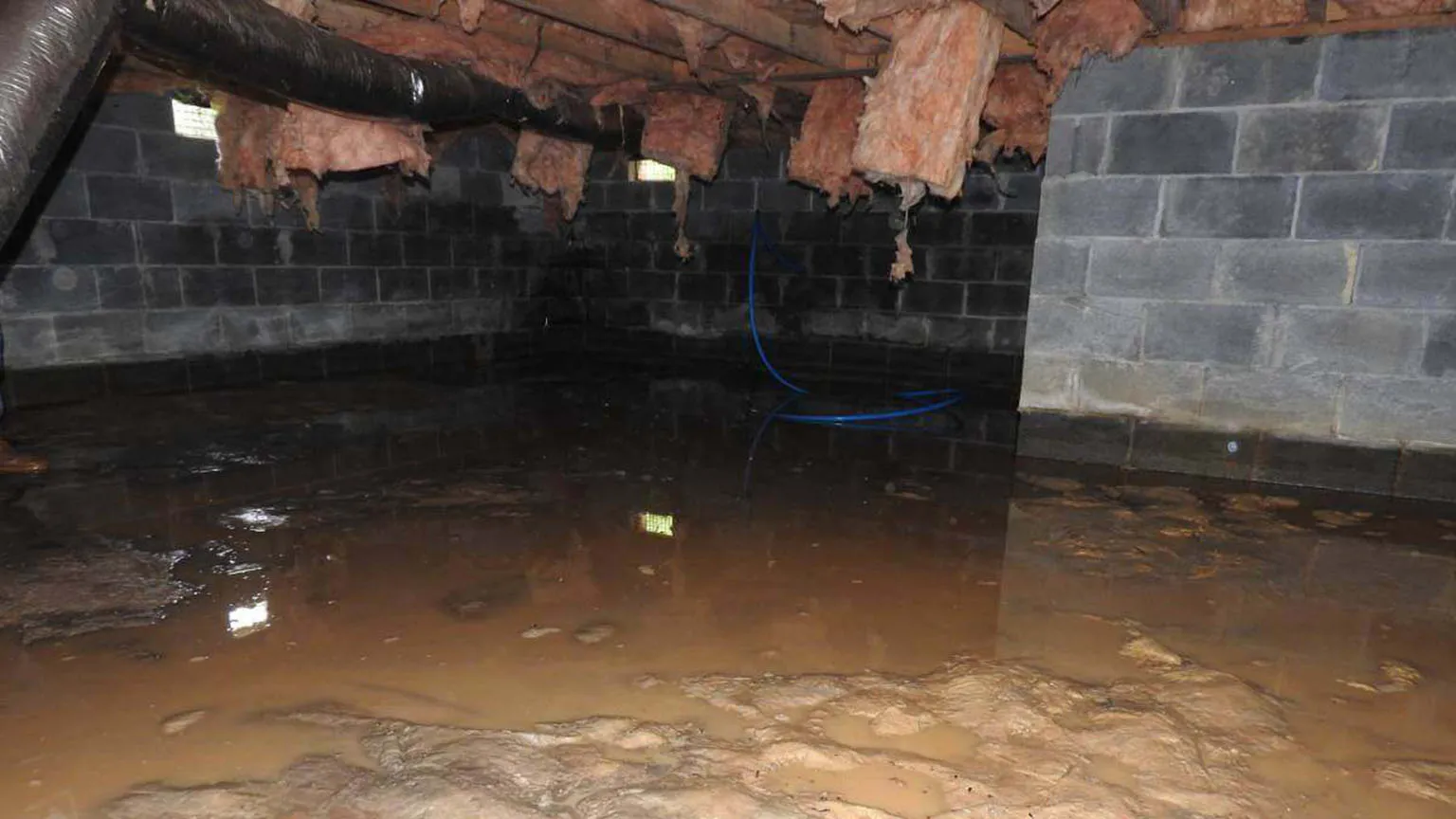
Job one is getting the water out and drying the space. That’s extraction, hauling out soaked material, running fans and dehumidifiers for a few days, and cleaning what’s left. It’s urgent, it’s messy, and it’s priced mostly by how much water sat there and how long.
Job two is stopping it from happening again. That’s drainage, a sump, a discharge line — the permanent side. It isn’t urgent in the same way, but it’s the part that decides whether you ever pay for job one again.
People blur those two together and then feel confused when the estimate arrives. So we split them on paper. You see the drying line, you see the permanent-fix line, and you get to decide how to sequence them. No bundling, no mystery.
Worth knowing
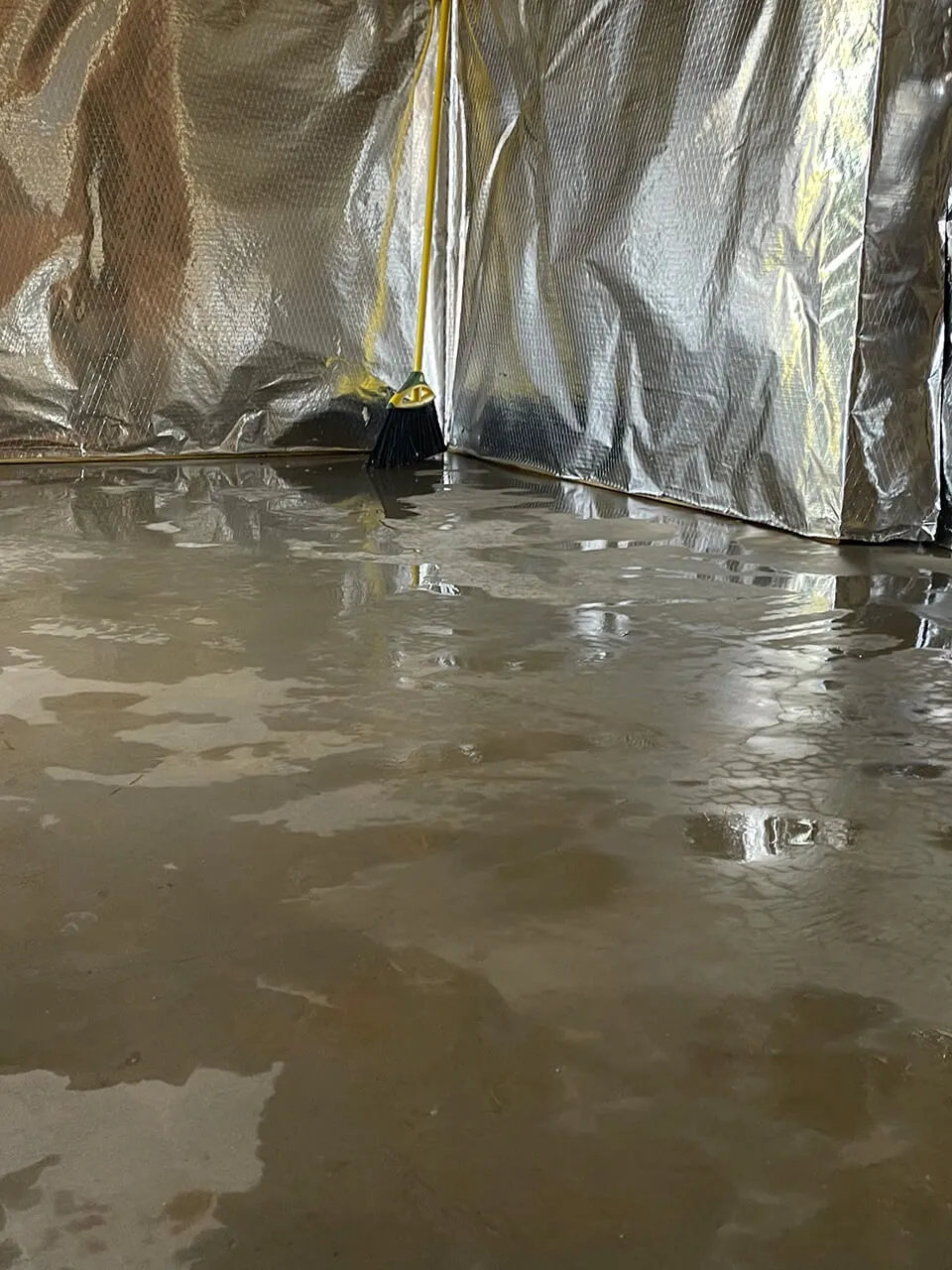
One inch of water across a 1,000-square-foot basement is more than 600 gallons. That’s why a shop vac feels hopeless about ten minutes in — you’re not slow, you’re just outnumbered.
What actually happens, in order?
Nobody enjoys surprises when concrete is involved, so here’s the sequence we follow.
- Stop the water and make it safe. Power to the affected area goes off first. After that, extraction starts, because standing water gets harder to deal with every hour it sits.
- Pull out the wet organic material. Carpet pad, soaked drywall, cardboard boxes, particleboard shelving. These hold moisture and feed problems later, so they come out.
- Dry the structure. Air movers and commercial dehumidifiers run for several days. We measure moisture in the framing and slab rather than guessing by touch.
- Find the entry point. Now the room is dry and readable. We walk the grading outside, check downspouts, then read the wall and floor seam inside.
- Written scope for the permanent fix. Linear feet, materials, sump location, discharge point, price. On paper, before anything else happens.
- Install the drainage. A narrow strip of slab comes up along the affected perimeter. Perforated pipe goes into clean washed stone below floor level, and wall liner routes seepage down into it.
- Sump, discharge, and closing up. Everything routes to a basin, the pump carries water well away from the house, fresh concrete goes down, and we test the system while you watch.
Steps one through three are job one. Steps four through seven are job two. Plenty of homeowners do the first half immediately and the second half a few weeks later, once the dust settles and the budget catches its breath.
What moves the number up or down?
Straight talk: nobody can price this over the phone, and anyone who tries is guessing with your money. Still, you deserve to know what we’re looking at while we walk your basement.
The six things that set the price
- How much water. A damp corner and four inches across the whole slab are different worlds. Volume drives extraction and drying time directly.
- How long it sat. Caught in an hour, it’s mostly a cleanup. Sat two days while you were out of town, and materials start absorbing.
- How much wet organic material comes out. An unfinished basement with a concrete floor is the cheap version. Carpet, pad, drywall and built-ins mean removal, haul-off and rebuild.
- Whether drainage is part of the permanent fix. Sometimes regrading and extending two downspouts handles it. Sometimes a full interior perimeter system is the honest answer.
- Whether a sump is involved. A new basin and pump is one line item. Replacing a tired 1990s pump in a basin that’s still good is a much smaller one.
- Wall and slab condition. Active cracking or a bowing wall gets addressed first, because building drainage against a moving wall is money spent twice.
Low end looks like a small unfinished area, caught fast, plus exterior corrections outside. High end looks like a finished basement that sat wet, a full perimeter system, a new sump and a battery backup. Most homes land somewhere in the middle, and you’ll get one written number with the scope spelled out. If you’re comparing across town lines, our breakdown of Snellville basement flooding cost uses the same math, and our guide to basement drying options covers the equipment side in more detail.
Which detail sounds small and absolutely isn’t?
Ask us where the water came in and nine times out of ten we point at the same spot: the cove joint. That’s the seam where the basement wall meets the floor. It’s a couple of inches of nothing, it never shows up in a listing photo, and it decides the whole job.
Why there? Because that seam is a cold joint — the wall and the slab were poured separately, so they were never truly one piece. When wet Georgia red clay swells against the foundation, it pushes. That push has a name, hydrostatic pressure, and it drives water sideways through the easiest opening available. The cove joint is always the easiest opening.
People look for a dramatic crack and find nothing. Then they run a hand along the base of the wall and it’s wet the whole way down.
Good news, though — this is very fixable, and it’s the kind of thing we handle constantly. Interior drainage sits below the slab and catches water at that seam before it ever reaches your floor. In other words, we stop arguing with the water and give it a faster exit instead. That’s also why a bucket of sealer never holds: the product goes on the surface, and the pressure is behind it.
The other small detail worth knowing is your sump pump, which fails in predictable ways rather than mysterious ones. Power goes out during the exact storm that fills the basement. A float gets stuck against the basin wall. The pump is undersized for the water it’s asked to move. There’s no check valve, so water drains straight back down after every cycle. Or the discharge line is clogged, frozen or dumping four feet from the foundation, which just puts the water back in line for another try.
Every one of those has a fix that costs far less than another flood. That’s the whole point of knowing them.
How long does it take, and what should you do first?
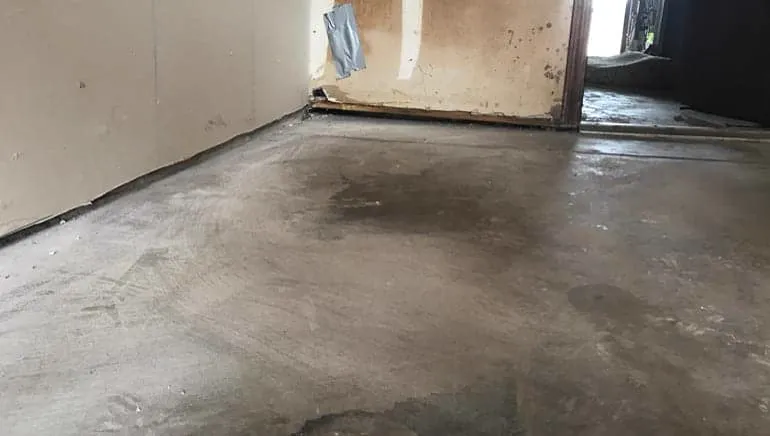
Drying usually runs three to five days with equipment on site. Interior drainage adds one to three days, depending on linear feet and whether the basement is finished. After the concrete goes back down, give it a few days before you load it up with shelving again.
Timing matters here, and it’s not just about your schedule. Mold can begin growing on wet organic material in roughly 24 to 48 hours — the CDC’s guidance on mold cleanup after a flood says the same thing plainly. Waiting a week doesn’t just delay the job. It changes the job, because now materials that could have been dried have to be removed instead.
Your prep list is short. Clear about four feet along the affected walls, lift anything valuable off the floor, take photos before you move things, and make sure we can reach an exterior door. We’ll handle the heavy items, because nobody should hurt their back to save a truck trip.
What can you honestly handle yourself?
More than you’d think, and we’d rather tell you than bill you for a Saturday’s worth of work.
Real DIY wins: extending downspouts six to ten feet from the house, cleaning gutters twice a year, regrading soil so it falls away from the foundation, clearing window wells, pouring a bucket of water into the sump basin to test the pump, and getting a small amount of water up quickly before it spreads. Those steps genuinely prevent a share of minor flooding, and they’re cheap.
What DIY can’t reach: anything below the slab. You can’t set drain tile without opening concrete, and rental fans don’t pull moisture out of framing the way commercial dehumidifiers do. Also, once water has crossed a few hundred gallons, a wet-vac stops being a tool and becomes a hobby. Not a skill problem — a math problem.
What did this look like for a real house?
We had a homeowner off Collins Hill with a 1979 block basement — original tar-only waterproofing on the outside, which was standard back then and has simply aged out. Spring storms rolled through, the power blinked, and the sump sat quiet while about two inches of water spread across the finished half.
She’d already priced a full perimeter system somewhere else and was bracing for it. What she actually needed was less. Drying and removing the soaked carpet pad handled the first half. Then the permanent fix came down to drainage along two walls, a properly sized pump with a check valve, and a discharge line rerouted well away from the house — because the old one had been quietly emptying beside the foundation for years.
She’s been through two storm seasons since with a dry floor and a basement her kids use again. That’s the feeling we’re actually selling: not a product, just the part of your house you stopped counting.
Stories like that repeat around here. Chandler Ridge has the same era of block walls, and homes over toward Sever’s Trail sit on the same red clay. We’ve been fixing basements in Lawrenceville for over twenty years, which means we’ve probably already worked on a house in your neighborhood — maybe on your street. That’s not a sales line, it’s just what happens when your shop is here.

How do you know the job was done right?
Ask for five things and you’ll separate good work from fast work quickly. First, moisture readings before and after drying, not just a thumbs-up. Second, a written scope naming linear feet and the discharge location. Third, photos of the stone and pipe before concrete goes back down. Fourth, a live test of the sump while you’re standing there. Fifth, a warranty you can actually read.
One more thing worth checking on your own: your insurance. Standard homeowners policies commonly exclude surface flooding, and sump pump failure coverage is usually a separate endorsement you have to add. We’re not insurance people, so don’t take our word for it — call your agent and ask what your policy actually covers. It’s a ten-minute call that occasionally changes everything. The National Weather Service flood safety page is a good neutral place to read up first.
After that, the proof arrives on its own schedule. Storms roll up GA-316 the way they always have, and your floor stays dry. You check the radar out of curiosity instead of dread. Better yet, you spend a spring evening at the Lawrenceville Lawn or catch a show at the Aurora Theatre without wondering what’s happening at home. Our full range of basement waterproofing systems is laid out on the service page, and if you’re also seeing cracks or settling, our page on foundation repair covers that side.

Where we work around Lawrenceville
Lawrenceville is home — our shop and our trucks are right here, so we’re usually a few minutes out rather than a few counties. We also cover Snellville, Grayson, Dacula, Suwanee, Duluth, Lilburn, Loganville and the wider Gwinnett area. If you’re near the Square, off Scenic Highway, or anywhere along 316, odds are we have a crew nearby already.
Questions we get from Lawrenceville homeowners
It splits into drying the space and stopping the water for good, and we price those separately so you can see both. A small unfinished area caught quickly sits at the low end, while a finished basement plus a full perimeter system and a new sump sits at the top. We give one written number after walking the house, never a phone guess.
Twice a year is still twice a year of cleanup, and the water is coming in the same way every time. Sometimes the fix is small, like regrading and rerouting downspouts, so it’s worth an inspection before you assume it’s a big project. Either way, you’ll know what you’re choosing between.
For a small spill caught fast, sure. For real flooding, no — one inch across 1,000 square feet is over 600 gallons, and box fans move air without removing moisture from framing. Commercial dehumidifiers do that part, which is why drying is measured rather than eyeballed.
Mold can begin on wet organic material in roughly 24 to 48 hours, which is why quick drying costs less than slow drying. Carpet pad, drywall and cardboard are the usual first spots. Get air moving and call somebody the same day if you can.
Cut power to the affected area before you step in, then take photos for your records. After that, lift what you can off the floor and start moving air. Then call us — live support runs 7 a.m. to 8 p.m., seven days a week, and the inspection is free.
Let’s find out what your basement actually needs
The inspection is free, the estimate is free, and nobody pressures you at the end. We’ll show you where water is getting in, what it takes to stop it, and what that costs here in Lawrenceville — even when the answer turns out smaller than you expected.
(678) 914-5112Serving Lawrenceville and all of Metro Atlanta · $500 off projects over $3,500 · Live support 7am–8pm, 7 days a week