

Foundation Repair Cost Duluth Homeowners Can Actually Plan For
Why piers are priced by depth, how to tell a settling crack from an old one, and what you can honestly sort out yourself.
Rain woke you up at two in the morning. Not the polite kind, either — the kind that slaps the windows and gets you doing math in the dark about the basement. Then you thought about that crack by the door frame, the one you keep meaning to ask somebody about. So if you’re lying there pricing out the foundation repair cost Duluth homeowners get quoted, take a breath first. These stories almost always end better than the 2 a.m. version.
Here’s the thing: a crack is information, not a verdict. Some of them need piers. Plenty of them need a tube of sealant and a downspout that reaches past the flower bed.
Why does the ground move here at all?
Georgia red clay is the short answer. Clay soaks up water and swells, then dries out in August and shrinks back down. Your footing sits on top of that slow breathing, season after season, and eventually one corner of the house rides a little lower than the rest.
Duluth adds its own wrinkle. The Chattahoochee wraps the north and west edge of the city, so lots near the river sit on sandy pockets mixed into the clay, while the subdivisions inland are clay all the way down. Two houses a mile apart can behave nothing alike. If you’re curious about what’s under your own yard, the USDA soil survey map will show you, and the UGA Extension soils pages explain the shrink-swell behavior in plain language.
Most of the housing stock around here went up between 1985 and 2005, which means a lot of foundations have now been through thirty-odd wet-dry cycles. That’s not a defect. That’s just time, and time is very repairable.
Is it even a settlement crack?
Start here, because this question decides whether you’re looking at a small invoice or a real project. Not every crack means the house is sinking, and honestly, most don’t.
Thin vertical cracks in a poured concrete wall are usually curing shrinkage. Concrete gives up water as it hardens and pulls tight on itself, and that shows up in the first year or two. We see them constantly in the newer townhomes around the Parsons Alley district, and they’re almost always cosmetic.
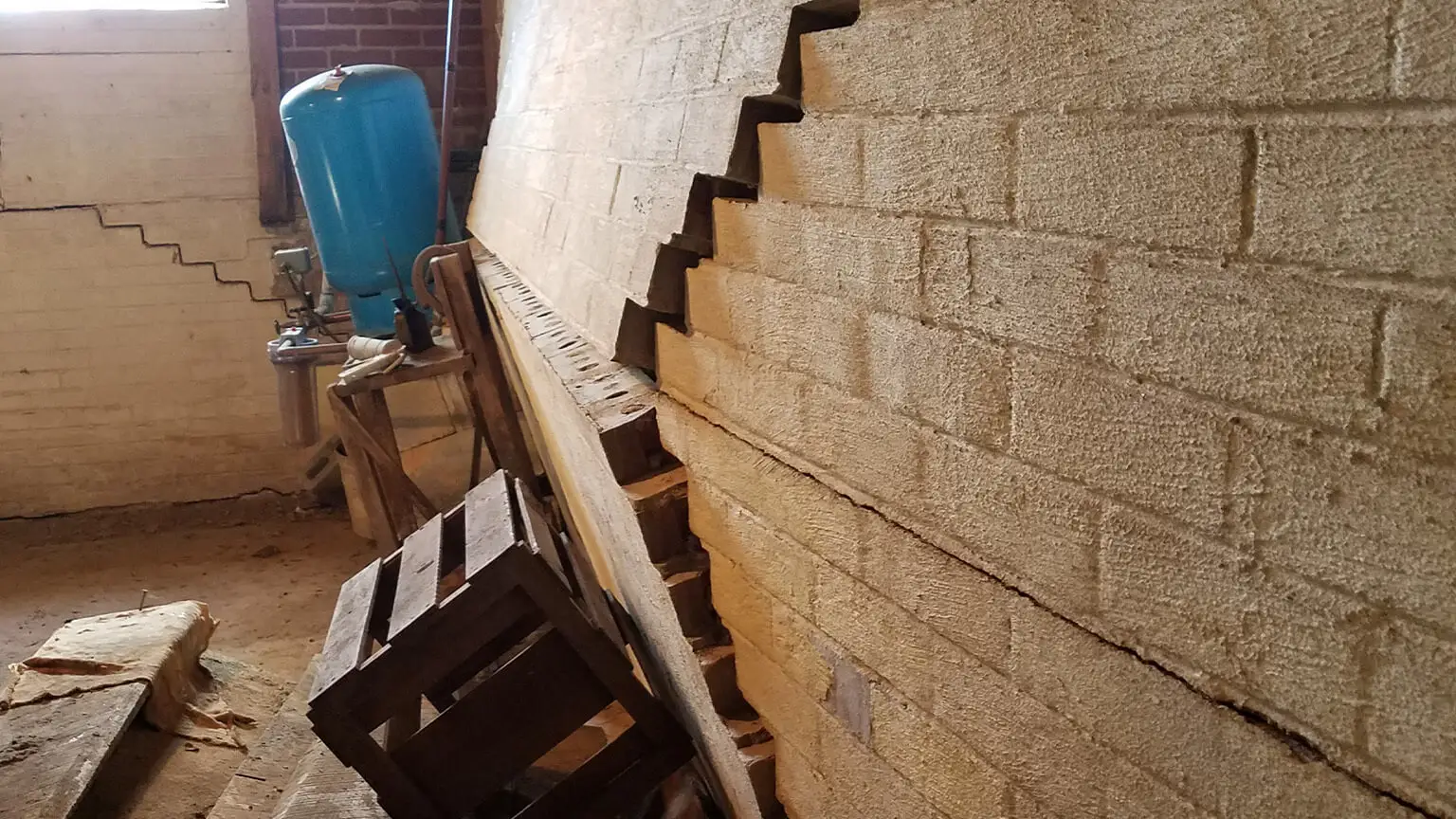
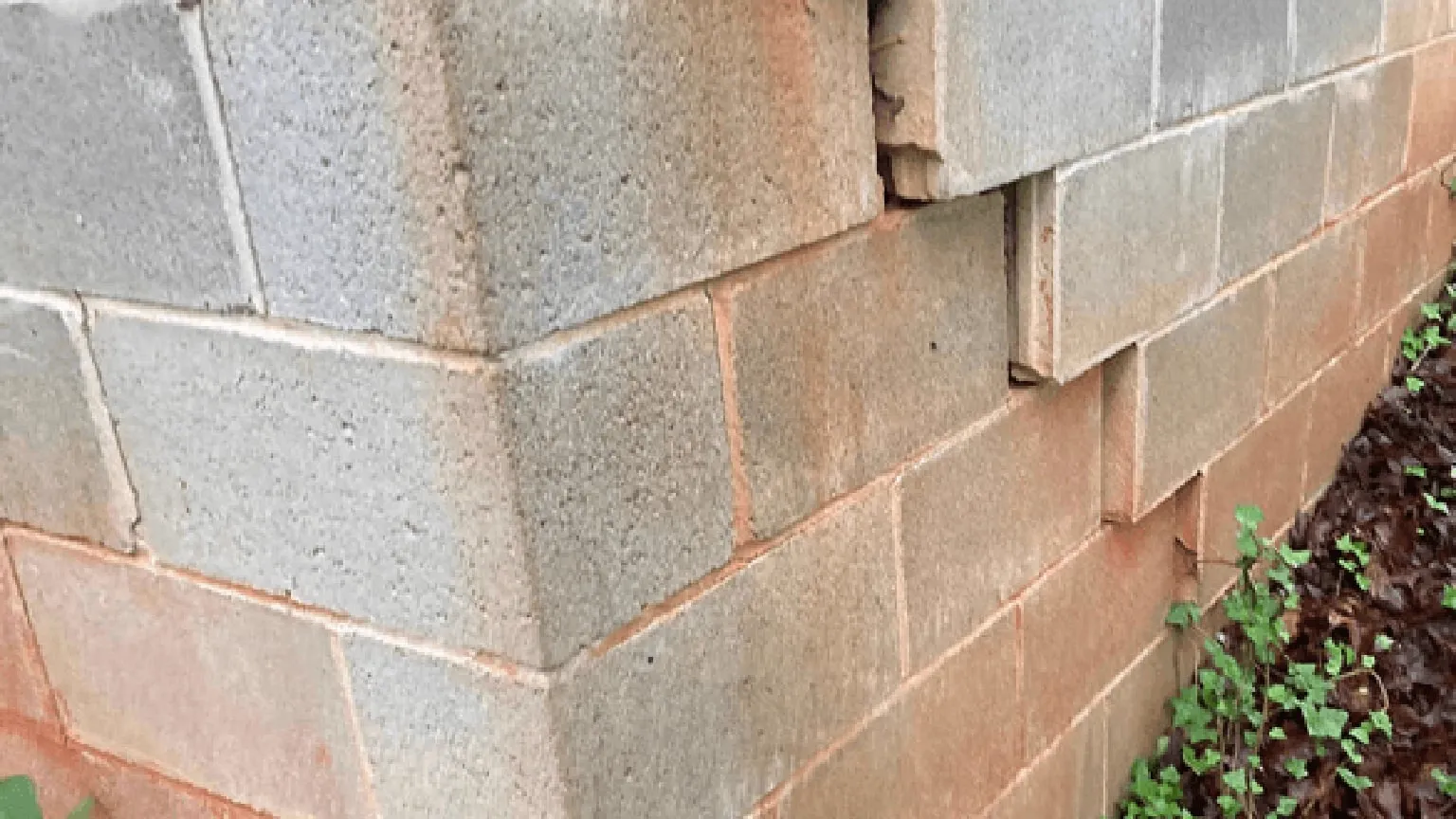
Stair-step cracks that follow the mortar joints in block or brick tell a different story. That pattern points to one part of a footing dropping faster than the rest. Horizontal cracks are a third thing entirely — those come from soil pushing sideways against the wall, and they get a different repair at a different price. Same house, three cracks, three answers.
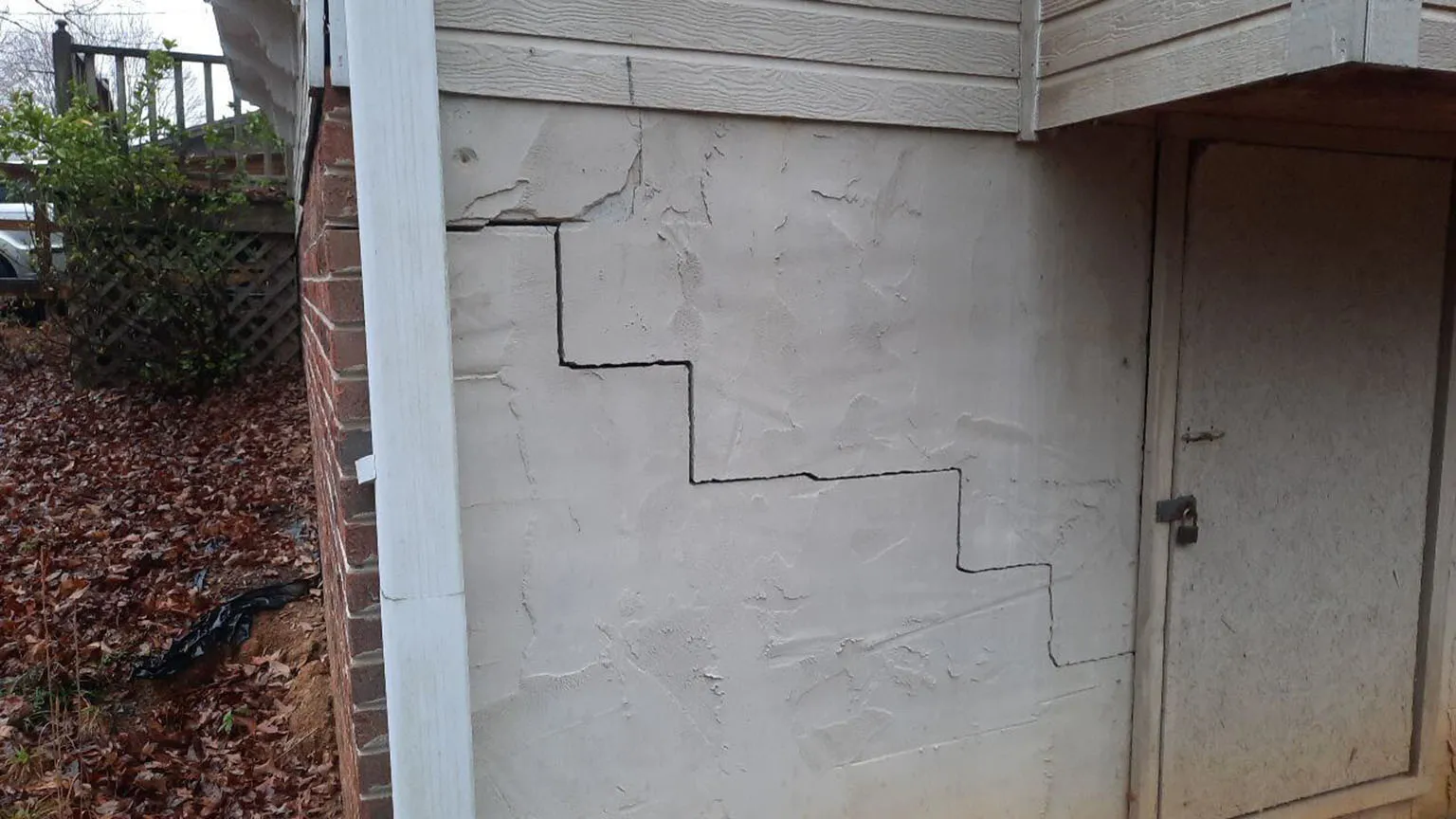
There’s one more test, and it’s free. Mark each end of the crack with a pencil and the date, then measure the width every month for a few months. A crack that hasn’t budged by spring is dormant, and a dormant crack often just needs sealing. That’s a very small job compared to piers, and we’ll tell you when that’s all you need — our page on foundation crack repair walks through those options.
What’s the second thing going on?
Here’s a part that rarely makes it into the sales conversation: the clay didn’t decide to move on its own. Water told it to. Which means a lot of foundation quotes quietly carry a drainage line item, and homeowners are surprised by it every time.
Think about what’s actually feeding that soil. A downspout dumping at the corner of the house soaks one spot every storm while the rest of the yard stays comparatively dry. That’s an uneven wet-dry cycle in a very specific place, right where the footing turns. Half the homes we look at off Sugarloaf Parkway have exactly that setup, and nobody ever thinks of a gutter as a structural part.
So when a scope includes regrading, downspout extensions or a catch basin, it isn’t padding. Piers hold the house steady, but correcting the water is what keeps the soil from cycling that hard again. Better yet, that portion is usually the cheapest part of the whole ticket.
Worth knowing
Duluth basements are working basements — in-law suites, home offices, kids’ rooms. When one gets damp here, it isn’t boxes getting wet. It’s somebody’s bedroom, which is why we look at moisture and structure in the same visit instead of selling you two separate trips.
What actually happens on a pier job?
Nobody enjoys watching a crew dig next to their house without knowing the plan. So here’s the order it runs in.
- The free inspection. We walk outside, then inside, and shoot elevation readings across the floor. Numbers beat opinions.
- Diagnosis, not a guess. Active movement gets a repair plan. Dormant cracking gets monitoring, and sometimes that’s the whole recommendation.
- Engineering, when the job earns it. Bigger repairs deserve a structural engineer’s stamped report. It costs extra, but it settles questions with buyers and insurers later.
- The written scope. Pier count, pier type, estimated depth, stabilize or lift, restoration, price. All on paper.
- Permits and locates. We pull what the county wants and get utilities marked before a shovel moves.
- Excavation. A neat hole opens at each pier spot down to the footing, not a trench around the whole house.
- Setting the piers. Helical piers get screwed into the ground until they hit soil dense enough to carry the load, then the foundation is transferred onto them. Push piers use the weight of the house to drive steel down instead.
- Load transfer and closing up. Brackets take the weight, we re-check elevations, then backfill and put your yard back together.
What moves the number up or down?
Straight talk: nobody can price this over the phone, and anyone who tries is guessing with your money. Still, the foundation repair cost Duluth quotes you collect all come down to the same handful of variables, and you deserve to see them before we show up.
What sets the price
- How many piers. Pricing is usually per pier, so the length of the affected footing matters more than the size of the house.
- How deep each one goes. Depth is decided by resistance, not by a menu. Helical piers stop when the soil finally carries the load, and that can be eight feet on one lot and far deeper on the next.
- Which method fits. Helical piers, push piers, slab piers and polyurethane foam lifting all solve different problems and price differently.
- Access. An open exterior corner is easy. Work inside a finished basement, or piers behind a patio, a driveway or twenty years of mature landscaping, adds labor and restoration.
- Stabilize or lift. Holding the house where it sits costs less than raising it. Lifting isn’t always wise either, since moving a settled house back up can open new cracks in drywall and trim.
- Engineering and permits. A stamped report and county fees are real line items, and on bigger jobs they’re money well spent.
- Drainage corrections. Gutter work, regrading or a buried discharge line often rides along, because that’s what stops the cycle from repeating.
A couple of piers on one accessible corner sits at the low end. A deep interior repair under a finished in-law suite, with an engineer involved, sits at the top. Most jobs land somewhere in the middle, and you get one written number with the scope spelled out. Want to compare across town? Our breakdown of Suwanee foundation repair cost runs the same math, and our guide to foundation repair options puts the methods side by side.
The one that wasn’t what they thought
A homeowner over near Abbotts Bridge called us convinced they were looking at a big structural bill. A bedroom door had started sticking, there was a stair-step crack outside near the corner, and a company had already floated a pier count over the phone. They were bracing for the worst.
Our elevation readings told a calmer story. The floor was within a normal range, and the crack, once marked and measured across four months, hadn’t moved a hair. What had moved was water — a downspout emptying at that corner plus a walkway that had settled just enough to tilt everything back toward the house. That was the whole culprit.
They got drainage corrections and a sealed crack. No piers, no engineer, and a total that was a small fraction of what they’d been dreading. The sticking door? That eased up once the soil stopped swinging between soaked and bone dry.
Now, it doesn’t always go that way. A home along the Berkeley Lake edge did need piers, and the depth surprised everybody, because the sandy river-bottom soil kept giving until the helicals found something firm well below where we started. That’s the honest range. One house needs a Saturday’s worth of drainage work, the next needs steel, and the only way to know which one you own is to measure.
How long does it take, and what can you do yourself?
Most exterior pier jobs run one to three days on site. Interior work under a finished basement takes longer, mostly because of the careful removal and the put-back. After that, backfilled soil wants a few weeks and a good rain to settle in, so we usually plan a follow-up look.
Your prep list is short. Move planters and patio furniture away from the work corners, mark any irrigation heads you know about, clear a few feet along the interior wall if we’re working inside, and plan on keeping pets in for the noisy stretch. We’ll handle the heavy lifting, since nobody should wrench their back to save us a trip.
Real DIY wins: extending downspouts six to ten feet out, cleaning gutters twice a year, adding soil so the ground falls away from the house, keeping big thirsty shrubs off the foundation line, and marking and measuring cracks with dates. Those cost almost nothing and genuinely change the odds.
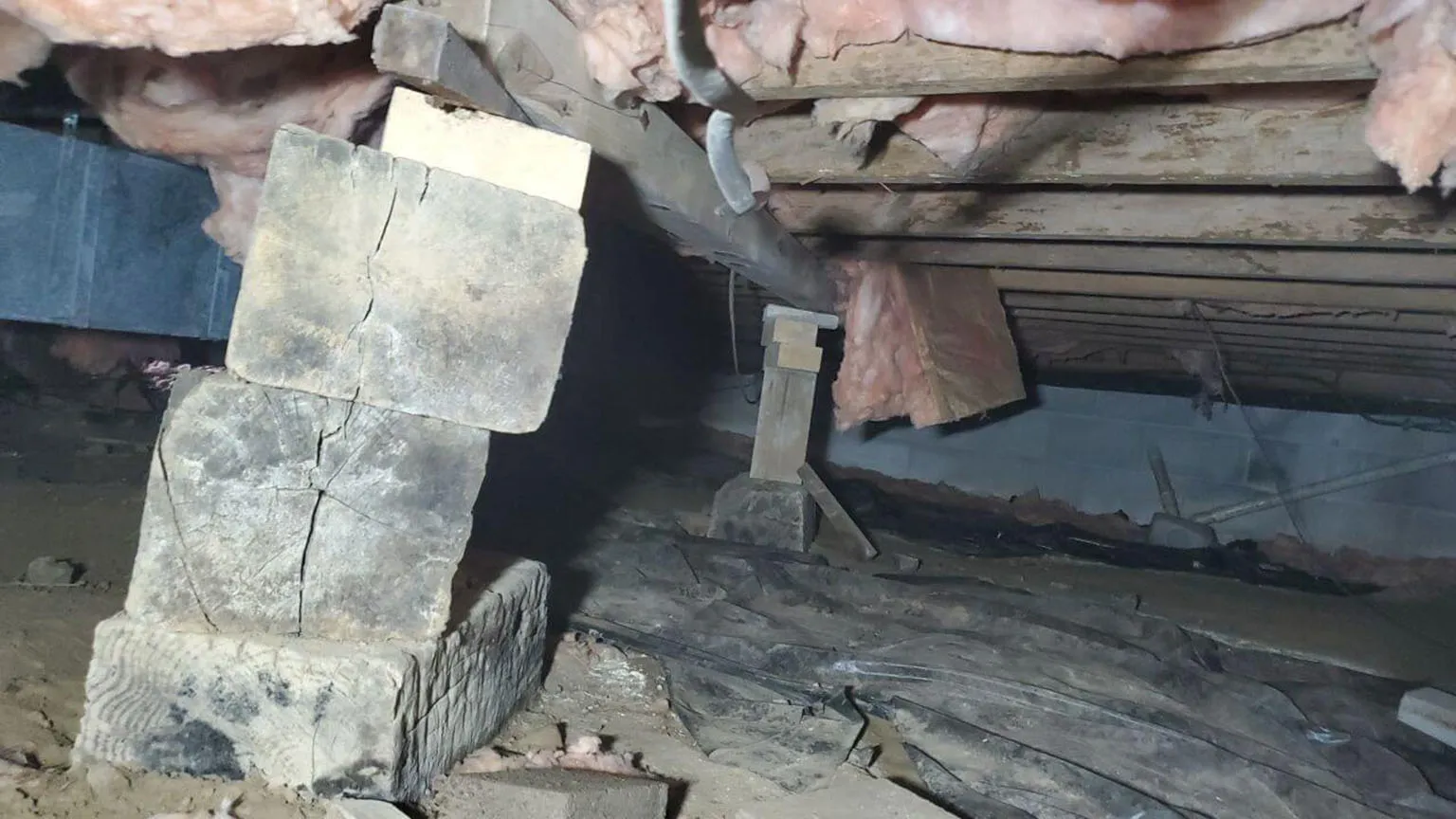
What DIY can’t reach: load transfer. Stacking blocks or shimming a girder holds weight for a while, but it’s resting on the same soil that moved in the first place. Piers work because they pass the load down to soil that will carry it, and there’s no bucket at the hardware store that does that.
How do you know it was done right?
Ask for the paperwork, and ask before you sign. You want a depth log for every pier, load readings taken during installation, elevation numbers from before and after, and photos of the brackets at the footing while the holes are still open. Once dirt goes back in, nobody can verify any of it.
Then read the warranty out loud with whoever hands it to you. Find out exactly what it covers — the pier itself, further settlement at that location, or the cracks — and whether it transfers to a buyer someday. Those are three different promises, and the difference shows up when you sell.
We’ve been at this for over twenty years across Gwinnett, from the older crawl-space homes near the Southeastern Railway Museum to the newer builds a few blocks off the Downtown Duluth Town Green. That history is why our warranty means something, because the same crew answers when you call in year eight. The full range of foundation repair methods we install is laid out on the service page.
We’d rather talk somebody out of piers than sell a set they didn’t need. Word travels fast in Duluth, and it travels both directions.
Where we work around Duluth
Our shop is about fifteen minutes away in Lawrenceville, so we’re in Duluth most weeks. We also cover Johns Creek, Suwanee, Berkeley Lake, Peachtree Corners, Norcross, Buford, Sugar Hill, Snellville and the wider Gwinnett County area. If you’re anywhere along the PIB corridor, odds are a truck is already close by.
Questions we get from Duluth homeowners
Less than you’d guess. We open a hole at each pier location rather than trenching the whole perimeter, then backfill, compact and rake it out when we’re done. Sod and plantings in the way get lifted and set back where we can, and we’ll tell you upfront if a shrub isn’t going to survive the move.
Usually not an emergency, but it is the kind of thing to get measured soon rather than later. A wall leaning inward is being pushed by soil pressure, so it gets a different repair than a settling footing does. We measure the deflection, check whether it’s still moving, and show you the options in writing.
Measurement, not appearance. Mark a crack at both ends with the date and watch the width for a few months, because a crack that isn’t growing is usually dormant. We also shoot floor elevations, which tells us whether anything has actually dropped. Plenty of inspections end with sealing and a drainage fix.
It’s driven by pier count and how deep each pier has to go before it reaches soil that carries the load. Method, access, permits, engineering and whether we lift or simply stabilize all move it too. A couple of piers on an open corner sits at the low end, while deep interior work sits at the top, and you get one written number after we walk the property.
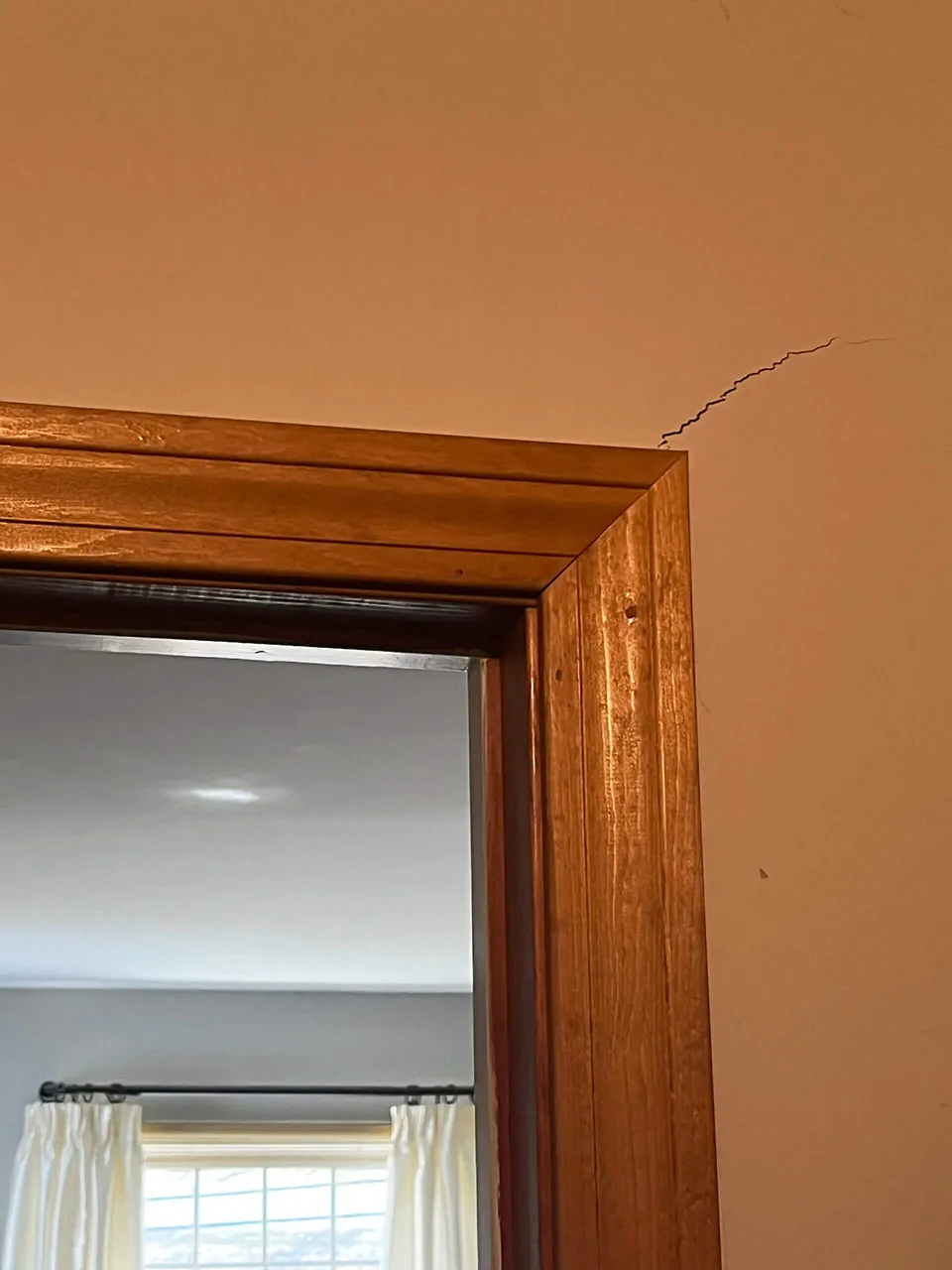
Sometimes, though humidity swings cause the same thing every summer. The tell is whether it shows up alongside sloping floors, diagonal cracks from door corners, or gaps opening at trim. If a door sticks all year and the floor reads low in that room, that’s worth an inspection.
Let’s find out what your foundation actually needs
The inspection is free, the estimate is free, and nobody pressures you at the end. We’ll measure your floors, read your cracks and show you what the fix costs here in Duluth — including the times when the answer is much smaller than you expected.
(678) 914-5112Serving Duluth and all of Metro Atlanta · $500 off projects over $3,500 · Live support 7am–8pm, 7 days a week