

Foundation Repair Cost Suwanee Homeowners Ask Us About Every Week
What a pier really is, why depth sets the price, how long it takes, and the cheaper answer most folks turn out to need.
Nobody tells you this part, so we will: the crack you’re staring at doesn’t set the price. Depth does. Somebody has to reach soil firm enough to carry a house, and no honest crew knows exactly how far down that is until the first pier goes in. So any real talk about foundation repair cost Suwanee homeowners will actually see has to start below the dirt, not at the wall.
Good news up front, though. Plenty of the calls we take around here never end in piers at all.
What is actually being priced?
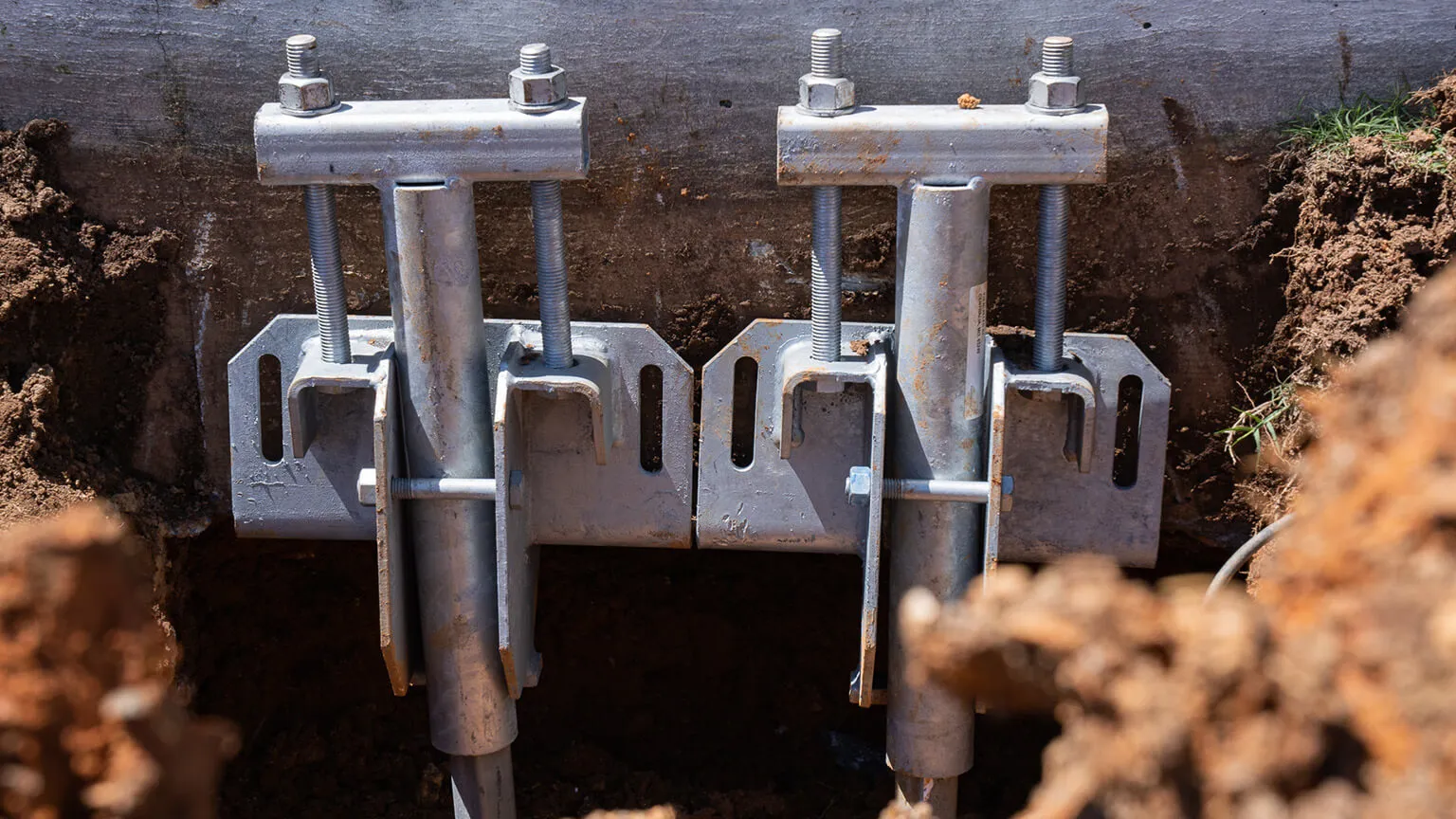
Almost always, the pier. That’s the unit. A pier is a steel shaft driven or screwed down past the soft, moody clay until it lands on ground that will hold weight. Then a bracket ties it to your footing, and the house rides on that instead of on the clay.
So two numbers drive the bill: how many piers, and how deep each one goes. One corner of a house might need three. A long settled wall might need nine. Because of that, “how much for foundation repair” is a little like asking a dentist how much for a filling before he’s looked in your mouth.
Here’s the part worth trusting a company over. Depth is a site condition, not a sales choice. Nobody sitting at a desk decides your piers should go deeper. The soil decides, the same way water decides when a well driller gets to stop.
What kind of crack are you looking at?
Before anybody quotes anything, this question has to get answered — because three cracks that look similar get three different repairs and three different prices.
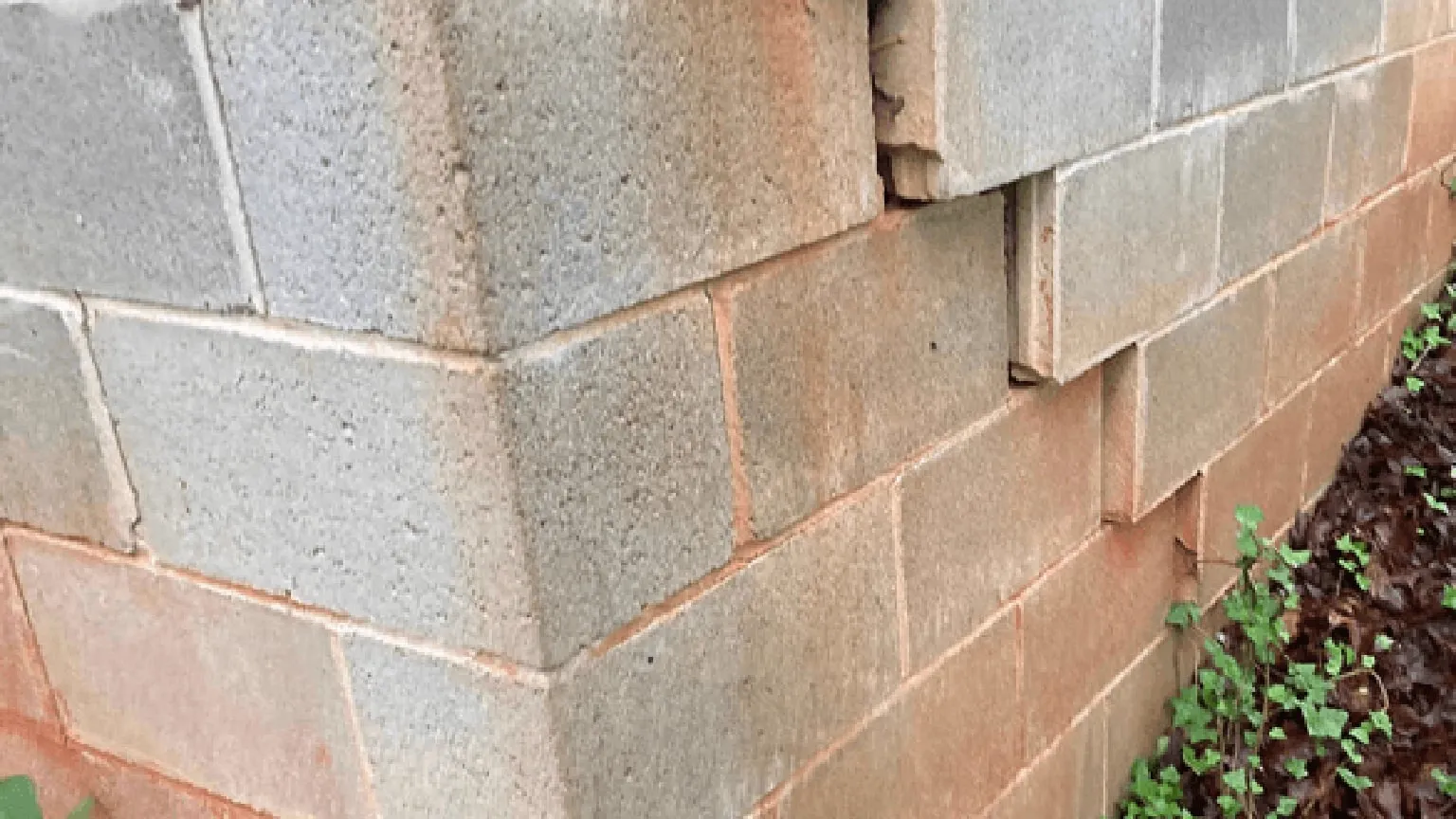
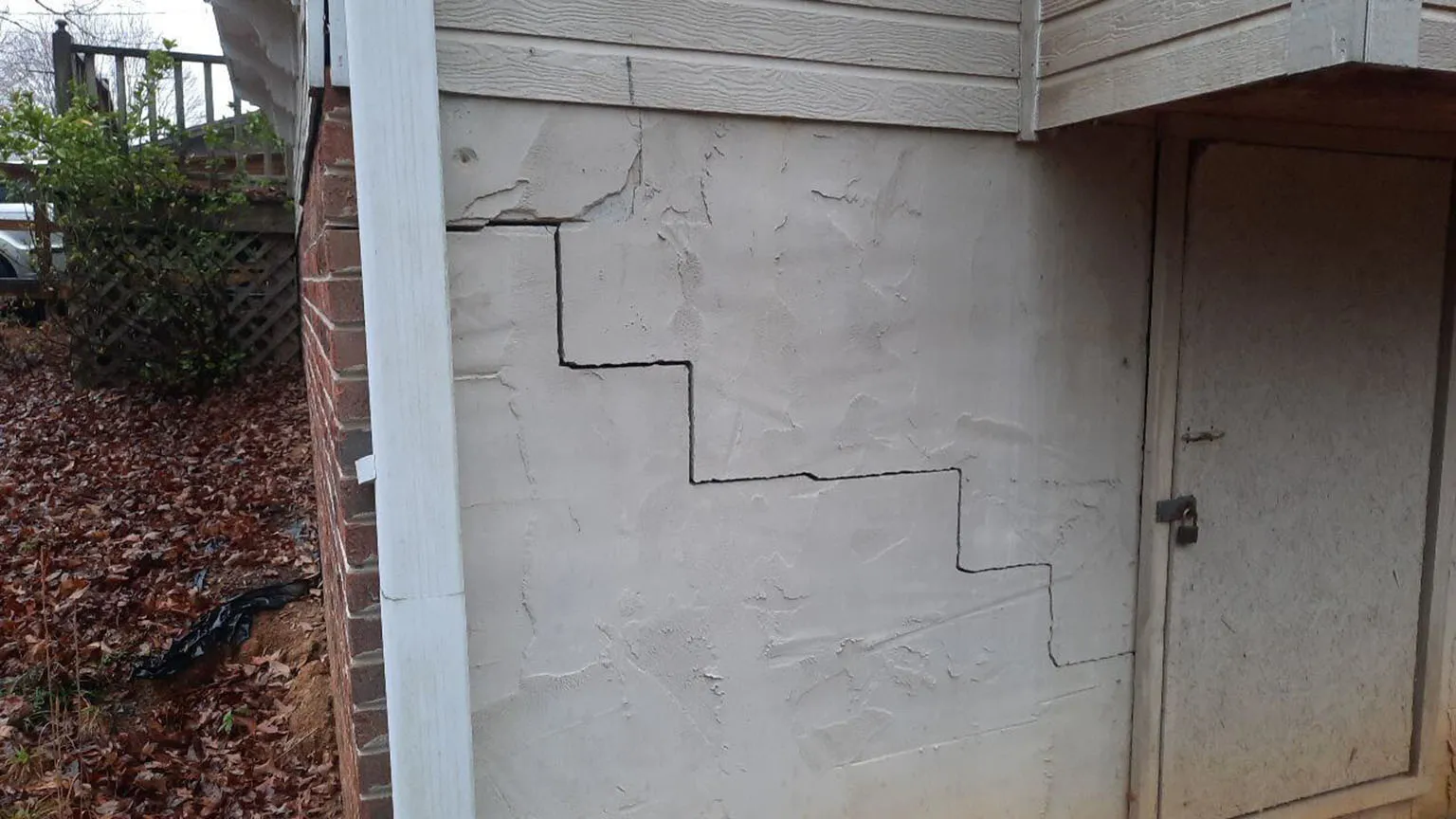
A thin vertical crack in a poured wall is usually just concrete curing and shrinking. It’s the most common thing we’re called out for, and it’s the least expensive by a mile. Stair-step cracking through block or brick is a different story, since that pattern points to one part of the footing dropping faster than the rest. And a horizontal crack across a block wall isn’t settlement at all — that’s soil pushing sideways, which calls for bracing or anchors rather than piers.
Vertical points down. Horizontal points in. Confuse the two and you’ll buy the wrong repair at the wrong price, which nobody enjoys explaining later.
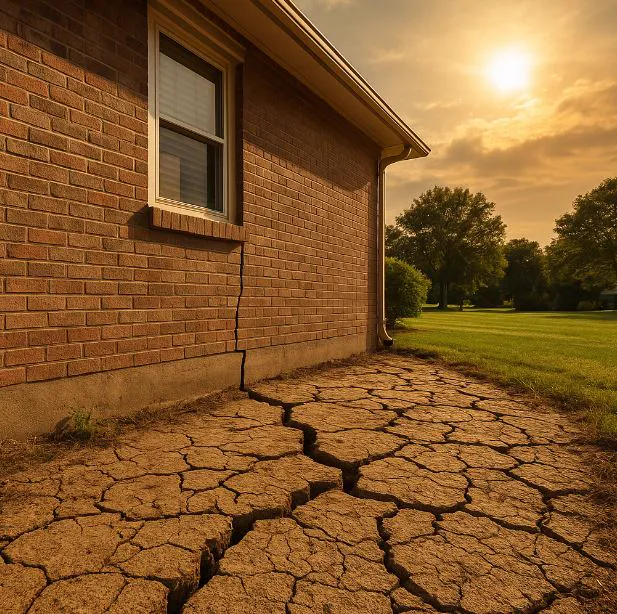
Why does our clay do this in the first place? Georgia red clay swells when it’s wet and shrinks when it dries out, over and over, season after season. That slow breathing under a footing is the root cause of most settlement here. If you like reading source material, the USDA soil survey will show you exactly what’s under your lot.
Suwanee gives this a local twist. The city went up in one fast wave in the late nineties and early two-thousands, so thousands of homes hit their twenty-five-year mark at roughly the same time. Grading settles over that stretch, and yards that once shed water away from the house now tip gently back toward it. We see it constantly in Ivy Falls and around Suwanee Station — nothing dramatic, just a quarter century of gravity doing its thing.
Is the crack even moving?
Now for the part that saves people real money. A crack that isn’t growing usually doesn’t need piers, and the expensive-sounding version of this job is rarely the one you need.
You can check it yourself. Draw a pencil line across the crack, mark each end, write the date beside it, then measure the width every few weeks. If nothing changes over three or four months, that crack is dormant. Dormant cracks get sealed, and sealing costs a tiny fraction of a pier job.
Worth knowing
Not every quote should be a pier quote. If a company inspects a hairline shrinkage crack and comes back with a nine-pier proposal, ask what measurements led there. A good answer exists. It should be easy to give.
That’s the whole reason we start with a free look instead of a price list. Some visits end with a stabilization plan. Others end with us sealing a crack, adjusting two downspouts, and heading out. Both endings are fine by us, and honestly the second one earns more referrals in a neighborhood group than the first ever has. If sealing is where you land, our page on foundation crack repair walks through what that involves.
What happens, in order?
Nobody likes surprises when there’s steel and a skid steer involved, so here’s the sequence.
- The free inspection. We measure floor elevations, read the crack patterns, and walk the grading outside. Most of the answer lives in those three things.
- Engineering, when it’s warranted. Bigger jobs sometimes deserve a structural engineer’s stamped report. It costs extra, but it’s independent, and it settles arguments before they start.
- The written scope. Pier count, pier type, bracket locations, whether we’re stabilizing or attempting a lift, permits, price. All on one page.
- Site prep. We protect landscaping, locate utilities, and open small excavations at each pier location.
- Setting the piers. Each one goes down until it hits capacity, and we log the depth and the load as we go. Depths vary across the same house, which is normal.
- Transferring the load. Brackets get set, and the weight of the house moves onto the steel.
- Stabilize or lift. We hold the position, or we attempt recovery — more on that difference in a second.
- Backfill and cleanup. Soil goes back, sod goes back, and you get the pier log with your paperwork.
What moves the number up or down?
Straightforward answer: seven things, and none of them are a mystery once somebody’s standing at your house.
The seven things that set the price
- Pier count. The single biggest factor. Three piers under one corner and eleven along a wall are different projects.
- Depth to competent soil. Deeper means more steel and more hours. The ground sets this, not us.
- Method. Helical piers screw in and suit lighter loads. Push piers use the home’s weight. Slab piers and foam lifting handle interior floors. Each carries its own price per point.
- Access. Open side yard? Easy. A patio, a driveway or mature plantings over the work zone? That’s careful hand work and restoration afterward.
- Stabilize versus lift. Holding a house still costs less than raising it. Lifting isn’t always wise either, since old cracks upstairs can reopen as things move back.
- Engineering and permits. A stamped report and a county permit add cost. On larger jobs, both usually earn their keep.
- Drainage riding along. Fixing the water that caused the movement often gets bundled in, which shifts the total but protects the repair.
So the low end looks like a few piers at one accessible corner. The high end looks like interior slab work, deep piers, a lift attempt, and an engineer’s stamp. Most homes land somewhere between, and you’ll get one written number after we’ve walked it — never a guess over the phone. To compare approaches side by side, see our rundown of foundation repair options, and for a cross-county reference point there’s our Peachtree Corners foundation cost breakdown.
How long does the work take?
Sealing a dormant crack is a morning. A typical exterior pier job runs two to four days, while interior slab piers or a full-perimeter plan can stretch past a week. Lift day itself is usually quick — the digging is what takes the time.
Getting ready is easy on your end. Clear about eight feet outside the work area, move pots and yard art, flag your irrigation heads and pet fence line, and leave a gate unlocked. We’ll handle the rest, because nobody should wrench their back to save us a trip with a wheelbarrow.
One timing note for around here: fall and winter are our favorite months for exterior work, since the ground behaves and the calendar is calmer than it is after the first spring storm blows up McGinnis Ferry Road. Permits and inspections follow the same standards the rest of the industry uses, which the International Code Council publishes openly if you want to see the rules yourself.
What can you handle yourself?
More than you’d think, and we’d rather tell you than bill you for it.
Real wins: extending downspouts well past the foundation, regrading soil so it falls away from the house, watering foundation beds during a long dry spell to keep clay from shrinking, monitoring crack width, and sealing hairline shrinkage cracks in a poured wall.
What DIY genuinely can’t reach: anything involving load. Driving a pier to capacity takes equipment that reads pressure as it goes, and lifting a house is a controlled, measured process rather than a strong afternoon. It isn’t a skill gap — it’s a physics and liability gap, and that’s a fair place to hand off the shovel.
What does settling have to do with the air in your house?
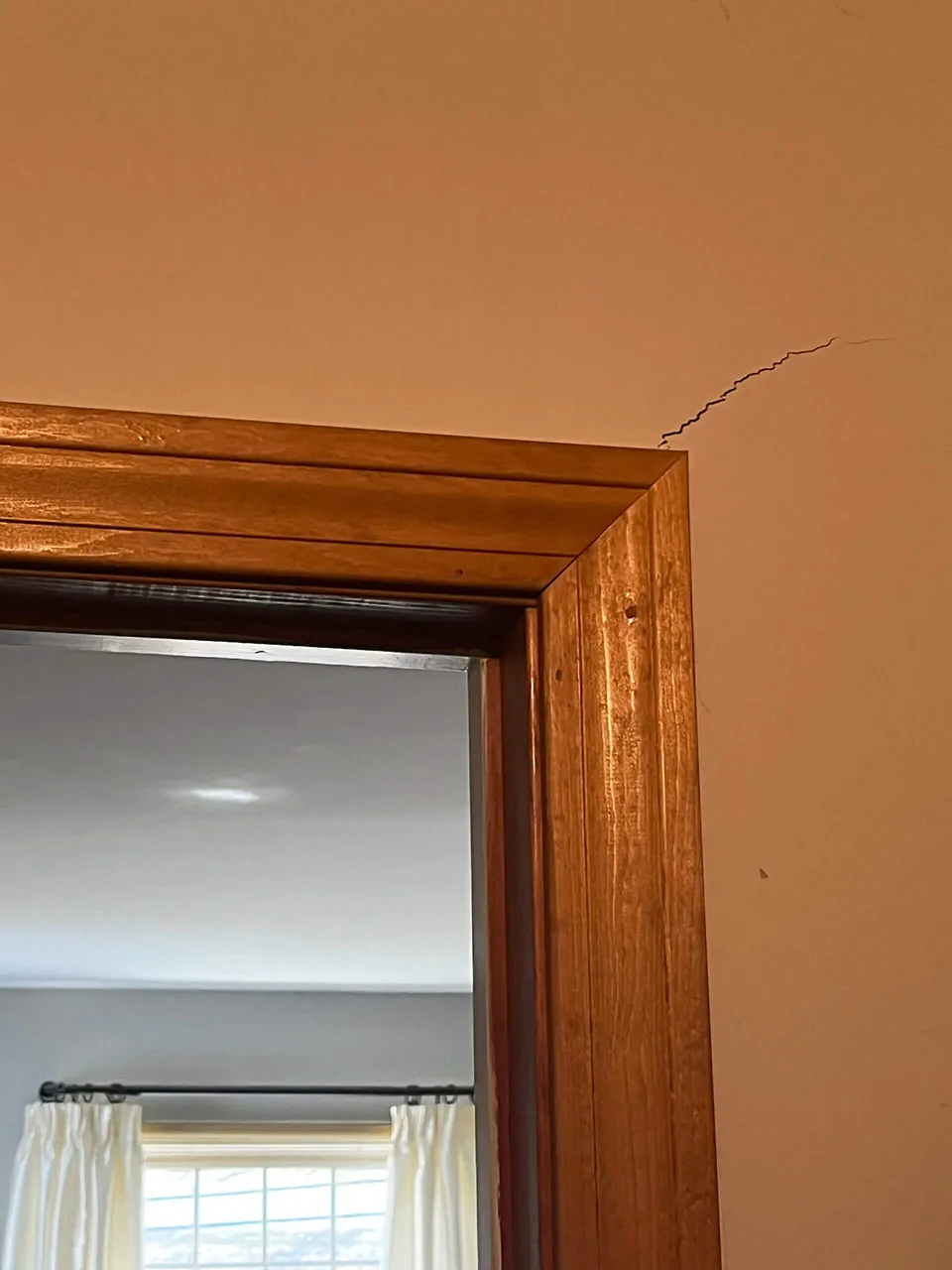
This connection surprises almost everyone. When a footing drops even slightly, gaps open along the sill, the rim joist, and the slab edge. Those gaps let unconditioned air in at the lowest point of the house.
Air travels upward inside a home, so whatever comes in down low ends up in the bedrooms. Damp basement air carries humidity with it, and humidity is what lets musty smells settle in. Which means closing those gaps quietly improves how the whole place feels, not just how the wall looks.
Picture next spring instead. Doors latch on the first try, the crack you’ve been photographing hasn’t budged, and the downstairs air smells like nothing at all. That’s the honest goal here — a house you stop thinking about.
How can you tell the work was done right?
Ask for four things. First, a pier log listing depth and load for every single pier. Second, photos taken before the soil went back. Third, elevation readings from before and after, so movement is documented rather than described. Fourth, the warranty in writing.
On that last one, get specific. Does the warranty cover the pier, the settlement, or the crack? Those are three different promises. Also ask whether it transfers to a buyer, because a transferable warranty answers the exact question every home inspector raises later.
We’ve worked this area for over twenty years — homes near North Gwinnett High School, the newer builds in the Town Center district, and plenty of afternoons parked within walking distance of Suwanee Town Center Park. Since we’re local, the same crew that logged your piers is the crew that answers in year eight. Our full foundation repair service page lays out every method we use.
Suwanee and the towns around it
Our shop is about fifteen minutes south in Lawrenceville, so we’re up this way most weeks. We also cover Duluth, Buford, Sugar Hill, Johns Creek, Cumming, Dacula, Sunny Hill, Berkeley Lake and the wider Gwinnett County area. If you’re anywhere along the Peachtree Industrial or I-85 corridors, there’s usually a truck close by.
Questions we get from Suwanee homeowners
Usually not an emergency, but it is a wall that deserves eyes on it soon. Bowing means soil is pressing sideways, and that pressure tends to build slowly rather than suddenly. Get it measured, then decide with real numbers instead of guesswork.
Movement is the test, not appearance. Mark a crack, date it, and measure the width for a few months — if it grows, something is still shifting. Sloping floors and doors that suddenly stick point the same direction, and an inspection with elevation readings confirms it either way.
It comes down to pier count, how deep the piers must go, the method used, and how easy the area is to reach. Sealing a dormant crack sits at the very bottom of the range, while deep piers with a lift attempt and an engineer’s report sit at the top. We give one written number after walking your house, never a figure over the phone.
Sometimes, though humidity swells wood doors every summer too. The tell is pattern: one door acting up is carpentry, while several doors and windows binding on the same side of the house suggests the frame has shifted. A quick elevation check separates the two in about fifteen minutes.
They’re steel shafts with plates welded on, screwed into the ground like a giant corkscrew until they hit firm soil. A bracket then connects each pier to your footing so the house rests on steel instead of clay. Because the equipment measures resistance as it turns, we know the pier is holding before any weight goes on it.
A free look before you spend a dollar
We’ll measure the floors, read the cracks, and tell you plainly whether this is a pier job, a sealing job, or a drainage fix. The inspection and estimate are free in Suwanee, and there’s no pressure at the end — including the days when the honest answer is “keep an eye on it.”
(678) 914-5112Serving Suwanee and all of Metro Atlanta · $500 off projects over $3,500 · Live support 7am–8pm, 7 days a week