

Standing Water Basement Lawrenceville Homeowners Find After a Storm
Walk down the stairs with us. Here’s what we look at first, what the water is telling you, and how the repair actually works.
Before we touch anything, we stop three steps from the bottom and just look. That pause tells us more than any tool does, because a standing water basement Lawrenceville homeowners call about always leaves a map behind. Where the water sits, how far it spread, what line it stopped at — all of it points somewhere.
Good news? Puddles on a slab are one of the most common things we get called for, and they’re very fixable. Water in a basement isn’t a mystery. It’s a path, and paths can be changed.
One safety note first, said calmly. If water is sitting on that floor and anything electrical is plugged in down there, go shut the circuit off at the panel before you step in. Do that part before curiosity wins.
What do we look at first?
The shape of the water. Standing water means bulk entry — actual liquid pushing its way in — not damp air or humidity condensing on cool block. That’s a helpful distinction, because it narrows the list of suspects fast.
So the next thing we read is the spread. A puddle parked in one corner usually means one local entry point, and that’s a small conversation. Water lying across most of the slab is a different message: pressure under the floor, coming up rather than in. Same house, two very different repairs.
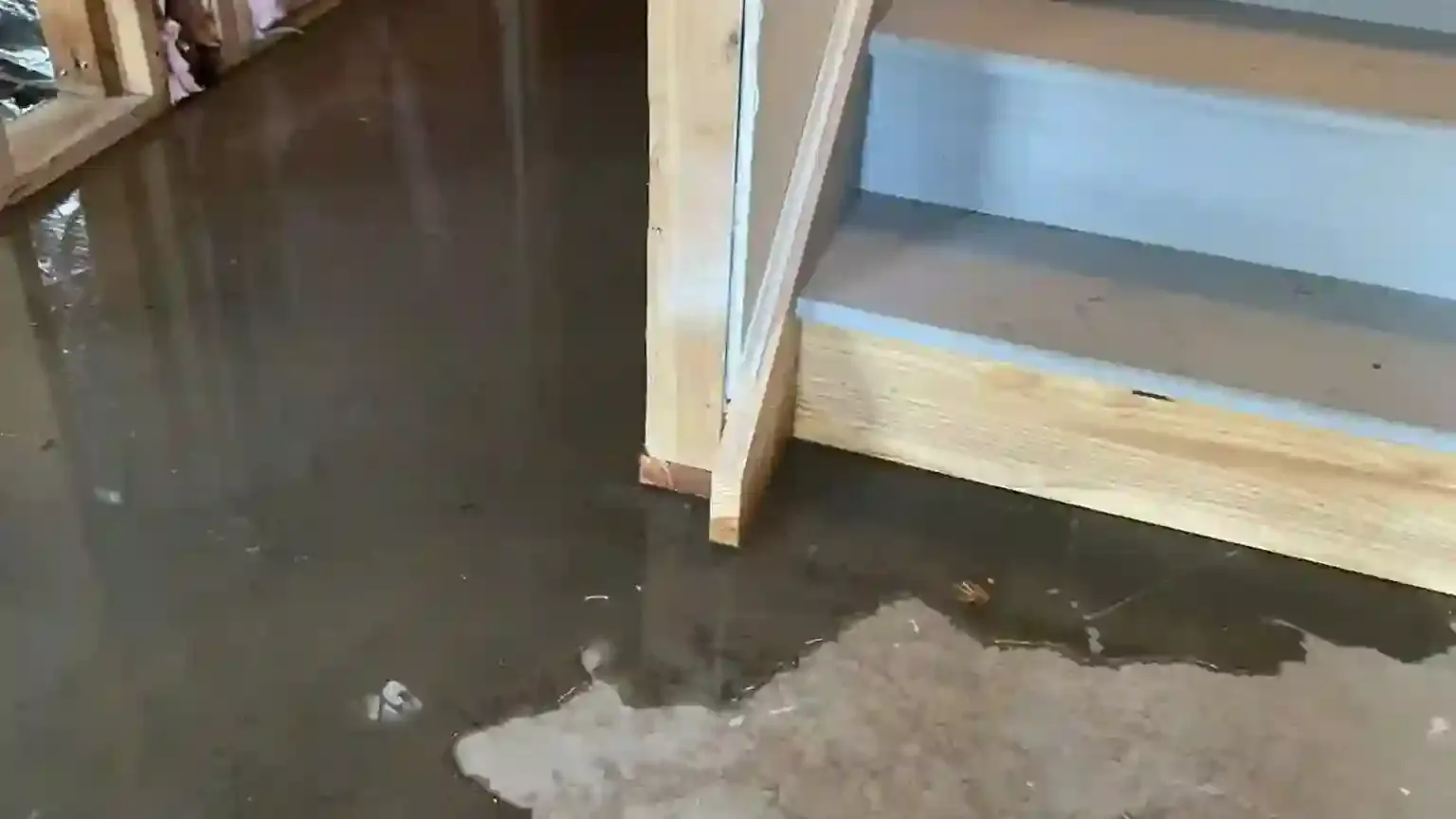
Then we follow the perimeter with a flashlight, low and slow — the base of the wall, the window wells, the sump. Meanwhile we listen, because a pump that hums without moving water announces itself.
Where is the water actually getting in?
Usually one of four places, and none of them are exotic. Here’s the short list we work through on almost every visit.
The cove joint. That’s the seam where your wall meets the floor slab. Those two pieces of concrete were poured on different days, so they never truly bonded — which means it isn’t a crack, it’s a seam. Under pressure, a seam that runs your whole perimeter is simply the easiest door in the room.
The sump. Pumps don’t fail creatively. Power drops mid-storm, or the float sticks, or the pump was undersized from day one, or there’s no check valve so the same water keeps sliding back down. Sometimes the discharge line outside is simply clogged.
A blocked drain line. Nineties subdivisions around here often have original drain tile that has silted up over twenty-five years. It isn’t broken. It’s full.
A window well with no working drain. A well without drainage is a bucket set against your foundation, and buckets fill. Your basement really shouldn’t have to share a wall with a swimming pool.
Good news
Water on the floor is not the same as a moving foundation. Those are two separate conversations, and most homes we walk are only having the first one. We’ll tell you plainly which one you’re in, even when the answer is the cheap one.
How serious is it, really?
Let’s sort it the way we do out loud in the basement, because guessing is the worst part.
Mild. A small puddle at one corner after a heavy night, gone in a day or two. Usually that’s a local entry — a window well, a hose bib line, a downspout dumping right beside the wall.
Moderate. Water tracking along the base of the wall in a line, showing up on a schedule every spring. In other words, the seam is doing what seams do, and it now has help from saturated soil.
Active. Water across the open slab, or a sump running hard for hours. That said, active still doesn’t mean urgent. It means stop guessing and get eyes on it.
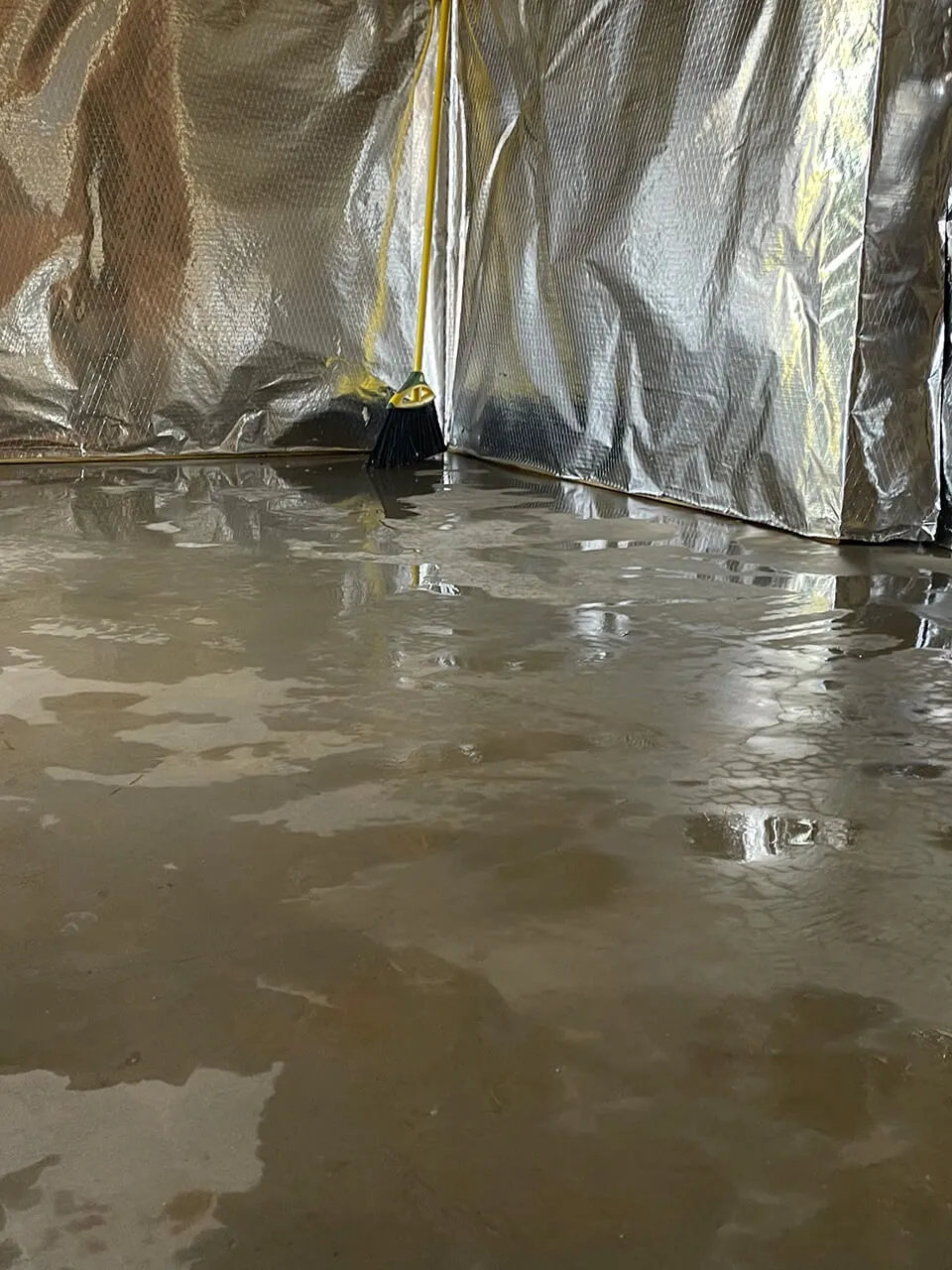
What happens if it’s left alone? Nothing dramatic, and no, the house is not going anywhere. Still, the drying clock matters: mold can start on wet organic material — drywall paper, carpet pad, cardboard boxes — in roughly 24 to 48 hours. That’s why speed of drying beats almost every other step after water shows up. The CDC’s guidance on mold cleanup after flooding says the same thing in more detail.
Where do homeowners get steered wrong?
Here’s the part we wish more people heard early. When water shows up, the first advice most folks get is to seal the wall — paint it, patch it, coat it. It feels right. It’s also the one approach that reliably disappoints.
Because a coating is a barrier, and standing water is a pressure problem. Georgia red clay is the reason. Clay holds water tight against your foundation long after the rain quits, so the soil stays loaded for days. That load has to go somewhere, and it pushes straight through hollow block cores and along the cove joint. A coating on the inside face never gets a vote.
The second thing homeowners get talked into is a bigger pump with no drainage behind it. A pump only moves what reaches it. If nothing collects the water first, you’ve bought a faster bucket.
We quit trying to block water a long time ago. Now we assume it’s coming, and we build it an easier way out than the one it found on its own.
Third: assuming it’s all inside work. Plenty of standing water basement Lawrenceville calls we run off US-29 have half the answer sitting in the yard — grading tilted back toward the house, a downspout ending two feet from the wall, or a low spot that holds water for a day after Gwinnett’s heavy spring rain. On a street near Providence, cleaning up the outside handled a real share of what was happening inside.
What does the real fix look like?
Plainly, so nothing surprises you on the day. Nearly every standing water basement Lawrenceville repair we do comes down to one idea: collect the water below the floor before it ever reaches your slab.
- Find the source. We walk the grade, gutters and window wells outside, then read the floor inside. Sometimes the answer is smaller than you feared, and we say so.
- Open a channel at the perimeter. A narrow strip of slab comes up along the affected walls. Loud and dusty for a day or so, then done.
- Set drainage in clean stone. Perforated pipe below the floor, tied into the cove joint, so water is caught before it arrives instead of mopped up after.
- Rebuild the sump properly. Right size, working float, real check valve, and a discharge line that carries water well away from the foundation.
- Close it up clean. Fresh concrete over the channel, wall liner where it’s called for, and our mess hauled off your driveway.

Wondering what it runs? It depends mostly on how much wall is involved and how the sump and discharge need to be handled, so we walk it before we quote it. Our breakdown of basement flooding cost covers every factor that moves the number, and the systems are explained on our basement waterproofing page.
What about the rooms upstairs?
This is the part almost nobody connects. Water sitting on a slab doesn’t stay a basement story, because a basement is the bottom of one shared air column. Warm air rises, and it takes moisture with it.
So the first floor gets humid in July even with the air running hard. Hardwood near the stair landing cups a little. A main-level closet smells like a basement, which is confusing when it’s nowhere near one. Meanwhile the HVAC works longer, and your bill quietly notices.

There’s a storage cost too, and people feel that one most. The holiday bins, the tools, the bike nobody has outgrown yet — all of it lives on the floor that floods. Once the water is handled, that floor becomes real square footage again.
Picture the next storm. Rain hammers all night, you sleep through it, and the floor is dry in the morning. That’s the actual product — not pipe and stone, but a house that quits asking you for help.
Why does local matter on this one?
Because Lawrenceville is home for us. Our shop is right here and our crews live in these neighborhoods. We’ve been fixing basements in this city for over twenty years, so we’ve probably already worked on a house in your neighborhood, maybe on your street.
That matters because the housing stock isn’t one thing. Older block basements built with tar-only waterproofing behave nothing like the poured walls that came later. On the River Club edge, lots run toward water and groundwater sits higher. Around Collins Hill, we see silted original drain tile more than anything else. We’ve worked homes minutes from the Gwinnett Historic Courthouse and plenty within earshot of a concert on the Lawrenceville Lawn.
You’ll get a written scope, proof of insurance, a real warranty and a clean job site. For neutral reading first, FEMA’s building science guidance on protecting property from flooding is solid. If cracks or settling are part of your picture, our foundation repair page covers that. Neighbors one town over see the same thing, so we wrote up the Snellville standing water basement version too.
Where we work around Lawrenceville
This is our home base, so we’re out on these streets most days of the week. We also cover Snellville, Grayson, Dacula, Suwanee, Duluth, Lilburn and Loganville, plus the wider Gwinnett area. If you’re anywhere along 316, Scenic Highway or Collins Hill Road, odds are we already have a truck close by.
Questions Lawrenceville homeowners ask us
Because saturated clay builds pressure under the slab, not just against the wall. Water takes the easiest opening it can find, and the cove joint where the wall meets the floor is a seam rather than solid concrete. That’s why you can see a wet floor with walls that look perfectly fine.
Yes, when the fix matches the cause. A drainage system under the slab is built to last the life of the house, since it’s stone and pipe with nothing to wear out. The sump pump is the part with a service life, so plan on replacing one around the ten-year mark the way you’d plan for a water heater.
It ranges widely, so we won’t pretend there’s one number. What moves it most: how many feet of wall are involved, whether the space is finished, how the sump and discharge need to be built, and access. We walk it, then put the scope and price in writing before anything starts.
That’s still worth an inspection, though it’s often a smaller repair than people expect. Twice a year usually means the entry point only opens under heavy rain, which points to grading, a window well or a tired drain line. Sometimes the honest answer is exterior work and a better discharge, not a full system.
For the cleanup, they help a lot, and drying fast genuinely matters. For the cause, no — a vacuum removes water that already arrived and changes nothing about why it came. Think of it as the towel, not the repair.
Let’s find out what’s really happening down there
The inspection is free, the estimate is free, and nobody pressures you at the end. We’ll show you where water gets in, explain it in plain English, and put the plan in writing — even if the fix turns out to be simpler than you expected. Lawrenceville is home for us, so we’re usually minutes away.
(678) 914-5112Serving Lawrenceville and all of Metro Atlanta · $500 off projects over $3,500 · Live support 7am–8pm, 7 days a week