

How to Choose the Best Basement Drainage Snellville Homeowners Can Actually Count On
The four drainage routes, what each one solves, and the questions that tell a real diagnosis from a sales script.
By the time you start shopping for the best basement drainage Snellville has to offer, the water has usually been showing up for years. Not in a dramatic way. A cool corner one spring, a smell at the bottom of the stairs the next, then a section of baseboard that never quite dries. So the clock started long before the puddle did.
That’s not a scolding — it’s good news. Slow problems leave clear evidence, and evidence is what a real diagnosis is built on. So let’s walk through what your house is doing, and how to tell which crew truly understands it.
What makes Snellville homes different?
Start with the dirt. Gwinnett red clay doesn’t drain, it holds. After a long rain, that clay stays saturated against your foundation wall for days, and the water leaning on it has to go somewhere. That sideways push is called hydrostatic pressure, and it’s the quiet engine behind most wet basements around here.
Then add the terrain. Land in this part of town rolls toward the Yellow River and its tributaries, so plenty of lots sit on a grade whether the owner thinks about it or not. Split-levels and ranches with block basements dominate the older streets, and a partly buried lower level is exactly where clay pressure shows up first.

Now the timing, and this is the part that explains your whole street. Most of Snellville was built between the mid-seventies and the mid-nineties, which means a lot of these basements got finished during that same stretch. The drywall has been quietly wicking water ever since. More drywall won’t fix it. Stopping the water first will.
One more local pattern worth naming: original block walls with horizontal cracks from clay pressure. Those show up on plenty of homes near Havenwood and Herrington, and they look scarier than they usually are. They’re a sign the wall has been taking a steady load, and they’re very fixable once drainage relieves what’s pushing on it.
So what are your actual drainage options?
There are four, and they solve four different problems. Any company that leads with one before looking at your house is guessing in a confident voice.
An interior perimeter drain is a channel cut into the slab edge, running to a sump. It targets the cove joint — the seam where your wall meets the floor — which is where water shows up under pressure more than anywhere else. Water gets a path it likes better than your floor, and it leaves.
An exterior footing drain handles water before it ever touches the wall, but it means digging along the foundation. Decks, patios, mature shrubs and a driveway all change that math fast.
Regrading fixes soil that slopes toward the house. Downspout extensions move roof water past the backfill zone. Both sound too simple, yet on clay they punch above their weight — dropping a roof’s worth of rain beside the foundation is like watering your problem on a schedule.
Good news
The cheapest correct fix is sometimes entirely outside the house. A good crew will tell you that even though the inside job pays better.
Sumps deserve their own minute, because they fail in predictable ways. Power goes out mid-storm. A float sticks. The pump was undersized for the volume. There’s no check valve, so water drains back down. Or the discharge line clogged. Each one has a fix, and a battery backup is a completely fair thing to ask about.

What changed our thinking after twenty years?
Honestly? We used to think of drainage as the fallback — the thing you do when sealing the wall wasn’t enough. Two decades of Gwinnett basements flipped that completely. Drainage isn’t the backup plan. It’s the permanent half of the problem, and everything else is trim.
Here’s what convinced us. Sealants and patches try to hold water back, while drainage gives water somewhere to go. One fights the ground forever, and only the other is still working in year fifteen.
You can’t out-seal a saturated clay lot. You can absolutely out-drain one.
The second change: we stopped quoting before finding the entry point. It slows the visit down, and it costs us some jobs. Still, it’s the only way to know whether you need four walls treated or one downspout moved.
Speed matters in one place, though. After water gets in, mold can begin growing on wet building materials within 24 to 48 hours, which is why drying quickly beats almost every other move. The CDC’s guidance on mold cleanup after flooding spells out that window clearly.
How do you read a drainage estimate?
Line by line. A real scope names what’s installed, how many linear feet, where the channel runs, where the sump sits, and where the water finally ends up. A weak one says “drainage system” and a total. What separates the best basement drainage Snellville crews offer from the rest is almost always specificity, not price.
Questions worth asking before you hire anyone
- Where is the water getting in, and how do you know? A confident answer includes something they saw outside.
- Why this route instead of the cheaper one? They should be able to explain the trade-off in plain words.
- How many linear feet, and why that section? Vague coverage means a vague price.
- Does the drain sit below the slab? Below floor level is a system. Above it is a gutter.
- Where does the discharge go? Well away from the house, not back into the same soil.
- What’s the sump’s backup plan? Power loss during a storm is the classic failure.
- Is the warranty transferable, and what voids it? Ask for it on paper.
Red flags get easy after that. Be careful with a firm price quoted over the phone, a discount that expires tonight, or an inspection that never left the basement. Also watch for a scope with no measurements, since a total without numbers behind it is a guess wearing a nice shirt.
On cost, we’ll be straight. Grading and downspout work sits at the low end, while a full perimeter drain with a new sump and battery backup in a finished basement sits at the high end. Linear feet, access, slab thickness and how much finished space needs protecting are what move the number. You get one written figure after we walk it — never a “starting at.”
The house on the Ozora side
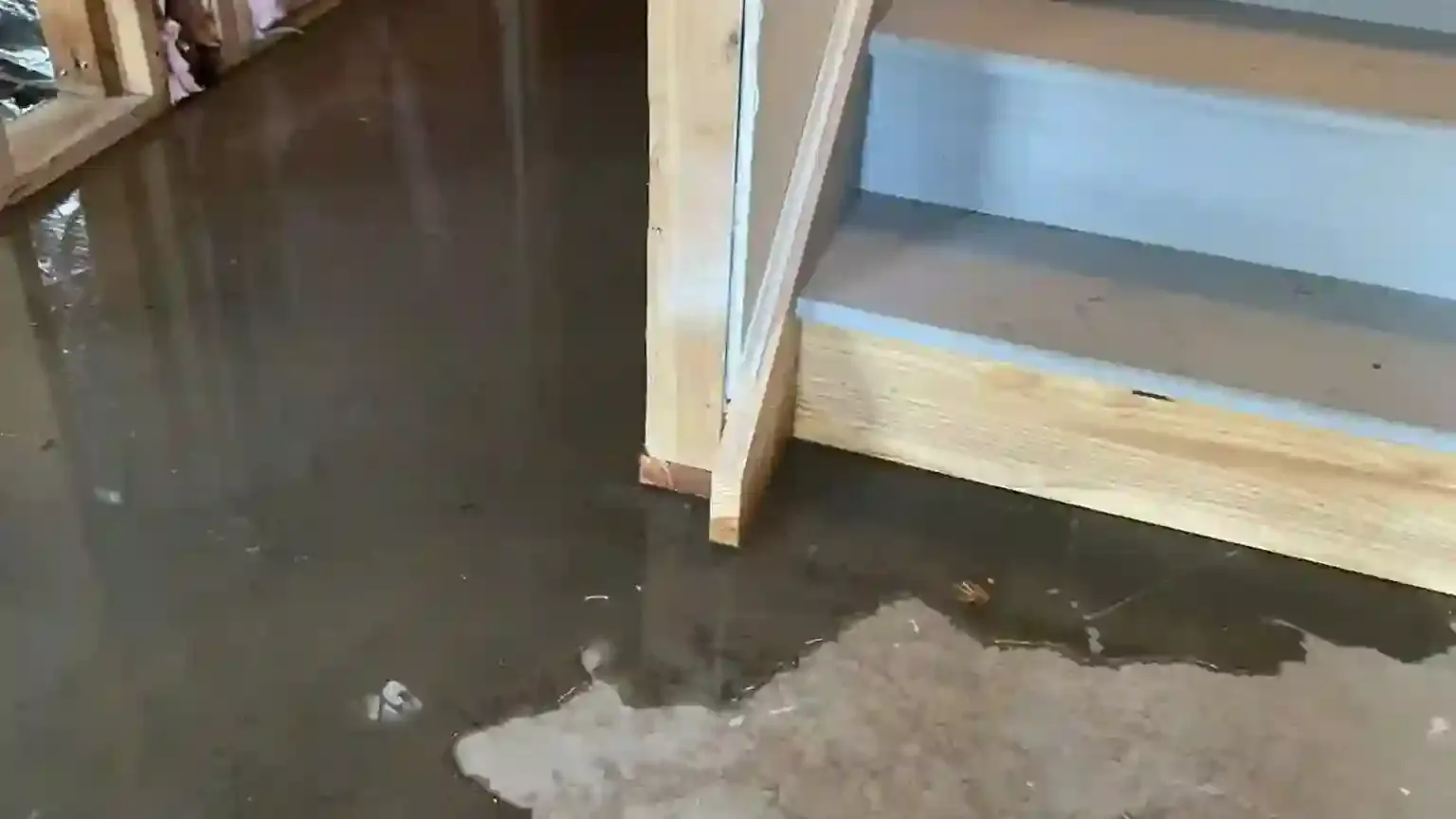
Want the visit that stuck with us? A homeowner over near Ozora called about a mid-eighties split-level with a finished lower level. Water along one wall after every long rain, two horizontal cracks in the block, and a prior estimate for a full four-wall system with a new sump.
Then we went outside. The back corner had settled over the years until the grade tipped gently toward the house, and one downspout emptied about a foot from the wall. Every storm was pouring roof water straight into the backfill beside the exact spot that leaked inside. Meanwhile, the original pump was fine.
So the fix came in smaller. Rebuild the grade, run two downspouts well past the foundation, and add an interior drain along that one wall to relieve the cove joint. The cracks got monitored rather than rebuilt, because once pressure drops, most of them settle down. That homeowner spent what the problem actually cost.
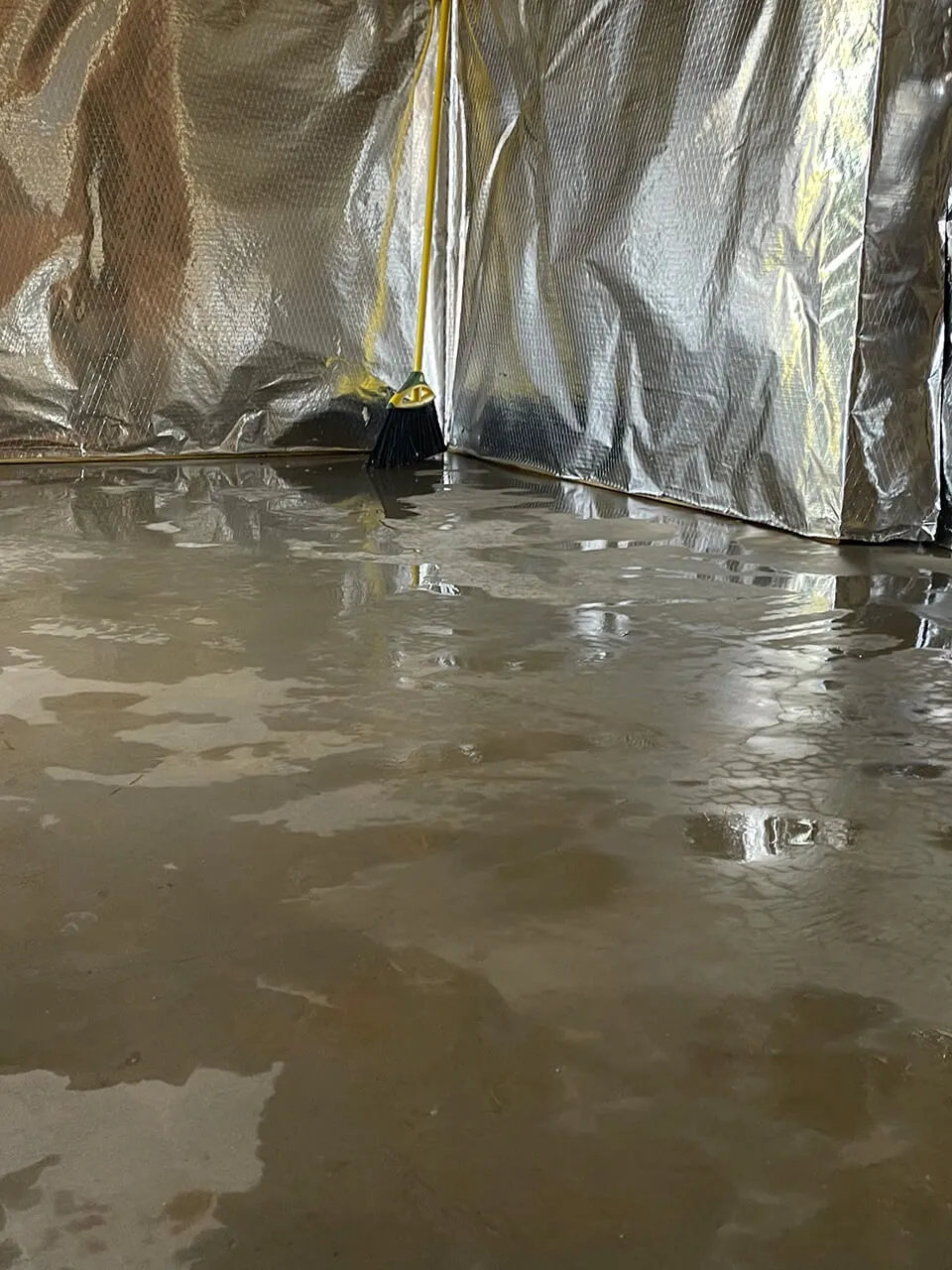
Picture your version of that. A hard spring storm rolls through, the floor stays dry, and the smell at the bottom of the stairs is simply gone. Better yet, you understand why. You know which route your water takes and what’s stopping it, which is a genuinely good feeling to have about your own house.
Why we might be a fit
We’re in Lawrenceville, about fifteen minutes north of Towne Center at Snellville, and we’ve been doing this over twenty years. Same crews, same trucks, and a service call goes to us rather than a call center. If you’ve driven Dogwood Road lately, you’ve probably passed a house we’ve been in.
Familiar housing stock is the real advantage. When a crew has opened up dozens of eighties split-levels on this same clay, the diagnosis comes faster and lands closer. That’s most of what the best basement drainage Snellville homeowners can hire actually comes down to.

Timing helps too. Spring storms and late-summer rain drive most of our calls, so winter is usually the calmest window to schedule. You can keep an eye on conditions yourself through the National Weather Service flood safety page.
Still figuring out what’s happening down there? Our guide to flooded basement repair covers what to do the day it happens, and the full range of basement waterproofing work is laid out step by step. If those block cracks are what worry you most, start with foundation repair instead. Comparing notes with family up the road? We cover the same ground for Buford best basement drainage.
Where we work around Snellville
We’re on these streets constantly, from the older sections around Herrington to the sloped lots running back toward the river. Beyond Snellville, we work in Lawrenceville, Grayson, Loganville, Lilburn, Stone Mountain, Tucker, Dacula, Norcross and Duluth, plus the wider Gwinnett area. Odds are we already have a truck nearby.
Questions Snellville homeowners ask us
Because clay soil has to fill up before it pushes. A short shower soaks in, but a long rain saturates the ground and water starts leaning on your wall. That pressure finds the weakest seam, which is almost always the joint where the wall meets the floor.
Usually not for groundwater or seepage, since standard policies treat that as a maintenance issue. A sudden failure like a burst pipe is often a different story, and some carriers sell a sump pump or water backup rider. Call your agent and ask what your specific policy says before you assume either way.
Quickly. Mold can start growing on wet building materials within 24 to 48 hours, so drying speed matters more than almost anything else after water gets in. Pull up soaked carpet, move stored items, and get air moving with fans and a dehumidifier while you sort out the permanent fix.
That’s the water table rising under your slab and pushing upward. It shows up at the cove joint or through small slab cracks, because those are the easiest paths. An interior perimeter drain tied to a sump relieves that pressure directly, which is exactly what it was designed to do.
Yes, when the fix matches the entry point instead of the symptom. Drainage gives water a managed path rather than trying to hold it back, and that keeps working for decades. It does need light upkeep, so test the sump twice a year and keep the discharge line clear.
Let’s find out what’s really going on in your Snellville basement
The inspection is free, the estimate is free, and nobody pressures you at the end. We’ll show you where the water is entering, which drainage route fits your lot, and why — including the times the answer is smaller than you expected.
(678) 914-5112Serving Snellville and all of Metro Atlanta · $500 off projects over $3,500 · Live support 7am–8pm, 7 days a week