

Choosing the Best Basement Drainage Buford Homes Actually Need
Interior drain, exterior drain, or a fix out in the yard — how to tell which one your house is asking for.
It’s 2 a.m., the rain has been going for six hours, and you’re lying there doing math about the basement stairs. If that’s how you found this page, the search for the best basement drainage Buford homeowners can buy probably started somewhere around that exact moment. Good news, though — what you’re picturing is almost always more fixable than it feels at 2 a.m.
Here’s the thing worth knowing before you call anybody: drainage is the permanent half of the problem. Sealing, patching and mopping deal with today. Drainage decides whether there’s a next time. So let’s walk through the choices like friends at a kitchen table, not like a sales visit.
What are you actually choosing between?
Three routes, and each one solves a different entry problem. An interior perimeter drain sits under the slab along the inside of your walls, catches water at the edge, and carries it to a sump pit. Meanwhile an exterior footing drain does the same job from outside, buried down at the footing, before water ever reaches the wall. The third route isn’t in the house at all — regrading the soil and extending downspouts so the water never gathers there in the first place.
Which one is “best” depends entirely on where water is getting in. That’s why a company that leads with a system before it’s found the source is selling, not diagnosing. Real talk: the cheapest correct fix is sometimes twenty feet outside your foundation, and a good crew will say so even though it’s a smaller ticket.
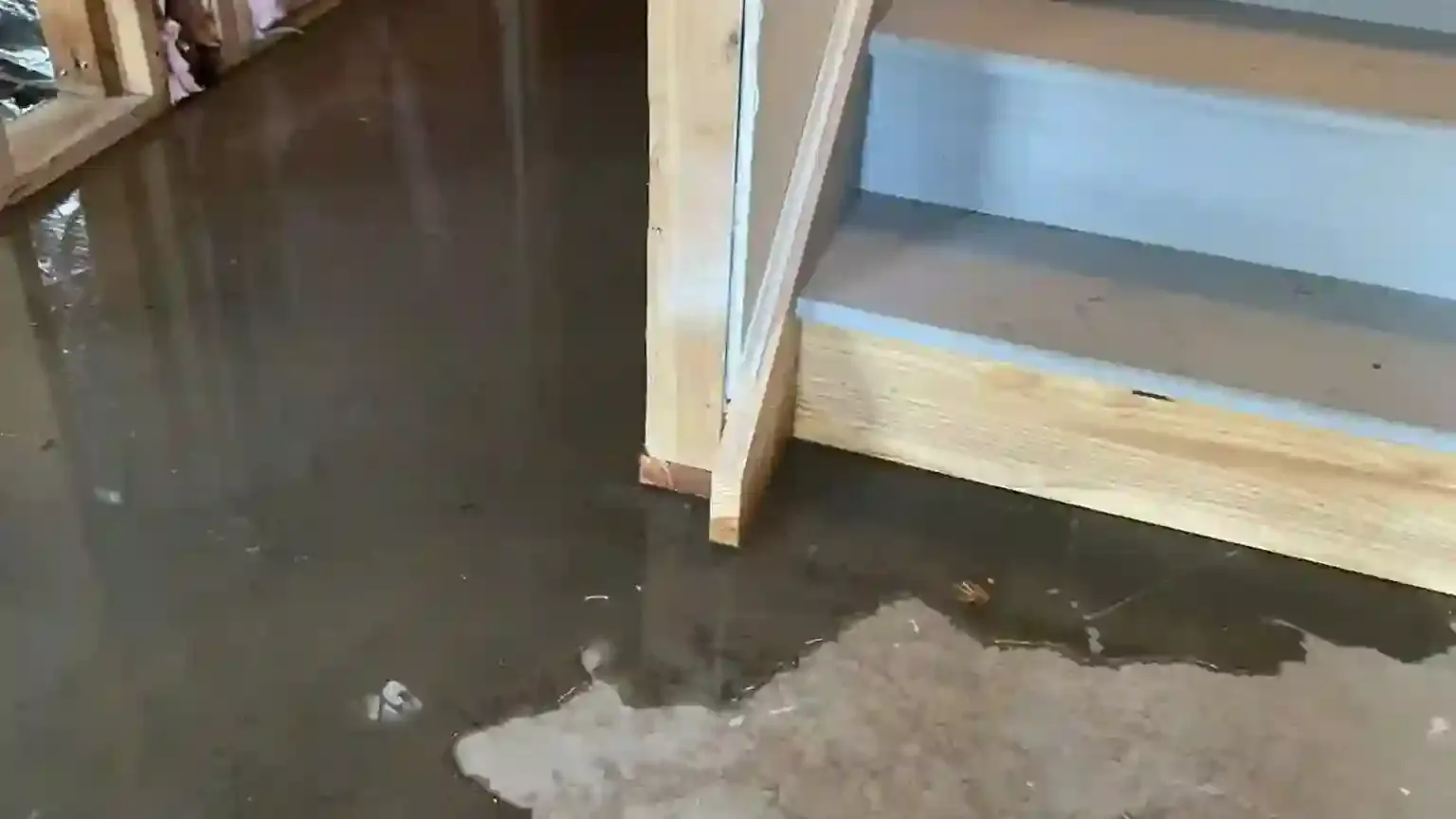
One detail explains most of what you’re seeing. The cove joint — the seam where the wall meets the floor — is the most common entry point when groundwater pushes upward. Water under pressure doesn’t need a crack. It just needs a seam, and every basement has one running all the way around.
That’s exactly what an interior perimeter drain relieves. Instead of fighting the pressure, it gives the water somewhere easier to go, so it never builds up under your slab. Think of it as offering the water a polite exit before it invites itself in through the floor.
What makes Buford homes their own thing?
Start with the dirt. Georgia red clay doesn’t drain — it holds. After a long rain it stays saturated and leans against your foundation wall for days, which is why grading and downspouts matter far more here than most homeowners expect. Clay is also why the storm that soaks you Tuesday can show up in your basement Thursday.
Then add elevation. Ground in this city moves a lot, especially near the lake and below the dam, so plenty of lots channel uphill runoff straight at the back of the house. Living near Lake Lanier is wonderful right up until the water table decides your basement is part of the lake.
Good news
High groundwater isn’t a defect in your house. It’s a condition to manage, and managing it is exactly what a properly sized drain and sump do — quietly, for decades.
Housing age matters too. Most subdivisions here went up between 1995 and 2015, so homes built in that stretch are hitting their first drainage failure right about now. Out in Lanier Springs and Chateau Forest, basements are big, finished and worth protecting. Over toward the Village at Deaton Creek edge, we see the same story with different floor plans.
Downtown is a separate conversation entirely. Around the Downtown Buford Historic District, the older homes sit on stone and block foundations that were built before waterproofing was a thing anyone bought. Those need a gentler, more custom plan — and honestly they’re some of our favorite houses to work on.
Want a shortcut? Think like the water.
Flip the whole thing around for a second. Water isn’t targeting your house. It’s just falling on a roof, landing on clay, and looking for the easiest downhill path it can find. Your foundation happens to be sitting in that path.
So follow the trip. Rain hits the roof, runs to the gutters, and drops out a downspout. If that downspout ends two feet from the wall, you’ve just poured a few hundred gallons into the exact soil pressing against your basement. After that, gravity takes over and the clay holds it there like a sponge nobody wrung out.
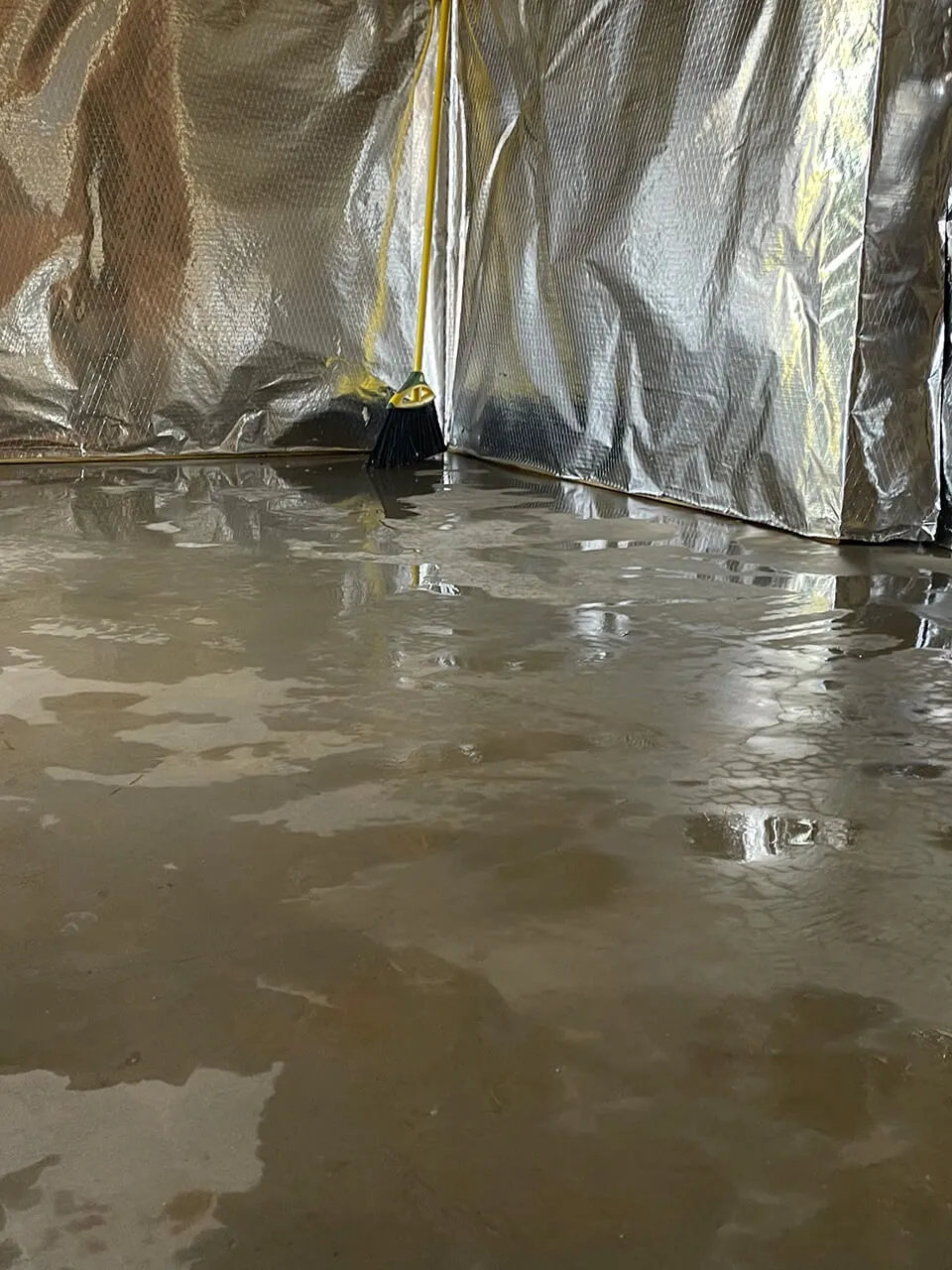
Volume is why it feels so overwhelming. One inch of water across a 1,000-square-foot basement is more than 600 gallons. No wonder a shop vac feels like emptying a bathtub with a coffee mug — you’re not doing it wrong, you’re just outnumbered.
Once you see the path, the fix stops feeling mysterious. Cut the water off high on the trip and you may never need to catch it down low. Cut it off at the wall and you need a drain. Either way, somebody has to walk that whole path before quoting, and that walk starts outside with a look at the yard.
How do you judge an estimate?
Look for three things: a stated entry point, a written scope, and a reason. Anyone offering the best basement drainage Buford has available should be able to tell you where water comes in, how they know, and why they picked this route over the cheaper one. That third answer is the tell.
Questions worth asking before you sign
- Where is the water entering, and what did you see outside? If the inspection never left the basement, the diagnosis is incomplete.
- How many linear feet, and why that stretch? Vague coverage makes a vague price.
- Does the drain sit below the slab? Below floor level is a system. At floor level is a gutter.
- Where does the discharge end up? It should exit well away from the house, not loop back to the foundation.
- Why not just fix the grading and downspouts? A straight answer here tells you a lot.
- Is the warranty transferable, and what voids it? Ask for it on paper, not in conversation.
- Who’s on the crew? Your own people, or whoever’s free that week?
Red flags are easier to spot once you’ve asked those. Be careful with a firm price quoted over the phone, a discount that disappears tonight, or a scope with no measurements anywhere on it. Honest pricing never needs a countdown clock.
On cost, we’ll be straight with you. Small exterior corrections land at the low end, while a full perimeter drain with a new sump and battery backup in a big finished basement sits at the high end. Linear feet, slab depth, access and how much finished space needs protecting are what move that number.
The best compliment we get isn’t “great work.” It’s “you told us the smaller fix would hold — and it did.”
What about the sump pump?
Pumps fail in predictable ways, which is genuinely good news, because predictable means preventable. Power goes out during the very storm you need it. A float sticks. The unit is undersized for the water it’s asked to move. There’s no check valve, so water drains right back down. Or the discharge line clogs somewhere out in the yard.
So ask about a battery backup. It’s a fair question and a reasonable line item, especially on the lake side of town where groundwater stays high through a wet spring. Ask about the check valve and the discharge route too — those two small parts quietly decide whether the pump keeps up.
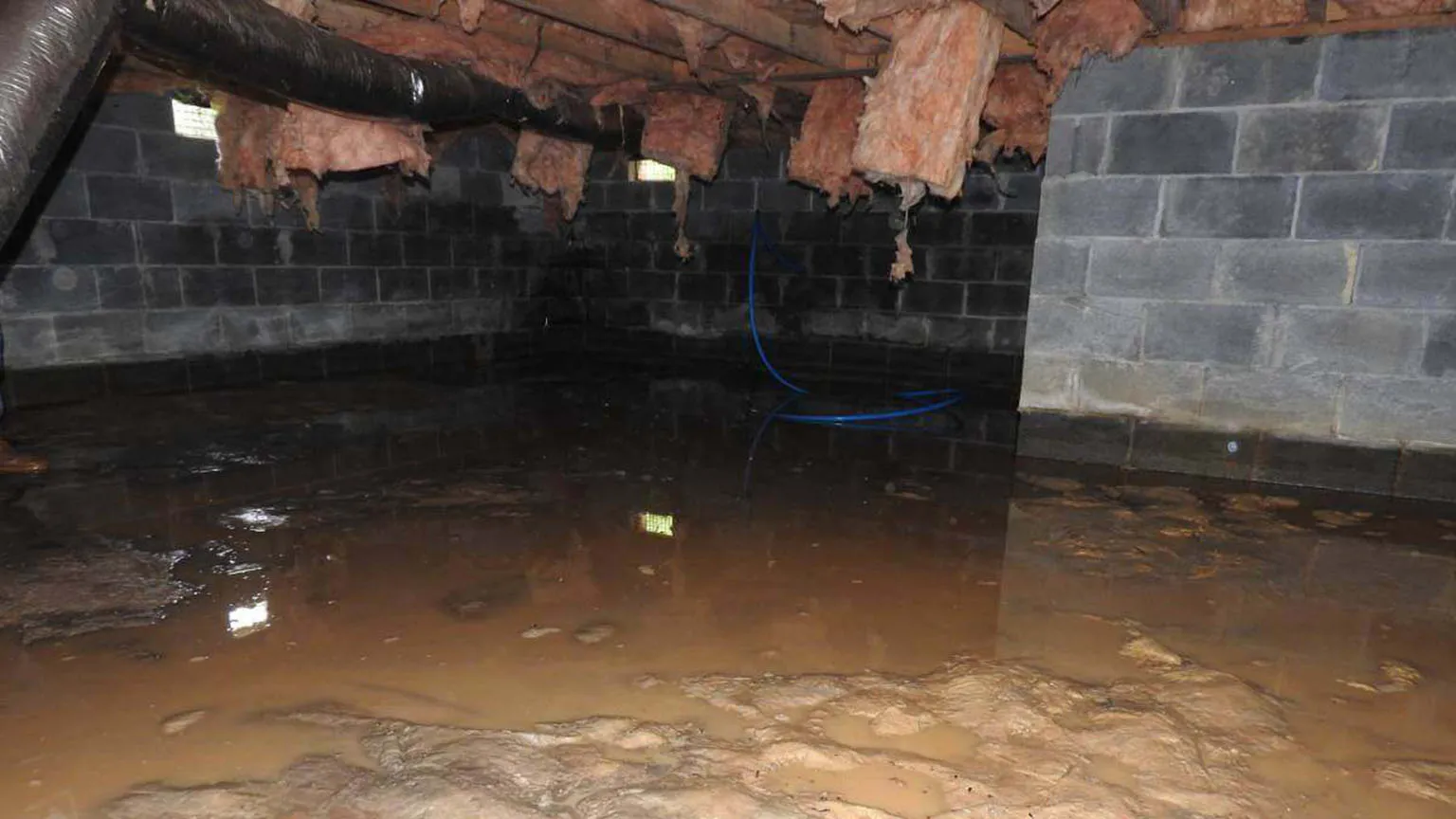
While you’re comparing, it’s worth reading a neutral source or two. The National Weather Service flood safety pages explain how fast water moves during heavy rain, and FEMA’s building science guidance covers protecting a home from flooding. Ten minutes there and you’ll know whether the person in your basement is explaining or performing.
What does life look like after?
Week one is the loud part, and then it’s over. Crews cut the channel, set the pipe and stone, tie in the sump, and finish the concrete. Most jobs run one to three days. By the weekend the noise is gone and there’s a clean white channel where the mess used to be.

Year one is the year you stop thinking about it. Spring storms roll through, the pump cycles a few times, and the floor stays dry. That’s when folks tell us the real change wasn’t the basement — it was sleeping through the rain. The 2 a.m. math just quietly stops.
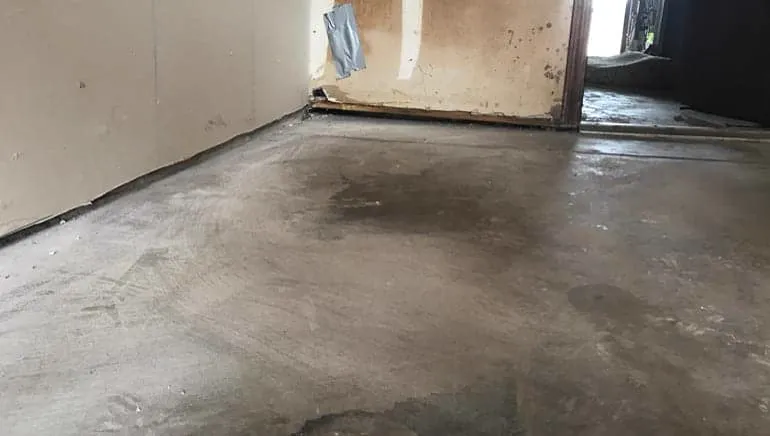
Year ten is about maintenance, and it’s small. Test the pump now and then, keep the discharge clear, glance at the gutters each fall. The drain itself is buried stone and pipe doing exactly one job, and it keeps doing it. Meanwhile that finished space stays a room you use instead of a room you watch.
Why we might be a good fit here
We’re about twenty minutes south in Lawrenceville, and we’ve been doing this for over twenty years. Buford isn’t a place we visit — it’s a straight shot up I-985, and we’ve worked streets from the ball fields near Bogan Park to the big finished basements over in the Hamilton Mill area. Knowing the housing stock means faster, more honest diagnoses, and it’s a big part of why folks looking for the best basement drainage Buford offers end up calling a local crew instead of a call center.
Still sorting out what’s happening down there? Our guide to flooded basement repair covers the cleanup side, while basement waterproofing lays out every system we install. If you’re seeing cracks or settling instead of water, foundation repair is the better starting point. Comparing notes with family down the road? We cover the same ground for Grayson best basement drainage.
Where we work around Buford
We’re up this way constantly, from downtown out to the lake side of town. Beyond Buford, we work in Suwanee, Sugar Hill, Braselton, Flowery Branch, Dacula, Gainesville, Duluth and Lawrenceville, plus the wider Gwinnett and Hall Counties area. Odds are we already have a truck near you this week.
Questions Buford homeowners ask us
Usually not, if the water came from groundwater or surface runoff. Standard policies lean toward sudden events, like a burst pipe, rather than water that seeps in over time. Call your agent and ask specifically about seepage and sump failure, because some carriers sell a small rider for exactly that.
Sooner is better, and the first day or two matters most. Standing water and damp materials let mold get started, so pull up soaked carpet and pad, get air moving, and run a dehumidifier. If the space is finished, it’s worth having someone check behind the baseboards.
That’s hydrostatic pressure. When saturated clay holds water beside and beneath the foundation, it pushes upward and finds the cove joint where the wall meets the floor. An interior perimeter drain relieves that pressure, which is why it’s the usual answer for floor-level water.
Yes, in the sense that a properly designed drainage system keeps working for the life of the house. It doesn’t stop rain, but it gives water a controlled path out instead of into your floor. Add a battery backup for the pump and you’ve covered the one failure that shows up during storms.
It depends on the route the water takes. Grading and downspout corrections sit at the low end, while a full perimeter drain with a new sump and battery backup in a large finished basement sits at the high end. Linear feet, slab depth and access are the main things that move the number, and you get one written figure after we walk the house.
Let’s find out where the water is really coming into your Buford basement
The inspection is free, the estimate is free, and nobody pressures you at the end. We’ll show you the entry point, explain why we’d pick one drainage route over another, and tell you plainly when the smaller fix is the right one.
(678) 914-5112Serving Buford and all of Metro Atlanta · $500 off projects over $3,500 · Live support 7am–8pm, 7 days a week