

Basement Flooding Cost in Cumming: What You’re Actually Paying For
Two separate jobs, one invoice — how cleanup and the permanent fix get priced.
There’s almost always a bead of caulk down there already. Somebody spent a Saturday running it along the seam where the wall meets the floor, and it held for eight months. Then one heavy spring night the water came back through the same line. So before we talk about basement flooding cost Cumming homeowners budget for, let’s talk about why that afternoon never stood a chance.
Good news right up front: that wasn’t a skill problem. Caulk seals a gap, and what you’ve got is pressure, not a gap.
Why does the seam leak first?
That seam has a name — the cove joint. It’s where your wall sits down onto the floor slab, and the two were poured at different times, so they’re never truly one piece. When wet clay pushes water under your house, that joint is the easiest door in the building.
The push has a name too: hydrostatic pressure. Red clay soaks up rain, swells, and squeezes. Water travels sideways under the slab, then rises where it meets the least resistance. In other words, it isn’t leaking down at you — it’s coming up at you.
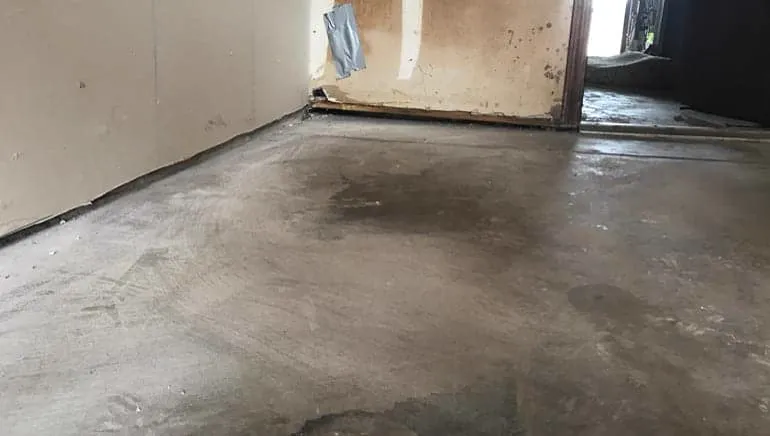
Here’s the thing about our county. A lot of Cumming homeowners are surprised to find water in a house that still feels new, and we get it. Twenty years, though, is about when builder-grade waterproofing starts to give up. Homes in Vickery Village and James Creek are hitting that mark now, and so are plenty of streets around Castleberry. That timing shapes the basement flooding cost Cumming families end up planning for.
Worth knowing
Lots closer to Lake Lanier can sit over a genuinely high water table. That’s not a defect in your house — it’s the ground underneath it, and it’s very manageable once somebody measures instead of guessing.
Why does one flood come with two prices?
Let’s back up, because this part trips up almost everybody. A flooded basement is two separate jobs, and mixing them up is how people end up feeling overcharged.
Job one is getting the water out and drying the space. Extraction, hauling out soaked material, drying equipment running for days. It restores what you had.
Job two is making sure it doesn’t happen again. Interior drainage, a sump that keeps up, a proper discharge line, sometimes grading outside. It changes the outcome next time.
Pay for job one alone and you’ve bought a rerun. Pay for both and the next storm goes back to being weather instead of an event.

What happens, step by step?
Nobody enjoys surprises when there’s a pump in the driveway. Here’s our order of work.
- Safety and power. Electricity near standing water gets shut down first. Always.
- Extraction. Pumps and vacuums pull the standing water. This part moves fast.
- Removing wet organic material. Carpet pad, cardboard, soaked drywall and particleboard come out. They hold water long after the floor looks dry.
- Drying and monitoring. Air movers and dehumidifiers run while somebody reads a moisture meter daily.
- The free inspection. We walk the grade outside, check downspouts, then read the inside for the real entry point.
- The written scope. Linear feet, sump location, discharge point, price — on paper, before anything loud starts.
- Installing the system. A narrow channel opens along the affected perimeter, perforated pipe goes into clean washed stone below floor level, and wall liner routes seepage into it.
- Sump, discharge, close-up. Water routes to a basin, the pump sends it well away, fresh concrete goes back, and we test it with you standing there.
Speed matters in step three, and not for sales reasons. Mold can begin on wet organic material in roughly 24 to 48 hours, so a fast start keeps the job small. The National Weather Service flood safety guide covers the same timing.
What would we want to know if this were our own house?
Fair question, and we ask it plenty, since several of our crew live up here. Three things top the list.
First, where is it coming in? Not “the basement” — the exact spot. If nobody can point at it, nobody can price the fix honestly.
Second, how old is the sump, and does it have a real backup? Sump pumps fail in predictable ways. Power goes out mid-storm. A float sticks against the basin wall. The pump was undersized from day one. There’s no check valve, so water drains back down and the pump cycles itself to death. Or the discharge line clogs and the pump runs perfectly into nothing.
Third, what’s happening outside? On newer builds, backfill soil often settles and starts sloping toward the house. Correcting grade and moving two downspouts sometimes handles most of it, and that’s a much smaller invoice.
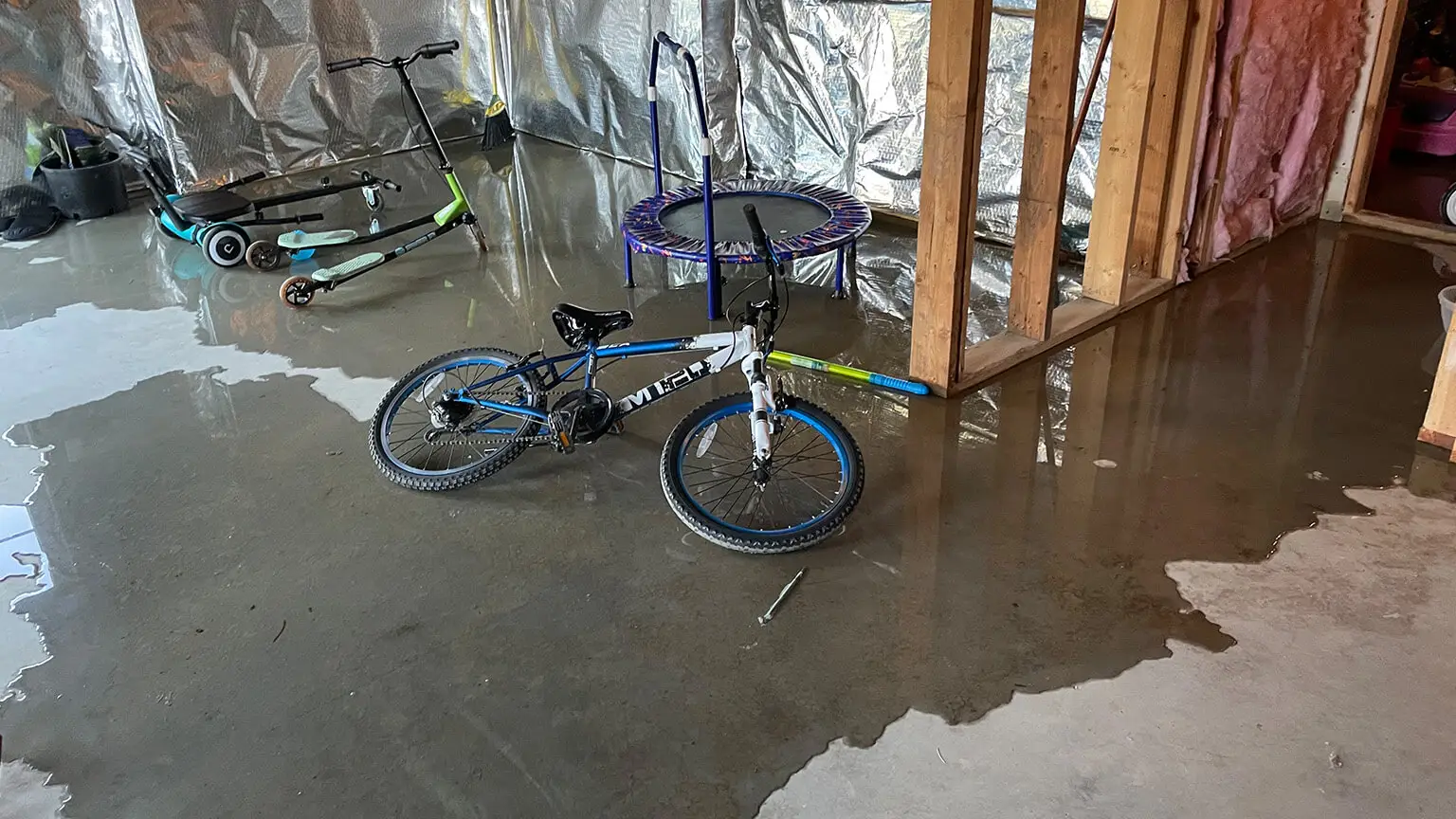
What moves the number up or down?
Straight answer: nobody can price this over the phone. Still, six things set the basement flooding cost Cumming homeowners get quoted, and we add them up while we walk your basement.
The six things that set the price
- How much water. A damp strip along one wall and two inches across the slab are different days of work.
- How long it sat. Caught in hours, it’s a drying job. Caught in a week, materials come out.
- How much wet organic material goes. Carpet, pad, drywall and stored cardboard drive labor and haul-off.
- Whether drainage is part of the fix. Interior perimeter drainage is the biggest line item when it’s needed.
- Sump and discharge. New basin, new pump, battery backup, a longer discharge run — each adds.
- Finished or unfinished. Built-ins and a basement bar mean careful work before the real work starts.
Drying jobs with a downspout correction land at the low end. A full perimeter system with a new sump and backup power sits at the top, and most homes fall between. Either way you get one written number with the scope spelled out. Our rundown of basement drying options covers the equipment side, and Decatur basement flooding cost runs the same math south of town.
How long does it take, and what should you do first?
Extraction usually happens the same day. Drying runs three to five days with equipment on site. Drainage installs in one to three days after that, and fresh concrete wants a few more days before you load it up.
Your prep list is short. Clear about four feet along the affected walls, lift fragile things off low shelves, and make sure we can reach an exterior door. We’ll move the heavy stuff, because nobody should wreck their back to save us a trip.
One timing note: March through May keeps us busiest, and the calendar fills fast once storms roll up GA-400.
What can you genuinely do yourself?
More than contractors usually admit. Extend downspouts six to ten feet out, clean gutters twice a year, regrade soil so it falls away from the house, clear window wells, and pour a bucket of water into the sump basin to confirm the pump kicks on.
What DIY can’t reach is anything below the slab. You can’t set drain pipe without opening concrete, and no product in a bucket outmuscles saturated clay. It isn’t about skill — the water simply isn’t where the product goes. FEMA’s building science guidance draws the same line.
Will insurance cover it?
Here’s the honest version. Standard homeowners policies commonly exclude surface flooding and groundwater seepage, and sump pump coverage is usually a separate endorsement you add on purpose.
So call your agent and ask two questions: is sump or water backup covered, and is groundwater excluded? Read your own policy, since yours is the one that pays. Either way, photograph everything first.
The diagnosis nobody expected
Want the case that changed how we explain this? A homeowner near Cumming City Center was sure a wall crack was the culprit, and two contractors had already quoted crack injection.
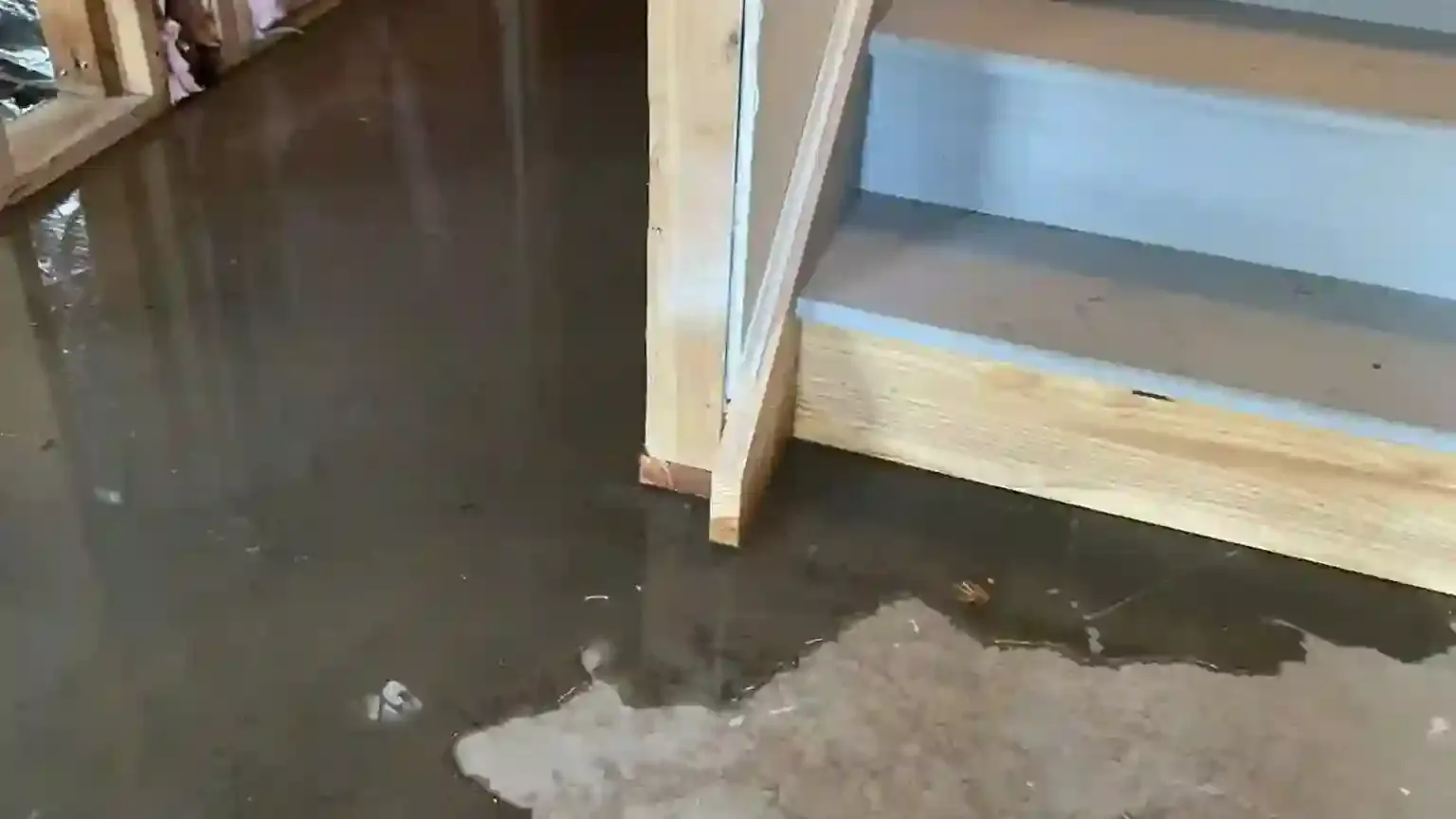
The crack was dry, though. Water entered at the cove joint fifteen feet away, ran along the slab, and pooled by the crack because that corner sat lowest. The real source was a discharge line dumping six feet from the foundation — so the sump kept recycling the same water into the ground beside the house, like a very dedicated little fountain.
The visible thing and the causing thing are rarely the same thing. That’s the whole reason we walk the outside before we look at the wall.
The fix ended up smaller than either quote: an extended discharge, a corrected grade, and drainage along one wall. That happens more than you’d think, which is why a real inspection beats a phone estimate. When a crack truly is structural, foundation repair is a different conversation, and we’ll say so plainly.
How do you know it was done right?
Ask for four things and you’ll sort careful work from fast work quickly. A written scope naming linear feet and the discharge location. A warranty you can sit down and read. Photos of the stone and pipe before the concrete goes back. And a live water test while you watch.
After that, proof shows up on its own. The floor stays dry through a hard spring night, the dehumidifier you were emptying daily sits quiet, and the boxes go back on the floor. Better yet, you take the kids to Central Park on a gray Saturday without checking the radar first.
That calm is the real deliverable. We’ve spent twenty-plus years on Metro Atlanta basements, and the same local crews come back if a system needs attention in year seven. Our full range of basement waterproofing systems sits on the service page.
Where we work around Cumming
Our shop sits about thirty minutes south in Lawrenceville, so we’re up GA-400 constantly. Along with Cumming, we cover Alpharetta, Milton, Suwanee, Buford, Gainesville, Dawsonville, Johns Creek, Duluth and the wider Forsyth County area. Anywhere in South Forsyth, odds are we have a truck nearby.
Questions we get from Cumming homeowners
Because wet clay pushes water under the slab, and the cove joint where the wall meets the floor is the easiest opening in the house. The wall can look perfectly fine and still sit above soaking ground. That’s why sealing the surface rarely changes anything.
In most homes, yes. Interior drainage, a properly sized sump, and a discharge line that carries water well away handles the great majority of cases. The system doesn’t block water — it collects it below the floor and sends it out, which is why it keeps working.
It depends on how much water there was, how long it sat, how much wet material comes out, and whether drainage and a sump are part of the permanent fix. Drying with a downspout correction sits at the low end, a full perimeter system with backup power at the top. We give one written number after walking the house.
Once or twice a year still means the ground around your foundation holds water during big storms. Each event brings drying costs and takes the room out of service for a week. Most homeowners find the permanent fix pencils out faster than two or three cleanups.
For a small puddle caught right away, sometimes yes. For real standing water, no — a household fan can’t pull moisture out of pad, drywall and framing, and mold can start on wet organic material within roughly 24 to 48 hours. Commercial dehumidifiers and a moisture meter finish the job.
Let’s find out what your basement actually needs
The inspection is free, the estimate is free, and nobody pressures you at the end. We’ll show you where water is getting in, what it takes to stop it, and what that costs here in Cumming — often simpler than you expected.
(678) 914-5112Serving Cumming and all of Metro Atlanta · $500 off projects over $3,500 · Live support 7am–8pm, 7 days a week