

Basement Drying Options Buford Homeowners Can Choose Between — Pros or Fans?
Professional structural drying or a shop vac and a rental dehumidifier? Here’s how each one works, and which one we’d pick for your house.
There’s a room in your house you stopped walking into. Maybe it was the playroom, or the spot where the treadmill lives, or the good couch nobody sits on anymore. It got wet once, it smells a little funny now, and the door stays shut. So the real question behind all these basement drying options Buford homeowners weigh isn’t about equipment at all. It’s about getting a whole floor of your house back.
Good news? You’re closer than you think. Most basements we walk into dry out completely, and the choice really comes down to two paths.
One path is professional structural drying. The other is you, a shop vac, and a weekend. Both are legitimate. We’ll lay them out fairly, then actually tell you which one fits.
What comes before anything else?
Safety, and only one rule really matters here. Never step into standing water while the power is still on. Go to the panel first and kill the circuits feeding the basement. If the panel itself is down there and you’d have to wade to reach it, call your utility or an electrician instead — that’s a phone call, not a judgment call.
After that, everything gets easier. Take photos before you move a single thing, because your insurer will want them and future-you will be grateful. The National Weather Service flood safety guide covers the rest of the basics in plain language.
Good news
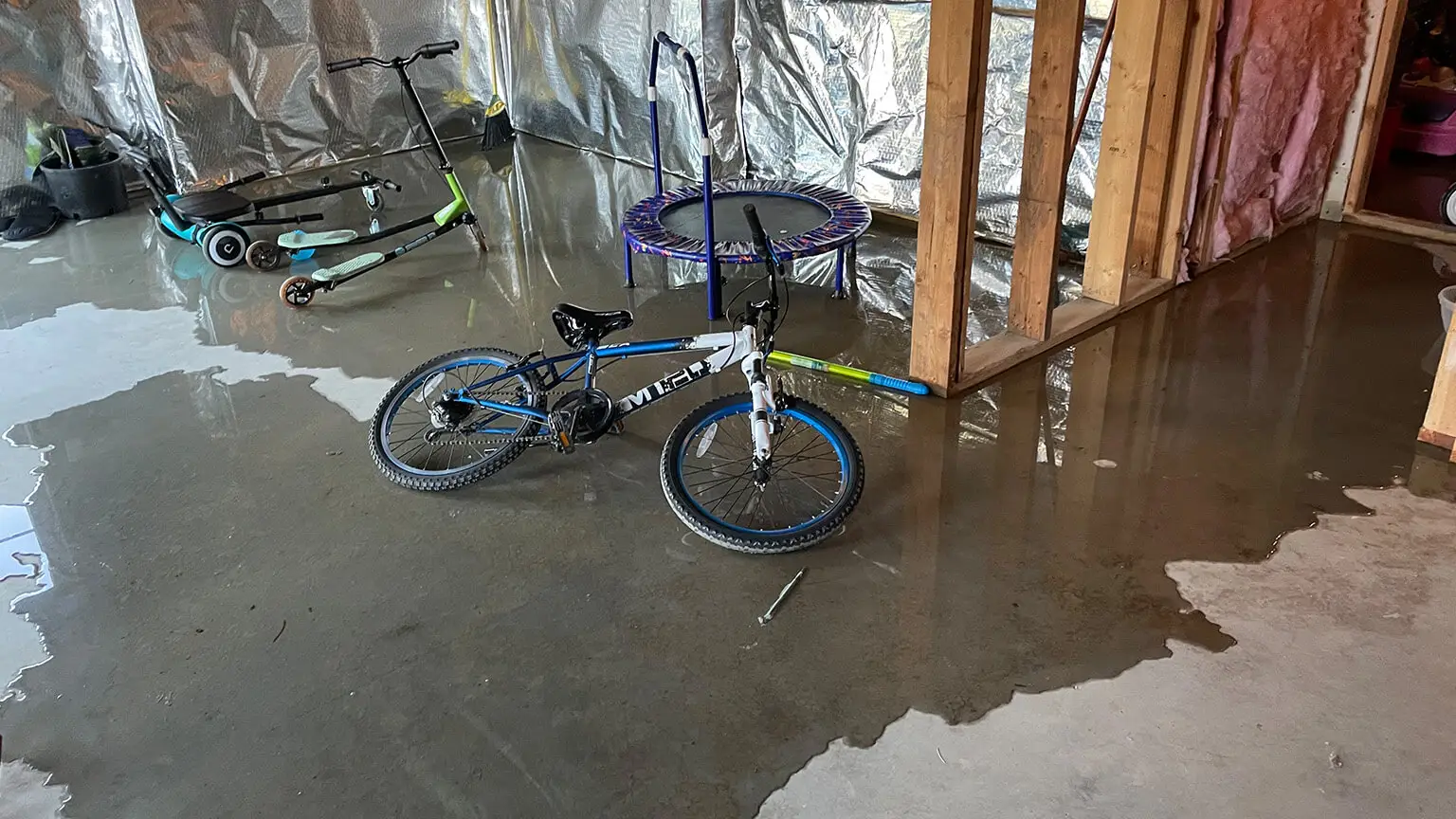
Clean rainwater on a bare concrete slab is the easy version of this story. If that’s your situation, you may not need us at all — and we’d rather say so.
Option A: what does professional drying actually involve?
People picture a big truck and some loud fans. It’s more organized than that. Structural drying is four steps, and each one has a job.
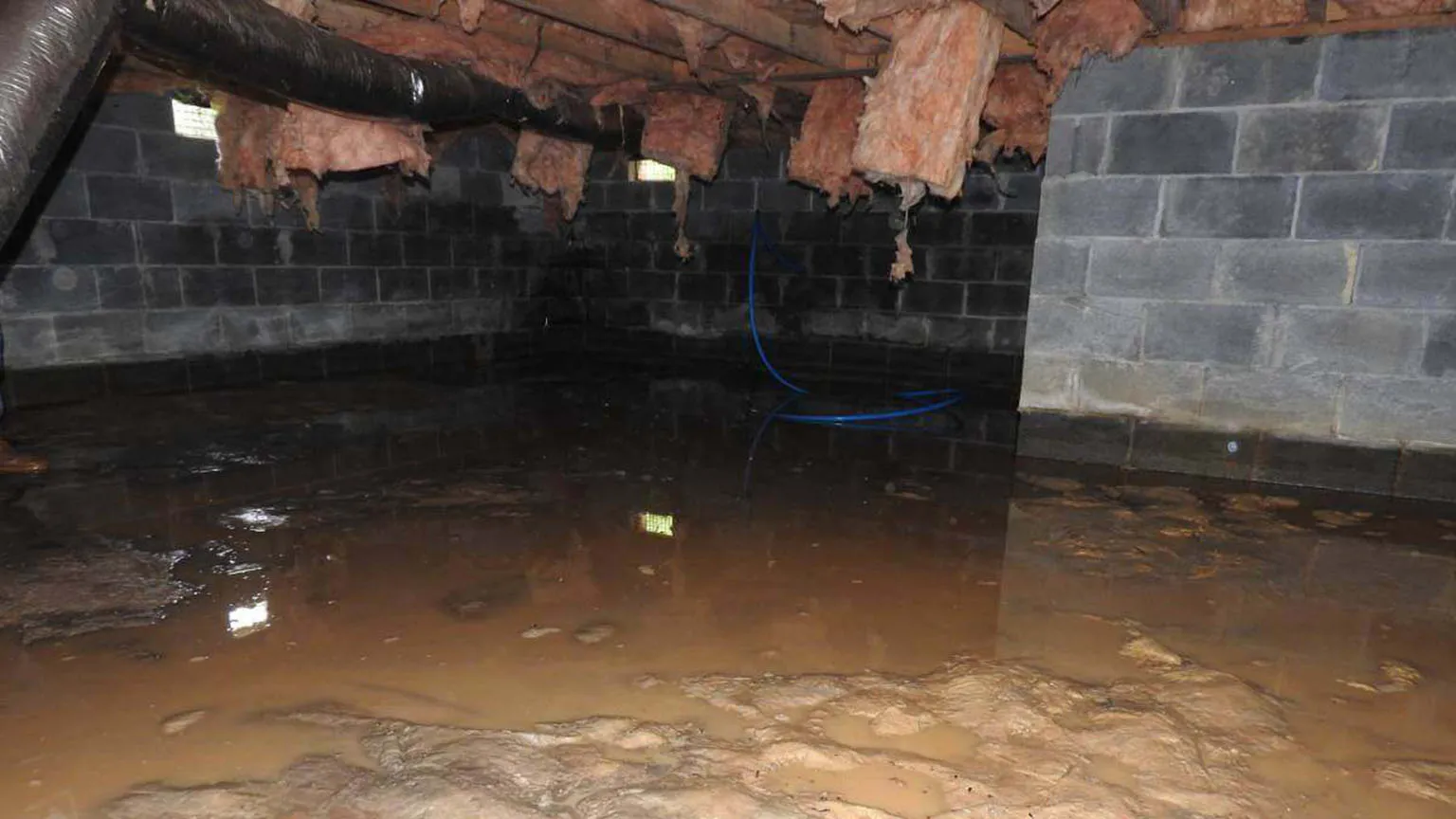
First comes extraction — pulling standing water out with truck-mounted or portable units that move far more volume than a shop vac. Then wet materials come out. Carpet pad, the bottom edge of drywall, and any insulation sitting in a finished wall get removed, because those hold water like a sponge and will not dry in place.
Next is air movement, aimed on purpose. Air movers go low along walls and into open cavities so moving air peels water off surfaces. Meanwhile commercial dehumidifiers pull that moisture out of the room instead of letting it drift somewhere else in the house.
When it wins: lots of water, water that sat overnight, finished walls, or any water that came from a sewer backup rather than the sky.
What it costs: square footage drives it, then how many days the equipment stays, then how much material has to come out. A small unfinished area is a modest number. A finished Hamilton Mill basement is a bigger one, because there’s demolition and rebuild wrapped around the drying.
The trade-off: it costs more, and there will be strangers and humming machines in your house for a few days.
Option B: can you just do it yourself?
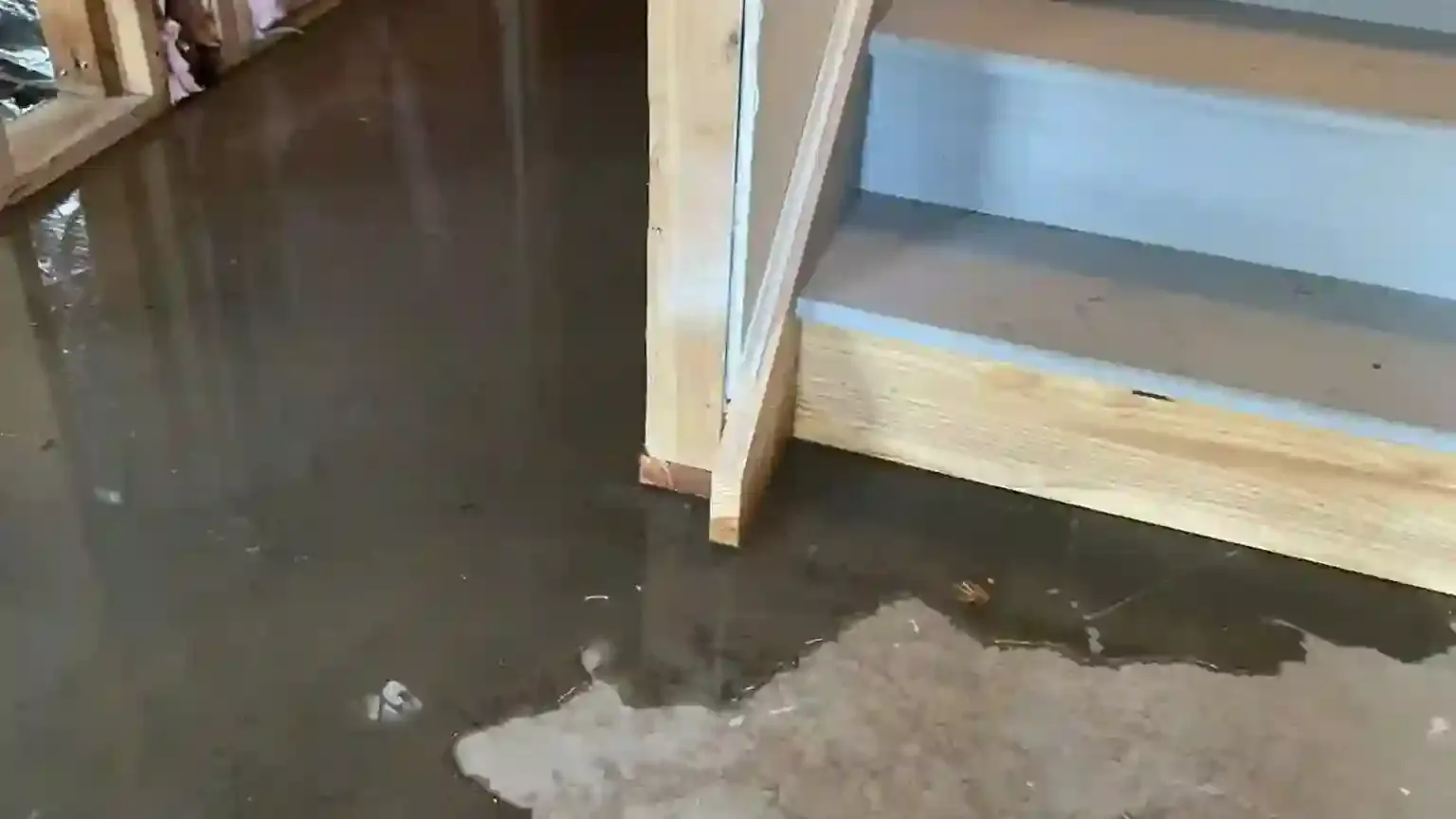
Sometimes, genuinely yes. The DIY kit is a wet/dry shop vac, a few box fans, and a rental dehumidifier from the hardware store off Buford Drive. Vacuum the water, get the fans moving, run the dehumidifier with the windows closed, and empty the bucket more often than you’d like.
When it wins: a shallow amount of clean water, caught within hours, on a slab with no finished walls and nothing organic soaking. That’s a real scenario and it happens all the time.
What it costs: a rental, some fans, and your weekend. Cheap compared to anything else in this article.
The trade-off: box fans move a fraction of the air a commercial air mover does, and a rental dehumidifier pulls a fraction of the water. Also, you’re guessing at “dry” instead of measuring it. That’s the part that bites people.
How do they stack up straight across?
Professional structural drying
- High-volume extraction in hours, not days
- Wet organics removed, not just dried around
- Moisture readings written down daily
- Handles finished walls and cavities
- Safe process for sewer or river water
- Costs more, and the house is busy for days
Shop vac, fans and a rental
- Cheap and you can start right now
- Fine for shallow, clean, fresh water
- Great on bare slab with nothing finished
- Much slower on volume and humidity
- No way to check inside a wall
- Never the answer for contaminated water
See how neither column says “better”? That’s on purpose. They’re built for different amounts of water.
Real talk — what actually decides whether it lasts?
Here’s the part that separates a basement that’s fine in a year from one that isn’t. It’s not horsepower. It’s whether anything wet and organic is still trapped where you can’t see it.
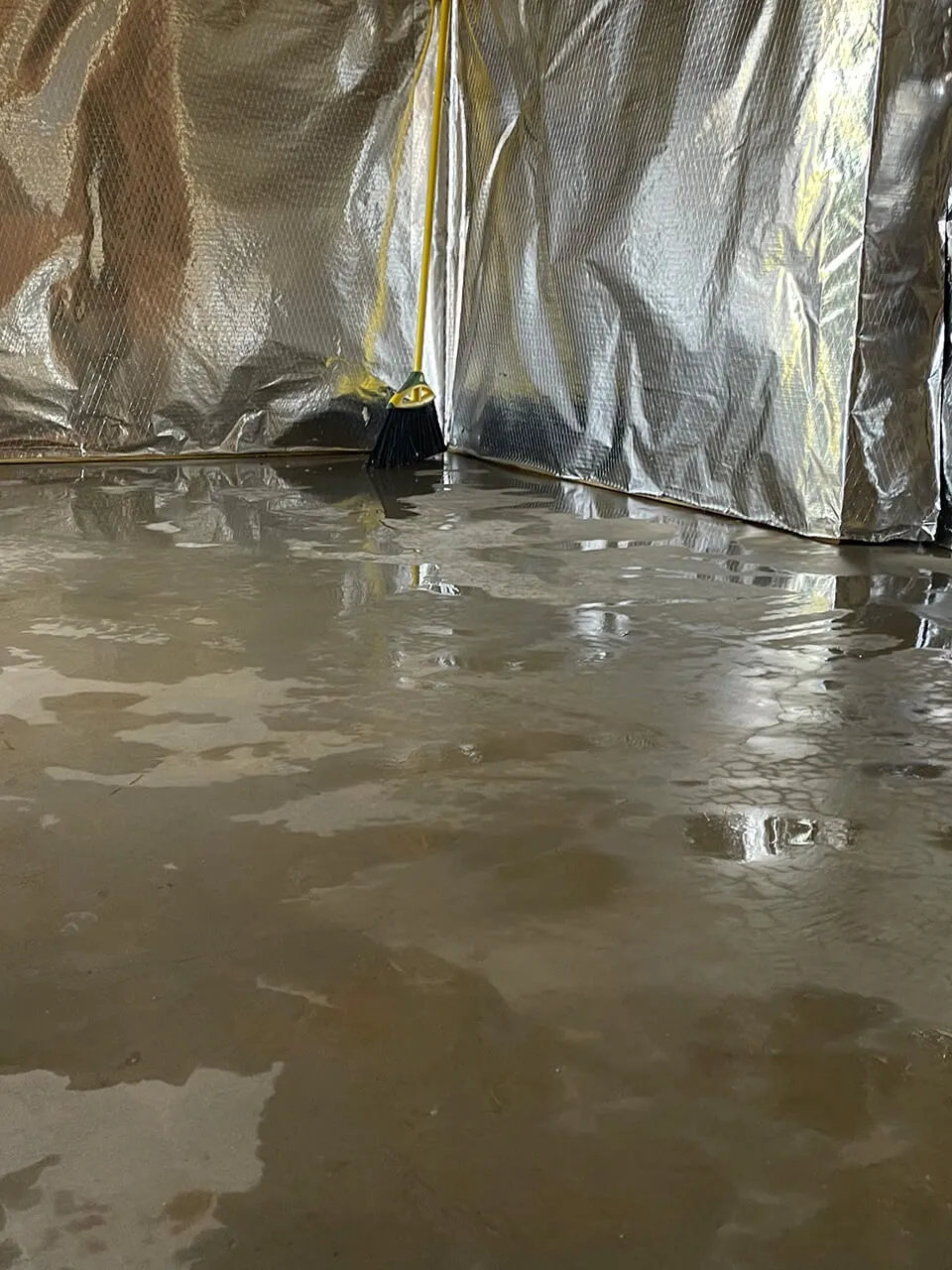
Drywall wicks water upward from the floor. Carpet pad holds it. Fiberglass insulation inside a finished wall soaks and stays soaked while the painted surface in front of it feels bone dry to your hand. That’s the classic mistake — the room looks great, the cavity is still wet, and six weeks later you smell it.
Good news is the fix is simple and not very glamorous. Open the bottom of the wall, pull the wet material, dry the cavity, then rebuild. Nobody enjoys cutting drywall, but it beats doing the whole room twice.
Speed matters just as much. Mold can begin growing on wet building materials within roughly 24 to 48 hours, which is why how fast you start beats how big your fans are. The CDC’s guidance on mold after flooding walks through cleanup safely. Then there’s the last question: clean rainwater or a sewer backup? Clean water you can handle. Sewer water is a health category of its own, and porous materials it touched need to leave the house — that one isn’t a DIY project.
Twenty years in, the thing we trust least is how a room feels. A wall can feel dry and read soaking on a meter. That’s why we write the numbers down every single day instead of guessing.
So which would we pick for your house?
You wanted a recommendation, so here it is, no hedging. Handle it yourself when all four of these are true: the water was clean, it was under an inch or so, you caught it within a few hours, and nothing finished or organic got soaked. Vacuum it, run air across it, keep a dehumidifier going for two or three days with the windows shut, and you’re done.
Call us in when any one of those flips. Water that sat overnight, water above ankle depth, finished walls, or anything that came from a drain line — that’s when professional structural drying pays for itself. It’s not that fans don’t work. It’s that fans can’t reach where the water went.
Lanier Springs is a good example of the middle ground. Lots close to the water sit on ground that’s already holding moisture, so a basement there dries slower than the same basement two miles inland. Living out near Lake Lanier Islands is wonderful right up until the water table decides your basement is part of the lake. Below Buford Dam it’s similar, because dam-influenced water movement keeps the ground down there working against you.
And plenty of times we tell people they don’t need the bigger option. A homeowner over near the Downtown Buford Historic District had two inches on a bare slab, caught same day. We told her to rent a dehumidifier and save her money. That call costs us a job and buys us a neighbor, and we’ll make it every time.
What surprised one homeowner the most?
This one still comes up around the shop. A family in the Downtown Buford / Main Street district kept drying the same corner every spring. Fans, dehumidifier, the whole routine. They assumed the old stone foundation was simply “weeping,” and they’d made peace with it.
It wasn’t the foundation. A buried downspout line had collapsed years earlier, so every hard rain sent roof water straight down beside the wall instead of out to the yard. The basement wasn’t leaking. It was being fed.
Fixing the drain line took part of a day and cost a small fraction of what they’d braced for. That corner has been dry through two storm seasons since. So if your basement only fills during heavy rain, that story might be yours too — worth a look before you buy a single fan.
What does the finished version look like?
Picture the room you shut the door on. Dry slab, clean white wall panels, a perimeter channel doing quiet work at the edges, and a dehumidifier holding steady all summer. No smell, no cool damp spot under your socks. Just a room again.
More than the space, though, there’s the feeling. You handled it, and now your house is solid because you take care of it. Homeowners tell us that’s the part that sticks.
Want the deeper reading? Our page on basement waterproofing explains the systems we install, and if your water keeps coming back, our guide to the best basement drainage setups is the next step. Neighbors down the road can compare Grayson basement drying options, and if you’re also seeing cracks or a door that won’t latch, start with foundation repair instead.

Where we work around Buford
We’re based in Lawrenceville, about twenty minutes south, so we’re up Buford Drive all week. We also cover Suwanee, Sugar Hill, Braselton, Flowery Branch, Dacula and Gainesville, plus Hoschton, Duluth and the wider Gwinnett and Hall Counties area.
Questions Buford homeowners ask us
Kill the power to the basement at the panel before you step into any standing water. Then take photos for your insurance, and start moving anything you can carry to dry ground. After that, extraction is the priority, because the sooner the water is gone the less material you lose.
Because the ground around the wall fills faster than it can drain, and that pressure pushes water through the seam where the wall meets the floor. Clogged or collapsed downspout lines make it worse by delivering roof water right beside the foundation. It usually means the source is outside, not the wall itself.
It depends on where the water came from. A burst pipe or failed water heater is often covered, while groundwater and surface flooding usually need separate flood coverage. Photograph everything before you move it and call your agent early, since documentation makes the difference.
Start the same day if you can. Mold can begin growing on wet building materials within roughly 24 to 48 hours, so speed matters more than how powerful your equipment is. Getting air moving in the first few hours changes the outcome more than anything you do later.
Saturated soil under the slab has to go somewhere, and the joint at the base of the wall is the easiest path. On lots near the lake or below the dam, the water table sits higher, so that pressure shows up sooner. A perimeter drain gives the water an easier exit than your floor.
Let’s find out what your Buford basement really needs
The inspection is free, the estimate is free, and nobody pushes you at the end. We’ll show you where the water came in, tell you honestly whether the small fix will do it, and put the plan in writing either way.
(678) 914-5112Serving Buford and all of Metro Atlanta · $500 off projects over $3,500 · Live support 7am–8pm, 7 days a week