

Standing Water Basement Milton Homeowners Keep Finding — and the Repair That Ends It
Where the water is really coming in, how to read the puddle, and what the fix looks like ten years out.
“There’s water on the floor. Not damp — water. I can see it moving.” That’s close to word for word how these calls start, and we hear it most weeks of the year. So if you’re at the bottom of the stairs wondering how bad this is, here’s the honest answer: a standing water basement Milton homeowners find after a storm is common, it’s readable, and it’s fixable.
Good news? Puddles are easier to diagnose than a mystery musty smell, because water leaves a trail — as long as somebody knows how to read it.
First, one calm safety note
Don’t step into standing water while the power is on down there. Kill the basement circuit at the panel first, and if the panel sits in the wet area, call your electrician. Just do it in that order.
Where is the water actually getting in?
Start with what puddles rule out. Standing water means bulk water arriving fast. Humidity makes things damp and musty, but it can’t build a pool on your slab. So we’re hunting an opening, not a climate problem, and there are four usual suspects.
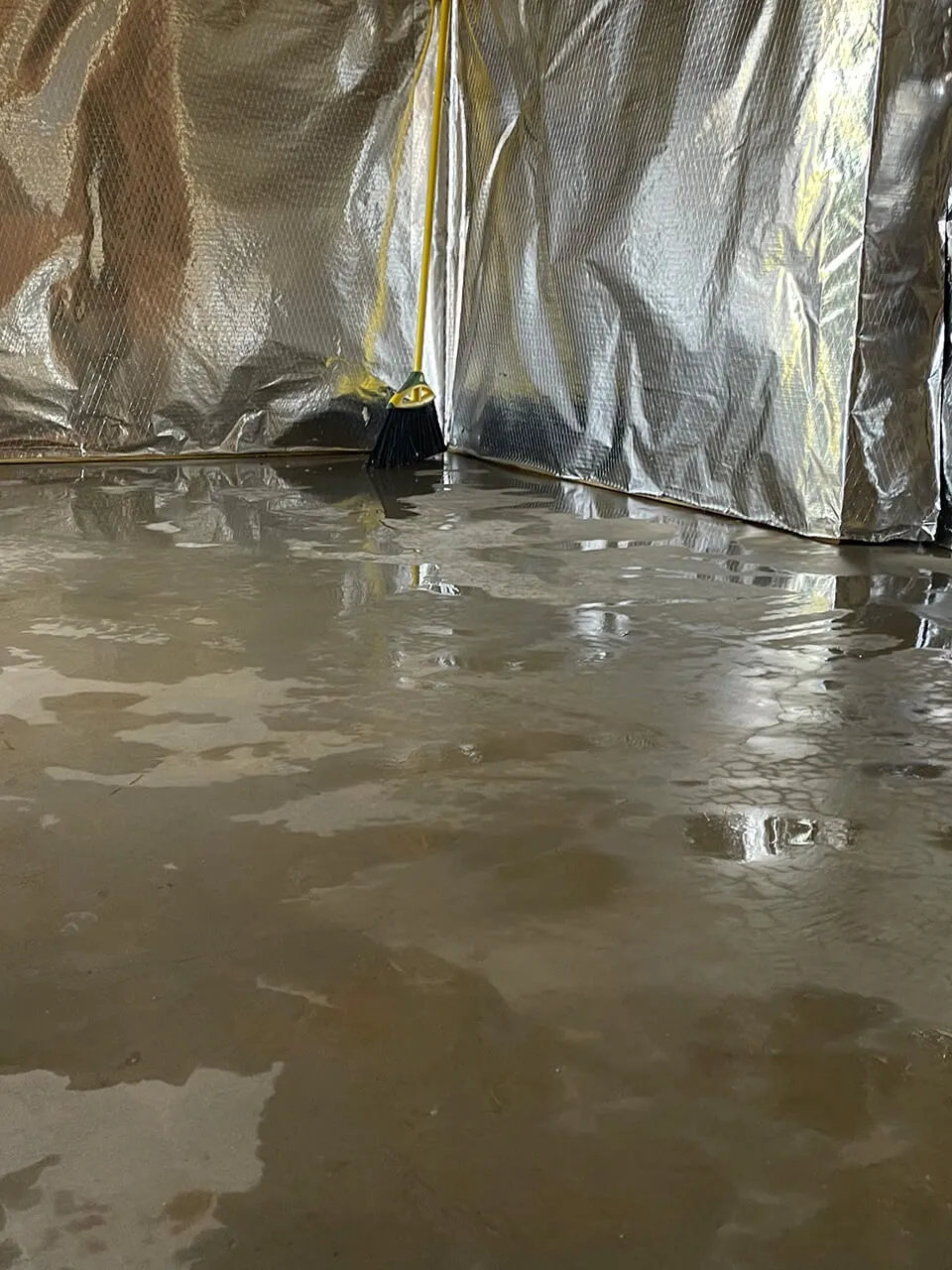
The cove joint. That’s the seam where your wall meets the floor slab. Those two pours happened on different days, so they never truly bonded — which makes it a door running your whole perimeter, not a crack. Under pressure, water picks the easiest opening every time.
A sump pump that quit. Pumps fail in boring, predictable ways: power drops during the very storm it was built for, the float sticks, the unit is undersized, there’s no check valve so water slides back down, or the discharge line is clogged.
A blocked drain line. Old drain tile silts up over the years, so water still arrives — it just has nowhere to go but up.
A window well with no working drain. A well is a bucket set against your foundation. If its drain is plugged it fills, then it empties through the window — and a window was never meant to be a spillway.
How do you read the puddle?
Here’s the thing — where the water sits tells you most of what you need to know.
Water pooled in one corner points to a local entry. Maybe a downspout dumps right there, or that’s the low side of a grade. Either way the problem has an address, which is the easiest version to solve.
Water spread across the whole slab, or seeping up through the floor, points to hydrostatic pressure underneath. Georgia red clay holds rain against your foundation instead of draining it away, so after a long wet stretch the soil is basically a saturated sponge. Then pressure builds and pushes through the hollow cores of block walls and up through that cove joint. That’s the standing water basement Milton crews see most.
Neither one is a structural emergency, though. A wet floor and a moving foundation are different conversations, and most homes we visit are only having the first. We’ll tell you plainly which you’re in.
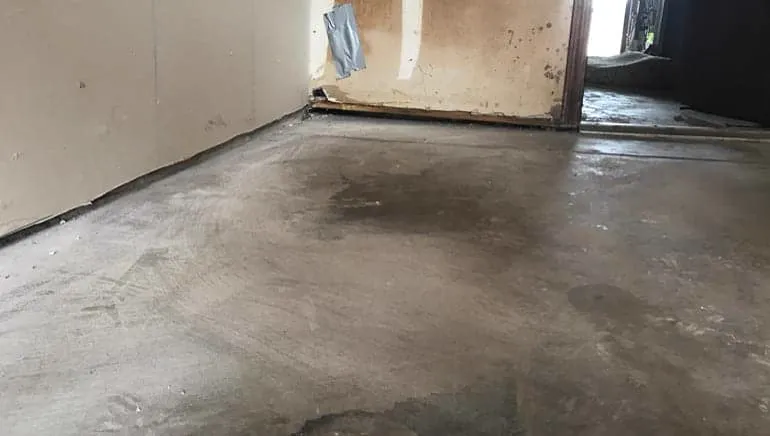
One more thing worth knowing calmly: mold can start on wet organic material — drywall paper, boxes, carpet pad — in roughly 24 to 48 hours. That’s not a scare stat, just the clock. The CDC’s guidance on mold cleanup after flooding covers it well, and drying fast is the cheapest move you’ll make all week.
What’s the second thing nobody mentions?
Almost every conversation about a wet basement stops at the house. In Milton, though, the house is rarely the whole property, and it’s almost never the only thing shedding water.
Think about a typical lot out here. Several acres. A long driveway. A barn, guest house or pool house, each with its own roof and gutters. Add a septic drain field working overtime. All that water goes somewhere, and gravity doesn’t care whose roof it came off of.
So we’ve walked properties near Six Hills and Kensington Farms where the basement wasn’t the problem at all. A barn roof was dumping thousands of gallons a storm onto ground that sloped back toward the house. Fix the barn, and the basement gets dry — a cheaper morning than anyone expected.
That’s why a real inspection here starts outside. We read grade changes across the whole parcel, where the driveway sheds, and whether hardscape is quietly acting as a funnel. Homes along the Bethany Bend corridor see this constantly, since grade moves more across one lot than people realize.
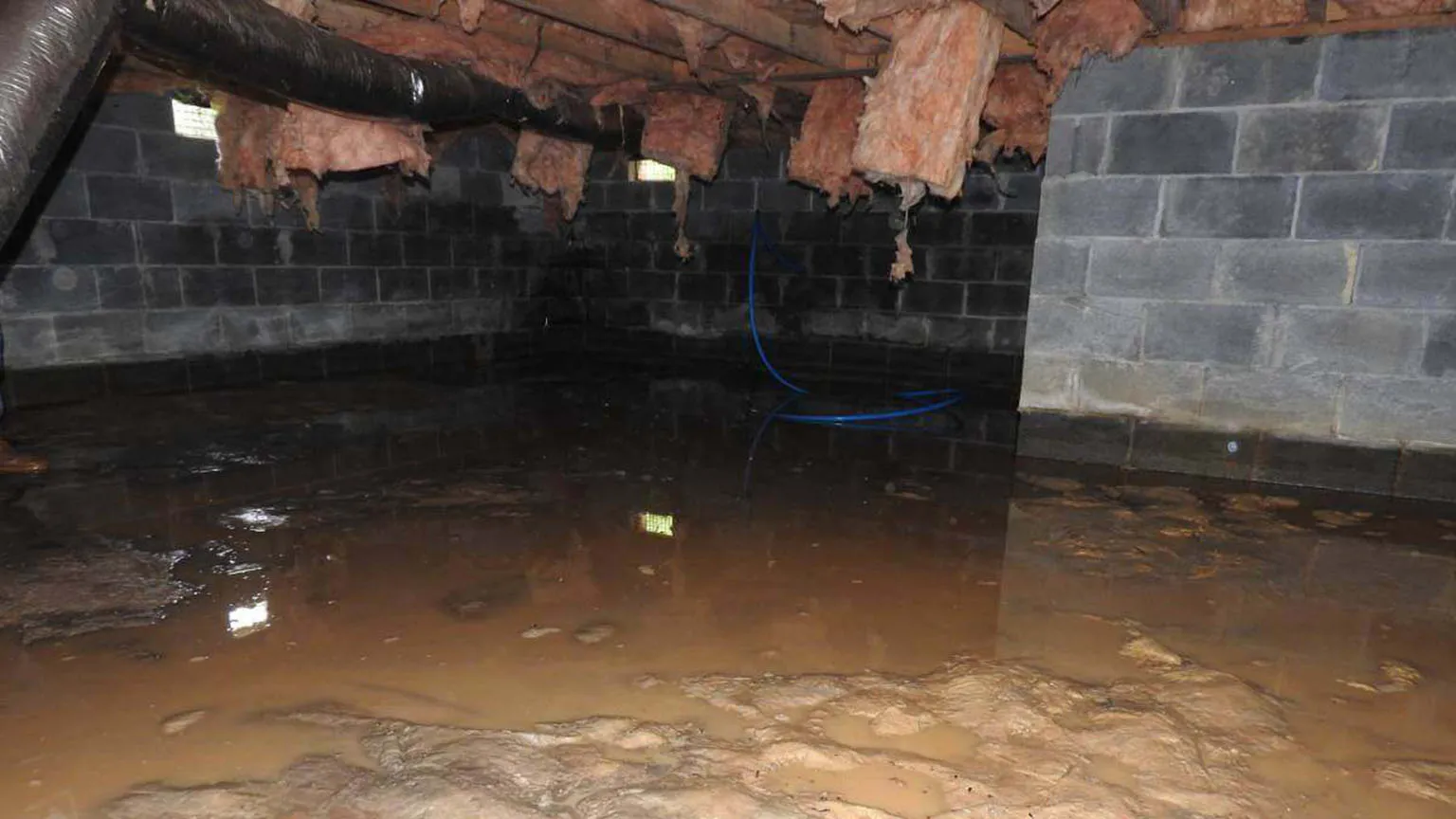
Here’s the local part that matters most. In Milton the basement isn’t storage — it’s a finished floor of the house, with theaters, gyms and in-law suites down there. So a small amount of water causes a very large amount of damage, which changes what “good enough” means.
What does the repair actually look like?
One idea drives all of it: give water an easier path than the one it’s using now.
- Find the source before touching concrete. Outside first — grading, gutters, driveway, outbuildings — then inside. Sometimes the answer is smaller than you feared, and we say so.
- Open a channel at the perimeter. A narrow strip of slab comes up along the affected walls. Loud and dusty for a day or two, then done.
- Set drainage below the floor. Perforated pipe in clean stone, under the slab, so water is collected before it reaches your floor.
- Route it to a proper sump. Right-sized pump, a real check valve, a discharge line that carries water well away — plus battery backup, since storms take power with them.
- Close it up clean. Fresh concrete over the channel, wall liner where it’s called for, dehumidification if the space is finished, and our mess hauled off.
Sealer paint is the one thing that never made this list. Pressure wins against a coating every time, so we build the escape route instead — and warranty that in writing.
Curious what it runs? It depends on how much wall is involved and how the space is finished, so we walk it before quoting. Our breakdown of basement flooding cost covers what moves the number, and the systems are explained on our basement waterproofing page. If you’re also seeing stair-step cracks or a door that won’t latch, foundation repair is worth covering at the same visit.
Why does a wet-vac feel so hopeless?
Because the math is brutal. One inch of water across a 1,000-square-foot basement is more than 600 gallons — a pool’s worth of bailing, one tank at a time, while more keeps arriving.
So the goal was never to get better at hauling water out. It’s a system that does it for you, every storm, whether you’re home or away. FEMA’s guidance on protecting property from flooding lands in the same place: manage the water, don’t fight it at the wall.
What do week one, year one, and year ten look like?
Fair question, since you’re spending real money. So let’s walk the timeline, because that’s how you judge whether this was a smart buy.
Week one. The channel goes in, the concrete gets closed up, the site gets cleaned. Then the first hard rain rolls through and nothing happens on your floor. You’ll go down and check anyway. Everybody does.
Year one. The smell is gone, which people notice even more than the dryness. Boxes come off the shelves and go back on the floor. Plenty of homeowners finish the space now, or finally trust it enough to put the good rug down.

Year ten. The stone and pipe under the slab still do exactly what they did on day one, since nothing down there wears out. Only the pump has a service life — plan on swapping one around the ten-year mark, like a water heater. And when a buyer’s inspector asks about the basement, you hand over a written scope and a warranty instead of a shrug. That’s when this stops feeling like a repair and starts feeling like a good decision.
Why does hiring local matter out here?
Because these lots don’t behave like suburban lots, so a crew that only works quarter-acre subdivisions misses half the story. Most of the standing water basement Milton inspections we run start at the property line, not the stairs. We know the ground near Bell Memorial Park drains differently than the parcels toward Providence Park, and we’ve worked the older streets around Crabapple where grade and hardscape have been rearranged three or four times.
We also know how business gets done here: written scope before we start, proof of insurance, a real schedule, references if you want them. Our shop sits about thirty-five minutes southeast in Lawrenceville, so the crew doing the work is the crew that answers in year six. If a relative one town north sees the same thing, we handle the Cumming standing water basement calls too.

Where we work around Milton
Milton is an easy run for our trucks. We also cover Alpharetta, Roswell, Cumming, Johns Creek, Woodstock, Canton, Sandy Springs and Marietta, plus Cherokee County and the wider Fulton area. If you’re off Birmingham Highway or anywhere along Bethany Bend, odds are we have a crew nearby this week.
Questions Milton homeowners ask us
Because clay soil holds rain against your foundation instead of draining it away. A short shower soaks in and moves on, but a long storm saturates the ground, so pressure builds under the slab. Your basement leaks whenever the soil outside runs out of room.
Usually not for groundwater or seepage, which is what most basement water actually is. Sudden failures like a burst pipe are often covered, and some carriers sell a sump failure rider. Ask your agent about that rider specifically, since policies differ more than people expect.
Aim for the first day or two. Mold can begin on wet organic material like drywall paper and carpet pad in roughly 24 to 48 hours, so speed saves money. Pull wet items off the floor, get air moving, and run a dehumidifier once power is safely off.
That’s pressure from underneath rather than a leak from the side. Saturated soil pushes water up, and it exits at the easiest opening — usually the cove joint where wall meets slab, since that seam was never bonded. Water across the whole floor points there, not at a crack.
Yes, when the system manages water instead of trying to block it. Interior drainage, a right-sized sump with backup power, and corrected grading outside handle the cause rather than the symptom. The drainage lasts the life of the house; only the pump gets replaced.
Let’s find out where that water is coming from
The inspection is free, the estimate is free, and nobody pressures you. We’ll walk your Milton property inside and out, show you the actual entry point, and put the scope in writing — even if the answer is simpler than you expected.
(678) 914-5112Serving Milton and all of Metro Atlanta · $500 off projects over $3,500 · Live support 7am–8pm, 7 days a week