

Basement Flooding Cost in Milton: What You’re Really Paying For
Two separate jobs, one confusing invoice. Here’s how the money splits, what moves the number, and how long the work takes.
How much does a flooded basement cost to fix? It’s two numbers, not one — which is why estimates confuse people. Getting the water out and drying the space is one job, while stopping it from coming back is a separate one. So when you compare basement flooding cost Milton quotes, check which of those two jobs each proposal covers.
Why is it two jobs instead of one?
Think of a burst pipe. Somebody has to mop up, and somebody has to fix the pipe. Skip the mopping and you’ve got damage, but skip the pipe and you’ll mop again next month. Good news: neither job is a mystery.
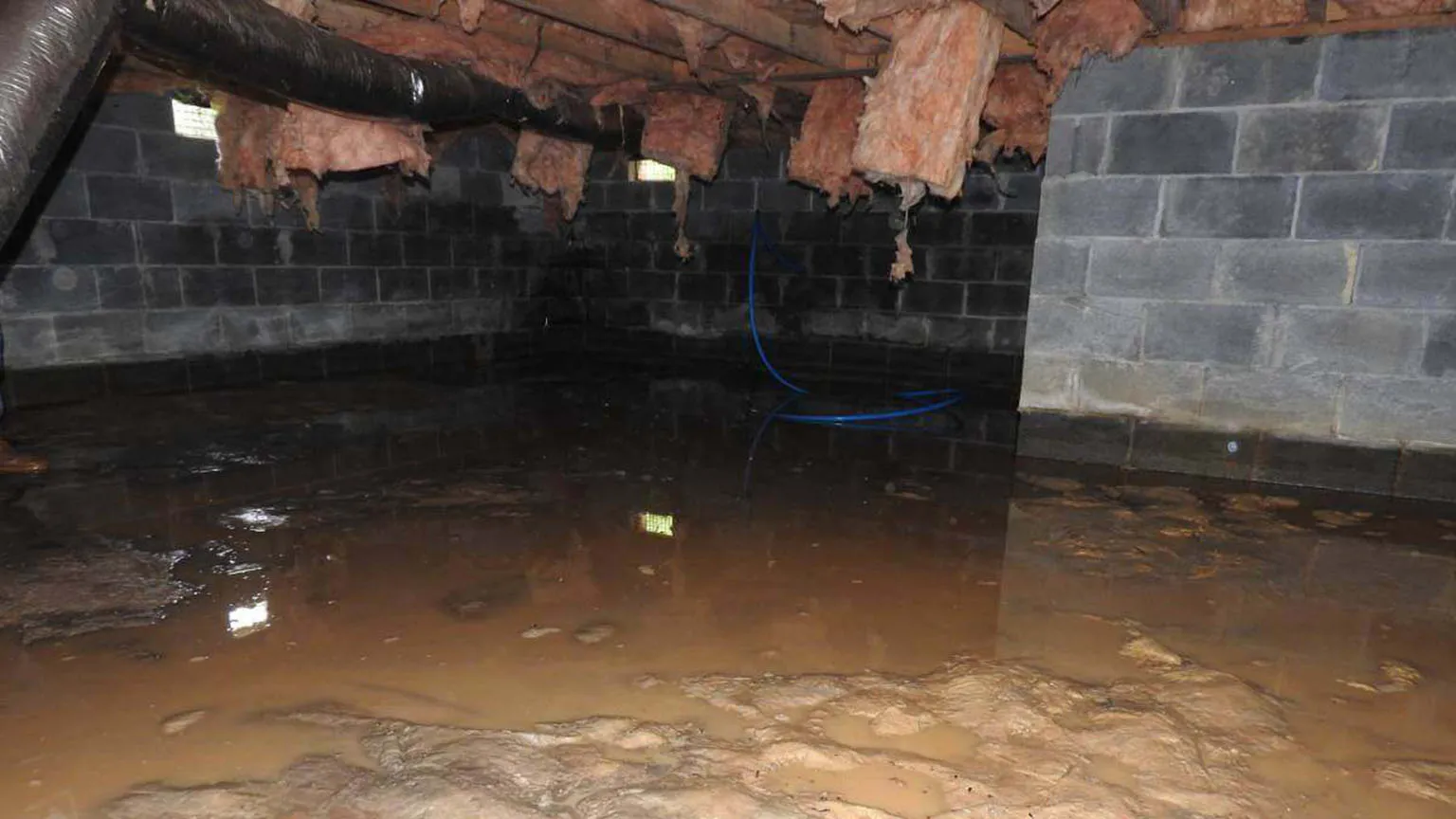
Job one is response and drying. Extraction, hauling out soaked carpet and pad, cutting away wet drywall and insulation, then running air movers and dehumidifiers until moisture readings come back down. It’s priced by what left the room and how long equipment ran.
Job two is the permanent fix. Interior drainage, a proper sump, grading, downspout extensions — whatever it takes so the next storm is just weather. That one is priced by linear feet and site conditions.
Worth knowing
Plenty of companies only do one of the two. Ask any bidder which job their number covers, because a cheap quote is often cheap because it’s half the work.
What actually happens after a flood?
Here’s the order we work in.
- Safety and power. Electrical gets checked before anyone wades in.
- Extraction. Standing water comes out with pumps, and it goes faster than people expect.
- Removing what’s soaked. Carpet, pad, drywall, insulation — anything organic that won’t dry in a couple of days.
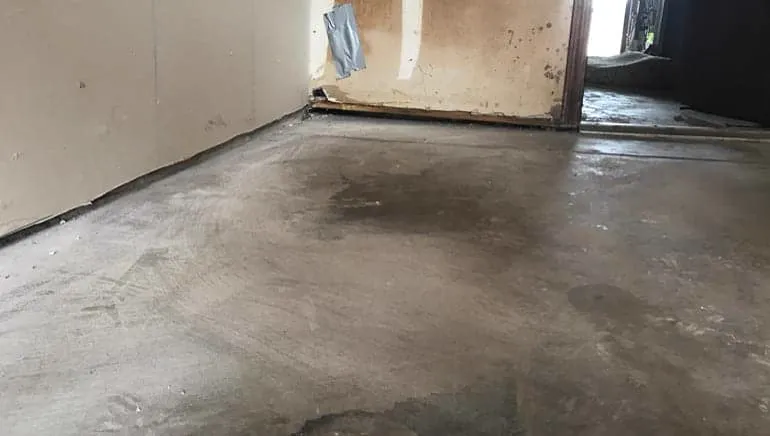
- Drying and monitoring. Equipment runs for days, and we take moisture readings so there’s proof the walls and slab came back to normal.
- The free inspection. Once the room is dry, we find the actual entry point, which is what decides job two.
- The written scope. Linear feet, sump location, discharge point, price, schedule.
- The permanent work. Drainage goes in below the slab, the sump gets set and tested, then exterior corrections handle what feeds the problem from outside.
Step five matters most. Dry a basement without finding the door water used, and you’ve only bought a pause.
What moves the number up or down?
Nobody can price this over the phone. Still, you deserve to know what sets the basement flooding cost Milton homeowners end up paying, so here’s the list we work from.
The six things that set the price
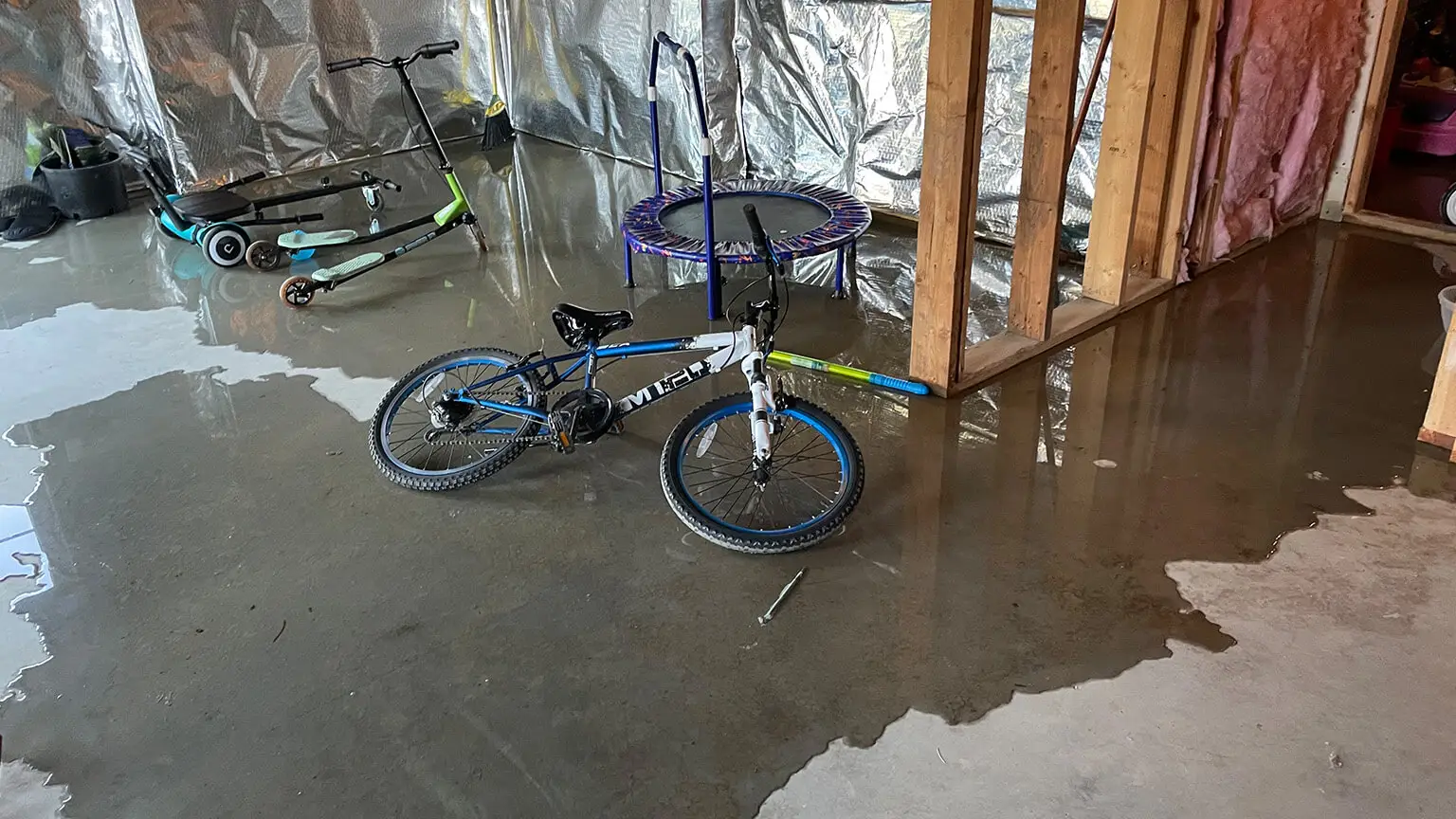
- How much water. A damp corner and four inches across a whole floor are different projects.
- How long it sat. Water found Saturday morning costs less than water that sat all week. Time is the biggest lever you control.
- How much wet organic material comes out. Carpet, pad, drywall, insulation, trim, upholstery. Removal plus rebuild is real money.
- Whether drainage is part of the fix. Perimeter drainage means opening a strip of slab, and linear feet is the biggest number there.
- Whether you need a sump. Some homes have a serviceable basin already. Plenty of nineties pumps around here don’t.
- What’s happening outside. Sometimes regrading and moving two downspouts handles most of it, which is a much smaller invoice.
Here’s a pattern worth knowing. A basement that floods only in heavy rain almost always has a surface water problem, not a groundwater one — and surface water is usually the cheaper fix. We see it on the big open lots off Birmingham Highway (GA-372), where runoff crosses half an acre of pasture and reaches the house with nowhere else to go.
Small exterior corrections land at the low end, while a full perimeter system with a new sump, backup power and a rebuild sits at the top. Most jobs fall between, and you’ll get one written number with the scope spelled out — never a phone guess. Our page on basement drying options covers the drying side on its own.
Most advice online stops right here. It shouldn’t.
Search this topic and you’ll get ten articles about drying equipment and none about where the water came in. That’s backwards, because the entry point decides whether you pay once or every spring.
So let’s back up and talk about the cove joint. It’s the seam where your wall meets the floor slab — two separate concrete pours that were never one piece. Georgia red clay soaks up days of rain, swells, and pushes. Under that pressure, water takes the easiest path it can find, and the cove joint is it.
Folks see water on a dry-looking wall and assume a crack. Usually it came up at the joint.
That’s why sealer on the wall rarely holds, since sealer sits at the surface where pressure is highest. Interior drainage sits below the slab, catches water at the joint before it reaches your floor, and routes it to a sump. In other words, we stop arguing with the water and give it a faster exit.
Why do sump pumps fail right when you need them?
Because they fail in predictable ways — and predictable means preventable.
- Power loss during the storm. The storm that fills basements is the storm that drops power lines, so a battery backup fixes this one outright.
- A stuck float. The switch hangs up on the basin wall or a cord, so the pump never gets the message.
- Undersized pump. It runs the whole time and still loses ground. Sizing has to match what the house actually produces.
- No check valve. Water in the discharge line drains back into the basin, so the pump keeps moving the same gallons.
- Clogged discharge. The line dumps too close to the house, gets crushed, or plugs with debris.
Every one of those is a checklist item on a good install. Test yours with a bucket of water twice a year and you’ll catch most of them yourself.
How long does it take, and what should you do first?
Drying typically runs three to five days with equipment on site. Interior drainage usually runs one to three days, while a full perimeter in a finished basement stretches longer, and fresh concrete wants a few days after that.
Speed matters on the front end. Mold can start on wet organic material in roughly 24 to 48 hours, so a fast response costs less than a weekend of deciding. The CDC’s guidance on mold cleanup after a flood lays out the same timing plainly.
Your prep list is short. Move what you can off the floor, clear about four feet along the affected walls, and make sure we can reach an exterior door. We’ll handle the heavy things.

What can you honestly do yourself?
More than you’d think, and we’d rather say so than bill you for a Saturday. Real DIY wins: extending downspouts six to ten feet out, cleaning gutters twice a year, regrading soil away from the house, and testing that sump pump. Around Crabapple, over in Providence and along the Bethany Bend corridor, those fix a fair share of our calls.
What DIY can’t reach: structural drying of a large flooded area, anything below the slab, and discharge routing across a big lot. Rental fans move air, but they don’t pull water out of a wall cavity. It isn’t a skill gap — the water just isn’t where the store-bought product goes.
What about insurance?
Here’s the honest version. Standard homeowners policies commonly exclude surface flooding — water from the ground, the yard, or a rising creek. Sump pump failure is usually a separate endorsement you add on purpose, while sudden internal events like a burst supply line are often treated differently.
So read your own policy, or call your agent and ask about those by name. Take photos before anything gets removed, either way. The National Weather Service flood safety pages are a good plain-language start.
What does a wet basement have to do with the rest of the house?
Here’s the part almost nobody connects. Warm air escapes near the roof, which pulls replacement air in from the lowest point in the house. That’s your basement, so some of what you breathe upstairs started down by that damp corner.
Damp air carries odor and humidity with it, then, and it turns up in odd places: sticking doors on the main floor, an HVAC system working harder than it should, hardwood cupping a room away from the water. Folks call about those without ever mentioning the basement.
Better yet, the fix is the one we’ve already described. Handle the water at the source and humidity drops on its own, no plug-in gadget required. Movement in the walls is a separate conversation, and our page on foundation repair covers that one.

How do you know the job was done right?
Ask for five things and you’ll sort careful work from fast work quickly. Moisture readings before and after drying. A written scope naming linear feet and the discharge point. Photos of the stone and pipe before concrete goes back down. A live system test with you standing there. And a warranty you can read.
This matters more here than most places, because in Milton the basement isn’t storage. It’s a finished floor of the house — theaters, gyms, wine rooms — so a small amount of water causes a very large amount of damage. Homeowners near Providence Park and out toward Scottsdale Farms compare bids line by line, and we’d rather be the clearest one than the fastest.
The proof then shows up on its own schedule. The floor stays dry through a hard spring storm, and the dehumidifier you kept emptying sits idle. That’s what the basement flooding cost in Milton actually buys you. Our full range of basement waterproofing systems is on the service page, and the math works the same one county over, which our Cumming basement flooding cost breakdown walks through.
Where we work around Milton
Our shop sits about thirty-five minutes southeast in Lawrenceville, so we’re up this way constantly. Along with Milton, we cover Alpharetta, Roswell, Cumming, Johns Creek, Woodstock, Canton, Duluth, Suwanee and the wider Fulton and Cherokee County areas.
Questions we get from Milton homeowners
Start within the first day if you can. Mold can begin on wet carpet pad, drywall and insulation in roughly 24 to 48 hours, so delay adds material that has to come out. Getting equipment running fast is usually the cheapest decision in the project.
Because of the cove joint, the seam where the wall meets the slab. Those are two separate pours, so under hydrostatic pressure that seam is the easiest path water can find. It’s the most common entry point we see, and drainage below the slab handles it.
In most homes, yes, once the actual source is found and handled. That usually means exterior grading and downspout work plus interior drainage routed to a properly sized sump. Systems like that carry a warranty because nothing at the surface is left to wear out.
It splits into drying costs and permanent repair costs, and both depend on the house. Water volume, how long it sat, how much wet material comes out, and whether you need drainage or a sump are the main drivers. Exterior corrections sit at the low end, a full perimeter system with a rebuild sits at the top, and we give one written number after walking the house.
That’s encouraging news. Flooding that only shows up in heavy rain usually points to surface water rather than groundwater, and surface water is generally the cheaper fix. Regrading, downspout extensions and outside drainage often handle it without opening the slab.
Let’s find out what your basement actually needs
The inspection is free, the estimate is free, and nobody pressures you at the end. We’ll show you where water is getting in, what it takes to stop it, and what that costs here in Milton.
(678) 914-5112Serving Milton and all of Metro Atlanta · $500 off projects over $3,500 · Live support 7am–8pm, 7 days a week