

Basement Flooding Cost in Duluth: What You’re Really Paying For
Two separate jobs, one confusing invoice. Here’s how the steps, the timeline and the price actually break down.
“There’s water everywhere and I don’t know who to call first.” That’s the sentence, almost word for word, most mornings after a hard rain. Then comes the second one: “How bad is this going to be?” So if you’re pricing out the basement flooding cost Duluth homeowners actually face, let’s answer that second question properly.
Good news up front: almost every call like that ends with a dry basement and a number the homeowner could plan around.
Why does one flood produce two different bills?
Here’s the thing nobody explains on the phone. A flooded basement is two separate jobs, so it gets quoted as two separate jobs.
Job one is getting the water out and drying the space. Extraction, hauling out soaked material, then days of air movers and dehumidifiers until the concrete and framing test dry. It’s priced mostly by volume and time.
Job two is making sure it doesn’t happen again. That’s drainage, a sump, discharge, and sometimes grading outside. Pay only for job one and you’ve bought a very expensive pause.
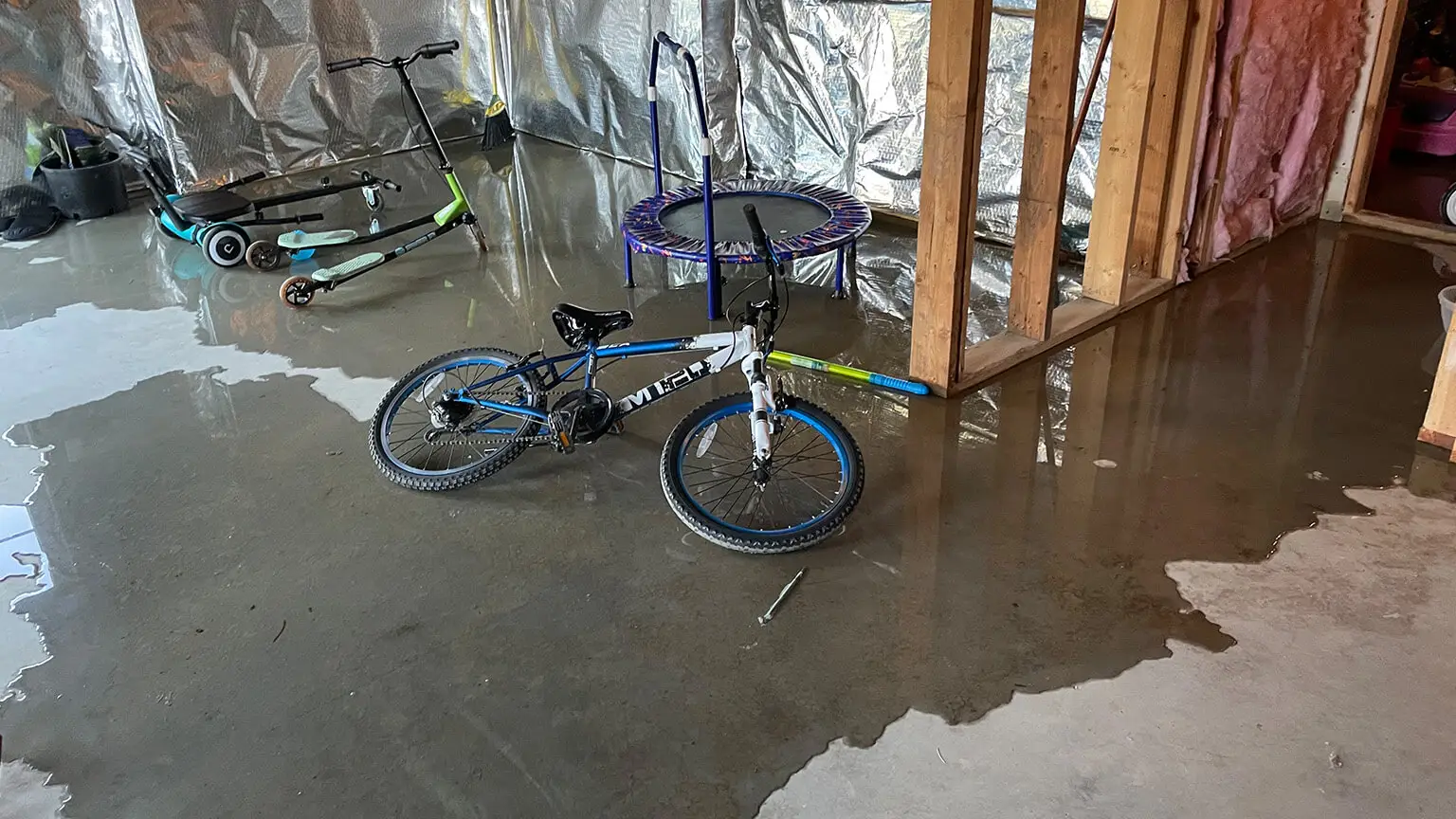
That distinction matters more here than most places. Duluth basements are working basements — in-law suites, home offices, kids’ spaces. When one gets damp in this city, it’s not storage getting wet. It’s somebody’s bedroom.
What actually happens, in order?
Nobody likes surprises when there’s a hose running through the door. So here’s the sequence.
- Stop the power, then look. Breakers off to the wet area before anyone steps in.
- Extraction. Pumps and truck-mounted vacuums pull the standing water out fast.
- Removal of wet material. Soaked carpet pad, drywall bottoms and wet insulation come out first, since organic material holds moisture longest.
- Structural drying. Air movers and commercial dehumidifiers run for several days while we meter the slab and framing.
- Finding the entry point. Once it’s dry, the source shows itself. We check the cove joint, wall cracks, window wells, the sump and the grading outside.
- The written scope. Linear feet, sump location, discharge point and price, all on paper before anybody starts.
- Installing the system. Interior drain tile in washed stone below the slab, wall liner, sump basin, discharge routed well away from the house.
- Close up and test. Fresh concrete, cleanup, then a live test with you watching the pump run.
Worth knowing
One inch of water across a 1,000-square-foot basement is more than 600 gallons. That’s why a wet-vac feels hopeless — you’re not failing, you’re just emptying a swimming pool five gallons at a time.
Why can two estimates be thousands apart?
Ready for the part that explains almost every confusing quote? Two companies can look at the same basement and land miles apart, because they aren’t pricing the same job.
One might cover drying only. Another covers drying plus a full perimeter system. Same basement, wildly different totals — and neither one is dishonest. That’s why the first question to ask any estimate is simple: does this stop it from happening again, yes or no?
What moves the number up or down
- How much water came in. An inch in a corner and four inches across a full floor are not the same afternoon.
- How long it sat. Water caught in hours costs less than water that sat all weekend. Time is the biggest lever you control.
- How much wet organic material has to leave. Carpet, pad, drywall and furniture drive the haul-out.
- Whether the basement is finished. Built-ins and a bathroom mean careful demo first.
- Whether drainage is part of the permanent fix. Linear feet of drain tile is the biggest line item, by a wide margin.
- Whether you need a sump, or a better one. Plenty of 1990s pumps here are undersized for what they’re being asked to move.
Small exterior corrections sit at the low end, while a full perimeter system with a new sump and backup power sits at the top. Most Duluth jobs land in between, and you’ll get one written number with the scope spelled out — never a phone guess. For the drying side on its own, see our basement drying options page, and the math runs similar just up the road for Suwanee basement flooding cost.
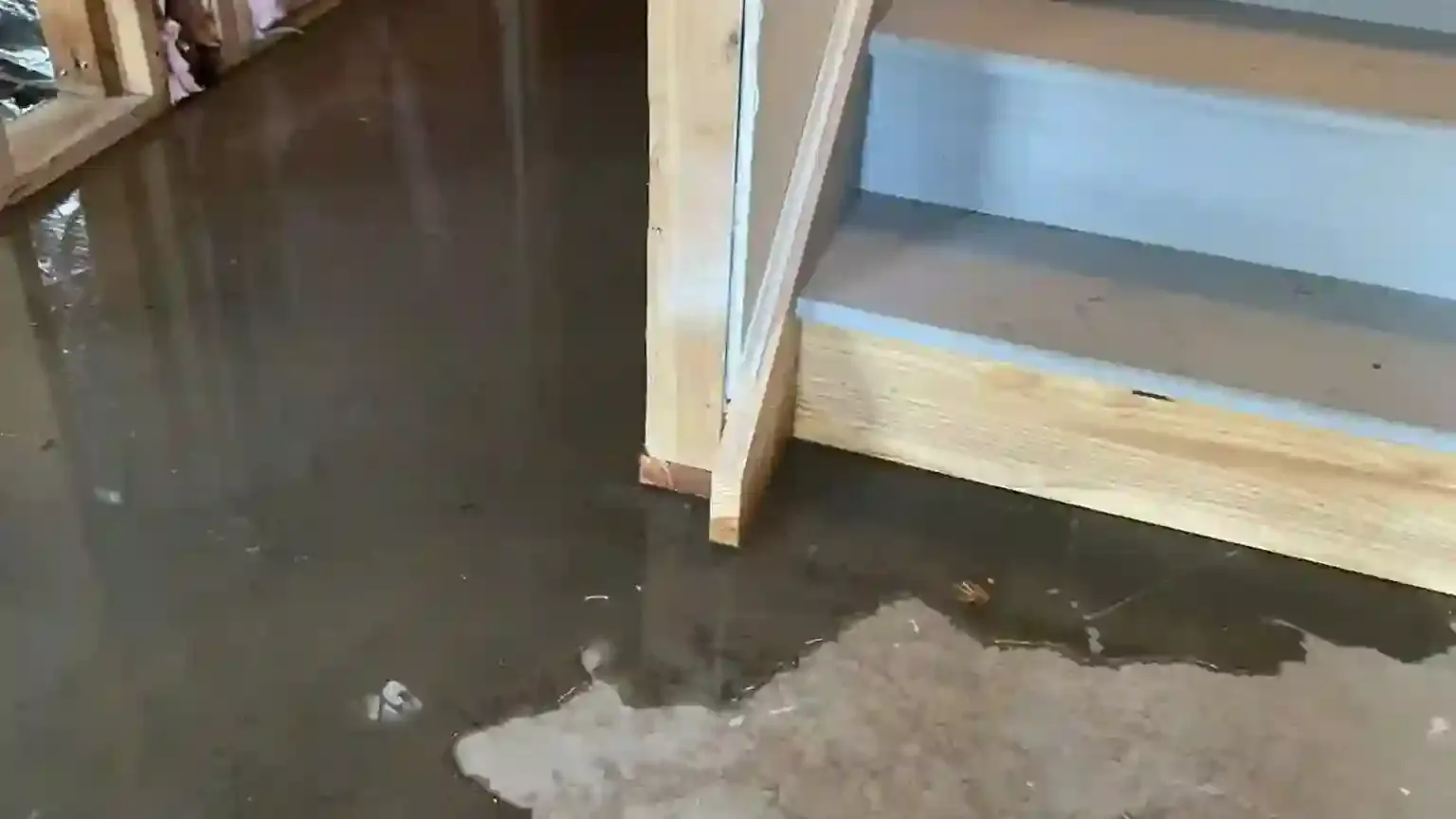
Where the water almost always comes in
Ask ten homeowners and nine point at a crack. Usually it’s lower than that. The cove joint — the seam where wall meets floor — is the most common entry point, because that’s the weakest line when saturated clay pushes water sideways under pressure.
Good news? That’s exactly what interior drainage is built for. Rather than fight water at the wall, we collect it below the slab and route it to a sump before it reaches your floor. In other words, we give water a faster exit, and water always takes the faster exit.
Why sump pumps quit at the worst possible moment
Sump failures aren’t mysterious. There are really only five: the power goes out during the same storm that’s filling the basin, the float sticks, the pump is undersized, there’s no check valve so water drains right back down, or the discharge line is clogged.
Every one of those has a fix, and none of them is dramatic. A backup battery covers the outage, while a properly sized pump and a check valve cover two more. That’s why a sump line item is usually money well spent — it’s the difference between a system that works and one that works when the weather is nice.
How long does all this take?
Drying typically runs three to five days with equipment going, longer if a lot of material got soaked. The permanent system is usually one to three days on site after that.
Your prep list is short. Clear about four feet along the walls we’re working on, move fragile things off nearby shelves, and make sure we can reach an exterior door for hoses. We’ll move the heavy stuff ourselves, because nobody should hurt their back to save us a trip.
One timing note: spring storms and late-summer tropical remnants fill our calendar fast, and fall leaf drop clogs catch basins, which sets up the November calls. Homes on river-adjacent lots near Rogers Bridge Park handle seasonal high groundwater on top of that, so those folks book earlier. Smart move, honestly.
What can you honestly handle yourself?
More than you’d think, and we’d rather tell you than bill you for a Saturday.
Real wins: extending downspouts six to ten feet out, cleaning gutters twice a year, regrading soil so it falls away from the foundation, clearing window wells, and pouring a bucket of water into your sump basin to confirm the pump kicks on.
What DIY genuinely can’t reach: anything below the slab, plus true structural drying. You can’t set drain tile without opening concrete, and household fans don’t pull moisture out of a saturated slab — they just move damp air around. The National Weather Service flood safety guidance is worth a read before you wade into standing water at all.
What does a wet basement have to do with the air upstairs?
Here’s the connection almost nobody makes. Air in a house moves upward — warm air escapes near the roof, which pulls replacement air in from the lowest point in the building. That’s your basement. So a share of what you breathe in the bedrooms started its trip down there.
Which is why delay costs money. Mold can begin on wet organic material in roughly 24 to 48 hours, and that’s exactly what a finished basement is full of: paper-faced drywall, carpet pad, wood trim. Every day water sits, more of it crosses from “dry it” to “remove it,” and removal is the pricier column.
The fix, though, is the one we’ve already described. Stop the source, dry it properly, and humidity drops on its own — no plug-in gadget required. FEMA’s building science resources on flood protection cover the property-level side well if you want the neutral version.
A word about insurance, plainly
Real talk: standard homeowners policies commonly exclude surface flooding, and sump pump failure coverage is usually a separate endorsement you add on purpose. A burst pipe often is covered, while groundwater through the cove joint often isn’t.
We’re not your agent, so don’t take our word for it — pull your own policy and call the number on it. Either way, photograph everything before anything moves. Five minutes with your phone is the cheapest step here.
How do you know it was done right?
Ask for four things and you’ll sort good work from fast work in about a minute. First, moisture readings at the end of drying, not just “feels dry.” Second, a written scope naming linear feet and the discharge location. Third, photos of the stone and pipe before the concrete goes back down. Fourth, a live system test while you watch.
After that, the proof shows up on its own schedule. The floor stays dry through a hard spring storm, and the dehumidifier you’ve been emptying twice a day sits idle. Better yet, the next ugly forecast becomes something you glance at instead of plan around.
Duluth is fifteen minutes from our Lawrenceville shop, so we’re up here constantly. We’ve handled 1990s subdivisions in Howell Farms where the original drainage silted up, walkout basements in Chattahoochee Run, and older homes along the Bunten Road corridor where a crawl space was doing all the suffering. Referrals travel fast here, which is a good reason to do it right the first time. Our basement waterproofing systems are on the service page, and if you’re seeing wall movement too, our notes on foundation repair cover that.

Picture that room six months out. The in-law suite is back in use, the rug is down again, and the job cost what you were told it would cost. That’s the feeling we’re after — not relief, exactly. More like knowing you spent your money well.
Where we work around Duluth
Our shop sits fifteen minutes east in Lawrenceville, so we’re in Duluth most weeks. We also cover Johns Creek, Suwanee, Berkeley Lake, Peachtree Corners, Norcross, Sugar Hill, Buford, Snellville and the wider Gwinnett area. If you’re along Pleasant Hill Road or over toward McDaniel Farm Park, odds are we have a truck nearby.
Questions we get from Duluth homeowners
For a small puddle caught right away, sometimes yes. For real standing water, no — one inch across a 1,000-square-foot basement is more than 600 gallons. Household fans also move damp air without pulling moisture out of the slab, and the slab is what has to dry.
Mold can begin on wet organic material in roughly 24 to 48 hours. That’s why fast drying is a cost decision as much as a health one, since material that dries in time gets to stay. Waiting a week moves items from the dry-it column to the replace-it column.
Cut power to the wet area at the breaker before anyone steps in, then take photos of everything for your records. After that, get anything light and valuable up off the floor and call for extraction. Live support runs 7 a.m. to 8 p.m., seven days a week.
Because saturated red clay swells and pushes groundwater sideways against the foundation. Water usually finds the cove joint where the wall meets the floor, since that’s the weakest seam under pressure. Interior drainage collects it below the slab instead of fighting it at the wall.
Sometimes, and it depends on the source. Standard policies commonly exclude surface flooding, and sump pump failure coverage is usually a separate endorsement you have to add. Check your own policy and call your agent, then photograph everything before anything gets moved.
Let’s find out what your Duluth basement actually needs
The inspection is free, the estimate is free, and nobody pressures you at the end. We’ll show you where water is getting in, what stops it for good, and what that costs in Duluth — even when the answer is smaller than you expected.
(678) 914-5112Serving Duluth and all of Metro Atlanta · $500 off projects over $3,500 · Live support 7am–8pm, 7 days a week