

How to Read a Bid From an Encapsulation Company Sugar Hill Homeowners Trust
What we check on the first walk-through, what belongs in a written scope, and the questions that sort a real plan from a fast one.
Let’s take the tour. When we open that little door and drop down the stairs, you can follow along, because picking an encapsulation company Sugar Hill homeowners can trust starts with understanding what a good inspector is even looking at. It’s not a mystery. It’s a short list, and you can learn it in about five minutes.
Good news right away: most of what we find is very fixable. The hard part isn’t the repair. It’s telling two bids apart when both say “encapsulate crawl space” and one costs a lot more.
What do we look at first?
The dirt, honestly. Before anything else we look for a water line — the faint stain on the block that shows how high water stood last time. Wood tells a story too, so we press on the joists and the sill to see what’s soft.
Then we look up. Batts hanging out of the joists mean the space has been humid long enough for the paper backing to give up. After that we check the ducts for sweat, the vents for daylight, and the corners nobody crawls to.
Last stop is outside, which surprises people. We walk the downspouts, the grade and the slope, because a crawl space rarely has a crawl space problem. It has a water problem that ends there.
Sugar Hill is named for a hill, and it earns it. On terrain like this, water doesn’t sit — it runs, and it runs toward whatever is downhill of it.
What makes Sugar Hill homes different?
The grade, first and foremost. The land drops hard toward Lake Lanier and toward the river below Buford Dam, so walkout and daylight foundations are the norm rather than the exception. That means a lot of homes here have a basement on one side and a crawl space tucked under a bonus room or an addition on the other.
Red clay does the rest. Clay holds water instead of letting it soak away, and on the steeper streets there’s rock close to the surface. Water hits that rock, turns sideways, and travels along it until it meets a foundation wall. That’s why a crawl space can flood on a lot with no visible puddle anywhere in the yard.
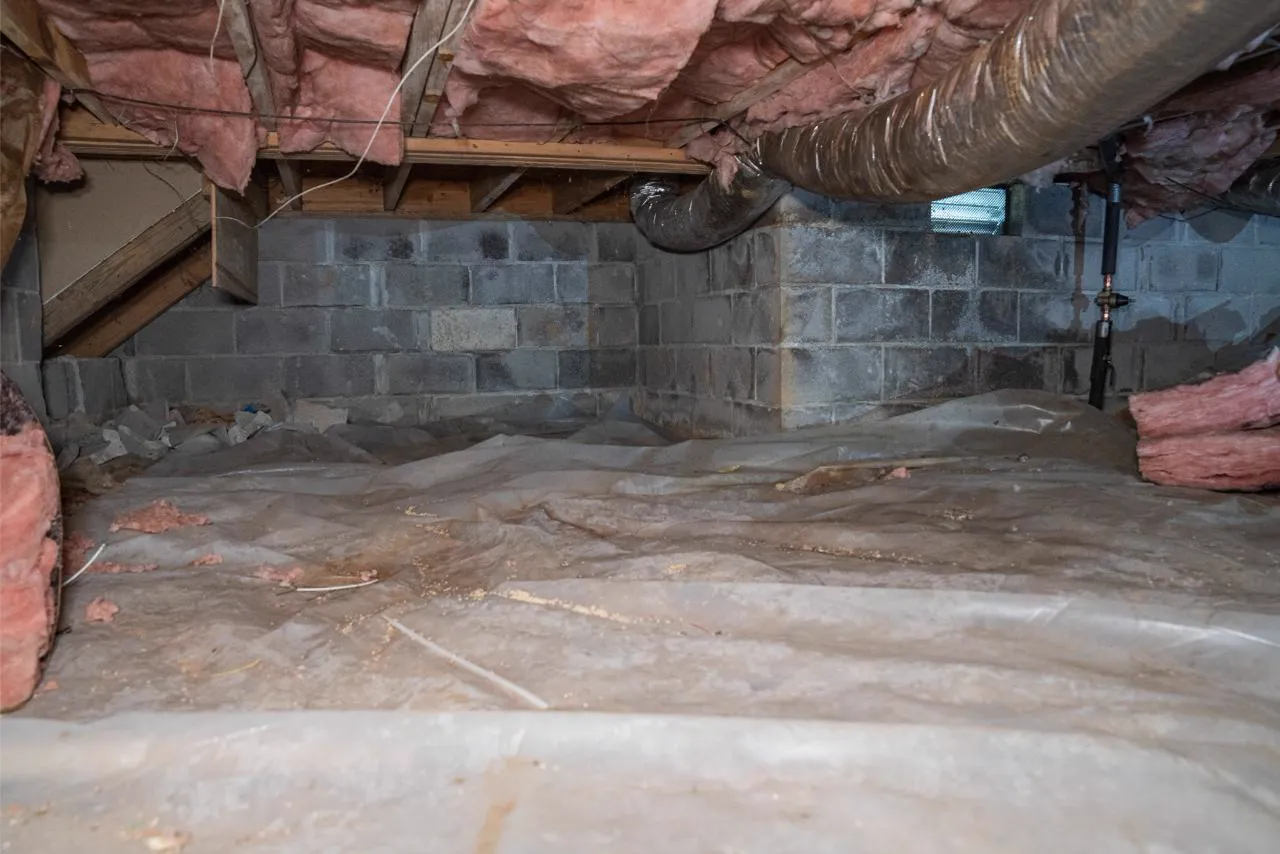
Age matters here too. Most of this city went up between 1990 and 2015, so original moisture systems are aging out on roughly the same schedule. Around Waterside and the older streets off Suwanee Dam Road, we’re often the second or third set of eyes on plastic somebody rolled out in the nineties.
Then there’s the newer stuff. In the downtown Sugar Hill infill and the homes around The Bowl district, the houses are young but the lots are tight and heavily regraded. Tight lots move water fast, which is great for the yard and less great for the low corner of the foundation.
What should a good crew do differently here?
Start uphill. On sloped ground the water arriving at your foundation often started two lots away, so a crew that only measures the crawl space is measuring the symptom. We want to know where the water comes from before we decide what to install.
Walkout doors and window wells get attention too. In a hard spring storm, a walkout door at the bottom of a slope is basically a drain with a doorknob. The fix is usually a trench drain, a rebuilt well and longer downspout runs — not a bigger sump.
Retaining walls are the third checkpoint. Plenty of steep lots here lean on a wall, and a wall that starts leaning has stopped draining. After that it quietly aims water at the house instead of away from it.
Worth knowing
Liner thickness gets measured in mils, and it matters more than color. A thin sheet tears the first time somebody crawls in to service a duct, while a reinforced liner takes knees, tools and years. So ask for the number, then compare that same line across every bid.
What’s the second thing nobody mentions?
Air. Here’s the thing most bids never bring up: your crawl space isn’t sealed off from your living room the way it feels. Warm air rises and leaves through the upper floors, and replacement air gets pulled in from the lowest point in the house. Building science research calls that the stack effect, and it means a large share of the air you breathe on the main floor started under your feet.
That explains a lot of small complaints. A main-floor closet smells like an old cabin, or someone’s allergies get louder at home than at work. The CDC’s overview of mold and your home covers why damp indoor air does that.
The fix is the encouraging part. Once the liner is sealed to the floor, the walls and every pier, that air stops carrying moisture upstairs. Most homeowners tell us the house smells like nothing a week later, which is the highest compliment a crawl space will ever get.
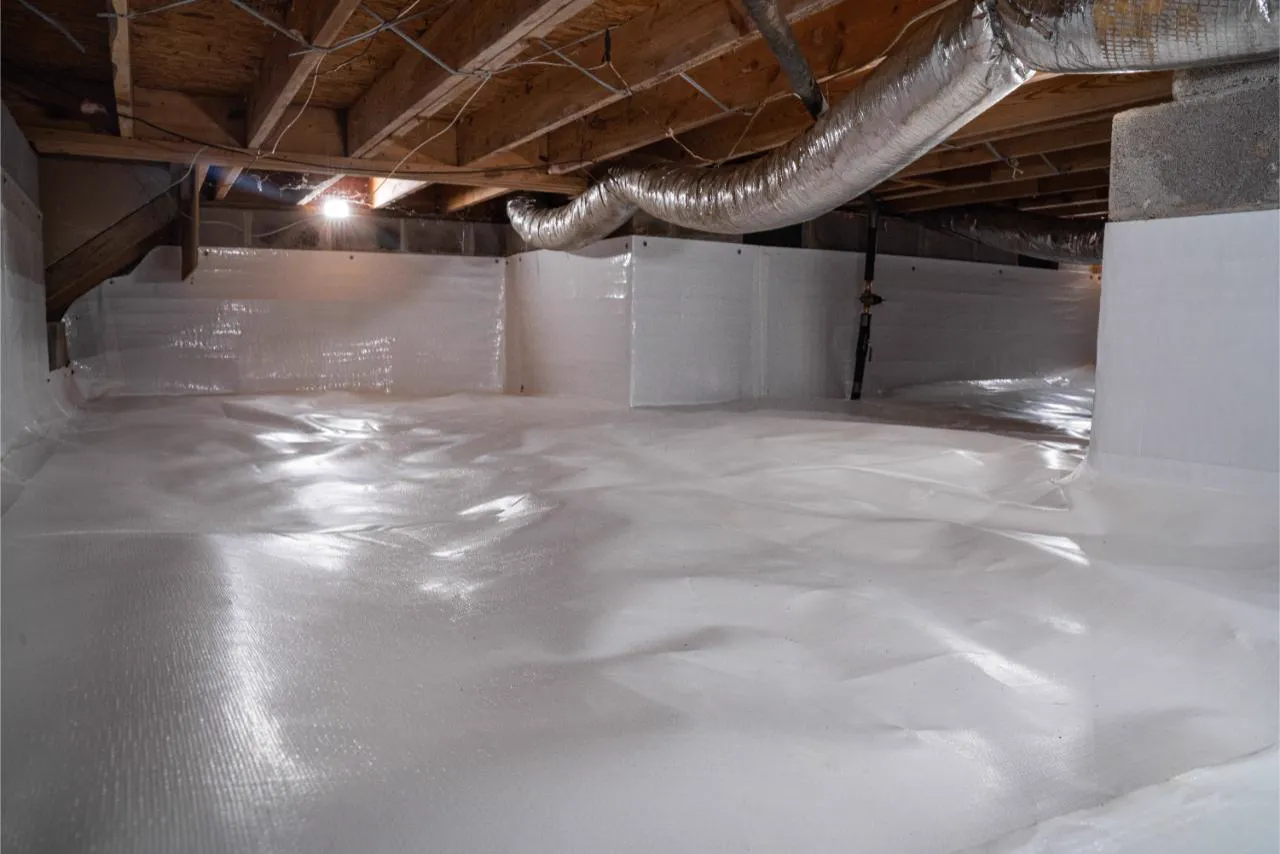
Insulation is the other half of that story. After the vents close, insulation belongs at the perimeter walls and rim joist instead of sagging between the floor joists. The Department of Energy’s guidance on insulation and moisture control lays out why that swap works, and your ducts stop running through a hot, damp box in July.
How do you read the estimate?
Line by line, with one question in mind: does this describe my crawl space, or could it be printed for any house on the street? A real scope names square footage, materials and equipment. A weak one names a price.
What should be spelled out in writing
- Liner thickness and reinforcement. In mils. This is the biggest quality gap hiding between two similar numbers.
- Where the liner stops. Floor only, or sealed up the stem walls and around every pier.
- Water handled first. Drain, sump, basin, and where the discharge line ends outside.
- Vent treatment. Sealed and insulated, or just covered with a grate.
- The dehumidifier. Model, capacity, and how it drains on its own.
- Exterior work. Downspouts, grading and window well drainage — often half the job on this terrain.
- Warranty in plain words. What’s covered, how long, and whether it transfers to a buyer.
About price: a firm number over the phone is a guess, and you’d be the one paying for it. Small dry spaces sit at the low end, while a big footprint with drainage sits well above that. So what you want is a written scope, not a “starting at.”
What should you ask, and what should worry you?
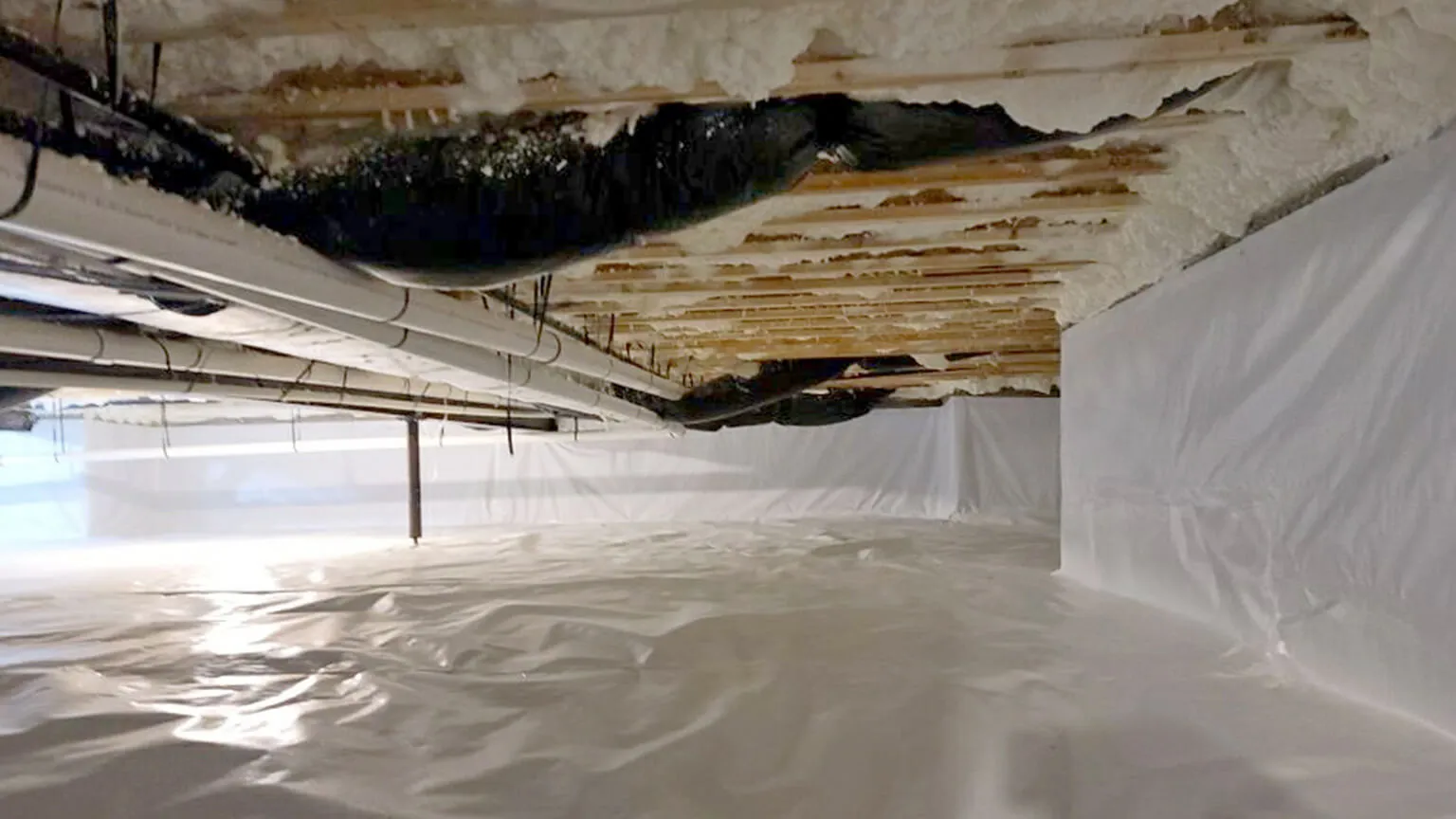
Five questions do most of the sorting. Ask how the liner attaches to the walls and piers. Then ask the thickness in mils, whether vents get sealed or just covered, how the dehumidifier was sized, and whether the warranty follows the house when you sell. Any encapsulation company Sugar Hill homeowners hire should answer all five without hedging.
Add a sixth for this city: ask what they saw outside. If nobody walked the slope and the downspouts, they inspected half your house, and on a hill that’s usually the important half.
Red flags are easier to spot than people expect. Pressure to sign today is one, and a discount that expires when the visit ends is another. Talk about your home falling apart is a sales line rather than a diagnosis, so treat it that way. A crew that won’t crawl to the far corner belongs on the same list, because nobody can price what they didn’t look at.
The one that wasn’t what they thought
Quick story. A homeowner up near the Suwanee Creek Greenway called us about a musty smell, holding a bid for a full encapsulation with a sump system. They’d already decided the crawl space was flooding.
But the dirt said otherwise. No water line on the block, no silt, no fan pattern in the soil. What we did find was condensation dripping off bare ductwork and one downspout dumping against a low corner of the wall.
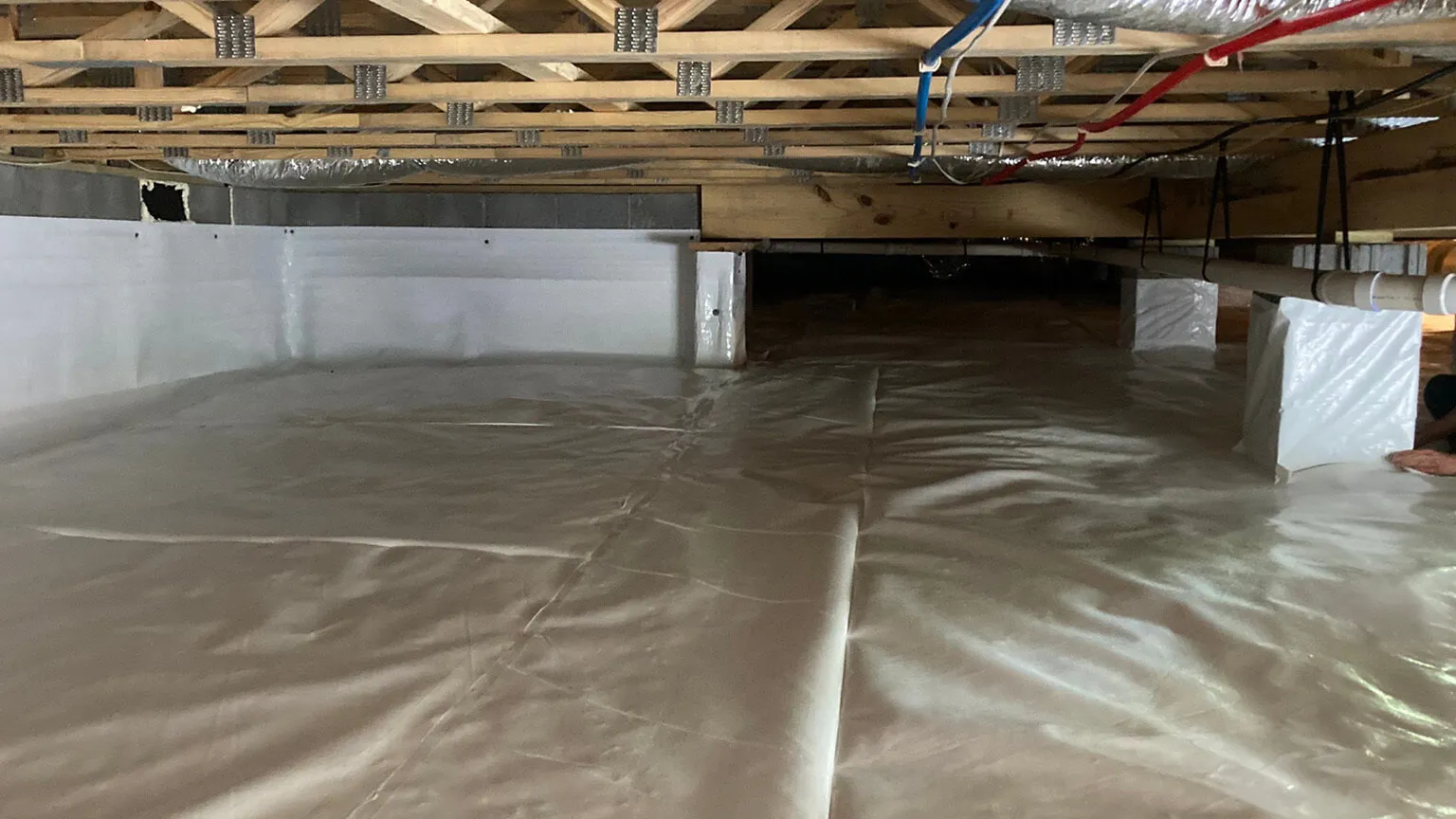
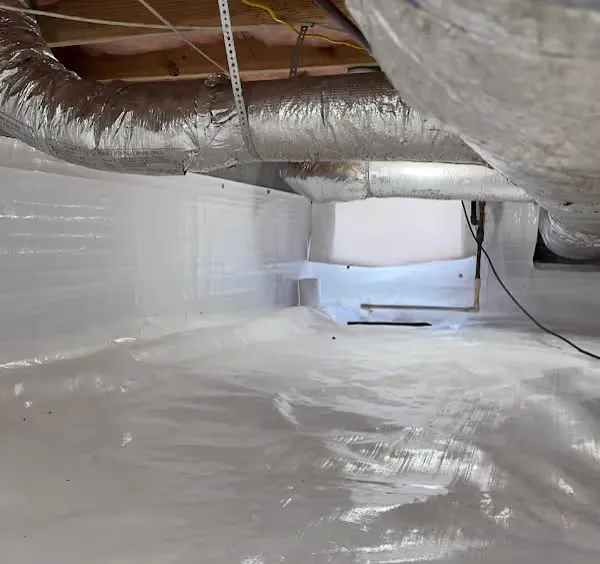
So the plan changed. We carried that downspout away from the house, handled the duct sweat, lined the space and set a sized dehumidifier. No sump, because there was nothing to pump, and the bid got smaller instead of bigger.
Their reaction is the part we remember. Not relief about money exactly — relief about understanding. They finally knew what was happening in their own house, and the guessing stopped.
Why we might be the right fit
We’ve been doing this for over twenty years, and Sugar Hill sits about twenty minutes north of our Lawrenceville shop. Between homes on the slopes above Buford Dam and jobs on the newer streets downtown, we’re up this way most weeks, so odds are good we’ve worked under a house built the same year as yours.
That matters for one plain reason: a warranty is only as strong as the company behind it. If something needs a second look in year eight, you’re calling the same local crews who did the work.
Want to read more first? Our local guide to crawl encapsulation walks through symptoms and options, and the full crawl space repair systems we install are laid out step by step. Neighbors down the highway get the same breakdown for Lilburn best crawl space work. If the lower level worries you more, start with our piece on a flooded basement, since walkout doors taking water in heavy rain is the other call we get here.
Where we work around Sugar Hill
Our shop is in Lawrenceville, so this side of the map is a quick drive. We work throughout Sugar Hill, Buford, Suwanee, Cumming, Gainesville, Flowery Branch, Duluth, Lawrenceville and Dacula, plus the wider Gwinnett area. Anywhere near Suwanee Dam Road, we’ve usually got a truck close by.
Questions we get around town
Most jobs run one to three days, and you can stay home the whole time. Bigger footprints take longer, and so does any space that needs drainage installed before the liner goes down. We give you the day count in writing before we start.
Usually it helps, because your ducts stop running through a hot, damp space in summer and a cold one in winter. Dry air is also easier to cool than wet air. We won’t promise you a specific number, though, since every house and every thermostat is different.
Old batts hanging out of the joists come out, since wet insulation holds moisture instead of stopping it. After the space is sealed, insulation belongs on the perimeter walls and rim joist instead. Your bid should say clearly what comes out and what goes back in.
It slows moisture a little, but it doesn’t seal anything, and it tears the first time somebody crawls across it. Real encapsulation uses a reinforced liner sealed to the walls and piers with taped seams. That connection to the walls is what actually changes how the space behaves.
Watch for a musty smell on the main floor, floors that feel cold or springy, and torn plastic or sagging insulation when you peek in. Standing water or a stain line on the block is a clear signal too. If you’re unsure, a free inspection settles it in about half an hour.
Let’s go look under your Sugar Hill home
The inspection is free, the estimate is free, and nobody pressures you afterward. We’ll show you photos of what’s down there, walk you through what the fix involves, and tell you plainly if the answer is simpler than you expected.
(678) 914-5112Serving Sugar Hill and all of Metro Atlanta · $500 off projects over $3,500 · Live support 7am–8pm, 7 days a week