

The Questions That Reveal the Best Crawl Space Lilburn Company for Your Home
What water is really doing under these houses, what belongs in a written quote, and how to tell a real fix from a fast one.
Here’s the whole thing in one sentence: warm outside air slides under your house, hits cool wood and cool dirt, and drops its moisture right there. That’s it. So if you’re comparing bids and trying to find the best crawl space Lilburn company for your home, understanding that one bit of physics will do most of the sorting for you.
Good news first. This is a fixable problem, and it’s usually smaller than the smell makes it sound. But two companies can quote what looks like the same job and be selling you two completely different things.
So what is the water doing down there?
Condensing, mostly. Hot August air holds a lot of water, and a crawl space floor sits in the low sixties year round. When that air comes through a foundation vent and cools off, the moisture has to go somewhere, so it lands on your joists, your ductwork and the clay.
That’s why a crawl space can get soggy in a month with hardly any rain. Wood starts supporting mold growth at around 20% moisture content, and in a vented Georgia crawl space in July, framing gets there regularly. Nobody made a mistake, either. Vents were simply the building standard back then.
Your crawl space shouldn’t be the most humid room in the house. In a lot of these homes right now, it quietly is.
Why do Lilburn homes behave this way?
Their age, honestly. Lilburn homes were mostly built in the seventies and eighties, back when “waterproofing” meant a coat of tar and hoping for the best. Fifty years is a long time to hope, and the original moisture systems all over town are aging out on roughly the same schedule.
Then there’s the ground. Red clay swells when it’s wet and shrinks when it’s dry, so water travels sideways instead of soaking straight down. On the rolling lots that drain toward Camp Creek, that water finds the low corner of a house and parks there.
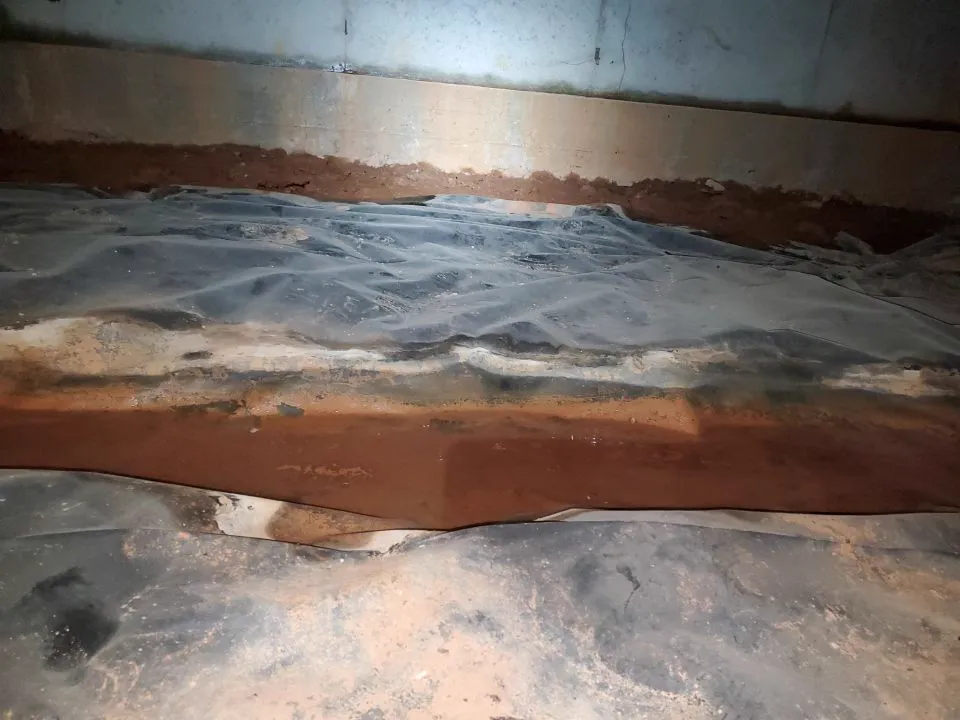
The footing drains are the other local wrinkle. Those 1970s lines are often crushed, collapsed or silted solid by now, and fifty-year-old hardwood roots finish the job. On the older streets near Old Town Lilburn we open a cleanout and find packed clay where water used to move.
Mixed foundations show up here too. Plenty of homes along the Indian Trail corridor have a block basement on the downhill side and a crawl space under an added room. As a result, one house can have two moisture problems, and a crew that only looks at the basement misses half the story.
What should a good company do differently here?
Start outside. A crew that walks the gutters, downspouts and grading before crawling under the house is telling you how they think. Under a mature tree canopy, one clogged downspout can dump hundreds of gallons against a corner of your foundation.
Next, they should handle water before vapor. If a spot puddles after every long rain, a liner laid over it just makes a swimming pool with a nice lid. Drainage and a sump come first.
Worth knowing
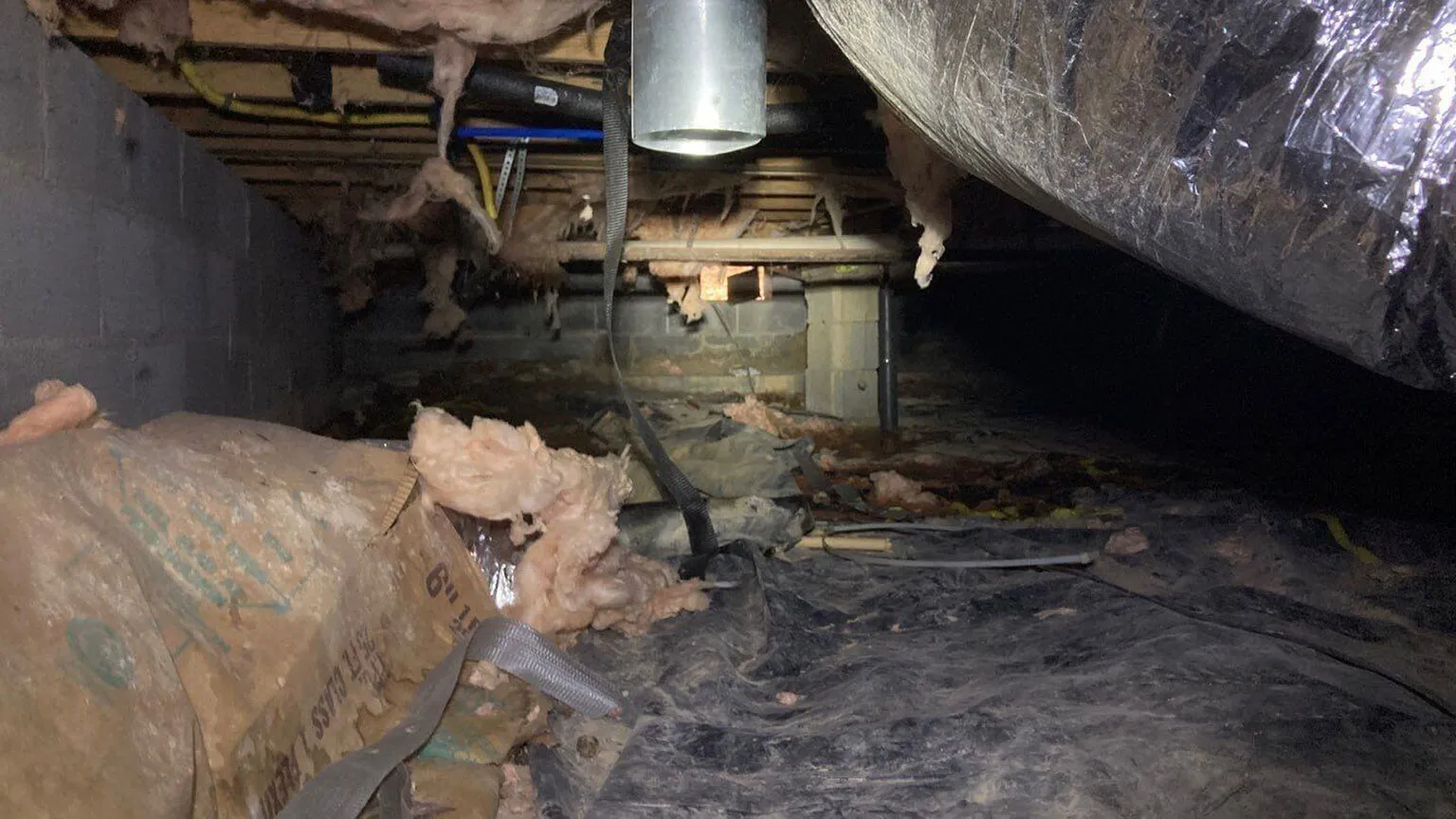
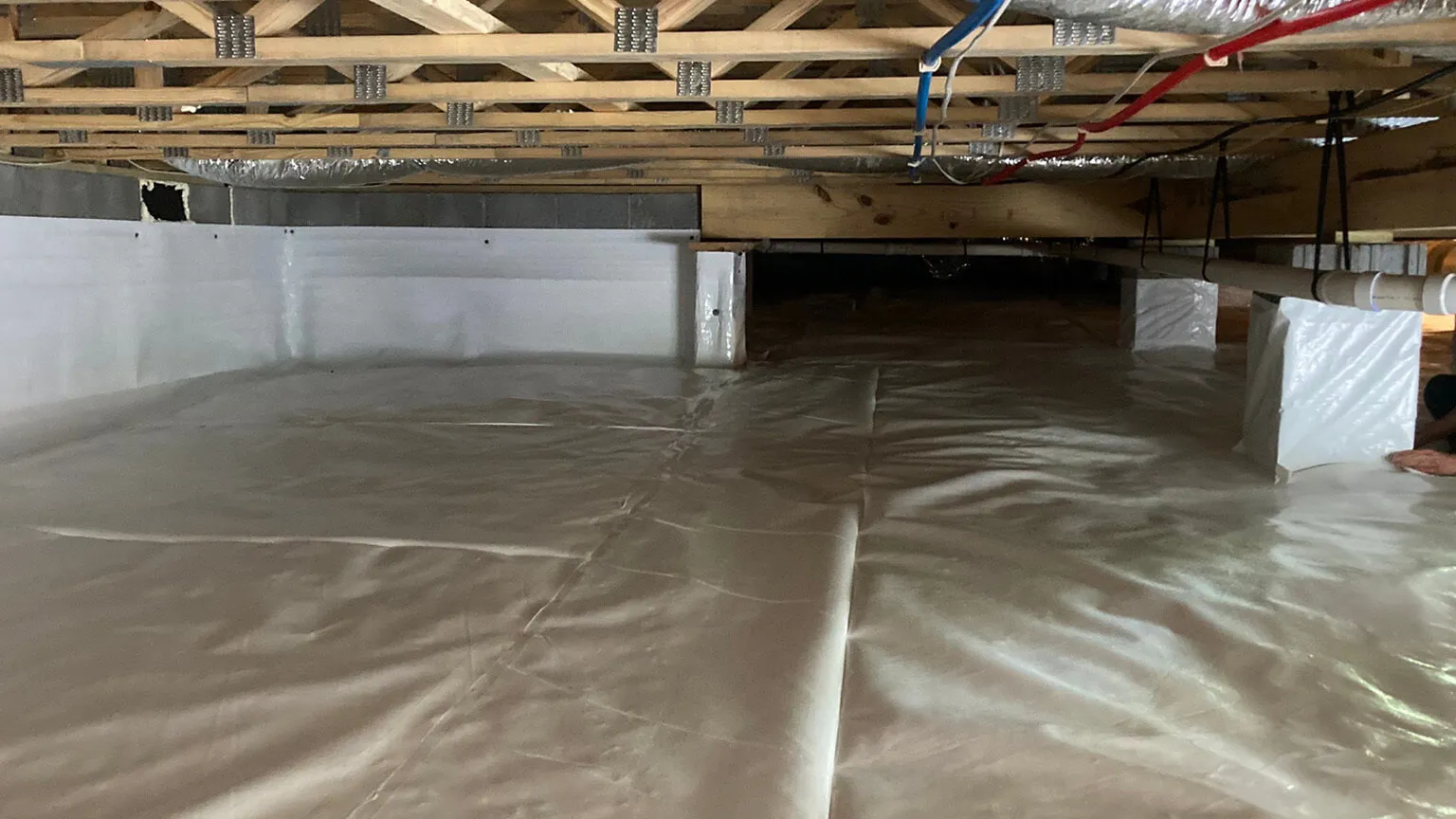
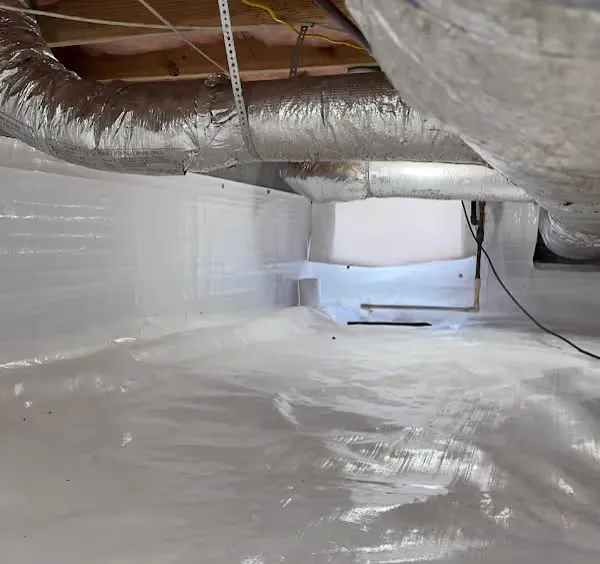
The word “encapsulation” gets used for two very different jobs. One is a heavy liner sealed to the floor, up the walls and around every pier, seams taped and vents closed. The other is a sheet of plastic laid loose on the dirt. Only one of them changes how the space behaves, so make sure the quote says which one you’re buying.
Liner thickness matters more than color, too. A thin sheet tears the first time somebody crawls in to service a duct. Ask for the thickness in mils, then line that number up across your quotes.
What if you don’t need the big version?
Good news, and it’s the part most articles skip: the expensive-sounding fix usually isn’t the one your house needs. Full encapsulation with drainage and a sized dehumidifier is the top of the menu, not the whole menu.
Plenty of homes we look at near Lions Club Park have no standing water at all. They have a torn barrier, two clogged downspouts and dirt that slopes toward the house. Regrade it, extend the downspouts, seal a proper liner, and the humidity drops without anybody trenching a footing.
That’s the feeling we want you to have when we climb back out: relief. Not “how am I going to pay for this,” but “oh good, that’s smaller than I thought.” An honest company will tell you when the fix is modest, even though the bigger job pays better.
How do you read the estimate?
Line by line, asking one question: does this describe my crawl space? A real scope names your square footage, your materials and your equipment. A weak one says “encapsulate crawl space” followed by a number.
What should be spelled out in writing
- Liner thickness and reinforcement. In mils. This is the biggest quality gap between two similar prices.
- Where the liner stops. Floor only, or sealed up the walls and around each pier.
- Vent treatment. Sealed and insulated from the inside, or just covered with a grate.
- Water first. Interior drain, sump, basin and discharge point, if the inspection found water.
- Drain line condition. On a home this age, whether the old footing drain was checked at all.
- The dehumidifier. Model, capacity, and how it drains. Sizing should match your footprint.
- Warranty, in plain words. What’s covered, for how long, and whether it transfers to a buyer.
About price: a firm number over the phone is a guess, and you’d end up paying for that guess. Small dry spaces sit at the low end, while a big footprint with drainage sits at the high end. So ask for a written scope instead of a “starting at.”
What should you ask, and what should worry you?
Six questions do most of the work. How does the liner attach to the walls and piers? What thickness is it? Do the vents get sealed or only covered? How was the dehumidifier sized? Did you check the original footing drain? And does the warranty transfer when I sell? Anyone bidding on the best crawl space Lilburn work should answer all six without hedging.
Red flags are easier to spot than folks expect. Pressure to sign today is one. A discount that expires when the visit ends is another, and so is dramatic talk about your house falling apart, which is a sales line rather than a diagnosis.
One more is specific to this town. Be careful with a bid priced purely off square footage, because around here a home’s age and its old drain lines move the number more than the footprint does. A company quoting Hickory Hills like a 2015 subdivision hasn’t looked closely enough.
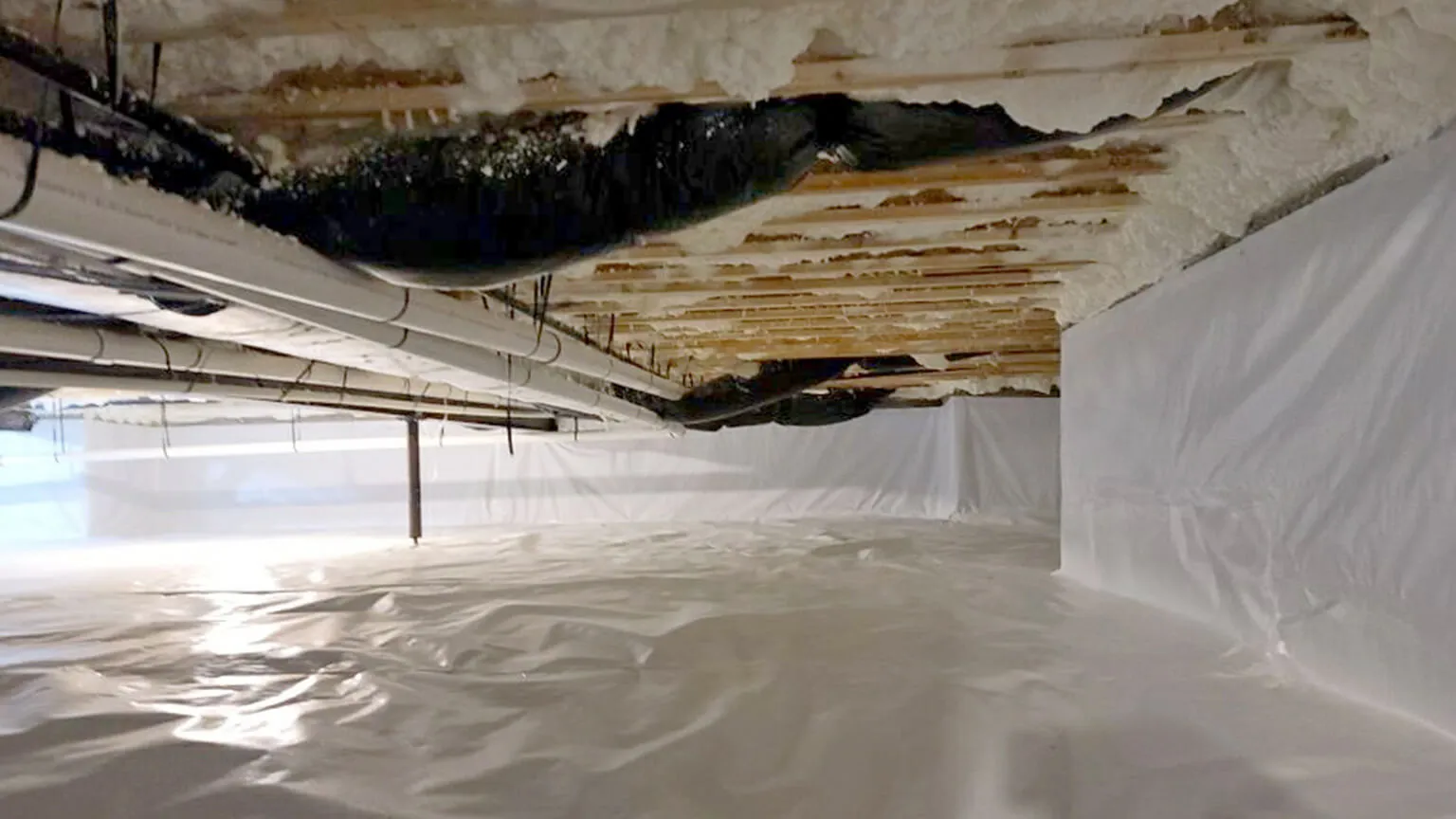
Sealed spaces need their air managed, since you just removed the vents that used to move it. A crawl space dehumidifier sized to your square footage handles that, and it should drain on its own. The U.S. Department of Energy’s guidance on insulation and moisture control lays out why the insulation moves to the walls at the same time.
What does this have to do with the air upstairs?
More than most people connect. Air moves upward through a house on its own, so a good share of what you breathe in the den started out under the floor. That’s why a main-floor closet smells like an old cabin while the crawl space hatch stays shut.
The rest of it is quieter. Hardwood boards near the back wall cup a little. A bedroom over the crawl space feels stuffy, or somebody’s allergies are louder at home than at work, and the EPA’s overview of mold and health explains why damp indoor air does that.
Here’s where it gets encouraging. Fix the moisture source and those symptoms fade without anyone treating them directly. Homeowners tell us the house smells like nothing about a week later, which is honestly the highest compliment a crawl space can receive.
Picture next July instead. Floors feel steadier, the power bill eases up because your ducts stopped running through a swamp, and the space below turns into storage you’d actually use. Better yet, you stop thinking about it.
Why we might be the right fit
We’ve been doing this over twenty years, and Lilburn is about fifteen minutes southwest of our Lawrenceville shop. Between jobs off Five Forks Trickum Road and homes on the older streets around Old Town Lilburn, we’re in this city most weeks, so we’ve very likely worked under a house built the same year as yours.
That history matters for a plain reason: a warranty is only as good as the company behind it. If something needs a second look in year eight, you’ll call the same crews who did the work. We’ll also tell you when the fix is smaller than you feared.
Want to read more before you call? Our local guide to crawl space encapsulation walks through symptoms and options, and the full crawl space repair systems we install are laid out step by step. Neighbors down US-29 get the same breakdown for Norcross best crawl space work. If your lower level worries you more than the crawl space does, start with our piece on flooded basement repair, since seepage along an old block wall is the other thing we find all over this zip code.
Where we work around Lilburn
Our shop sits in Lawrenceville, so this stretch of the map is a short drive. We work throughout Lilburn, Lawrenceville, Snellville, Norcross, Tucker, Stone Mountain, Duluth, Grayson and Loganville, plus the wider Gwinnett area. Anywhere along Rockbridge, Killian Hill or the Indian Trail corridor, we’ve usually got a truck close by.
Questions we get around town
It’s a heavy liner sealed across the dirt floor, up the walls and around the piers, with the seams taped and the vents closed. Any standing water gets drained first. After that the space is dry and conditioned, so it acts like part of your house.
The house usually tells you first. A musty smell in a main-floor closet, cold or springy floors, cupping hardwood, or a power bill that climbs every summer are the common signs. A quick look with a light and a moisture meter settles it, and that look is free.
It helps a little, but it isn’t the same job. Thin sheeting laid loose on the dirt tears quickly and leaves the walls and piers open, so humid air still gets in. A reinforced liner sealed to the walls is what changes how the space behaves.
If it’s wet or sagging, it comes out, because damp batts hold moisture against your subfloor. Once the vents are sealed, new insulation goes on the perimeter walls and rim joist instead of between the joists. That swap is usually why floors feel warmer afterward.
It often helps, though we won’t promise you a number. Dry air is easier to heat and cool than wet air, and your ducts stop running through a hot humid box all summer. Most homeowners notice the comfort change before they notice the bill.
Let’s go look under your Lilburn home
The inspection is free, the estimate is free, and nobody pressures you afterward. We’ll show you photos of what’s actually down there, explain what it takes to fix, and say plainly when the answer is simpler than you expected.
(678) 914-5112Serving Lilburn and all of Metro Atlanta · $500 off projects over $3,500 · Live support 7am–8pm, 7 days a week