

Wet Crawl Space in Snellville: What Causes It, and How It Gets Fixed
Start with the good news: this is one of the most common things we look at, and it has a clear, permanent fix.
Let’s start at the end, because the ending is the friendly part. A wet crawl space Snellville homeowners find under an eighties or nineties house is normal, expected, and one of the most solvable problems in the whole house. It isn’t a sign you did anything wrong. It’s just what happens when bare Georgia clay sits under a floor for forty years with open vents on every wall.
So take a breath. Then let’s walk through what’s happening down there, in plain English, with no drama attached.
Why does this feel worse than it is?
Mostly because you can’t see it. A crawl space is the one room you’ve never really stood in, so imagination fills the gap. Meanwhile the actual mechanism is boring: damp ground, humid air, cool wood, condensation.
Here’s the thing — we crawl into these every week around Gwinnett, and the pattern repeats so reliably that we can usually guess what a house looks like underneath before we open the hatch. That’s not a brag. It’s proof you’re in very common company.
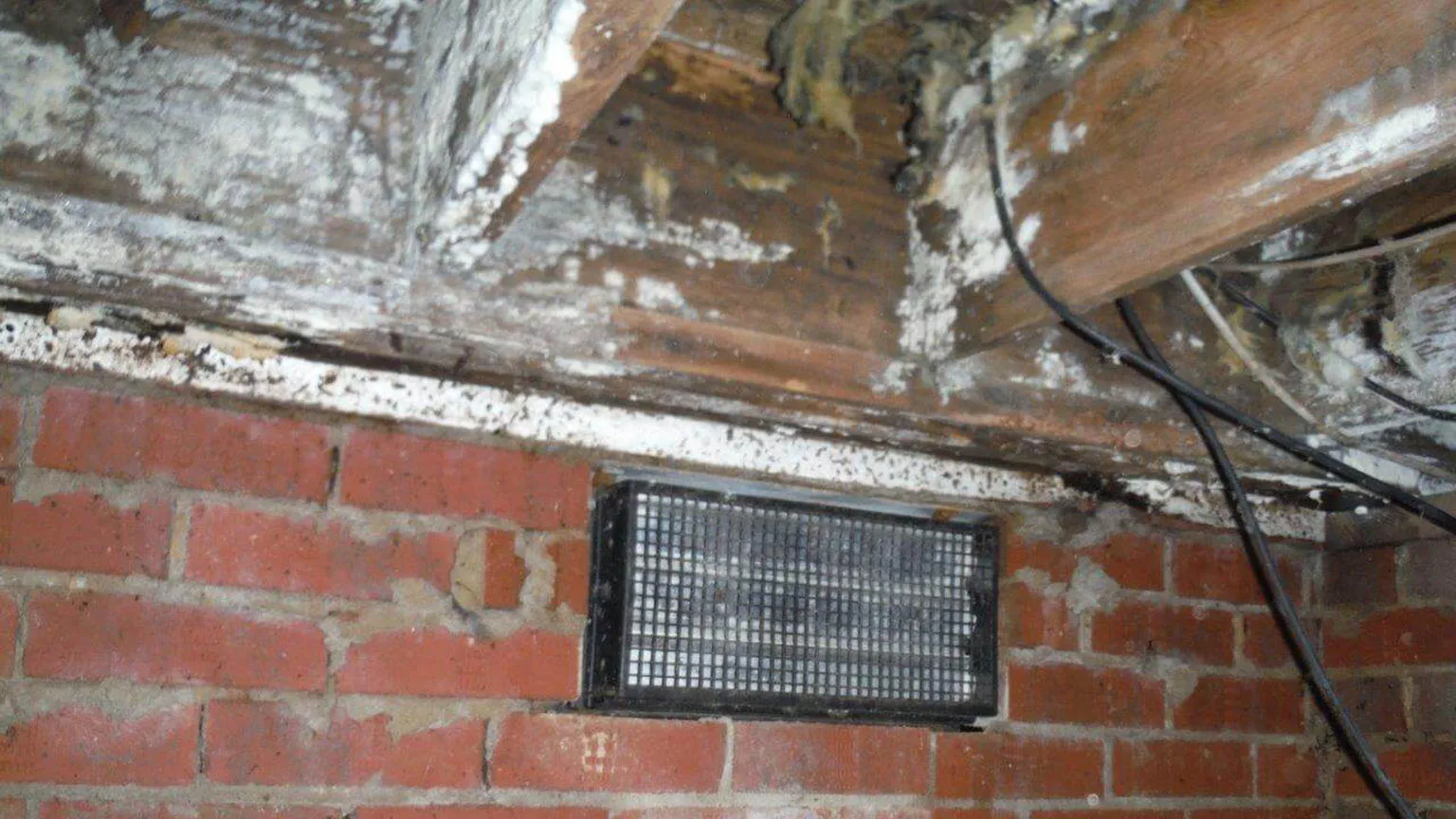
Wood tells the truth down there. Framing starts supporting mold growth once its moisture content reaches roughly twenty percent, and in a vented Georgia crawl space in July, joists hit that number regularly. That’s a measurement, not a scare. So we bring a meter and show you the reading, because a number beats an opinion every time.
So what’s actually making it wet?
Three things, and they stack. First, bare dirt releases water vapor around the clock. Second, red clay holds rain like a sponge and lets it go slowly, so the ground stays damp long after the storm has moved on. Third — and this one surprises almost everyone — the foundation vents.
Open vents were code for decades, built on the idea that outside air dries a crawl space out. In a humid climate, however, it works backward. Warm summer air rolls in, meets a cool subfloor, and drops its moisture right there. In other words, the vents installed to dry the space have been quietly watering it since the house was framed.
Worth knowing
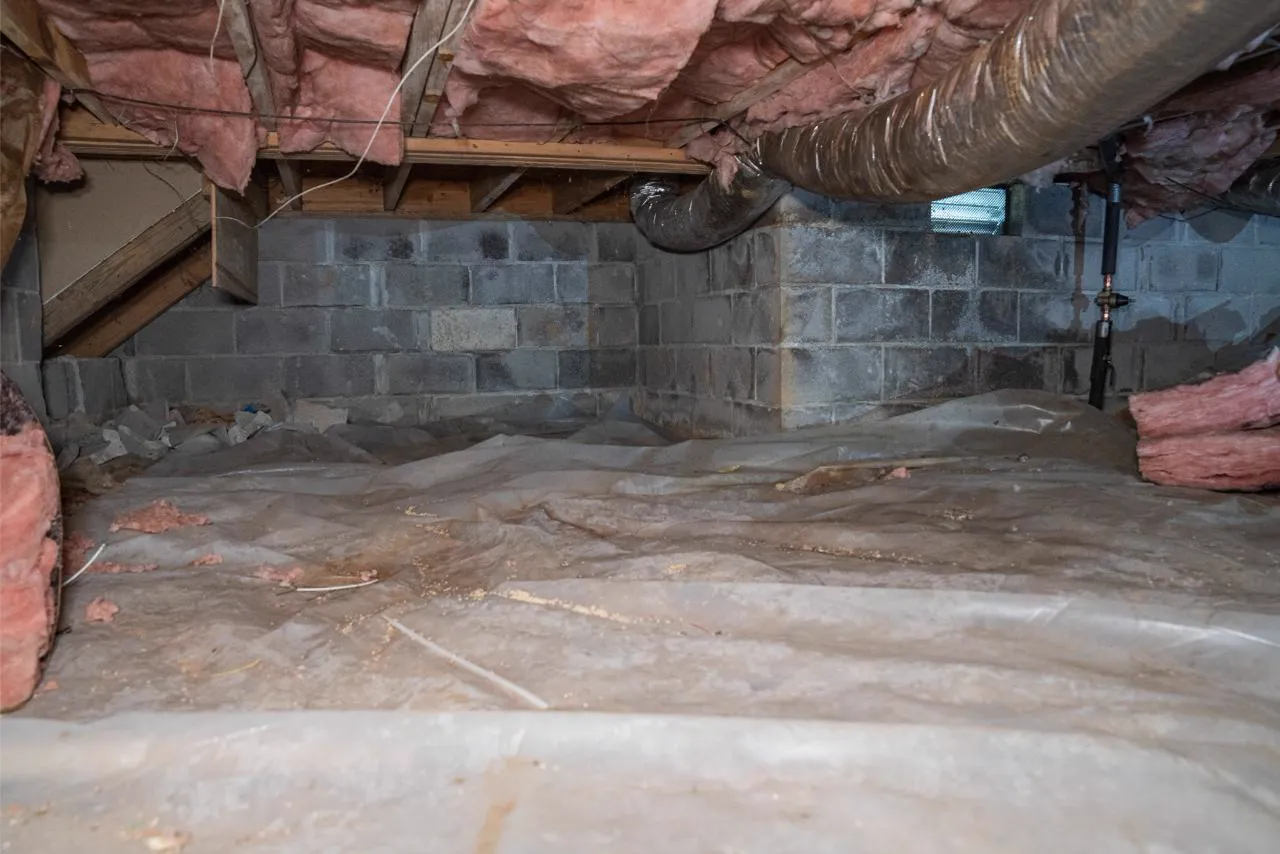
Torn plastic lying loose on the dirt is not a vapor barrier. It’s a suggestion. A real barrier is thick, sealed at every seam, and run up the walls so the ground can’t feed the room anymore.
Snellville adds one more wrinkle: terrain. The land rolls toward the Yellow River and Big Haynes Creek, so plenty of lots sit downhill from a lot of yard. Homes off Dogwood Road catch runoff with a running start. That said, a house on a slope isn’t a bad house — it just needs its water aimed somewhere on purpose.
Is yours mild, or is it more than that?
Fair question, and you can answer most of it without ever going under the house. None of what follows is bad news, either. It simply tells you where you sit on the scale.
Reading the signs
- Musty smell, nothing visible. Moisture is arriving as vapor. Mild, and the least expensive version to solve.
- Indoor humidity parked in the mid-sixties. Your air conditioner is fighting the ground, and the ground doesn’t get tired.
- Batt insulation hanging between the joists. Fiberglass drinks moisture, gets heavy, then lets go.
- White fuzzy bloom on the rim joist. Surface growth on damp wood. Still very fixable at this stage.
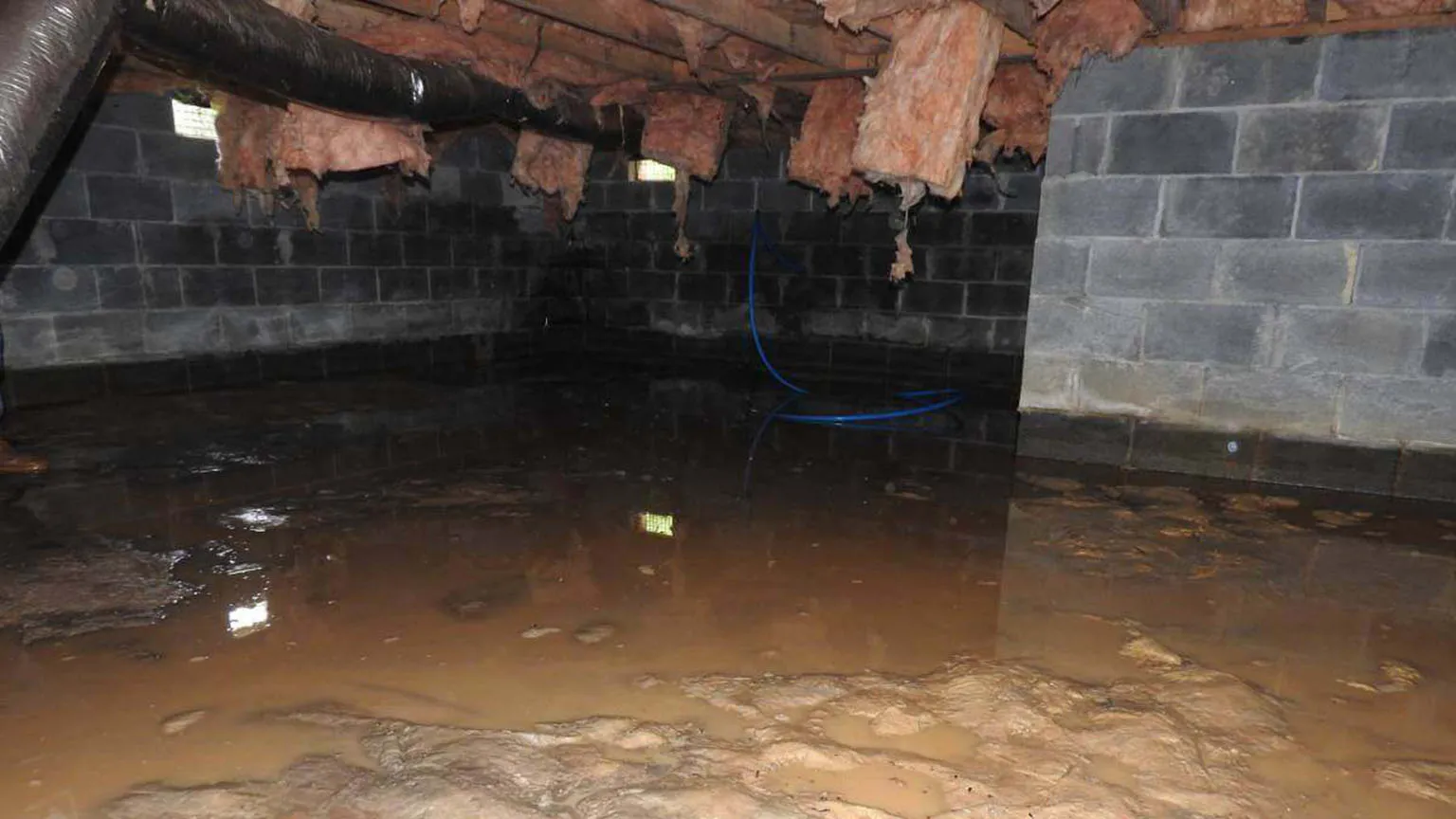
- Standing water or soft mud after a storm. Worth a look. Bigger scope, same basic idea.
Most Snellville homes we see land in the first three lines. Only a small share ever reach standing water, and even those come back to dry. Either way, you’re looking at a repair with a clear finish line.
Where do homeowners get steered wrong?
Now here’s the part that costs people real money, and it’s why we wanted to write this one. A wet crawl space Snellville houses develop gets misdiagnosed constantly — not by bad people, just by folks treating the symptom instead of the source.
The classic version around here is the hydraulic cement patch. Someone finds a damp block wall, smears cement over the wet spot, and calls it sealed. Water, however, doesn’t quit — it moves eight inches left and comes through somewhere else. We’ve been in houses off Dogwood Road with five old patches in a row, like breadcrumbs marking every place the water got politely redirected.
Same story upstairs. A lot of Snellville lower levels were finished in the nineties, and that drywall has been quietly wicking moisture ever since. The fix isn’t more drywall. It’s stopping the water first, then finishing.
If a repair doesn’t change where the water goes, it isn’t a repair. It’s a delay with an invoice attached.
The other misfire is a bag of desiccant or a fan in the vent. Both feel productive, and both are trying to dry a room that’s connected to open soil. That’s like running the AC with the windows up.
Homeowners in Havenwood and Herrington tend to compare bids carefully, and honestly we like that. Ask any company where the water comes from and how their plan changes its path. If the answer is vague, keep shopping. Our crawl space repair page lays out what we install and why, so you can hold every bid to the same standard.
What happens if you just leave it?
Nothing sudden, honestly. It widens slowly. Insulation keeps dropping, humidity upstairs stays high, and your cooling system works a little harder each summer. Over enough years, damp framing softens, which turns a sealing job into a carpentry job.
That’s the whole case for handling it sooner — cost, not fear. Homeowners near Ozora often tell us they wish they’d looked five summers earlier, because the scope would have been shorter.
How does the fix actually work?
Simpler than most people expect. Encapsulation means treating that space as part of the house instead of as outdoors. Here’s the order, and the order matters more than any single product.
- Handle the water first. Downspouts, grading, and an interior drain with a sump if groundwater is arriving.
- Clear it out. Old plastic, debris and soaked insulation come out. Wood gets cleaned and treated where it needs it.
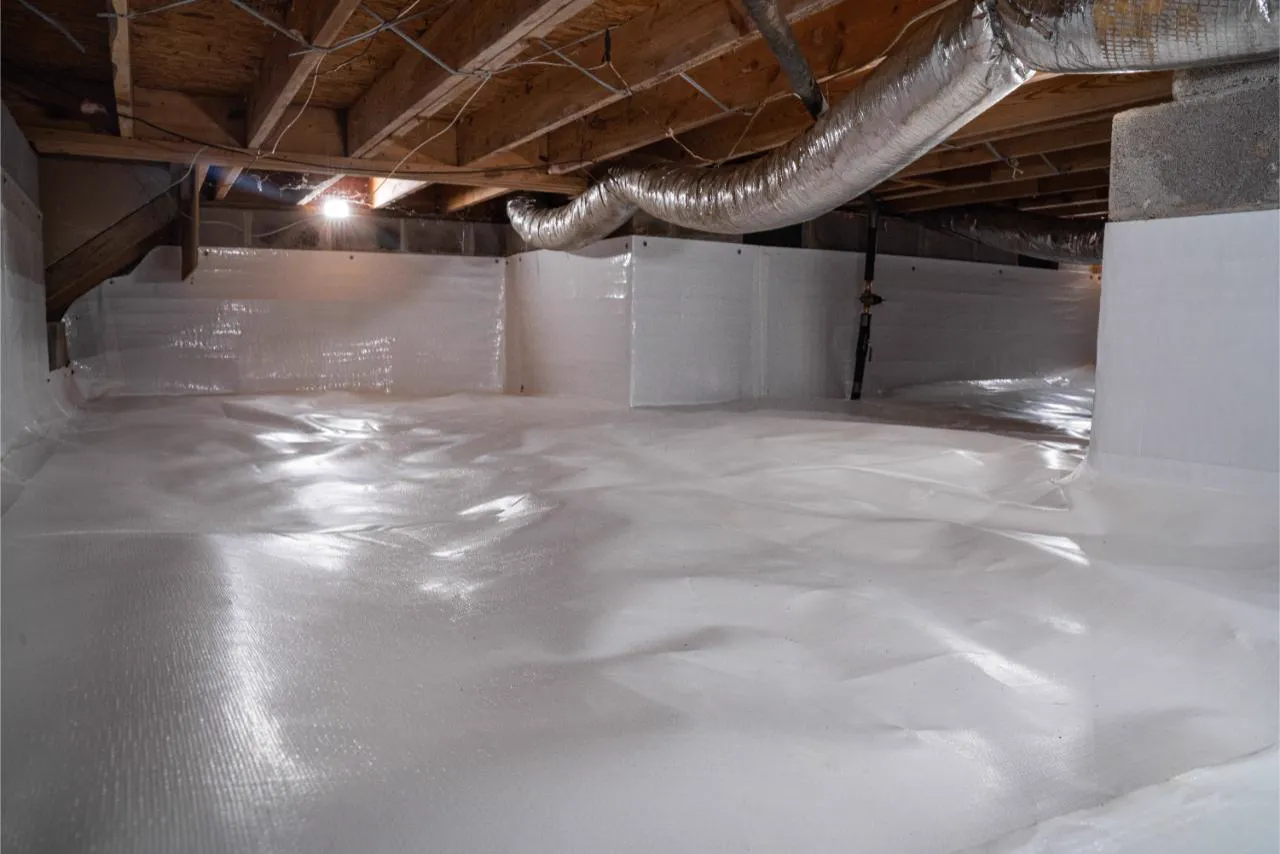
- Line everything. A heavy liner runs across the dirt and up the walls, with every seam sealed and every pier wrapped.
- Close the vents. Once the ground is sealed, outside air has no drying job left — only a wetting one.
- Insulate the walls, not the ceiling. Foam on the stem walls holds the space near house temperature, which stops condensation.
- Control what’s left. A dehumidifier keeps humidity steady, and we set a gauge you can read without crawling anywhere.
Most jobs run two to four working days. Price follows square footage, ceiling height, and whether water has to be moved, so our encapsulation cost breakdown walks through the drivers before you pick up the phone. No flat number, since no two crawl spaces match.
We also put the scope in writing, with proof of insurance and a warranty you can read in one sitting. Plus the same crews do the work — no stranger showing up at seven in the morning.
What does this have to do with the air upstairs?
More than almost anyone expects, and this is the part that changes how people think about the whole project. Your house breathes from the bottom up. Warm air rises and leaves through the roof, so replacement air gets pulled in from the lowest point available.
That’s the stack effect, and it means a real share of the air in your den started on the dirt below it. So when the ground is damp, that moisture rides up through gaps around pipes and lands in your hallway as that soft, been-in-a-tent smell. An air freshener was never going to win that fight.
If you want the health side explained by somebody who isn’t selling anything, the EPA’s page on mold and health is short and level-headed, and the CDC’s guidance on mold in the home covers the same ground. We’d genuinely rather you read a neutral source than take our word for it.
Here’s the encouraging half. Seal the ground, close the vents, hold humidity in the fifties, and the supply line for all of that simply stops. The smell fades in a week or two because the source is gone, not covered. Floors quit feeling cold in the mornings. The number on your thermostat finally sits still.
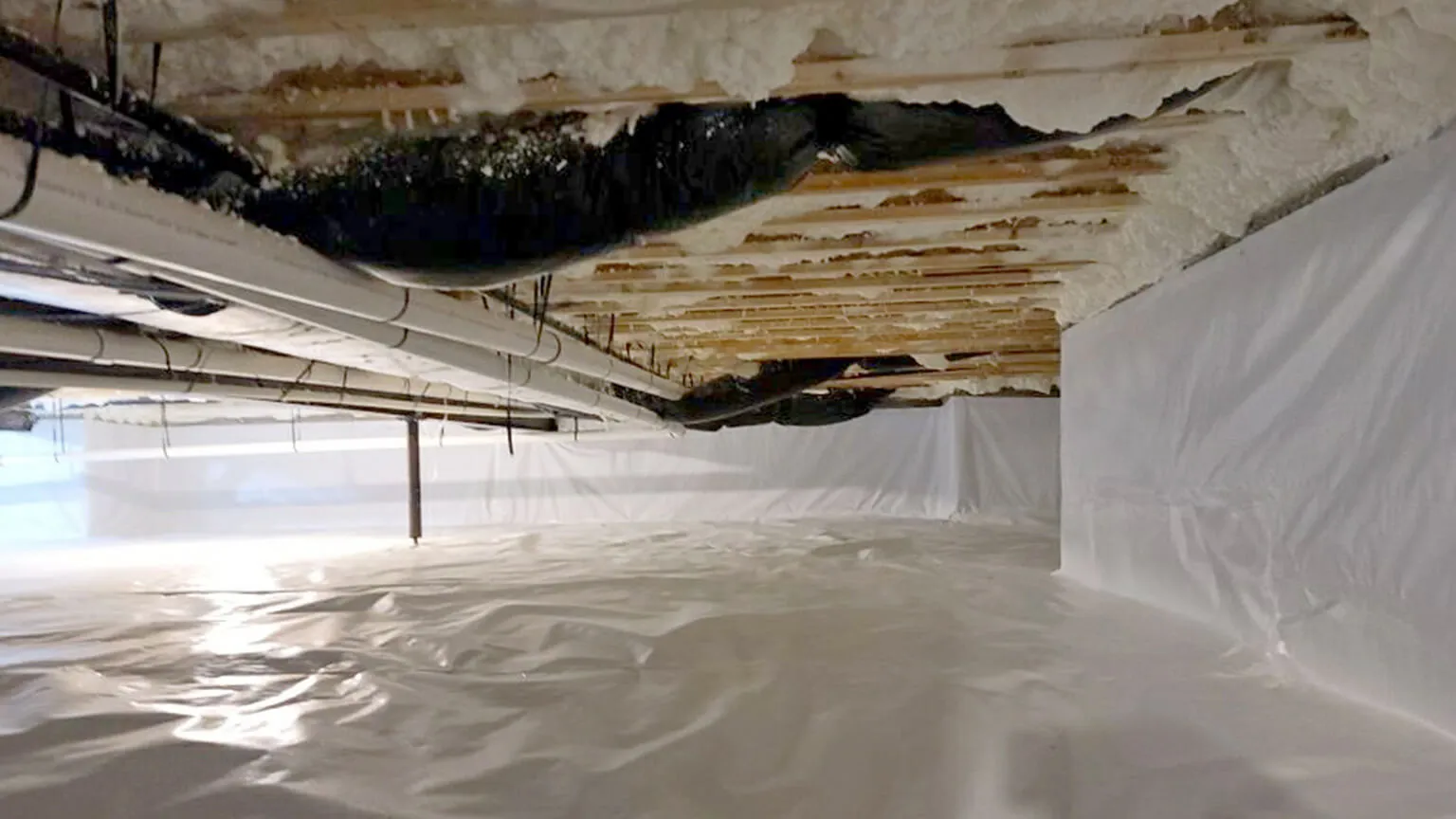
A year later, most folks stop thinking about it entirely. One homeowner near Briscoe Park told us the strangest part was walking guests through the front door and not wondering what the hallway smelled like. That’s the real payoff — not a product, just one less thing on your mind.
Why do so many Snellville homes hit this together?
Because the city was built in one long wave, roughly 1975 through 1995. A whole town’s worth of original moisture systems are aging out on the same schedule. Neighbors compare notes over coffee near Towne Center at Snellville and realize three of them got the same news the same month.
Split-levels and ranches with block basements dominate here, and many have a finished lower level on one side and a crawl space on the other. Both halves share the same groundwater. Our flooded basement repair guide covers that half of the story, and the Buford wet crawl space guide shows how similar homes behave up north.
Where we work around Snellville
We’re based in Lawrenceville, about fifteen minutes north, so we’re in this corner of Gwinnett constantly. That includes Snellville, Grayson, Loganville, Lilburn, Stone Mountain, Tucker, Lawrenceville, Centerville, Dacula and the wider Gwinnett County area. If you’re close and not on that list, call anyway — odds are good we’re already working a street or two over.
Questions Snellville homeowners ask us
Most crawl spaces take two to four working days from start to cleanup. Add a day if drainage or a sump pump is part of the scope, and another if the space is tight or packed with debris. You can stay in the house the entire time, since all of the work happens below the floor.
Usually it helps, though how much depends on your house and your habits. Dry air is much easier to cool than damp air, so your system runs shorter cycles all summer. Sealing the walls also brings your ductwork inside the conditioned envelope, which stops the energy you were losing under the floor.
If it’s wet, sagging or falling, it comes out — damp fiberglass holds moisture against the wood instead of protecting it. After that, insulation goes on the stem walls rather than back up between the joists. That keeps the whole space near house temperature, which is what stops condensation from forming again.
As a short-term step it beats bare dirt, but it won’t hold up. Thin sheeting tears, sinks into the red clay, and leaves every seam and pier open for vapor to slip past. A real system uses heavy liner, sealed seams, covered walls and controlled humidity — that combination is what makes the result permanent.
Start with your nose and your thermostat. A musty hallway, indoor humidity above sixty percent, cold floors in winter, or insulation you can see hanging down all point the same direction. If any of those sound familiar, a free inspection with a moisture meter will settle it in about half an hour.
Let’s find out what your Snellville crawl space really needs
We’ll go under the house, take real moisture readings and photos you can see for yourself, then explain the fix in plain language. The inspection is free, the estimate is free, and nobody pressures you. If all you need is a small thing, we’ll tell you that and go home.
(678) 914-5112Serving Snellville and all of Metro Atlanta · $500 off projects over $3,500 · Live support 7am–8pm, 7 days a week