

Wet Crawl Space in Buford: What Causes It, and How It Gets Fixed
Start with the finished picture — bright, sealed and dry — then work backward to how a house gets there.
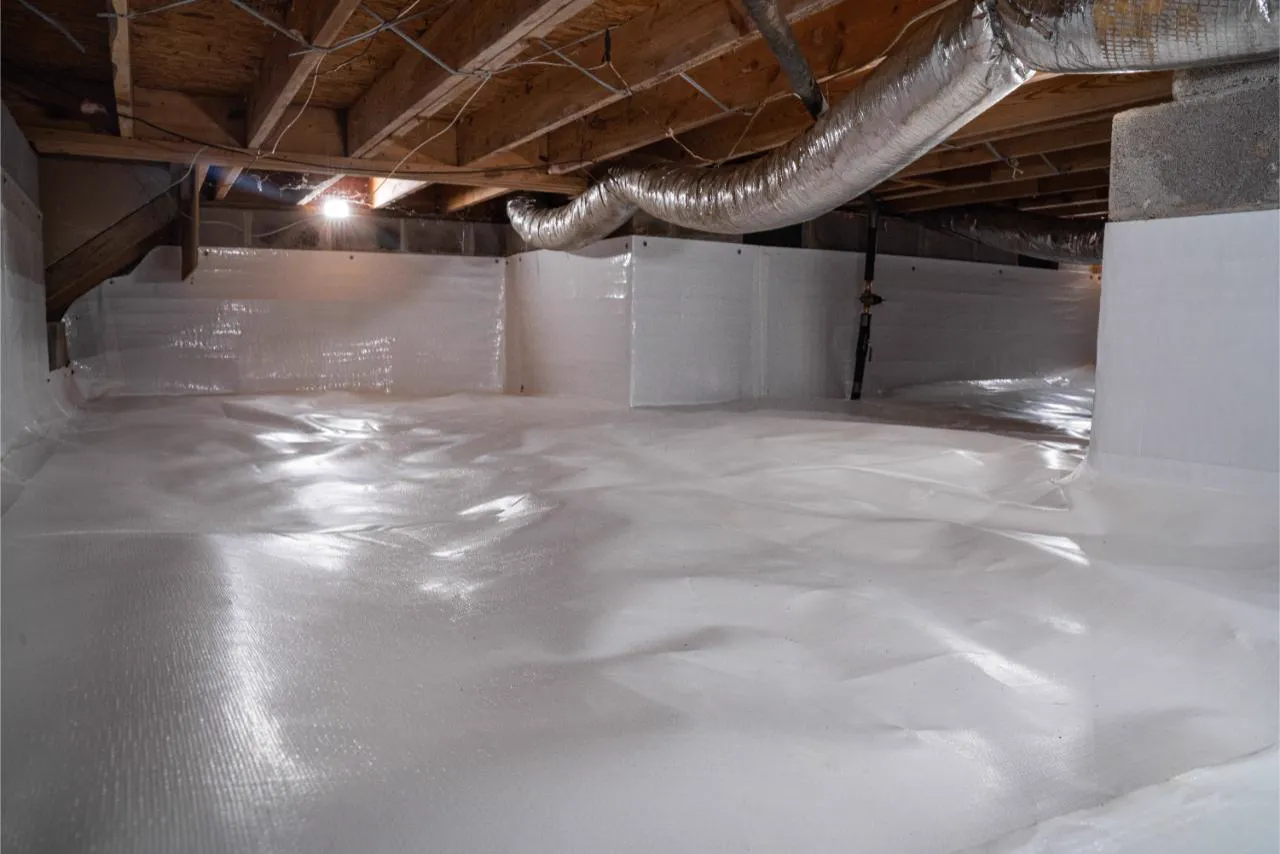
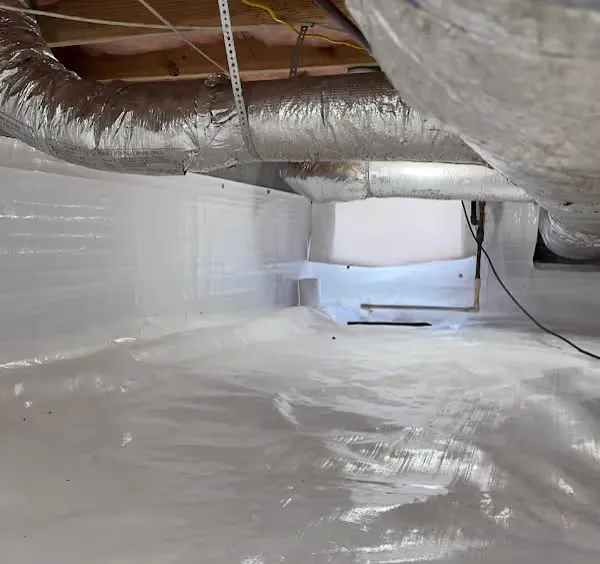
Picture the finished version first. You open the hatch and a light clicks on over a floor of clean white liner that runs up the walls and wraps every pier. The air smells like nothing at all, a small gauge reads in the low fifties, and the wood overhead is dry to the touch. That’s how a wet crawl space Buford homeowners have been living over ends up looking, and honestly, getting there is far less dramatic than most people expect.
Good news right up front: this is one of the most common things we get called about, and it’s very fixable. Better yet, the whole job happens under the floor. Nobody has to move out, and nobody has to open a wall.
So why start with the after picture?
Because the before picture is where people get stuck. You smelled something musty in the hallway, so you searched, and every result showed a dark hole full of hanging insulation. That’s the scary version, and it isn’t the useful one.
The useful version is the sealed one. Once you know how the finished space looks, every step in between makes sense, since each one exists to get you to that photo. Think of it as a recipe read backward — the cake explains the flour.
What’s actually making it wet down there?
Three things stack up, and they’re all ordinary. First, bare dirt gives off water vapor around the clock, because soil is never truly dry. Second, red clay holds rain like a sponge and lets it go slowly, so a crawl space stays damp long after the storm has passed.
Third — and this is the one that surprises everybody — the vents. Open foundation vents were required for decades on the theory that outside air dries a crawl space out. In a humid climate, however, warm outside air hits cool pipes and a cool subfloor and drops its moisture right there. In other words, the vents that were supposed to dry the space have been quietly watering it every summer.
Worth knowing
Old torn plastic laid loose on the dirt is not a vapor barrier. It’s a suggestion. A real barrier is thick, sealed at every seam, and run up the walls so the ground can’t feed the space anymore.
Wood keeps honest records, too. Framing starts supporting mold growth once its moisture content climbs to roughly twenty percent, and in a vented Georgia crawl space in July, joists reach that number regularly. So we bring a meter and show you the reading, which beats taking anybody’s word for it.
Is yours mild, or is it more than that?
Fair question, and you can get most of the way to an answer without ever going under the house. None of the signs below are bad news. They just tell you where you sit on the scale, so you can decide what’s worth doing and when.
Reading the signs from upstairs
- Musty smell, nothing visible. Moisture is arriving as vapor. Mild, and the least expensive version to solve.
- Indoor humidity stuck in the mid-sixties. Your air conditioner is fighting the ground, and the ground is patient.
- Insulation sagging between the joists. Fiberglass soaks up moisture, gets heavy, then lets go.
- White fuzzy bloom on the rim joist. Surface growth on damp wood. Still very fixable at this stage.
- Standing water or mud after a rain. Bigger scope, same idea — move the water first, then seal.
Want the health side from somebody who isn’t selling anything? The CDC’s page on mold and your home is short, plain and calm. We’d rather you read a neutral source than trust a pitch.
Why do so many Buford homes hit this at once?
Here’s the thing about this town. Buford grew in one long wave from the mid-nineties through about 2015, which means a whole lot of original moisture systems are aging out on roughly the same schedule. Neighbors trade notes on the walking trails at Little Mulberry Park and realize three of them got the same news in the same month.
Terrain does the rest. The ground here changes grade fast, especially as you move toward the lake, and living near Lake Lanier is wonderful right up until the water table decides your crawl space is part of the lake. Lots in Lanier Springs sit close enough to that water table that groundwater arrives with a running start. Up in Chateau Forest, the slopes send yard runoff toward the back of the house. Out along the Village at Deaton Creek edge, homes built tight and modern hold moisture in once it finds a way inside.
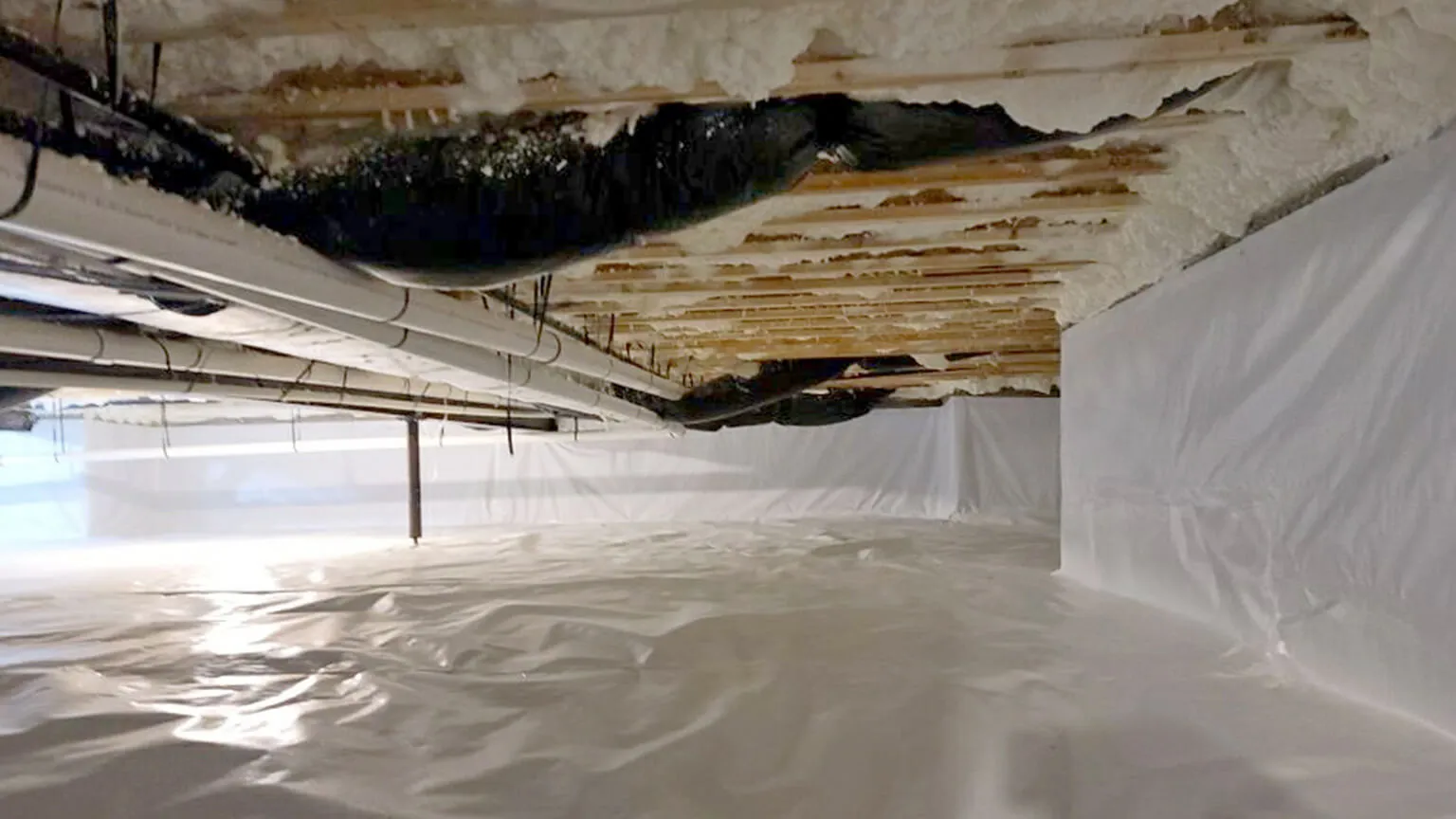
Then there’s the older side of town. Homes around the historic downtown core often sit on stone and block foundations built long before anybody waterproofed anything, so those crawl spaces are damp for perfectly logical reasons. They respond beautifully to the same treatment. Age isn’t the enemy here — untreated ground is.
We’re up and down GA-20 most weeks, so we see the pattern by street and by decade. If your basement side is involved too, our flooded basement repair guide covers that half of the house.
Where does most advice stop?
Right about here. Nearly every article online tells you the same three things: lay plastic, close the vents, add a dehumidifier. All true, and all incomplete, because none of it addresses where the water is coming from in the first place.
Stop the source first. That means downspouts carried well away from the wall, grading that slopes away instead of toward the house, and a drain with a sump if groundwater is genuinely pushing in. Seal a space that’s still taking on water and you’ve built a very expensive terrarium.
Sealing is the last step, not the first. Water gets handled, then the space gets closed. Do it in that order and it stays fixed.
The other thing most advice skips is insulation placement. Fiberglass belongs nowhere near a damp crawl space ceiling, since it holds moisture against the wood it’s meant to protect. Foam on the stem walls keeps the space near house temperature, and warm surfaces don’t collect condensation. The Department of Energy’s guide to insulation and moisture control walks through the reasoning.
Left alone, a wet crawl space in Buford doesn’t do anything sudden. It just widens quietly. Insulation keeps falling, humidity upstairs stays high, and damp framing eventually softens, which turns a sealing job into a carpentry job. That’s a cost argument, not a scare tactic.
How does the fix actually work?
Simpler than people expect. Solving a wet crawl space in Buford means treating that space as part of your house instead of as outdoors. Here’s the order we work in, every time.
- Handle the water. Gutters, downspouts, grading, and interior drainage with a sump where groundwater needs somewhere to go.
- Clear it out. Old plastic, debris and wet insulation come out. Wood gets cleaned and treated where it needs it.
- Line everything. Heavy liner across the dirt and up the stem walls, seams sealed, piers wrapped.
- Close the vents. Once the ground is sealed, outside air has no drying job left — only a wetting one.
- Insulate the walls, not the ceiling. That’s what stops condensation from starting over.
- Control what’s left. A dehumidifier holds humidity steady, plus a gauge you can read without crawling anywhere.
Most jobs run two to four working days. Pricing follows square footage, ceiling height, and whether water has to be moved, so our encapsulation cost breakdown explains the drivers before you ever pick up the phone. The crawl space repair page shows exactly what goes in.
What did this look like for one Buford family?
A homeowner near the historic downtown district called us about a block-and-stone foundation with a crawl space that had never been touched. Her complaint was small: the guest bedroom smelled like a tent, but only in summer. She’d already replaced that carpet once, which tells you how long it had been going on.
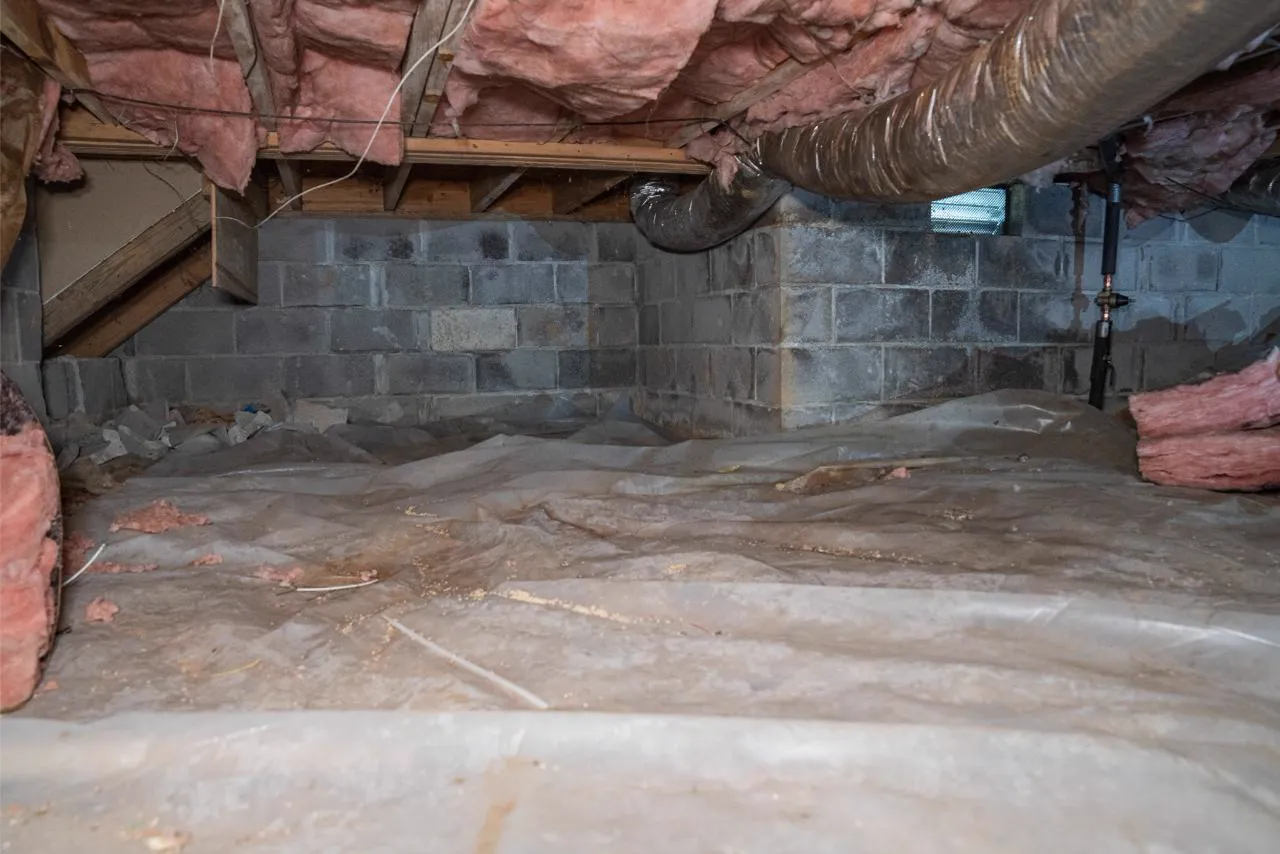
Under the house we found bare dirt, shredded plastic, and batts hanging down like laundry. Nothing structural was in trouble, though, and we told her so in the first ten minutes, because that’s the part people actually need to hear. Her readings were high, the cause was obvious, and the plan was short.
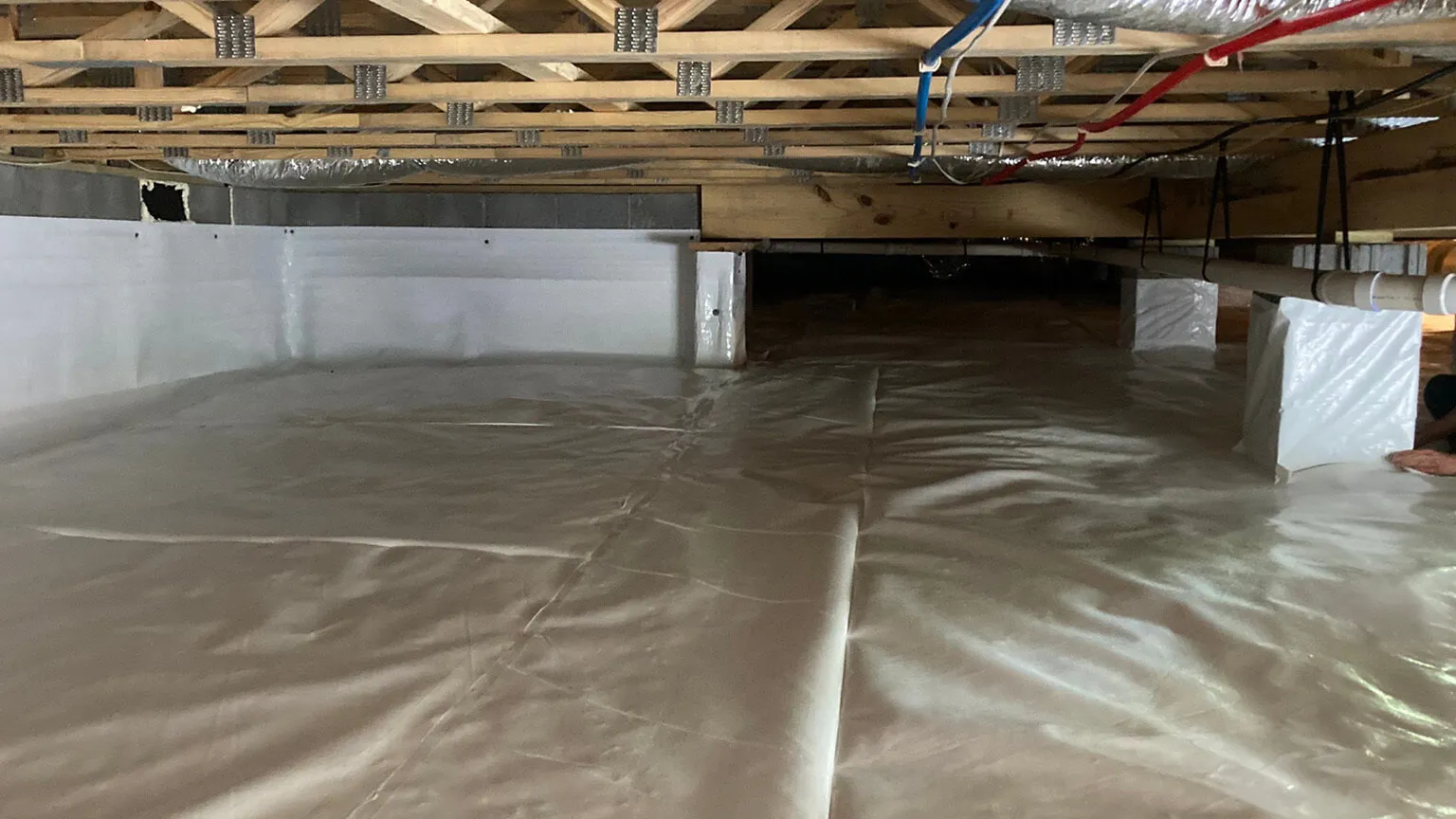
Her fix took three days. Grading and downspouts on day one, cleanout and liner on day two, wall foam, sealed vents and a dehumidifier on day three. When she stopped by the Mall of Georgia that weekend and came home, the guest room smelled like nothing — which is exactly what a bedroom should smell like.
The real change, she said later, was mental. She stopped listening for the smell and started using that guest room for guests again. That’s the feeling we’re after — your family and your home, looked after, quietly, without you having to think about it.
A year on, most people forget the work happened. Floors stop feeling cold, the humidity number sits still, and yearly upkeep is reading a gauge and rinsing a filter. If you’re comparing notes a few miles south, our Grayson wet crawl space guide covers those homes.
Where we work around Buford
We’re based in Lawrenceville, about twenty minutes south, and we’re up this way constantly. That includes Buford, Suwanee, Sugar Hill, Braselton, Flowery Branch, Dacula, Gainesville, Hoschton, Duluth and Lawrenceville, plus the wider Gwinnett and Hall Counties area. Same local crews on every job, so the person who inspects your house is the person who explains the plan.
Questions Buford homeowners ask us
Usually it helps, though how much depends on your house and your habits. Dry air is much easier to cool than damp air, so your system runs shorter cycles all summer. Sealing the walls also brings your ductwork in out of the weather, which stops energy from leaking away under the floor.
If it’s wet, sagging or falling, it comes out, because damp fiberglass holds moisture against the wood instead of protecting it. New insulation then goes on the stem walls rather than back up between the joists. That keeps the whole space near house temperature, which is what stops condensation from forming again.
As a short-term patch it beats bare dirt, but it won’t last. Thin sheeting tears, sinks into the clay, and leaves every seam and pier wide open for vapor to slip through. A real system uses heavy liner, sealed seams, covered walls and controlled humidity, and that combination is what makes it permanent.
Start upstairs, since the clues show up there first. A musty smell, cold floors in winter, indoor humidity above sixty percent, or a room that never feels quite comfortable all point downward. From there a free inspection settles it with real moisture readings and photos, so you’re deciding from facts instead of guesses.
It means sealing the crawl space so it becomes part of your house instead of part of the outdoors. Heavy liner covers the dirt and walls, the vents get closed, the walls get insulated, and a dehumidifier holds the air steady. Water is handled first, and after that the space simply stays dry.
Let’s find out what your Buford crawl space really needs
We’ll go under the house, take real moisture readings and photos you can see for yourself, then explain the fix in plain language. The inspection is free, the estimate is free, and nobody pressures you. If all you need is a small thing, we’ll say so.
(678) 914-5112Serving Buford and all of Metro Atlanta · $500 off projects over $3,500 · Live support 7am–8pm, 7 days a week