

Crawl Space Encapsulation Dunwoody: Costs and What to Expect
You’re ready to hire somebody. Here’s what the work really includes, what moves the number up or down, what the warranty covers, and how to tell an honest bid from a thin one.
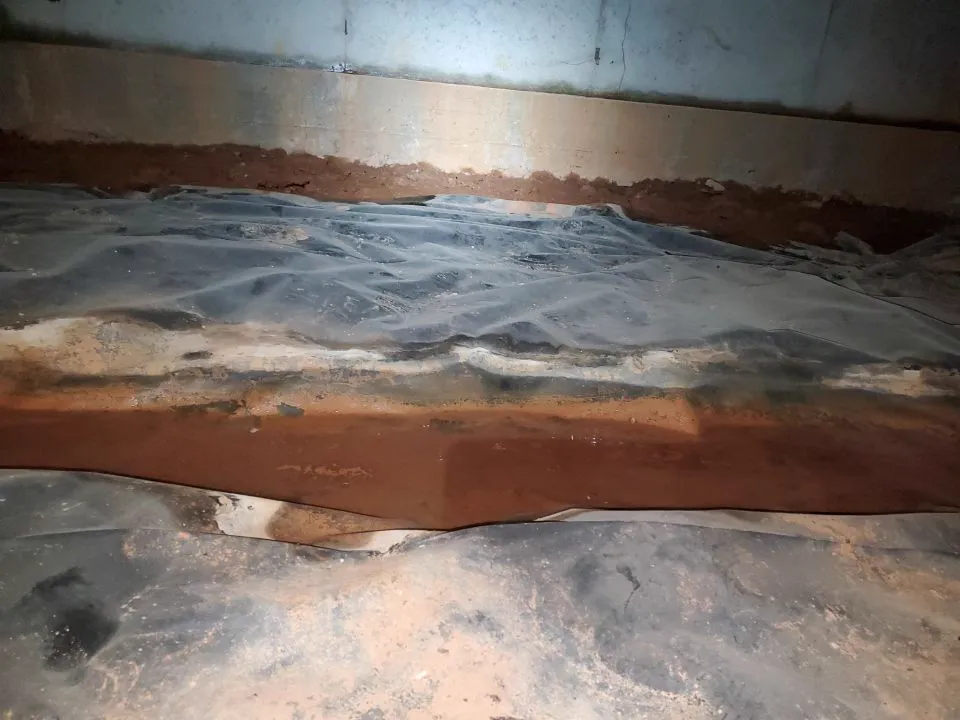
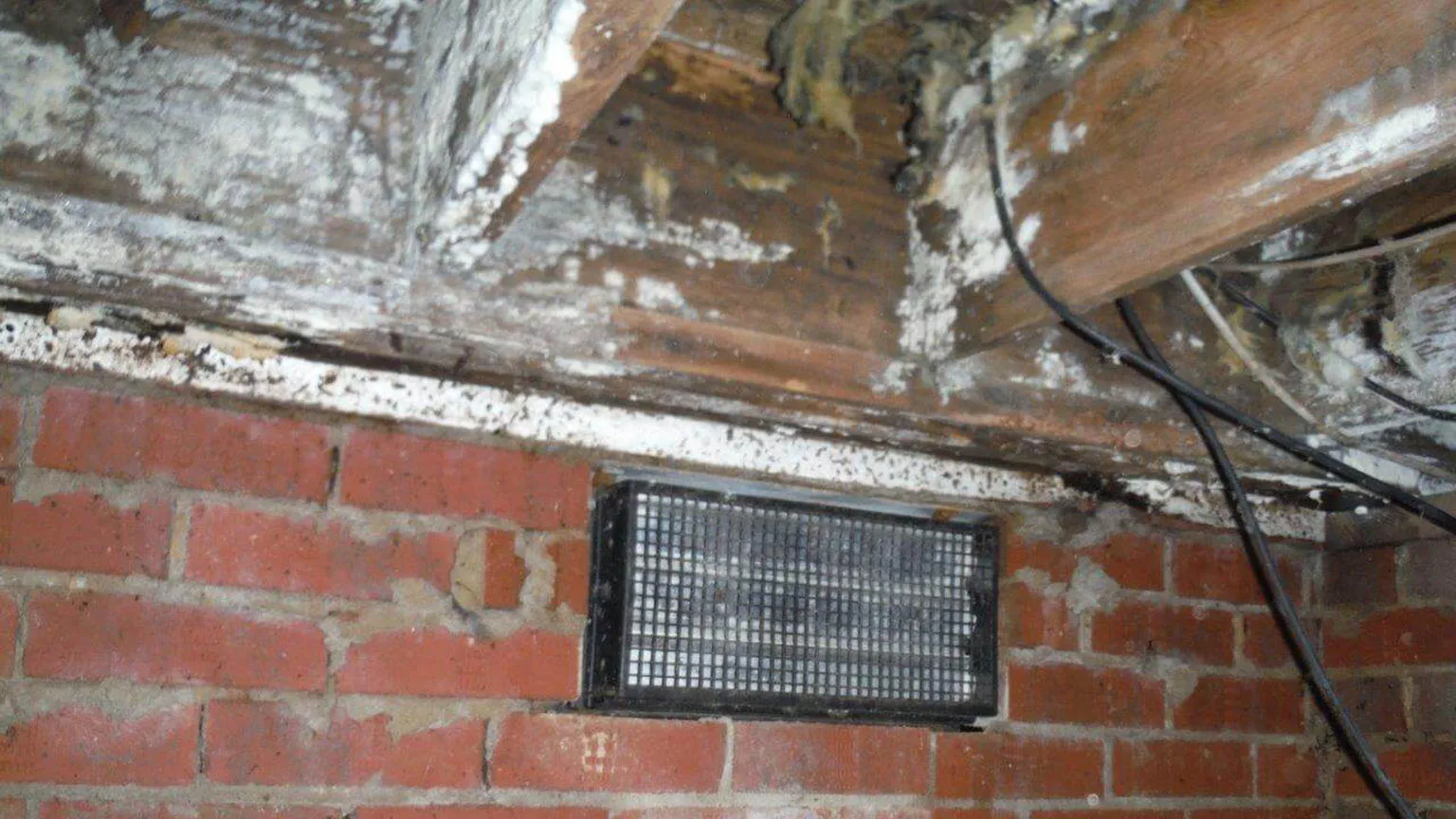
Here’s the thing almost nobody tells you before they quote crawl space encapsulation Dunwoody homeowners are shopping for: the vents in your foundation wall were never drying that space out. They were feeding it. Open foundation vents were required for decades on the theory that outside air dries a crawl space. In a humid climate, though, warm outside air hits cool surfaces and condenses. So the “fix” built into your 1972 ranch has been quietly working against you the whole time.
Good news? This is very fixable, and it’s honestly routine work for us. We seal the space, control the moisture, and hand you paperwork that spells out exactly what we did. Your crawl space doesn’t need fresh air any more than your sock drawer needs a garden hose.
So why did anyone vent a crawl space?
Because on paper it made sense. Move air through, carry damp air out, keep the wood dry. That logic works fine in Arizona, but our summers run humid for months and the red clay under your floor stays cool. Warm air plus a cool surface equals water, which is the same trick a glass of sweet tea pulls on your porch table in July.
Dunwoody’s split-levels and ranches were built when “waterproofing” meant a spray coat of asphalt on the outside of a block wall. Fifty years of Georgia clay later, those walls are telling on themselves. Crawl spaces got the same era of thinking, which means the houses around Vermack and off Winters Chapel Road are all arriving at this same conversation on roughly the same schedule.
What is encapsulation, in plain words?
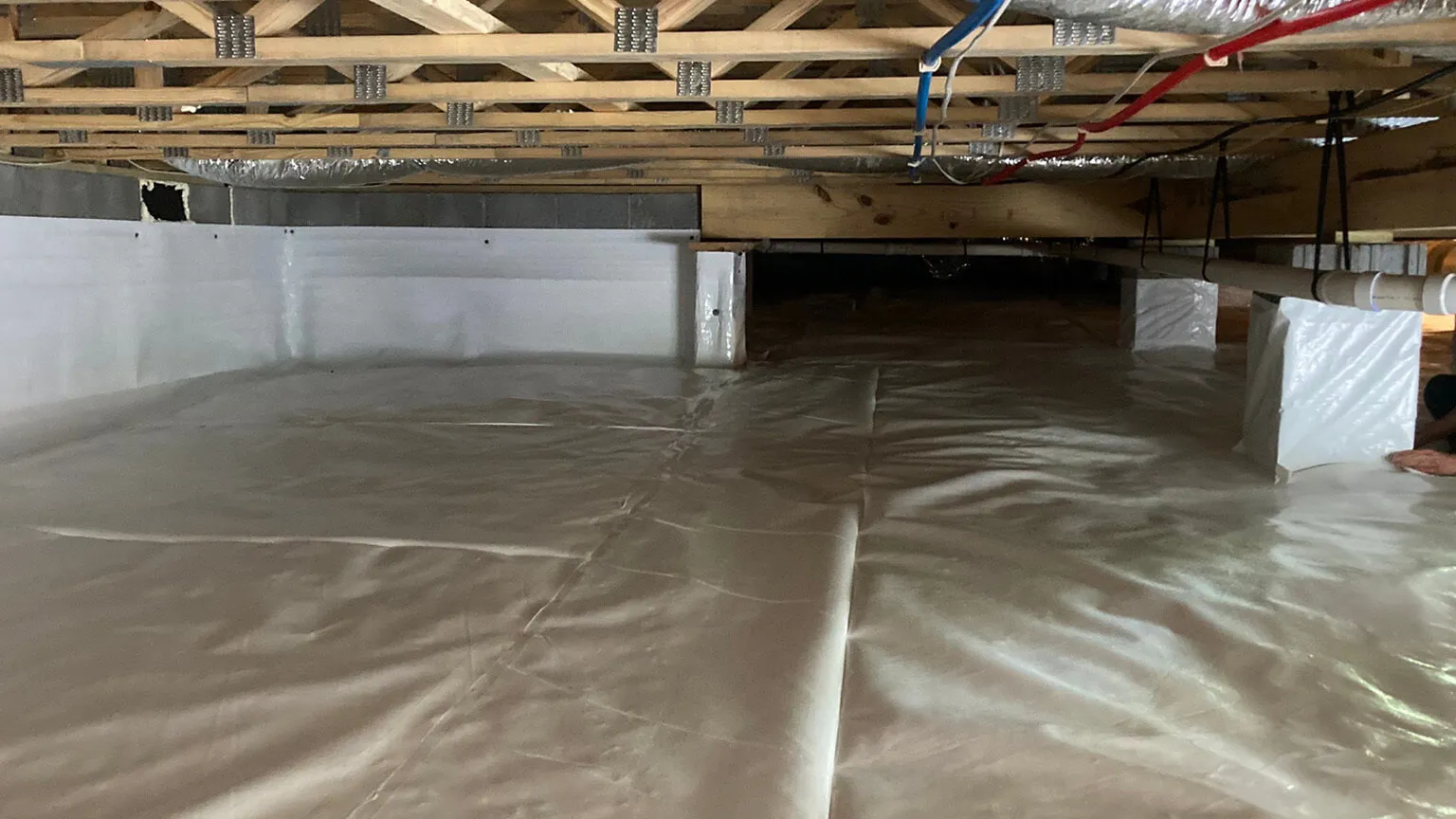
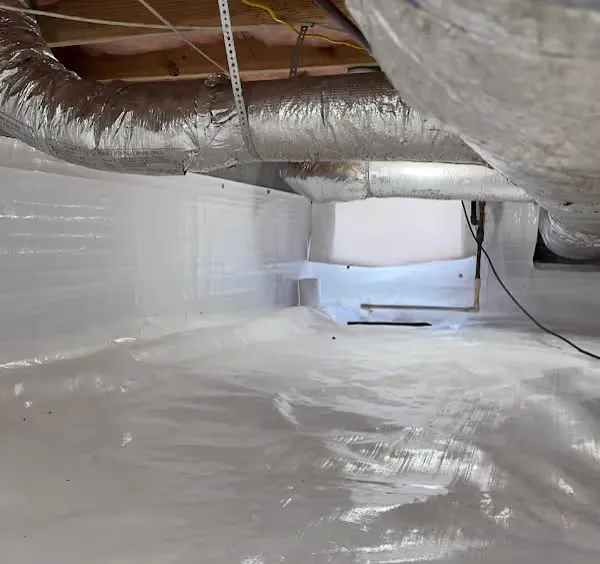
Picture a heavy white liner covering the entire dirt floor, running up the foundation walls, and wrapping every pier. Seams get overlapped and sealed. The top edge gets mechanically fastened, so the ground and the block stop pushing damp air up into your floor joists.
After that we close the vents, seal the access door, and start treating the crawl space as part of the house instead of part of the yard. Most homes then get a dedicated dehumidifier sized to the square footage, with a drain line that carries water off on its own. Nobody should be emptying a bucket under their house on a Saturday.
Some homes need drainage first, though. Sealing a space that’s actively taking on water just gives the water a cleaner place to sit. If you’re seeing standing water instead of damp air, start with our guide to a wet crawl space, because the order of operations changes completely.
What does a real job look like?
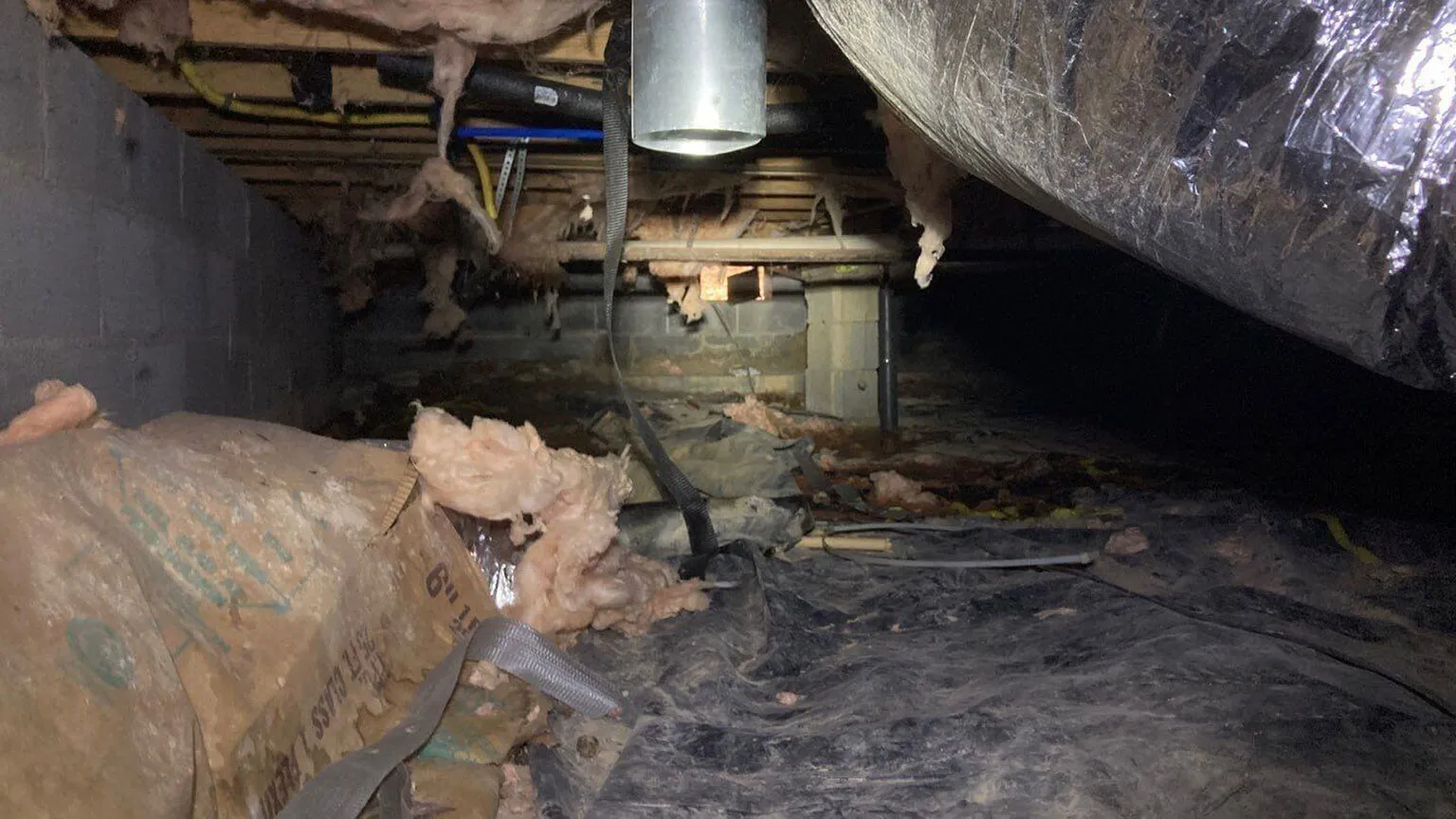
Day zero is the free inspection. We crawl the whole space, not just the first ten feet past the hatch, and we read the wood. Moisture readings, staining lines, rusted duct straps, sagging insulation — all of it tells us where water is coming from and how long it’s been arriving.
One thing we check hard in older Dunwoody homes: the sewer line. Original cast-iron and clay lines from the sixties and seventies crack at the joints and soak the soil right beside the foundation. That’s a plumbing problem wearing a crawl space costume, and sealing over it would be a waste of your money. We’d rather tell you on day one than three days in.
Next comes cleanout. Old batt insulation gets pulled, debris and torn plastic go out, and the grade gets smoothed so the liner can lie flat. Then the liner goes down, up the walls, and around each pier. Vents close, the door gets sealed, the dehumidifier gets set and drained. Most spaces take two to four working days, and a homeowner near Donaldson-Bannister Farm told us the loudest part of the whole week was our radio.
Worth knowing
Encapsulation and drainage are two separate conversations. Plenty of the crawl spaces we inspect only need sealing and a dehumidifier. Others need water managed first. We’ll tell you which one you have before money ever comes up.
What happens after the crew drives away?
This is the part almost no bid talks about, and it’s the part that decides whether you’re happy in year five. A sealed crawl space is a system, not a one-day project. It has a machine in it, a drain line, and a liner that should stay tight at the top edge for decades.
So here’s what we hand you when we leave. Photos of every wall and pier, the dehumidifier model and its setting, where the drain line goes, and a short written warranty you can read in one sitting. In other words, you shouldn’t have to call us to find out what’s under your own house.
Maintenance is genuinely light. Rinse the dehumidifier filter a couple times a year, glance at the drain line, and peek at the seal around the access door after a hard freeze. That’s it. Even so, if something looks off, you call us and we come look — same crews, same trucks, no ticket system, no subcontractor roulette.
And the warranty transfers with the house. That matters more than folks expect in a market where buyers ask sharp questions. Homeowners in the Dunwoody Village infill area have handed our paperwork straight to a buyer’s agent and gone right back to packing boxes.
What actually moves the price?
Mostly square footage, headroom, and how much has to come out before anything goes in. We won’t publish a flat number, because one price covering a tight 900-square-foot space and a sprawling 2,400-square-foot ranch would be wrong somewhere. Still, you deserve to see exactly what we’re weighing.
Price drivers, biggest first
- Square footage. Liner, labor and crawling hours all scale with floor area. Biggest swing by a mile.
- Headroom and access. A space you can duck-walk through costs less to work in than an eighteen-inch belly crawl. That’s real labor, not a surcharge.
- Cleanout. Fallen insulation, old plastic and debris all have to leave before the liner goes down.
- Drainage needs. If groundwater shows up, a drain and pump go in under the liner, which changes the scope.
- Dehumidifier size. Bigger spaces need bigger units, plus a condensate line that has somewhere sensible to go.
- Extras. Subfloor insulation, duct sealing and a new access door are common add-ons, but none of them are automatic.
Small sealed spaces land at the low end. A large space with drainage, a pump and a commercial-grade dehumidifier sits up top, and most homes land somewhere in the middle. Either way you get one written number with the scope printed beside it. If you’re comparing quotes across the metro, our Roswell crawl space encapsulation guide walks through the same cost logic.
What’s included, what isn’t, and what’s the warranty?
Included: the inspection, the estimate, the diagnosis, the liner and all sealing, vent and door closure, the dehumidifier and its drain, haul-off of everything we pull out, and photos before we close it up. Ask any contractor for those photos. Nobody honest minds.
Not included, usually: mold remediation, structural repairs to damaged joists, HVAC replacement, and plumbing repairs we spot along the way. We flag those during the walkthrough rather than mid-project, because surprises belong at birthday parties and nowhere else. Sagging framing or rotted supports become a crawl space repair conversation of their own.
The warranty itself is written in plain English, not lawyer soup. It says what’s covered, for how long, and what to do if something isn’t right. Read it before you sign anything, from us or from anybody else.
Which rooms does this quietly affect?
More than you’d guess, and this is the part homeowners connect last. Air in a house travels upward — builders call it the stack effect — so a real share of the air in your den started its day in the crawl space. Whatever’s down there does not politely stay down there.
That’s why a musty smell in a hallway closet so often traces back to damp wood under the floor. It’s also why the guest room over the crawl space runs colder in February, why hardwood near an exterior wall can cup, and why the bathroom on that side of the house always feels a little clammy. One damp space, four unrelated-looking complaints.
Sealing cuts the moisture that feeds all of it. The U.S. Department of Energy’s guidance on insulation and moisture control explains the mechanics without selling anything, and the EPA’s page on mold and health covers the indoor-air side in plain language.
Now picture the after. Floors that feel warmer in winter, a hallway that smells like nothing at all, and a space you’d actually stack holiday bins in. A family over in Winters Chapel told us the change they noticed first wasn’t the crawl space at all — it was that their upstairs finally held one steady temperature. That’s the quiet win nobody puts on a truck.
Why does hiring locally matter here?
Because Dunwoody was mostly built between 1965 and 1985, which means a whole city’s worth of original moisture barriers, footing drains and sewer lines are aging out together. The ranch we sealed last month three streets from you probably has the same crawl height, the same pier layout, and the same tired plastic. Twenty-plus years around Metro Atlanta means we’ve already met your house.
Being close helps too. Our Lawrenceville shop is about thirty minutes northeast, and we’re inside the Perimeter constantly — we’ve had trucks parked closer to Perimeter Mall than some of the mall employees. A follow-up visit isn’t a scheduling project, it’s a Tuesday. And if water is showing up lower in the house instead, our flooded basement repair guide covers that side of things.
Real talk: the reason we push written scopes, photos and transferable warranties is that we plan to still be here when you sell. Long-term thinking is normal in this city. It should be normal in your contractor too.
Where we work around Dunwoody
We’re based in Lawrenceville and we’re in this corner of DeKalb County constantly. That covers Dunwoody, Sandy Springs, Brookhaven, Peachtree Corners, Chamblee, Doraville, Norcross and the surrounding DeKalb area. Whether your house sits up on a rise or tucked down below street grade, we’ve probably worked on one just like it nearby — and there’s usually a truck close by already.
Questions Dunwoody homeowners ask us
We line the whole crawl space with a heavy white barrier, run it up the walls and around every pier, and seal the seams. Then we close the vents, seal the access door, and add a dehumidifier so the space stays dry year-round. In short, we turn a dirt cellar into a clean, sealed part of your house.
In most older homes it comes out. Old batt insulation soaks up moisture, gets heavy, and falls out of the joists, so leaving it in place would trap damp against your subfloor. We haul it off as part of the job. Once the space is sealed and dry, some homeowners add new subfloor insulation, and we’ll tell you honestly whether yours needs it.
Not really, and it’s the most common thing we pull out. Thin plastic laid loose on dirt still lets moisture rise around every edge and every pier, and it tears the first time somebody crawls over it. Real encapsulation uses a thick reinforced liner that’s sealed at the seams and fastened to the walls, which is what actually stops the moisture.
Look for the everyday signs first: a musty smell in the house, floors that feel cold or springy, insulation hanging down, or condensation on ductwork. Standing water and rusty duct straps are clearer signals. If you’re not sure, we’ll crawl it and show you photos, and plenty of the time the honest answer is that you’re fine.
It depends most on square footage, headroom and how much cleanout is needed, so we quote each house rather than posting a flat price. A small, clean, easy-access space sits at the low end, while a large space needing drainage and a big dehumidifier sits at the top. You get one written number with the scope beside it, plus $500 off projects over $3,500.
Let’s find out what your Dunwoody crawl space actually needs
We’ll crawl the whole space, take real moisture readings, show you photos of what’s down there, and explain the fix in plain language. The inspection is free, the estimate is free, and nobody pressures you at the end of it.
(678) 914-5112Serving Dunwoody and all of Metro Atlanta · $500 off projects over $3,500 · Live support 7am–8pm, 7 days a week