

Crawl Space Repair Duluth Homeowners Weigh: Full Encapsulation or Just a Vapor Barrier?
An honest side-by-side of the big fix and the lighter one — including when we say the lighter one is plenty.
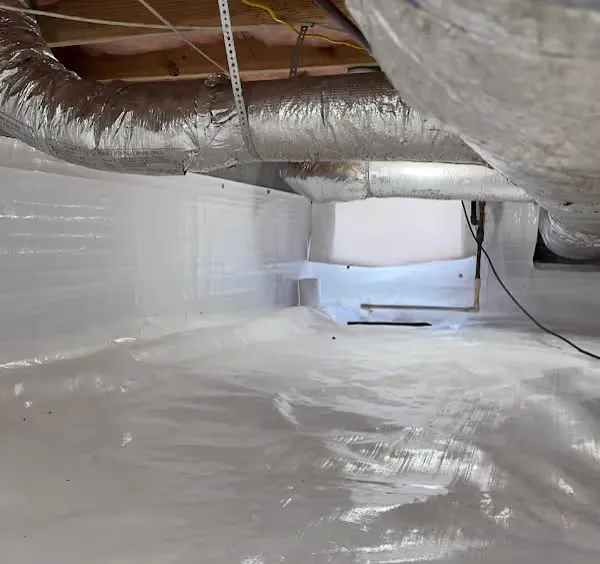
Picture the finished version first. You open the hatch and a bright white liner runs across the whole floor and up the walls, the dirt smell is gone, and a little gauge on the wall reads a steady, boring number. That’s the end of a good crawl space repair Duluth project, and honestly it looks more like a clean room than a crawl space. So let’s work backward from that picture and figure out how much of it your house actually needs.
Here’s the thing — there are two real ways to get there. One is the full build. The other is lighter, cheaper, and genuinely enough on plenty of homes.
Option A: what does full encapsulation actually mean?
Encapsulation seals the crawl space off from the ground and the outside air. A heavy reinforced liner covers the dirt floor, then runs up the block stem walls and gets fastened and sealed at the top. Seams overlap and get taped, so the ground is basically wrapped.
After that, the foundation vents get closed and sealed. A dehumidifier usually goes in to hold the air steady, and it drains on its own so nobody has to crawl down with a bucket.
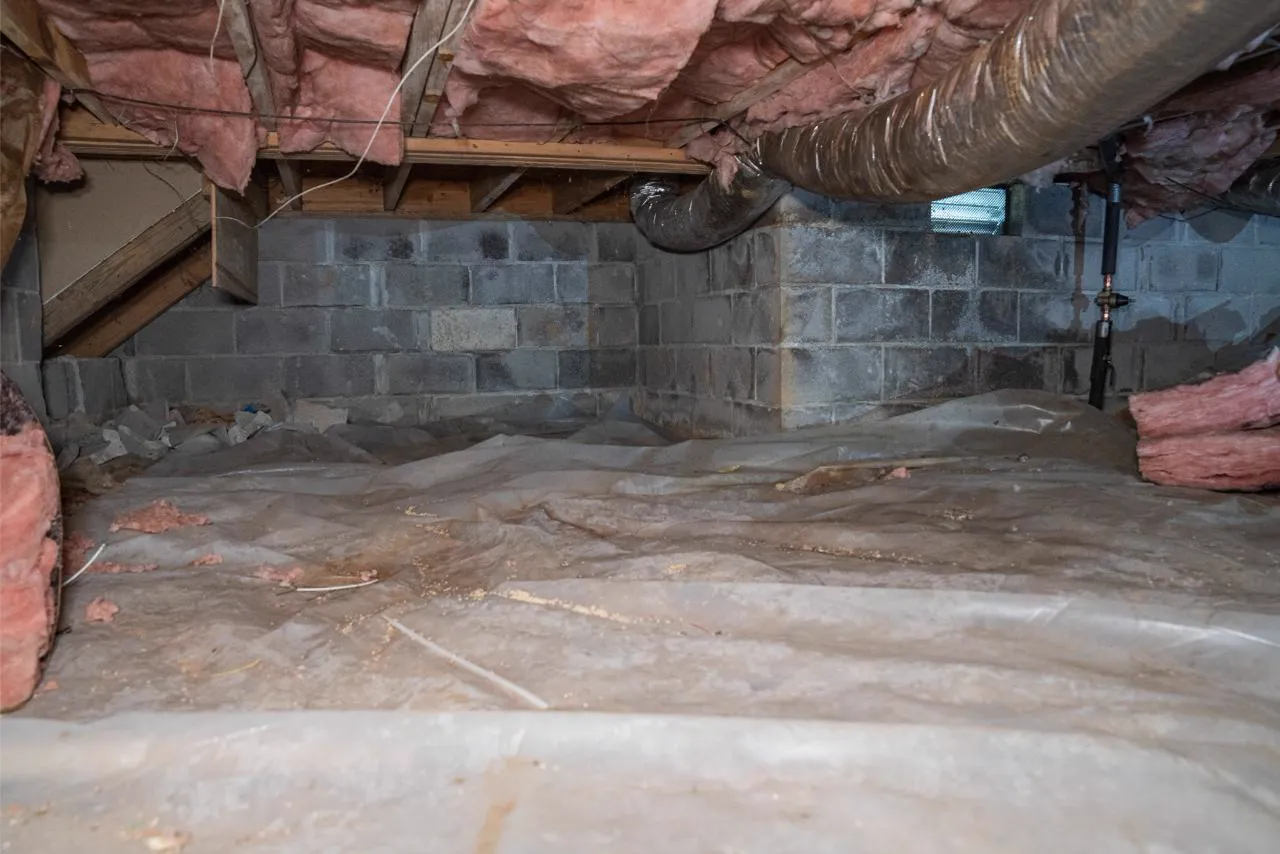
What does that buy you? A space that stays dry year round instead of swinging with the weather. Wood stays dry, so it stops feeding mold and stops drawing the bugs that like damp framing. Better yet, the floor above stops feeling cold in January.
We did this last winter for a family in Rivermoore Park with an in-law suite right over the crawl space. Their real complaint wasn’t the crawl space at all — it was that grandma’s bedroom smelled like a basement. Two days later it didn’t.
Worth knowing
Open foundation vents were required for decades, on the idea that outside air dries a crawl space out. In a humid climate it works the other way. Warm outside air hits cool pipes and cool framing, then gives up its moisture as condensation — so the vents feed the problem instead of solving it.
Option B: is a vapor barrier and drainage enough?
Sometimes, yes. The lighter option puts a vapor barrier across the dirt floor only, and pairs it with fixing whatever is letting water in. That usually means gutters, downspout extensions, regrading the soil away from the house, and sometimes a small drain line or a sump in one low corner.
It leaves the walls bare and the vents alone. Instead, it goes after the source and blocks the biggest moisture path, which is plain evaporation off open soil. Does that sound too simple? On a crawl space that’s tall, dry underfoot, and sitting on a lot that drains well, it holds up fine for years.
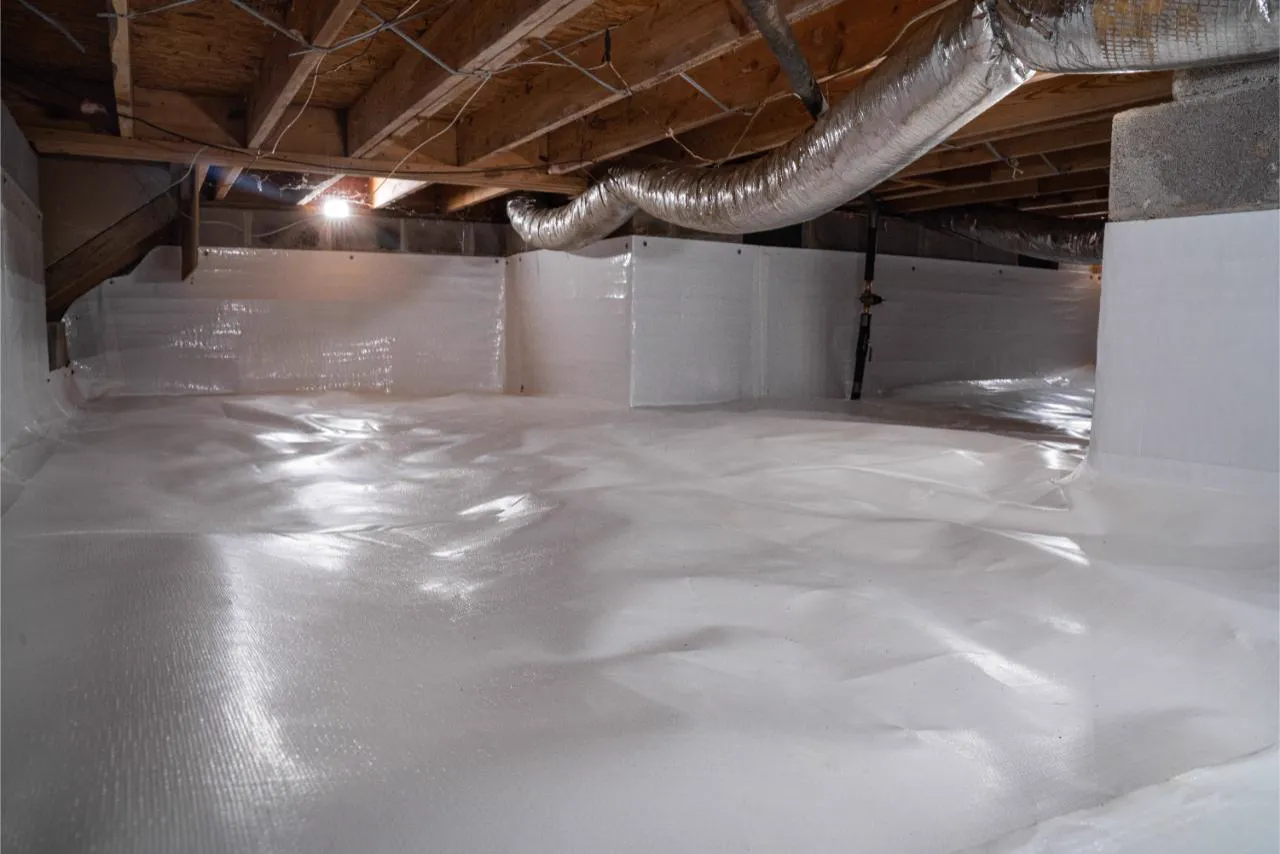
The catch is that it manages moisture rather than controlling it. Humidity down there still follows the weather, so August will always be muggier than April. For many homes that’s a fine trade, but for a finished room overhead it usually isn’t.
Before you call anyone, understand this one distinction
Ready for the thing that makes every estimate make sense? There are two different kinds of water under a house, and almost nobody separates them on the phone.
The first is liquid water. Rain comes off the roof, hits soil sloped the wrong way, and runs in — puddles, mud, a wet stain along one wall. That’s a drainage problem, and no liner fixes it, because plastic over a puddle is still a puddle.
Stop the source first. If someone quotes encapsulation without ever walking your downspouts and your grade, they’re wrapping the symptom and leaving the cause outside.
The second is water vapor. Soil stays damp all the way down, and it evaporates upward all day even when the floor looks dry as dust. That’s a humidity problem, so drainage alone won’t touch it.
So the right option depends on which water you have. Most Duluth homes have a little of both, which is why the answer isn’t the same on every street. Our page on the best crawl space approaches goes deeper.
Side by side, honestly
Enough theory. Here’s how the two stack up when we’re down there with a flashlight and a moisture meter.
Full encapsulation
- Liner on the floor and up the walls, sealed at the seams
- Vents closed, so outside humidity stays outside
- Dehumidifier holds a steady level all year
- Costs more up front and takes two to four days
- Adds a small amount to the power bill, offset by easier heating
- Best when a finished room, an office or a bedroom sits above
Vapor barrier and drainage
- Barrier on the dirt floor, walls left open
- Water source fixed outside: gutters, grade, downspouts
- No equipment to plug in and no filters to change
- Costs less and often finishes in a single day
- Humidity still rises and falls with the season
- Best on a dry, tall crawl space under unfinished space
Notice that neither column says “better.” Once we’ve seen the lot and the meter readings, one of these is usually obvious — and the other becomes a conversation we can skip.
What decides it on a Duluth house?
Four things, more or less. They come up on nearly every crawl space repair Duluth inspection we run between downtown and the Gas South District.
The deciding factors
- What’s above it? A bedroom or in-law suite pushes us toward the full build. A storage room doesn’t.
- How close is the river? Lots near the Chattahoochee ride a seasonal groundwater table, and those crawl spaces stay damp longer.
- What’s the soil doing? Red clay holds water against the block. Sandy river-bottom pockets drain faster and change the plan.
- How old is the drainage? Original 1990s catch basins silt up quietly, and fall leaf drop finishes the job.
That river point matters more than people expect. Homes toward Chattahoochee Run and the streets running down to Rogers Bridge Park sit low, so groundwater rises seasonally instead of arriving in one storm. On those lots we lean toward encapsulation, because the moisture never really leaves.
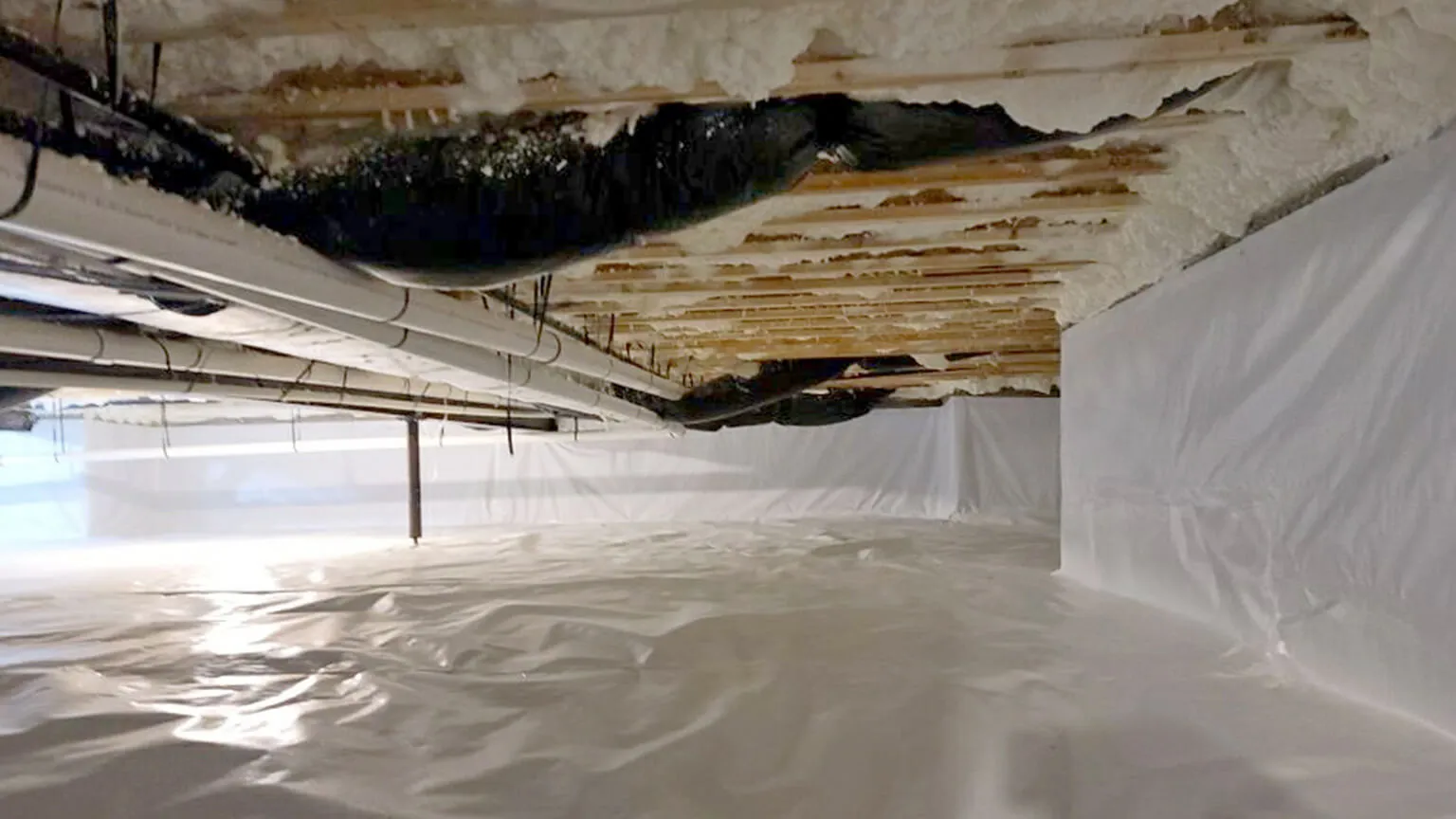
Up on higher ground it flips. Plenty of Howell Farms homes sit well above the water table with good fall away from the foundation, so those crawl spaces just need floor plastic and a gutter fix. We’ve said exactly that, written the smaller job, and driven off happy.
The number that reframes the whole thing
Want the figure that changes how people think about this? Roughly 1,000 square feet of open crawl space soil can push 10 to 15 gallons of water into the air daily. Not once — every day.
All that vapor has to go somewhere, so it goes up. Warm air leaves through the attic, which pulls replacement air in from the lowest opening, meaning a real share of what you breathe upstairs started in the crawl space. The EPA’s guidance on mold and health is worth a read.
Suddenly the sticky doors, the cupped hardwood, and the musty upstairs closet all connect. Each gets chased separately, yet they trace back to one source. The U.S. Department of Energy’s guide to insulation and moisture control covers the science behind it.
Now flip to the after. The gauge reads steady through a wet Georgia August, the smell at the top of the stairs is gone, and the room over the crawl space feels like the rest of the house. Duluth crawl spaces sit under working homes — offices, kids’ rooms, in-law suites. When one gets damp here, it isn’t storage getting wet. It’s somebody’s bedroom.
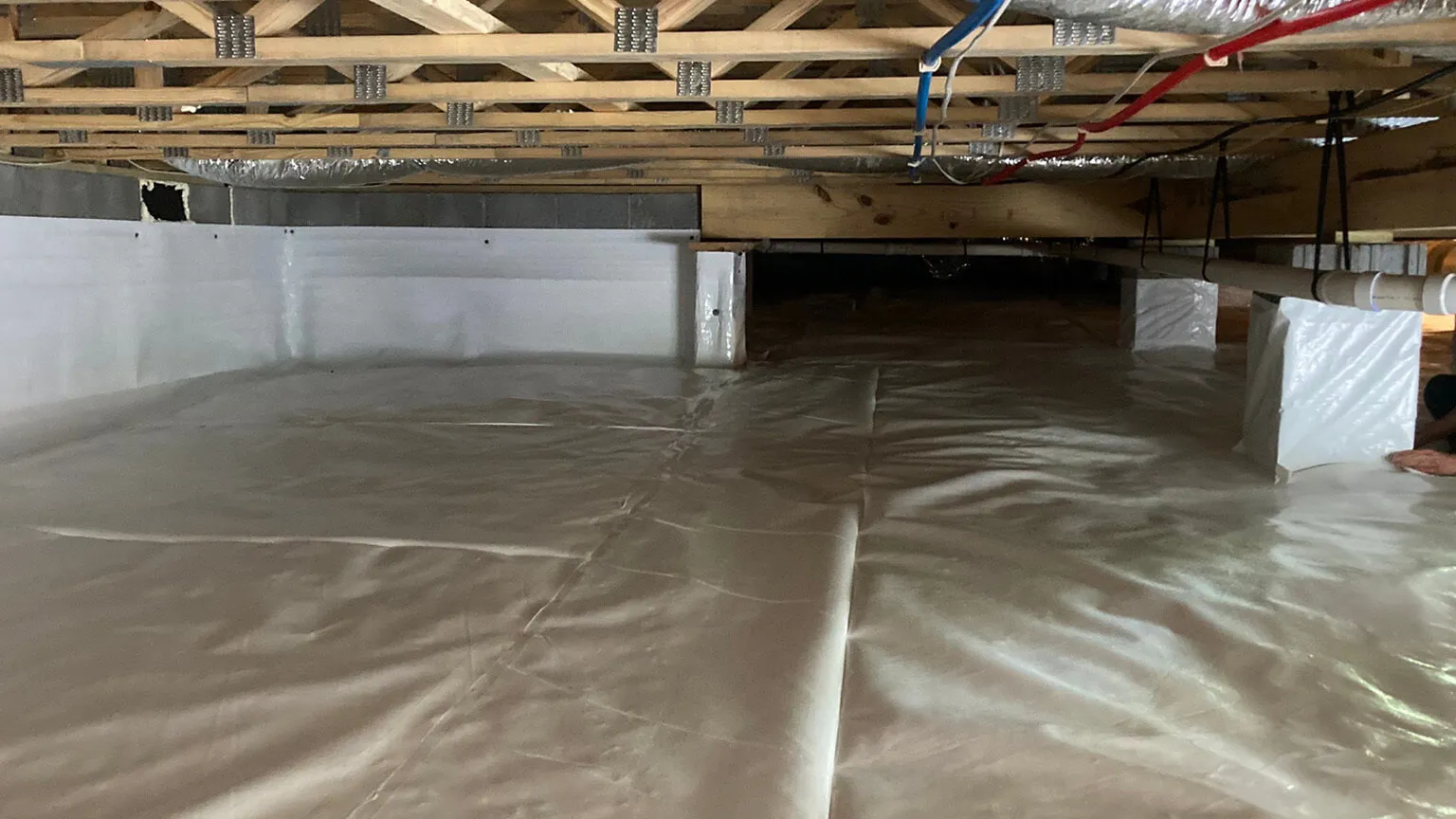
So which one do we recommend?
Full encapsulation, when there’s living space overhead, when the lot sits low or holds water, or when someone in the house has allergies or asthma. Under those conditions the sealed version earns its money, and we’d tell our own family the same thing.
The vapor barrier route, when the crawl space is dry underfoot, the grade already falls away, and nothing but subfloor sits above it. Fix the water source, cover the dirt, then check it again next spring. If the numbers hold, you’re done.
Sometimes we recommend neither yet. When a downspout dumps against the foundation along Duluth Highway, or a gutter is packed with pine straw, that gets fixed first and everything else waits sixty days. An afternoon of gutter work has quietly solved more crawl spaces than anyone in this trade likes to admit. Curious how the same call goes one town north? Our write-up on Suwanee crawl space repair covers newer construction, where the math shifts.
Why hire people who work these neighborhoods every week?
Because a crawl space near the river behaves differently than one on a hill two miles away, and that difference isn’t in any script. We’re fifteen minutes from downtown Duluth, so we know which subdivisions were built over what.
You’ll get the same crews and trucks every visit, plus a written warranty before anything starts. For the technical breakdown, our crawl space repair page lays out the systems step by step. And if water is showing up on the other side of the house, our guide to flooded basement repair is the better place to start.
Where we work around Duluth
We’re based in Lawrenceville, fifteen minutes east, so Gwinnett County is home turf: Duluth, Johns Creek, Suwanee, Berkeley Lake, Peachtree Corners, Norcross, Lawrenceville, Sugar Hill, Buford, Snellville and Dacula. Odds are we’ve been under a house near yours.
Questions Duluth homeowners ask us
It means wrapping the whole space in a heavy sealed liner so the ground can’t give off moisture into your house. The liner covers the dirt floor and runs up the walls, the vents get closed, and a dehumidifier usually holds the air steady. Think of it as putting the crawl space inside the house instead of leaving it outside.
It depends on square footage, how tall the space is, and whether drainage work is needed first. A floor barrier on a small, dry crawl space sits at the low end, while a full sealed system with a dehumidifier sits at the high end. Anyone quoting a flat number over the phone is guessing, so we measure it first and hand you a written scope.
With full encapsulation, almost always — sealing the space without controlling the air leaves moisture nowhere to go. With a floor barrier alone, usually not, since the vents are still doing their thing. We set a meter and watch the actual readings before recommending one.
In our climate, closed is generally better, but only as part of a sealed and conditioned space. Open vents were required for decades on the theory that outside air dries things out. Humid Georgia air hitting cool framing actually condenses, so the vents can add moisture rather than remove it.
Usually yes, and often within the first week. That smell rides up from damp soil and damp wood, so once the ground is sealed and the air is dry, the supply is cut off. If any wood is already affected, we clean and treat it while we’re down there.
Let’s see what your Duluth crawl space actually needs
The inspection is free, the estimate is free, and nobody pressures you afterward. We’ll take real moisture readings, show you both options side by side, and tell you honestly if the smaller fix is the right one.
(678) 914-5112Serving Duluth and all of Metro Atlanta · $500 off projects over $3,500 · Live support 7am–8pm, 7 days a week