

How to Choose the Best Crawl Space Suwanee Homeowners Can Actually Trust
What makes homes here different, what real encapsulation includes, and the questions that sort a good bid from a cheap one.
Most homes have one room the family quietly stopped using. Often it’s the bedroom sitting right over the crawl space — the one that smells like a damp towel and never quite warms up. So when folks go looking for the best crawl space Suwanee has to offer, they aren’t shopping for plastic. They want that room back.
Good news up front: this one is very fixable, and it’s the kind of work we do week in and week out. The hard part isn’t the repair. It’s telling two very different bids apart when both say “vapor barrier.”
What makes a Suwanee home different?
Timing, mostly. Suwanee grew up in one fast wave in the late nineties and early two-thousands, so those homes are all hitting their first real waterproofing failure at once. That’s no knock on the builders. Materials age together when houses go up together.
Then there’s the ground. Rolling hills run down toward Suwanee Creek, and under all of it sits Piedmont red clay that swells wet and shrinks dry. Clay barely drains, so water leans on a foundation instead of soaking away. Meanwhile the original grading has been settling for twenty-five years, and on plenty of lots it now tilts back toward the house.
One more piece surprises people. Air moves upward through a house — building scientists call it the stack effect. So a large share of the air you breathe on the main floor started its trip down in the crawl space. It isn’t a separate building, even though it feels like one.
What should a good company be doing here?
Start with water, not plastic. Any crew worth hiring walks the outside first, because in neighborhoods like Morningview the source is usually above ground — downspouts dumping at the foundation, a settled grade, a drain line packed with pine needles. Those fixes are cheap, and a straight shooter points at one even when it shrinks the invoice.
Inside, order matters. Standing water and wet soil get handled first, with drainage and a sump if the lot needs one. Only then does anything go down on the ground. Sealing a liner over a puddle is like lidding a pot and calling the water gone.
Worth knowing
Two crews can quote the same job for very different money because they’re not quoting the same job. One lays sheeting on dirt. The other seals a whole room. Both may call it a vapor barrier, so the words alone won’t tell you which is which.
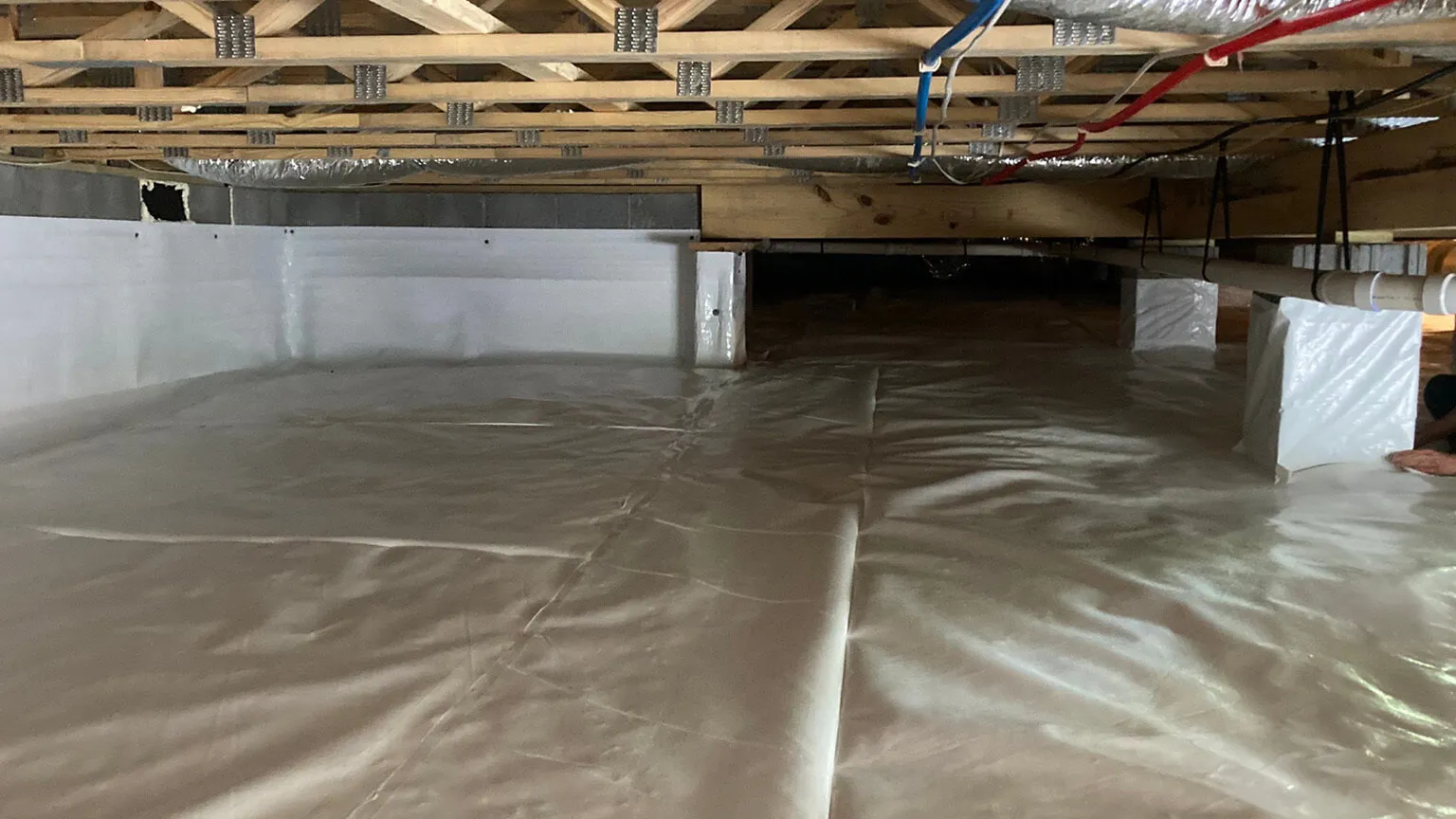
A real system has four parts: drainage where it’s needed, a reinforced liner sealed to the walls and piers, vents closed for good, and a dehumidifier sized to the space. Miss one and the other three work harder than they should. That’s the honest version of crawl space encapsulation.
Here’s a detail that sounds small and absolutely isn’t
Ask one question and you’ll learn more than any brochure tells you: is the liner sealed to the walls and piers, or just laid on the dirt?
Loose sheeting on soil stops only a slice of the moisture coming up. Around the edges and every pier, damp ground air keeps rolling in. A sealed liner climbs the stem walls, wraps each pier, gets fastened and taped, and turns the crawl space into part of your house. Same words on the invoice, very different result.
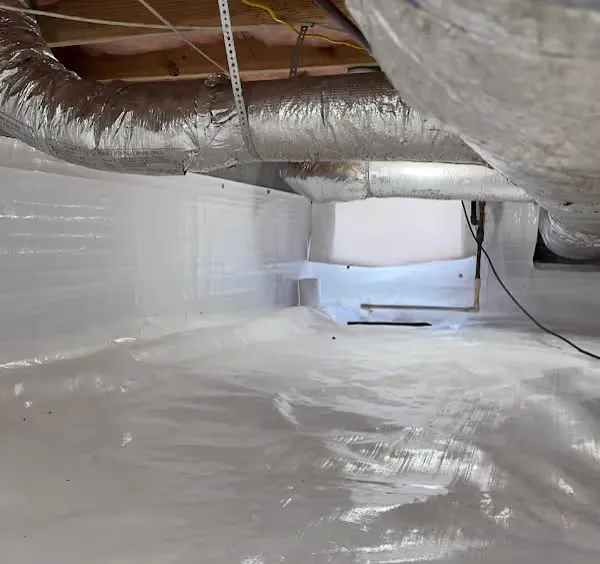
Thickness and reinforcement matter too. Thin film tears the first time somebody drags a hose across it, while reinforced liner takes a knee, a boot and a plumber’s toolbag without splitting. That’s how the seal you paid for is still a seal in year eight.
Then there are the vents. Older thinking said crawl spaces should breathe, but in a Georgia summer those openings invite humid air onto cool surfaces. A finished job seals them shut. If a bid leaves vents open while adding a dehumidifier, you’re paying to dry the neighborhood.
How do you read an estimate without a degree in this?
Look for scope instead of a number. A real estimate names the square footage, the liner spec, how the edges get sealed, what happens with the vents, and whether a dehumidifier is included. If all you got was a price and a signature line, that’s a guess with good posture.
What a solid Suwanee encapsulation estimate spells out
- Water first. Drainage, a sump if the lot calls for it, and where that water ends up.
- Liner thickness and reinforcement. A written spec, not the words “heavy duty.”
- How the edges attach. Sealed up the walls and around every pier, or laid loose.
- Vents. Sealed closed, and named in the scope so nobody argues later.
- Dehumidifier size. Matched to your square footage, with a real drain line.
- Warranty terms. Length, coverage, and whether it transfers to the next owner.
That last line carries more weight than people expect. A transferable warranty is a selling point at closing, so it quietly pays you back twice. Get it in writing, because a friendly “oh yeah, it transfers” is worth nothing the day you list the house.
Prices swing widely because crawl spaces do, so a flat number quoted sight unseen is a guess with your money. Square footage, headroom, standing water and access all move the total. We’ll give you a real number after somebody crawls the space, and if the answer is simple crawl space repair, we’ll say so.
What does life look like after the crew leaves?
This is the part nobody compares, and it’s the part you live in. Within a week the musty smell upstairs fades, because the source is cut off instead of covered. Floors over the crawl space stop feeling damp underfoot.
By the first summer you notice the quieter wins. Your air conditioner stops fighting humid air rising through the floor, so rooms hold their temperature more evenly. The Department of Energy’s guide to insulation and moisture control explains why dry air is easier to heat and cool.
Years later, the space still looks finished. Bright liner, sealed seams, a dehumidifier humming along. Better yet, you can send a plumber down there without apologizing first.
That’s the feeling worth paying for, and it isn’t just “the smell stopped.” It’s knowing every part of your house — including the part under the floor — is handled.
What should you ask before you hire anybody?
Five questions do most of the sorting. Ask every company the same five, then compare answers instead of totals — that’s how the best crawl space Suwanee companies separate from the fast ones.
Five questions worth asking
- “Is the liner sealed to the walls and piers?” A confident yes, plus how, tells you plenty.
- “What’s the liner spec?” Thickness and reinforcement, in writing.
- “Are the vents getting sealed?” Half-measures here undo the rest.
- “How is the dehumidifier sized, and where does it drain?” Guessing on size is the shortcut we see most.
- “Does the warranty transfer?” One word, and it should come fast.
Red flags are simpler than folks expect. A firm price over the phone means nobody measured, while pressure to sign today is a sales tactic. Real talk: when a bid lands far under the others, ask what got left out. Usually it’s drainage, the wall seal, or the dehumidifier.
Air quality belongs in the conversation too, though not as a scare line. Damp wood grows mold the way damp anything does, which the CDC’s page on mold and your home covers plainly. Handle the moisture and the rest settles down.
How did it go for a homeowner in Ivy Falls?
A while back we crawled under a late-nineties home in Ivy Falls. The owners had shut the door on a guest room, because it smelled musty no matter how many candles went in. Two other bids sat on the counter, and both quoted “new vapor barrier” for numbers miles apart.
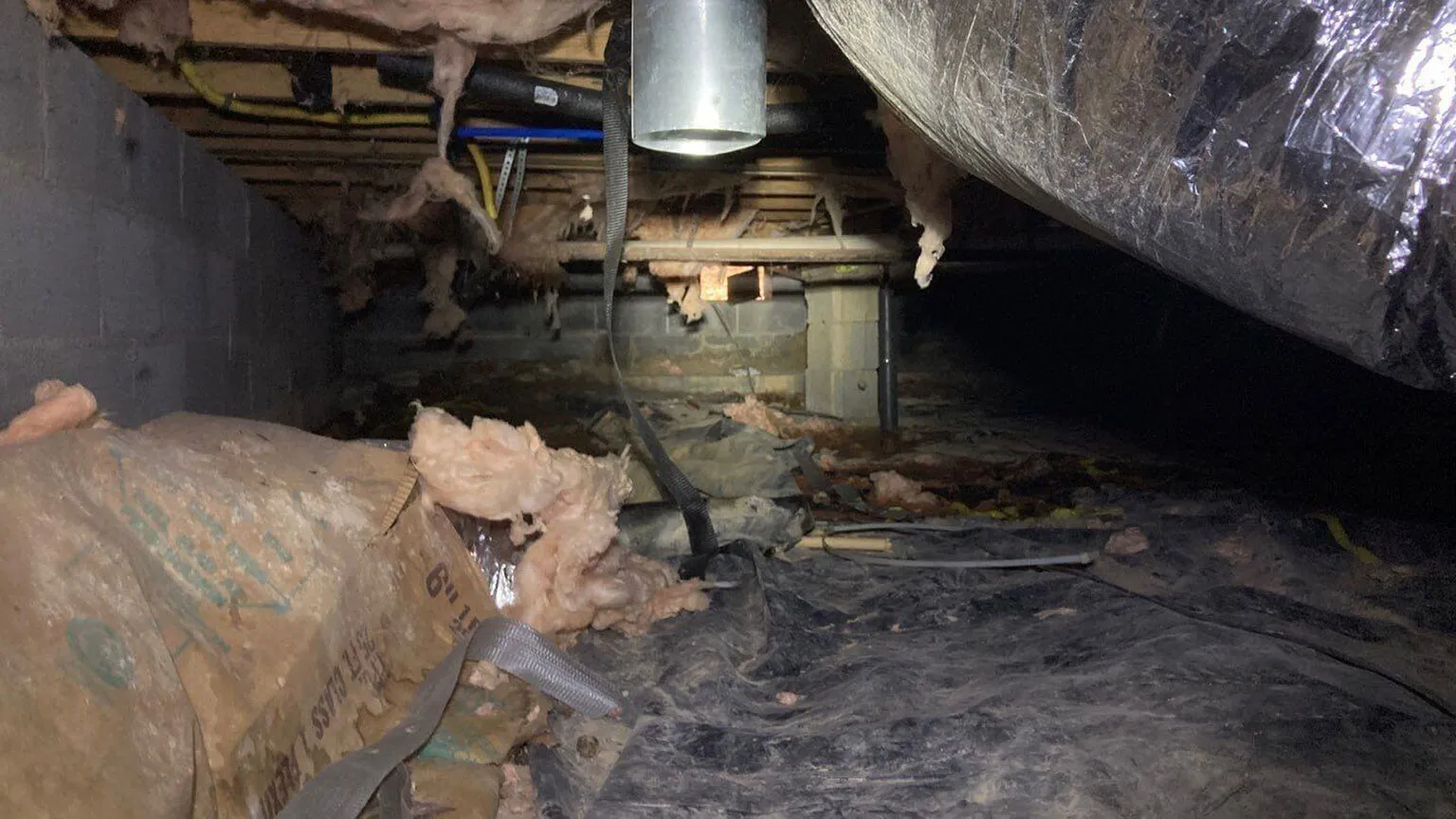
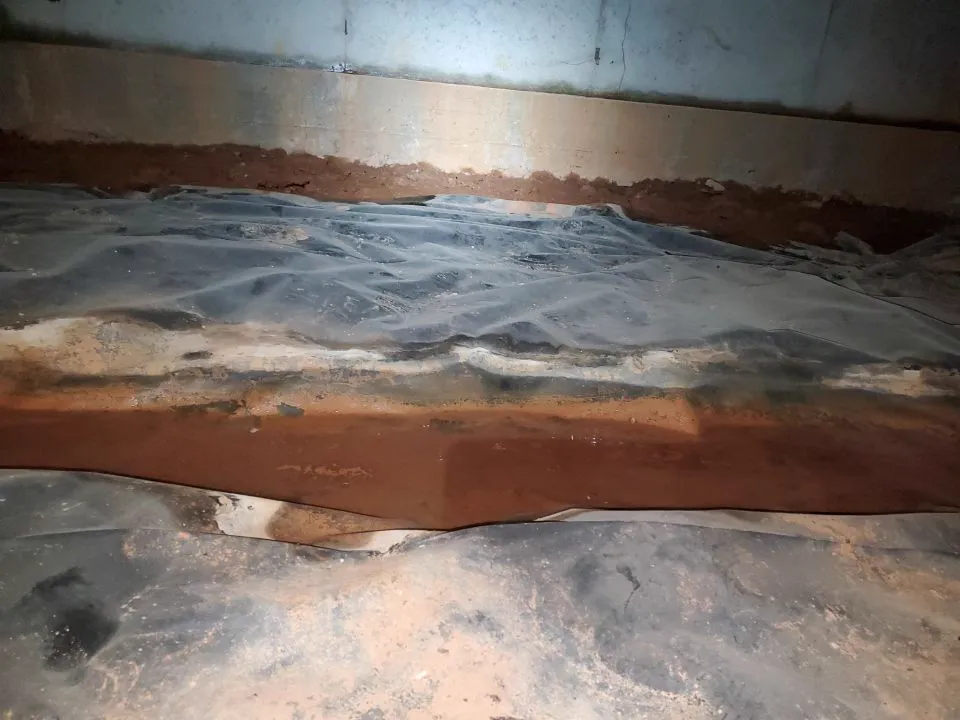
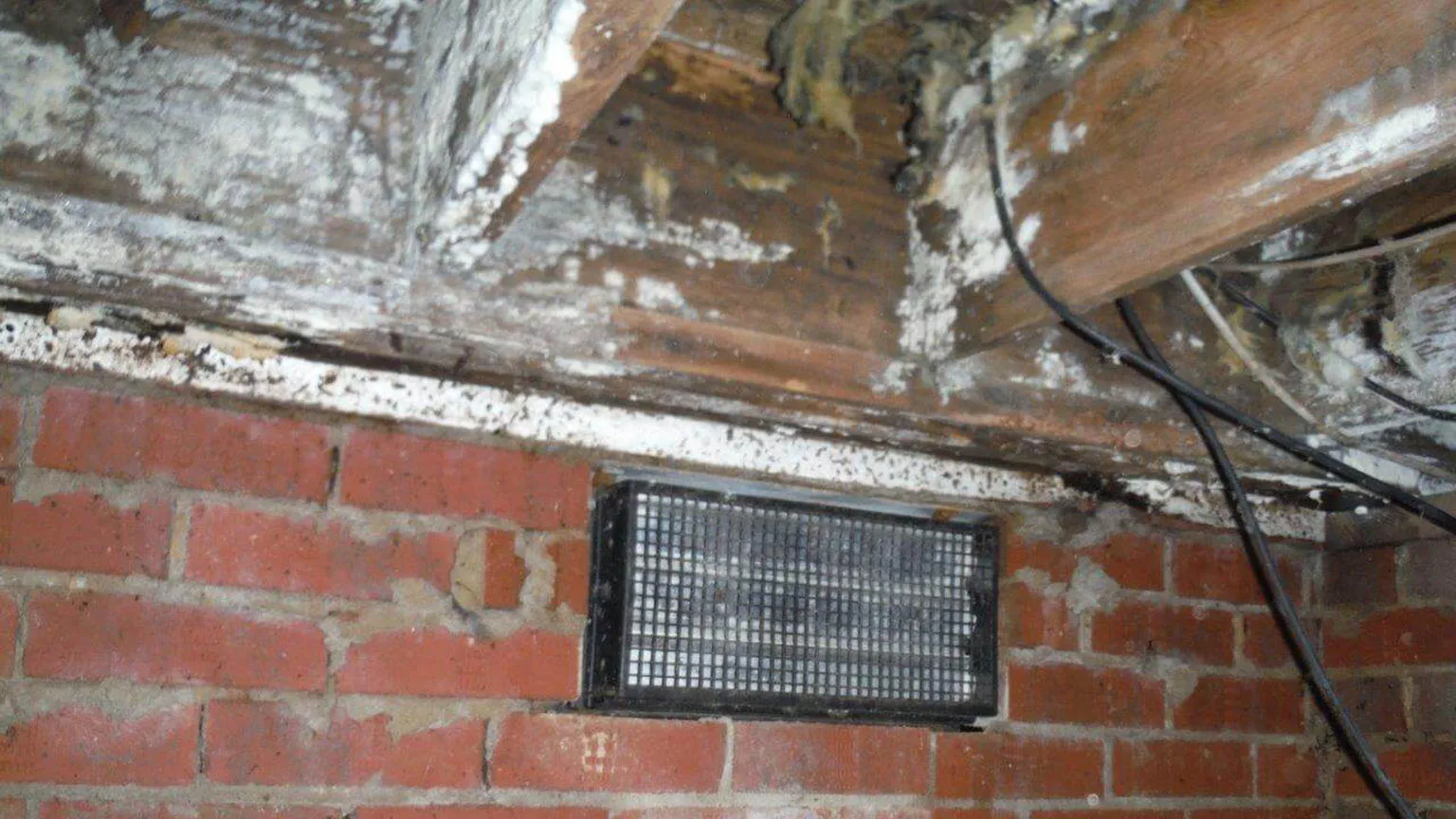
Underneath we found the usual story for that vintage. Black plastic was half buried in red clay, insulation had let go of the subfloor, and one corner stayed wet because a downspout drained into the flower bed. None of it was neglect. It was twenty-five years of ordinary settling.
So the plan went in order: move the roof water away, cut drainage to a sump in the low corner, pull the fallen insulation, seal reinforced liner up the walls and around every pier, close the vents, and set a right-sized dehumidifier. Three working days. The seal was the slow part, and it mattered most.
What they noticed first wasn’t the crawl space, of course — it was the guest room. Two weeks later the smell was gone, and by fall their mother-in-law was sleeping in there over the holidays. They use the room now.
Why are we a fit for Suwanee homes?
Because we’ve spent twenty-plus years under houses like yours, and we’re fifteen minutes down the road in Lawrenceville. We work the streets off Peachtree Industrial Boulevard constantly, from Settles Bridge toward the Suwanee Creek Greenway and the families near PlayTown Suwanee.
We also know how people here hire. Word travels fast in Suwanee neighborhood groups, so careful work is the only marketing that survives. You’ll get photos from under the floor and a straight answer when a smaller fix will do. If water shows up in a basement instead, our guide to flooded basement repair covers that, while our Peachtree Corners encapsulation company page walks the same process one county over.
Where we work around Suwanee
We’re based in Lawrenceville and in this part of Gwinnett almost daily. That includes Suwanee, Duluth, Buford, Sugar Hill, Johns Creek, Lawrenceville, Cumming, Snellville and Dacula, plus the wider Gwinnett area. Whether your home sits up in Morningview or closer to the creek, odds are a truck is nearby.
Questions Suwanee homeowners ask us
Closed and sealed, in our climate. Open vents pull humid summer air onto cool surfaces, and that’s where condensation starts. Once the space is sealed and a dehumidifier runs, it stays drier than the outdoors year round.
Usually yes, and faster than people expect. Because air moves upward through a house, that smell is crawl space air arriving on the main floor. Cut the moisture and the odor fades in a week or two.
Most Suwanee crawl spaces run two to four working days. Add a day when drainage goes in first, or when old insulation has to come out. Tight headroom slows a job more than square footage does.
Often a little, though we’d rather under-promise than hand you a percentage. Dry air is easier to heat and cool, so your system stops working overtime. Comfort usually improves before the bill does.
If it’s sagging, wet or falling out of the joists, it comes out. Wet batts hold moisture against the subfloor and stop insulating anyway. We’ll show you what we find and what should replace it.
Let’s take a look under your Suwanee home together
We’ll crawl the space, show you photos, and explain the plan in plain language — including the parts you don’t need. Free inspection, free estimate, no pressure.
(678) 914-5112Serving Suwanee and all of Metro Atlanta · $500 off projects over $3,500 · Live support 7am–8pm, 7 days a week