

How to Hire the Best Crawl Space Duluth Company for Your Street
Why two quotes for the same job can be thousands apart, what the good one actually includes, and the questions that sort it out in ten minutes.
Is your crawl space musty? Then odds are good your neighbor’s is too. Homes on the same street usually sit on the same dirt, were built in the same few years by the same builder, and drain the same direction. So when folks go looking for the best crawl space Duluth has to offer, they’re rarely the only house on the block with the problem — they’re just the first one to look under the floor.
Good news right away: this is one of the most fixable things in a house. Nothing here is an emergency, and nothing here requires tearing anything up inside. It mostly requires hiring the right kind of work.
Why does a whole street get this at once?
Duluth sits on red clay, with sandy river-bottom pockets closer to the Chattahoochee. Clay holds water like a sponge that never quite wrings out, so the ground under your house stays damp long after the rain quits. That damp ground breathes moisture upward all day, and a vented crawl space happily invites it in.
Then there’s the age of the housing. Plenty of homes near downtown and along the older stretches around Abbotts Bridge were built on crawl spaces, while most of the 1985–2005 subdivisions went up with basements. If you’re on a crawl space here, you’re usually in an area where the drainage was designed a long time ago and the trees have grown a lot since.
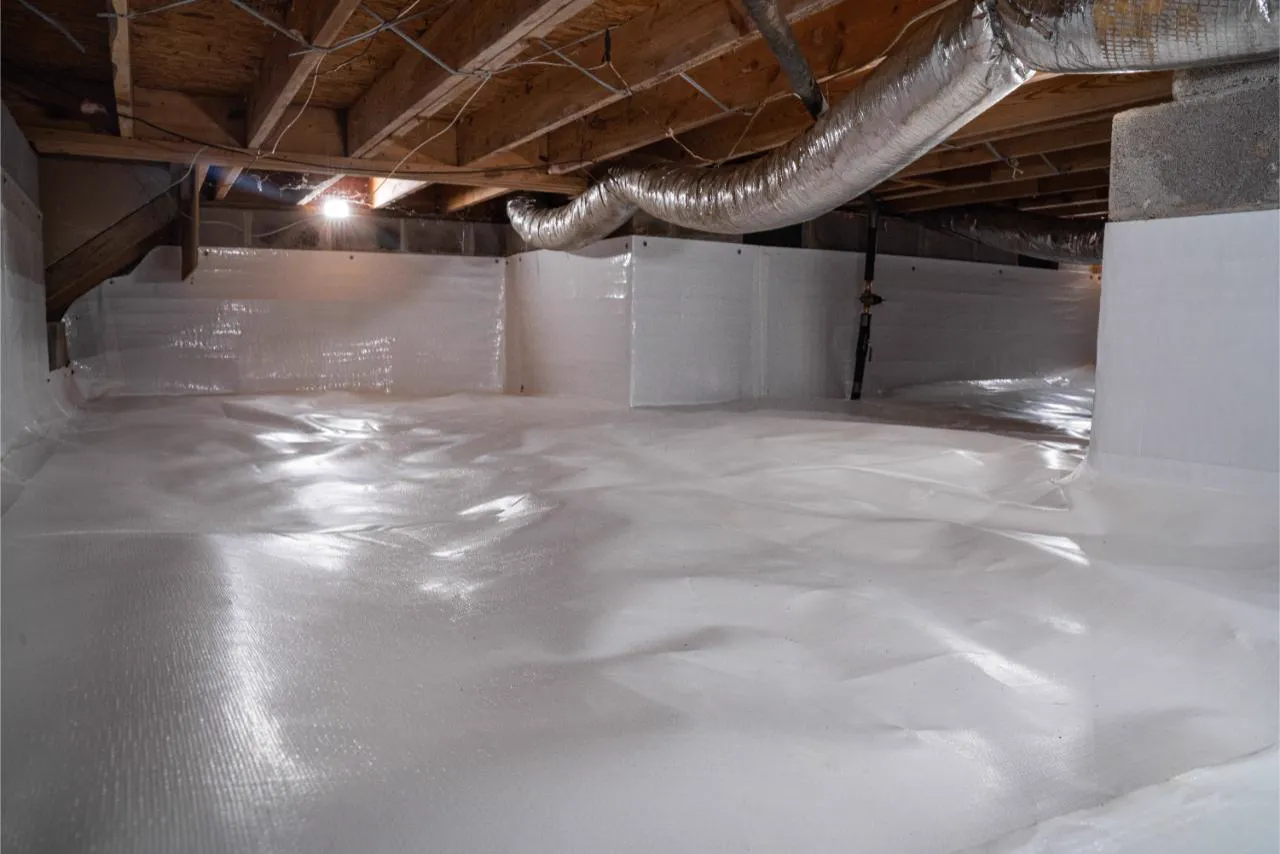
Here’s the local part that matters. Duluth homes are working homes — in-law suites, home offices, a kid’s room over the crawl space. When the air under the floor goes damp, it isn’t storage getting funky. It’s the room somebody sleeps in, which is why folks around Chattahoochee Run tend to call us in the spring instead of waiting.
Why do two quotes for the same job look so different?
Because they’re often two different products wearing the same name. A cheap “vapor barrier” job and a real encapsulation get quoted like they’re the same thing, and they are not remotely the same thing. That single confusion causes most of the disappointment in this trade.
A thin barrier job is loose plastic rolled over the dirt. It’s better than nothing, but loose sheeting shifts, tears at the pier bases, and leaves every wall open, so the damp air still gets in around the edges.
The one line worth remembering
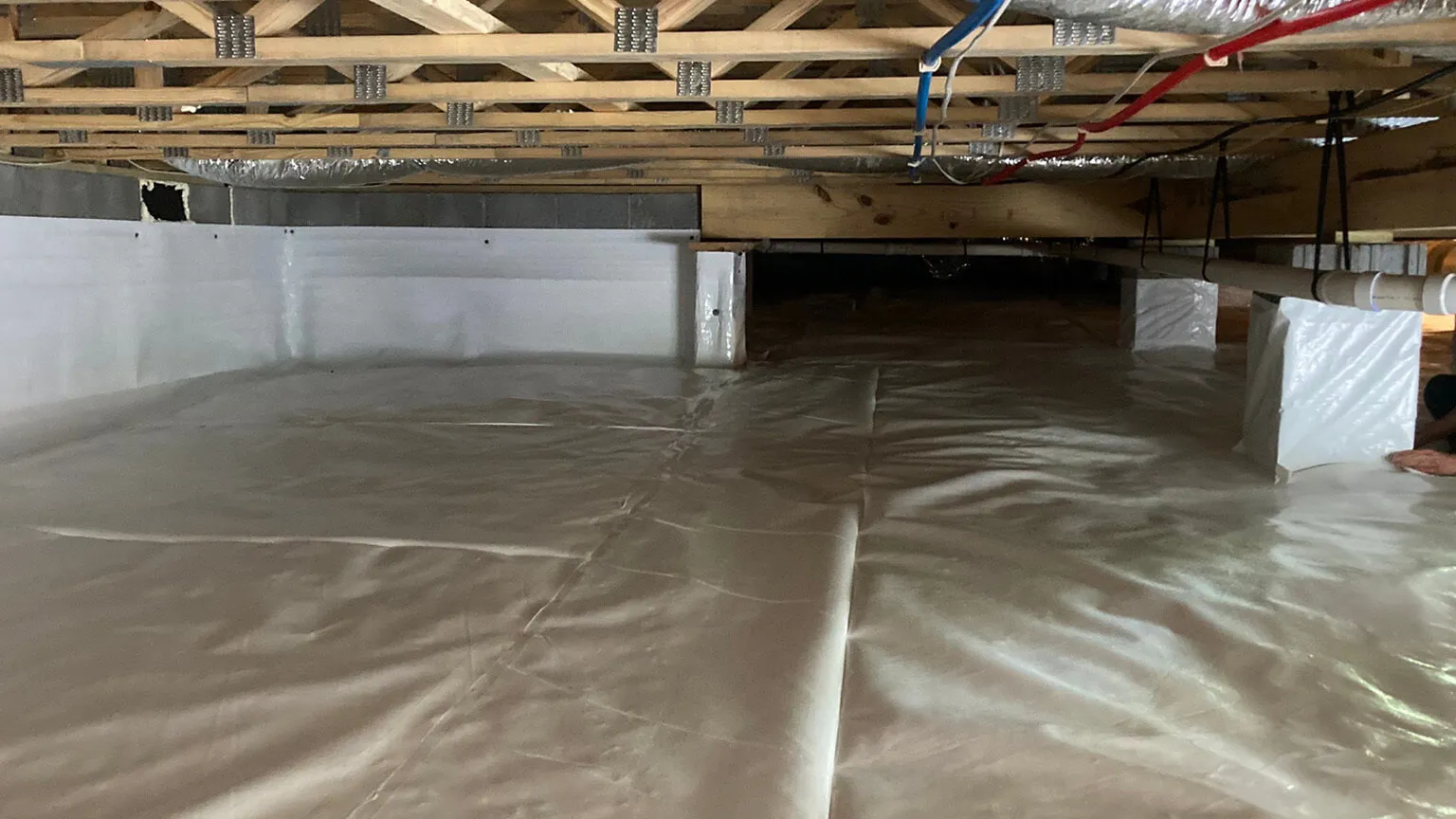
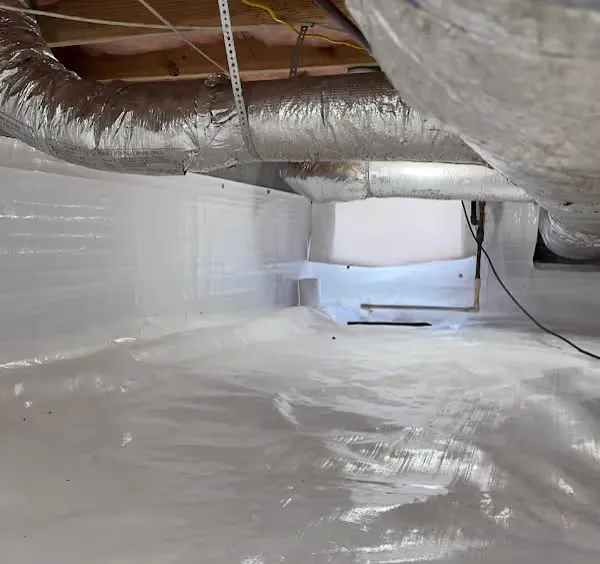
A true encapsulation uses a reinforced liner sealed to the walls and the piers — not loose sheeting laid on the dirt. If the liner isn’t attached to something, it isn’t sealing anything.
A real system wraps the space like a cooler. The liner runs up the stem walls and gets fastened and sealed, each pier is wrapped, seams are taped, and the vents are closed off for good. After that the space stops trading air with the wet outdoors, and the smell goes with it.
What’s the part most companies skip when they explain this?
Water first, liner second. A liner manages ground moisture, but it was never designed to hold back standing water. If a corner puddles after a storm, sealing plastic over it just makes a very expensive water bed.
So a good crew handles drainage before anything shiny goes down. That might mean a perimeter drain and a sump under the liner, or it might mean moving downspouts and cutting the grade back outside. Sometimes the whole fix is in the yard, which is a cheaper day for you and an honest one for us.
Then comes the air. Once the vents are sealed, the space needs a way to stay dry, which is where a properly sized dehumidifier earns its keep. Sized matters — a hardware-store unit in an 1,800-square-foot crawl space runs constantly and still loses. A correctly sized unit with a drain line sits at a steady humidity level and mostly gets ignored.
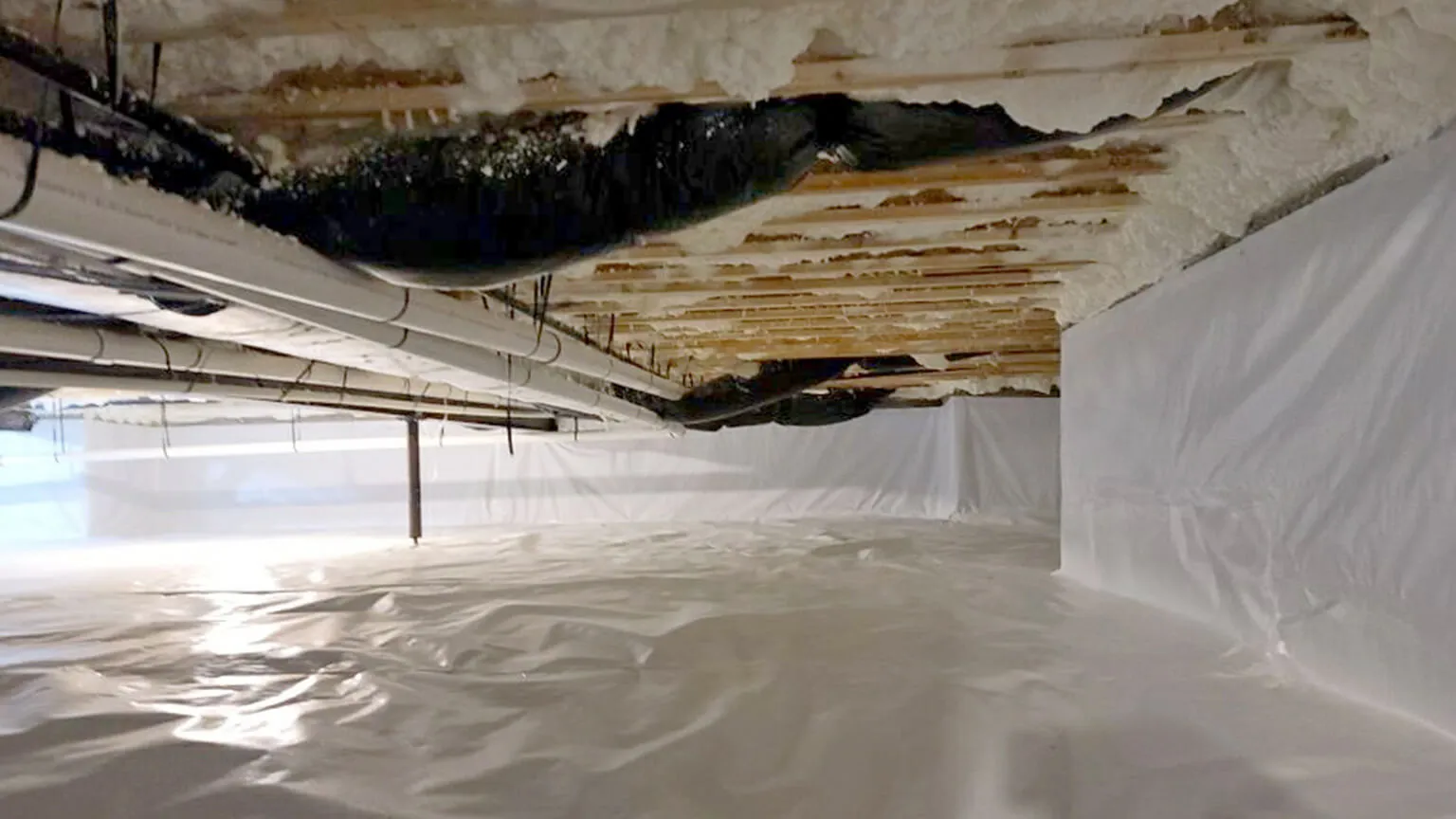
Insulation is the last layer. Foam on the subfloor or on the walls keeps floors warmer in January and helps the whole system hold its own. If you want the mechanics in more detail, our guide to crawl space encapsulation for Duluth homes walks through each step.
How do you read an estimate without guessing?
Compare scope, not totals. A real estimate names the liner thickness, whether it’s reinforced, where it terminates on the wall, how the piers are handled, what happens to the vents, and whether a dehumidifier is included. If your quote is one line and a price, there’s nothing in it to compare.
What a solid Duluth estimate spells out
- Liner thickness and reinforcement. Thin builder plastic and a reinforced liner are not cousins.
- How it attaches. Sealed to the walls and piers, or laid loose on the dirt? Ask directly.
- Vents. Sealed and insulated, or left open? Half-sealed does very little.
- Water handling. Any drainage, sump or grading work listed before the liner goes in.
- Dehumidifier. Included or not, and sized for your square footage with a real drain line.
- Warranty terms. Length, what it covers, and whether it transfers to the next owner.
Prices swing a lot because crawl spaces do. Height, access, standing water and square footage move the number more than anything else, so any figure quoted before somebody crawls under there is a guess. We give ranges on the phone and real numbers after the inspection.
That transferable warranty line is worth a second look. Homes around here change hands often, and a warranty that follows the house is a genuine selling point later. Better yet, it tells you the company plans to still be around.
What should you ask before you hire anybody?
Five questions do most of the sorting. Ask all of them, then compare answers instead of totals — that’s how the best crawl space Duluth crews separate themselves from the quick-plastic outfits.
Five questions that tell you everything
- “Is the liner sealed to my walls and piers?” A confident yes, with a description of how, is what you want.
- “What are you doing about water before the liner?” Silence here is the biggest red flag there is.
- “Are the vents getting sealed?” If they’re staying open, you’re buying a floor cover.
- “What size dehumidifier, and where does it drain?” Real answers include a number.
- “Does the warranty transfer?” Ask for it in writing, not as a handshake.
Red flags are simple, too. A firm price over the phone means nobody measured. Pressure to sign today is a sales tactic and not a real schedule. Real talk: if a bid lands far under the rest, ask what got left out — nine times out of ten it’s drainage, the vents, or the dehumidifier.
One more Duluth note. Word of mouth carries unusual weight here, and reputations travel fast between neighbors. Ask who did the house two doors down, because along the Bunten Road corridor that answer is usually easy to find.
What does the crawl space have to do with your upstairs air?
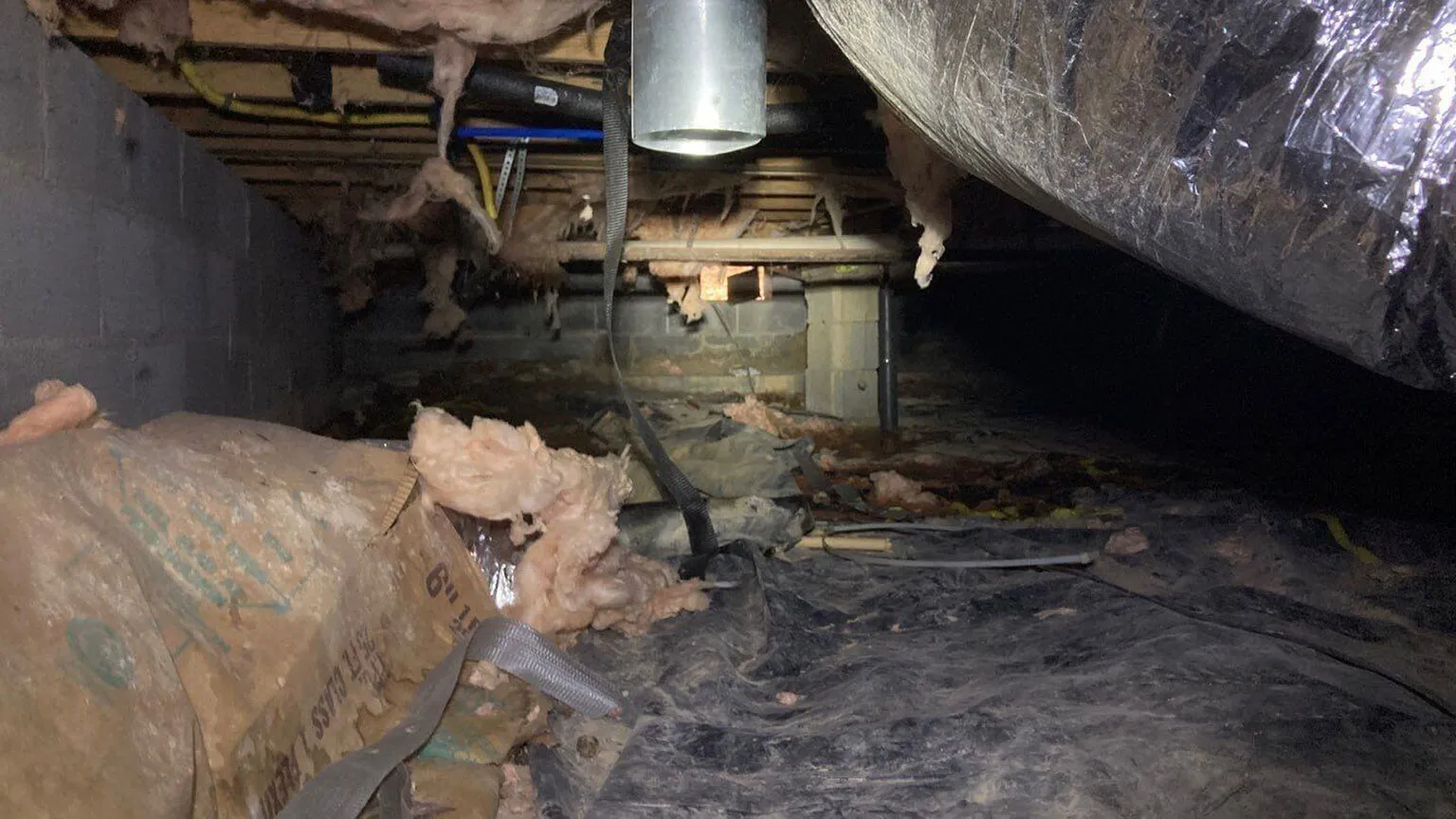
More than most people think. Warm air rises and leaves the house up top, which pulls replacement air in from the lowest point — the crawl space. A good chunk of the air you breathe in your living room started under your floor, so damp, musty air down there doesn’t stay down there.
That’s why the smell shows up in a closet or a back bedroom before anybody thinks to look underneath. It’s also why moisture matters most in homes with an in-law suite or a bedroom on the main floor. The EPA’s page on mold and health explains the connection plainly, and the CDC’s guidance on mold at home says the same thing in one sentence: control the moisture and you control the rest.
Here’s the happy part. Once the ground is sealed, the vents are closed and the humidity holds steady, that whole issue quietly stops. Floors feel warmer, the musty note fades within a couple of weeks, and the air upstairs just smells like a house again.
Picture the next big storm. Rain drums the roof, the yard soaks, and you keep watching your show — because under the floor nothing is changing. That calm is really what you’re buying.
Why are we a fit for Duluth homes?
We’re about fifteen minutes down the road in Lawrenceville, and we’ve been under Gwinnett houses for twenty-plus years. We’ve worked homes near Rogers Bridge Park where the river keeps the ground wet, and older places over toward McDaniel Farm Park where the original grading has long since disappeared under mulch.
You’ll also get straight answers. We photograph what we find, show you the water path, and tell you when the fix is a downspout instead of a project. If a wet basement is the real story at your place, that’s flooded basement repair and we’ll say so. Our crawl space repair page shows what we install, while the Suwanee best crawl space guide covers the newer subdivisions just north of you.
Where we work around Duluth
We’re in this corner of Gwinnett constantly, from Pleasant Hill Road down to the river. That includes Duluth, Johns Creek, Suwanee, Berkeley Lake, Peachtree Corners, Norcross, Lawrenceville, Sugar Hill, Buford, Snellville and the wider Gwinnett area. So there’s usually a truck close by, and getting somebody out rarely takes long.
Questions Duluth homeowners ask us
In our climate, almost always. Sealing the space stops new moisture from coming in, but a dehumidifier is what holds the humidity steady through a muggy Georgia August. It should be sized for your square footage and plumbed to a real drain, not a bucket somebody has to empty.
Closed and sealed, once the space is encapsulated. Open vents were meant to dry the space out, but in humid Georgia summers they mostly let damp air in. Sealing them is part of the system, so it shouldn’t be an extra line item you have to ask for.
Usually yes, because that smell is riding air that comes up from below. Once the ground is sealed and the humidity drops, most homeowners notice the difference within a week or two. If a smell hangs on, there’s another moisture source and we’ll help you track it down.
Most Duluth crawl spaces take two to three working days. Add a day when drainage or a sump goes in first, and another if there’s old insulation and debris to haul out. You can stay home the whole time, since the work happens under the floor.
Often a little, though we’d rather under-promise here. Dry air is easier to heat and cool than damp air, and sealed vents stop your system fighting outdoor weather. The dehumidifier uses some power itself, so treat savings as a nice bonus rather than the reason to do it.
Let’s take a look under your Duluth home
We’ll crawl it, photograph what’s down there, and explain the plan in plain language — including the parts you don’t need. Free inspection, free estimate, no pressure afterward.
(678) 914-5112Serving Duluth and all of Metro Atlanta · $500 off projects over $3,500 · Live support 7am–8pm, 7 days a week