

Waterproofing Options Loganville Homeowners Compare: Fix the Yard or Fix the Basement?
A straight side-by-side of outside drainage work and a full interior system on a big Walton-side lot — with a real recommendation, not a shrug.
Do I need a full waterproofing system, or do I just need better drainage in the yard? That’s the question, and on a lot of properties out here the honest answer is the yard. Most people weighing waterproofing options Loganville companies pitch are picking between those two paths, and one of them costs a whole lot less.
Good news: this is a decision you can actually make with confidence once somebody lays it out plainly. So we’ll walk through both, no thumb on the scale. Then we’ll tell you which one we’d pick standing in your yard.
Option A: what does outside drainage work really involve?
Outside work goes after water while it’s still moving across your property. Nothing gets cut, nothing gets jackhammered. Instead, we change where the water goes before it ever reaches your foundation.
That usually means a few things together. Downspouts get carried well away from the house instead of dumping at the corner. Then the soil beside the foundation gets regraded so it slopes away. Where water still collects, a French drain or catch basin gives it a clear path to a low spot on the lot.
Here’s the thing about Loganville lots — there’s usually room to do this right. On a half-acre off Tom Brewer Road, a machine can reach anywhere it needs to, and there’s somewhere downhill to send the water. Tight in-town lots simply don’t have that luxury.
Worth knowing
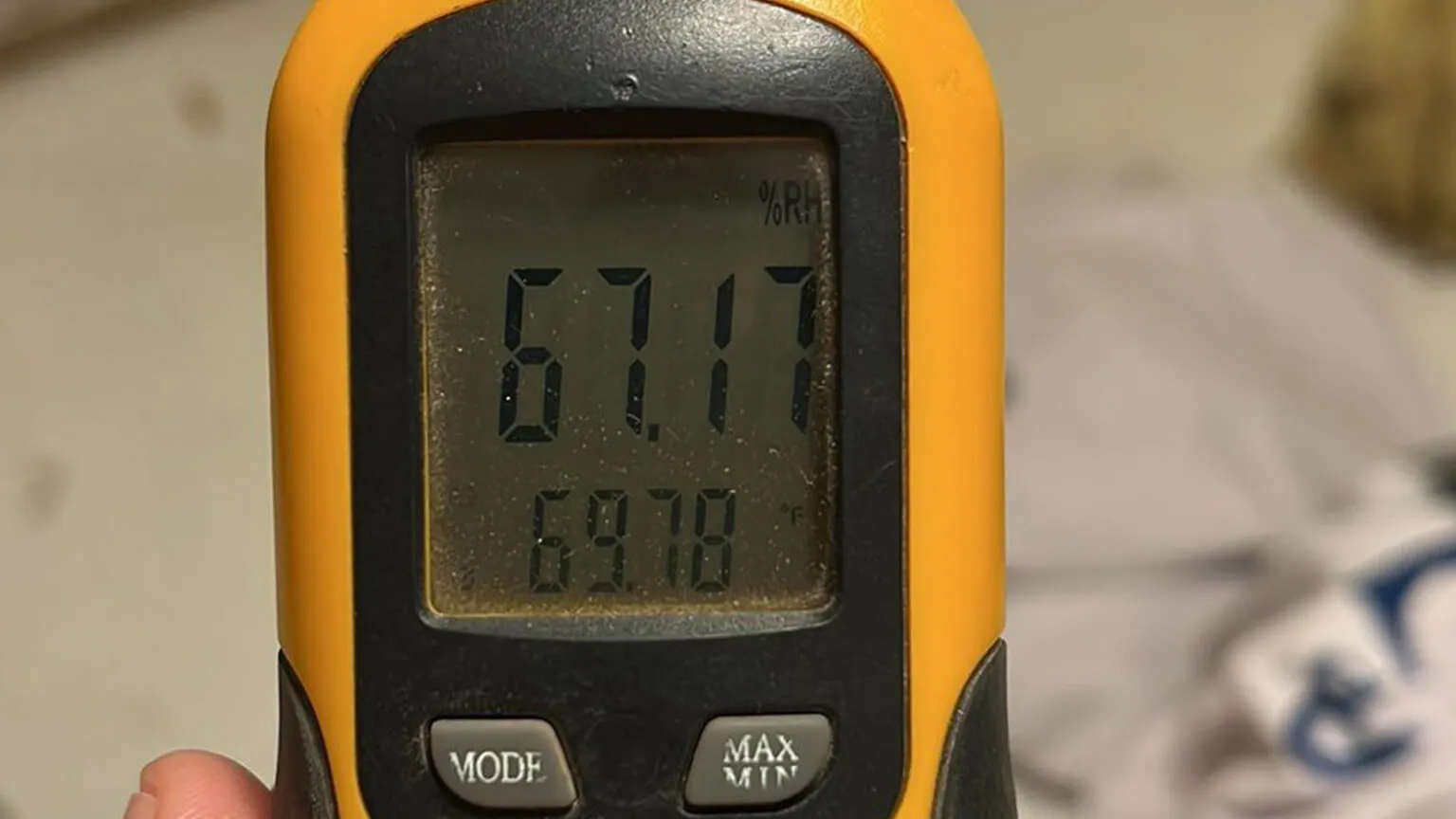
Red clay holds water instead of letting it drain. So a yard that looks flat can still be pushing water at your foundation for days after the rain stops. That’s not a flaw in your house — it’s just what our soil does.
Option B: how does an interior drainage system work?
An interior system takes a different job. It doesn’t try to stop water outside at all. Instead, it catches water underneath your floor and carries it off before it reaches anything you care about.
The crew opens a narrow channel in the slab along the walls that leak. Perforated pipe goes in, packed in clean stone and set below floor level. Everything runs to a sump, and the pump pushes water far away from the house. After that, fresh concrete closes the channel back up.
Why does this work so reliably? Because it targets the cove joint — the seam where the wall meets the floor slab. That seam is the single most common water entry point in a Georgia home, and no coating on earth seals it forever. An interior system doesn’t fight that seam. It just gets underneath it.
Can we look at this from the water’s point of view for a second?
Water isn’t trying to get into your basement. Honestly, it doesn’t care about your basement. Water is only ever doing one thing, which is heading downhill and looking for the easiest opening along the way.
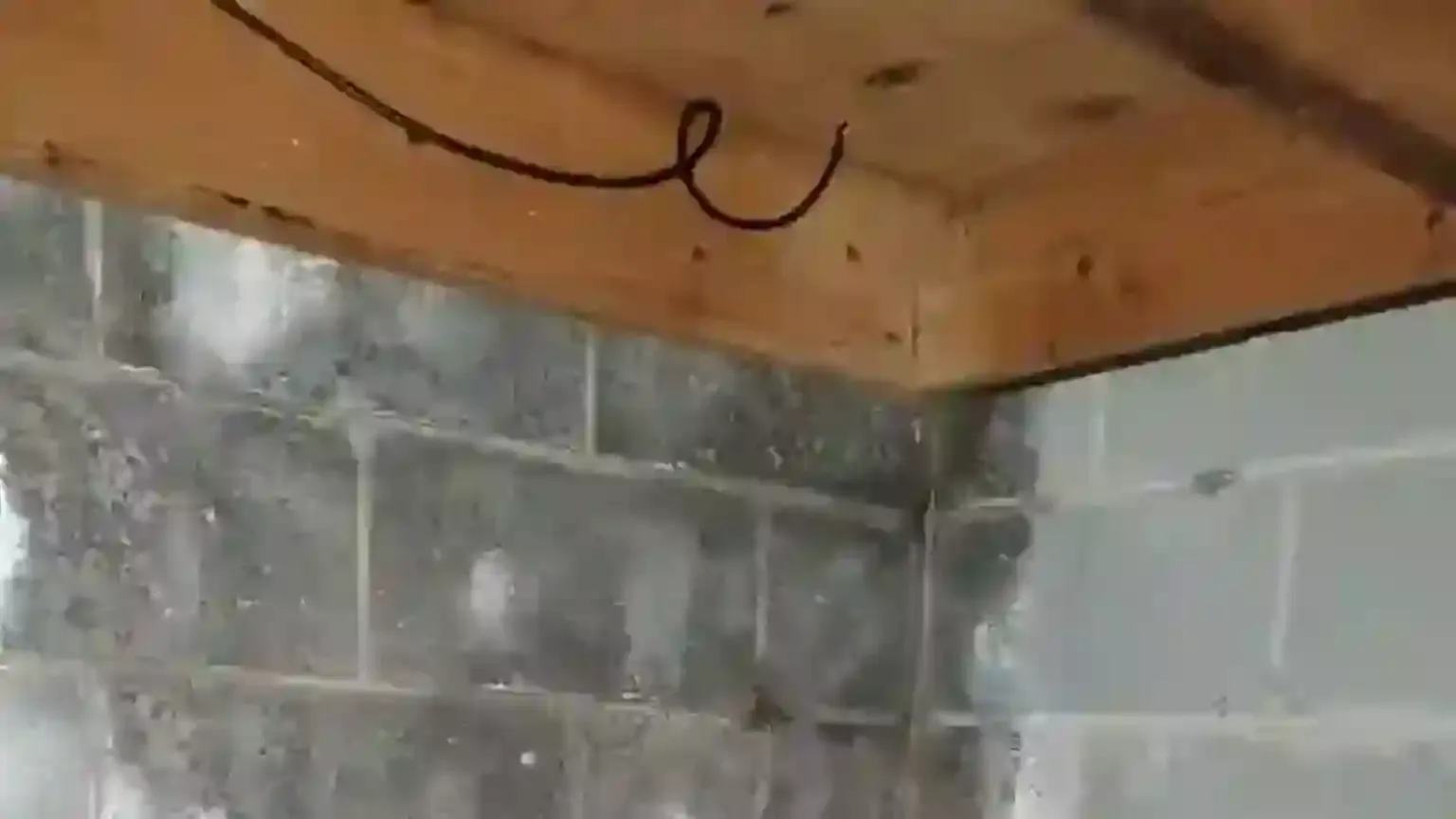
So follow a raindrop. It lands on your roof, runs to a downspout, and hits the ground three feet from your wall. Then it soaks into clay that won’t take it fast enough, so it pools in the loose backfill ringing your foundation. That backfill is softer than the packed clay around it, which means the trench your house sits in acts like a bathtub.
Water never picks the hard way in. If you give it an easier path forty feet from the house, it takes that path every single time — and your wall never gets tested.
Once you see it that way, the two options stop looking like big fix versus small fix. Outside work removes the water before the test. Inside work manages water that already showed up. Both are real, and a home can genuinely need the second without the first having failed.
That’s also why we’re careful about promising a coating will solve it. Sealer on a wall asks paint to hold back a hillside, and the hillside is patient. The U.S. Geological Survey’s groundwater primer covers the pressure side well if you like the science.
Side by side, honestly
Enough theory. Here’s how the two stack up when we’re standing in your yard with a level and a flashlight.
Outside drainage and regrading
- Costs less, often by a wide margin
- Nothing inside the house gets opened or cut
- Needs open lot space and a low spot to drain toward
- Fixes standing water in the yard at the same time
- Rain delays the work, since it all happens outdoors
- Won’t help much against true rising groundwater
Interior drainage system
- Handles water at the cove joint and under the slab
- Works no matter what the yard or the neighbors do
- Usually finished in one to three days
- Weather never delays it, because it’s all indoors
- Includes a pump, so there’s a part to service over time
- Costs more, and involves cutting concrete
Notice neither column says “better.” Because once we’ve walked your lot, one of these is usually obvious — and the other is a conversation we can skip.
What actually decides it on a Loganville lot?
Four things, more or less. They come up on nearly every inspection we run between downtown Loganville and the Walton side.
The deciding factors
- Is there room to work? Big open lots make outside drainage cheap and easy. Tight side yards flip the math fast.
- Where’s the water coming in? Water at the floor seam points inside. Wet only after heavy storms points outside.
- Is there a septic field nearby? A saturated drain field keeps soil wet no matter how well you grade.
- Basement or crawl space? Plenty of homes here have both, and each one asks a different question.
That last one matters more than folks expect. A newer place in Chandler Ridge or Meadow Glen usually has a poured basement wall, so the cove joint is the story. Older properties on the rural edge often sit on block piers with a crawl space underneath, where rotting floor framing is the real concern and the fix looks nothing alike.
We had a homeowner over near Bay Creek convinced he needed a full system. Turned out both back downspouts emptied six inches from the wall, and the ground sloped gently toward the house. After a morning of drainage work and some regrading, his basement stayed dry through spring. Not every call ends that easily, but plenty do.
So which one do we actually recommend?
For most Loganville homes with real yard space, we recommend starting outside. Fix the downspouts, correct the grade, add drainage where water sits, and then watch it through one storm season. If that solves it, you saved thousands and you also got a yard you can mow without sinking.
We recommend the interior system when water shows up at the floor seam even in ordinary rain, when the lot is flat with nowhere to send water, or when outside corrections have already been done properly and it’s still wet. In those cases, more dirt work is just spending money to be disappointed.
And sometimes we tell people they don’t need either one. Clogged gutters have flooded more basements than anyone likes to admit, and we’ll say so out loud even though it’s a much smaller invoice. Curious how this same call goes closer to the city? Our breakdown of Tucker waterproofing options shows how tight lots change the recommendation completely.
What does any of this have to do with the air upstairs?
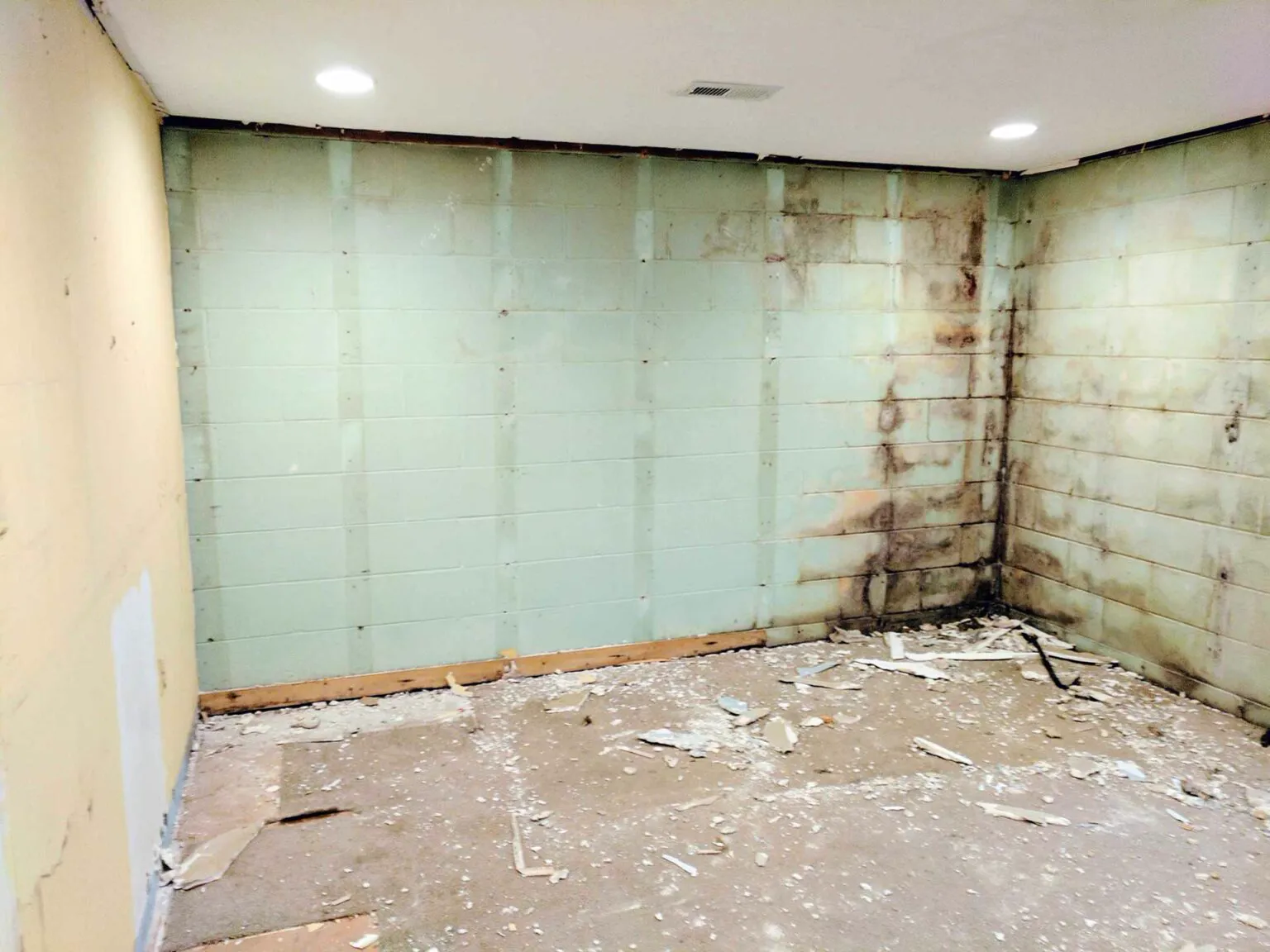
Ready for the part that surprises people? Damp down low isn’t a downstairs problem. Out in Loganville a lot of homes sit on crawl spaces, and a wet crawl space doesn’t stay down there. That damp air rises right up into the house you’re living in.
Air in a house moves upward all day long. Warm air escapes through the attic, which pulls replacement air in from the lowest point in the building. So a good share of what you breathe in the kitchen started its trip beside a damp wall or on wet dirt.
Moisture rides along for the trip. Hardwood floors cup at the seams. Doors stick in August and fit fine by October. A closet upstairs smells musty even though it’s dry up there, and folks chase each of those separately, yet they trace back to one source.
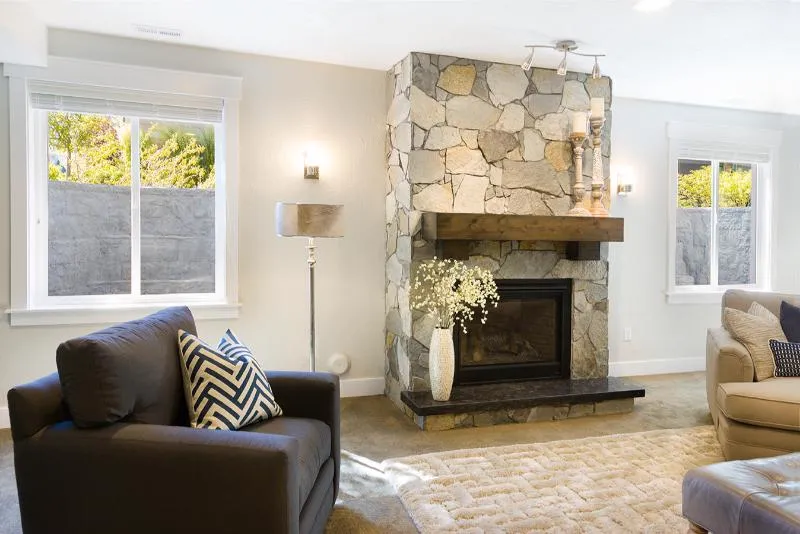
Now picture it handled. The floor stays dry through a hard spring storm, and around here spring storms are the whole ballgame — you can watch them line up on the National Weather Service Peachtree City forecast. That smell at the bottom of the stairs is gone. Better yet, the space downstairs becomes somewhere you’d actually put a couch.
Why folks out here keep calling us back
Because nobody around Loganville enjoys being upsold, and we’ve never had the stomach for it either. If the cheaper fix will hold, that’s the one we write up. If it won’t, we’ll show you why right there on the wall instead of asking you to take our word for it.
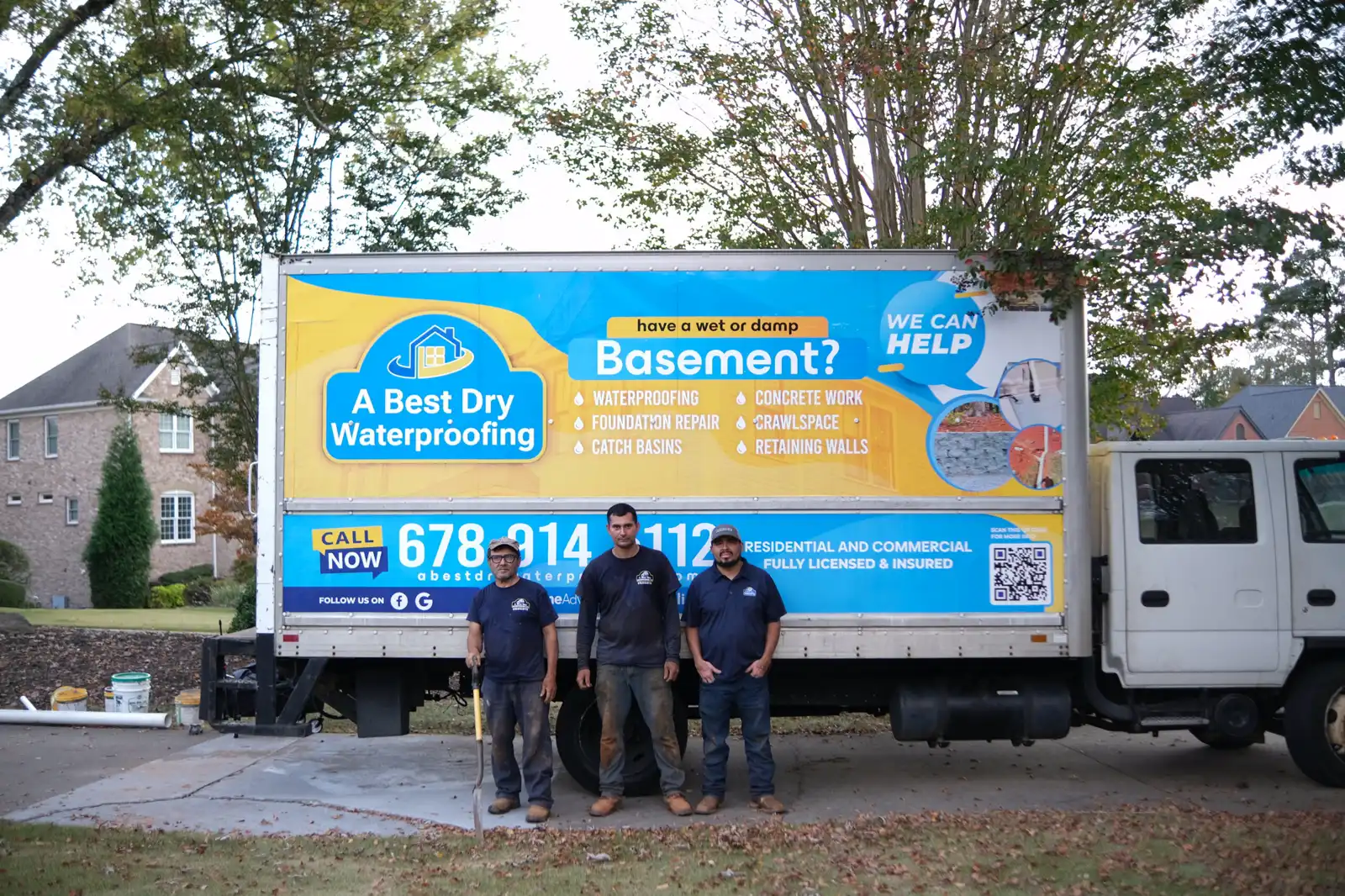
You get the same crews and the same trucks each visit, plus a warranty in writing before work starts. Want the deeper technical read? Our basement waterproofing page lays out the systems, our guide to the best basement waterproofing approaches goes further on local soil, and if your home sits on a crawl space, crawl space encapsulation is probably the right conversation instead.
Where we work around Loganville
We’re based in Lawrenceville, about twenty minutes northwest, so we’re through here constantly — some weeks it feels like we park at Vines Park. That covers Loganville, Snellville, Grayson, Monroe, Between, Bay Creek, Dacula, Walnut Grove and Centerville, plus the wider Walton and Gwinnett Counties area.
Questions Loganville homeowners ask us
Yes, and you get it in writing before anything starts. Interior systems carry the longest coverage, while drainage and grading work carry their own terms. We’d rather explain the fine print at the kitchen table than have you find it later.
Usually, yes. We only need about four feet of clear perimeter along the walls being treated, so most built-ins and drywall come back exactly as they were. Where something has to be opened, you’ll know which sections before we start.
It helps in two ways. A dry lower level is space buyers will actually count, and a transferable warranty answers a question that shows up in nearly every inspection report. On larger lots, fixed drainage helps the yard show better too.
Often within a few days, and sooner if water is actively coming in. Live support runs 7 a.m. to 8 p.m., seven days a week, so you’re not leaving a message into the void. Both the inspection and the estimate are free.
It depends on how much wall is involved and how easy the lot is to work. Drainage corrections sit at the low end, while a full perimeter system in a finished basement sits at the high end. Anyone quoting a flat number over the phone is guessing, so we walk it first and hand you a written scope.
Let’s find out what your Loganville basement is really doing
The inspection is free, the estimate is free, and nobody pressures you afterward. We’ll show you where the water starts, walk both approaches with you, and tell you honestly if the smaller fix is the right call.
(678) 914-5112Serving Loganville and all of Metro Atlanta · $500 off projects over $3,500 · Live support 7am–8pm, 7 days a week