

Waterproofing Options Tucker Homeowners Weigh: Inside the Slab or Uphill Outside?
An honest side-by-side of interior drainage and an exterior interceptor drain on a house built over Stone Mountain granite — with a real recommendation at the end.
Somebody already tried. There’s a gray smear of hydraulic cement on the block, or a fresh coat of that thick waterproof paint, and for one dry season everybody felt pretty smart about it. Then a spring storm rolled through and the floor got wet again in the same spot. Most people comparing waterproofing options Tucker contractors offer start right there — not at square one, but at square two, after a patch that quit.
Good news: that patch wasn’t wasted. It told you something useful. So let’s lay out the two real fixes side by side, then tell you which one we’d pick.
Why didn’t the patch hold?
Because a patch treats a wall like a boat hull, and it isn’t one. Water in the ground pushes hard, and that push never takes a night off. So you plug one path, and the water finds the next one a few feet over.
Here’s the thing about Tucker specifically. This side of DeKalb County sits on the edge of the Stone Mountain granite, and in a lot of yards that rock is shallow. When water hits the rock it can’t keep going down, so it turns and travels sideways — and quite often it goes sideways straight into somebody’s basement. Your wall isn’t leaking so much as it’s standing in the way.
That’s actually encouraging news, though. Water with somewhere better to go will take it every time. Both of the options below work on that idea, and neither one asks a coating to hold back a hillside.
Worth knowing
Concrete block is porous. Water moves through solid, uncracked block by capillary action, so a wall can be damp with no crack on it at all. If you hunted for the crack and came up empty, you didn’t miss it.
Option A: how does interior drainage work?
An interior system stops trying to block water and starts routing it instead. Interior drainage systems collect water below the slab and send it to a sump before it ever reaches the floor, rather than fighting it at the wall face. Picture a gutter, except it lives under your basement floor.
The crew cuts a narrow channel in the slab along whichever walls are wet. Perforated pipe goes in, packed in clean stone, sitting below the floor. Everything drains to a sump basin, and the pump carries water well away. Then the channel closes with fresh concrete.
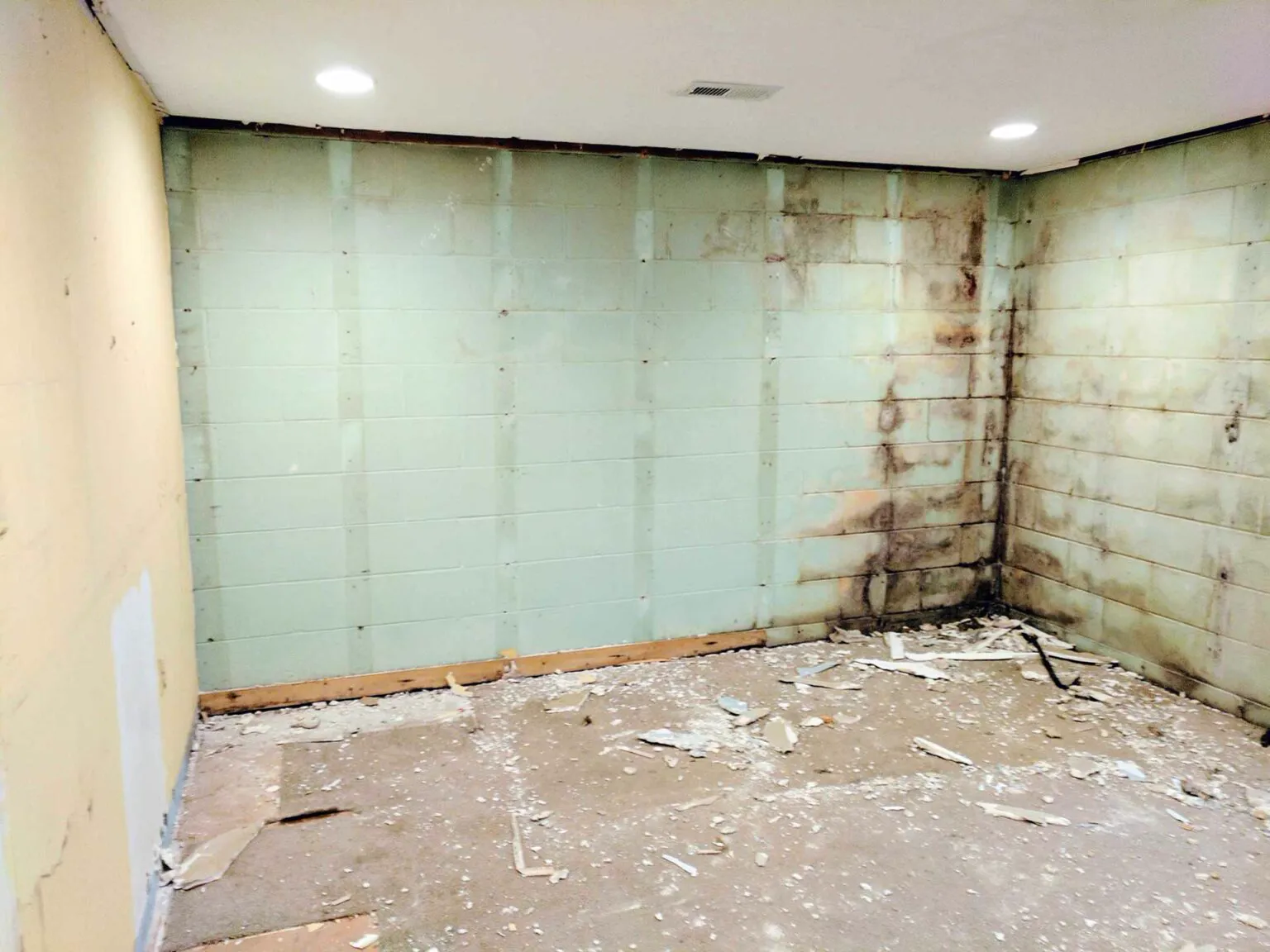
Why do so many Tucker houses land here? Mostly because of what’s under them. Block basements from the 1950s through the 1970s fill Midvale and the streets off Brockett, and their original footing drains silted up years ago. Below-slab drainage doesn’t care, since it works underneath the old system instead of reviving it.
Option B: what is an uphill interceptor drain?
This one goes after water earlier, out in the yard. A trench gets cut across the slope above the house, perforated pipe goes in on stone, and that pipe carries hillside water around the home to daylight. Sometimes the wall gets excavated and coated with a membrane too.
On a lot of Tucker lots, this approach is genuinely powerful. Since water here rides sideways on shallow rock instead of soaking down, a drain in its path catches plenty of it before it arrives. That’s not true everywhere in Metro Atlanta.
But the same granite cuts both ways, and we’ll say that plainly. Shallow rock makes digging slower and pricier, because a machine that would slice through clay in an afternoon can spend two days chewing stone. Add roots and a tight side yard, and the excavation line climbs fast.
Why are two estimates thousands of dollars apart?
This next part is the reason. It’s almost never that one company is greedy and the other is generous — it’s that they’re pricing dirt, and dirt on this side of town is unpredictable.
One contractor walks the lot, assumes normal clay to eight feet, and bids the trench cheap. Another one probes, hits rock at three feet, and bids for hammering. Same house, same problem, wildly different numbers. Nobody lied; one of them just did more homework, and the honest bid usually looks worse on paper.
We’d rather show you the rock on day one than discover it on day three. Surprises are only fun at birthday parties.
So when you’re comparing quotes, ask each one a simple question: what happens if you hit granite? A crew that knows Tucker will already have an answer, plus a written plan for it. A crew that stammers is about to hand you a change order.
Side by side, honestly
Enough theory. Here’s how the two compare when we’re standing in your basement with a flashlight.
Interior drainage
- All work happens indoors, so weather never delays it
- Trees, patios and landscaping stay exactly where they are
- Typically finished in one to three days
- Shallow granite doesn’t change the price much
- Includes a pump, which needs service over the years
- Handles rising groundwater and water already at the footing
Uphill exterior drain
- Catches hillside water before it reaches the wall at all
- Especially effective where rock pushes water sideways
- Requires excavation, and rain pauses the work
- Shallow rock raises the cost, sometimes a lot
- Needs machine access and a place to daylight the pipe
- Also lets us fix grading while the ground is open
Notice neither column says “better.” Once we’ve seen the slope and probed for rock, one of these usually becomes obvious.
What decides it on a Tucker house?
Four things, more or less. They come up on nearly every inspection we run between Downtown Tucker Main Street and the Northlake area.
The deciding factors
- How steep is the uphill side? A real slope above the house makes an interceptor worth pricing. A flat lot rarely does.
- How deep is the rock? Shallow granite tilts the math toward interior work, purely on cost.
- Where does water show up? Water at the floor seam points inside. A wet band high on one wall points uphill.
- What’s already finished down there? Old paneled basements hide years of moisture, and that changes the plan quickly.
That last one deserves a second. Plenty of homes near Lawrenceville Highway got finished basements decades ago, and behind the paneling somebody rolled on a sealer and called it handled. Then the musty smell returns, because a coating got asked to do a drain’s job. The EPA’s guide to moisture in the home explains it plainly.
So which one do we actually recommend?
For most Tucker homes, we recommend interior drainage first, paired with outside corrections that need no machine: downspouts carried well past the foundation, regrading the first six feet, and clearing the leaf pack a wooded lot drops each fall. That combination solves most of what we see, and the price stays predictable.
We recommend the uphill drain when the lot has real slope above the house and the rock isn’t three feet down. Given diggable ground and a daylight path, intercepting water uphill is excellent value, because water you never receive is water you never pump.
Sometimes we tell folks they need neither. If the floor only dampens in a hard storm and the gutters are packed solid, start with a ladder and a Saturday. That has saved more basements than the industry admits, and we’ll say so even though it’s a smaller invoice. Curious how this call changes across the county line? Our breakdown of Johns Creek waterproofing options covers newer homes.
How did it go for a homeowner off Brockett?
Here’s a real one. A homeowner off Brockett called us after two wet springs, in a basement finished with wood paneling back in the seventies. Behind that paneling, one wall had been quietly damp for years.
They already had a quote for a full exterior dig, and the number had scared them off the project. But when we probed the uphill side, rock sat close to the surface across the slope. Digging there meant days of hammering and a much bigger bill, for a result we could match another way.
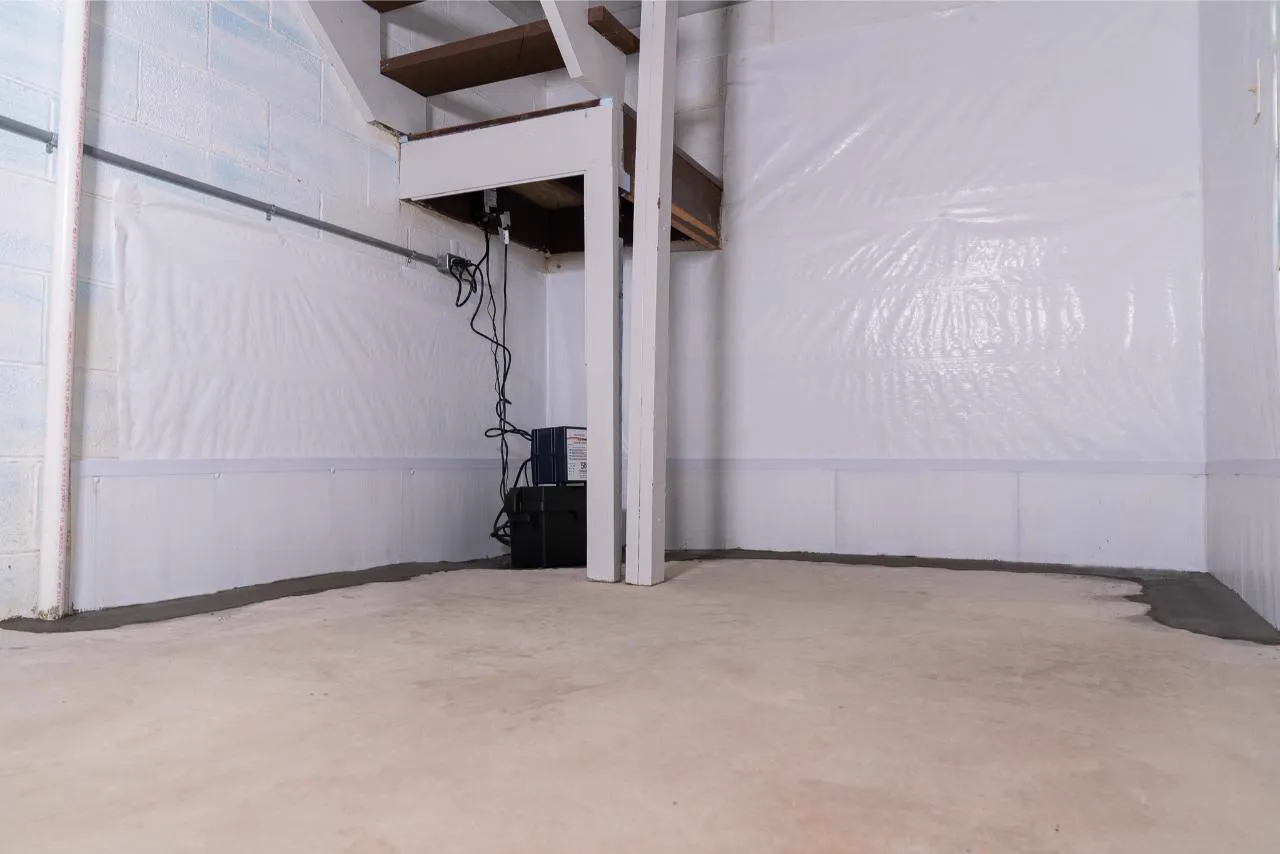
So we opened about four feet of perimeter inside, ran below-slab drainage on the two walls that were actually wet, tied it to a sump, and added a liner behind the finish. Most of their paneling came off and went straight back on. The job wrapped inside three days.
What did they notice first? Not the drainage — the smell. That stairwell had a scent for twenty years, and a week later it was gone. Storms since have come and gone without anyone in that house thinking about the floor.
The part that makes this feel calm
Picture next April. Rain is coming down hard enough to hear from bed, the kind that used to send somebody downstairs with a towel at midnight. Instead the pump cycles twice, the floor stays dry, and nobody gets up. You can even watch the front roll in on the National Weather Service Peachtree City map with the mild curiosity of a person who has no stake in it.
Why hire people who know this ground?
Because granite changes the answers, and you can’t read a lot like this off a satellite photo. Tucker folks know their own houses well, so we’d rather trade notes than talk over you. We probe, show you what we find, then explain the plan before we quote it.
You get the same local crews and a written warranty before anything starts. For the technical deep end, our page on basement waterproofing lays out each system, our guide to the best basement waterproofing methods goes further on old block walls, and if your house sits over a vented space, crawl space encapsulation is the better conversation.
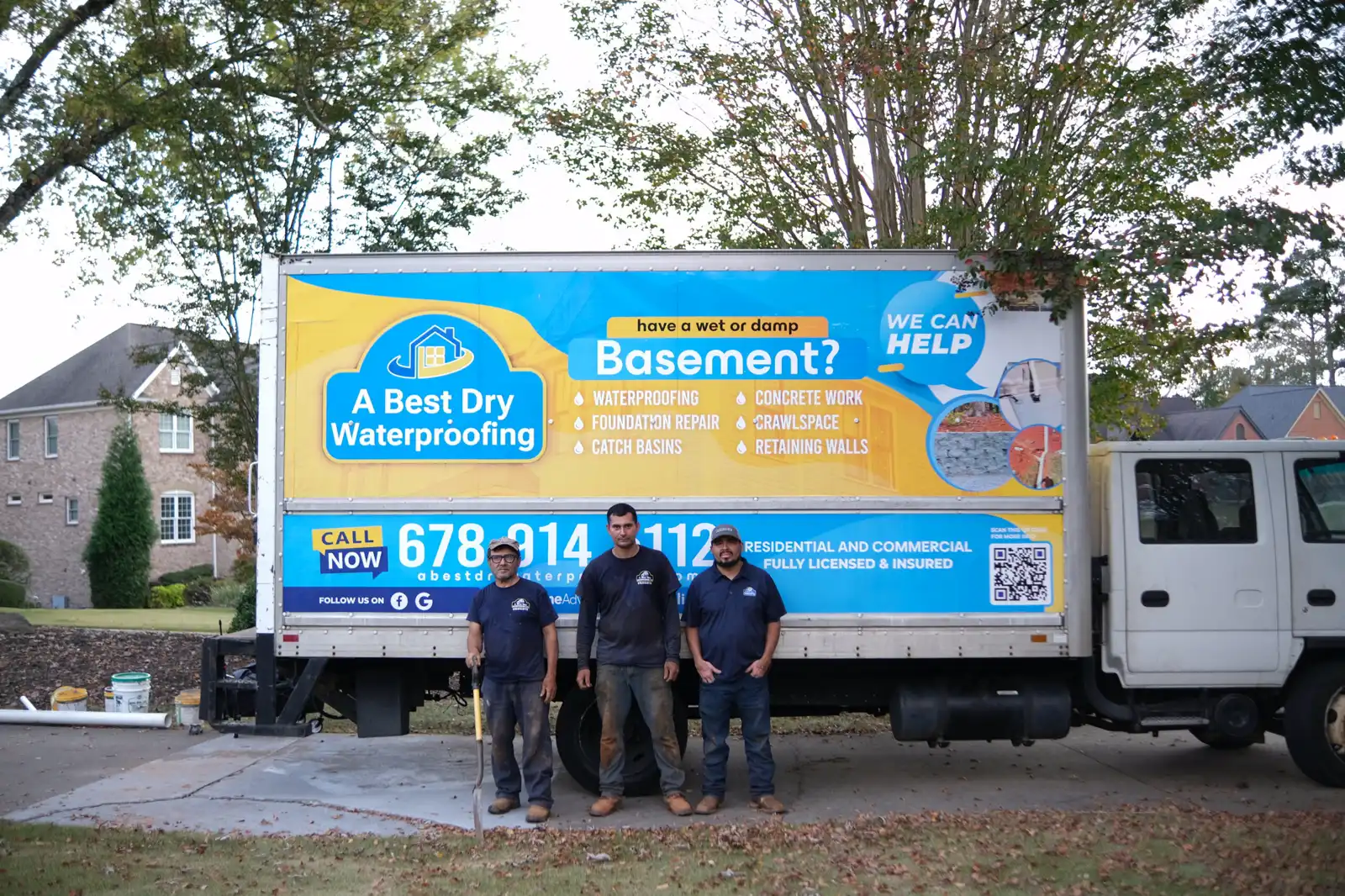
Where we work around Tucker
We’re based in Lawrenceville, about twenty-five minutes northeast, so we’re through this part of DeKalb County constantly. That includes Tucker, Lilburn, Stone Mountain, Norcross, Decatur, Clarkston, Doraville, Brookhaven, Chamblee, Pine Lake and the wider DeKalb area. Odds are good we’ve already worked on a house near yours.
Questions Tucker homeowners ask us
Usually, yes. We need roughly four feet of clear perimeter along the walls we’re treating, so paneling and built-ins often go right back the way they were. Where a section has to open, we show you which one before we start, never after.
It helps two ways. A dry lower level is square footage a buyer will actually count, and a transferable warranty answers a question that otherwise turns up in every inspection report. On older block foundations especially, documented work makes the sale smoother.
Often within a few days, and faster if water is coming in right now. Live support runs 7 a.m. to 8 p.m., seven days a week, so you’re not leaving a message into the void. Both the inspection and the estimate are free.
It depends on how much wall is involved and what’s under the yard. Interior drainage on a couple of walls sits at the low end, while an uphill exterior drain through shallow granite sits at the high end. Anyone quoting a flat number over the phone is guessing, so we walk the lot first and then hand you a written scope.
Most interior systems run one to three days from start to cleanup. Exterior trenching takes longer, and rock or rain can stretch it further. Either way you get a schedule up front, plus a crew that hauls its own mess away.
Let’s find out what your Tucker basement is really doing
The inspection is free, the estimate is free, and nobody pressures you afterward. We’ll show you where water gets in, probe for rock, walk you through both approaches, and say so honestly if the smaller fix is right.
(678) 914-5112Serving Tucker and all of Metro Atlanta · $500 off projects over $3,500 · Live support 7am–8pm, 7 days a week