

Waterproofing Cost in Sugar Hill: A Step-by-Step Breakdown for Hillside Homes
What the work involves, why the slope of your lot moves the number, how long it takes, and where do-it-yourself honestly runs out of road.
Here’s the thing almost nobody tells you before you start pricing this out. Most basement water in Georgia doesn’t come through a dramatic crack in the wall. It comes in low and quiet, at the cove joint — the seam where your basement wall meets the floor slab. So when you’re comparing waterproofing cost Sugar Hill quotes, the real question isn’t how big the crack is. It’s whether the plan actually treats that seam.
Good news, said plainly: this is solvable, and it’s the kind of thing we handle week in and week out. Let’s walk the whole thing — steps, timeline, what drives waterproofing cost in Sugar Hill up or down on a steep lot, and where a weekend project stops being enough.
Why does the ground here matter so much?
Because Sugar Hill is named for a hill, and it earns it. The land drops hard toward Lake Lanier and the Chattahoochee below Buford Dam, so water here doesn’t sit. Instead it runs, and it runs toward whatever is downhill. If that’s your house, your foundation is the first wall it meets.
That’s also why walkout and daylight basements are everywhere here. Builders worked with the grade instead of fighting it, which is smart. But it means one side of your basement sits deep in wet clay while the other opens to the yard, and those two sides behave nothing alike in a storm.

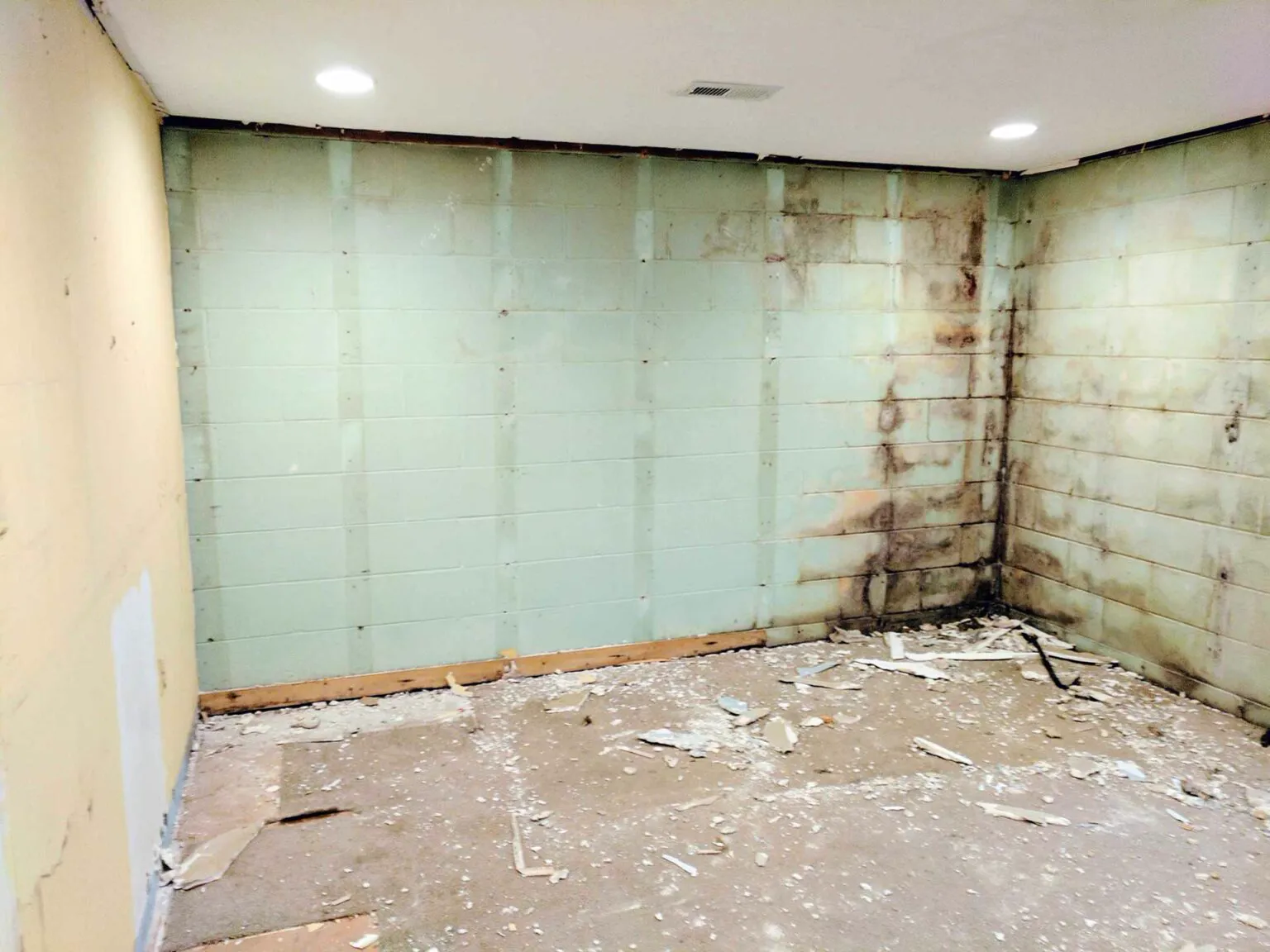
Clay swells when it takes on water, and swollen clay pushes. That push has a name — hydrostatic pressure — and it moves water through solid block with no crack required. Shallow rock on the steeper slopes adds to it, sending water sideways until it finds your wall. For the plain-science version, the USGS groundwater primer is worth ten minutes.
Worth knowing
Seepage and structural trouble are two separate conversations. Plenty of the foundations we look at here are letting water in while staying perfectly sound. We’ll tell you which one you have before anyone talks money.
What does the job actually look like?
Every house differs a little, but the sequence rarely changes. Here’s the honest version.
- Find the source outside first. We walk the uphill side, the downspouts, the grade and any retaining wall steering water at the house. On a slope, the fix sometimes lives entirely in the yard.
- Read the foundation inside. The cove joint gets checked along every wall, not just the wet-looking one.
- Write the scope down. You get it on paper: what goes in, where, and why that spot.
- Open the perimeter. A narrow strip of slab comes up along the affected walls. It’s loud for about a day, and then it isn’t.
- Set the drainage low. Perforated pipe sits in clean stone below floor level, so water is caught before it can reach that seam.
- Route it away for good. On many lots here we discharge by gravity, since the grade does that work free. Otherwise a sump basin and pump send it well downhill.
- Close it up clean. Fresh concrete, wall liner where it belongs, and our mess in our truck.
Timeline? Most interior systems here run two to four working days. Add a day when the basement is finished, and another when a walkout door or window well needs drainage of its own.
Can we back up for a second?
Let’s back up, because there’s a question sitting under the question you came here with. You typed in a price. What you really want to know is how much of this hill am I paying for.
Real talk: slope changes a job. A machine that rolls right up to a flat lot may not reach the low side of a Waterside lot at all, so some digging happens by hand or with smaller equipment. That isn’t a markup. It’s hours.
Grade also decides where water goes afterward. Downhill, gravity is on your side and discharge stays simple. On a lot sitting below the road — and there are plenty along Cumming Highway (GA-20) — water has to be lifted and carried somewhere sensible instead.
Most advice online stops at the list of steps. That’s the easy half. The hard half is knowing what your hill does with water before it ever reaches the house.
What actually moves the number?
Straight answer: how much wall is involved, and how hard it is to reach. Most waterproofing cost Sugar Hill estimates swing on those two things. Anyone quoting a flat price by phone is guessing, so here’s what we weigh.
Price drivers, biggest first
- Linear feet. One wet wall versus a full perimeter is the biggest swing in any estimate.
- Lot access. If a machine reaches the work, exterior digging stays reasonable. If it can’t, the same trench becomes a much longer day.
- Excavation depth. The buried uphill wall can be twice as deep as the walkout side, so it takes more time and more care.
- Retaining walls. Many steep lots have one, and a leaning wall usually needs its own drainage first.
- Discharge route. Gravity outfall is the cheap version. A sump and a long buried line downhill costs more, though sometimes it’s the only right answer.
- Age of the original system. Plenty of 1990s and early-2000s homes here still have their first drain line and first pump, and both have earned retirement.
Small exterior corrections land at the low end. A full perimeter system with a new pump and a hand-dug uphill section sits at the top, and most jobs land between. Either way, you get a written number with the scope spelled out beside it. To compare systems before you call, our guide to waterproofing options puts them side by side, and the basement waterproofing page shows exactly what we install. Curious how flatter ground prices out? The Lilburn waterproofing cost guide makes the slope difference pretty clear.
What can you honestly do yourself?
Quite a lot, and we won’t pretend otherwise. Some of the best outcomes we’ve seen started with a homeowner, a shovel and a free Saturday. Here’s where your effort really pays off.
Real DIY wins on a slope
- Move downspout water downhill. Six to ten feet out beats a splash block, and on a grade that distance is nearly free.
- Cut a shallow swale uphill. A gentle channel above the house sends runoff around it instead of into it.
- Clean gutters twice each fall. Leaf drop clogs the drainage steep lots depend on, and November comes fast.
- Keep a rain log. Which wall gets wet, after what storm, how quickly. That note beats any photo.
Now the other side, said with respect. Waterproof paint can’t beat pressure — it’s a raincoat on a submarine. Hydraulic cement in the cove joint has the same trouble, since sealing one inch of a seam just moves water four feet over.
Sub-slab drainage and discharge routing aren’t DIY either, and not because of the tools. A system set six inches too high looks identical to a correct one until the first hard spring storm. Moisture and air quality are worth reading up on, and the EPA’s guide to moisture control covers it without selling you a thing.
How should you get ready?
Not much, honestly. Clear about four feet along the walls we’re working on, and pull boxes toward the middle instead of the garage. We’ll handle the heavy things. If your driveway is steep, tell us before we show up. Pets do better upstairs while the saw runs, and that’s the list.

Want to hear how one of these actually went?
A homeowner in the Lanier Golf area called about a musty smell in a basement built in the late nineties. They’d already had the walls painted, which held one season and then didn’t. Nothing looked broken, and that was the confusing part.
What we found was ordinary. The original drain line had silted up over twenty-five years, while beds and mulch slowly built the uphill yard against the wall. Water rode along shallow rock and arrived right at the cove joint. In other words, the house wasn’t failing — its first system had finished its run.
So we regraded the uphill side, set a new interior channel along two walls, and used the slope for a gravity discharge well past the house. Three days of work. They kept their old pump, since it tested fine and we won’t sell you a part you don’t need.
A year later they finished the space, and their kid practices drums down there now. That’s the feeling we’re after — a room you stop worrying about and start using.
How do you know it was done right?
Ask for four things, and any honest crew hands them over without blinking. First, photos of the stone bed and pipe before the concrete goes back. Second, the discharge point, walked and shown to you. Third, a written warranty you can read in one sitting. Fourth, a plain explanation of why your walls got the treatment they got.
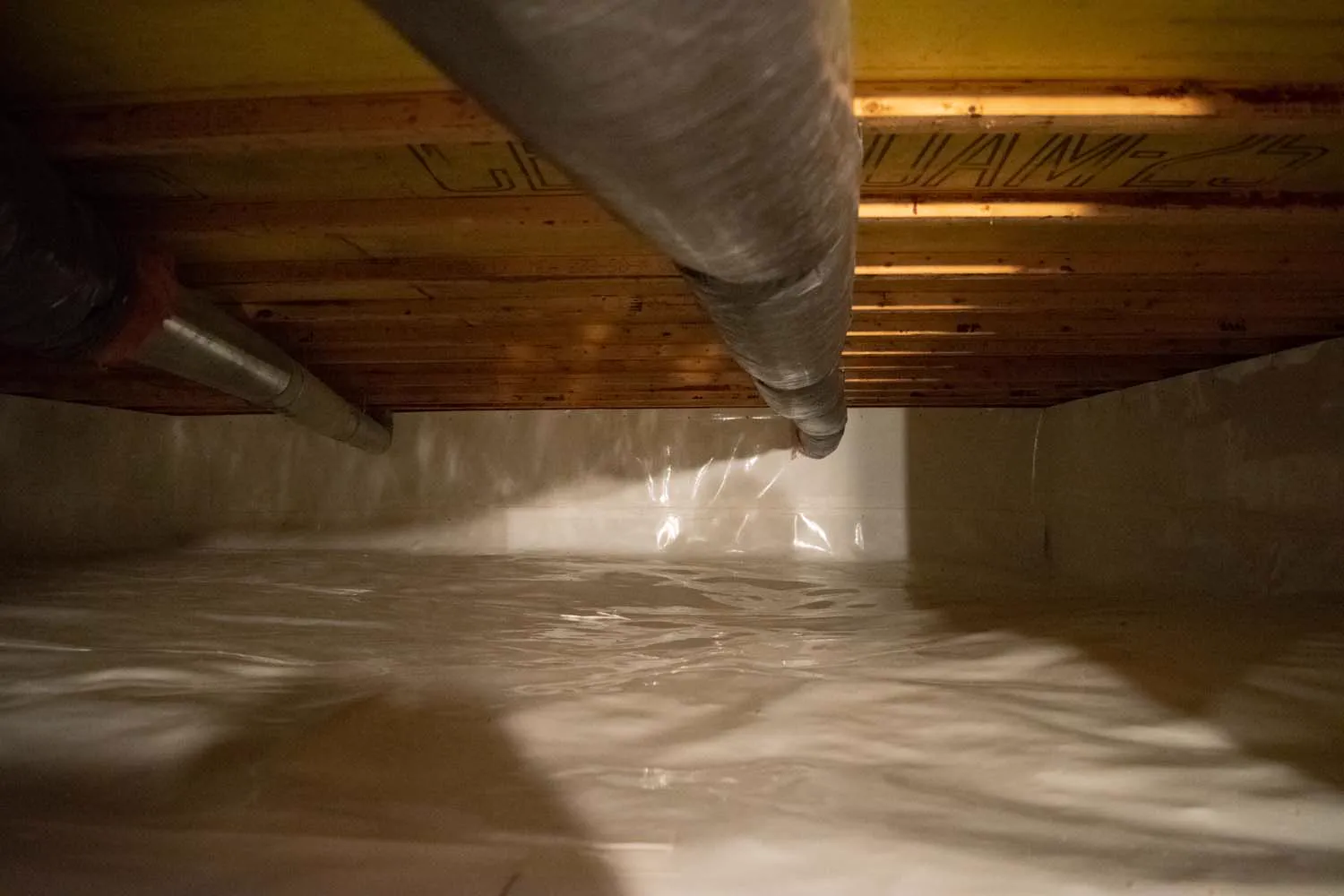
One more note for hillside homes. If part of your house sits over a crawl space instead of a full basement — common on plenty of lots over near Whitfield Farms — then crawl encapsulation is often the better tool for that section. Different system, same goal: dry air, solid house, space you trust again.

Where we work around Sugar Hill
We’re based in Lawrenceville, about twenty minutes south, and we’re up this way constantly. That includes Sugar Hill, Buford, Suwanee, Cumming, Gainesville, Flowery Branch, Braselton, Dacula, Duluth and the wider Gwinnett area. Whether your house sits above Sugar Hill Golf Club or on a side street near Gary Pirkle Park, we know these slopes.
Questions Sugar Hill homeowners ask us
Most interior systems run two to four working days from start to cleanup. A finished basement adds about a day, and a steep lot that needs hand digging can add another. We’ll give you the schedule in writing before we start, so you can plan around it.
No, just clear about four feet along the walls we’re working on. Slide boxes toward the middle and we’ll take care of anything heavy. Dust barriers go up before the saw comes out, so the rest of your things stay covered.
Sometimes, and sometimes a crack needs its own repair alongside the drainage. A hairline seepage crack can be sealed as part of the job, while a wall that’s moving needs structural work first. We’ll show you which one you have and explain the difference before anything gets priced.
It depends on the lot more than on the house. Interior drainage works nearly anywhere and is easier on a tight or steep site, while exterior work makes sense when a machine can reach the wall and the grade is the real problem. On many hillside homes the best answer is a bit of both.
The drainage itself is built to last as long as the house, because stone and pipe below the slab have nothing to wear out. A pump is the one part with a service life, so plan on replacing it somewhere around the ten-year mark. Everything else keeps working quietly in the background.
Let’s find out what your Sugar Hill basement actually needs
We’ll walk the lot with you, show you where water is getting in, and explain the fix in plain language — hills, retaining walls and all. The inspection and the estimate are free, and nobody pressures you afterward.
(678) 914-5112Serving Sugar Hill and all of Metro Atlanta · $500 off projects over $3,500 · Live support 7am–8pm, 7 days a week