

Basement Waterproofing in Norcross: What It Costs and What to Expect
You’re ready to hire somebody. Here’s the whole picture — what the crew does, what moves the price, what the warranty covers, and how to spot a real diagnosis.
Before you compare quotes for basement waterproofing Norcross crews can actually stand behind, go stand in your basement for five minutes. Look at the seam where the wall meets the floor, all the way around. That thin line tells you more about your house than any phone estimate ever will, and it costs nothing to read.
You’re looking for a stain, a chalky white bloom, or a faint dark ring that fades a foot up the wall. If you find one, good news — that’s the most fixable version of this problem. Also, you now know something useful before anyone knocks on your door.
Why does that seam matter so much?
Because the cove joint — the seam where the basement wall meets the floor slab — is the single most common water entry point in a Georgia home. It isn’t a crack and it isn’t a defect. Two slabs of concrete poured on different days simply never bond to each other, so water under pressure finds that gap first.
Here’s the thing: almost nobody mentions this before the sales visit. Once you know it, though, a crew that starts at the cove joint is clearly reading your house.

What is the work, in plain words?
Groundwater sits in the soil around your foundation and pushes. That push is called hydrostatic pressure, and it’s strong enough to move moisture straight through solid masonry with no crack involved at all. If the mechanism interests you, the USGS groundwater primer explains where that underground water comes from without trying to sell you a thing.
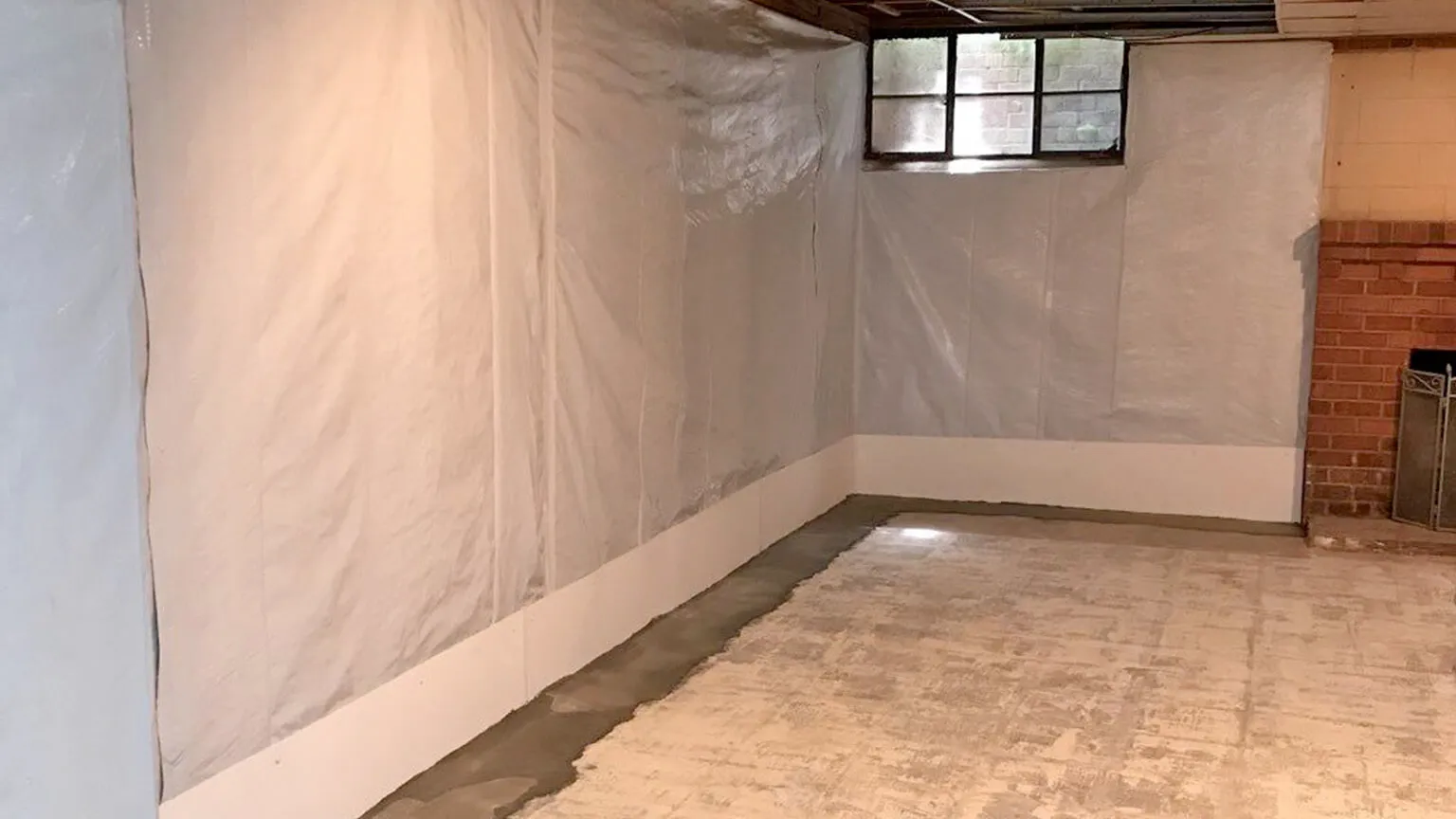
So you don’t fight the pressure. Instead, you give the water an easier path. An interior system opens a narrow strip of floor along the wall, sets perforated pipe in clean stone below the slab, and carries everything to a sump basin. From there a pump sends it well away from the house.
Exterior work solves the same problem from the yard side — grading, buried downspouts, repaired drain lines. Sometimes that alone is the whole answer, and when it is, we say so.
What does a real job look like?
Day zero is the inspection, and it’s free. We walk the outside first, because a surprising share of the time the answer is sitting in the yard and the invoice gets much smaller. Downspouts, grade, old drain lines and sewer laterals all get checked before anybody mentions concrete.
Install day is loud for one day and then it isn’t. Saw cuts, spoil hauled out, stone and pipe set low, basin placed, discharge routed away from the house — not politely back into the flower bed for a second lap. Fresh concrete closes it up, wall liner goes on where it’s called for, and our mess leaves in our truck.
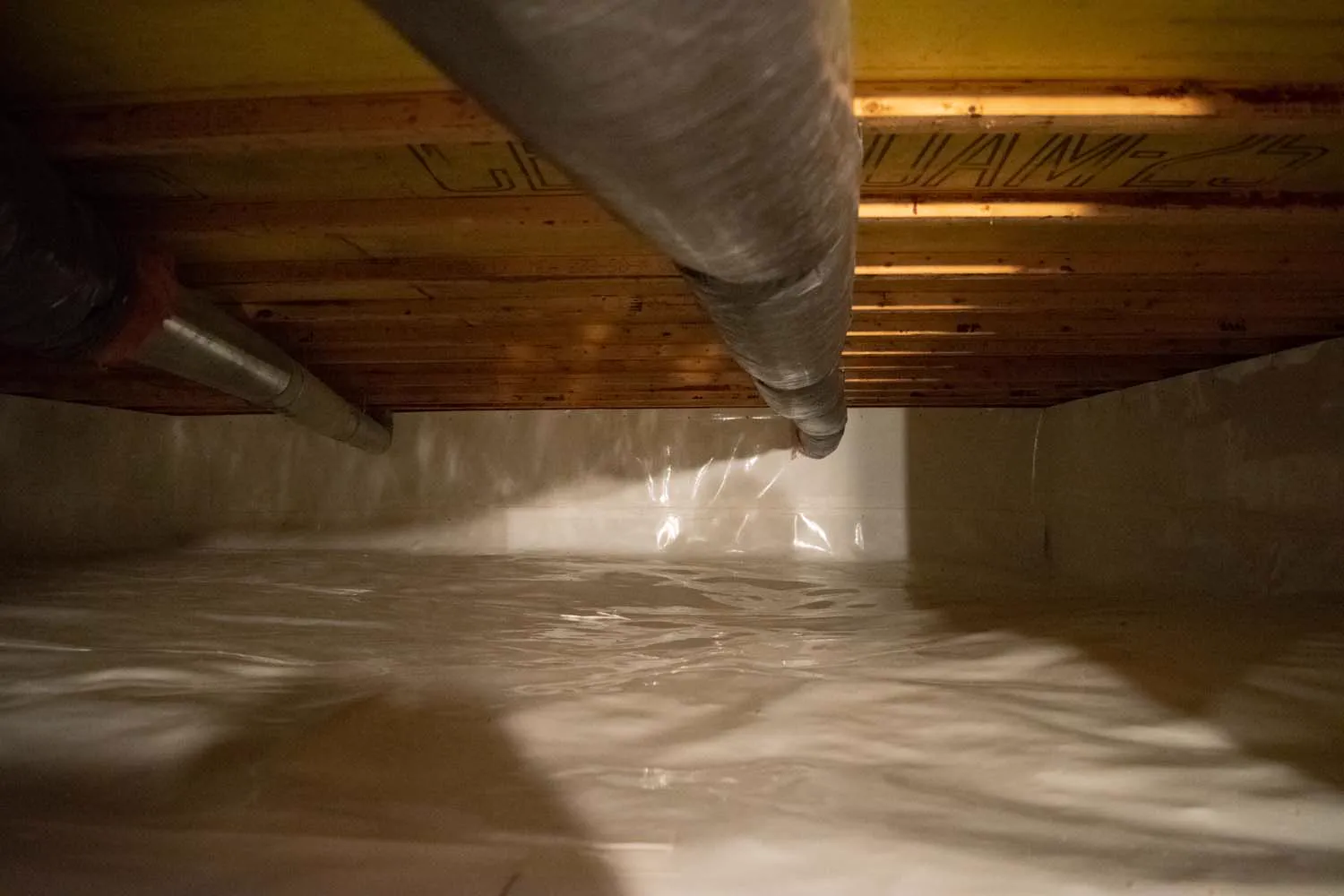
Most Norcross basements run two to four working days. Add a day for a finished space, plus another when a crawl space section needs a real vapor barrier. Standing water under a crawl with no barrier is one of the most common things we find here, and it’s also one of the most satisfying to fix.
Why does the answer change house to house?
Most advice online stops right about here. It shouldn’t — because in this city, the generic answer is the wrong one more often than not.
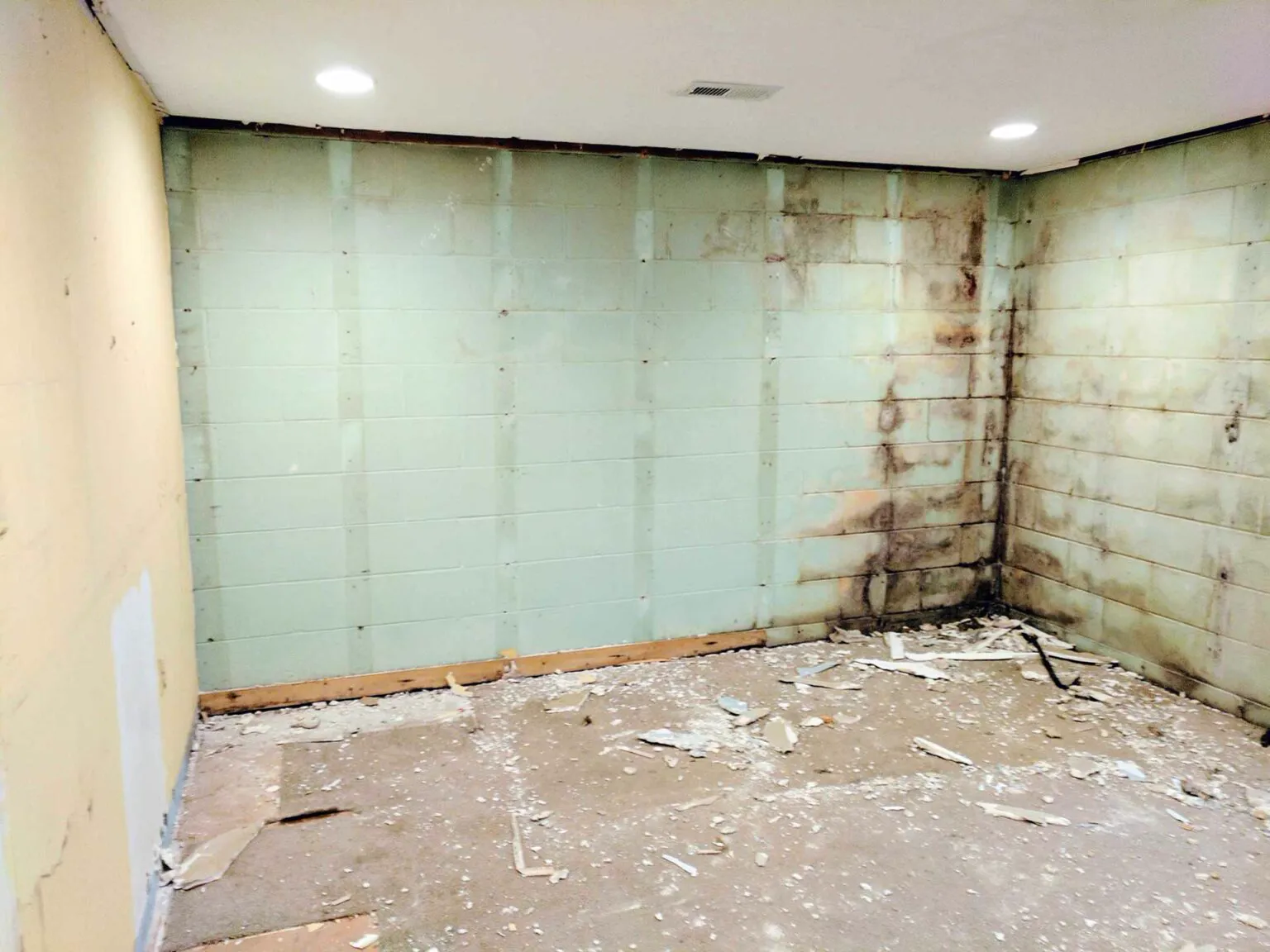
Norcross has houses from three different centuries. Historic downtown Norcross has stone and brick foundations built by hand in the 1800s. Head toward the Beaver Ruin area and you’re into 1960s and 1970s block basements that never had any real waterproofing to begin with. Newer streets out past the Peachtree Station edge bring poured walls with a whole different set of habits.
Each one needs a different answer, which is exactly why a real inspection beats a phone quote every time. A hand-laid stone wall can’t be treated like a poured wall without damaging something worth keeping. Hollow block holds water inside the cores, so it needs relief the poured wall doesn’t. Poured concrete usually leaks at joints and tie holes instead.
So ask any company one question: “Where is the water coming from, and how do you know?” A real answer sounds like evidence. A weak answer sounds like a brand name. We had a homeowner near Lucky Shoals Park whose basement only got wet during slow all-day rain, never in a fast storm. That timing was the clue, and it pointed outside.
Worth knowing
Seepage and structural movement are two separate conversations. Plenty of the old foundations we inspect are seeping while staying perfectly sound. We’ll tell you which one you have, in plain words, before money ever comes up. If English isn’t the language you’d rather have that talk in, just say so when you call.
What actually moves the price?
Mostly two things: how much wall is involved, and how hard it is to reach. We won’t publish a flat number, because one price for an 1890s downtown foundation and a 1972 block ranch would be a lie somewhere. Still, here’s the scale we weigh.
Price drivers, biggest first
- Linear feet. One wall versus a full perimeter is the largest swing by far.
- Foundation type. Stone and old brick take more hours and more care than poured concrete. That’s real labor, not a surcharge.
- Access. Built-ins, a finished bar, a bathroom, or a tight side yard mean careful work before the real work starts.
- Crawl space sections. Very common around here, and adding a proper vapor barrier changes both scope and comfort quite a bit.
- Sump and discharge. Some homes already have a serviceable basin. Others have none, or one that quietly retired years ago.
- Outside work. Regrading, drain repair, buried downspouts — sometimes that is the fix, and we’ll happily say so.
Small exterior corrections land at the low end. A full perimeter system with a new sump, battery backup and a sealed crawl sits at the top. Most jobs land in between, and after we walk it you get one written number with the scope spelled out beside it — no menu of surprises later. If you’re still figuring out what’s happening down there, our guide to a wet basement covers the symptoms, and the basement waterproofing service page shows the systems we install.
What’s included, what isn’t, and what’s the warranty?
Included: the inspection, the estimate, the diagnosis, the system, the sump and discharge, the concrete going back, full cleanup, and photos of the stone bed and pipe before the floor closes. Ask for those photos from anyone you hire. Any honest crew already takes them without being asked.
Not included, usually: rebuilding finished walls we opened, replacing damaged flooring, mold remediation, and major plumbing repairs. Each one gets flagged during the walkthrough. Surprise plot twists belong in movies, not invoices.
The warranty is written, plain, and readable in one sitting. If a warranty needs a lawyer to decode, it isn’t doing you much good. Ours also transfers with the house, which matters a lot in a market where buyers ask hard questions about older foundations.
Want the number that changes how you see this?
One inch of rain landing on a 1,500-square-foot roof sheds a little over 900 gallons of water. That’s a single storm, on a single average house, and every gallon has to go somewhere within a few feet of your foundation.
Suddenly the story makes more sense, doesn’t it? Your basement isn’t failing. It’s simply standing next to a lot of water with nowhere good to go, and that’s solvable. Gutters, grade and drainage handle most of it, while a below-slab system handles the rest.
That’s also why spring calls spike here, since clay soil saturates fast and homes on the slope toward the Chattahoochee feel it first. Moisture control is the real goal, and the EPA’s guide to moisture in the home makes the same point.
Picture the after. A dry floor you’d actually put a rug on, a pump that cycles twice and goes quiet, and boxes that stay off cinder blocks. One homeowner over near Best Friend Park turned a room she’d written off into her kid’s practice space. Same square footage she’d been paying taxes on all along.

Why does hiring local matter here?
Because diagnostic skill is the whole job in a city this varied, and skill comes from repetition. Twenty-plus years around Metro Atlanta means we’ve already met your foundation type — stone, brick, block, poured, crawl space, half basement, all of it. Same crews, same trucks, no subcontractor roulette.
It also means we’re close by. A run down Holcomb Bridge Road puts a truck at your door quickly, so a follow-up visit is a normal Tuesday rather than a scheduling project. That closeness is most of what a warranty is worth, honestly.
If your house sits on a crawl space instead of a full basement, the right answer is often crawl space encapsulation — different system, same goal of dry and stable. And if you’re comparing how newer construction behaves, our Loganville basement waterproofing guide walks through that side of the county.
Where we work around Norcross
We’re based in Lawrenceville, roughly twenty minutes northeast, so we’re through this corner of Gwinnett constantly. That covers Norcross, Peachtree Corners, Duluth, Lilburn, Doraville, Tucker, Berkeley Lake, Suwanee and Snellville, plus the wider Gwinnett area. Whether your house dates to the 1890s or the 1970s, we’ve worked on one like it.
Questions Norcross homeowners ask us
Usually within a few days, and often sooner when a spot opens up. Live support runs 7am to 8pm, seven days a week, so evenings and weekends are fair game. The inspection is free either way, whether you hire us or not.
It depends mostly on how many linear feet of wall are involved and what your foundation is made of. Small exterior corrections sit at the low end, while a full perimeter system with a new sump and a sealed crawl space sits at the top. We give you one written number after walking the house, plus $500 off projects over $3,500.
Most interior systems take two to four working days. Add a day for a finished basement, and another if a crawl space section needs a vapor barrier. You get the timeline in writing before we start, so you can plan parking and pets around it.
No, just clear about four feet along the walls we’re working on. Pull boxes toward the middle instead of hauling them to the garage. Our crew handles the heavy items, and we cover whatever stays.
Sometimes, though they’re two different questions. A seeping crack can often be sealed as part of the work, while a crack that’s actively moving is a foundation repair conversation instead. We’ll tell you which one you have during the inspection, plainly, before anyone talks money.
Let’s find out what your Norcross basement actually needs
We’ll walk the house with you, show you where water is getting in, and explain the fix in plain language — 1800s downtown foundations included. The inspection is free, the estimate is free, and nobody pressures you afterward.
(678) 914-5112Serving Norcross and all of Metro Atlanta · $500 off projects over $3,500 · Live support 7am–8pm, 7 days a week