

Wet Basement in Norcross: What’s Really Causing It, and How It Gets Fixed
The box in the corner tells you more than you think. Here’s how to read it, and what a fair estimate should look like.
That cardboard box was fine last month. Now the bottom is soft, the flap peels apart in your hand, and nothing above it ever spilled. So where did the water come from? A soggy box in the corner is how most people first notice a wet basement Norcross homeowners live with for years without naming it — and honestly, it’s one of the most common and most fixable things we look at.
Why is the box wet when nothing spilled?
Because water rarely arrives the way people expect. It doesn’t pour in like a burst pipe. Instead it seeps, wicks and evaporates, which means the floor can look dry while the cardboard sitting on it slowly drinks.
Concrete is porous, so moisture moves up through the slab and into whatever is touching it. That’s why the box and the bottom of a dresser go first. Your basement shouldn’t be running a quiet humidifier for free, but plenty of them are.
Good news, though: this is the cheap stage. Catching it while the evidence is cardboard, not carpet, usually keeps the whole project small.

What’s actually happening under your floor?
Two words cover most of it: hydrostatic pressure. Our red clay soaks up rain and swells, and swollen soil pushes hard against everything it touches. Under enough pressure, water moves through solid block the same way it moves through a sponge — no crack required.
That’s why a wall can be perfectly sound and still stay damp. In fact, most older foundations we inspect are seeping while holding up fine. For the plain-science version, the U.S. Geological Survey’s groundwater basics explains how water travels underground.
Norcross adds its own wrinkle, though. This city has houses from three different centuries, so each one needs a different answer — which is exactly why a real inspection beats a phone quote every time.
Think about the range. Historic Downtown Norcross has stone and brick foundations laid by hand in the 1800s. A few streets over in the Lillian Webb district sit block basements from the sixties and seventies that were never really waterproofed, because that wasn’t standard work yet. Out toward the Berkeley Lake edge, lots drop toward the river and stay wet for weeks.
Worth knowing
Seepage and structural movement are two separate conversations. We’ll tell you clearly which one you have, and if it’s only seepage, we’ll say so before anyone talks money.
Seasonal groundwater is the piece most homeowners never hear about. Along the Chattahoochee River corridor, the water table rises in late winter and spring, so a basement that’s dry in September starts weeping in March. Spring storms here arrive fast, too, and the National Weather Service office in Peachtree City is a decent place to watch what’s heading your way.
Is yours mild, or is it something bigger?
Fair question, and you can get most of the way there yourself. None of this is bad news — it simply shows where you sit on the scale.
Reading the signs
- Musty smell, no visible water. Moisture is arriving as vapor. Mild, and often solved outside.
- White chalky bloom on block. That’s efflorescence, mineral left behind after water passed through.
- Soft cardboard or curling floor tile. Vapor is rising through the slab, so storage takes the hit first.
- A damp seam where floor meets wall. Pressure is winning at the joint, which points at drainage.
- Standing water that lingers for days. Time to have someone look. Still fixable, just bigger.
What if you leave it alone? A wet basement Norcross homeowners live with rarely changes overnight. Moisture just widens slowly, so stored things get ruined and simple repairs stop being simple.

Can you just paint the problem away?
Here’s the myth we hear on almost every estimate, so it’s worth clearing up. Somebody at the hardware store said a bucket of waterproof paint would take care of it. Roll two coats on the inside of the wall, and done.
We understand why it sounds right. The wall is where you see water, so the wall feels like the problem. But sealer on the inside face is a raincoat on a submarine — the pressure is still there, still pushing, and it simply finds the next weak spot a few feet away.
Most of the time the wall isn’t failing. Something outside the wall is delivering more water than the ground can carry away — and that’s a much friendlier problem to own.
So the honest version is this: you don’t block water, you give it somewhere better to go. Once that clicks, every estimate you read starts making more sense.
So how does it actually get fixed?
More simply than most people expect. Almost every wet basement Norcross job starts the same way. Interior drainage collects water below the slab and routes it to a sump before it ever reaches your floor, instead of stopping it at the wall. Here’s the sequence.
- Walk the outside first. Downspouts, grade, patios, drain lines. Sometimes the fix lives in the yard.
- Read the foundation. Hand-laid stone gets treated differently than sixties block or a poured wall.
- Open a narrow strip of slab. Only along the affected walls, and only for a day of noise.
- Set perforated pipe in clean stone, below floor level. Depth is the whole ballgame.
- Route it to a sump basin. The pump carries water well away, not back into the flower bed.
- Close it up. Fresh concrete, wall liner where it’s called for, and our mess in our truck.
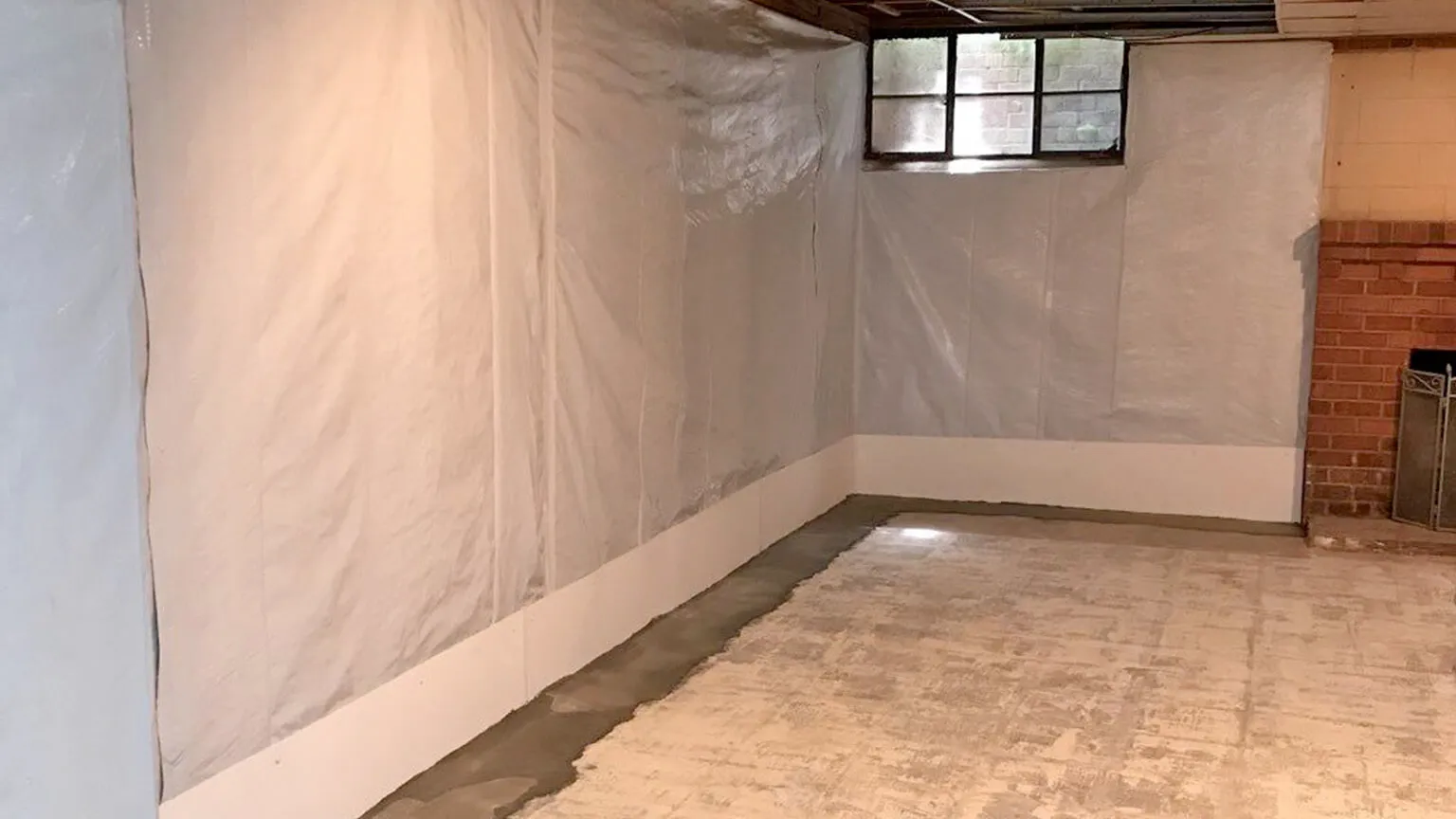
Most interior systems in an older home here run two to four working days. Because pricing tracks scope more than anything else, our waterproofing cost breakdown walks through the drivers if you’d like numbers first. The basement waterproofing page shows exactly what we install.
What if the water isn’t coming from the sky?
This is the part most articles skip. In older parts of town, the water often isn’t rain at all. It’s a pipe.
Original clay drain and sewer lines still serve a lot of these lots. After sixty or a hundred years, joints separate and roots find the gap. A line like that soaks the soil right at your footing every day, rain or shine. That’s why a wall can stay damp through a dry August, which drives homeowners crazy until somebody scopes the line.
Good news, though — this one is very solvable, and finding it early usually saves money. We had a homeowner over near Best Friend Park convinced he needed a full perimeter system. His side yard had been quietly watered by a cracked line for years, and the real answer turned out to be one repair plus a short run of drainage on that wall.
Buried grading is the other quiet culprit. Walk your foundation and look for soil sitting above the top of the block. Lowering it is often the cheapest item on the list.
Does any of this affect the rest of the house?
It does, and this piece surprises people. Air in a house moves upward, so whatever your basement smells like, the bedrooms are breathing a version of it.
You’ve probably noticed the pattern without connecting it. Stuffy air in spring, a smell that returns after every storm, and allergies that behave better away from home. Once the moisture source is cut, that changes fast.
Here’s the fix side, simply. Drainage removes the liquid water, a sealed liner keeps wall moisture out of the room, and a dehumidifier holds the space near forty-five to fifty-five percent. As a result, the smell fades in days and the whole house feels lighter.

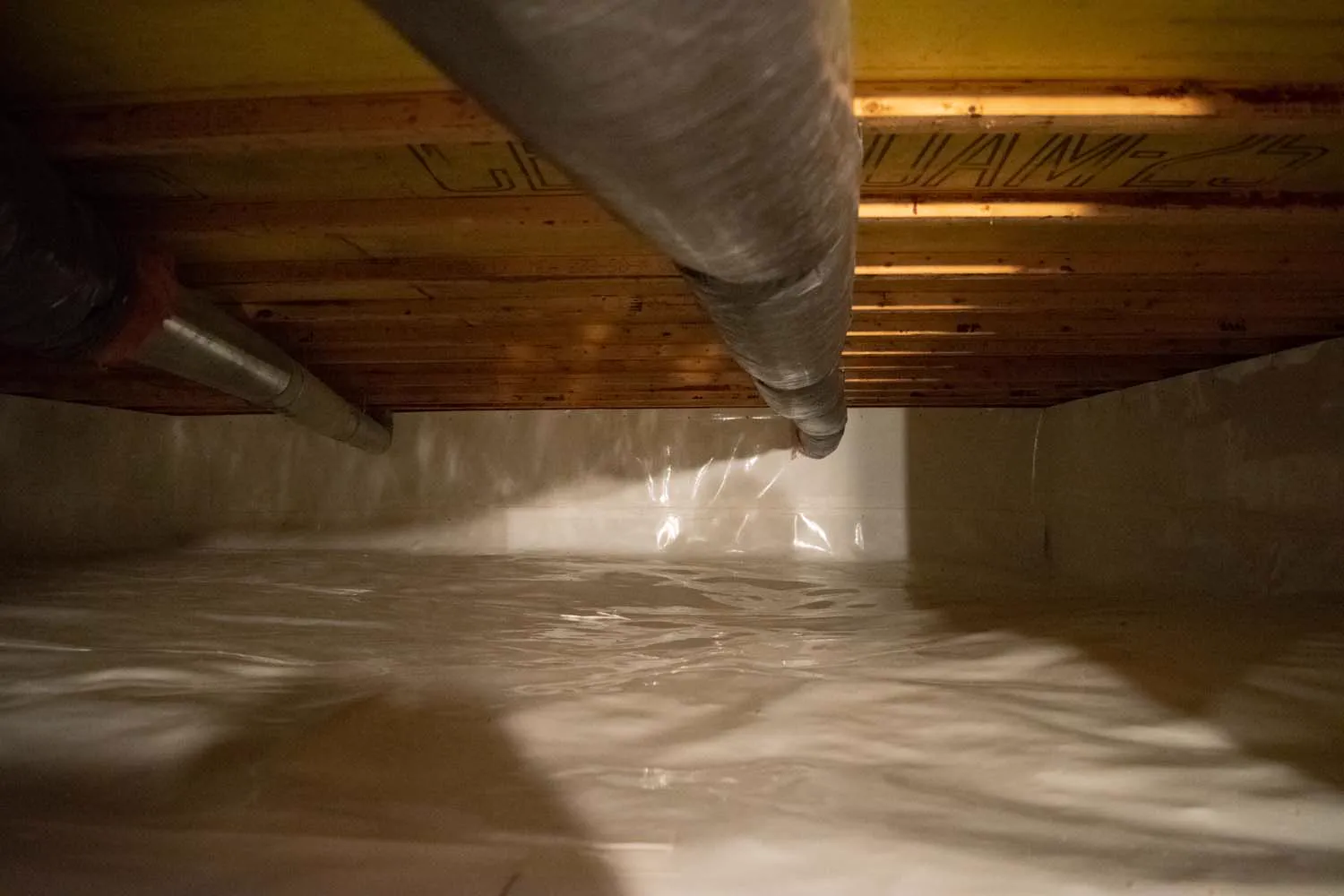
Some homes around here sit on a crawl space instead of a full basement, especially the smaller older lots. In that case crawl space encapsulation is usually the better system. Different approach, same goal — dry air under the house so the air inside behaves.
What should a fair estimate include?
Four things, and any honest contractor hands them over without blinking. First, what they found outside and why they ruled it in or out. Second, the depth and route of the drainage, in writing. Third, where the water discharges. Fourth, a warranty you can read in one sitting.
If a price shows up over the phone with no walk-through, that’s a guess, and you’d be paying for it. Ask plenty of questions, too.
Ask for the diagnosis in plain language, not product names. If you’re comparing across the county, our Loganville wet basement guide shows how different ground changes the answer.
What does life look like once it’s dry?
Quieter, mostly. Your sump cycles after a storm, which is the system working rather than a problem. By the second weekend, people are carrying boxes back downstairs without thinking about it — dry boxes this time.
A year in, you stop checking after rain. One homeowner who walks the trails along the Chattahoochee River said the strangest part was realizing she hadn’t thought about her basement since March. Ten years in, the pipe and stone below the slab still work, because nothing down there wears out.
Best of all, the room becomes yours again. Homeowners near the Buford Highway side of town have turned theirs into workshops, guest rooms and one very ambitious home gym.
Where we work around Norcross
We’re based in Lawrenceville, roughly twenty minutes northeast, so we’re in this corner of Gwinnett constantly. That includes Norcross, Peachtree Corners, Duluth, Lilburn, Doraville, Tucker, Berkeley Lake, Stone Mountain, Suwanee and the wider Gwinnett area. Stone, brick, block and poured walls are all normal work for us.
Questions Norcross homeowners ask us
Most interior systems take two to four working days from start to cleanup. A finished basement adds a day, and an old dirt floor that needs capping can add another. We’ll give you the schedule before we start.
Only what sits along the walls we’re working on, usually a three to four foot strip. Everything in the middle of the room can stay where it is. We cover what stays, and we’ll tell you what to shift ahead of time.
Sometimes, but they’re two different jobs. Drainage handles water, while a crack may also need repair or reinforcement depending on what caused it. We look at both during the inspection and tell you plainly which one you have.
It depends on the source of the water and what surrounds your house. Interior drainage is less disruptive and works well under old foundations, since it collects water below the slab instead of fighting it at the wall. Exterior work makes more sense when grading or a bad drain line is the real cause, and plenty of homes get both.
The drainage itself is built to last as long as the house, because pipe and clean stone below the slab have nothing to wear out. The pump is the part with a service life, so plan on replacing it somewhere around the ten-year mark.
Let’s find out what your Norcross basement really needs
We’ll walk the house with you, show you where the water is coming from, and explain the fix in plain language — 1800s stone and 1970s block included. The inspection is free, and nobody pressures you at the end of it.
(678) 914-5112Serving Norcross and all of Metro Atlanta · $500 off projects over $3,500 · Live support 7am–8pm, 7 days a week