

Basement Waterproofing in Dacula: What It Costs and What to Expect
You’re ready to hire somebody. Here’s what the work involves, what really moves the price, what the warranty covers, and how an acre of land changes the whole plan.
Picture two houses on the same street in Dacula. Same builder, same year, same floor plan, same red clay underneath. After a heavy spring storm one basement is bone dry and the other has water creeping across the slab. That gap is the whole reason basement waterproofing Dacula homeowners ask about even exists — and the difference usually isn’t the house at all. It’s where the water goes once it leaves the sky.
Why do two identical homes act so differently?
Out toward Dacula the lots get bigger, and so does the amount of water that has to go somewhere when a storm rolls through. An acre catches a lot of rain. If that acre has no defined path for surface runoff, the water picks its own path, and gravity almost always votes for the low corner of the house.
Then there’s the dirt. Much of this area was farmland before the subdivisions went in from the late nineties through the mid-2010s. Heavy equipment packed that red clay down hard, so instead of soaking rain in, it sheds it sideways like a driveway with grass on top.
Good news, though: this is very fixable. Once water has a controlled route away from the footing, the basement stops being a weather report. You get storage you trust and a floor you’d put a rug on.
What is the work, in plain words?
Water sitting in the soil pushes. That push has a name — hydrostatic pressure — and it’s strong enough to move moisture through solid block without any visible crack. If you want the mechanism without a sales pitch attached, the USGS groundwater primer explains where that underground water comes from.
Here’s the part most folks find surprising. You don’t beat that pressure by sealing the wall harder. Interior drainage systems collect water below the slab and route it to a sump before it ever reaches the floor, instead of trying to block it at the wall. A narrow strip of concrete comes up, perforated pipe goes into clean stone under the floor, and a pump sends the water well away from the house.
Exterior work solves the same problem from the yard side: regrading, buried downspout lines, drains that give runoff a real path. On big Dacula lots that outside work matters more, because there’s simply more ground feeding the foundation.
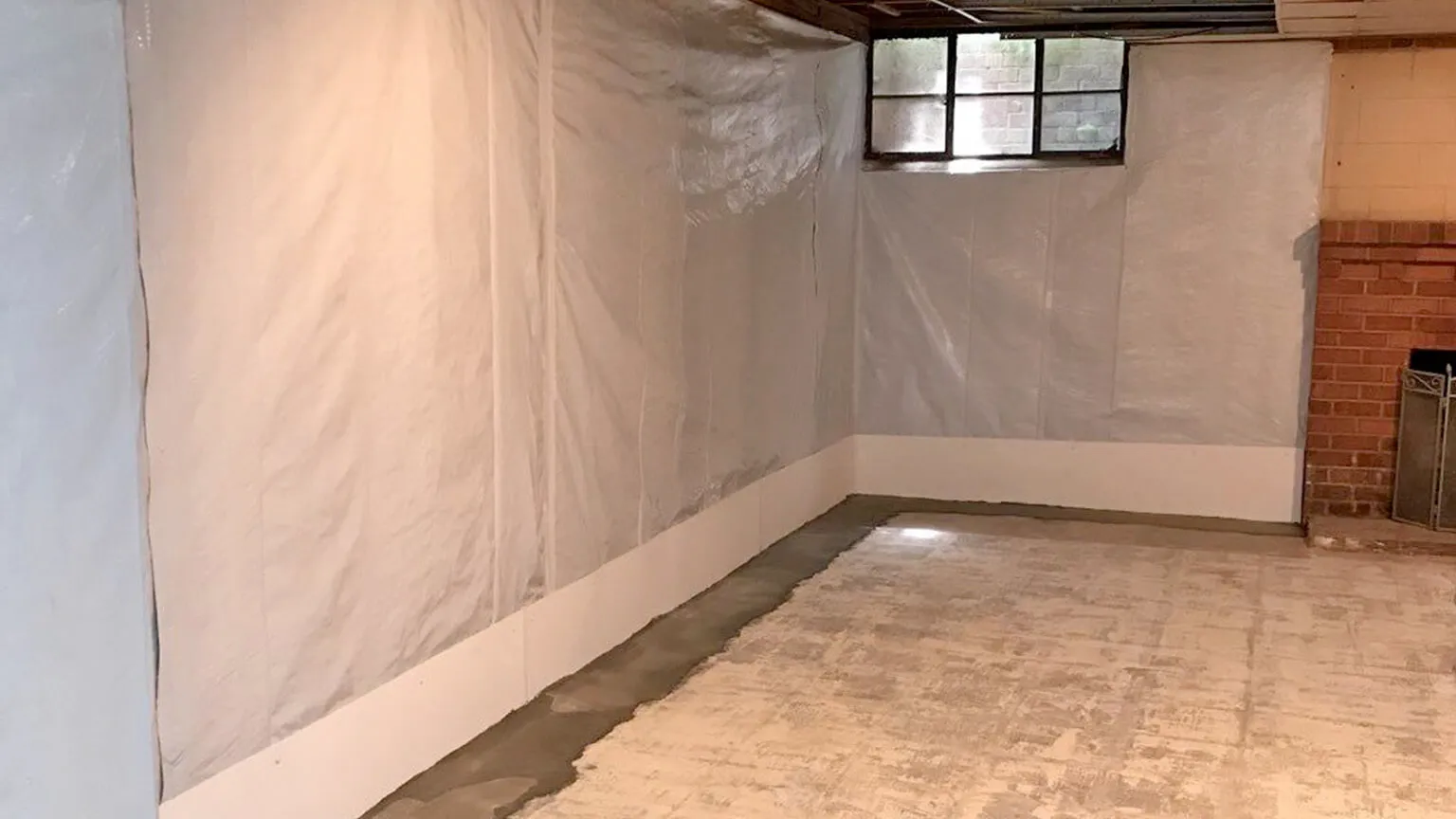
What does a real job look like, start to finish?
Day zero is the inspection, and it costs nothing. We walk the outside first, because on properties out past Hamilton Mill Road the answer is often in the yard — which makes the invoice smaller, not bigger. Downspouts, slope, low spots, septic drain fields: all of it gets checked before anyone mentions breaking concrete.
After that we come inside and read the foundation. A poured wall from 2006 in Chandler Walk tells a different story than an older block foundation on the rural fringe. Then you get a written scope: which walls, what system, and why each one got the treatment it got.
Install day is loud for a day, and then it isn’t. Saw cuts, spoil hauled out, stone and pipe set low, sump basin placed, discharge routed far from the house — not politely back into the flower bed for a second lap. Fresh concrete closes it up, liner goes on where it’s called for, and the mess leaves in our truck.
Most Dacula basements run two to four working days. Add a day for a finished space, plus more if exterior grading is part of the plan. Either way you’ll know the schedule before we start.
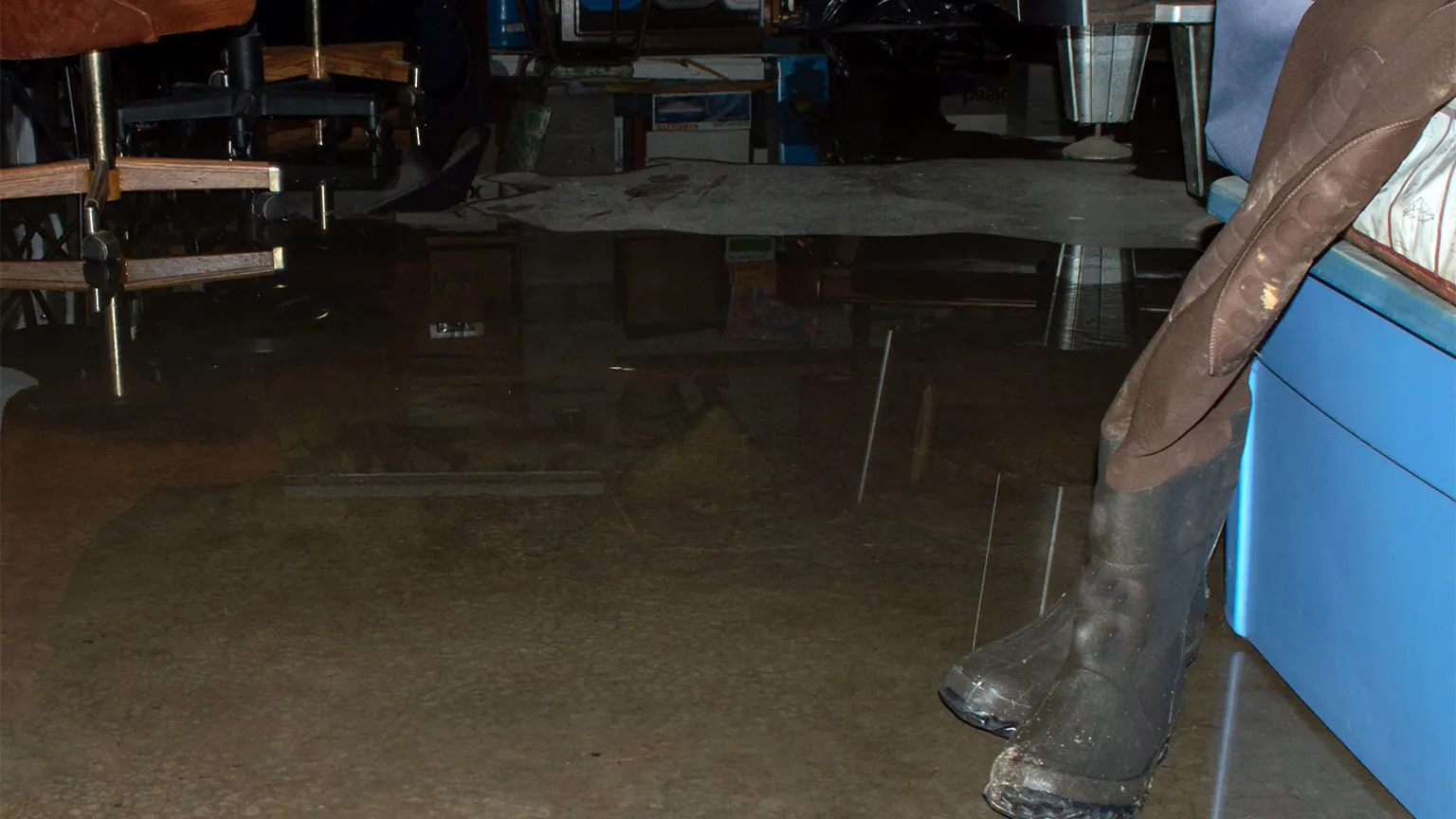
Do you actually need the big system?
Real talk: often, no. The good news is that the expensive-sounding version usually isn’t the one you need. Plenty of Dacula homes we look at have a drainage problem, not a foundation problem, and those two get very different price tags.
Think about what feeds a basement wall out here. Gutters dumping at the corner. A patio tilted slightly toward the house. A septic drain field keeping soil damp near a footing. Fix the feed, and the wall dries out on its own.
Because of that, roughly a third of our estimates start with exterior corrections instead of interior systems. It’s a smaller number, it’s faster, and honestly it’s the recommendation that earns the referral. If you’re still figuring out what you’re dealing with, our guide to a wet basement walks through the symptoms in order.
That said, when groundwater is genuinely pushing up at the cove joint — that seam where wall meets slab — no amount of yard work fixes it. Then the interior system is the honest answer, and we’ll show you the evidence rather than the brochure. The basement waterproofing service page lays out the systems we install.
Worth knowing
Seepage and structural movement are two separate conversations. Many walls we inspect are damp while staying perfectly sound. We’ll tell you which you have before money comes up.
What actually moves the price?
Mostly how much wall is involved and how hard it is to reach. We won’t publish a flat number, since one price for a walkout in Chandler Walk and an older foundation near the Harbins corridor would be wrong somewhere. Still, here’s the scale we weigh.
Price drivers, biggest first
- Linear feet. One wall versus a full perimeter is the largest swing by a wide margin.
- Access. Built-ins, a finished bar, or a bathroom wall all mean careful work before the real work starts.
- Sump and discharge. Some homes already have a serviceable basin. Others have none, or one that quietly retired years ago.
- How far the water has to travel. On an acre, the discharge line runs longer, and that’s real trenching.
- Exterior grading. Reshaping ground around a large lot takes machine hours. Sometimes it’s the whole fix, though.
- Septic layout. We route around drain fields, which takes planning but keeps your system safe.
Small exterior corrections land at the low end of any honest range. A full perimeter system with a new sump, battery backup and regrading sits at the top. Most jobs fall between, and you get one written number with the scope beside it.
What’s included, and what does the warranty cover?
Included: the inspection, the estimate, the diagnosis, the system itself, the sump and discharge, concrete going back, cleanup, and photos of the stone bed and pipe before the floor closes. Ask anyone you hire for those photos. Any honest crew already takes them.
Not included, usually: rebuilding finished walls we opened, replacing damaged flooring, mold remediation, and major plumbing repairs. Each one gets flagged during the walkthrough, so nothing surprises you later. Nobody enjoys a mid-project plot twist.
The warranty is written, short, and readable in one sitting. If a warranty needs a lawyer to decode, it isn’t doing you much good. Ours transfers with the house too, which matters out here where buyers ask real questions about drainage before they sign anything.
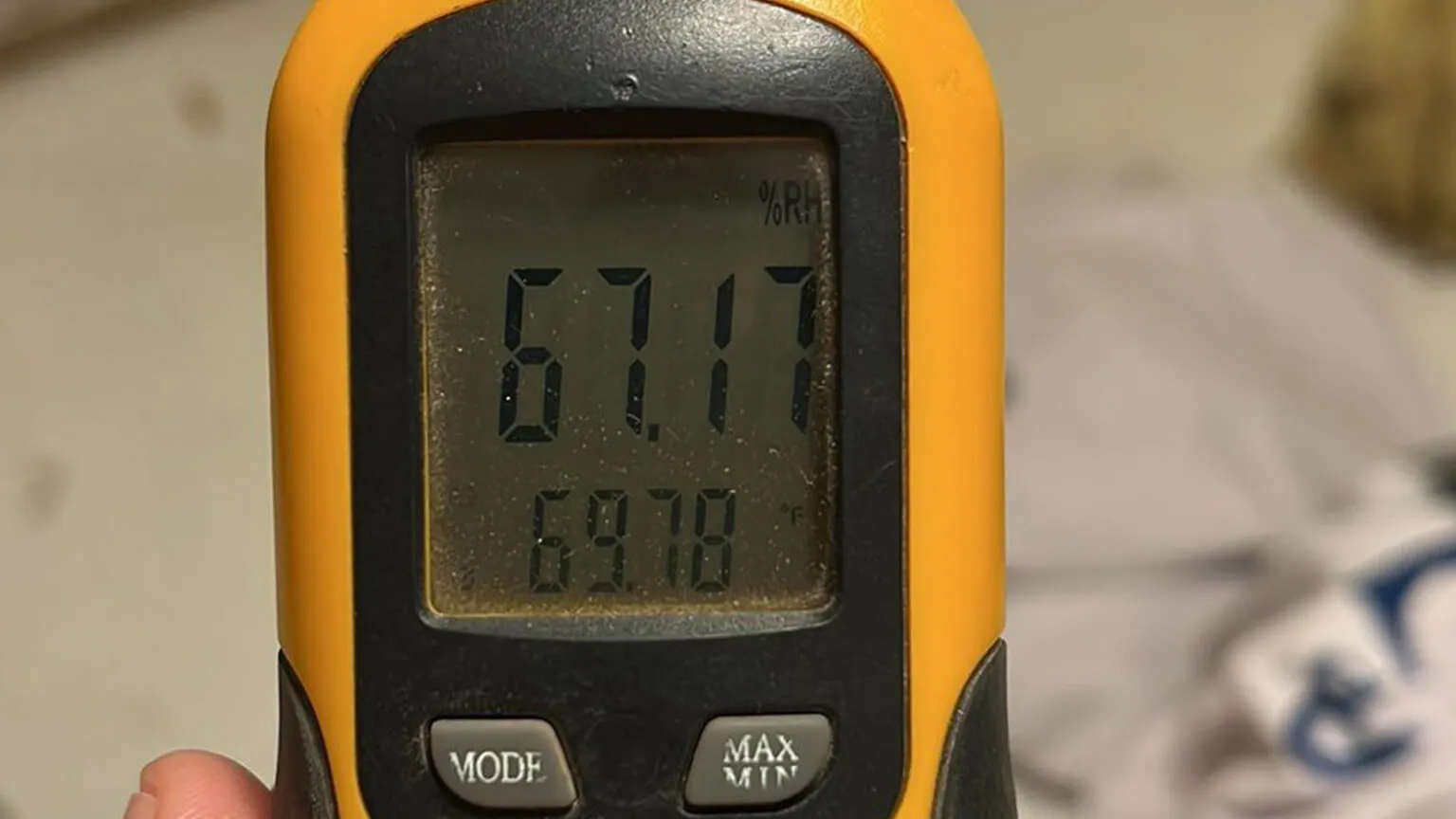
Humidity is the quiet half of this, by the way. The EPA’s guide to moisture and your home explains why controlling water also controls that damp basement smell. If your house has a crawl space section instead, crawl space encapsulation handles the same job with a different system.
What does this look like on a real Dacula property?
We had a homeowner over in Rabbit Hill with an early-2000s basement that only got wet during long, soaking rains — never during a fast summer thunderstorm. That timing was the clue. Quick storms ran off the packed clay and left, while two-day rains finally saturated the ground and raised water right at the footing.
Her back yard sloped gently toward the house, and both rear downspouts emptied a foot from the wall. So the first move wasn’t concrete at all. We buried those downspouts, reshaped the grade, and sent that runoff toward the low side of the lot.
Then, because the cove joint on one wall was still weeping after a wet week, we added interior drainage along that single wall and a sump with a sealed lid. One wall, not four. The estimate she’d gotten elsewhere covered the entire perimeter.
Now that basement is where the kids keep a ping-pong table, and the storm forecast is just a forecast again. That’s the feeling we’re really selling: you stop watching the sky. Folks comparing options across the county also read our Sugar Hill basement waterproofing guide, since the soil story changes a bit north of here.
Why does hiring local matter out here?
Because Dacula isn’t Lawrenceville, even though it’s twelve minutes away. Land near the Apalachee River behaves differently in spring than higher ground does, so a crew that’s worked both asks where your lot sits first.
Twenty-plus years around Metro Atlanta also means the same crews, the same trucks, no subcontractor roulette. We’re out past Hamilton Mill Golf Club regularly, so a free inspection isn’t a two-week wait. Better yet, we’ll say plainly when the fix is small.
Where we work around Dacula
We’re based in Lawrenceville, roughly twelve minutes west, and we’re out this way constantly. That covers Dacula, Lawrenceville, Grayson, Buford, Auburn, Winder, Braselton, Suwanee, Snellville and Loganville, plus the wider Gwinnett area. Whether you’re on an acre off Hamilton Mill Road or in a tighter subdivision lot, we already know how this soil moves water.
Questions Dacula homeowners ask us
Yes, and it’s written in plain language you can read in one sitting. Interior systems carry a long-term warranty on the drainage, while pumps carry their own manufacturer coverage. It also transfers if you sell the house, which buyers around here tend to appreciate.
Usually, yes. We open a narrow strip of flooring and the bottom section of wall along the affected side, then put it back cleanly. Built-ins and bathrooms take extra care, so we walk the room with you first and show exactly what gets touched.
A dry basement is easier to sell, because it removes a question every buyer asks. More importantly, it makes the square footage usable for storage or living space instead of being a room nobody trusts. The transferable warranty gives you something concrete to hand over at closing.
Most Dacula inspections get scheduled within a few days, and often sooner. We answer the phone from 7 a.m. to 8 p.m., seven days a week, so evenings and weekends work fine. The visit is free and there’s no pressure at the end of it.
It depends mostly on how much wall is involved and whether outside grading is part of the plan. Small exterior corrections sit at the low end, while a full perimeter system with a sump and regrading sits at the top. After we walk the property you get one written number with the scope beside it, plus $500 off projects over $3,500.
Let’s find out what your Dacula basement actually needs
We’ll walk the house and the lot with you, show you where the water is coming from, and explain the fix in plain words — including when the fix is a small one. The inspection is free, the estimate is free, and nobody pressures you at the end.
(678) 914-5112Serving Dacula and all of Metro Atlanta · $500 off projects over $3,500 · Live support 7am–8pm, 7 days a week