

Basement Waterproofing in Sugar Hill: What It Costs and What to Expect
You’ve decided to hire somebody. Here’s what the work involves on a steep lot, what moves the price, and how to spot a real diagnosis.
Pin every basement waterproofing Sugar Hill call we’ve run onto a map and the pins don’t scatter evenly. They stack along the slopes — the Sugar Mill area, the older streets around Sycamore Farms, and homes behind The Bowl district. What those spots share isn’t age. It’s grade.
Sugar Hill is named for a hill, and it earns it. The land drops hard toward Lake Lanier on one side and toward the Chattahoochee below Buford Dam on the other, so water here doesn’t sit. Instead it runs toward whatever is downhill of it. Sometimes that’s a creek. Sometimes that’s your wall.
Why does the map look like that?
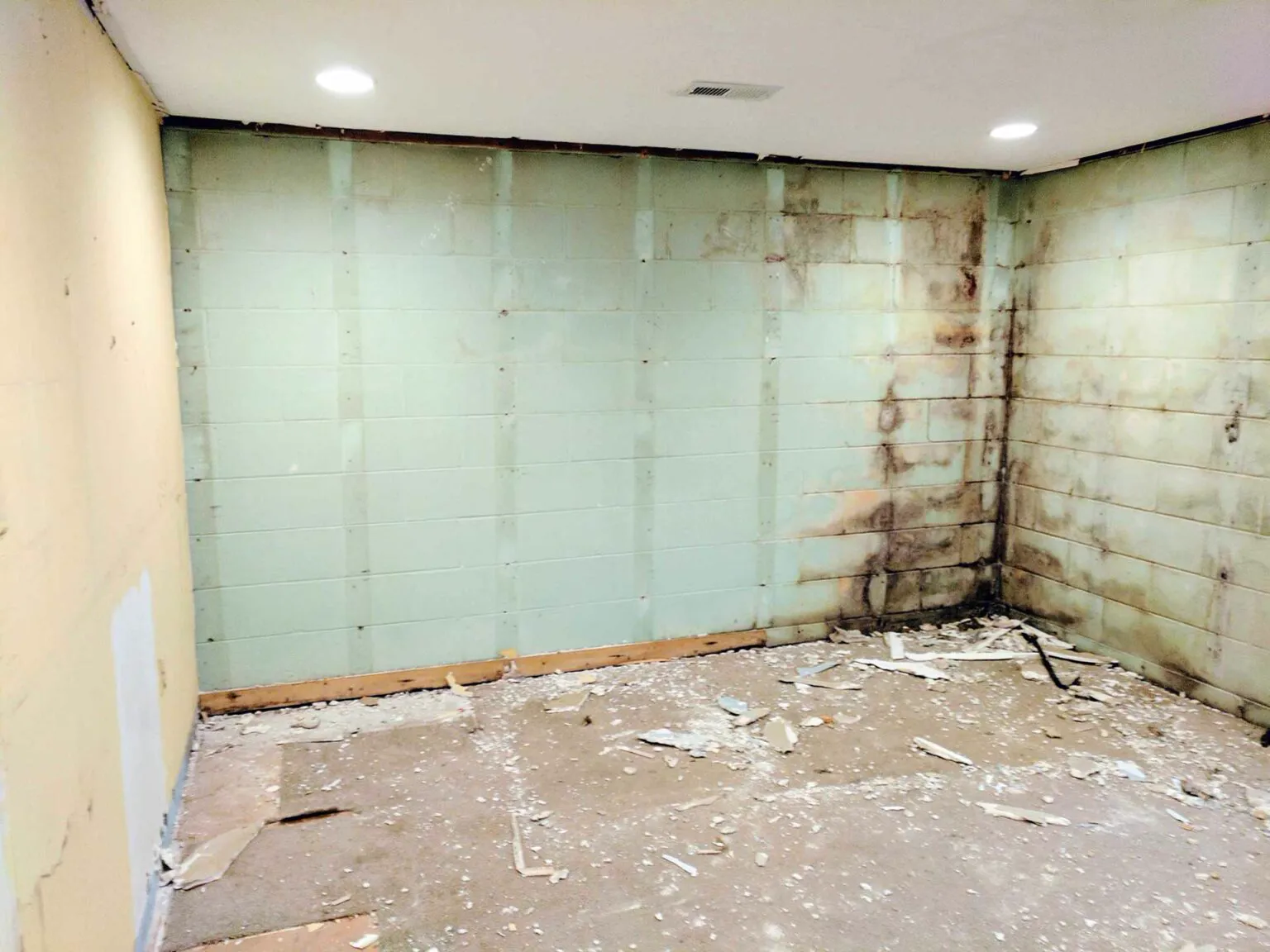
Because almost every home on this terrain is a walkout or a daylight basement. That’s not a flaw — it’s the smart way to build on a slope, and it’s why so many Sugar Hill homes have a real second living floor. But a walkout has three sides buried in clay and one side open, so the buried sides carry all the pressure.
Add the rock. Under these slopes you hit shallow rock fast, and water that can’t sink keeps moving sideways along the top of it. That flow travels until something stops it, usually a basement wall halfway down the hill. Good news, though: once you know the mechanism, the fix is repeatable.
Lots along the Lake Lanier and Chattahoochee corridor add a seasonal high water table too. So a house can stay dry for three years, then get wet in one soaking March. That’s not bad luck — that’s a water table doing its thing.

What is the work, in plain words?
Water in the soil pushes. A saturated clay hillside can press thousands of pounds against a basement wall, and that force has a name: hydrostatic pressure. It moves water straight through solid concrete with no visible crack anywhere. The USGS groundwater primer explains where all that underground water comes from without selling you a thing.
Here’s the good part. You don’t fight pressure — you give it somewhere better to go. An interior system opens a narrow strip of floor along the wall, sets perforated pipe in clean stone below the slab, and carries water to a sump basin. The pump then sends it downhill, well away from the house.
Exterior work solves the same problem from the yard: regrading, buried downspouts, and drainage behind a retaining wall that’s quietly aiming runoff at your house. On a steep lot that outside work often turns out to be the cheaper half of the answer.
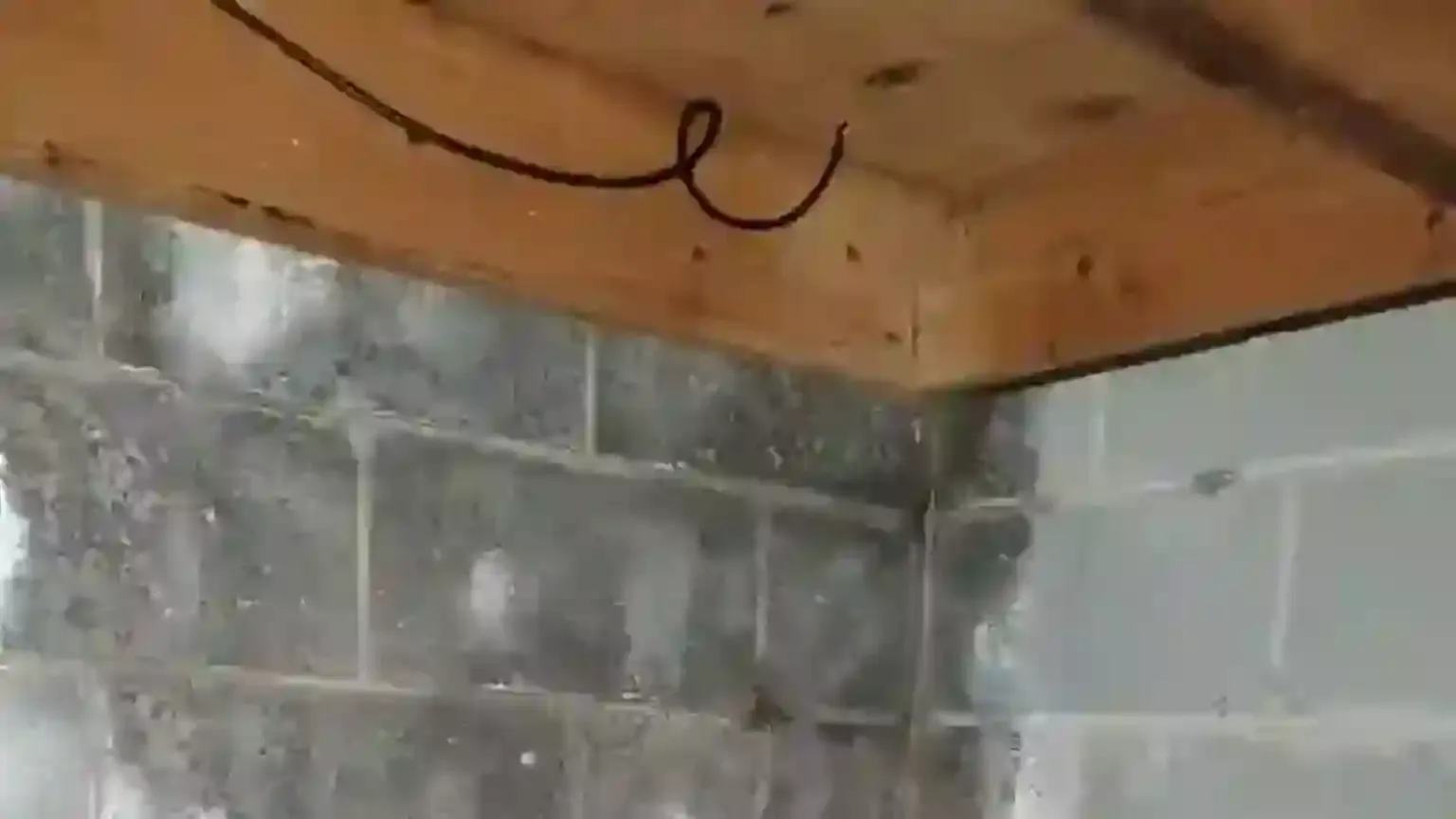
One detail almost nobody mentions: the cove joint. That seam where wall meets floor slab is the most common entry point in a Georgia basement. Two pours never truly bond, so a good drain catches that seam first.
What does a real job look like?
Day zero is the inspection, and it’s free. We walk the outside first, since on a hill the answer lives in the yard more often than people expect — and then the invoice gets smaller. Downspouts, grade, retaining walls, and where uphill runoff crosses your lot all get read first.
Then we come inside and find which walls are actually taking water. On a walkout, that’s rarely all four. After that you get a written scope: what goes in, where, and why.
Install day is loud, then it isn’t. Saw cuts, spoil hauled out, stone and pipe set low, sump basin placed, discharge routed downhill — not politely back into the flower bed for a second attempt. Fresh concrete closes it up, and the mess leaves in our truck.
Most Sugar Hill basements run two to four working days.
Worth knowing
Seepage and structural movement are two different conversations. Plenty of walls we inspect are seeping while staying perfectly sound. We’ll tell you which one you have before money comes up.
What should you understand before calling anyone?
One distinction decides everything: is your water surface water or groundwater? Surface water arrives fast — off the roof, down the driveway, across a neighbor’s slope. Groundwater is already in the soil, moving sideways along rock, arriving slowly and staying.
Why does that matter? Because surface water is usually fixed outside for a fraction of the cost, while groundwater needs interior drainage to be solved honestly. A company selling one system for both will be right about half the time.
Here’s the simple home test: timing. If the basement gets wet in a thunderstorm and dries within a day, that’s usually surface water. If it shows up in long soaking rains and lingers, that’s groundwater. A homeowner in the Sugar Mill area only got wet in slow rain, and that clue changed the plan.
So ask any contractor one question: “Where is the water coming from, and how do you know?” A real answer sounds like evidence, while a weak one sounds like a product name.
What actually moves the price?
Mostly how much wall is involved and how hard it is to reach. We won’t publish a flat number, because one price for a 1996 walkout and a 2013 daylight basement would be a lie somewhere. Still, here’s what we weigh, in order.
Price drivers, biggest first
- Linear feet. One buried wall versus a full perimeter is the largest swing by far.
- How steep the lot is. Grade drives how much uphill water arrives, and where discharge can safely go.
- Access. Built-ins, a bar, a bathroom, or a tight side yard mean careful prep first.
- Walkout doors and window wells. These take water directly, so each may need its own drain.
- Sump and discharge. Some homes have a serviceable basin. Others have one that quietly retired years ago.
- Outside work. Regrading, buried downspouts, retaining wall drainage. Sometimes that is the whole fix.
Small exterior corrections land at the low end. A full perimeter system with a new sump, a backup, and drainage at two walkout openings sits at the top. Most jobs land in between, and you get one written number. If you’re still sorting out symptoms, our guide to a wet basement covers what each sign means, and the basement waterproofing service page shows the systems we install.
What’s included, and what does the warranty cover?
Included: the inspection, estimate, diagnosis, system, sump and discharge, the concrete going back, cleanup, and photos of the stone bed and pipe before the floor closes. Ask any company for those photos, because an honest crew already takes them.
Not included, usually: rebuilding finished walls we opened, replacing damaged flooring, mold remediation, and major plumbing. We flag each one during the walkthrough, so nothing shows up later as a surprise. Nobody enjoys a mid-project plot twist.
The warranty is written, plain, and readable in one sitting. If a warranty needs a lawyer to decode, it isn’t doing much good. Ours transfers with the house too, which matters here, since buyers on sloped lots ask sharp questions.
What do week one, year one, and year ten look like?
Week one is quiet. The concrete cures, the dehumidifier stops running constantly, and that heavy basement smell fades. Most folks notice the smell first.
Year one is when spring storms test it, and spring hits hard on this grade. Water arrives, enters the pipe, and leaves through the discharge. The National Weather Service office in Peachtree City is the honest place to watch what’s heading toward north Gwinnett. Meanwhile the basement becomes a room again — a den, a guest space, a gym that doesn’t smell like a cave.
Year ten is boring, which is the goal. Stone and pipe below the slab have nothing to wear out, so the drainage keeps working. The pump is the one part with a service life, much like a water heater, so plan on replacing it near that mark.
Your yearly checklist
- Test the pump each spring. Pour a bucket into the basin and watch it cycle. Thirty seconds, yearly.
- Clear gutters twice each fall. Leaf drop clogs the drainage steep lots depend on, and folks near The Bowl district know what we mean.
- Walk the discharge line. Make sure the outlet is open and still pointed downhill.
- Check the grade after storms. Soil settles on a slope, so pull it back if it leans toward the wall.
Why does a local company matter on this terrain?
Because slope work is a skill, and basement waterproofing Sugar Hill homeowners trust starts with reading the hill, not with picking a product. Twenty-plus years around Metro Atlanta means we’ve met your foundation type already: walkouts, daylight basements, block, poured, and plenty of original 1990s systems now ending their run.
It also means we’re close. Our shop sits twenty minutes south in Lawrenceville, so a run up Nelson Brogdon Boulevard puts a truck at your door quickly. If your home has a crawl space section instead, crawl encapsulation is often the answer there — different system, same goal. And our Lilburn basement waterproofing guide covers what flatter lots need.

Where we work around Sugar Hill
We’re based in Lawrenceville, roughly twenty minutes south, and we’re in north Gwinnett constantly. That covers Sugar Hill, Buford, Suwanee, Cumming, Gainesville, Flowery Branch, Duluth, Lawrenceville, Braselton and Dacula, plus the wider Gwinnett area. Whether your lot drops toward Lake Lanier or sits near downtown, we’ve worked the same grade nearby.
Questions Sugar Hill homeowners ask us
Usually, yes. We open a narrow strip at the base of the affected walls, so the work stays contained instead of gutting the room. Some trim or the bottom of the drywall may need replacing, and we’ll show you which sections first.
It protects value more than it inflates it, and on a walkout that protection matters. A dry lower level counts as usable living space, while a documented system with a transferable warranty answers the first question buyers ask about a sloped lot.
Often within a day or two, and sooner when a crew is already in north Gwinnett. Live support runs 7 a.m. to 8 p.m., seven days a week, so you can call before work or after dinner. Inspection and estimate are both free.
It depends mostly on how much wall is involved and how steep the lot is. Small exterior corrections sit at the low end, while a full perimeter system with a sump and walkout drainage sits at the top. You get one written number after we walk the property, plus $500 off projects over $3,500.
Most interior systems take two to four working days. Add a day for a finished basement, and another when a walkout door or window well needs its own drainage. You get the timeline in writing first, so you can plan around it.
Let’s find out what your Sugar Hill basement actually needs
We’ll walk the lot with you, show you where water is getting in, and explain the fix in plain language — steep grades and walkouts very much included. The inspection is free, the estimate is free, and nobody pressures you.
(678) 914-5112Serving Sugar Hill and all of Metro Atlanta · $500 off projects over $3,500 · Live support 7am–8pm, 7 days a week