

Wet Basement Dunwoody: What’s Causing It, and What Actually Fixes It
A calm, plain-English look at why the water keeps coming back, how to tell mild from serious, and what a permanent fix looks like.
Somebody already tried to fix it. Almost every call about a wet basement Dunwoody homeowners are living with starts right there — with a bag of hydraulic cement, a gallon of waterproof paint, and a weekend well spent. It held beautifully, too. Then the first hard spring storm rolled through and the dark line came right back along the floor.
Here’s the thing, and it’s honestly good news: that patch didn’t fail because you did it wrong. It failed because it was never built to win that fight. So let’s walk through what’s really happening down there, how to tell a small problem from a bigger one, and what a real repair looks like.
Why didn’t the patch hold?
Because you sealed a door, and water wasn’t especially attached to that door. Water is lazy and endlessly patient, so it takes whatever path is easiest. Plug the crack it was using, and it finds the next seam or the next joint where your wall meets the slab.
There’s a second reason, though, and it matters more. The water outside your foundation isn’t just sitting there — it’s pushing. Wet Georgia clay swells, and swelling clay presses on a block wall with real force. That force has a name, hydrostatic pressure, and it can move water through solid block with no crack in sight. Paint is only a coating, so it has nothing to push back with. It’s a raincoat on a submarine.
What’s really causing it in a Dunwoody house?
Now for the part that makes this local instead of generic. Dunwoody’s split-levels and four-sides-brick ranches were built when “waterproofing” meant a spray coat of asphalt on the outside of a block wall. That was standard practice, and for a while it worked fine. Fifty years of Georgia clay later, though, those walls are telling on themselves.
Add the terrain. This city is hilly, so plenty of homes sit below street grade with a basement cut into a slope. Water moves downhill, your house is downhill, and the math writes itself. In Dunwoody North and Vermack especially, we see basements that stay dry for months and then take on water in one afternoon.
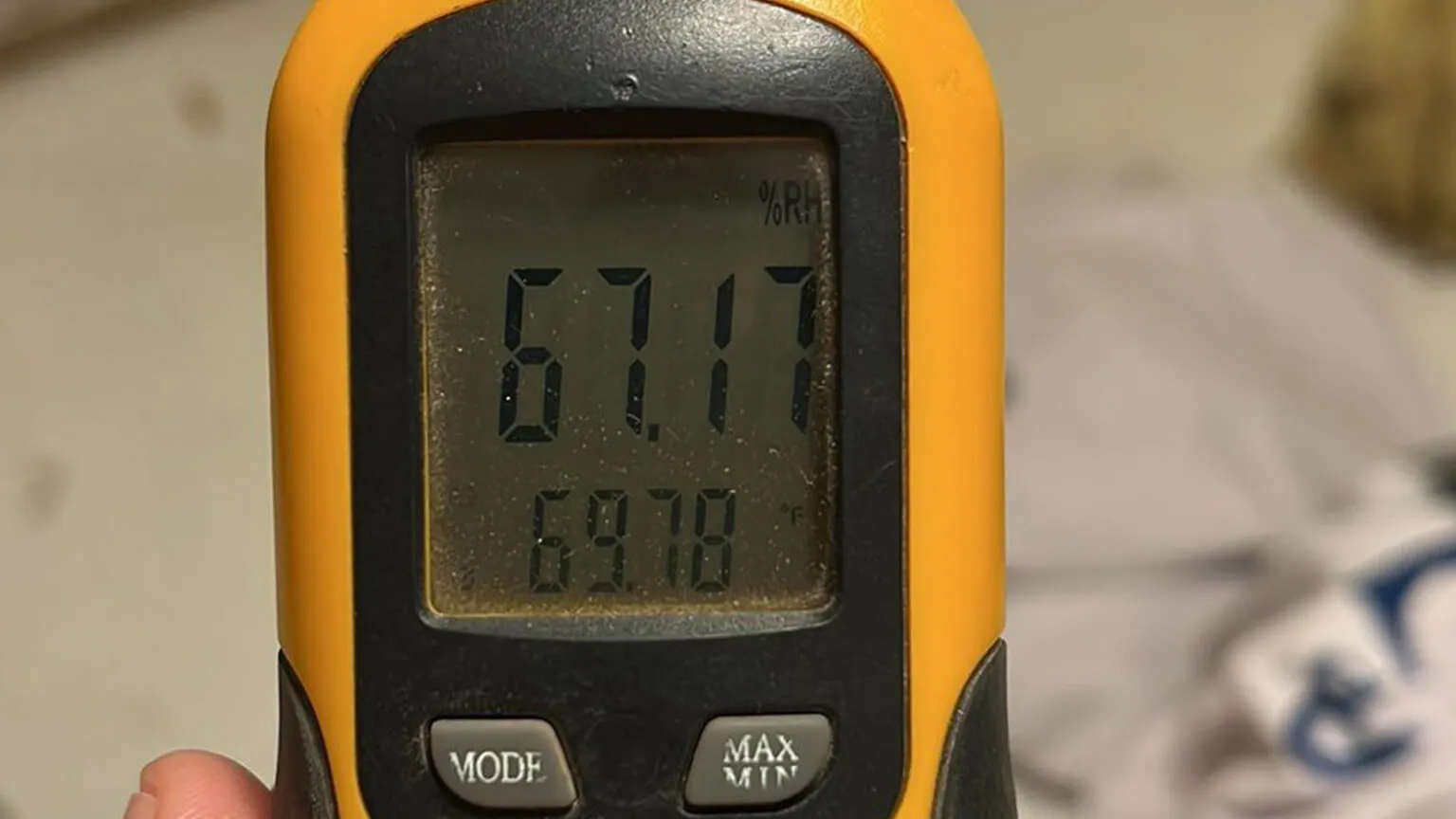
Then there’s the quiet cause nobody suspects. Original cast-iron and clay sewer lines from that era crack underground, which keeps the soil near the foundation soaked even in a dry stretch. So if your basement is damp in July with no rain in the forecast, that’s a clue worth chasing.
Good news
Water in a basement and a failing foundation are two different conversations. Most of the homes we walk only need the first one. We’ll tell you plainly which one you’re in, in words you can repeat to your spouse over dinner.
One more local factor: trees. Those beautiful sixty-year-old oaks along Ashford-Dunwoody Road are doing the same thing under your yard that they’re doing above it. Roots find footing drains, fill them, and crush them. As a result, a drainage system that worked in 1974 may simply not be a drainage system anymore.
Is this mild or is this serious?
Fair question, and you deserve a straight scale instead of a sales pitch. Nearly every wet basement Dunwoody call we take lands somewhere on this ladder.
What we’re reading on your walls
- Musty smell, no visible water. Usually vapor moving through block. Mild, and often the cheapest thing here to solve.
- White chalky bloom on the wall. Efflorescence — salts left behind as water passes through. It means water is moving, but it says nothing scary about the structure.
- A wet line along the floor after storms. Classic pressure at the wall-floor seam. Very common, and it’s the reason interior drainage exists.
- Standing water you have to squeegee. More volume, same mechanism. It needs a real system, not a coating.
- Horizontal cracks or a wall that bows inward. Now we’re in structural territory, so that gets handled first — waterproofing over a moving wall is money spent twice.
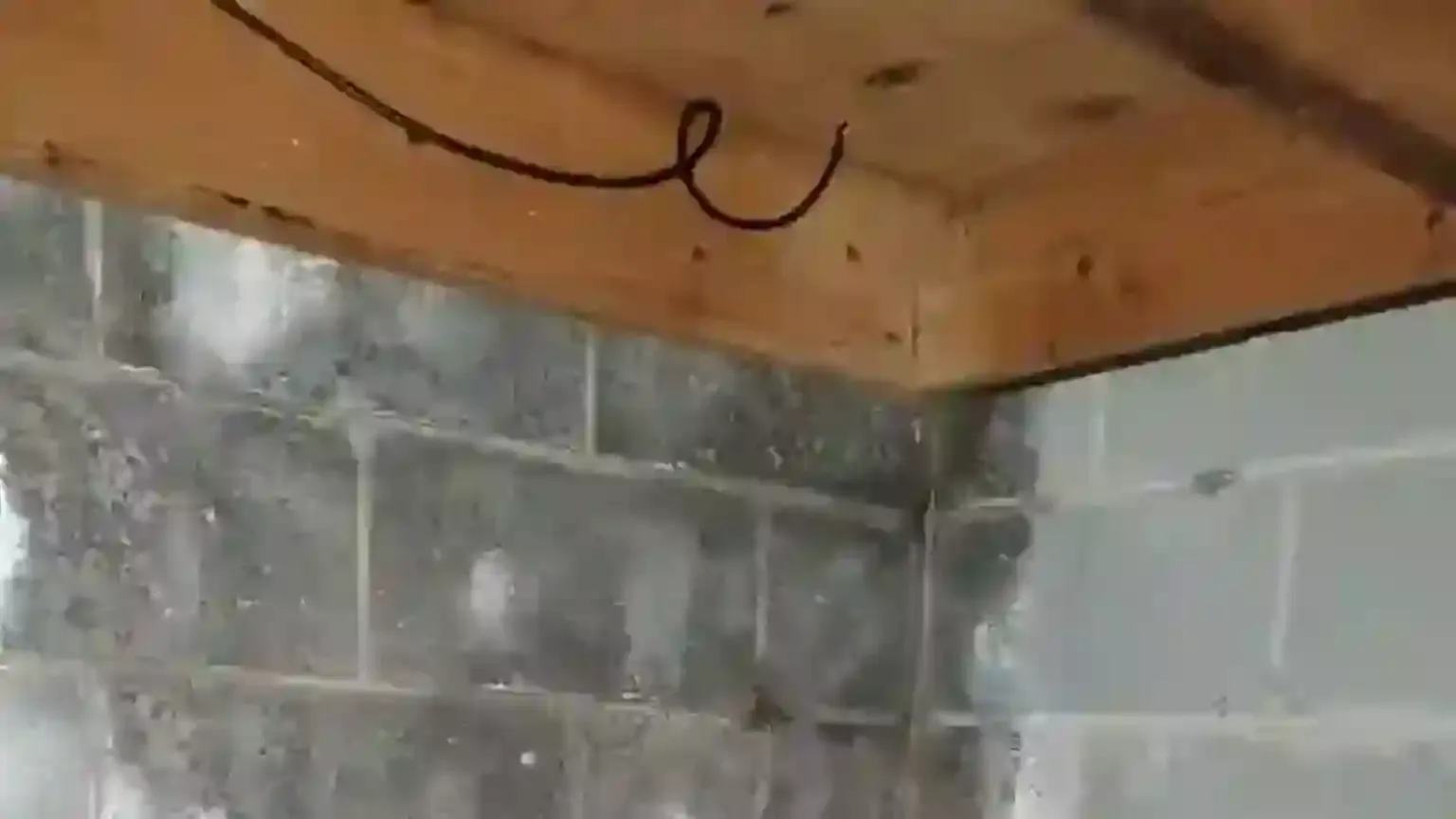
Notice that four of those five are water problems, not structure problems. Even the fifth one is repairable — it just has to happen in the right order.
What’s the question that tells you somebody actually diagnosed it?
Ask this, word for word: “Where is the water getting in, and how do you know?”
That’s it. That single question separates a real inspection from a guy quoting square footage. A real answer sounds specific — the northeast corner, below grade, showing up four to six hours after rain starts, with the downspout at that corner dumping two feet from the wall. A vague answer sounds like a brochure.
Why does it matter? Because roughly a third of the time, the real fix is smaller than the homeowner braced for. Regrade a flat spot, extend two downspouts, and the basement dries out. We had a homeowner near Winters Chapel sure they needed a full perimeter system, and the culprit was a buried downspout line that had collapsed years earlier.
Twenty years in, the thing that changed how we work is simple: we stopped trying to block water and started routing it instead.
If you want the physics behind that in neutral terms, the U.S. Geological Survey’s groundwater primer explains how water moves through soil better than any contractor’s website will. Worth ten minutes, even if you never call anybody.
So what’s the actual fix?
Here’s the core idea, and it’s the opposite of what most people expect. Instead of fighting water at the wall, interior drainage systems collect it below the slab and route it to a sump before it ever reaches your floor. You’re not blocking anything. You’re giving water a path so easy it stops being creative about your basement.
On a typical job, that plays out in five steps.
- Find the source first. We walk the outside — grading, downspouts, where water lands — then the inside. Nothing gets quoted before that.
- Open a channel at the perimeter. A narrow strip of slab comes up along the wet walls. It’s dusty and loud, and usually done in a day or two.
- Set drainage below floor level. Perforated pipe in clean stone, sitting under the slab. This is the part doing the real work.
- Route it all to a sump. The pump sends water well away from the house, not right back beside the foundation for another lap.
- Close it up clean. Fresh concrete over the channel, wall liner where it’s needed, and our mess leaves in our truck.

What about leaving it alone? Stated plainly: moisture problems don’t resolve on their own, because the cause doesn’t go away. Damp block stays damp, stored items pick up that smell, and finished 1980s walls can hide mold behind the paneling. None of that is an emergency. Still, it’s simpler to handle at the damp-corner stage than at the squeegee stage.
Cost comes next, and no two wet basement Dunwoody jobs price out the same. It depends on how much wall is involved, how easy it is to reach, and whether a sump is already there. So we publish an honest breakdown of waterproofing cost before anybody knocks on your door.
What does life look like after it’s fixed?
Let’s walk it forward, because this is the part that actually matters.
The first week
The concrete cures, the dust settles, and you put your shelves back where they belong. Then it rains — and nothing happens. Most homeowners tell us they went down and checked anyway, twice, out of pure habit. That’s normal.
The first year
The musty smell at the bottom of the stairs disappears somewhere around month two, and you don’t notice the day it left. Spring storms come through, and the pump runs the way it’s supposed to. Meanwhile the room quietly changes jobs. It becomes storage you trust, a workshop, a place where kids can be loud.
The tenth year
Stone and pipe below a slab have nothing to wear out, so the drainage is still doing its job. The pump is the one part with a service life — plan on a replacement around that ten-year mark, same as a water heater. Otherwise, you’ve mostly forgotten it’s there. Better yet, when the folks at the National Weather Service office in Peachtree City put out a flood watch, it’s just weather again.

Why hire somebody who knows these houses?
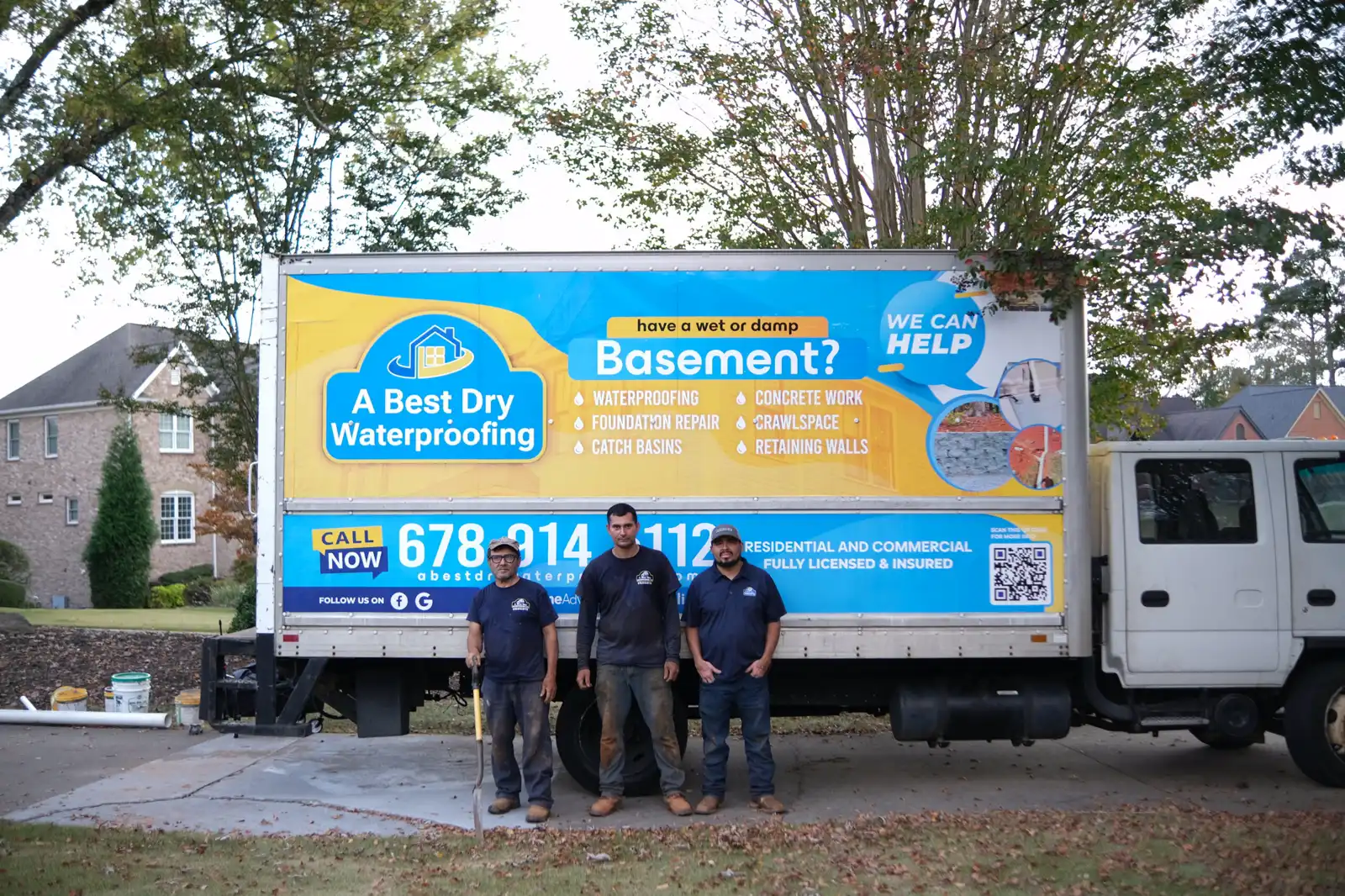
Because a 1972 block basement behaves differently than a 2019 poured wall, and knowing that up front saves you a discovery phase. We’ve worked on homes minutes from Emory Saint Joseph’s Hospital and on older lots out toward Donaldson-Bannister Farm, so the housing stock is familiar. Same crews, same trucks.
That history matters for a boring reason, too. A warranty is only worth as much as the company standing behind it, and Dunwoody homeowners tend to ask that early — which is exactly the right instinct.
Want to go deeper? The basement waterproofing systems we install are laid out step by step. If your home sits on a crawl space instead, crawl space encapsulation is usually the better answer. And if you’re comparing notes with family across the river, we cover the same ground for a Roswell wet basement.
Where we work around Dunwoody
We’re based in Lawrenceville, about thirty minutes northeast, so Dunwoody is an easy run for our crews. We also work throughout Sandy Springs, Brookhaven, Peachtree Corners, Chamblee, Doraville, Norcross, Tucker, Duluth and Johns Creek, plus the wider DeKalb County area. If you’re anywhere near Dunwoody Village or the Perimeter, we’re close by.
Questions Dunwoody homeowners ask
Usually within a few days, and sooner if water is actively coming in. Live support runs 7am to 8pm, seven days a week, so you’re not leaving a voicemail into the void. The inspection is free, and so is the estimate that follows it.
It depends on how many linear feet of wall are involved, how easy the area is to reach, and whether a sump needs to go in. Small drainage corrections land at the low end, while a full perimeter system in a finished basement sits at the high end. After we walk it, you get a written number with the scope spelled out — never a phone guess.
Most interior systems are finished in one to three days. A larger perimeter, a finished basement, or added structural work can stretch that a bit. We’ll give you the schedule before we start so you can plan around the noisy part.
Only along the walls we’re working on. We need roughly four feet of clear space at the perimeter, so boxes and shelving get pulled toward the middle of the room. You don’t need to empty the space, and we’ll help with the heavy things.
They’re really two separate jobs. Drainage handles the water, but a crack that’s still moving needs its own repair first, because sealing a shifting wall only buys you a season. During the inspection we’ll show you which situation your wall is in and what order the work should happen in.
Let’s find out what’s really going on in your Dunwoody basement
The inspection is free, the estimate is free, and nobody pressures you at the end of it. We’ll show you where the water is getting in and what it would take to stop it — even if the answer turns out to be simpler than you expected.
(678) 914-5112Serving Dunwoody and all of Metro Atlanta · $500 off projects over $3,500 · Live support 7am–8pm, 7 days a week