

Waterproofing Cost in Milton: A Step-by-Step Breakdown of the Work and the Price
Every step of the job, in order. What moves the number, how long it takes, and how to check the work when it’s finished.
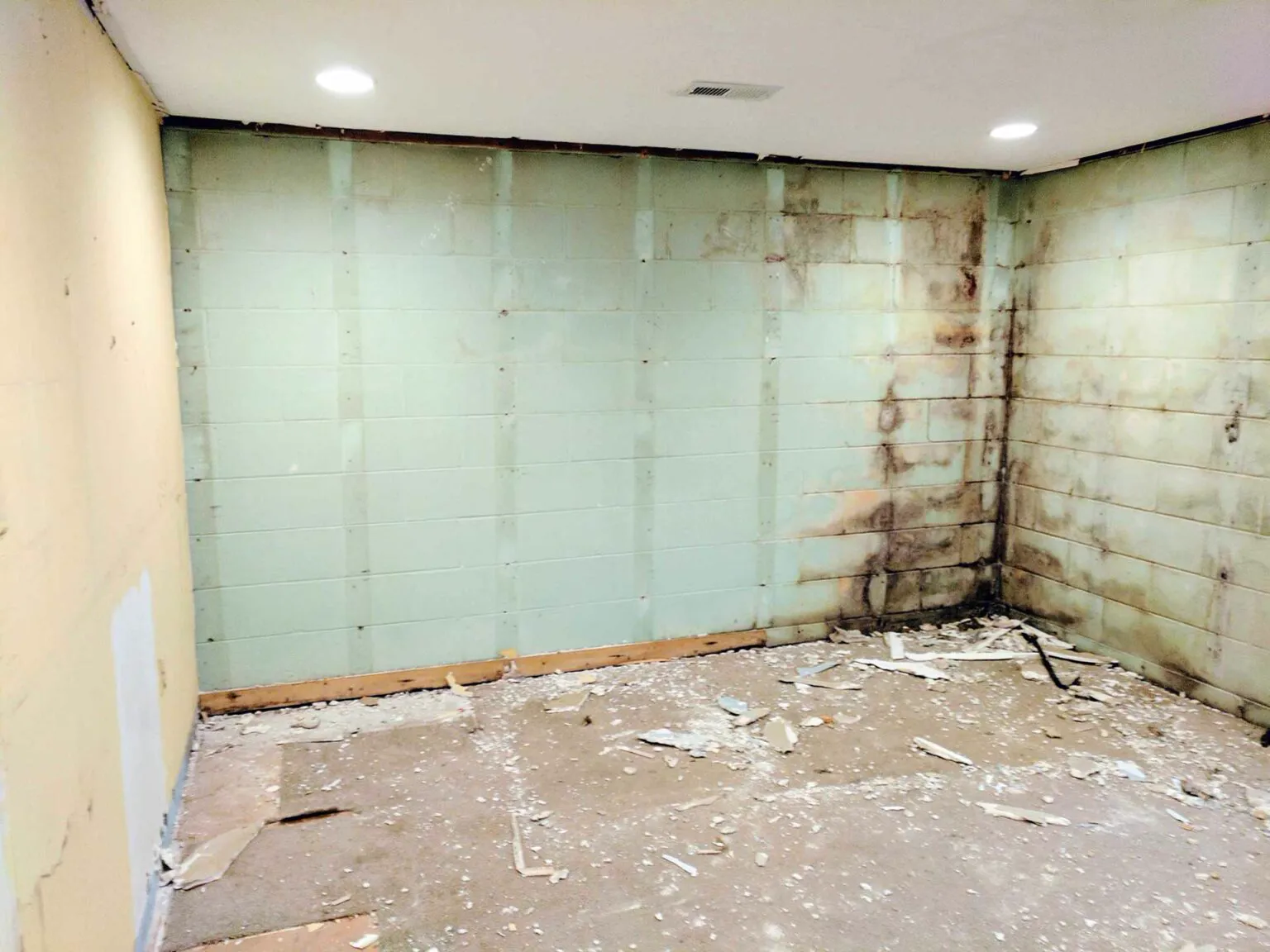
Want a real answer on waterproofing cost Milton homeowners can plan around? Start with five minutes and a flashlight. Walk down to your basement, get low, and look at the seam where the wall meets the floor — all the way around the room.
That seam has a name. It’s called the cove joint, and it’s the single most common place water enters a Georgia home. If you see a thin dark line, a chalky white crust, or a stain that fans out along the floor, you’ve just found your answer. Good news, though: that’s the most fixable thing we deal with, and we handle it constantly.
So let’s do this the useful way. Below is the whole job in order, what each part costs you, how long it takes, and how to tell later that it was done right. No pressure, no sales pitch, just the same walk-through we’d give you standing in your basement.
What should you look for on that first walk?
Five things, and you don’t need any tools beyond a light. First, the cove joint, as we said. Second, the corners — water gathers there before anywhere else. Third, your storage boxes: cardboard tells the truth long before concrete does.
Then check the smell. A basement should smell like nothing. If it smells like an old book, moisture is already in the air even when the floor looks dry. Finally, step outside and follow your downspouts. On big Milton lots the water often gets dumped ten feet from the house and then quietly walks right back.
What are the actual steps of the job?
Here’s the sequence, start to finish. Most interior systems follow this shape, so you can hold any estimate up against it and see what’s missing.
- The inspection. We walk the outside first — grading, downspouts, driveway slope, where water lands. Then we walk the inside. This part is free, and it takes about an hour.
- The written scope. You get linear feet, materials, the pump spec, and the price in writing. If we think the fix is smaller than you feared, we’ll say so right there.
- Clearing the perimeter. About four feet of space along the working walls gets opened up. We help move the heavy things.
- Opening the channel. A narrow strip of slab comes up along the affected walls. It’s loud and dusty for a day, and then it’s over.
- Setting the drainage. Perforated pipe in clean stone, placed below the floor, so water is collected before it reaches your slab instead of after.
- The sump and the discharge. Everything routes to a basin, and the pump pushes water well away from the house — not to a spot where it can circle back.
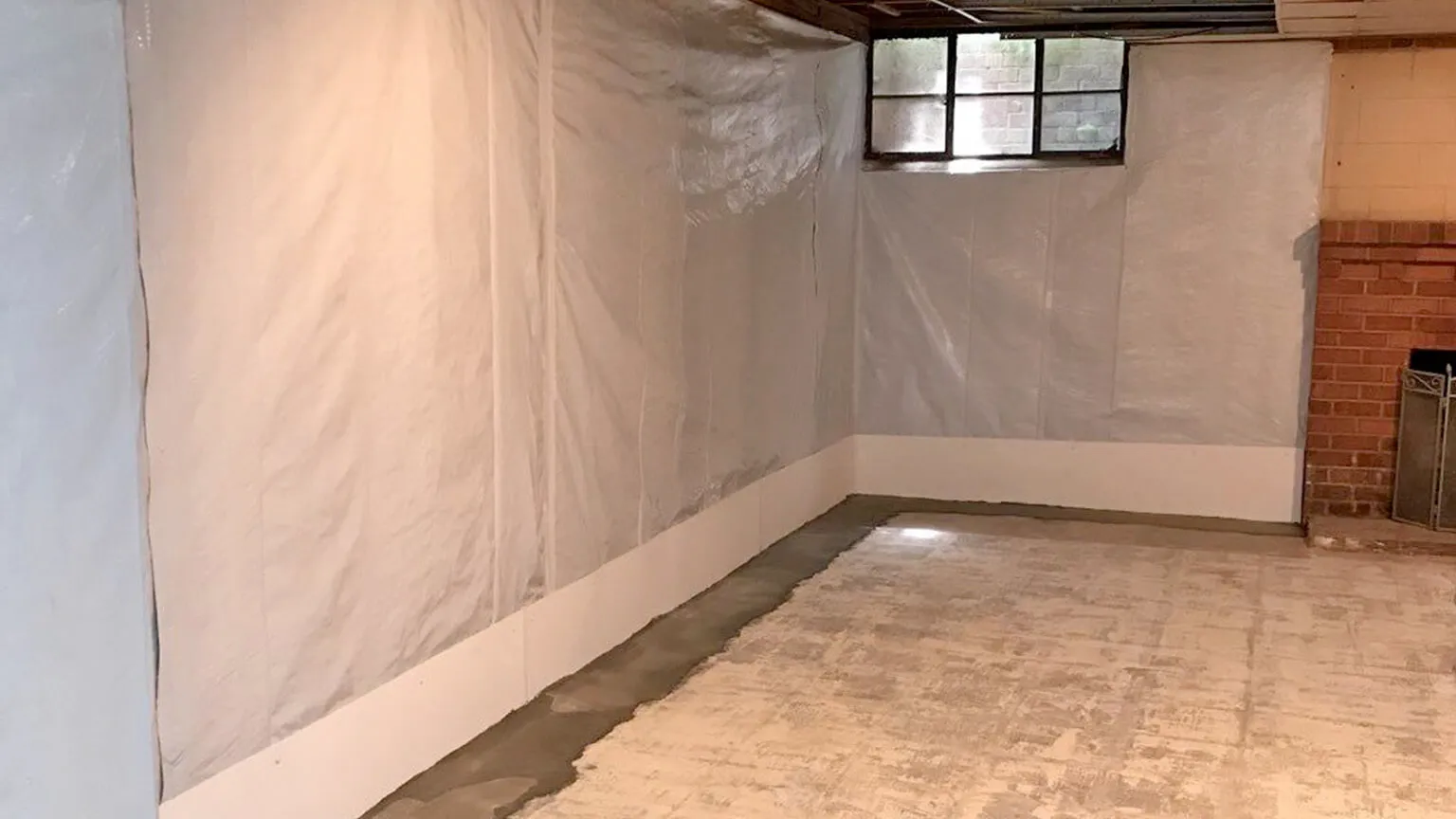
- Wall liner where it’s called for. Bright white panels channel wall seepage down into the system and make the space feel finished again.
- Closing up and cleaning out. Fresh concrete over the channel, site swept, debris hauled off. Leaving a pile in your driveway isn’t a finish.
Notice there’s no painting step. Waterproof coatings are fine products for damp-proofing, but a coating can’t beat pressure. That’s a raincoat on a submarine.
Before you call anyone, can you tell these two apart?
This is the distinction that decides your whole invoice, and almost nobody brings it up on the phone. There are two completely different ways water gets into a basement, and they cost very different amounts to solve.
Surface water is rain that lands on your roof and your lot and then runs toward the house. Groundwater is water already in the soil, pressing sideways and upward against your foundation. Red clay swells as it takes on water, and that swelling pushes with real force — enough to move water through solid, uncracked concrete. The technical name is hydrostatic pressure, and the U.S. Geological Survey explains how groundwater moves better than we can in a paragraph.
Why does the difference matter so much? Because surface water problems are often solved outside, with grading, extensions and a drain line — a much smaller number. Groundwater needs a real interior system. Plenty of homes have some of both, which is exactly why a phone quote is a guess you’d be paying for.
Good news
A wet basement and a structural problem are two separate conversations. Most of the homes we look at only need the first one. We’ll tell you plainly which one you’re in, and we’ll show you what we’re looking at while we’re standing there.
Around here the surface side matters more than people expect. Lots off Crabapple Road run big and rolling, so runoff crosses a lot of open ground before it finds a low spot — and the low spot is often the back of the house. Long driveways make it worse, because pavement is very good at aiming water. Once we regrade and reroute, that alone can cut what’s left of the job.
What actually moves the price?
Straight answer: mostly how much wall is involved and how hard it is to reach. Here’s the full list of what we’re weighing when we write your number.
The cost drivers, in order of impact
- Linear feet. One wall versus a full perimeter is the single biggest factor. Milton basements run large, so this matters more here than in a townhome.
- Access. An open basement is quick work. A theater room, a wine room or a built-in bar means careful protection and reassembly before and after the real work.
- Sump and pump. Some homes have a serviceable basin. Many need a new one, plus a discharge run to daylight.
- Outside work. Regrading, downspout extensions or a French drain can be added — or can replace most of the interior scope entirely.
- Wall condition. Settlement cracks are common on homes under twenty years old, which covers a lot of the Crabapple Market district. Those get addressed before waterproofing, not after.
- Backup power. A battery backup costs more. It also runs during the storm that took your power out, which is the same storm that floods basements.
Small drainage corrections land at the low end. A full perimeter system with a new sump, backup power and careful work around a finished space sits at the high end. Most jobs land in between, and after we walk it you get one written number with the scope spelled out — not a range, and not a “starting at.” Curious how the systems compare side by side? We break down your waterproofing options in a separate guide, and the full lineup of basement waterproofing systems we install is laid out there too.
How long does it take, and what do you need to do?
Most interior systems run one to three days. A single wall can be a same-day job. A full perimeter in a big finished basement, with structural work first, can stretch to a week. Weather rarely stops us, since the work is inside, though heavy rain can delay the outside grading portion.
Your prep list is short. Clear about four feet along the working walls, move anything fragile out of the room, and make sure we can reach a hose bib and an outlet. Plan to be a little noisy for a day — this is a good afternoon to go grab lunch over at Crabapple Market. Pets do better somewhere else while the saw is running.
What can you honestly do yourself?
More than you’d think, and we’d rather tell you than sell you. Extending downspouts eight to ten feet away from the house is a real fix, and it costs almost nothing. Cleaning gutters helps. Building soil back up so it slopes away from the foundation helps a lot. Running a dehumidifier and emptying it is genuinely useful.
Here’s where DIY stops. Anything that requires cutting the slab, sizing a pump, or setting pipe below floor level is not a weekend project — get that wrong and you’ve paid twice. Crack injection needs to happen after the movement stops, not before. And hydraulic cement in the cove joint has failed on essentially every house we’ve ever walked into, because it’s trying to block pressure instead of route it.
Twenty years in, the thing that changed how we work is simple: we stopped trying to block water and started giving it an easier way out.
What does any of this have to do with the air upstairs?
More than most homeowners realize, and this is the part we wish came up earlier. Air in a house doesn’t sit still. Warm air rises and escapes out the top, which pulls replacement air in from the lowest, coolest point — your basement. That effect is called the stack effect, and it means a meaningful share of the air you breathe in your bedroom started downstairs.
So a damp basement isn’t only a basement issue. Musty smell on the second floor, allergy symptoms that get worse after a wet week, an upstairs that never feels quite comfortable — all of it can trace back to moisture below. Spring storms make it obvious, and the National Weather Service office in Peachtree City tracks our local rainfall if you want to match the calendar to your symptoms.
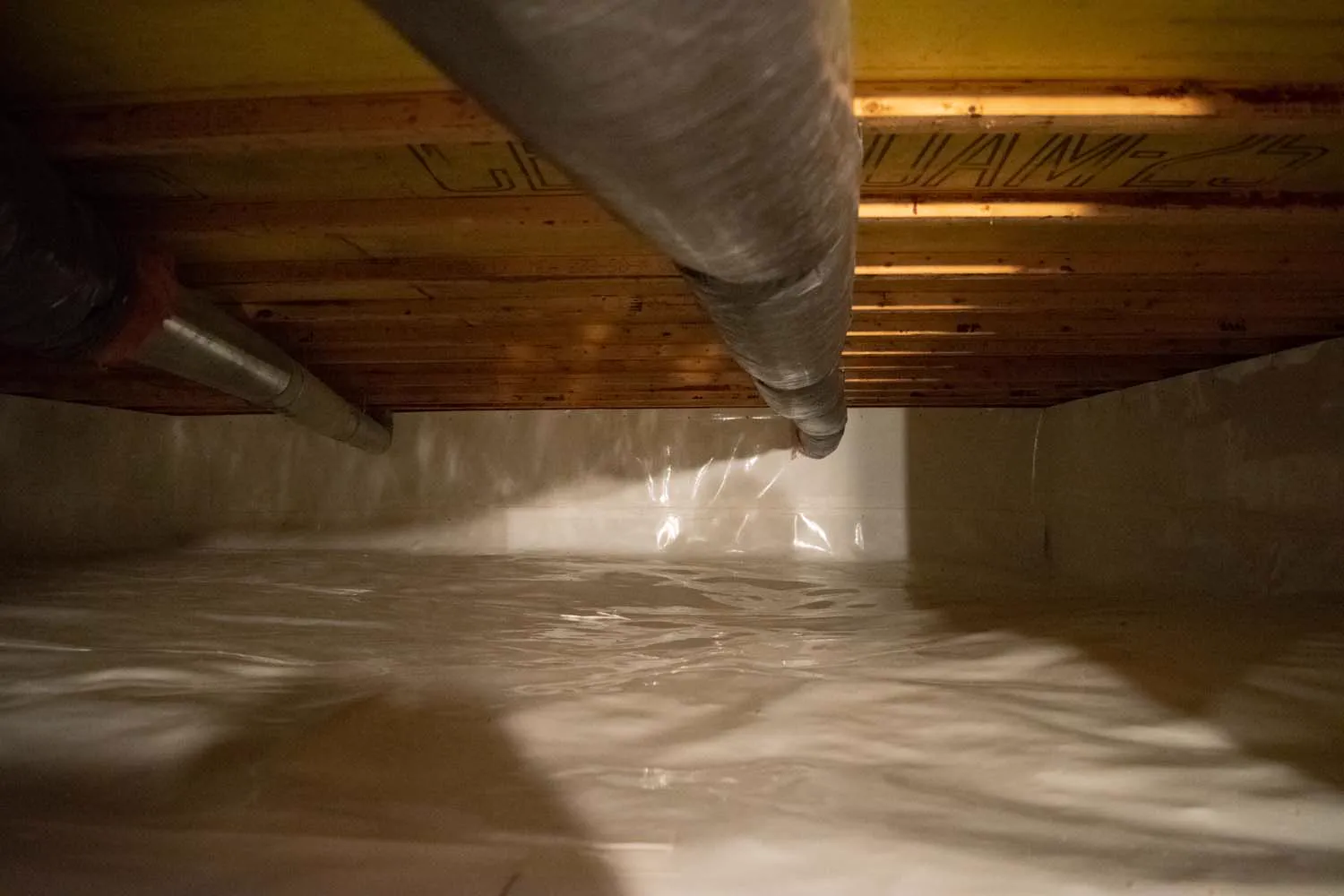
Here’s the hopeful part. Dry the source and the air follows, usually within a couple of weeks. The smell fades, the dehumidifier stops running around the clock, and the whole house feels lighter. Homeowners tell us that’s the change they notice most — not the pipe in the floor, but the way the upstairs finally smells like nothing at all. If damp air is your main symptom and you’ve got a vented area under part of the house, crawl space encapsulation may be the better first move.

How do you know the job was done right?
Check five things when the crew packs up. Pour a bucket of water into the channel and watch the pump kick on, then shut off. Walk outside and confirm the discharge line ends well away from the house, not beside it. Look at the fresh concrete — it should sit flush, not proud.
After that, ask for the warranty in writing and read it before anyone leaves. Then wait for the first hard rain and go look. A system that’s working is boring, and boring is exactly what you paid for.

Why does local experience change the number?
Because we already know how these houses behave. Estate homes out by The Manor Golf & Country Club sit on long slopes where the drive itself steers water. Over in White Columns we see newer poured walls with hairline settlement cracks, which is a different fix than the older block we handle closer in toward Milton City Hall. Knowing that up front means fewer surprises mid-job, and surprises are what blow up a budget.
That history also makes the warranty mean something. If year six brings a question, you’re calling the same local crew that did the work. Comparing notes with someone across the county line? We cover the same ground on Cumming waterproofing cost as well.
Where we work around Milton
We’re based in Lawrenceville, which puts Milton about thirty-five minutes from our shop — close enough that we’re up this way most weeks. Along with Milton, we work throughout Alpharetta, Roswell, Cumming, Johns Creek, Woodstock, Canton and Marietta, plus Sandy Springs, Dunwoody and the rest of Fulton and Cherokee County. If you’re anywhere between Crabapple and Birmingham Highway, we’re an easy trip.
Questions Milton homeowners ask us
Sometimes, but they’re really two jobs. Drainage handles the water, while a crack that’s still moving needs its own repair first. Sealing a wall that’s shifting only buys you a season. We’ll tell you which situation you’re in during the inspection.
It depends on where the water enters and what’s sitting on the soil outside. Exterior work stops water before it touches the foundation, but it means excavating, so a patio, a deck or mature landscaping changes the math quickly. Interior drainage is less disruptive and works well on most homes here.
The drainage itself is built to last the life of the house, since stone and pipe below the slab have nothing to wear out. The pump is the part with a service life, so plan on replacing one around the ten-year mark. Think of it the same way you think about a water heater.
Yes, and you get it in writing before the work starts rather than after. Ask us to walk you through what’s covered and what isn’t, in plain words. A warranty nobody can explain in one sentence isn’t doing you much good.
Usually, yes. We open the bottom section of wall along the working perimeter, install the system, and put it back — so most of your finishes stay untouched. It does add labor to the price, and we’ll show you exactly which sections have to come off before you decide.
Let’s find out what your Milton basement actually needs
The inspection is free, the estimate is free, and nobody leaves you with pressure at the end of it. We’ll show you where water is getting in, explain the fix in plain words, and put a real number in writing — even if the answer turns out simpler than you expected.
(678) 914-5112Serving Milton and all of Metro Atlanta · $500 off projects over $3,500 · Live support 7am–8pm, 7 days a week