

Waterproofing Options in Duluth: Which One Is Right for Your Home?
Two real choices, side by side — plus the one most homeowners here actually need.
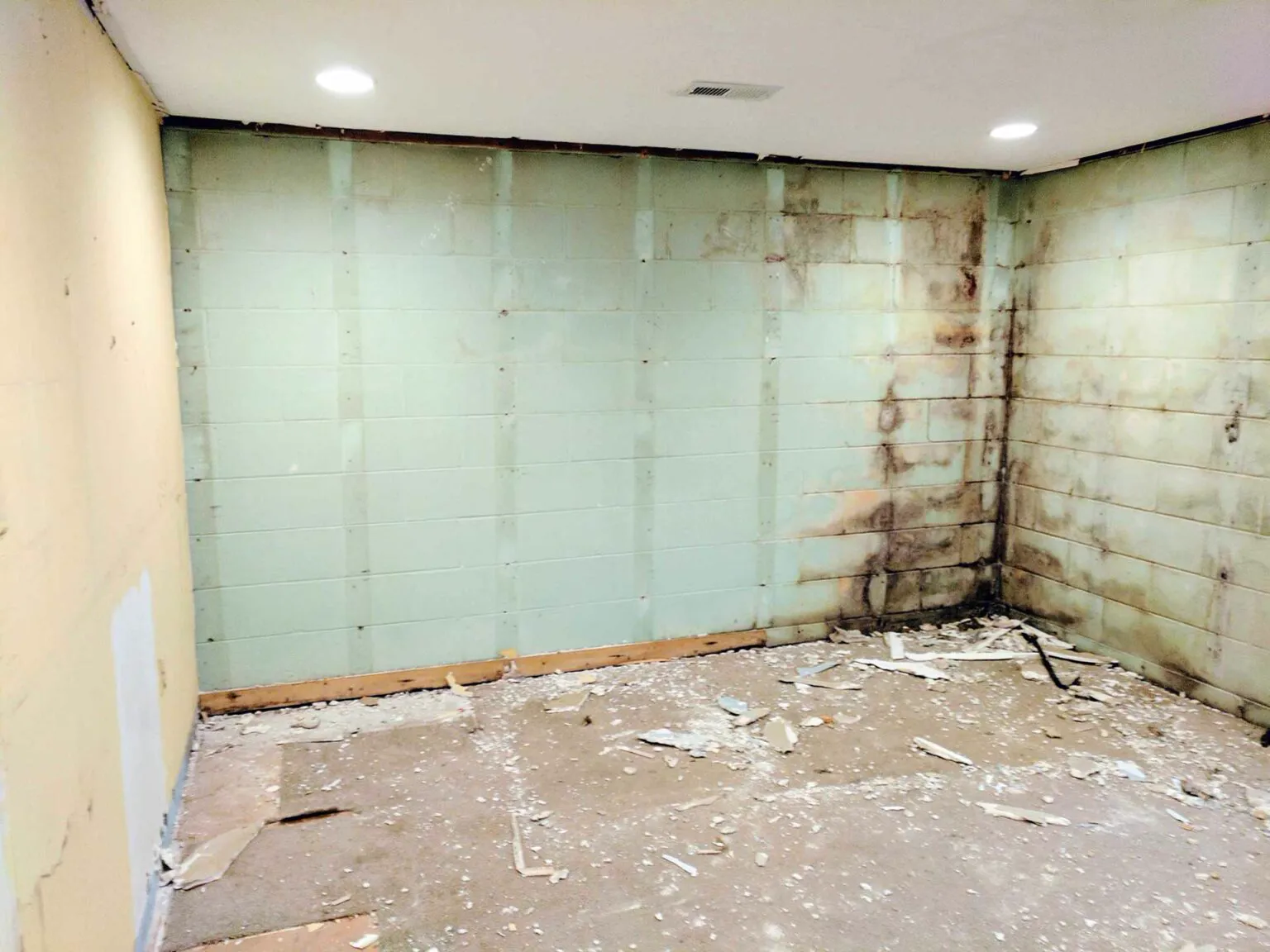
Want to know which of the two big waterproofing options Duluth homeowners get quoted is the one you actually need? Go stand in your basement for five minutes. Look at the seam where the wall meets the floor, all the way around, and tell me what you see.
That seam has a name — the cove joint — and it’s the single most common water entry point in a Georgia home. If the staining, the dampness or the little dark line follows that joint, water is arriving from underneath. But if the wet spot sits high on the wall and runs downward, water is coming in above the floor. Same house, same rain, two very different fixes. Good news, though: both of them are ordinary work we do all week, and neither one requires you to panic about your foundation.
What are you really choosing between?
Strip away the brand names and there are two honest paths. You can catch water on the inside and route it out, or stop it on the outside before it touches the wall. Everything else is a variation on one of those two ideas.
One quick note, because this trips people up: waterproof paint isn’t a third option. A coating can’t beat pressure. It’s a raincoat on a submarine.
Option A: interior drainage — how does it work?
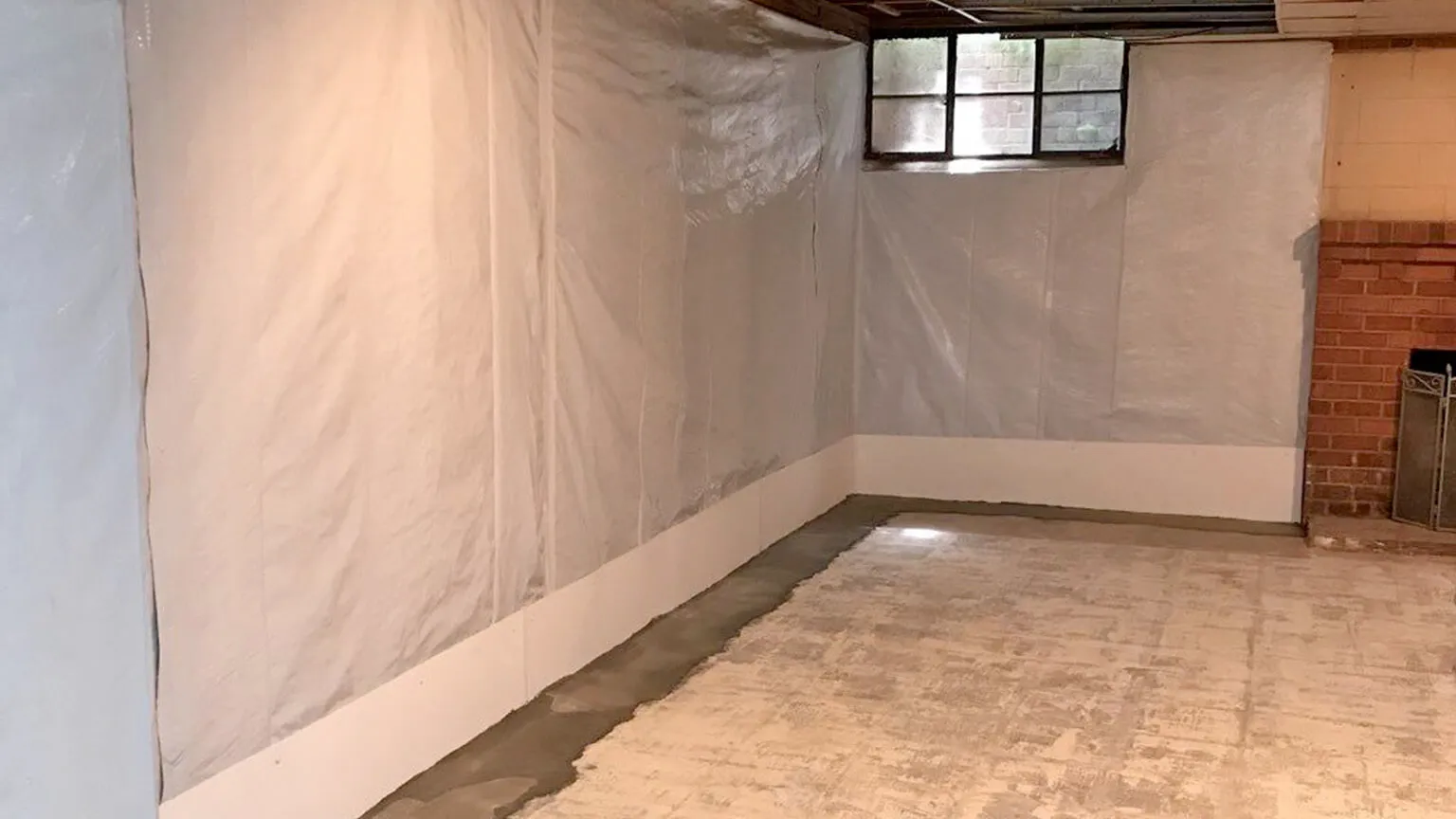
We open a narrow channel in the slab along the affected walls. Perforated pipe goes in, packed in clean stone, set below the floor. Water gets collected before it reaches your floor instead of after, then it travels to a sump basin and the pump sends it well away from the house. Fresh concrete goes back over the channel, and a wall liner goes on where it’s called for.
Because it works from the inside, your yard stays a yard. No excavator on the lawn, and your deck, patio and hydrangeas all survive the week.
Where it wins: cove joint leaks, seasonal high groundwater, walkout basements on a slope, and homes where the outside is simply too built-up to dig. It’s also the faster job, so you’re back to normal sooner. Most of the basement waterproofing we install across Gwinnett is exactly this.
Option B: exterior waterproofing — and why it sounds better
Here we go the other direction. Soil gets excavated down the outside of the foundation wall, the wall is cleaned and coated with a membrane, and a footing drain goes in at the bottom. Then the soil goes back, regraded to slope away from the house.
On paper that’s the purist’s answer. Water never reaches the wall, so the wall never wicks moisture into your basement air. When it’s the right call, it’s a beautiful fix.
Where it wins: water entering high on the wall, failed original coating on a 1990s build, a foundation wall that also needs structural attention, or a lot where grading is genuinely working against you. It’s the stronger answer for above-floor entry, plain and simple. If you want the science behind how groundwater moves through soil, the USGS groundwater primer explains it well.
Where it gets expensive: depth, access and everything sitting on top of the dig. A walkout with a stamped patio and mature landscaping over the trench is a very different invoice than an open side yard. What’s more, weather can stall an excavation, while an interior system can’t be rained out.
Side by side, honestly
- Works from inside — landscaping, deck and patio stay put
- Usually a few days, weather doesn’t stop it
- Best for cove joint entry and rising groundwater
- Lower cost per linear foot in almost every case
- Needs a sump and a discharge line
- Wall itself still sees moisture — liner handles that
- Stops water before it ever touches the foundation
- Best for above-floor entry and failed original coating
- Pairs naturally with structural repair on the same wall
- Fixes bad grading while the dirt is already open
- Costs more — digging, depth and restoration add up
- Disruptive outside, and rain can pause the work
Notice that neither column says “always better.” That’s the honest shape of the two waterproofing options Duluth homeowners get quoted. So let’s get to the recommendation, because you came here for one.
Good news
The expensive-sounding option usually isn’t the one you need. On the majority of Duluth homes we inspect, water is entering at the cove joint, and interior drainage handles that better than digging would — for less money and less mess.
Real talk: we make more on an exterior job. We steer most homeowners toward the interior system anyway, because water arriving from below doesn’t care what you paint on the outside. Selling the bigger job would feel good for a month, and then you’d tell your neighbor. Around here, that’s the whole business.
What decides it on a Duluth home?
Mostly, the house answers it for you. Duluth basements are working basements — in-law suites, home offices, kids’ spaces, a second kitchen downstairs. When one gets damp here, it isn’t storage getting wet. It’s somebody’s bedroom, and that changes what “good enough” means.
The terrain pushes the answer too. Rolling golf-course lots mean walkout basements, so one wall is fully buried while another is barely underground at all. Up in Sugarloaf Country Club and St. Marlo Country Club, those big finished basements are the ones that hurt when they get wet, and they’re also the ones where an excavator would take out a patio somebody planned for years. Interior drainage wins there most of the time.
Closer to the river it shifts again. Red clay dominates most of the city, but lots near the Chattahoochee have sandy river-bottom pockets and a seasonally high water table. Those homes get water from below almost every time, so interior drainage plus a properly sized sump is the fix, and exterior work alone would leave you disappointed.
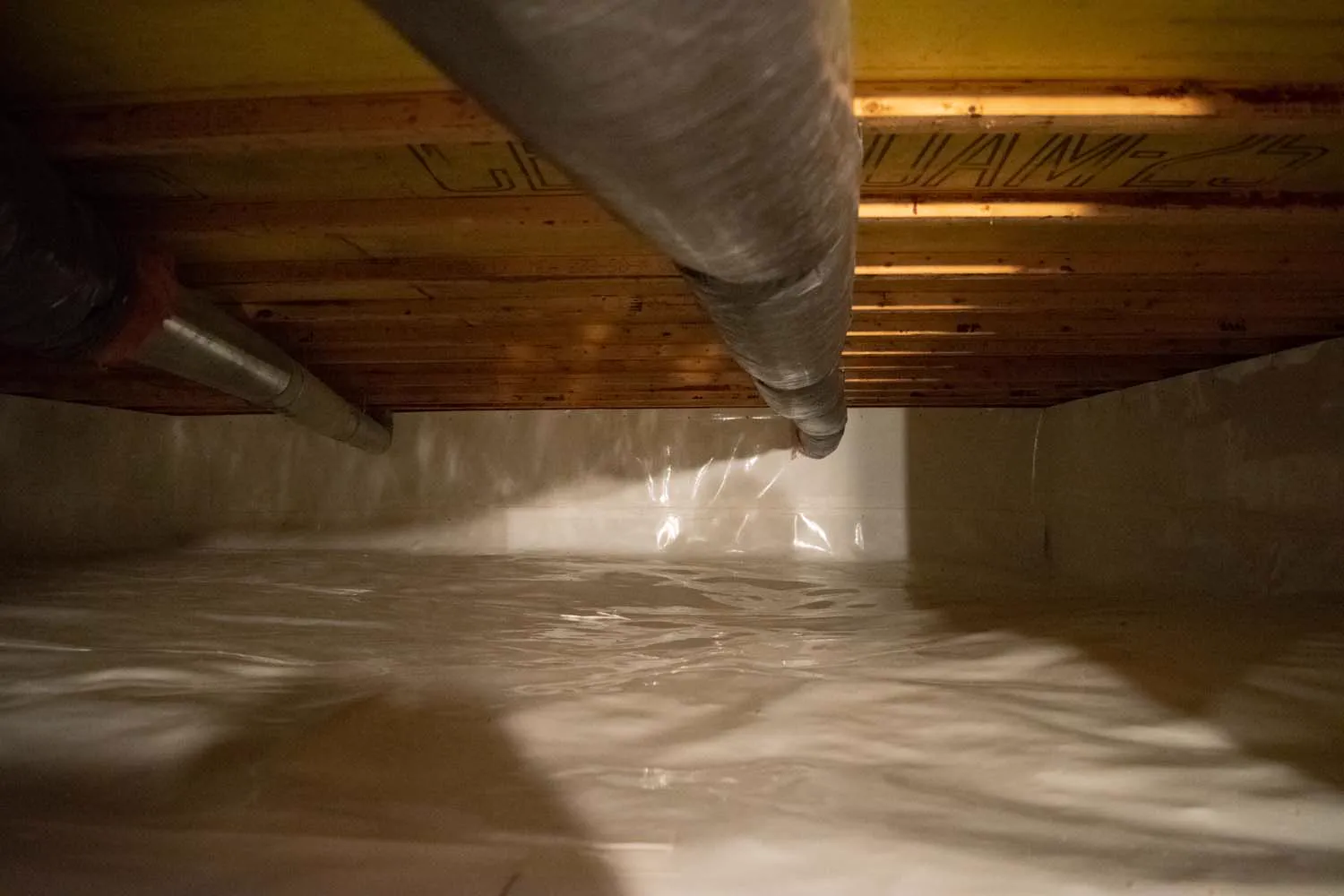
Then there’s the age factor. A lot of Duluth was built between 1985 and 2005, and original footing drains from that era silt up quietly over twenty-odd years. If you’re near The River Club or anywhere off Sugarloaf Parkway with a home from that stretch, the drainage isn’t broken so much as retired. Meanwhile the older properties around downtown Duluth are often crawl spaces instead of basements, and there the right answer is usually crawl space encapsulation, not either option above.
The rooms nobody connects to a wet basement
Here’s the part that surprises people. A damp basement doesn’t stay in the basement, because air doesn’t respect floors. Warm air rises and leaves through the attic, which pulls basement air up behind it, into the hallway, the bedrooms, the closets upstairs.
So the musty smell in the guest room has nothing to do with the guest room. Neither does the hardwood that cupped slightly last spring, or the air conditioner running long because damp air is harder to cool. The EPA’s guide to moisture and your home makes the same point: control the moisture and the rest settles down.
Good news is that this cuts both ways. Fix the source and the whole house gets quieter about it. Homeowners tell us the smell at the bottom of the stairs is gone within a couple of weeks, and that upstairs just feels less sticky in August. One family near Parsons Alley got their downstairs bedroom back for a grandparent who’d been sleeping in a spare room upstairs for two years. That’s the real product — not a pipe in a floor.

When we’d tell you that you don’t need the bigger job
Plenty of times, actually. Roughly a third of the homes we look at have a problem that starts outside and ends outside — downspouts dumping at the foundation, a flower bed graded back toward the house, a catch basin clogged after the fall leaf drop near the Downtown Duluth Town Green. Those are cheap corrections, and we’d rather say so than sell you a system.
Same goes for one damp corner after a heavy storm, with a dry floor the rest of the year. That one is worth watching for a season first.
The most useful thing we do some days is walk a homeowner outside, point at a downspout, and charge them nothing.
Where we won’t hedge: if the wall is bowing or a crack is actively moving, structural work comes first either way. Waterproofing over a moving wall is money spent twice, and we’ll be direct with you about that during the inspection.

So what would we actually do at your house?
We’d walk the outside first — grading, gutters, where the water lands. Then we’d walk the cove joint with you and show you what we’re reading. After that you get one recommendation in writing, with the scope and the reason attached.
Comparing quotes is smart, and we encourage it. If you want more depth on systems and pricing for this city, our guide to the best basement waterproofing goes deeper, and neighbors one exit north can read the same breakdown for Suwanee waterproofing options.
Where we work around Duluth
We’re about fifteen minutes down the road in Lawrenceville, so Duluth is home turf. We work all over Johns Creek, Suwanee, Berkeley Lake, Peachtree Corners, Norcross, Lawrenceville, Sugar Hill, Buford and Lilburn, plus the wider Gwinnett area. Whether you’re off Peachtree Industrial, near Pleasant Hill or out toward the Chattahoochee, there’s usually a truck of ours nearby already.
Questions Duluth homeowners ask us
It comes down to how much wall is involved, how hard it is to reach, and whether you need a sump. A small drainage correction sits at the low end, while a full perimeter system in a finished basement sits at the high end. We won’t quote over the phone, because that number would be a guess and you’d be paying for it.
Most interior systems run two to four days from first cut to final cleanup. Exterior work takes longer, since digging, coating and restoring the yard all add time, and rain can push the schedule. You’ll get a real day count before we start, not a shrug.
Just the perimeter. We need about four feet of clear space along the walls we’re working on, so shelves and boxes shift toward the middle of the room. You don’t have to empty it out, and we’ll help with the heavy things.
Sometimes, but they’re really two jobs. Drainage handles the water, while a crack that’s still moving needs its own repair first. Sealing a wall that’s shifting only buys you a year, so we’ll tell you which situation you’re in during the inspection.
Neither is automatically better — it depends on where water enters. If it’s arriving at the cove joint where wall meets floor, interior drainage is the stronger and less costly answer. If it’s coming in high on the wall or the grading outside is working against you, exterior work earns its price.
Let’s figure out which option your Duluth basement actually needs
The inspection is free, the estimate is free, and nobody leaves pressure on your kitchen table. We’ll show you where the water is getting in and tell you plainly which path we’d choose if it were our house.
(678) 914-5112Serving Duluth and all of Metro Atlanta · $500 off projects over $3,500 · Live support 7am–8pm, 7 days a week