

What to Look For in a Waterproofing Company Johns Creek Homeowners Can Trust
How to compare bids, read a scope of work, and tell a real diagnosis from a sales script.
Most people assume every waterproofing company Johns Creek has to offer sells roughly the same thing, so the smart move is to get three bids and take the middle one. That sounds reasonable. It’s also an easy way to overpay, because the price isn’t what varies between those companies. The diagnosis is.
Here’s the thing: two crews can look at the same damp corner and see two different problems. One sees a wall to coat, while the other sees a downspout dumping water beside your foundation. Same stain, very different invoices — and only one of them stays dry. So let’s walk through how to tell them apart.
What makes Johns Creek homes different?
Start with the ground. This side of Fulton County sits on Georgia Piedmont red clay, and clay does something concrete hates — it swells when wet and shrinks when dry. That movement leans on foundation walls year after year. Then add the terrain, which drops toward the Chattahoochee along the west edge of town, so a lot of homes here have daylight or walkout basements cut into a slope.
Now add the timing, and this is the part that actually explains your neighborhood. Johns Creek was largely built in one big wave, mostly between 1988 and 2007. That means a whole city’s worth of original waterproofing systems are aging out on roughly the same schedule. Your neighbor’s basement didn’t get wet because they did something wrong. It got wet because it turned twenty-eight.
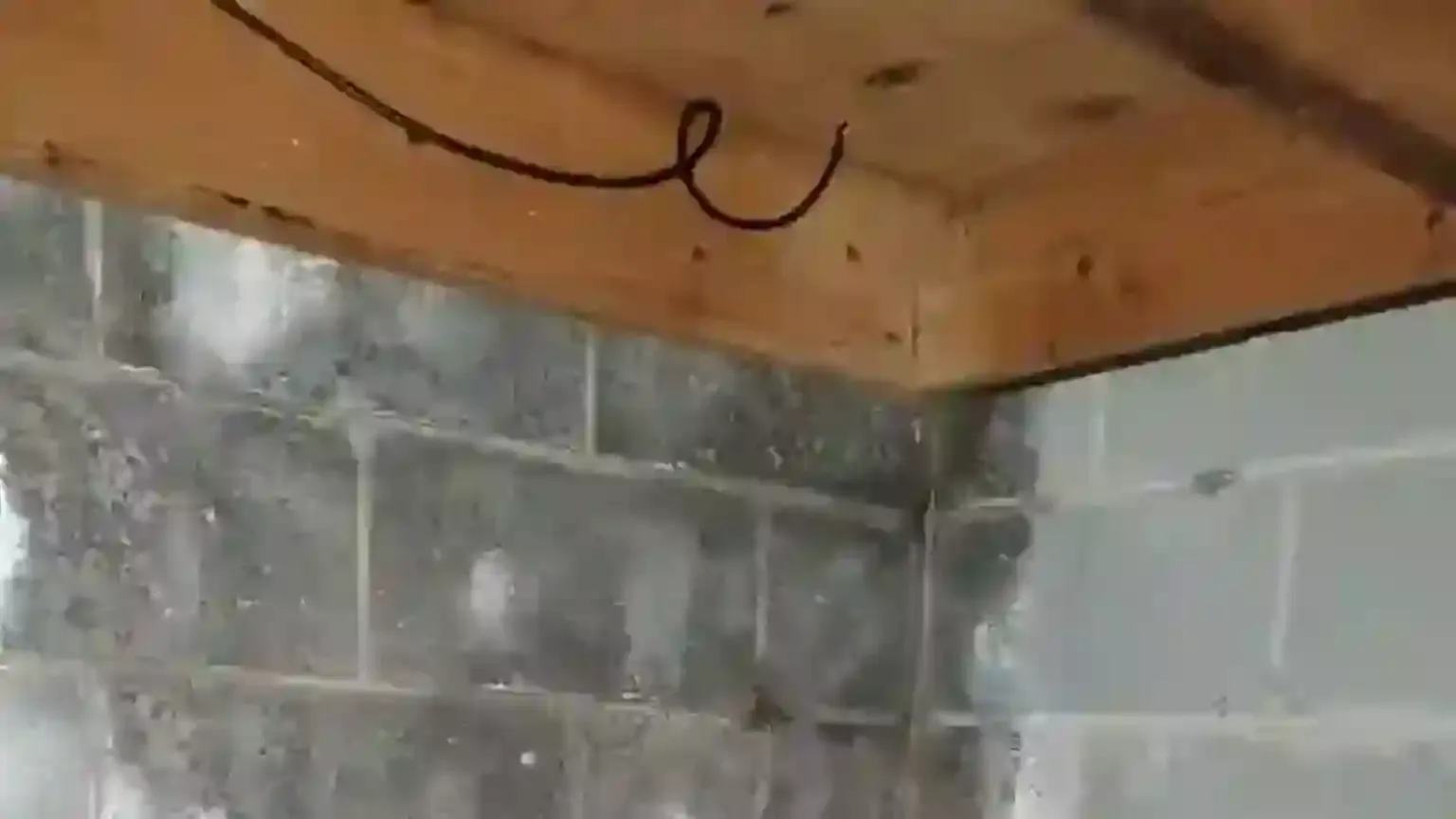
The sump pumps tell the same story. A pump installed with the house in 1996 has run quietly for decades, and pumps wear out. Good news, though — that’s one of the cheapest fixes on this page, and swapping one takes a morning.
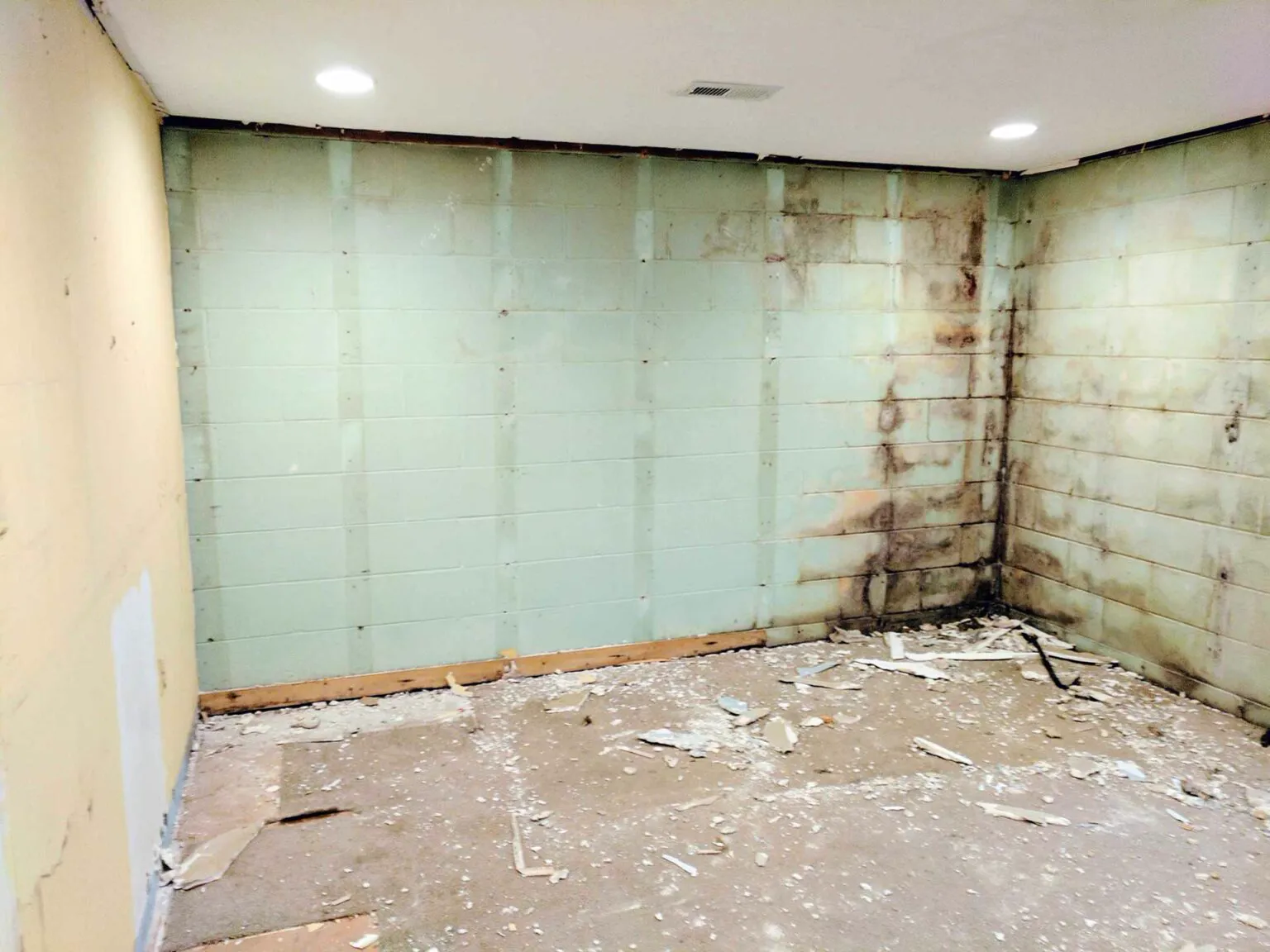
One more wrinkle matters: a very high share of basements here are finished. Drywall, flooring, a bar, sometimes a whole second living space. So a slow leak that would be a shrug in a bare basement turns into real damage in a finished one.
What should a good company do differently here?
Simple test: did they go outside? A real inspection starts in the yard, not the basement. We walk grading, downspouts, gutter runs and where the lot sheds water — because on a sloped Johns Creek lot, the water causing your problem often landed twenty feet away.
Good news
A wet basement and a failing foundation are two different conversations. Most homes we look at only need the first one, and we’ll say so plainly.
After that, they should be measuring. Linear feet of affected wall, slab depth, where the old drain tile runs, whether a serviceable sump basin already exists. Those numbers are what an honest price is built from. If nobody wrote anything down, the total at the end is a guess wearing a nice shirt.
In this city specifically, ask about the HOA. Neighborhoods like Country Club of the South and The Standard Club have real architectural rules, so exterior work — regrading, downspout extensions, a discharge line — gets coordinated instead of just started. We handle that all the time. It’s paperwork, not a problem.
Now here’s where a lot of homeowners get steered wrong
Ready for the part nobody warns you about? A lot of companies sell one system. Not one per house — one, period. So whatever your basement is doing, the recommendation arrives as a full perimeter drain with a new sump, every time.
Sometimes that’s the right call. But sometimes the honest fix is regrading a flowerbed, extending two downspouts, and replacing a tired pump. When a company has only one product, every house starts to look like a customer for it. That’s not usually dishonesty — it’s what happens when a crew is trained to install rather than diagnose.
The best compliment we get isn’t “great work.” It’s “you talked us out of the bigger job.”
The other common detour is coatings. Waterproof paint sells well because it’s cheap and looks like progress on day one. Here’s the catch, and it’s physics rather than opinion: concrete is porous, and water moves through solid, uncracked concrete by capillary action. That’s why a wall can be wet without a single visible crack — and why a coating is fighting pressure it can’t win. It’s a raincoat on a submarine.
Real talk: you don’t have to trust a contractor on this. The EPA’s guide to moisture and your home covers the basics in ten minutes. Read it before your estimates, and you’ll know whether the person in your basement is explaining or performing.
How do you actually read an estimate?
Line by line, and out loud if it helps. A good proposal from any waterproofing company Johns Creek homeowners consider says what’s installed, how much of it, where it goes, and what happens to the water. A weak one says “waterproofing system” and a total. Folks here compare bids carefully, which we love, because specificity is why we win jobs.
Questions worth asking before you hire anyone
- Where exactly is the water getting in, and how do you know? A confident answer includes what they saw outside.
- How many linear feet are we treating, and why that section? Vague coverage means a vague price.
- Does the drainage sit below the slab? Collecting water below floor level is the difference between a system and a gutter.
- Where does the discharge go? It should end well away from the house, not back beside the foundation.
- Is the warranty transferable, and what voids it? Ask them to explain it in one sentence.
- Who’s actually doing the work? Your own crew, or whoever’s available that week?
- Can I see proof of insurance? Any real company hands it over without flinching.
Red flags get easier to spot once you’ve asked those. Watch for a firm price quoted over the phone before anyone has seen the house, or a discount that expires today, since real pricing doesn’t need a countdown. Be wary too if the inspection never left the basement, if the scope has no measurements, or if the warranty is described but never handed to you on paper.
On cost, we’ll be straight with you. Small drainage corrections land at the low end, while a full perimeter system with a new sump and battery backup in a finished basement sits at the high end. What moves the number is linear feet, access, and how much finished space has to be protected. After we walk it, you get a written figure with the scope spelled out — not a “starting at.”
The house that wasn’t what they thought
Want the inspection that surprised everybody? A homeowner over in Falls of Autry Mill called us sure the foundation was failing. There was a hairline crack near the corner, water along the floor after every long rain, and two previous estimates for major structural work.
Then we went outside. A buried downspout line had collapsed at the elbow, so every storm was quietly pushing roof water into the soil beside that corner. Meanwhile, the original sump pump — installed with the house — had stopped keeping up years earlier. The crack wasn’t the cause. It was just the only part anyone could see.

So the fix came in far smaller than the structural bids: repair the buried line, correct the grade, replace the pump, and add drainage along one wall instead of four. That’s why we push so hard on source-first inspections. The goal isn’t a bigger job — it’s the right-sized one.
Picture the after. The floor stays dry through a hard March storm, and the musty smell at the bottom of the stairs is gone. Your basement goes back to a room you use instead of a room you watch. Better yet, you spent what the problem actually cost — not what a sales script hoped.

Why we might be the right fit
We’re about twenty minutes east of you, in Lawrenceville, and we’ve been at this over twenty years. If you want a waterproofing company Johns Creek homeowners have already used, we’ve likely worked a street near you — from the older sections near Jones Bridge Park to the sloped lots running back toward McGinnis Ferry Road. Familiar housing stock means faster, better diagnoses.
Timing matters too, so plan ahead if you can. March through May is our busiest stretch, while winter is usually the calmest window to schedule. You can check the local outlook yourself through the National Weather Service office in Peachtree City.
Still sorting out what’s happening down there? Our deeper guide to basement waterproofing costs and methods breaks the work down step by step, and the drainage systems we install are laid out in full detail. If your home has a damp crawl space instead, crawl encapsulation is usually the better answer. Comparing notes with family one town over? We cover the same ground for Alpharetta best basement waterproofing.
Where we work around Johns Creek
We’re on the ground here constantly, from the streets around Newtown Park to the wooded lots on the river side of town. Beyond Johns Creek, we work in Alpharetta, Duluth, Suwanee, Roswell, Milton, Peachtree Corners, Cumming, Norcross and Berkeley Lake, plus the wider Fulton and north Gwinnett area. Odds are we already have a truck near you.
Questions Johns Creek homeowners ask us
It depends on how much wall is involved and how hard it is to reach. Minor drainage corrections sit at the low end, while a full perimeter system with a new sump and battery backup in a finished basement sits at the high end. After we walk the house, you get one written number with the scope spelled out.
Most jobs run one to three days. A single wall can be done in a day, while a full perimeter with a new sump usually takes two or three. Finished basements add a little time, because careful demo and rebuild happen on both ends of the work.
Only the perimeter. We need roughly four feet of clear space along the walls we’re treating, so shelves and boxes shift toward the middle of the room. You don’t need to empty the space, and we’ll help with the heavy things.
Sometimes, but they’re really two jobs. Drainage handles the water, while a crack that’s still moving needs its own repair first. Sealing a wall that’s shifting only buys you a season, so we’ll tell you during the inspection which situation you’re in.
Neither is automatically better — it comes down to where water enters and what sits on the soil outside. Exterior work stops water before it touches the foundation, but it means excavating, and a deck, patio or mature landscaping changes the math quickly. Interior drainage is less disruptive and fits most Johns Creek basements well.
Let’s find out what’s really going on in your Johns Creek basement
The inspection is free, the estimate is free, and nobody pressures you at the end. We’ll show you where the water is coming in and how big the job honestly needs to be — including when the answer is smaller than you expected.
(678) 914-5112Serving Johns Creek and all of Metro Atlanta · $500 off projects over $3,500 · Live support 7am–8pm, 7 days a week