

Basement Waterproofing in Johns Creek: What It Costs and What to Expect
The 2 a.m. storm, the damp corner, and what it takes to make it stop.
It’s two in the morning and the rain is really going. You’re awake, listening to it hit the windows, and you’re not thinking about the roof — you’re thinking about the basement. If that’s you, then this guide to basement waterproofing Johns Creek homeowners can actually use was written for that exact moment.
So let’s start with the good part. This is fixable, and it’s work we’ve done every week for more than twenty years. You’re not looking at a mystery — just a water problem that lives outside your walls, and those have solutions. Below is the honest version — the work, the price drivers, and what you get in writing.
So what is basement waterproofing, really?
Ask three companies and you’ll get three answers, which is part of why this gets confusing. Here’s ours: waterproofing means giving water an easier path than the one it takes through your house now.
That’s the whole idea. Water is lazy but stubborn, so it follows the easiest route. On a lot of homes here, that route runs through the cove joint — the seam where your basement wall meets the floor. After a long stretch of rain, that seam weeps, and a dark line shows up along the bottom of the wall.

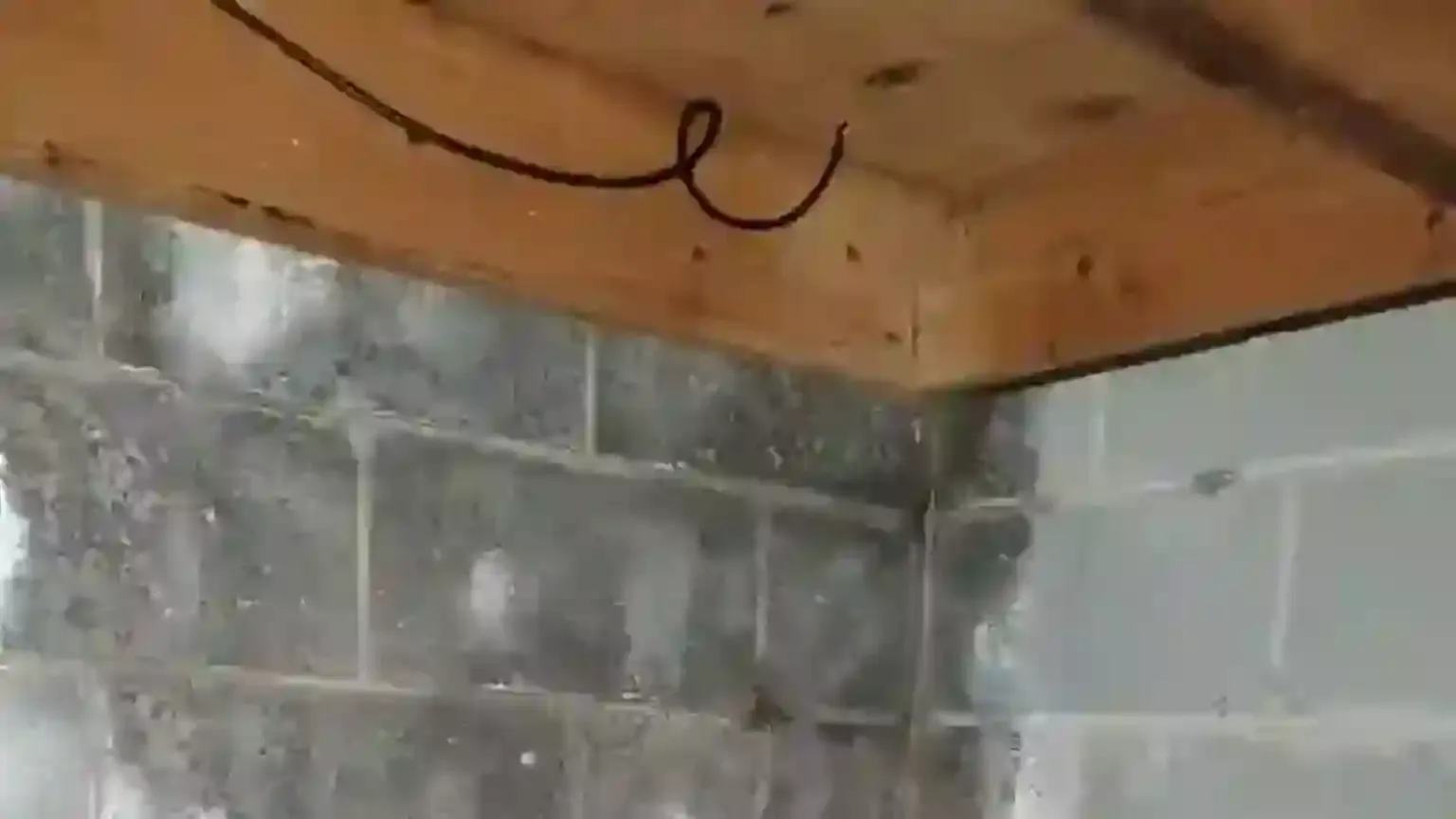
Here’s a fact that surprises almost everybody. Concrete is porous. Water moves through solid, uncracked concrete by capillary action — the way a paper towel pulls up a spill — so a wall can be soaking wet with no visible crack. If you’ve been hunting for one and can’t find it, you’re not missing it.
Good news
A wet basement and a failing foundation are two different conversations. Most homes we look at are only having the first one, and we’ll tell you which before anybody talks money.
Why does this happen so much in this part of Fulton County? Two reasons. The terrain rolls and drops toward the Chattahoochee, so plenty of homes have daylight or walkout basements cut into a slope. Plus the soil is Piedmont red clay, which swells when wet and presses on your walls until water finds the easiest opening.
What happens on the day the crew shows up?
Most interior systems follow the same shape, so you can picture it before anyone parks a truck outside:
- We find the source first. Before we price anything, we walk the outside — grading, downspouts, where roof water lands. Then we walk the inside. Often the fix is smaller than expected, because the problem was outside all along.
- We open a channel at the perimeter. A narrow strip of slab comes up along the walls that need it. It’s dusty and loud, and usually done in a day or two.
- We set drainage below the slab. This part matters most. Perforated pipe in clean stone, placed below floor level, so water gets caught before it reaches your floor instead of after.
- Everything routes to a sump. The pipe carries water to a basin, and the pump sends it well away from the house — not beside the foundation, where it would come back for a second try.
- We close it back up. Fresh concrete over the channel, wall liner where needed, site swept clean. We haul our mess out, because a pile of broken slab by your garage is not a finish.
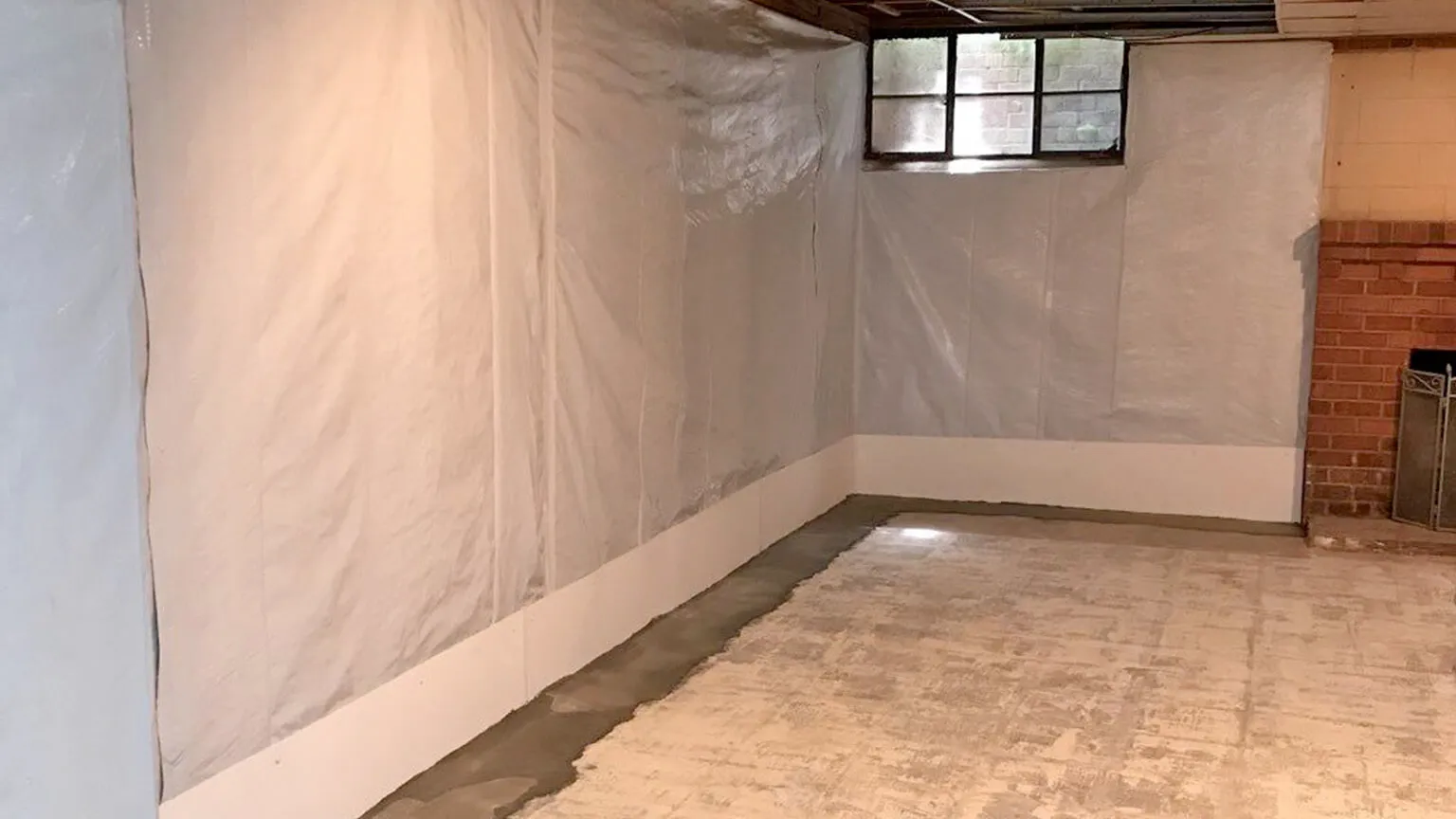
Notice what’s missing? Nobody painted anything. Waterproof paint is fine for what it is, but a coating can’t beat pressure. It’s a raincoat on a submarine.
Twenty years in, the thing that changed how we work is simple: we stopped trying to block water and started routing it.
But here’s the part most companies skip
Ready for the piece that rarely makes it into a sales pitch? Timing. Not the season — the age of the house.
Johns Creek was largely built in one big wave, mostly between the late eighties and the mid two-thousands. That means a whole city’s worth of original waterproofing systems are aging out on roughly the same schedule. Footing drains that worked fine for twenty years are silted up, and sump pumps that came with the house are now old enough to vote. None of that is a defect. It’s a service life, same as a water heater.
Which tells you two things. First, if your neighbor two doors down just had water for the first time, that’s no coincidence. Second, a company that sells one product will sell you that product no matter what your house needs.
So we quote what the house needs. Sometimes that’s a full system. Other times it’s a regrade, two downspout extensions and a new pump, and we say so even though it’s a smaller invoice. For a neutral primer on how groundwater behaves under a lot, the U.S. Geological Survey’s groundwater basics is a good ten minutes.
So what does it cost?
Straight answer: it depends on how much wall is involved and how hard it is to reach. Anybody quoting a flat number sight unseen is guessing — and you’d be paying for that guess. Still, here’s exactly what we’re weighing.
What drives the price up or down
- Linear feet. One wall is a very different job than a full perimeter. This is the biggest factor by far.
- Access. An open basement is straightforward. A finished one with built-ins costs more, because there’s careful work before the real work.
- Whether you need a sump. Some homes have a serviceable basin. Many around here have one that came with the house in 1996 and is living on borrowed time.
- What’s happening outside. Grading, downspouts and a clogged footing drain can carry most of the blame. That’s a smaller ticket, and we’ll say so.
- Wall condition. Cracks or bowing mean structural work comes first. Waterproofing over a moving wall is money spent twice.
- Backup power. A battery backup adds cost. It also runs during the storm that knocks the power out — the same storm that floods basements.
Small drainage corrections land at the low end. A full perimeter system with a new sump, battery backup and careful work around a finished space sits at the high end. Most basement waterproofing Johns Creek jobs land in between, and after we walk your house you get a written number with the scope spelled out.
What’s included? Labor, materials, the concrete we replace, hauling and the warranty. What isn’t? Rebuilding finished walls we opened, replacing ruined flooring, and structural repair, which is priced on its own. Better you hear it now than read it in fine print.
One more note: exterior work here often needs HOA coordination. We handle that with you, because nobody enjoys a surprise letter.
A house in Sugar Mill, and how it turned out
Want to see how this goes in real life? A homeowner in Sugar Mill called us in the spring, right after one of those long soaking weeks. Their basement had been finished for years — carpet, guest room, the works — and a dark line had crept up the baseboard on the uphill wall.
They’d already had two companies out. One wanted to excavate the whole back of the house, while the other quoted sealant and fresh paint — which, to be fair, would have looked terrific for about seven months.
Here’s what we found. Water was entering at the cove joint on one wall only, and the original footing drain there had given up years earlier. The lot also sheds toward the house, so every hard rain sat against that corner. The fix: a perimeter channel on two walls, a new sump with battery backup, and regrading plus buried downspouts outside. Two and a half days, which is a pretty typical basement waterproofing Johns Creek project start to finish.
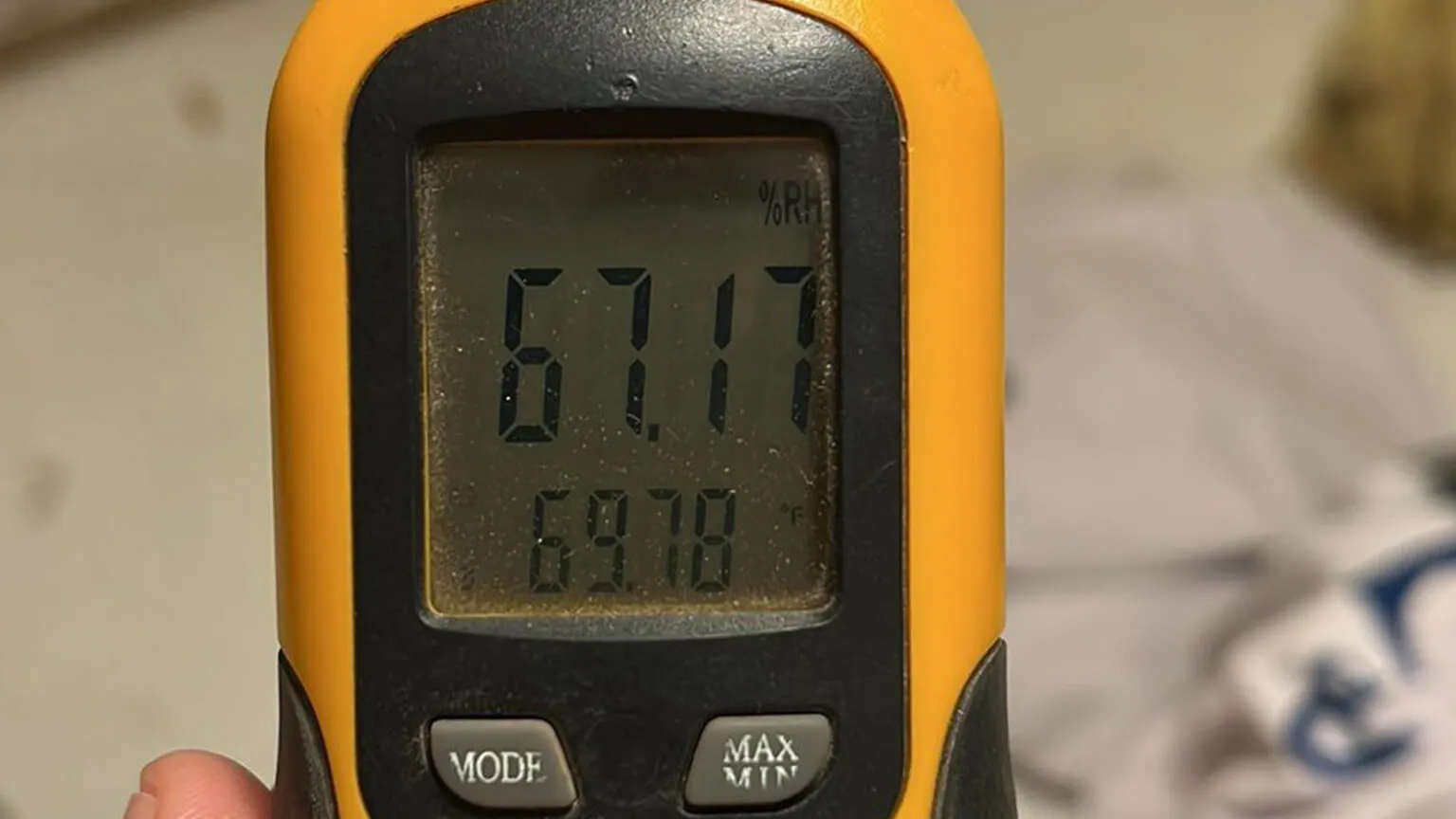
They texted that August, after tropical leftovers dumped rain for two straight days. The message was three words: floor’s completely dry.
And that’s the real product. Not pipe, not stone. A basement that stays a basement during a storm, a guest room you don’t apologize for, and a forecast you get to ignore. If you watch the radar anyway, the National Weather Service office in Peachtree City covers our whole area — you’ll just be watching for fun.
Why hire somebody local for this?
Because a warranty is only worth as much as the company behind it. We’ve been at this over twenty years, and our shop sits twenty minutes east in Lawrenceville. If something needs attention in year six, you’re calling the people who did the work.
Local also means we know the housing stock. We know how older poured walls behave in Doublegate, we’ve worked the sloped lots near Seven Oaks, and we’ve been in and out of the streets off McGinnis Ferry Road. If you’re anywhere between Emory Johns Creek Hospital and Johns Creek Town Center, odds are good we’ve already been under a house on your street.
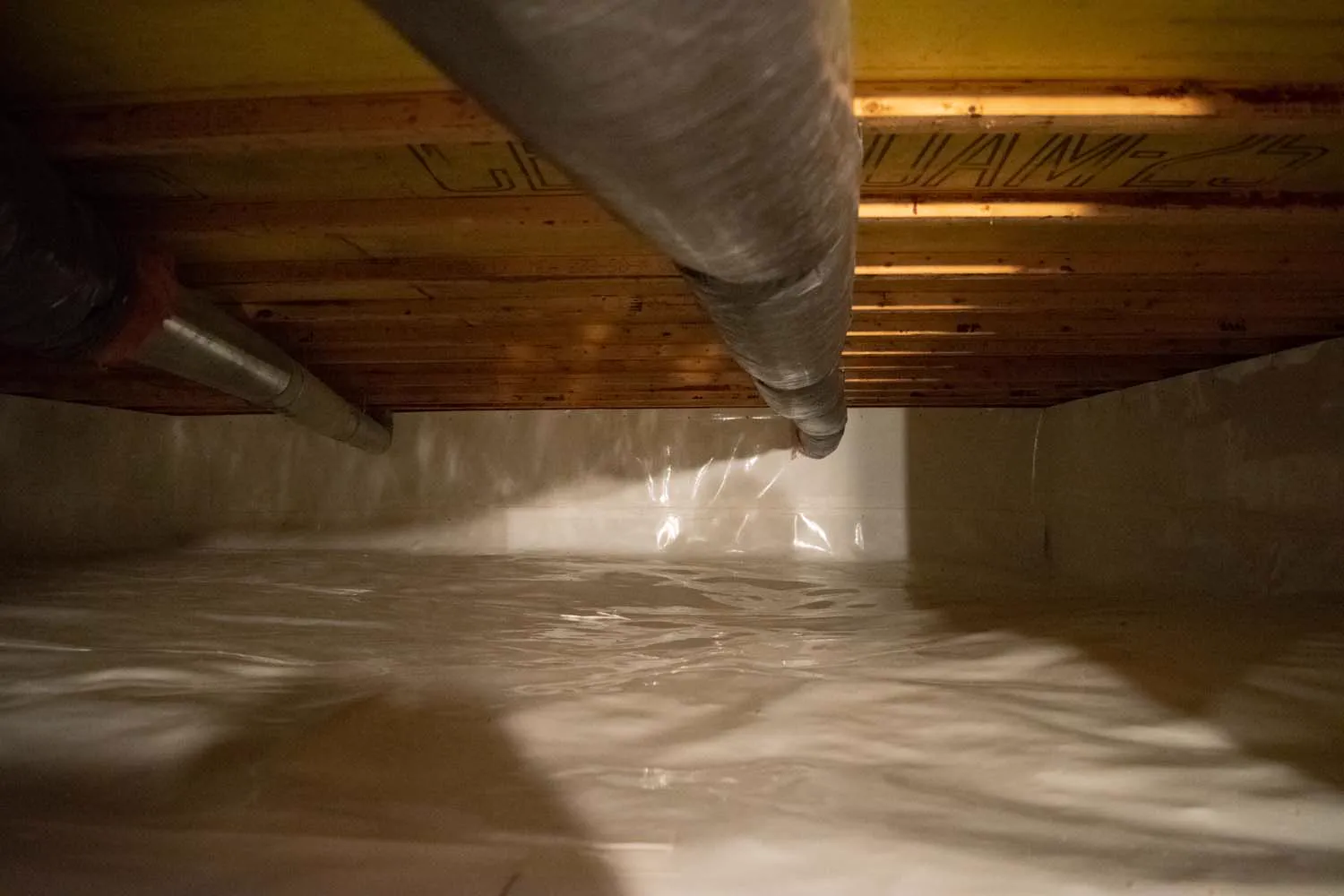
Still sorting out what you’re looking at? Our guide to what causes a wet basement covers the common symptoms, and every basement waterproofing system we install is laid out on our service page. Comparing notes with family a few exits away? We cover the same ground for Alpharetta basement waterproofing. If your issue is a musty smell instead of standing water, crawl encapsulation may be the better answer.
Where we work around Johns Creek
We’re based in Lawrenceville, so Johns Creek is a short hop. We work throughout Alpharetta, Duluth, Suwanee, Roswell, Milton and Peachtree Corners, plus Berkeley Lake, Norcross and Sugar Hill and the wider Fulton and Gwinnett area. If you’re near the 141 corridor or over toward State Bridge, we’ve likely got a truck nearby.
Questions Johns Creek homeowners ask us
Only the perimeter. We need about four feet of clear space along the walls we’re working on, so boxes and shelves slide toward the middle. You don’t have to empty the room, and we’ll help with the heavy pieces.
Sometimes, but they’re really two jobs. Drainage handles the water, while a crack that’s still moving needs its own repair first. Sealing a shifting wall only buys you a year, so we’ll tell you which situation you’re in.
Neither wins automatically — it depends on where water gets in and what sits on the soil outside. Exterior work stops water before it touches the foundation, but it means digging, and a deck or patio changes the math fast. Interior drainage is less disruptive, so it’s the right call on most homes here.
The drainage is built to last the life of the house, since it’s stone and pipe below the slab with nothing to wear out. The pump is the part with a service life, so plan on replacing one around the ten-year mark.
Yes, and you get it in writing before the work starts, not after. Ask us to walk you through what’s covered and what isn’t, because a warranty nobody can explain in a sentence isn’t doing much good.
Let’s find out what’s really going on under your Johns Creek home
The inspection is free, the estimate is free, and there’s no pressure at the end. We’ll show you where the water gets in and what it takes to stop it — even if that’s simpler than you expected.
(678) 914-5112Serving Johns Creek and all of Metro Atlanta · $500 off projects over $3,500 · Live support 7am–8pm, 7 days a week