

Wet Basement in Peachtree Corners: What’s Causing It, and How It Gets Fixed
A calm, plain-English walk through the real cause, how to tell mild from serious, and what a lasting repair actually involves.
Why is my basement wet? Here’s the short answer: water outside your house found an easier way in than the way you’d prefer. That’s the whole story behind nearly every wet basement Peachtree Corners homeowners call us about. So take a breath, because this is a solved problem. It isn’t a mystery, and it isn’t a crisis. It’s just water doing what water does, plus a repair that gives it somewhere better to go.
You’ve probably noticed a damp corner, a smell at the bottom of the stairs, or a thin line of water after a hard rain. Maybe an inspection report used a word you had to look up. Either way, you’re in good company, because we see this every week around here.
Where is the water actually coming from?
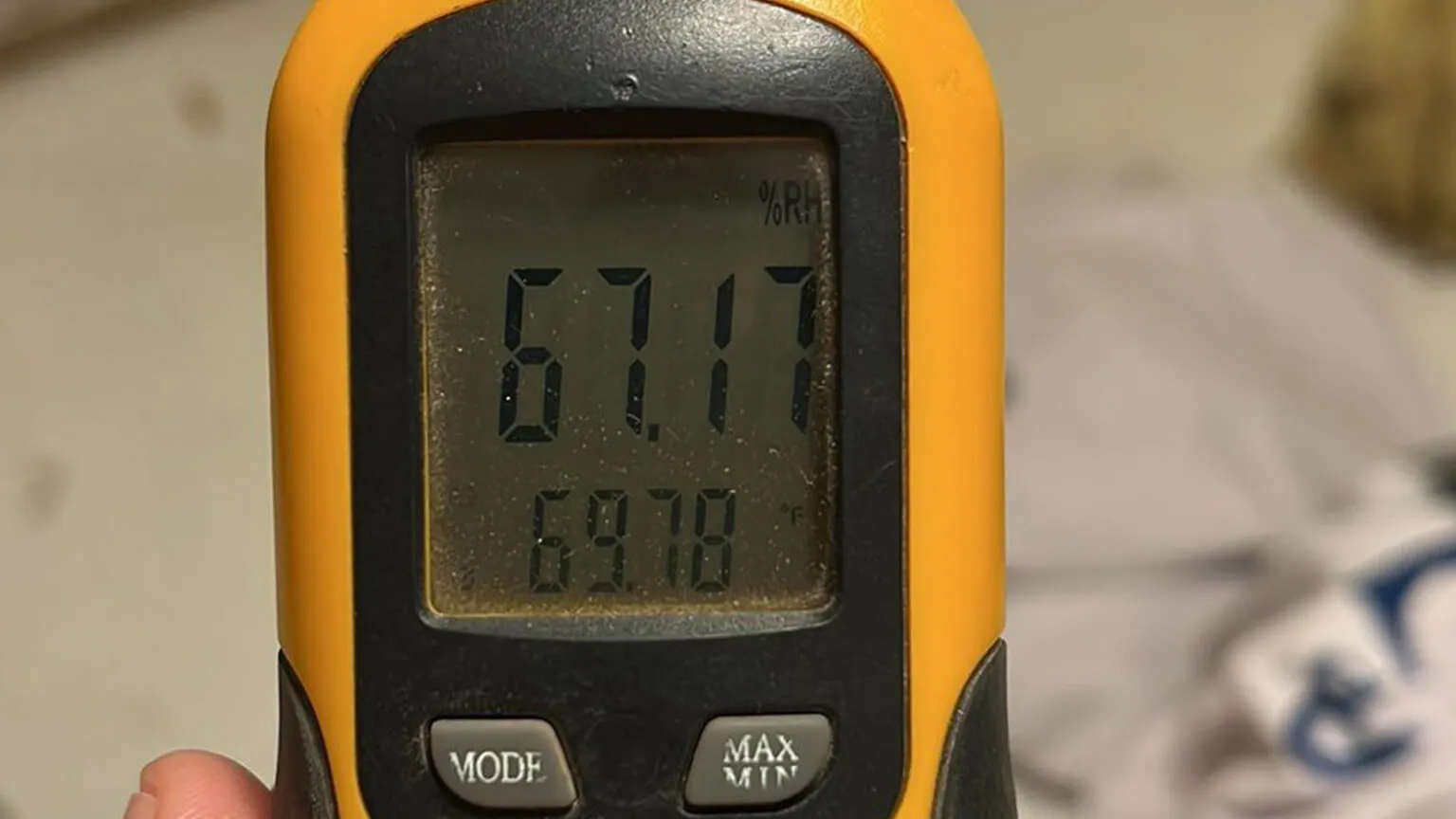
Almost never through the ceiling, and almost never from a pipe. In most homes, it arrives through the soil. Rain soaks the ground next to your foundation, that ground swells, and the wet clay leans on your walls with real weight behind it.
Engineers call that hydrostatic pressure. You can call it “dirt pushing water sideways.” Concrete and block look solid, but they’re full of tiny pores, so water wicks through without needing a crack at all. That’s why sealing a crack so often changes nothing.
Now, the part specific to your side of Gwinnett. Peachtree Corners homes were mostly built before modern basement waterproofing was standard practice. Many never had a real system — they had a coat of tar and good intentions. That coating worked for a few decades, then it got old, the way a roof gets old.
Good news
A damp basement and a failing foundation are two different conversations. Most of the homes we walk through only need the first one. We’ll tell you plainly which one you’re in, even when the answer is “you’re fine, here’s a smaller fix.”
One more local wrinkle. The big hardwoods shading these streets have been growing for fifty years, and root systems that old lift slabs and open wall joints as they spread. So a shaded lot near Technology Park can end up with a gap nobody caused. The trees get to stay, by the way.
Is this mild or is it serious?
Fair question, and you deserve a straight way to think about it. There’s no need to guess in the dark, so here’s roughly how we sort it during an inspection.
What we look at first
- When it shows up. Water only after heavy rain usually points outside — gutters, grading, a buried downspout. That’s often the least expensive kind of fix.
- Where it shows up. A wet line right where the wall meets the floor points at the cove joint. More on that in a second.
- White chalky bloom. That’s efflorescence, mineral salt left behind as water passes through block. It’s a receipt, not an emergency.
- Smell without visible water. Humidity is still moisture. A musty stair landing counts, even when the floor looks dry.
- Wall shape. A wall that bows or steps out of line is a structural conversation, and it comes before drainage.
Most homeowners land in the first three buckets, which are the easy ones. Even the last one is routine work, though it changes the order of operations. Either way, water problems move slowly, so you have time to make a good decision.
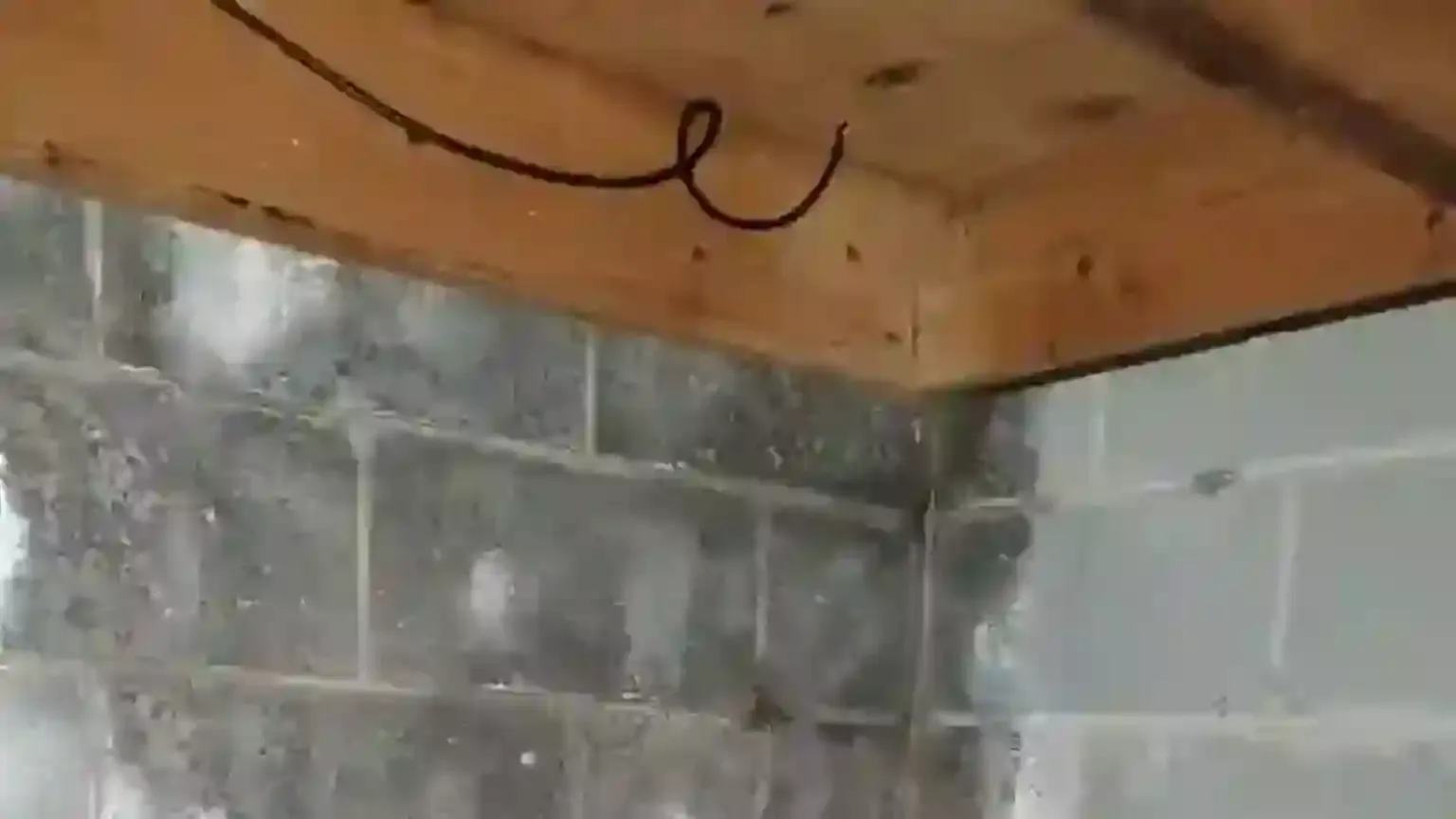
Now, that cove joint. It’s the seam where your basement wall meets the floor slab, and it’s the single most common water entry point in a Georgia home. Two pieces of concrete poured at different times never truly bond, which leaves a hairline gap running the whole way around your basement. Pressure finds it. Every time.
So what’s the difference between a patch and a fix?
This is where most of the money in our industry gets wasted, so let’s be blunt. A patch tries to block water. A fix gives water a path. Those ideas sound similar, but they behave nothing alike after the third spring storm. In fact, nearly every wet basement Peachtree Corners repair we get called back to redo was somebody’s patch first.
Take hydraulic cement troweled into a crack. It’s a good product, and it holds for a while. But the pressure outside never stops, so eventually water goes around the patch and comes in a foot to the left. Then you’re standing there with the same wet floor and one more receipt.
Twenty years in, the thing that changed how we work is simple: stop fighting water at the wall, and start collecting it under the floor.
Waterproof paint has the same problem. It’s a coating, and a coating can’t beat pressure — it’s a raincoat on a submarine. Paint is fine for looks on a dry wall. Still, it isn’t a repair, and anybody selling it as one is selling you a nice feeling.
A real fix assumes water is going to arrive, so instead of arguing with it, we build an easier route out. That’s also why we can put a warranty in writing. You can’t honestly warranty a coating, but you can warranty a system built around how groundwater behaves. For a neutral explanation of where that water sits before it reaches you, the U.S. Geological Survey’s groundwater basics is a clear read.
What does the repair actually involve?
Fair to want the whole picture before anybody shows up with a jackhammer. Most interior systems follow the same shape, so here’s the honest version.
- Find the source first. We walk the outside — grading, downspouts, where roof water lands. Then the inside. Often the real answer is smaller than feared, and we say so.
- Open a channel at the perimeter. A narrow strip of slab comes up along the affected walls. It’s loud and dusty for a day or two, then it’s over.
- Set drainage below the floor. Perforated pipe in clean stone, placed under slab level, so water gets caught before it reaches your floor.
- Route everything to a sump. The pump carries water well away from the house, not right back beside the foundation for a second try.
- Close it up clean. Fresh concrete over the channel, wall liner where needed, and our mess hauled away. Debris in your driveway isn’t a finish.
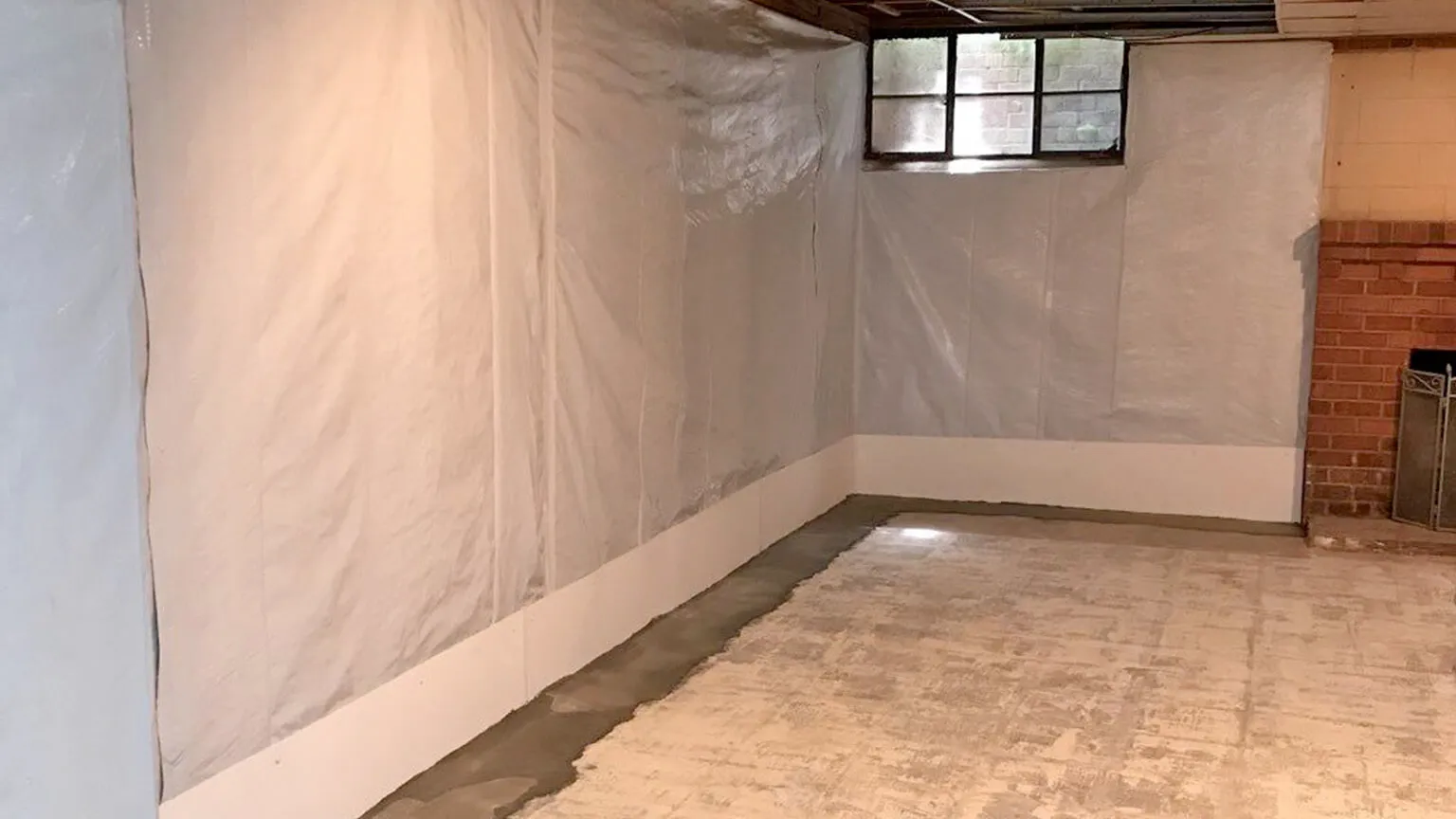
Cost follows scope, and scope follows how much wall is involved plus how hard it is to reach. One wall in an open basement sits at the low end. A full perimeter with a new sump and battery backup in a finished basement sits at the high end. We break the real numbers down in our guide to waterproofing cost, and you can see the full range of basement waterproofing systems we install as well.
One caveat for the oldest streets in town. Some houses over near Simpson Elementary sit on crawl spaces rather than full basements, and torn or missing vapor barriers are common on those. In that case crawl encapsulation is usually the better answer, and it’s a very different price tag.
What happened at a house off Spalding Drive?
Here’s one that stuck with us. A homeowner over in Peachtree Station called in April, right after a stretch of spring storms. Original owner, 1970s block basement, and a wet line along the back wall that had been showing up every wet season for close to eight years.

He’d already tried two patches and a bucket of sealer. Because the sealer looked convincing on day one, he assumed it was solved. Then October came, and so did the water.
The cause turned out to be ordinary. Roof water from a clogged downspout had been dumping into one flower bed for years, the original drain tile was silted shut, and the cove joint on that back wall was doing exactly what cove joints do. So we cleared the outside first, then ran interior drainage along two walls and set a sump with a backup pump. Three days, start to finish.
His floor stayed dry through the next spring, and the smell at the stairs was gone within a month. Better yet, he moved his workshop back down there. That’s the part we care about — not the pipe, but the room he stopped apologizing for.
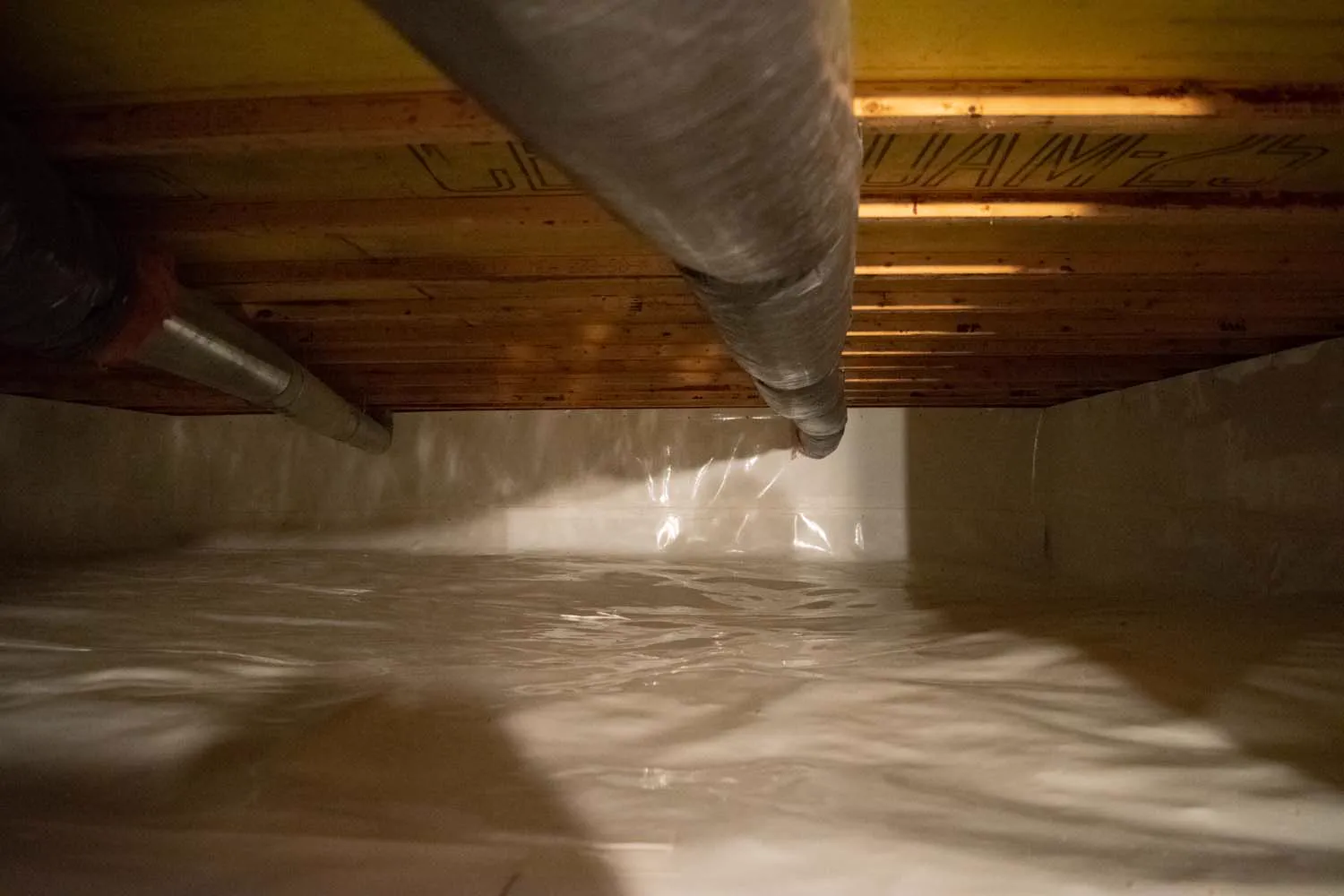
That’s what solving a wet basement Peachtree Corners families live with really buys. The forecast turns ugly, and you don’t think about it. Storage you trust, plus one less thing sitting in the back of your mind.
Why does hiring local matter here?
Because these neighborhoods aren’t interchangeable. We know the 1970s block walls in the older sections, and we know the newer construction around Town Center at Peachtree Corners behaves differently. Out along the Dunwoody Club Forest edge, the lots slope hard enough that grading alone sometimes solves half the problem, so we check that before quoting anything bigger.
That history matters for a boring reason: a warranty is only as good as the company behind it. If year six brings a question, you’re calling the same crew that did the work. For a neutral read on moisture, the EPA’s guide to moisture control is worth ten minutes. And if family one town over has the same symptoms, we cover the Dunwoody wet basement situation too.
Where we work around Peachtree Corners
We’re based in Lawrenceville, roughly twenty minutes northeast, so we’re down this way constantly. That includes Peachtree Corners, Norcross, Duluth, Johns Creek, Dunwoody, Berkeley Lake and Sandy Springs, plus Suwanee, Lilburn, Snellville and the wider Gwinnett area. If you’re anywhere near Technology Park or the Peachtree Parkway corridor, odds are we’ve already got a truck close by.
Questions we hear around town
It helps in two ways. A documented, warrantied system removes a moisture finding that buyers and inspectors flag, which keeps negotiations simple. It also turns unusable square footage into space you can finish, and finished lower levels are worth real money here.
Usually within a few days, and often sooner outside of storm season. Live support runs 7 a.m. to 8 p.m., seven days a week, so you can reach a person rather than a voicemail box. If you’re on a closing deadline, say so and we’ll work around it.
It depends on how much wall is involved and how easy it is to reach. Small drainage corrections sit at the low end, while a full perimeter system with a sump and backup pump sits at the high end. After we walk the house you get a written number with the scope spelled out, not a vague range.
Most interior systems run one to three days. Bigger perimeters, structural repairs or a finished basement that needs careful demo can stretch it a little. We give you the timeline in writing up front so you can plan around the noise.
Just the edges. We need about four feet of open space along the walls we’re working on, so shelves and boxes move toward the middle. The room stays furnished otherwise, and we’ll help with the heavy things.
Let’s find out what’s really going on down there
The inspection is free, the estimate is free, and nobody pressures you at the end of it. We’ll show you where water is entering your Peachtree Corners home and what it takes to stop it — even when the honest answer is a smaller job than you expected.
(678) 914-5112Serving Peachtree Corners and all of Metro Atlanta · $500 off projects over $3,500 · Live support 7am–8pm, 7 days a week