

Wet Basement in Duluth: What’s Causing It and How It Gets Fixed
A walk-through of what we look at, what the stains actually mean, and how to tell a small problem from a real one.
Let us take you on the tour. When we get called out for a wet basement Duluth homeowners have been staring at for weeks, the inspection starts before we even reach the bottom step. We stop halfway down and just breathe. Air tells you a lot, and so does the handrail.
Then we check the stair stringers where they meet the slab, because wood remembers water long after the floor has dried. After that, we work the room clockwise. By the end of this page you’ll be able to do a rough version of that same walk yourself — and honestly, that’s the point. You should understand your own house.
So what are we actually looking for?
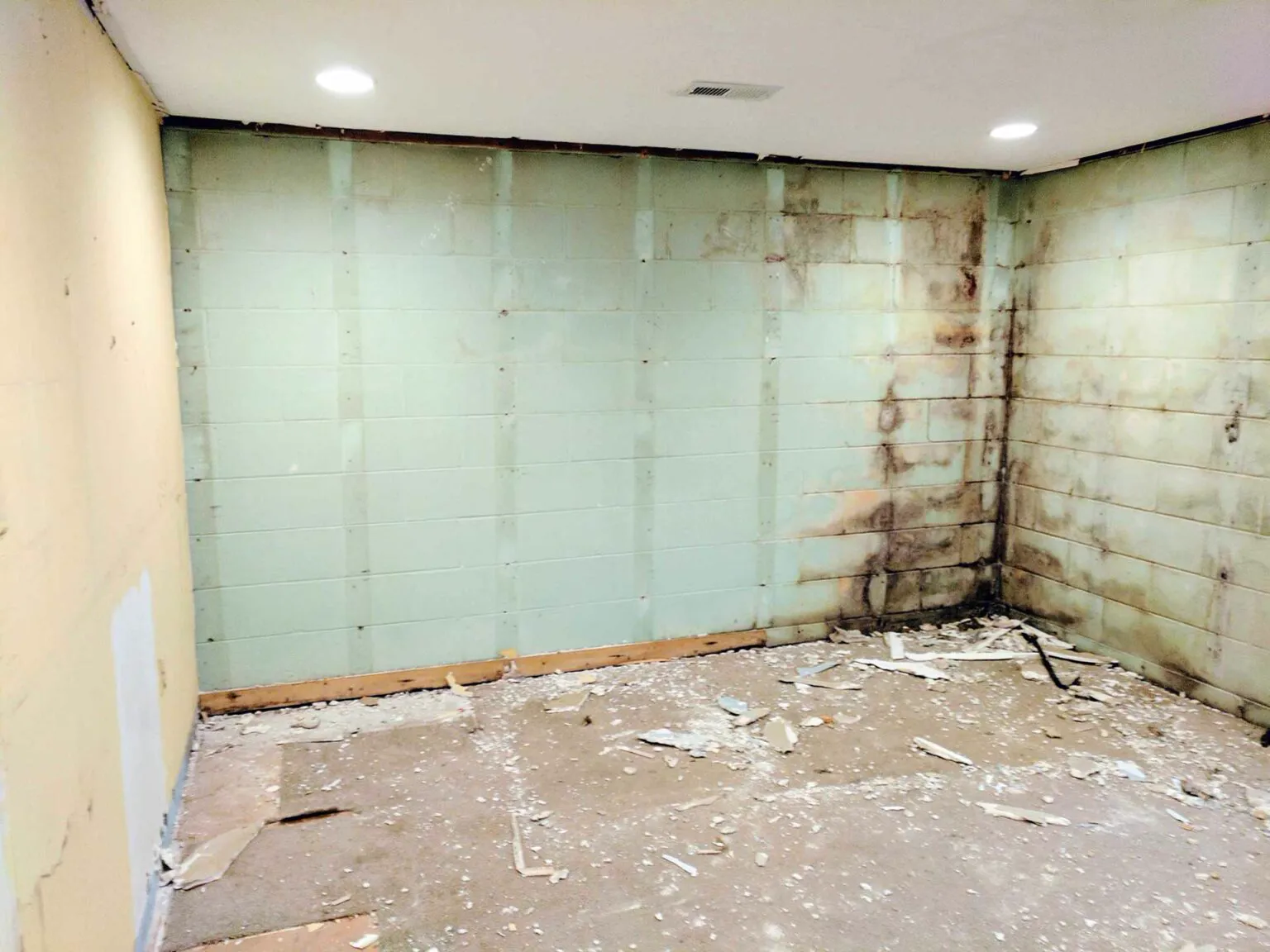
Six things, mostly. None of them are dramatic, and all of them are easy to spot once somebody points them out.
- The cove joint. That’s the seam where the wall meets the floor. It’s the number one entry point in Gwinnett homes, and it almost never looks like a hole.
- Chalky white bloom on the block. Mineral salts, left behind after water passed through. More on that in a second.
- A tide line on stored boxes. Cardboard is a great record keeper. It shows you how high the water got.
- Rust at the bottom of appliance legs. Water heaters and shelving posts rust from the floor up, never from the top down.
- Smell. Musty air means moisture is present right now, not last spring.
- The outside. Grading, downspouts, and where roof water lands. Roughly a third of the time, the story ends out there.
Notice that we didn’t say “puddle.” A slab can pull in plenty of moisture without ever forming one, which is why the smell usually shows up before the mess does. Your nose is a decent inspector.
What’s really causing it?
Here’s the thing: water isn’t attacking your house. It’s just heavy, and it’s looking for the easiest way down. Right now the easiest way happens to run through your basement.
Georgia red clay is the reason. Clay soaks up rain and swells, and once it’s saturated it presses on your foundation walls with real force. That force has a name — hydrostatic pressure — and a basement wall can face thousands of pounds of it after a long wet week. Concrete looks solid, but it’s porous, so that pressure pushes moisture straight through walls that don’t have a single crack in them. If you want the science without the sales pitch, the U.S. Geological Survey’s groundwater basics explains how water moves underground.
Good news, though: pressure is predictable, and predictable problems have reliable fixes. Once you know water arrives at the cove joint under pressure, the answer stops being “seal it” and becomes “give it somewhere better to go.”
Good news
A damp basement and a failing foundation are two different conversations. Most Duluth homes we look at are only in the first one. We’ll tell you plainly which one you’re in, and we’ll show you why we think so.
The Duluth wrinkle nobody mentions
Duluth basements are working basements. Out toward Abbotts Bridge and along the Berkeley Lake edge, that lower level is an in-law suite, a home office, a place where kids are loud on a Saturday. So when one gets damp here, it isn’t storage getting wet. It’s somebody’s bedroom.
There’s a timing pattern here too. Plenty of subdivisions between Pleasant Hill Road and the Chattahoochee went up in the 1990s, and the original exterior drainage on those homes has quietly silted up since. It didn’t fail. It filled. Meanwhile the older houses near the Parsons Alley district often sit on crawl spaces instead, which is a different job entirely.
Is it mild or is it serious?
Fair question, and you deserve a straight scale rather than a scare. Nearly every wet basement Duluth homeowners call us about lands in one of these four spots.
Reading your own basement
- Mild: a faint musty smell, a little efflorescence, one damp corner after heavy rain. Often solved outside with grading and downspout work.
- Medium: water tracks along the wall-floor seam after most storms, and the carpet pad stays damp for days. This is the classic interior drainage job.
- Worth handling soon: water shows up without rain, or it appears in several walls at once. That usually points to groundwater rather than roof runoff.
- Different conversation: stair-step cracks in block, a wall that bows, doors that stick upstairs. Structure comes first, water second.
And what if you leave it? Moisture just keeps doing slow, boring damage — trim swells, flooring lifts, and the room stops being usable. Not only that, the scope tends to grow, since finished space costs more to work around. So there’s no emergency here, just a good reason not to sit on it for three more years.
What happens after the crew leaves?
Everybody asks about the install. Almost nobody asks about week two — and week two is where you find out whether you hired well.
First, the concrete over the new channel cures. It’ll look slightly different from the old slab for a while, which is normal and fades. Then comes the first real storm, and that’s your moment. Walk the perimeter, listen for the pump cycling, and watch the floor stay dry. That first dry storm is when the whole thing stops being a project and starts being peace of mind.
After that, maintenance is genuinely small. Test the pump once or twice a year by pouring a bucket into the basin, and keep the discharge line clear — especially in November, when leaf drop clogs everything in this county. Plus, keep your gutters honest. That’s about it: no filters, no chemicals, no service plan.
We stopped trying to block water years ago and started routing it instead. Water always wins a blocking fight. It has never once beaten a better path.
The other thing that happens after the crew leaves is the smell. Or rather, the smell leaves too. Homeowners mention that more than anything else — they come down a month later and the air is just ordinary air. Then the boxes come off the shelves and somebody starts pricing flooring.

What the fix actually involves
Here’s the short version. We open a narrow strip of slab along the affected walls, set perforated pipe in clean stone below floor level, route it all to a sump, and pump it well away from the house. Wall liner goes on where it’s needed, fresh concrete closes the channel, and we haul our mess out. Most jobs run a day or two.
What you won’t see on that list is paint. Waterproof coatings are fine products for damp-proofing, but a coating can’t beat pressure — it’s a raincoat on a submarine. If you want the full breakdown of systems and options, our basement waterproofing page lays it out, and the waterproofing cost guide covers what moves the number.
Ever have it turn out to be something else?
All the time, and one from last spring sticks with us. A homeowner near McDaniel Farm Park called about a wet wall in a finished basement bedroom. He was sure the foundation had cracked, since water showed up in the same spot every heavy rain.
We ran the tour. No efflorescence on the block, no tide line on the storage, and the cove joint was dry all the way around — which didn’t fit at all. So we went outside. A downspout on that corner fed a buried line, and that line had collapsed under the driveway apron. Every storm, half a roof was dumping into one square yard of clay against the wall.
The fix wasn’t a drainage system. It was reworking that discharge and correcting the grade, which cost a fraction of what he’d braced for. In other words, the story in his head was bigger than the actual problem — and that happens more often than you’d think.
That’s why we won’t price a wet basement Duluth call over the phone. Sight unseen, we’d be guessing, and you’d be paying for the guess. Sometimes the honest answer is a smaller invoice, and we’d rather say so.
Why local knowledge matters here
Because Duluth isn’t one market, it’s several. A walkout basement on rolling golf-course terrain behaves nothing like a 1980s block basement in the older streets near the Southeastern Railway Museum. Sandy river-bottom pockets near the Chattahoochee drain fast, while red clay a mile away holds water for days.
Weather matters too. Spring storms and late-summer tropical remnants drive most of our calls, and you can track what’s coming through the National Weather Service office in Peachtree City. Even so, the homes that stay dry aren’t the lucky ones. They’re the ones where somebody handled the water on purpose.

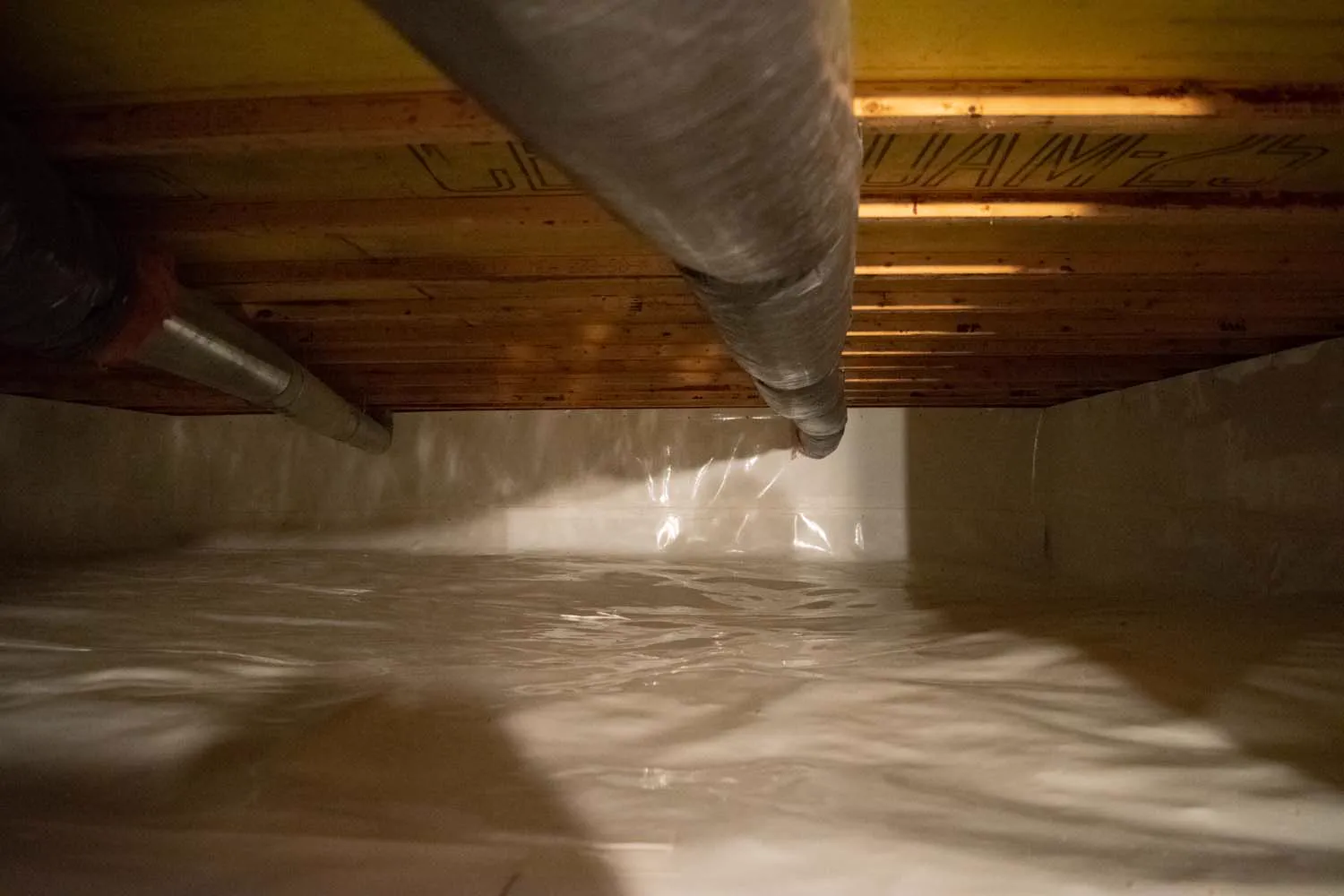
Comparing notes with family one exit up? We cover the same ground for a Suwanee wet basement. And if your lower level is a crawl space rather than a full basement, crawl space encapsulation is usually the better path.
Where we work around Duluth
We’re based in Lawrenceville, about fifteen minutes from most of Duluth. Along with Duluth, we work in Johns Creek, Suwanee, Berkeley Lake, Peachtree Corners, Norcross, Lawrenceville, Sugar Hill, Buford and Lilburn, plus the rest of Gwinnett County. If you’re along the Peachtree Industrial corridor, odds are we’ve got a truck nearby already.
Questions Duluth homeowners ask us
Yes, and you get it in writing before any work starts. Ask us to read it out loud with you, because a warranty you can’t explain in one sentence isn’t worth much. It also helps that we’re local, so the people who did the work are the people you’d call.
Usually, yes. We open the bottom of the wall along the affected side and put it back when we’re done, so the room stays a room. It costs a bit more than working in an open basement because of the careful prep, but you’re not gutting anything.
A dry, documented basement helps in two ways. It removes a problem buyers ask about during inspection, and it makes the lower level count as real living space. That second part matters a lot in Duluth, where basements often hold an in-law suite or an office.
Usually within a few days, and faster if water is actively coming in. We answer the phone from 7 in the morning until 8 at night, seven days a week. The inspection and the estimate are both free, with no pressure at the end.
It depends on how much wall is involved, how hard it is to reach, and whether you need a sump. A small drainage correction outside sits at the low end, while a full perimeter system in a finished basement sits at the high end. After we walk it, you get one written number with the scope spelled out.
Let’s find out what’s really going on down there
We’ll walk your Duluth basement the same way we described above, show you what each sign means, and tell you plainly what it would take to fix it. Free inspection, free estimate, and no pressure — even if the answer turns out to be simpler than you expected.
(678) 914-5112Serving Duluth and all of Metro Atlanta · $500 off projects over $3,500 · Live support 7am–8pm, 7 days a week