

Wet Basement in Cumming: What’s Causing It and How It Gets Fixed
Start at the finish line — a dry floor, clean air, a room you use — then work backward to how you get there.
Picture the end of this first. The floor is dry after a hard spring storm, the air smells like nothing at all, and the corner you’ve been keeping an eye on is just a corner again. That’s the ending for a wet basement Cumming homeowners have been living around, and it’s a lot closer than it feels right now. So let’s walk backward from that dry floor and find out how you get there.
You’ve probably noticed one or two things already. Maybe a damp stripe along the bottom of a wall, or a musty smell that shows up when it rains and fades when it doesn’t. Good news? Those are early signals, and early is the cheap end of this problem. Your basement just shouldn’t have opinions about the weather.
Where is the water actually getting in?
Here’s the thing most people get wrong: they go looking for a hole. They scan the walls, find a hairline crack, and decide that’s the villain. But water rarely needs a crack at all, and the real entry point is usually somewhere nobody thinks to look.
Look at the line where your basement wall meets the floor slab. That seam has a name — the cove joint — and it’s the single most common water entry point in a Georgia home. The wall and the floor are poured at different times, so they never truly become one piece. As a result, that joint stays a joint forever, and water under pressure treats it like an open door.
What creates that pressure? Red clay, mostly. Clay soaks up rain, swells, and then leans on your foundation walls with real force. Engineers call it hydrostatic pressure, and it’s strong enough to push water through solid concrete without any crack involved. Concrete looks sealed, but it’s actually a bit like a hard sponge, so moisture wicks straight through it.
Around here, the ground makes that worse in a specific way. Lots on the slopes near the Sawnee Mountain area take runoff from uphill neighbors, which means your foundation is handling your rain plus somebody else’s. Even a gentle grade change stacks up over a season. If you want the plain-science version of how water moves underground, the U.S. Geological Survey’s groundwater basics explains it well without the jargon.
Good news
A wet basement and a failing foundation are two different conversations. Most of the homes we look at only need the first one, and we’ll tell you plainly which one you’re in before you spend a dollar.
Is mine mild, or is it the serious kind?
Fair question, and you can get pretty close on your own. Mild usually looks like this: a damp patch that appears during heavy rain and dries out within a couple of days, a chalky white bloom on block, or air that feels heavier downstairs than upstairs. That’s water arriving slowly, and slow is workable.
The bigger version looks different. Standing water after a storm, a stain line that keeps climbing higher each season, wood trim that stays soft, or a sump pump running like it’s training for a marathon — those all point to volume, not seepage. Neither one is an emergency. But the second one does mean the water has a real path, and finding that path is the whole job.
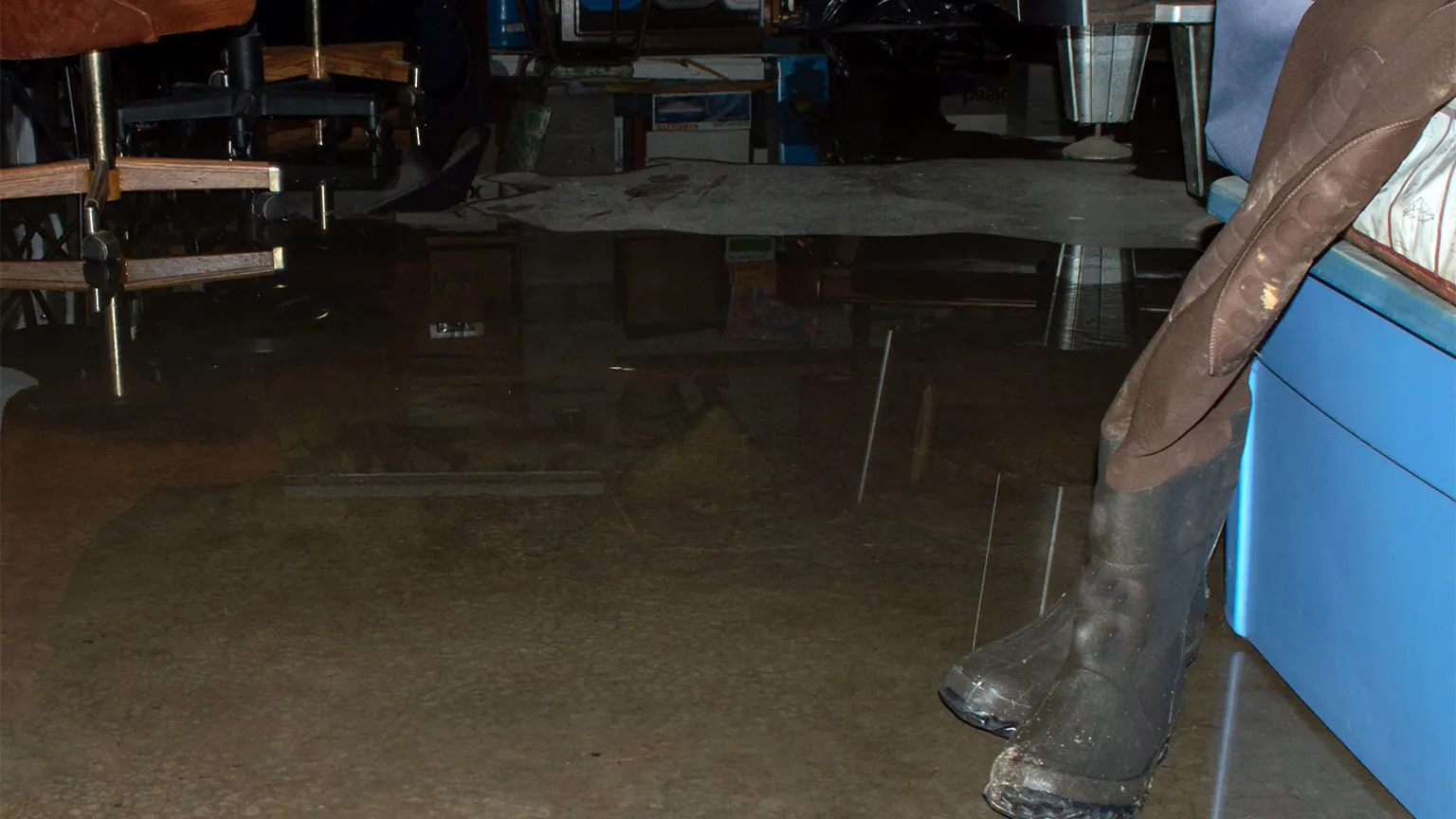
What happens if it’s left alone? Honestly, nothing dramatic in month one. Over years, though, the pattern is consistent: moisture keeps the air damp, damp air feeds musty smells and mold, stored belongings take the hit, and finished walls eventually need replacing. That’s why we’d rather look early. Small problems stay small when somebody’s watching them.
Now for the part that surprises people most in this county. A lot of Cumming homeowners are shocked to find water in a house that still feels new. Yet twenty years is exactly when builder-grade waterproofing starts to give up — the exterior coating ages, the backfill settles, and the original sump reaches the end of its life. Homes all through the Lambert district neighborhoods were built in that window, so they’re hitting this stage together, right on schedule.
Why can two estimates be thousands of dollars apart?
This next part is the reason you can get two quotes for the same basement and they don’t even look like the same job. It isn’t markup, and it usually isn’t greed. It’s that the two companies decided to solve different problems.
One estimate might cover sealing a crack and painting the wall. The other covers finding the source, cutting a channel, installing drainage below the slab, and routing everything to a pump. Same symptom, completely different scope. So the cheaper number isn’t a better deal — it’s a smaller promise, and you’ll find that out during the next big rain.
What actually moves the number on a real quote
- How much wall is involved. One wet corner is a very different job than a full perimeter. This drives the price more than anything else.
- What’s in the way. An open basement is straightforward. A finished one with a bar, built-ins and a bathroom means careful work before the real work starts.
- Whether you need a sump. Some homes have a basin that’s still healthy. Plenty of others have one that came with the house and is living on borrowed time.
- What’s happening outside. Sometimes regrading and moving downspouts handles most of it. That’s a smaller invoice, and we’ll say so out loud.
- Wall condition. If a wall is cracked or moving, that gets addressed first. Waterproofing over a shifting wall is money spent twice.
- Backup power. A battery backup costs more. It also runs during the storm that knocks the power out, which is the exact storm that floods basements.
Ranges are honest; flat phone quotes aren’t. A small drainage correction sits at the low end, while a full perimeter system with a new pump in a finished basement sits at the high end. Most jobs land between those two, and after we walk your house you get a written number with the scope spelled out. If you want the deeper breakdown, our page on waterproofing cost goes line by line.
So what does the fix actually look like?
Simpler than most people expect, and it’s over faster too. The whole idea behind an interior system is that we stop trying to block water and start giving it an easier path than the one through your floor. Water is lazy. Offer it a better route and it takes it.
- Find the source first. We walk the outside — grade, gutters, downspouts, where runoff lands — then walk the inside. A fair share of the time the real fix is smaller than the homeowner expected.
- Open a channel at the perimeter. A narrow strip of slab comes up along the affected walls. It’s loud and dusty, but it’s usually done in a day or two.
- Set drainage below the floor. Perforated pipe in clean stone, placed lower than the slab, so water gets collected before it reaches you instead of after.
- Route it all to a sump. The pump then sends water well away from the house, not right beside the foundation where it would just circle back for another try.
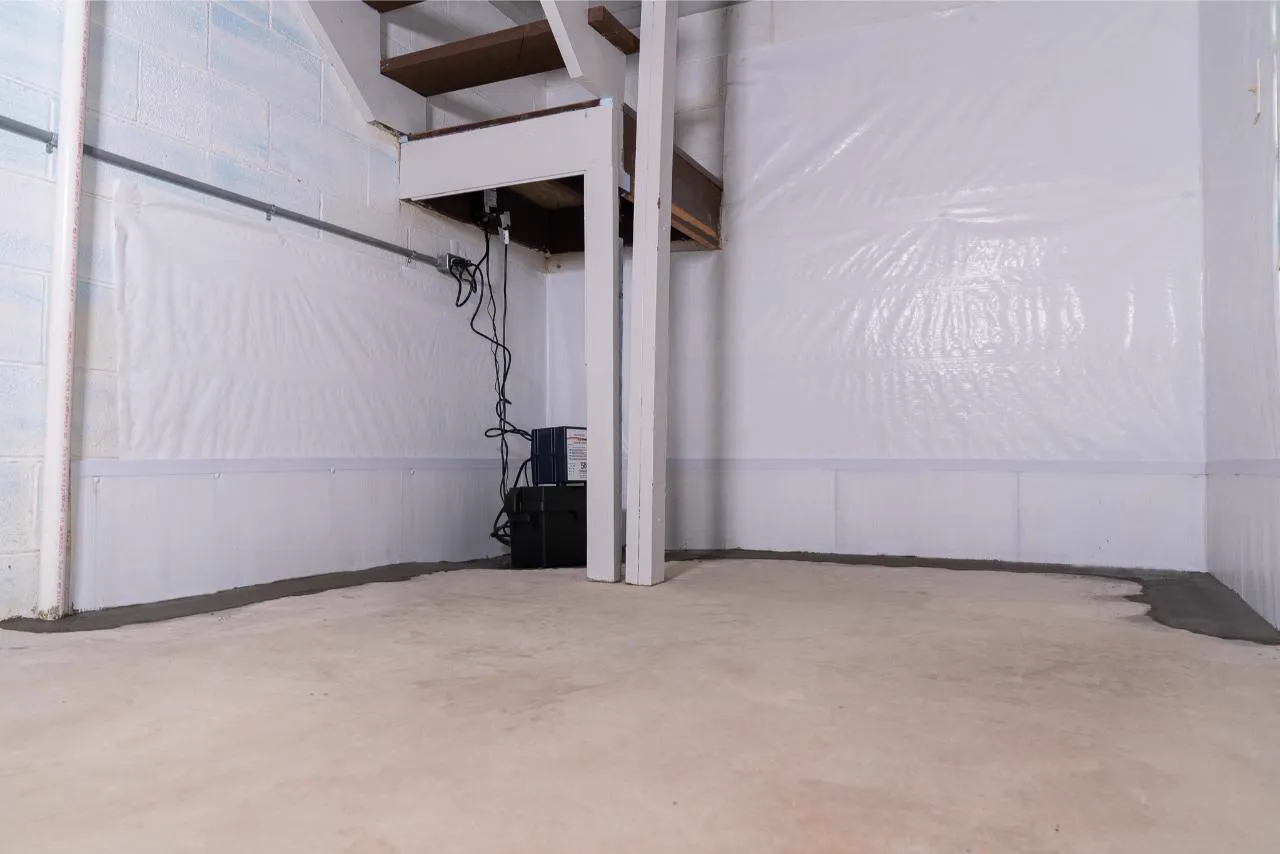
- Close it up clean. Fresh concrete over the channel, wall liner where it belongs, and our mess hauled away — because leaving it in your driveway isn’t a finish.
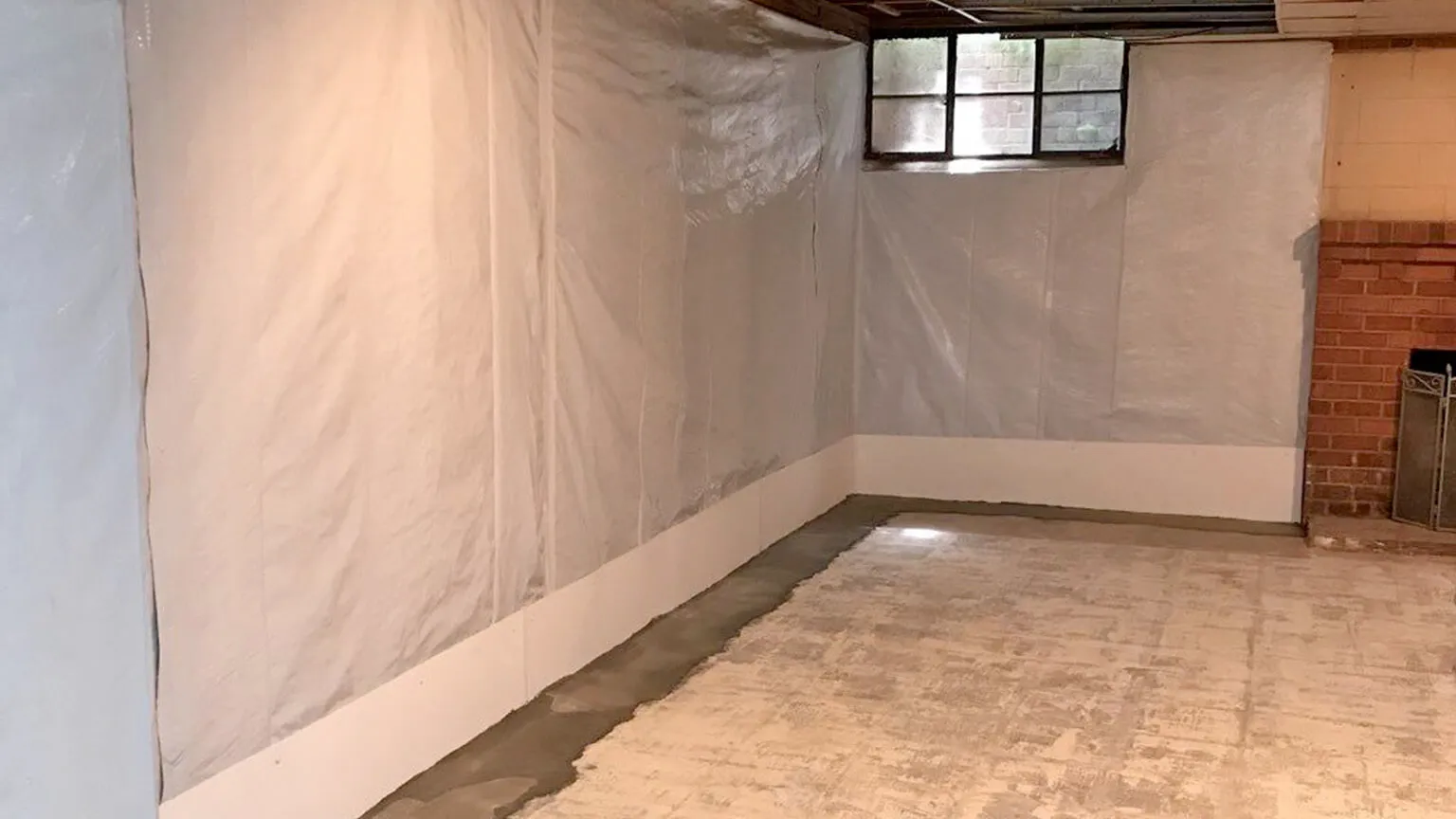
Twenty years in, here’s what changed our thinking: we quit fighting water at the wall and started routing it under the floor instead.
That’s also why we’re comfortable putting a warranty in writing. You can’t honestly warranty a coating, since every coating ages and the pressure behind it never quits. A system built around how water behaves is a different thing entirely. Curious how we build them? The full rundown lives on our basement waterproofing page.
What about the rooms upstairs?
Here’s the part almost nobody connects to a damp basement corner: the rest of the house is downwind of it. Air in a home moves upward — warm air rises and leaves, and replacement air gets pulled from the lowest level. Which means the air in your bedroom started its day in your basement.
So a damp foundation doesn’t stay a basement issue. It shows up as a musty smell in the hall closet, as hardwood that cups a little in humid months, as an HVAC system running longer because damp air is harder to cool. Some folks even blame allergy season for something that’s really just moisture moving through the house. Your nose was right the whole time.
Good news, though: fix the source and the whole stack settles down. Dry air downstairs means dry air upstairs, so the smell goes, the floors calm down, and the system stops working overtime. Homeowners tell us the surprise wasn’t the dry floor — it was the house feeling lighter.
And that’s the feeling we’re really after. Not just a dry slab, but the sense that your house is looked after and your family is too. The next time the forecast turns ugly over Central Park and the fields at Fowler Park, you get to not think about it. That’s the actual product. A storm you’re allowed to ignore.
Why hire somebody who works this county?
Because water behaves differently a few miles apart, and we’ve seen both versions. Newer homes in the Cumming City Center district sit on backfill that’s still settling, which pulls grade back toward the foundation. Older lots off GA-20 out toward Canton Highway have decades-old drainage that quietly stopped working. Storms here are their own factor as well — the National Weather Service office in Peachtree City covers our whole area, and spring rain totals are the reason our phone rings.
That history matters for a boring but real reason: a warranty is only as strong as the company behind it. If something needs a look in year seven, you’re calling the same crews who did the work. Same trucks, same county, same people.
Comparing notes with family closer to town? We cover the same ground for a Decatur wet basement. And if your house sits over a crawl space instead of a full basement, crawl space encapsulation is usually the better answer.
Where we work around Cumming
We’re based in Lawrenceville, about thirty minutes south, so Forsyth County is an easy run for our crews. Along with Cumming, we work in Alpharetta, Milton, Suwanee, Buford, Gainesville and Dawsonville, plus Johns Creek, Duluth, Sugar Hill and the wider Forsyth area. If you’re anywhere near Sawnee Mountain or south toward the county line, there’s a good chance we’ve already worked on a street near yours.
Questions Cumming homeowners ask us
Just the perimeter, not the whole room. We need about four feet of clear space along the walls we’re working on, so shelves and boxes slide toward the middle. We’ll help you move the heavy things.
Sometimes, but they’re really two separate jobs. Drainage handles the water, while a crack that’s still moving needs its own repair first. Sealing a wall that’s shifting only buys you a season, so we check for movement during the inspection and tell you which situation you’re in.
Neither one wins automatically — it depends on where water enters and what’s sitting on the soil outside. Exterior work stops water before it touches the foundation, but it means digging, and a deck or patio changes the math fast. Interior drainage is less disruptive, and it’s the right call on most Forsyth County basements.
The drainage is built to last the life of the house, since it’s stone and pipe under the slab with nothing to wear out. The pump is the part with a service life. Plan on replacing one somewhere around the ten-year mark, the same way you’d plan for a water heater.
Yes, and you get it in writing before the work starts rather than after. Ask us to walk through exactly what’s covered and for how long. A warranty nobody can explain in one sentence isn’t doing you much good.
Let’s find out what’s really going on down there, Cumming
The inspection is free, the estimate is free, and nobody pressures you at the end of it. We’ll show you where water is coming in and what it would take to stop it — even if the answer turns out to be smaller than you feared.
(678) 914-5112Serving Cumming and all of Metro Atlanta · $500 off projects over $3,500 · Live support 7am–8pm, 7 days a week