

Waterproofing Options Decatur Homeowners Choose Between: Inside or Outside?
An honest side-by-side of interior drainage and exterior excavation on a hundred-year-old house — and a real recommendation at the end.
It’s two in the morning and the rain is loud enough to wake you up. You lie there listening to it hit the roof, and one thought shows up uninvited: the basement. Most people who start comparing waterproofing options Decatur contractors offer got here the exact same way — not from a flooded floor, but from a storm and a bad feeling.
Good news: the choice in front of you is smaller than it looks. There are really two families of fix, and once you know how each behaves, picking gets simple. So let’s lay both out fairly, then we’ll tell you which one we’d recommend.
Option A: how does an interior drainage system work?
An interior system doesn’t try to stop water at the wall. Instead, it catches water under the floor and carries it off before it reaches your living space. Think of it as a gutter that lives below the slab.
The crew opens a narrow channel in the slab along the walls that leak. Perforated pipe goes in, packed in clean stone, set lower than your floor. Everything routes to a sump, and the pump sends water well away from the house. Then the channel closes back up with fresh concrete.

Why do so many old houses end up here? Because an interior system doesn’t care what your foundation is made of. Stone, brick, hand-laid block, a dirt-floor cellar that predates poured walls entirely — the drainage sits below all of it and works the same way. That matters a lot around here, since a Decatur bungalow was built before basement waterproofing existed as a trade.
Worth knowing
Concrete is porous. Water moves through solid, uncracked concrete by capillary action, which is why a wall can be wet without a single crack in it. If you’ve hunted for the crack and can’t find one, you’re not missing anything.
Option B: what does exterior waterproofing involve?
Exterior work goes after water earlier, before it ever touches the foundation. Soil gets excavated to the footing, the wall gets cleaned and coated with a membrane, and a footing drain goes in at the base. Then the trench is backfilled and the grading gets corrected.
On paper it’s the more thorough approach, and we’ll say that plainly. Water never reaches the wall, so the wall never has to fight. For a foundation with tired mortar joints, that’s genuinely valuable.
But exterior work is also the more disruptive one, and on Decatur lots that disruption is real. Mature oaks and poplars sit right against a lot of these houses, and their root systems are enormous. Setbacks are tight in Winnona Park and around the MAK Historic District, and a machine has to physically fit between the house and the property line. Sometimes there’s simply no path in — and no amount of wanting it changes that.
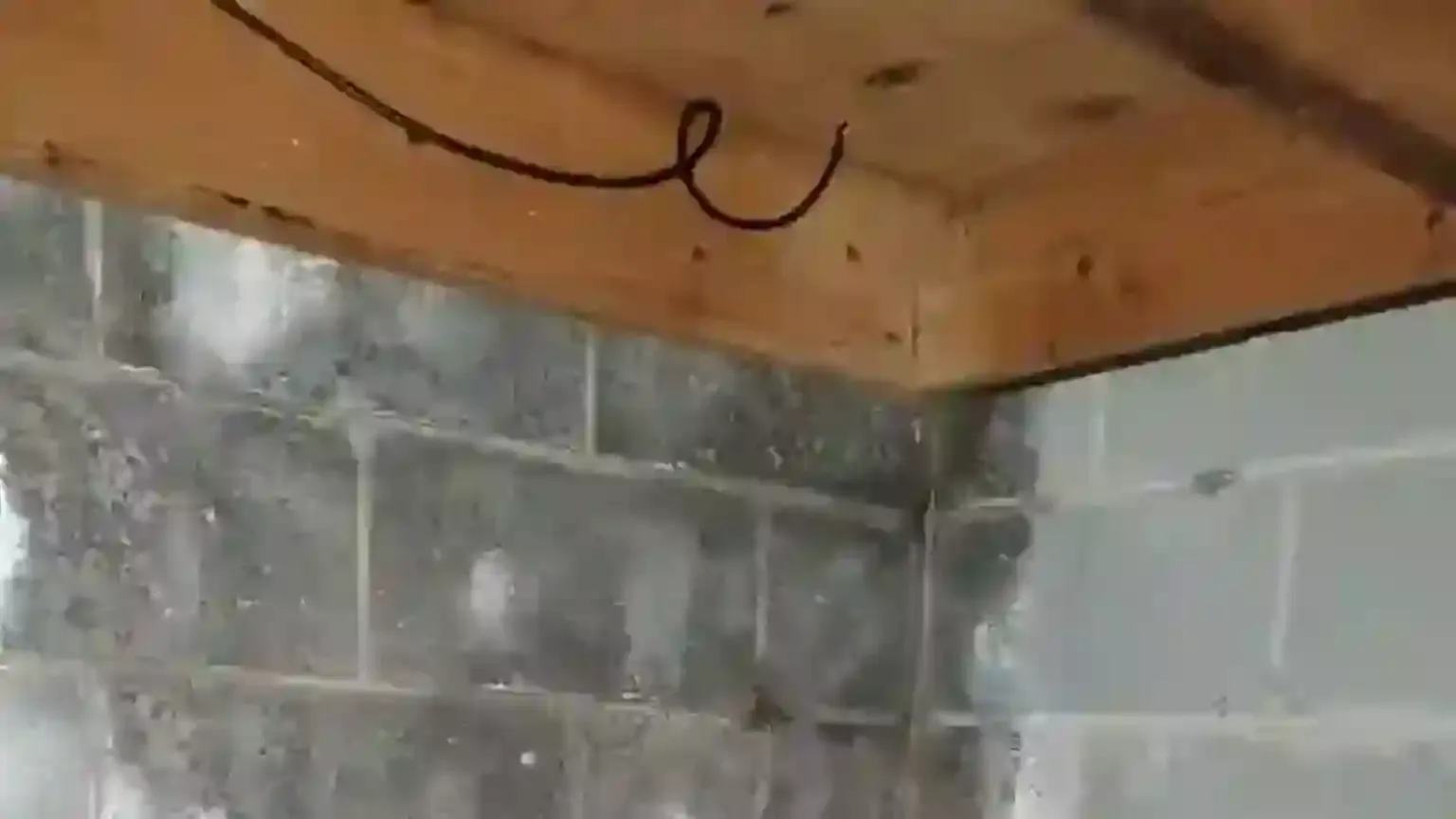
The myth we hear on almost every estimate
Somewhere between the first call and the walkthrough, most homeowners have read a version of this line: exterior waterproofing is the real fix, and interior drainage is the cheap shortcut people settle for. We hear it constantly, usually from someone who did their homework — and we appreciate that they did.
Here’s the thing, though. That framing compares the two systems as if they’re trying to do the same job, and they aren’t. Exterior work manages water in the soil. Interior work manages water that has already arrived at the foundation. One is prevention, one is collection, and a house can absolutely need the second without failing at the first.
We stopped trying to block water and started trying to route it. Water always wins the blocking fight eventually, because the pressure never stops and the coating always ages.
Twenty years in, that shift is the biggest thing that changed how we work. A membrane is a fine product, but it ages, and it’s buried under eight feet of clay where nobody can check on it. Below-slab drainage is stone and pipe, so there’s nothing to wear out.
So no, interior drainage isn’t the discount version. On a century-old foundation it’s very often the smarter version, and the reason has nothing to do with price.
Side by side, honestly
Enough theory. Here’s how the two compare when we’re standing in your basement with a flashlight.
Interior drainage
- Work happens indoors, so weather never delays it
- Landscaping, patios and trees stay untouched
- Typically finished in one to three days
- Works on stone, brick, block or poured walls alike
- Includes a pump, which needs service over time
- Handles water already at the footing, plus rising groundwater
Exterior waterproofing
- Stops water before it reaches the wall at all
- Requires excavating to the footing all the way around
- A longer job, and rain pauses it
- Costs more, mostly for digging and restoration
- Often impossible where roots or tight setbacks block access
- Also fixes grading and the mortar face while the wall is open
Notice that neither column says “better.” Because on a given house, one of these is usually obvious once you’ve seen the lot — and the other one is a conversation we can skip entirely.
What actually decides it on a Decatur house?
Four things, more or less. They come up on nearly every inspection we run within a mile of Decatur Square.
The deciding factors
- Can equipment get there? A hundred-year-old canopy and a narrow side yard often answer this before we do.
- Where’s the water entering? Wall-face seepage points outside. Water at the floor seam points inside.
- What shape is the mortar in? Crumbling joints on a stone wall may need attention on the exterior face regardless.
- What’s already been done? Renovated basements where moisture got covered up instead of solved change the plan quickly.
That last one deserves a moment. Plenty of homes in Great Lakes and off Scott Boulevard got beautiful basement finishes over the years, and behind the drywall somebody sprayed a sealer and called it handled. Then the smell comes back — not because anyone was careless, but because a coating was asked to do a drain’s job.
The good news? We can usually work in sections and save most of the finished space. A homeowner near Agnes Scott College was braced for losing a whole wall of built-ins, and we opened about four feet of perimeter instead. Relief is the right word for how that call ended.
So which one do we recommend?
Of the waterproofing options Decatur homes typically qualify for, we recommend interior drainage first — paired with exterior corrections that don’t require excavation, like downspout extensions, regrading, and clearing the drains that fall leaf drop buries every year.
We recommend full exterior work when the lot allows it and the wall itself is deteriorating, or when you’re already digging for another reason. Given clean machine access and active mortar loss, going outside is worth it. Otherwise you’re paying a premium to remove trees, which is hard to feel good about here.
Sometimes we tell people they don’t need either one. If water only shows up in heavy storms and the gutters are packed solid, start there. A morning of gutter work has solved more basements than anyone wants to admit, and we’ll say so even though it’s a smaller invoice. Curious how the same call goes one county over? Our breakdown of Lawrenceville waterproofing options covers newer construction, where the math shifts.
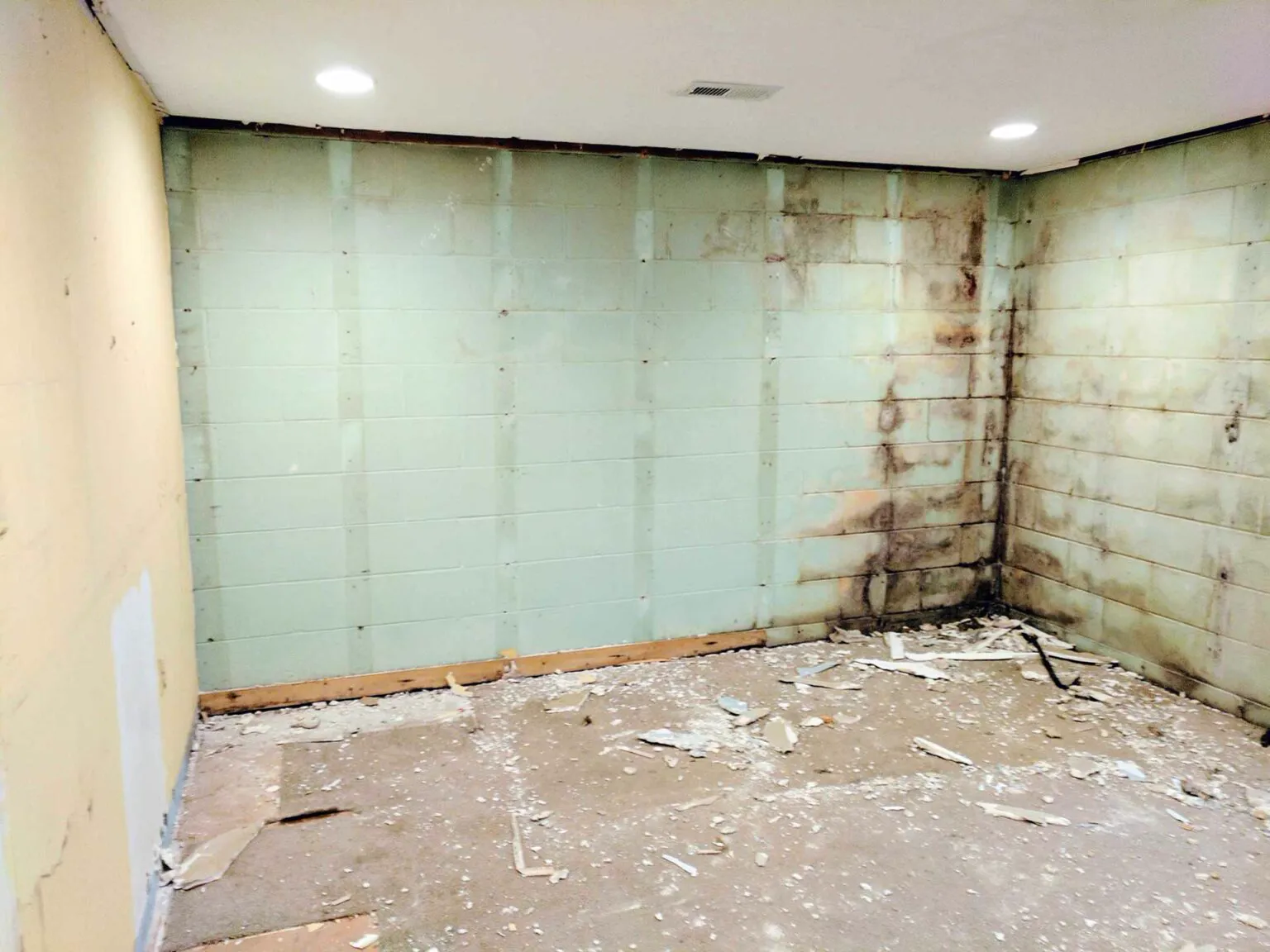
The rooms nobody connects to this
Ready for the part that surprises people? A damp basement isn’t a basement problem. It’s a whole-house problem, and the symptoms usually show up two floors away from the water.
Air in a house moves upward. Warm air leaves through the attic, which pulls new air in from the lowest point — your basement or cellar. So the air you breathe upstairs started its trip down by that damp wall. That’s why a second-floor closet smells musty even though it’s bone dry up there.
Moisture rides along with it. Hardwood floors cup at the seams. Doors stick in July and fit fine in October. Homeowners chase each of those separately, yet they trace back to one source. If you want the science, the U.S. Geological Survey’s groundwater primer is a good half hour.
Now picture it fixed. The floor stays dry through a hard spring storm — and around here spring storms are the whole ballgame, which you can watch coming on the National Weather Service Peachtree City forecast. That smell at the bottom of the stairs is gone. Best of all, the next time it rains at two in the morning, you roll over and go back to sleep.
Why hire people who know old houses?
Because a hundred-year-old foundation asks different questions than a 2005 poured wall, and the answers aren’t in a script. These houses have stood a century, so the fix has to respect that instead of fighting it — meaning we work around original masonry and tell you honestly when something is fine as-is.
You’ll get the same crews and the same trucks, and a warranty in writing before anything starts. If you want the deeper technical read, our page on basement waterproofing lays out the systems, our guide to the best basement waterproofing approaches goes further on old foundations, and if your house has a cellar rather than a basement, crawl space encapsulation is probably the conversation instead.
Where we work around Decatur
We’re based in Lawrenceville, about thirty-five minutes northeast, so we’re in DeKalb County constantly. That includes Decatur, Avondale Estates, Tucker, Brookhaven, Clarkston, Stone Mountain, Atlanta, Chamblee, Doraville, Scottdale and Pine Lake. Odds are we’ve already worked on a house near yours.
Questions Decatur homeowners ask us
Usually, yes. We only need about four feet of clear perimeter along the walls we’re treating, so built-ins and drywall often come back exactly as they were. Where something has to be opened, we tell you which sections before we start, never after.
It helps in two ways. A dry, usable lower level is square footage buyers will actually count, and a transferable warranty removes a question that otherwise shows up in every inspection report. On older homes especially, documented waterproofing makes the sale easier.
Often within a few days, and sooner if water is actively coming in. Live support runs from 7 a.m. to 8 p.m., seven days a week, so you’re not leaving a message into the void. The inspection and the estimate are both free.
It depends on how much wall is involved and how hard it is to reach. Small drainage corrections sit at the low end, while a full perimeter system in a finished basement sits at the high end. Anyone quoting a flat number over the phone is guessing, so we walk it first and then put a written scope in your hands.
Most interior systems run one to three days start to finish. Exterior excavation takes longer and pauses for rain. Either way, you get a schedule up front and a crew that cleans up and hauls its own mess away.
Let’s find out what your Decatur basement is really doing
The inspection is free, the estimate is free, and nobody pressures you at the end of it. We’ll show you where water is getting in, walk you through both approaches, and tell you honestly if the smaller fix is the right one.
(678) 914-5112Serving Decatur and all of Metro Atlanta · $500 off projects over $3,500 · Live support 7am–8pm, 7 days a week