

How to Pick the Best Basement Waterproofing Decatur Has for a Century-Old House
What makes these houses different, what a good company does about it, and the questions that tell you everything before you sign.
One inch of rain that lands on a 1,500-square-foot roof sheds a little over 900 gallons of water. That all comes down in a few hours, into soil that already sits tight against your foundation. So when homeowners start hunting for the best basement waterproofing Decatur has to offer, the real question isn’t who owns the shiniest truck. It’s who understands where those 900 gallons go next.
Good news up front: this is very fixable. You’re not choosing between a dry basement and an original 1928 foundation — you can have both, but you have to hire for it on purpose.
What makes a Decatur house different?
Age, mostly. Craftsman bungalows and Tudors went up here between the 1920s and the 1950s on stone, brick and hand-laid block. A Decatur bungalow was built before basement waterproofing existed as a trade. These houses have stood a hundred years anyway — and the fix has to respect that, not fight it.
Then there’s what a century does to a lot. Original grading gets buried under decades of added soil, so water that once ran away now leans toward the house. Old clay sewer lines crack and soak the footing, while huge oak roots lean on walls that never expected company. None of that is neglect. It’s just time.
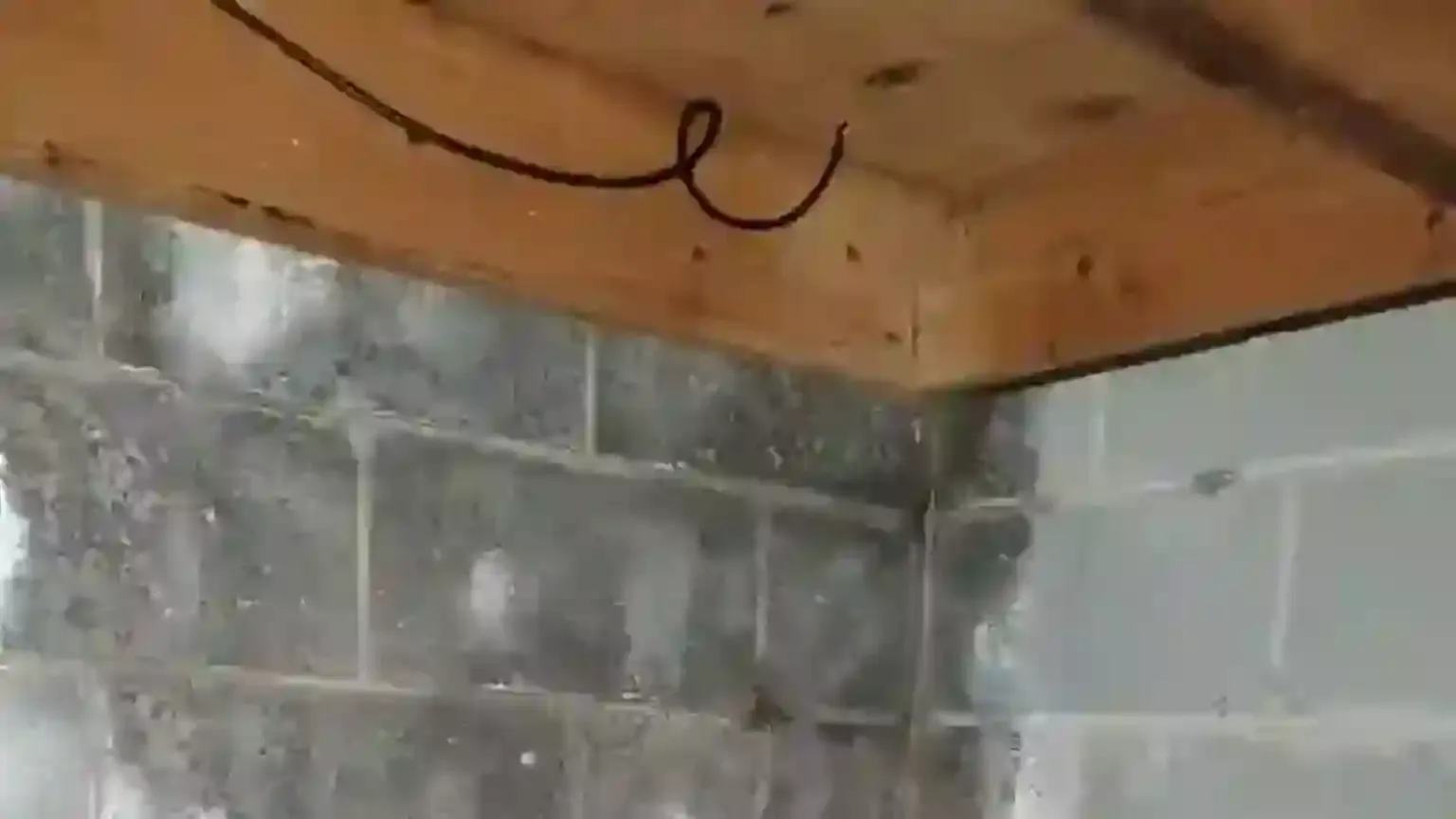
Here’s the detail that trips up crews from out of the area. The cove joint — the seam where the basement wall meets the floor slab — is the single most common water entry point in a Georgia home. In a hand-laid stone cellar that seam wanders, and half the time part of the floor is still dirt. Same problem, very different day of work.
What should a good company be doing differently here?
Start outside. Any company worth hiring here walks your yard first, because on old lots the source is often above ground. Downspouts dumping at the wall, a patio that slopes back, a drain line that gave up under the leaf load — those are cheap fixes, and a good contractor will point at one even when it costs them the bigger job.
After that, they should read the foundation for what it is. Old lime mortar breathes and moves a little on purpose. Packing rigid hydraulic cement into a stone joint just hands the pressure to the next weak joint. Waterproof paint has the same trouble, since a coating can’t out-argue pressure. It’s a raincoat on a submarine.
Worth knowing
Seepage and structural trouble are two separate conversations. Plenty of century-old stone foundations are seeping while staying perfectly sound. You should be told which one you have before anyone mentions money.
The system itself is the easy part. Perforated pipe in clean stone, set below floor level, routed to a sump that throws water well away from the house. What separates the best basement waterproofing Decatur crews do from average work is judgment — which walls need it, and which parts of an old house to leave alone.
How do you read an estimate without a degree in this?
Look for scope, not for a number. A real estimate names the walls, the linear feet, the drainage depth, the discharge point, and what happens to any dirt floor. If all you got was a price and a signature line, that’s not an estimate — it’s a guess with confidence.
What a solid Decatur estimate spells out
- Linear feet and which walls. One wall or a full perimeter is the biggest price swing there is.
- Foundation type, named. Hand-laid stone takes more hours than block. That’s real work, not a surcharge.
- Depth of the drainage. Below the slab, not beside it. Bargain bids quietly cross that line.
- Discharge location. Water has to leave the property, not tour the flower bed and come back.
- Dirt-floor sections. Common in old cellars, and capping them changes scope and comfort.
- Exterior corrections. Regrading sometimes is the fix, so it should be priced honestly.
Prices swing widely because houses do, so you should get your number in writing after somebody stands in your basement. For the mechanics of the systems themselves, our guide for Decatur homes walks through them, and the basement waterproofing page shows what we install.
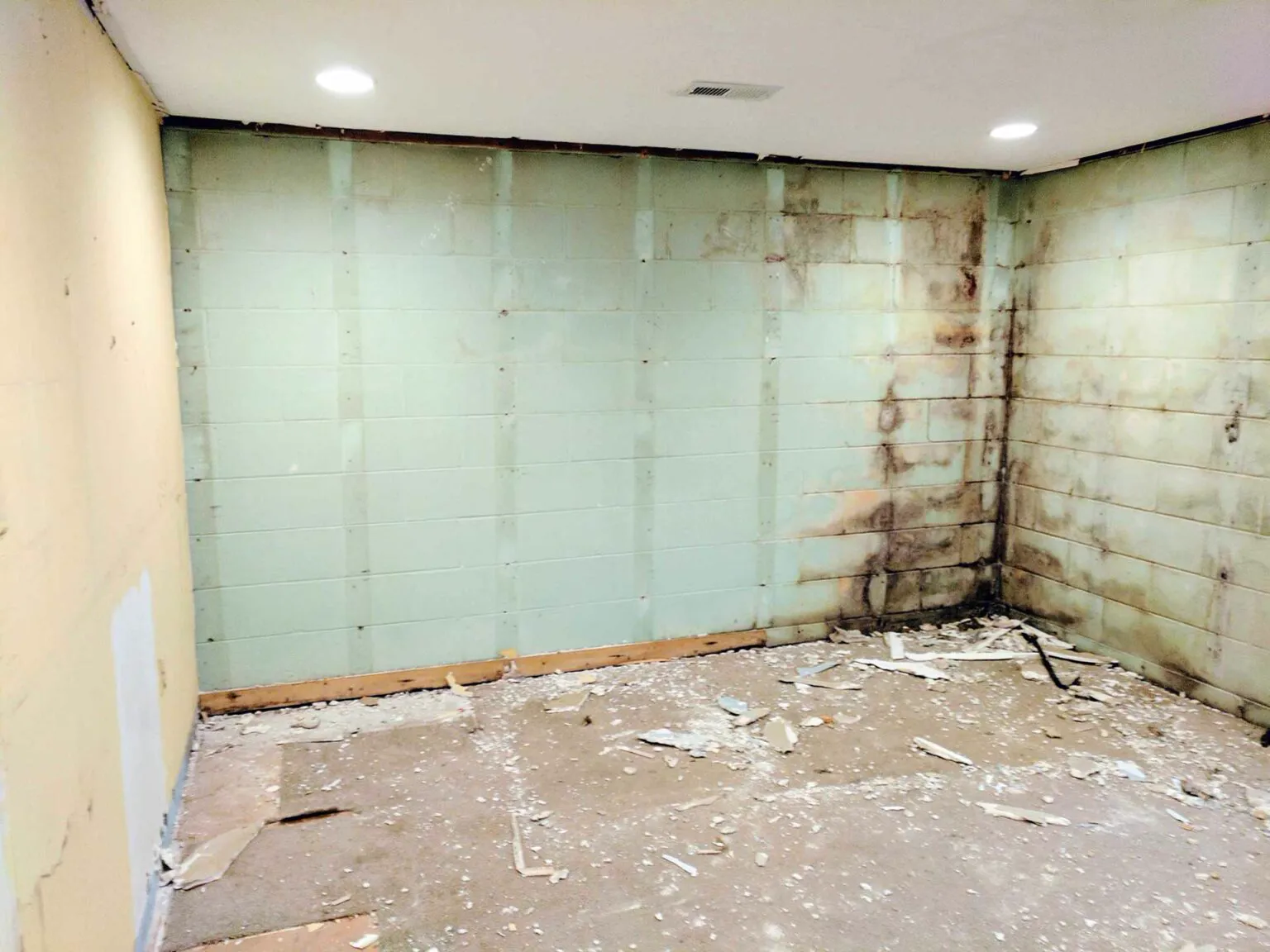
Now let’s talk about what happens after the crew leaves
This is the part nobody compares, and it’s the part you live with. A system is only as good as the ten years after it, so ask how those years go.
Week one. The new concrete cures, and the sump cycles a few times when it rains. That’s the system working, not a problem. Meanwhile the damp smell fades fast, because the source is finally cut off instead of masked.
Year one. You get through spring storms and one full fall of leaf drop, which under the Decatur canopy is no small test. Better yet, you stop checking after every rain. One homeowner over near Lenox Place told us the strangest part was realizing she hadn’t thought about the basement in months.
Year ten. Stone and pipe below a slab have nothing to wear out, so the drainage keeps quietly doing its job. The pump is the one part with a service life — plan to replace it around the ten-year mark, same as a water heater.
That’s the feeling worth paying for. Not “the leak stopped,” but “my home is looked after.” Storms roll through and you hear rain instead of your stomach dropping.
What should you ask before you hire anyone?
Five questions do most of the work. Ask every company you talk to, then compare the answers instead of the totals — that’s how the best basement waterproofing Decatur offers sorts itself out from the rest.
Five questions worth asking
- “How many stone foundations have you worked on?” If the answer gets vague, you’ve learned what you needed to.
- “What did you find outside?” A crew that skipped the grading and downspouts didn’t look for the source.
- “Will you photograph the pipe before the concrete goes back?” Yes should be instant.
- “Where does the water discharge?” They should walk you out and point at the spot.
- “Who’s actually on my job?” Same crews, or a subcontractor you meet on day one?
Red flags are simpler than people expect. A firm price quoted over the phone means nobody measured anything. Pressure to sign today is a sales tactic, not a scheduling reality. Real talk: if a bid comes in far under the others, find out what got left out — usually it’s drainage depth.
Local knowledge counts too, and not as a slogan. Rainfall here comes in bursts, and you can see that pattern in the records the National Weather Service Peachtree City office keeps. Air quality matters as much as the floor, which the EPA’s guide to moisture control explains without selling you anything.
How did it go for a homeowner in Oakhurst?
A few seasons back we walked a 1920s bungalow in Oakhurst — half-basement, stone foundation, dirt floor under the kitchen. The owner had two other bids. Both called for coating the walls, and one wanted to lay plastic on the dirt and call it done.
We started in the yard, because that’s where the story usually begins. Two downspouts emptied within a foot of the wall, and added soil had built the grade above the sill on the shaded side. Inside, the mortar was soft in a six-foot run and the cove joint was damp end to end — classic seepage, though the wall itself was sound. That mattered, since it meant repointing and drainage rather than anything dramatic.
So the plan had three parts: move the roof water out, cut the grade back down, and set drainage below the slab along the two wet walls with the cellar floor capped. Three working days, plus a morning of mortar work. What she noticed first wasn’t the floor — it was that the house stopped smelling like a basement.
She uses the space now. Bikes, a workbench, the giant plastic tubs everyone owns and nobody admits to. Meanwhile the original stone is still original stone, which mattered as much to her as the dryness.

Why are we a fit for old Decatur houses?
Because we like them, honestly. Most volume contractors avoid old-house work, since stone and dirt floors don’t fit a template. We’ve spent twenty-plus years on this kind of foundation, from Tudors near the MAK Historic District to bungalows behind Agnes Scott College and homes over toward Emory University.
You’ll also get answers, which Decatur homeowners tend to want in detail. We’ll show you the water path, explain why one wall gets treated and another doesn’t, and hand you photos from under the slab. If your house has a crawl space instead, the honest answer is often crawl space encapsulation. Our Lawrenceville best basement waterproofing guide covers newer construction, if you want the contrast.
Where we work around Decatur
We’re based in Lawrenceville, about thirty-five minutes northeast, and we’re in DeKalb constantly. That includes Decatur, Avondale Estates, Tucker, Brookhaven, Clarkston, Stone Mountain, Scottdale, Chamblee, Doraville and Atlanta, plus the wider DeKalb area. Whether you’re off Church Street or on a side street downtown, we know these foundations — and there’s a good chance a truck is nearby already.
Questions Decatur homeowners ask us
Often within a few days, and sooner right after a storm. Live support runs seven a.m. to eight p.m., seven days a week, so call whenever it suits you. Both the inspection and the estimate are free.
It depends mostly on how much wall is involved and how hard it is to reach. Small exterior corrections sit at the low end, while a full perimeter with a new sump and a capped cellar floor sits at the top. We won’t quote a flat number over the phone, since that number would be a guess you’d end up paying for.
Most interior systems in an older Decatur home run two to four working days. Add a day for a finished basement, and another when a dirt floor needs capping. Exterior work depends on what’s in the way, since a hundred-year-old shade tree gets protected rather than removed.
No. Clear about four feet along the walls we’re working on and pull boxes toward the middle, and we’ll handle the heavy things. Pets do better upstairs while the saw runs, and that’s really the whole list.
Sometimes, though a crack can be its own conversation. Relieving water pressure stops seepage through a joint or a hairline, but movement cracks need the movement addressed first. We’ll tell you which one you have during the inspection, in plain language.
Let’s take a look at your Decatur basement together
We’ll walk the house with you, show you where water is getting in, and explain the plan in plain language — century-old stone included. Free inspection, free estimate, no pressure at the end of it.
(678) 914-5112Serving Decatur and all of Metro Atlanta · $500 off projects over $3,500 · Live support 7am–8pm, 7 days a week