

Waterproofing Options Buford Homeowners Compare: Inside, Outside, or Neither?
Two real systems, laid out fairly — plus the recommendation we’d actually give you standing in your basement.
Most people don’t go looking for this. The inspection report shows up eleven days before closing, and there it is on page six: moisture staining, lower level, recommend evaluation by a specialist. Suddenly you’re comparing waterproofing options Buford contractors quote, on a deadline, with a buyer waiting.
Good news? That line on the report is not the emergency it feels like. There are really only two families of fix, and once you know how each behaves, choosing gets straightforward. So let’s walk both, honestly, and then we’ll tell you which one we’d pick.
Option A: how does interior drainage work?
An interior system doesn’t argue with water at the wall. Instead, it catches water underneath the floor and moves it out before it ever reaches your space. Picture a gutter that lives below the slab.
The crew cuts a narrow channel in the concrete along whichever walls are leaking. Perforated pipe drops in, packed in clean stone and set lower than your floor. Everything runs to a sump basin, and the pump pushes water well away from the house. After that, fresh concrete closes the channel back up.
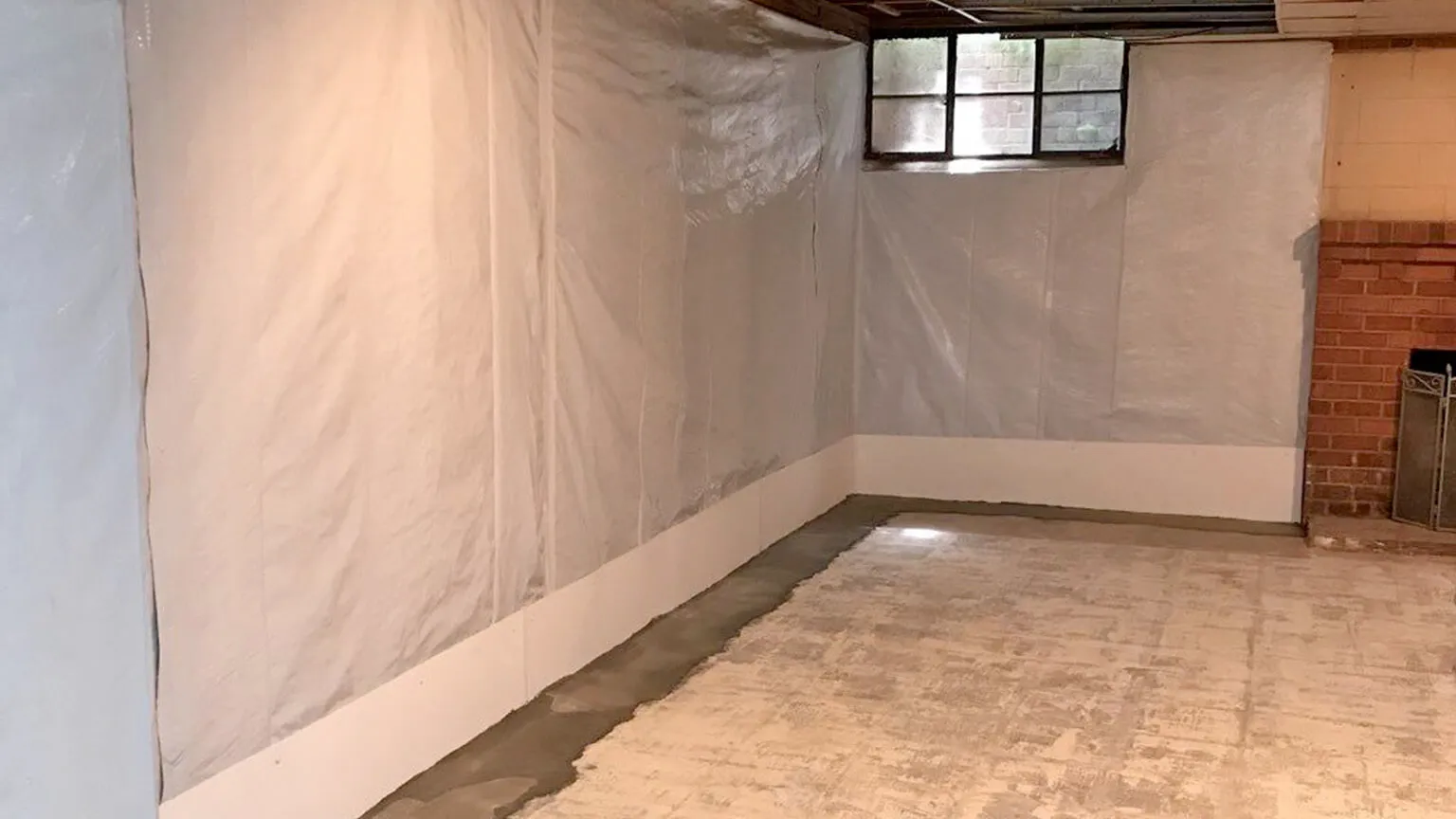
Why does this approach handle so much? Because it takes pressure off instead of trying to hold it back. A basement wall can face thousands of pounds of push from saturated clay — that’s hydrostatic pressure, and it’s the force driving water straight through solid concrete. Give the water an easier path and the pressure simply stops building.
Worth knowing
Concrete is porous. Water can move through a wall that has no crack in it at all, by capillary action. So if you’ve hunted for the crack and come up empty, you didn’t miss it.
Option B: what does exterior waterproofing involve?
Exterior work meets water earlier, before it touches the foundation. Soil comes out down to the footing, the wall gets cleaned and coated with a membrane, and a footing drain goes in at the base. Then the trench is backfilled and the grade around the house is corrected.
On paper it’s the more complete approach, and we’ll say that plainly. Water never reaches the wall, which means the wall never has to fight. For a foundation with real deterioration in it, that’s worth something.
However, exterior work is also the bigger project, and on Buford lots the digging is rarely simple. Grade changes are steep in these subdivisions, and once you cut into a slope you’re rebuilding it too. Add patios, decks and a retaining wall, and restoration can cost more than the waterproofing did. Machines also need a path in, and side yards in Chateau Forest aren’t always generous.
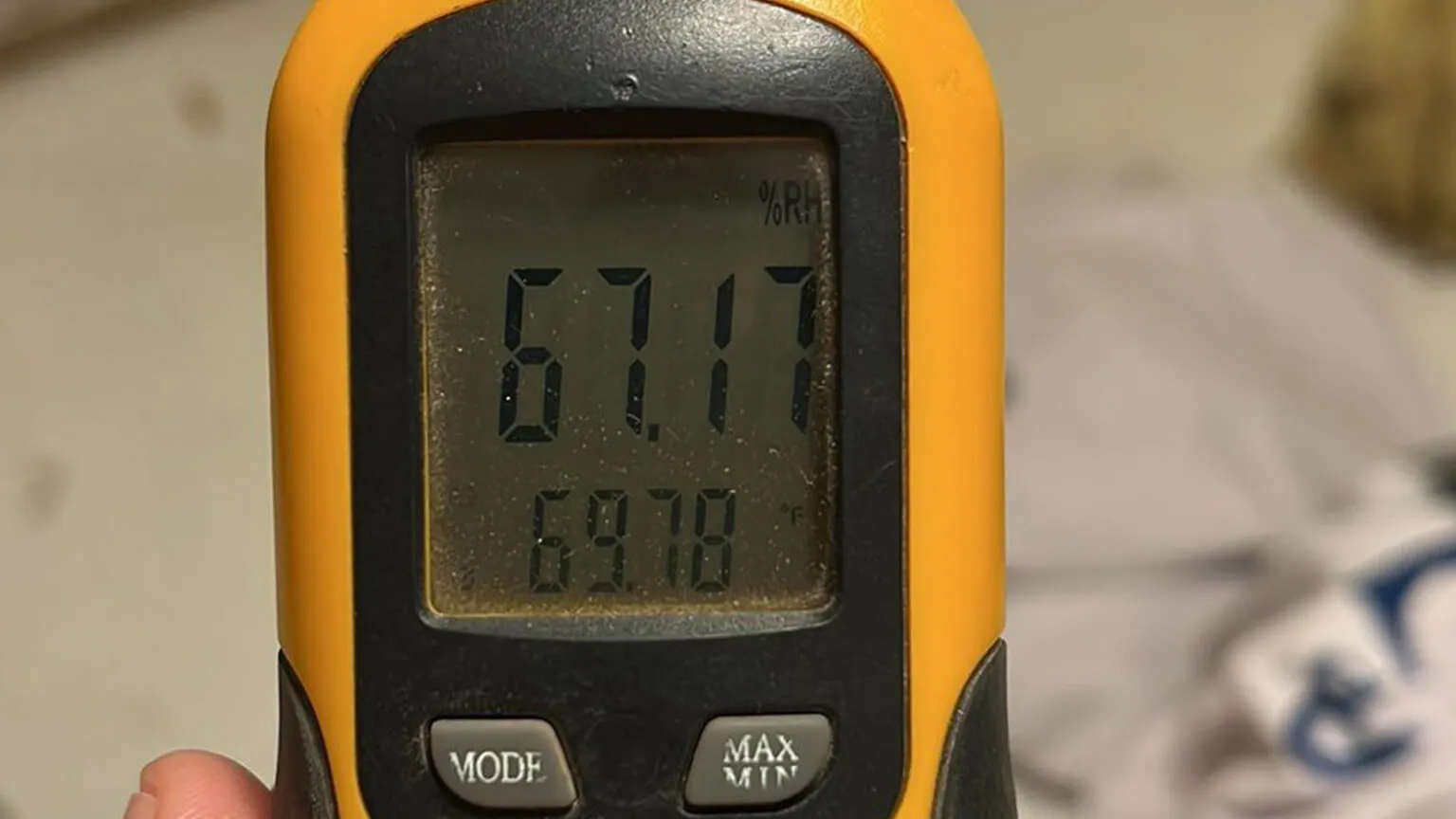
Here’s the thing about Buford houses specifically
Which option wins depends less on the brochure and more on the dirt your house sits in. Buford’s dirt is not average. Living near Lake Lanier is wonderful right up until the water table decides your basement is part of the lake.
That’s not a joke about the view. On lake-corridor lots the groundwater sits genuinely high, and it rises and falls with sustained rain the way a bathtub responds to a running faucet. A membrane on the outside of the wall does nothing about water arriving from below. In other words, on those lots exterior work can be done beautifully and the floor still gets damp.
So on a high water table lot, interior drainage plus a good sump is usually the honest answer. Not the cheap answer — the correct one. Water coming up wants somewhere to go, and only one of these two systems gives it a destination.
We stopped trying to block water and started routing it. Blocking is a fight the wall loses eventually, because the pressure never quits and every coating ages.
The rest of the city has its own pattern. Most Buford subdivisions went up between 1995 and 2015, so these are poured walls in decent shape — which means the wall itself usually isn’t the problem. Houses built around 1998 to 2008 are simply hitting their first waterproofing failure now, right on schedule.
Steep lots add one more wrinkle. Plenty of homes near Little Mulberry Park sit with a hill behind them, so every hard rain sends uphill runoff straight at the back wall. If you’d like to see how that water behaves underground, the U.S. Geological Survey groundwater primer explains it well.
Side by side, no spin
Enough theory. Here’s how these two compare when we’re standing in your basement with a flashlight and a moisture meter.
Interior drainage
- Handles rising groundwater, which matters near the lake
- Work stays indoors, so rain never stops the schedule
- Decks, patios, grading and plants stay untouched
- Usually finished in one to three days
- Includes a sump pump, which needs service over the years
- Costs less, mostly because nothing gets rebuilt outside
Exterior waterproofing
- Stops surface and soil water before it reaches the wall
- Requires digging to the footing along every wall treated
- Longer job, and weather pauses it
- Landscaping and hardscape restoration drive the price up
- Does nothing about water rising from underneath
- Lets us repair the wall face and regrade while it’s open
Notice that neither column says “better.” Because on any given house one of these is obvious once you’ve walked the lot, while the other is a conversation we can skip entirely.
What actually decides it on your house?
Four questions, more or less. They come up on nearly every inspection we run between the Mall of Georgia and the lake.
The deciding factors
- Where is water entering? Seepage at the floor seam points inside. Water running down the wall face points outside.
- How high is the water table? Near the lake it’s often high enough that interior drainage is the only real answer.
- Can equipment reach the wall? Steep grade, a pool, or a tight side yard can answer this before we do.
- Is the basement finished? Valuable finished space changes the plan, though usually less than owners expect.
That last one deserves a second. Big finished basements are everywhere here, so homeowners brace for losing the whole room. Truthfully, we only need about four feet of clear perimeter, and the rest survives untouched.
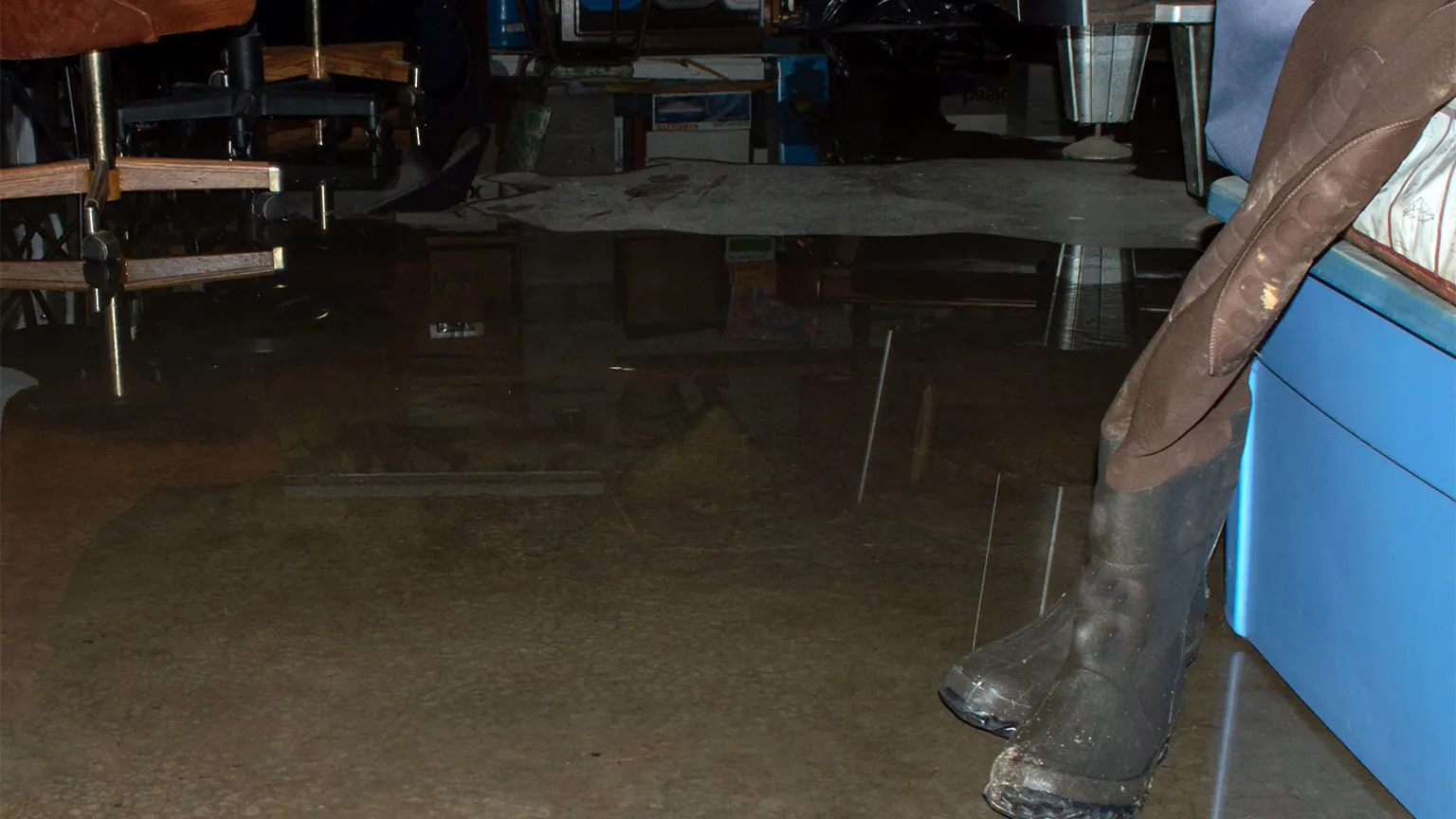
So which one do we recommend?
For most Buford homes, we recommend interior drainage with a properly sized sump, paired with exterior corrections that don’t require a backhoe. That means longer downspout extensions, regrading the first few feet away from the house, and fixing whatever is dumping uphill runoff at the back wall. Together those handle the large majority of what we see.
Full exterior work earns its keep in narrower cases. If the wall itself is deteriorating, if you’re already excavating for an addition, or if the lot lets a machine work cleanly, then going outside makes sense. Downtown Buford’s older stone foundations fall in that group more often than the newer subdivisions do. Curious how the same call plays out a few exits down I-85? Our breakdown of Grayson waterproofing options covers a very different mix of homes.
And sometimes we tell people they don’t need either one. If water only shows up during heavy storms and the gutters are packed with pine straw, start there. A morning of gutter and downspout work has dried more basements than the industry likes to admit, and we’ll say so even when it’s a much smaller invoice.
The house off Ivy Creek
Want a real example? A homeowner over in the Ivy Creek area called us with the classic version of this — an inspection report, a buyer, and a wall that had been quietly weeping for years. Two chalky white streaks ran down the block, and the seller assumed the whole exterior would have to come out.
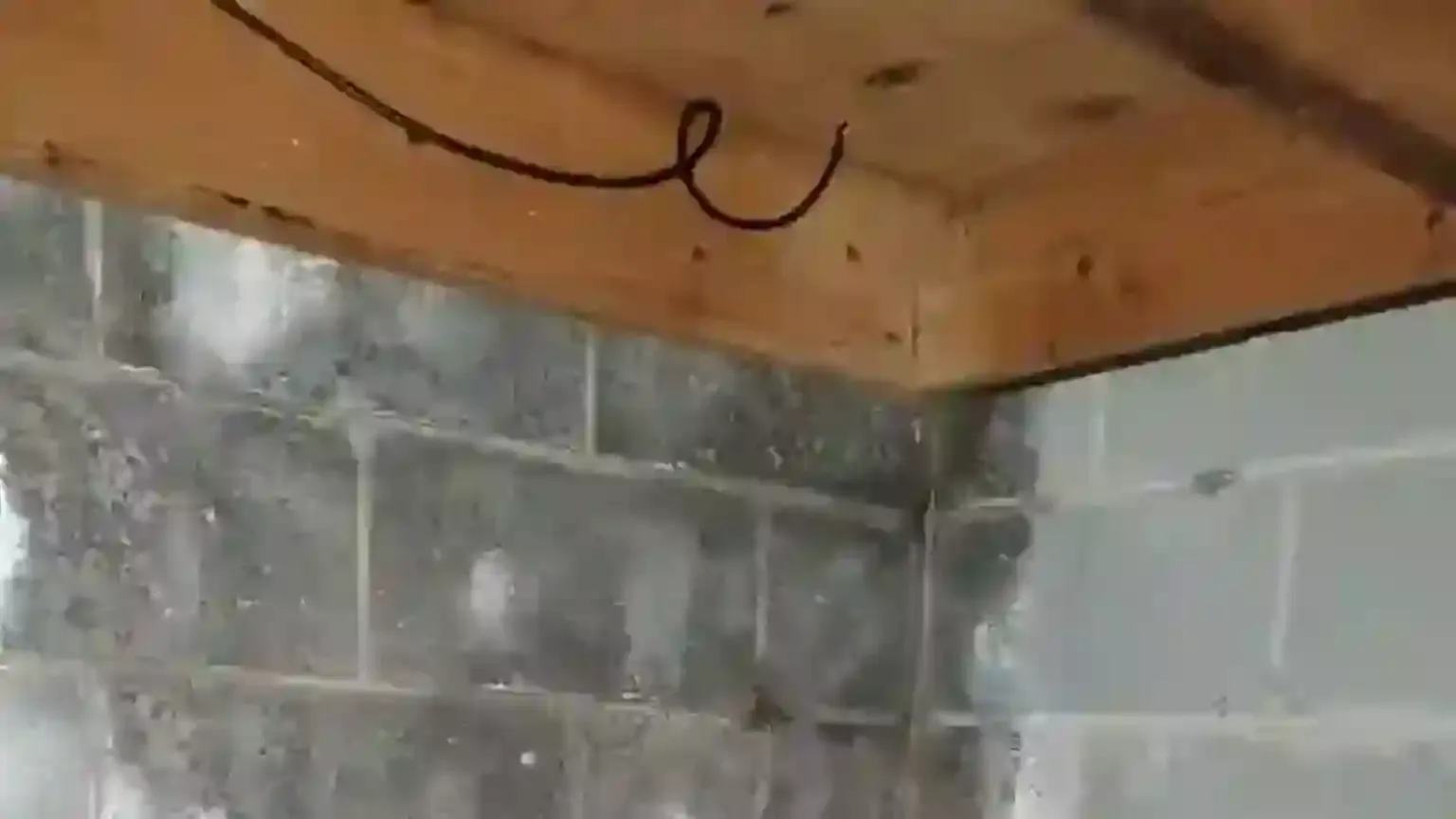
What we found instead was a downspout draining six feet from the foundation and a back yard sloping toward the house. So we ran interior drainage along two walls, set a sump with a sealed lid, extended the downspouts and reworked the grade. Three days, no excavation, no landscaping bill.
The house closed on time. Better yet, the seller got to hand the buyer a written warranty instead of an awkward explanation — and that shift, from apologizing to handing over paperwork, is the part people remember. You’re not covering something up. You’re proving the house is solid and that you took care of it.
Now picture that in your own house. Spring storms roll through, the kind you can track on the National Weather Service Peachtree City forecast page, and the lower level stays dry. The musty smell at the bottom of the stairs disappears. Best of all, the basement turns back into square footage you’d actually invite people into.
Why local matters on this one
Buford isn’t generic Gwinnett, and we don’t treat it that way. Homes near the Village at Deaton Creek edge behave differently than lake-corridor lots, which behave differently than a hundred-year-old foundation downtown. Knowing which is which before we quote is most of the job.
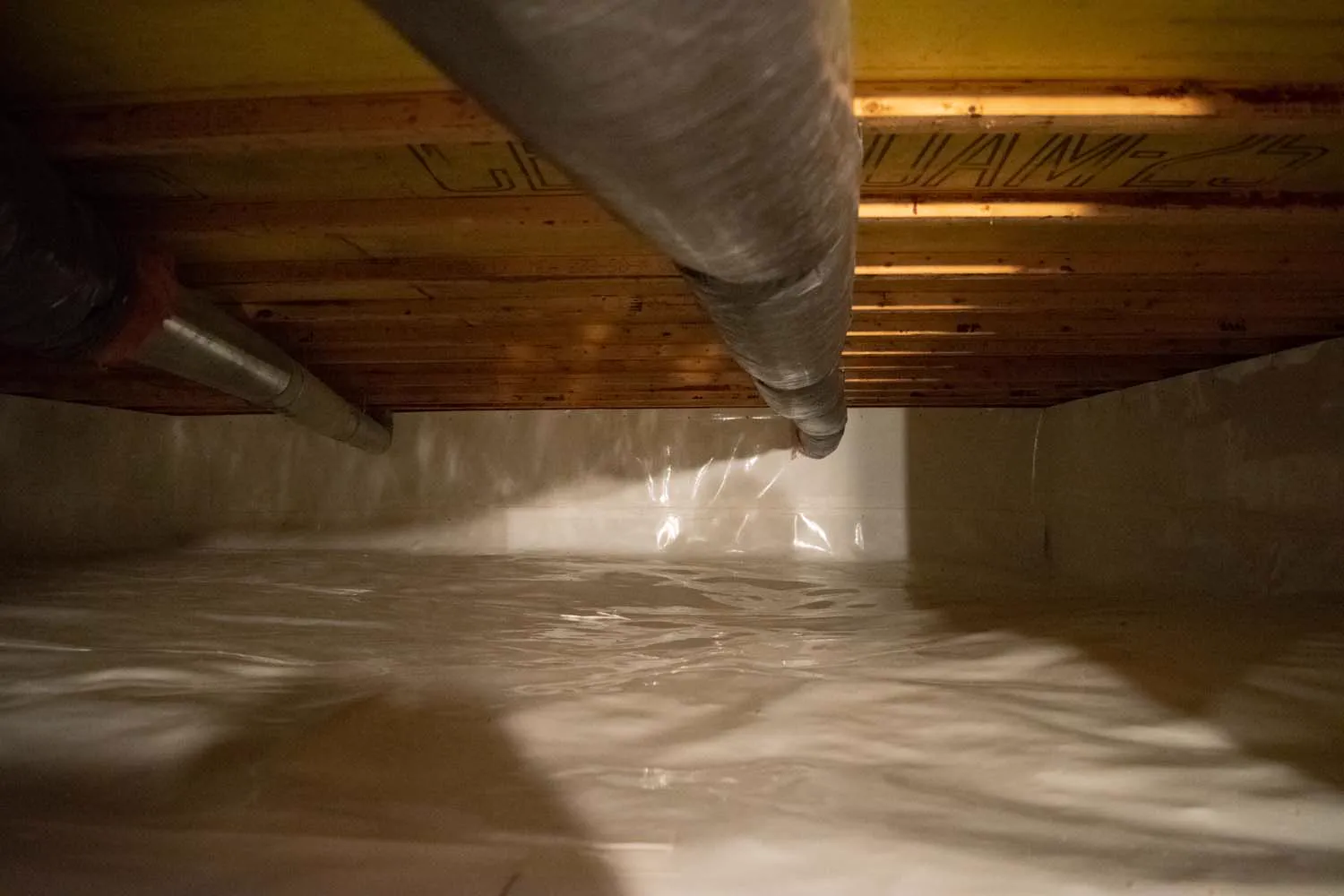
You get the same crews and the same trucks every visit, plus a written warranty before work starts. If you want the deeper technical read, our page on basement waterproofing lays out each system, our guide to the best basement waterproofing approaches goes further on newer construction, and if your house has a crawl space instead, crawl space encapsulation is the conversation to have.
Where we work around Buford
We’re based in Lawrenceville, roughly twenty minutes south, so we’re up this way constantly. That includes Buford, Suwanee, Sugar Hill, Braselton, Flowery Branch, Dacula, Gainesville, Lawrenceville, Duluth and Hoschton, plus the wider Gwinnett and Hall Counties area.
Questions we get in Buford
It depends on how many walls are involved and how hard the space is to reach. Small drainage corrections sit at the low end, while a full perimeter system in a finished basement sits at the high end. Anyone quoting a flat number over the phone is guessing, so we walk it first and then hand you a written scope.
Most interior systems run one to three days from start to cleanup. Exterior excavation takes longer and pauses when it rains. Either way, you get a schedule up front and a crew that hauls its own mess out.
Only about four feet along the walls we’re treating. We help slide heavy things and we cover what stays, so the rest of the room can sit right where it is. Nobody’s asking you to empty the whole level into the driveway.
Sometimes, and sometimes the crack needs its own repair. A narrow seepage crack can be sealed and tied into the drainage system during the same visit. Cracks that show movement are a foundation question instead, and we’ll tell you which one you have before we start.
On lots with a high water table, especially near the lake, interior drainage with a good sump is usually the honest answer. Exterior work wins when the wall face itself is failing or the ground is already open. We look at the lot and the entry point, then recommend one.
Let’s find out what your Buford basement is really doing
The inspection is free, the estimate is free, and nobody pressures you afterward. We’ll show you where water is getting in, compare both approaches for your specific lot, and say so plainly if the smaller fix is the right one.
(678) 914-5112Serving Buford and all of Metro Atlanta · $500 off projects over $3,500 · Live support 7am–8pm, 7 days a week