

How to Choose the Best Basement Waterproofing Buford Homes Actually Need
What the lake and the terrain do to these houses, what a good crew does about it, and the questions that sort real work from a sales pitch.
Water doesn’t really leak into a basement. It gets pushed in, because wet soil holds pressure and your foundation is the only thing standing in its way. Once you see it that way, shopping for the best basement waterproofing Buford has to offer gets a lot simpler. You’re not hiring somebody to patch a spot. You’re hiring somebody to take the pressure off.
Good news right up front: this is fixable, and it’s usually far less dramatic than the puddle makes it look. Most homeowners we meet have already imagined something much worse.
What makes a Buford house different?
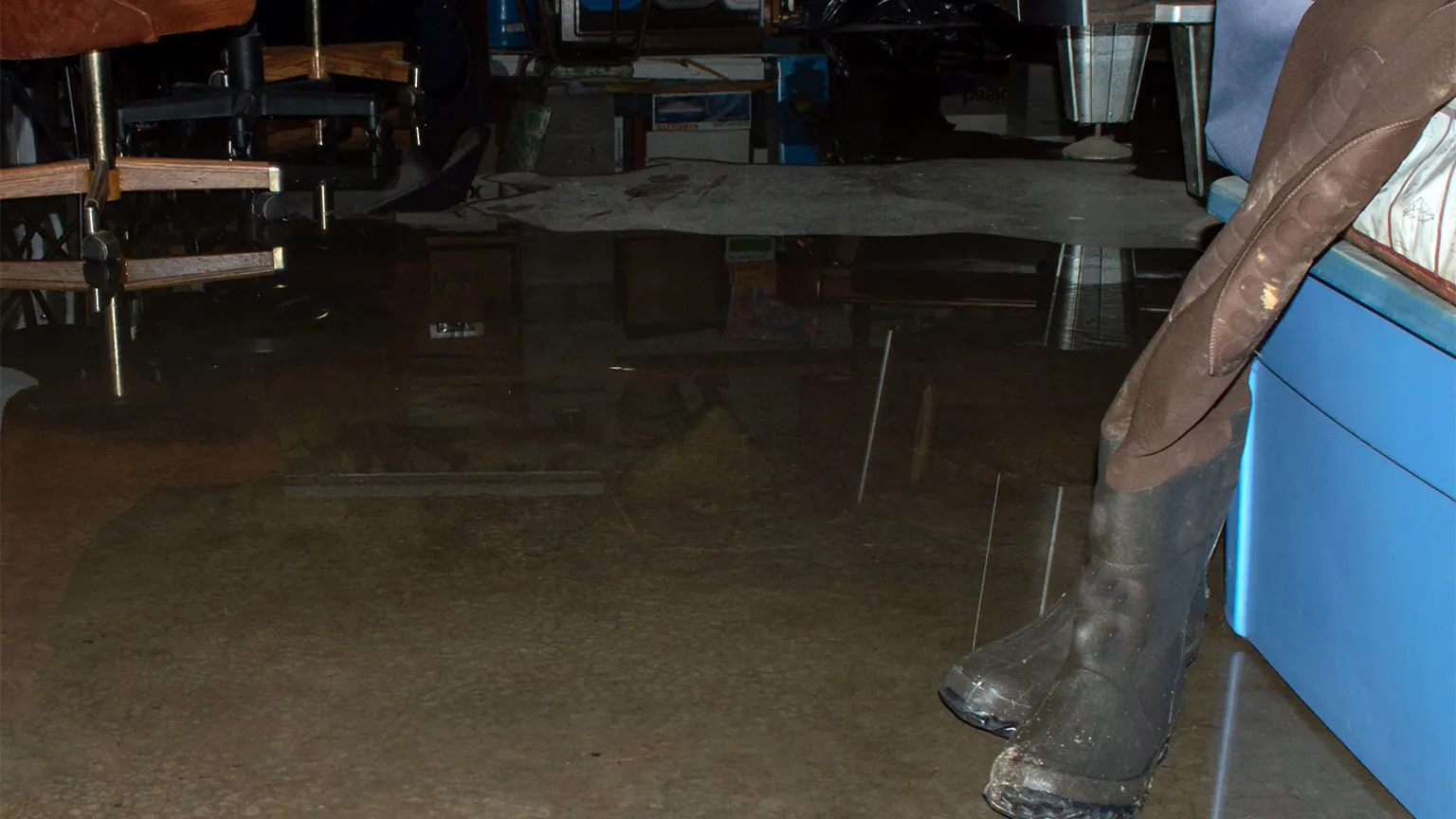
Two things, mostly. First, the water. Living near Lake Lanier is wonderful right up until the water table decides your basement is part of the lake. Lots along that corridor sit on genuinely high groundwater, so the soil beside the footing stays damp long after the rain stops.
Second, the ground itself. Buford is hilly, and the grade changes hard between one street and the next. A house in Ivy Creek can sit at the bottom of a slope that quietly collects runoff from six neighbors uphill, while red clay holds that water like a sponge.
Then there’s age. Most of these subdivisions went up between 1995 and 2015, and homes built around 1998 to 2008 are hitting their first waterproofing failure right about now. Newer house, older problem — the original footing drain simply reached the end of its useful life.
Downtown Buford is its own world, of course. Those older homes have stone and block foundations built before waterproofing was even a trade, so the goal is to work with them rather than fight them.
What should a good company be doing differently here?
Start outside, every time. On a sloped Buford lot the source is often above ground, so a crew that never walks your yard is guessing. Downspouts dumping at the wall, a patio pitched the wrong way, a driveway feeding water toward the garage — those are cheap corrections, and an honest contractor will point at one even when it shrinks their invoice.
After that, they should ask about the lake. Groundwater on a Lanier-adjacent lot behaves nothing like groundwater on a Sardis hillside, and the terrain below Buford Dam surprises crews from out of town. Same house, different plan.
Worth knowing
Seepage and structural trouble are two separate conversations. Plenty of basements are wet while the walls stay perfectly sound. You should be told clearly which one you have before anybody mentions money.
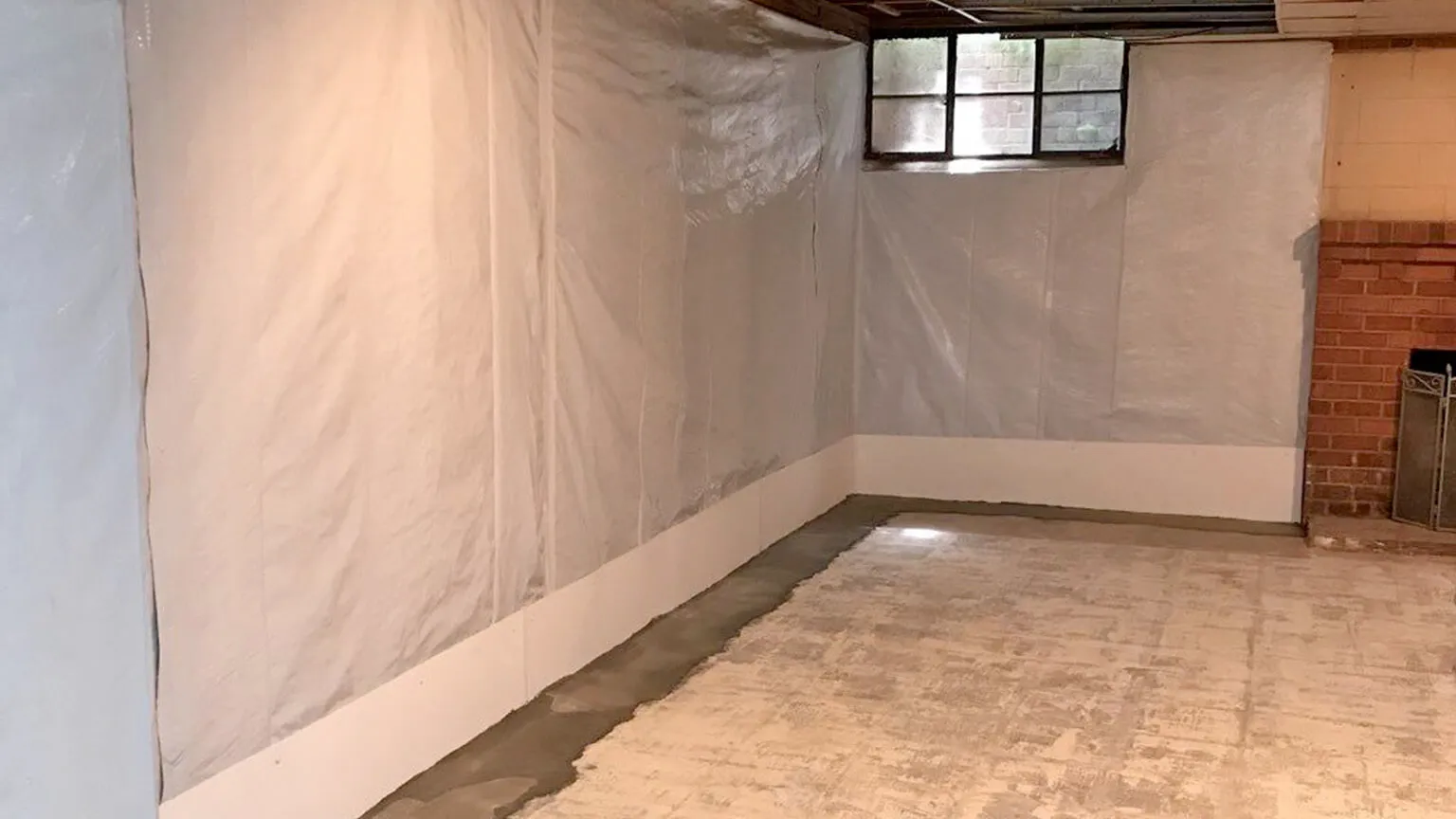
The system itself is honestly the easy part. Perforated pipe in clean stone, set below the floor slab, tied to a sump that throws water well away from the house. What separates the best basement waterproofing Buford crews do from average work is judgment — which walls actually need it, and which ones don’t.
Here’s the question that tells you whether somebody actually diagnosed it
Ask this: “Where is the water coming in, and how do you know?” Then stop talking and listen.
A crew that diagnosed your basement will answer with places and evidence. They’ll point at the cove joint where the wall meets the floor, or a specific run of block, or the corner under the deck stairs. Better yet, they’ll tell you what tipped them off — a stain line, a soft spot, a chalky bloom.
A crew that didn’t diagnose it will answer with a product. “We install the premium system, full perimeter.” That’s not a diagnosis, that’s a menu. Sometimes a full perimeter really is the right call, but it should arrive as a conclusion instead of a starting point.
Real talk: this one question saves people real money. We’ve walked into homes in the Mall of Georgia corridor neighborhoods where two walls were bone dry and the bid still covered all four. Nobody was lying, exactly. Nobody had looked, either.
Why a dry-looking wall can still be soaking
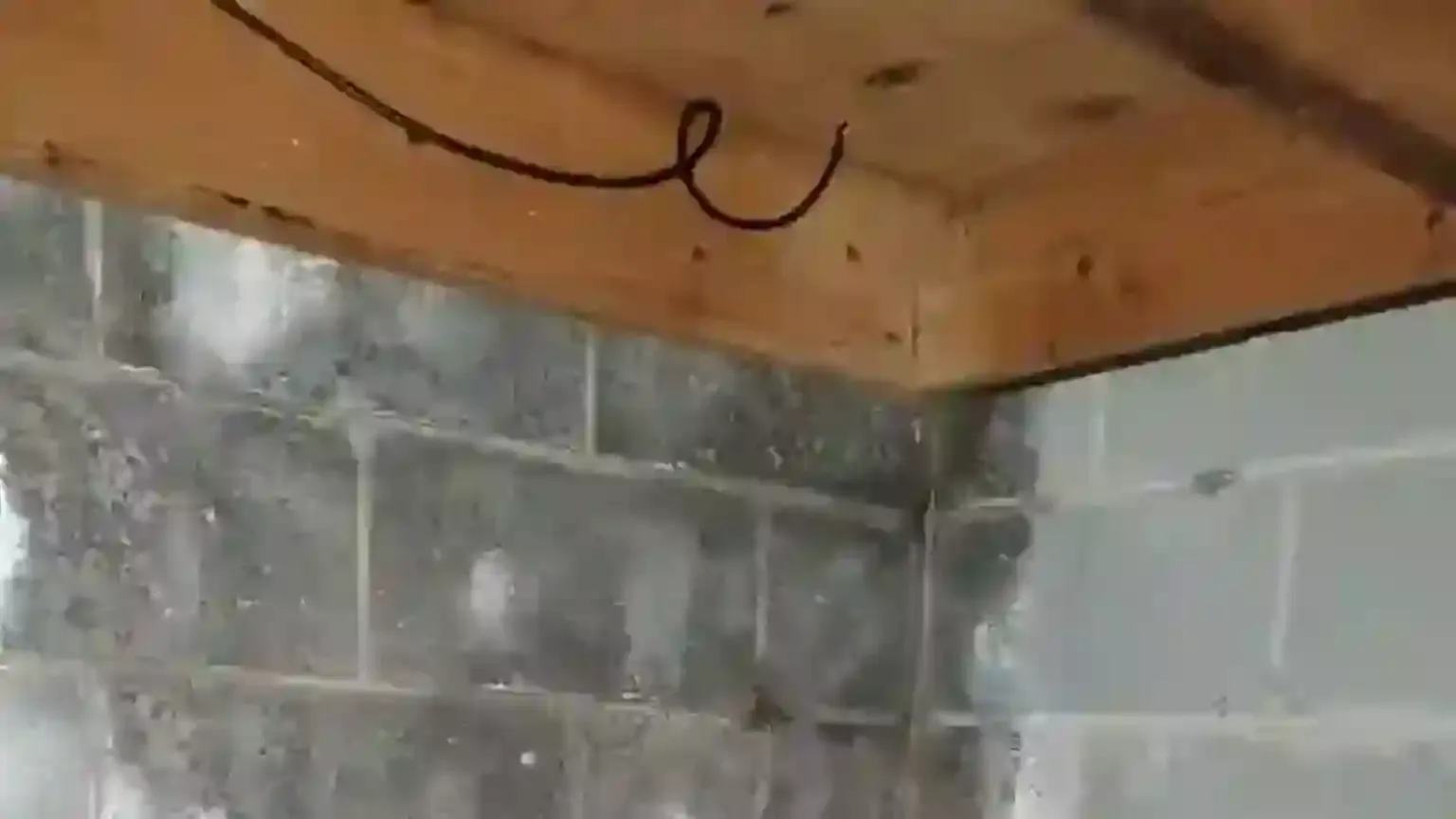
Concrete is porous. Water moves through solid, uncracked concrete by capillary action, the same way a paper towel pulls a spill upward. That’s why a wall can be genuinely wet without a single visible crack, and why “I don’t see any cracks” isn’t the reassurance it sounds like.
This is also where that white chalky dust comes from. As water passes through the block it carries minerals along, and those minerals stay behind when the water evaporates. It’s called efflorescence, and it’s basically a receipt.
How do you read an estimate without a degree in this?
Look at scope, not at the total. A real estimate names the walls, the linear feet, the depth of the drainage, and where the water finally goes. If all you got was a number and a signature line, that’s not an estimate — it’s a confident guess.
What a solid Buford estimate spells out
- Which walls, and how many feet. One wall versus a full perimeter is the biggest price swing there is.
- Drainage depth. Below the slab, not beside it. Bargain bids quietly cross that line.
- Where the water discharges. It has to leave the property, not tour the flower bed and come home.
- Sump and backup plan. On lake-corridor lots this matters more than anywhere else in Gwinnett.
- Exterior corrections. Regrading and downspout work sometimes is the fix.
- Finished-space handling. Framing, drywall and flooring change the day.
Numbers swing widely because houses do, so get yours in writing after somebody has stood in your basement. If you want the mechanics behind each system, our guide for local homes walks through them, while the basement waterproofing page shows exactly what we install.
Red flags, plainly stated
A firm price quoted over the phone means nobody measured anything. Pressure to sign today is a sales tactic and not a scheduling reality, since good crews book a week or two out and say so. Waterproof paint sold as a complete solution is another one, because a coating can’t out-argue pressure. It’s a raincoat on a submarine.
One more: a bid that lands far under everything else. Find out what got left out, because usually it’s drainage depth — and that’s the part you can’t inspect later without breaking concrete.
The number that reframes this whole conversation
Water weighs about 62 pounds per cubic foot. So a single foot of saturated soil standing against your basement wall leans on it with roughly 62 pounds of force on every square foot of surface. Stack that up on an eight-foot wall and the load gets serious fast.
Here’s why that matters to you as a shopper. Nothing you paint or caulk changes that number, since sealers only touch the inside face of a problem that lives outside. Drainage is the one approach that actually lowers the pressure, because it gives water somewhere easier to go than through your wall.
Once homeowners hear that, the bids in front of them sort themselves out fast. Better yet, relieving pressure is routine work — it’s what we do nearly every day between Hamilton Mill Road and the lake.
What does life look like after the crew leaves?
This is the part nobody compares in a bid, and it’s the part you actually live with.
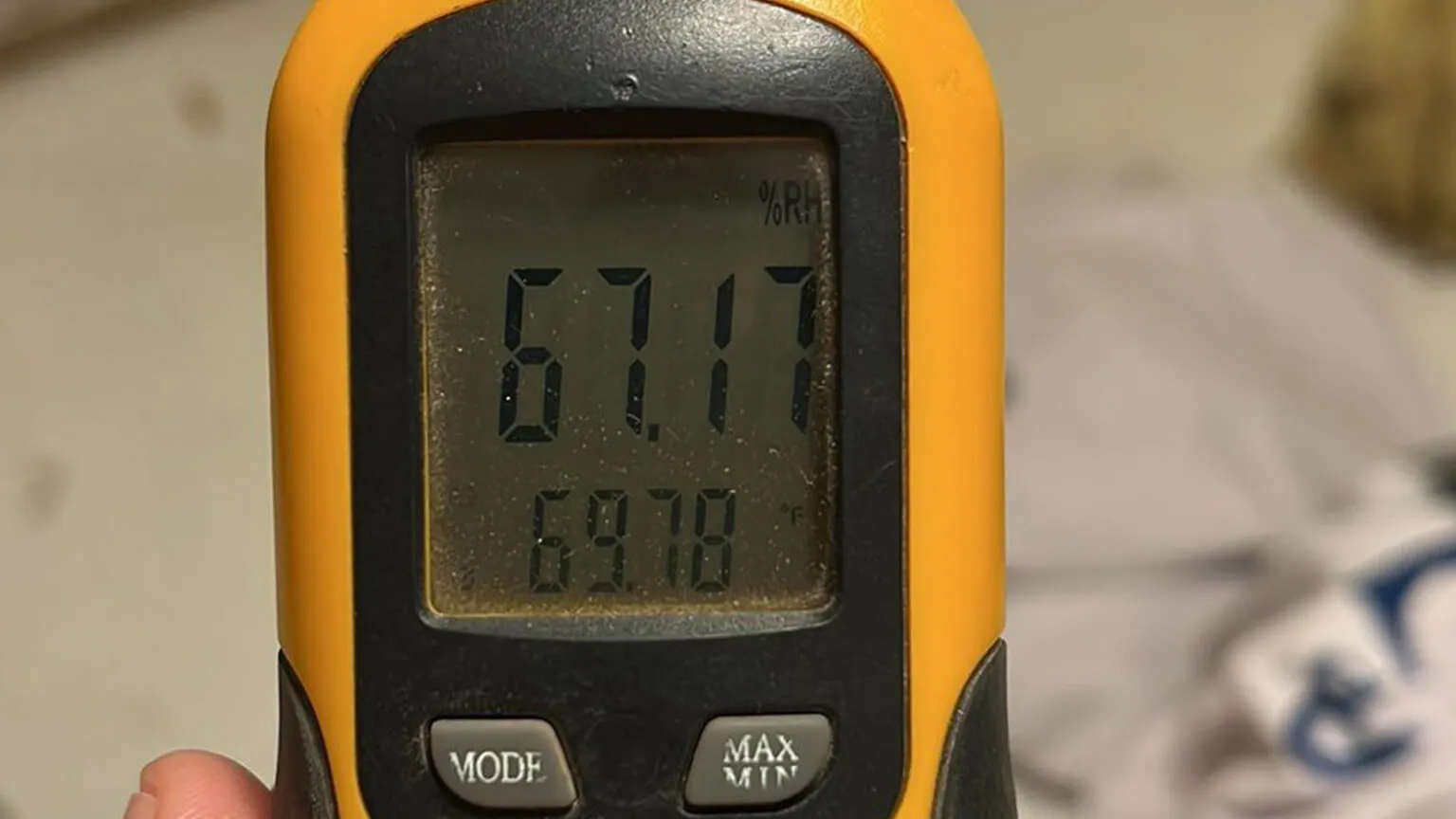
Week one. New concrete cures and the sump cycles a few times when it rains. That’s the system working, not a problem. Meanwhile the damp smell fades, because the source finally got cut off instead of covered up.
Year one. You clear a full round of spring storms, which around here is the real test. Better yet, you stop walking downstairs after every heavy rain. A homeowner over near Sardis told us the strangest part was noticing she hadn’t thought about the basement in months.
Year ten. Stone and pipe under a slab have nothing to wear out, so the drainage keeps quietly doing its job. The pump is the one part with a service life, and it gets replaced around the ten-year mark like a water heater.
That’s the feeling worth paying for. Not “the leak stopped,” but “my house is looked after.” Storms roll across the lake and you hear rain instead of your stomach dropping.
Local weather patterns are part of the plan too, and the records the National Weather Service Peachtree City office keeps show how much of our rain arrives in short bursts. Indoor air matters as much as the floor, which the EPA’s guide to moisture control explains without selling you anything.

Why are we a fit for Buford homes?
Because we’re local in the way Buford means it. We’re a Gwinnett company twenty minutes down the road in Lawrenceville, and we’ve spent twenty-plus years on these foundations — walkouts in the newer subdivisions, old block and stone downtown, and everything sloping toward the lake.
You’ll get answers, too. We’ll show you the water path, explain why one wall gets treated and another gets left alone, and hand you photos from under the slab. If your house sits on a crawl space instead, the honest answer is often crawl space encapsulation. For a look at different terrain, our Grayson best basement waterproofing guide makes a useful comparison.
Where we work around Buford
We’re based in Lawrenceville, roughly twenty minutes south, so we’re up this way constantly. That includes Buford, Suwanee, Sugar Hill, Braselton, Flowery Branch, Dacula, Gainesville and Lawrenceville, plus the wider Gwinnett and Hall Counties area. Whether you’re near the Mall of Georgia, out toward Ivy Creek, or on a lot that slopes straight down to the water, we’ve been in a basement like yours recently.
Questions Buford homeowners ask us
No, and that’s usually a relief. Clear about four feet along the walls we’re working on and slide boxes toward the middle, then we’ll handle the heavy things. Pets do better upstairs while the saw runs, and honestly that’s the whole list.
Sometimes, though a crack can be its own conversation. Relieving water pressure stops seepage through a joint or a hairline, but a crack caused by movement needs the movement addressed first. We’ll tell you which one you have during the inspection, in plain language.
It depends on the lot, not on which one sounds fancier. Interior drainage works beautifully on high-groundwater lots near the lake and inside finished basements, while exterior work makes more sense when the trouble is surface water, grading or a failed original drain. Plenty of Buford homes get a mix of both.
The drainage itself is stone and pipe under a slab, so there’s nothing in it to wear out. What needs attention over time is the pump, which typically gets replaced somewhere around the ten-year mark. Keep the discharge line clear and the system just keeps working.
Yes, and you should get the terms in writing before any work starts. Ask what’s covered, how long it runs, and whether it transfers if you sell the house. We’re a local company with the same crews year after year, so if you ever need us again you’ll reach the people who did the work.
Let’s take a look at your Buford basement together
We’ll walk the house with you, show you where the water is getting in, and explain the plan in plain language — no pressure at the end of it. Free inspection, free estimate, straight answers.
(678) 914-5112Serving Buford and all of Metro Atlanta · $500 off projects over $3,500 · Live support 7am–8pm, 7 days a week