

Waterproofing Cost in Lawrenceville: A Step-by-Step Breakdown from the Crew Down the Road
What the work involves, what moves the number, how long it takes, and where a weekend project runs out of road.
Most folks believe a wet basement means a crack. Find it, patch it, problem solved — that’s the story, and it’s why people start pricing out waterproofing cost Lawrenceville work expecting a tube of sealant to settle things. Here’s the thing, though: concrete is porous by itself. Water creeps through solid, uncracked walls by capillary action, so a wall can be soaking wet without a single visible crack.
So the goal was never really “seal the wall.” It’s to give water somewhere better to go. Good news? That’s a solvable job, and we’re right here in Lawrenceville doing it. Let’s walk it out loud: the steps, the timeline, the price drivers, and where do-it-yourself stops being enough.
Why do Lawrenceville basements get wet?
Because of what’s under them. Red clay runs through all of Gwinnett, and clay swells as it soaks up water, pressing on your walls hard. That push has a name — hydrostatic pressure — and it moves water straight through masonry. For the plain-science version, the USGS groundwater primer is a good read.
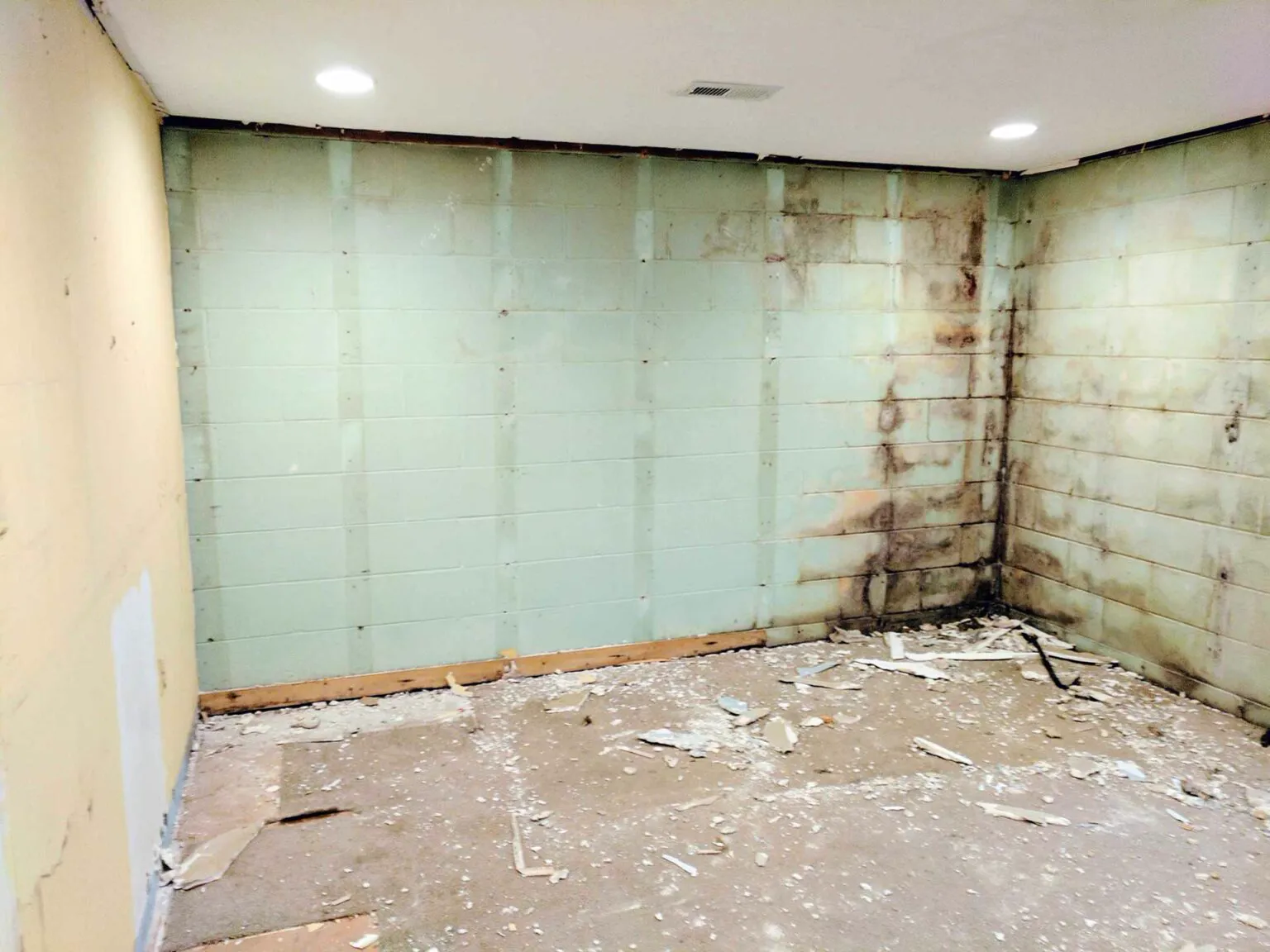
Then there’s the house itself, and our city has a real mix. Block basements from the 1970s and 1980s usually got tar on the outside and nothing else, since that was the standard then. Poured walls from the 1990s and 2000s came with a drain line, but decades of clay silt those lines up. On the older east side, plenty of homes sit on crawl spaces with no vapor barrier.
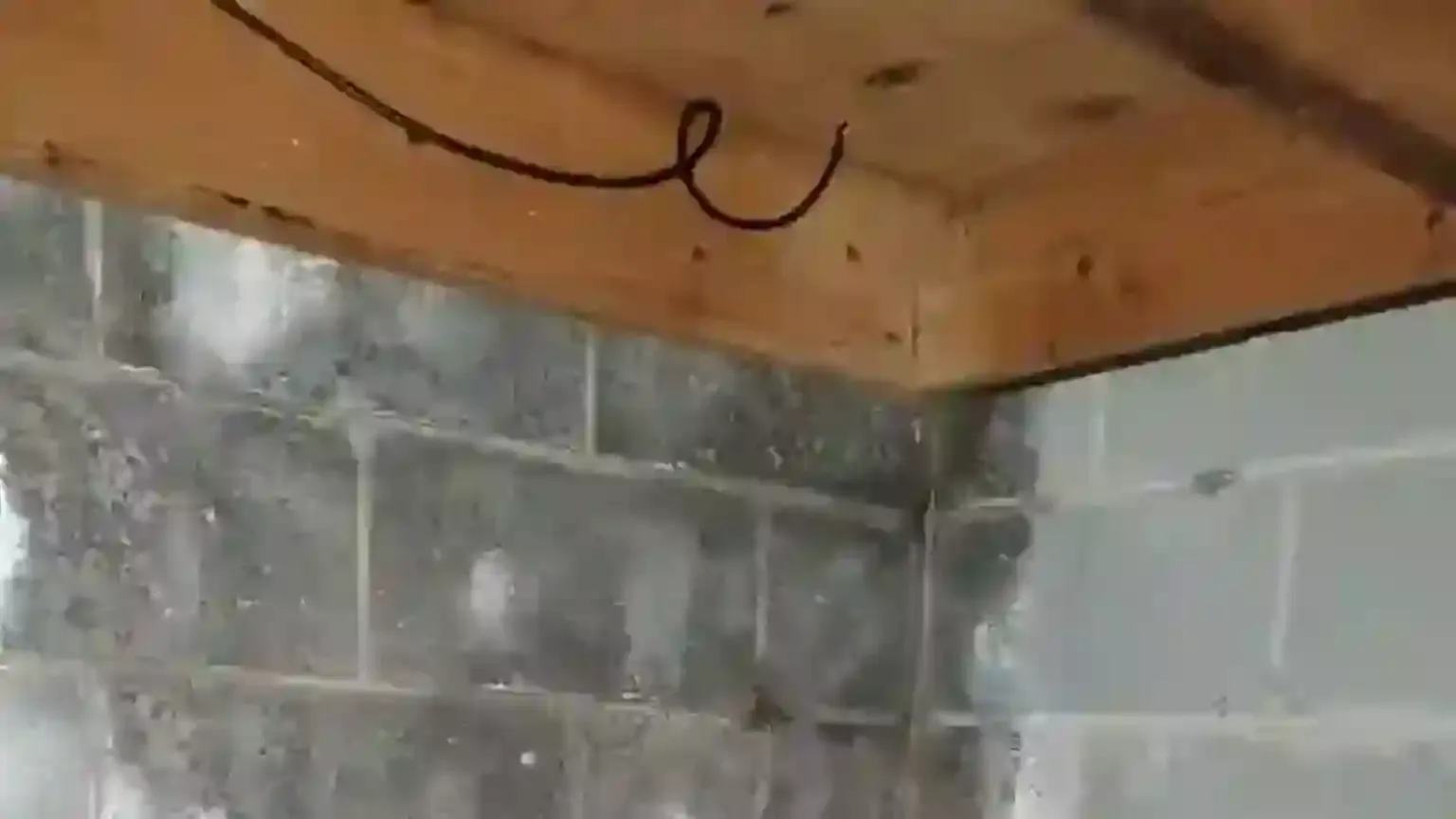
Older addresses have their own story. Around Historic Downtown Lawrenceville and the Courthouse district, houses went up long before anybody drew a drainage plan, so roof water has no organized place to go. Newer subdivisions like Rivermist have the opposite issue — the system exists, but it’s quietly clogged.
Worth knowing
Seepage and structural movement are two different conversations. Plenty of walls we see are damp while staying perfectly sound, and we’ll tell you which one you have before anybody talks money.
What does the job actually look like?
Every house is different, but the order rarely changes.
- Find the source. We start outside — downspouts, grade, gutters, and where the yard sends water. Sometimes the whole fix lives out there, which means a smaller invoice.
- Read the foundation. Block walls get checked differently than poured walls, since block has hollow cores that hold water like a row of cups.
- Write the scope. You get it on paper: what’s going in, where, and why.
- Open the perimeter. A narrow strip of slab comes up along the wet walls. It’s loud and dusty for a day, then it isn’t.
- Set the drainage low. Perforated pipe goes into clean stone below floor level, so water is caught before it reaches your floor.
- Route it to a sump. The pump then pushes that water well away from the house — not politely back into the flower bed for another try.
- Close it up clean. Fresh concrete, wall liner where it’s needed, and our mess loaded into our truck.
How long? Most interior systems here run two to four working days. Add a day when the basement is finished, and another if the sump has a long way to travel. Exterior work depends on what’s in the way, since a mature oak gets protected, not removed.
Timing helps too. Storm season here peaks in March and April, which the National Weather Service Peachtree City office tracks closely, so winter is a great window for interior work.
What would we want to know if it were our house?
Fair question, and we’ve asked it plenty — several of us live a few miles from Coolray Field, so this is our neighborhood too. If we were writing the check, here’s what we’d want first.
The four things we’d ask for
- Show me the source, not the symptom. Anyone can point at a wet spot. We’d want somebody to walk the yard and explain how water gets there.
- Photos before the concrete goes back. The stone bed and pipe should be documented while they’re visible, since after the pour nobody can prove a thing.
- Where does the water end up? Ask to see the discharge point on the ground. A pump that dumps six feet from the wall just restarts the cycle.
- A warranty you can read in one sitting. If it takes a lawyer to explain, it isn’t doing much for you.
We’d also want the smaller option offered first. Regrading a side yard and burying two downspouts sometimes fixes a basement completely, at a fraction of the price. That said, when water comes up under the slab, gutter work won’t touch it — and a straight contractor says so.
We’ve been fixing basements in Lawrenceville for over twenty years. That means we’ve probably already worked on a house in your neighborhood — maybe even on your street.
So what actually moves the number?
Straight answer: how much wall is involved, and how hard it is to reach. Nearly every waterproofing cost Lawrenceville estimate swings on those two before anything else. Because of that, a flat price over the phone is a guess — here’s what we actually weigh.
Price drivers, biggest first
- Linear feet. One wall versus a full perimeter is the largest swing on any job.
- Foundation type. Hollow block needs its cores relieved so trapped water can drain. Poured walls skip that step.
- Access. Built-ins, a bathroom, a bar, or a tight side yard mean careful work before the real work.
- Sump and discharge. Some homes have a usable basin already. Many have none, or one that quietly retired years ago.
- Discharge distance. A flat lot means a longer run to get water safely away.
- Outside corrections. Regrading, drain lines, buried downspouts. Sometimes this is the whole fix.
Small exterior corrections land at the low end. A full perimeter system with a new sump, a backup and a liner sits at the top, while most jobs land in the middle. After we walk your house, you get a written number with every line spelled out. To compare systems first, our guide to waterproofing options lines them up side by side, and the basement waterproofing page shows exactly what we install.
Curious whether pricing shifts south of town? Not much — the Snellville waterproofing cost breakdown covers similar soil and similar housing stock. And if your home sits on a crawl space rather than a full basement, which is common on the older east side, crawl space encapsulation is usually the better answer.
How should you get ready?
Barely at all, which surprises people. Clear about four feet along the walls we’re working on, and slide boxes toward the middle instead of hauling them to the garage. We’ll handle anything heavy. Pets do better upstairs while the saw runs, and that’s the list.
Can you do part of this yourself?
Absolutely, and we won’t pretend otherwise. Some of the best outcomes we’ve seen started with a homeowner and a shovel. These jobs are where your effort pays off.
Real DIY wins
- Extend the downspouts. Six to ten feet out beats a splash block every single time.
- Pull the grade back. Move soil and mulch away from the wall so the ground slopes down and away.
- Clean the gutters twice each fall. Overflowing gutters dump water right where you least want it.
- Keep notes. Which wall gets wet, after which kind of rain, and how fast. That log helps us more than any photo.
Now the other half, said with respect. Waterproof paint can’t beat pressure, so a coating on a block wall usually blisters in a season or two. It’s a raincoat on a submarine. Hydraulic cement has the same trouble, because plugging one spot sends water to the next weak joint.
Sub-slab drainage isn’t really DIY either, and not because of the tools. It’s because pipe set at the wrong depth looks identical to correct work until the first hard spring storm.
What do you do once it’s fixed?
Here’s the part almost nobody writes about. A good system asks very little of you, but “very little” isn’t “nothing,” so put fifteen minutes on the calendar once a year.
Your once-a-year checklist
- Test the pump. Pour a bucket of water into the basin, watch it kick on, then shut off.
- Walk to the discharge line. Make sure the outlet isn’t buried under mulch, leaves or a new flower bed.
- Check the backup power. If you have a battery backup, confirm it still holds a charge before spring.
- Look at the grade again. Soil settles, so top it up until it slopes away from the wall.
- Clear the gutters. Same as always, and still the cheapest waterproofing there is.
After that, honestly, you stop thinking about it. A homeowner near Rhodes Jordan Park told us the strangest part was realizing she hadn’t checked the basement in months. That’s the point — a room you trust, and a decision you feel good about.

Long term, the buried parts have almost nothing to wear out. The pump is the one piece with a service life, so plan to replace it near the ten-year mark, like a water heater.
Where we work around Lawrenceville
This is home base, so our trucks are minutes away rather than counties away. We cover Lawrenceville plus Snellville, Grayson, Dacula, Suwanee, Duluth, Lilburn, Loganville and the wider Gwinnett area. Whether you’re off Collins Hill Road, near the Square, or out toward the Alcovy side, we’ve worked on a foundation like yours nearby.
Questions Lawrenceville homeowners ask us
Yes, and you get it in writing before the work starts rather than after. Ask us to explain what’s covered and for how long, in plain words. If a warranty can’t be summed up in a sentence or two, it isn’t doing you much good.
Usually, yes. We open only the bottom section of wall and floor along the affected perimeter, then put everything back. Finished spaces sometimes hide damp behind paneling, so we check that first — and if we find it, you see it before we touch anything.
A dry, documented basement is a real asset when you sell, because buyers and inspectors both ask about it. Transferable warranty paperwork helps that conversation a lot. Beyond resale, you also get usable square footage back, which is value you enjoy right now.
Often within a few days, and sooner when a storm has just rolled through. Since we’re based in Lawrenceville, local visits are easy to fit in. Live support runs seven a.m. to eight p.m., seven days a week, and both the inspection and the estimate are free.
It depends mostly on how many linear feet of wall are involved and how hard that wall is to reach. Small exterior corrections sit at the low end, while a full perimeter system with a new sump sits at the top. We give you a written number after walking the house, never a guess over the phone.
Let’s find out what your Lawrenceville basement actually needs
We’ll walk the house with you, show you where water is getting in, and explain the fix in plain language. The inspection is free, the estimate is free, and nobody pressures you afterward.
(678) 914-5112Serving Lawrenceville and all of Metro Atlanta · $500 off projects over $3,500 · Live support 7am–8pm, 7 days a week