

Standing Water Basement Suwanee: What It Means and How It Gets Fixed
Water on the floor is not a mystery. Here’s what pushed it in, how to read it, and what the repair actually looks like.
It’s 2 a.m., the rain is hammering the roof, and you’re lying there doing the math on the basement. Then you go down with a flashlight and there it is — a shallow lake where the floor used to be. If you’re staring at a standing water basement Suwanee storms just delivered, take a breath. This is one of the most common calls we get, and it is very fixable.
Good news up front: water on the slab almost never means the house is hurt. It means water found an easier way in than it had a way out. That’s a plumbing-style problem, not a scary one, and it has an ordinary repair.
One safety note before anything else, and we’ll say it plainly. Never step into standing water while the power is on. Go to the panel, kill the circuits that feed the basement, and only then go look.
Where did all that water come from?
Here’s the thing — puddles and dampness are two different animals. A musty smell is vapor, which moves slowly through concrete. Standing water is bulk entry, which means water came through an opening in volume while the storm was running.
So it used one of a handful of doors. Water isn’t creative — it’s patient, and it picks the easy one.
- The cove joint. The seam where your wall meets the floor slab. Those two pours happened on different days, so they never bonded — it’s a seam, not a crack, and it runs your whole perimeter.
- A sump pump that quit. Power loss mid-storm, a stuck float, a clogged discharge line, or a pump too small for the job.
- A blocked drain line. Old drain tile silts up, and once it’s packed it stops draining and starts holding.
- A window well with no drain. If that drain is buried or missing, the well turns into a bucket sitting against your glass.
Now add our dirt. Georgia Piedmont clay soaks up a long rain and then holds it against the wall instead of letting it drain away. As a result, pressure builds in the soil, and pressure pushes. On hollow block walls it finds the cores, fills them like straws, and comes out low.
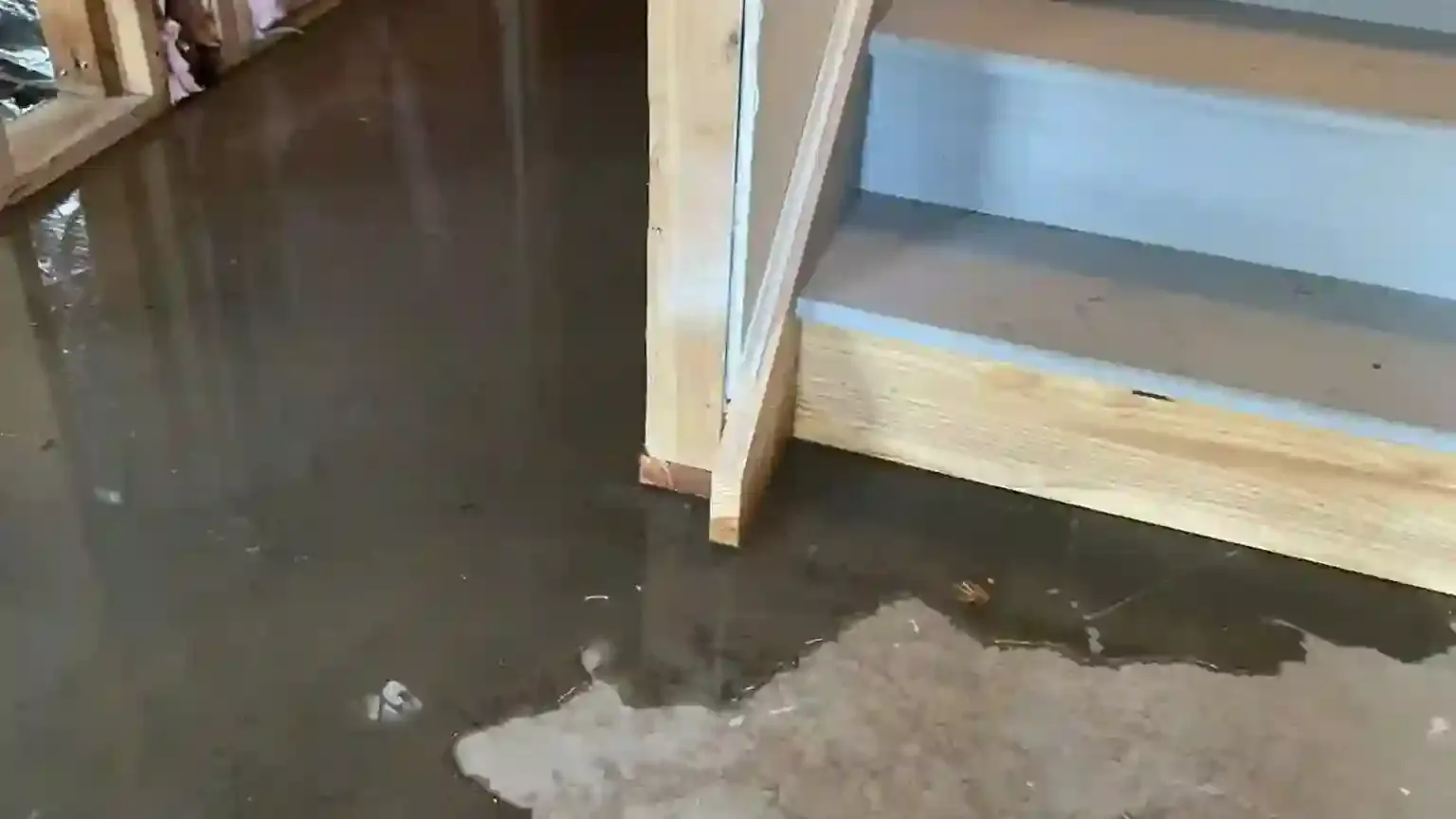
Suwanee gives this a local flavor, too. The land rolls down toward Suwanee Creek and the Chattahoochee, so walkout basements are everywhere. Cut a room into a hillside and the uphill side sits underground — not a flaw, but drainage has a job to do.
How do you read a wet floor?
Believe it or not, where the water sits tells most of the story. So walk the room with a flashlight and note the shape of it.
A puddle in one corner or along one wall. That points to a local entry — one window well, one bad downspout, one section of failed joint. Repairs like this are often the smallest ones we do.
Water across the whole slab, fairly even. That usually means pressure under the floor, not a single hole. Which sounds worse than it is, honestly. It just tells us the fix belongs under the slab instead of at one spot on the wall.
Water that drains off once the storm passes. Good sign — the soil loaded up and unloaded. But if it sits for days, groundwater is staying high, so a pump belongs in the plan.
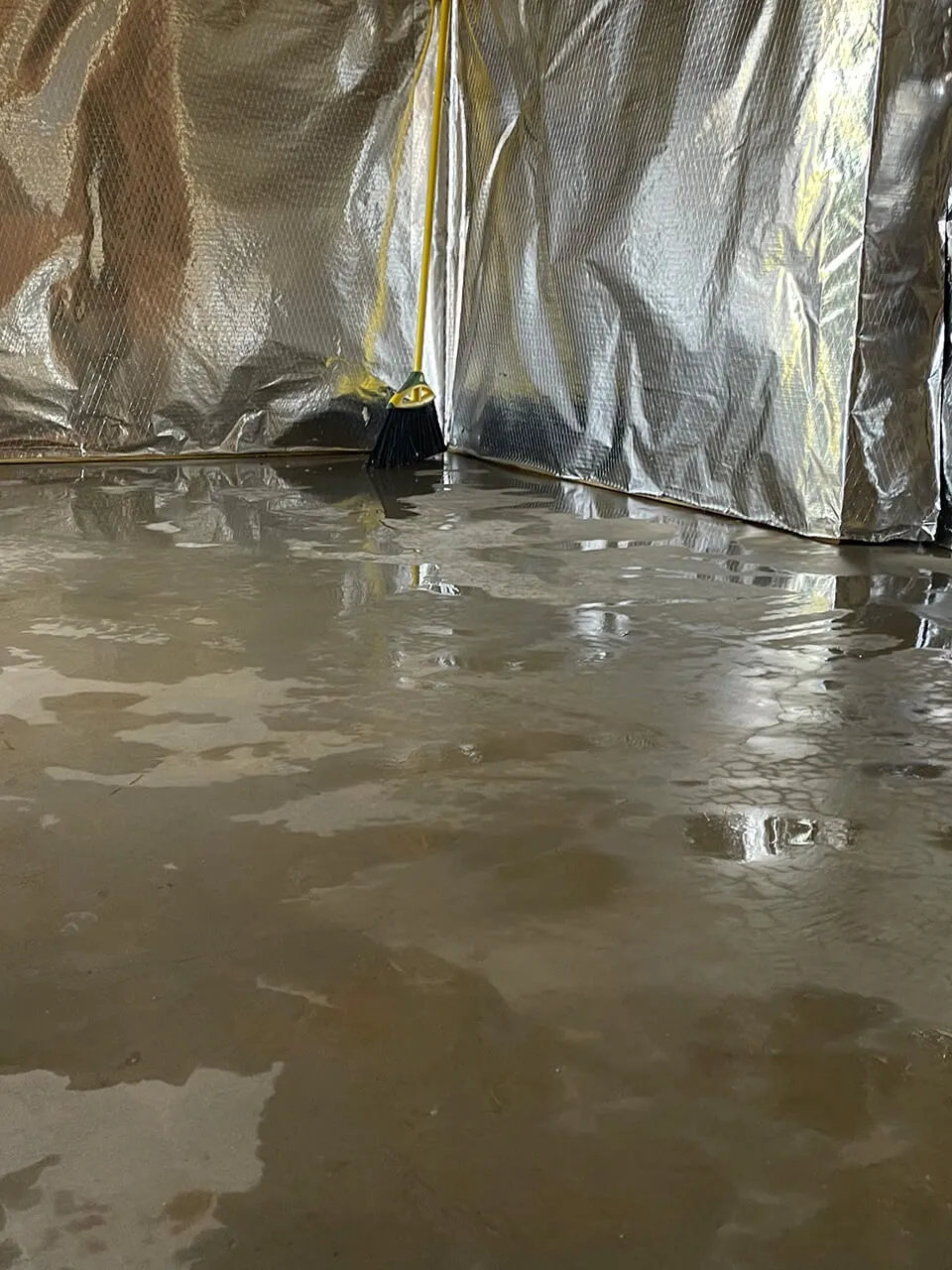
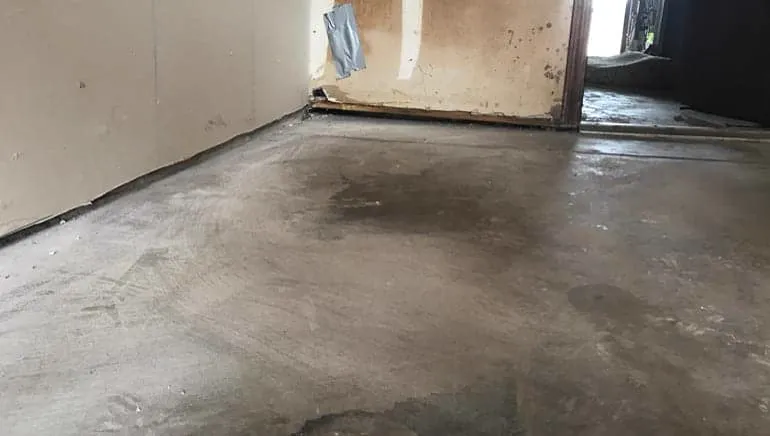
And what if you leave it? Stated calmly: it holds about the same for a while, then it gets a little worse each season, because clay keeps swelling and the seam keeps opening. Meanwhile the real cost is rarely the concrete. It’s the flooring, the drywall, and the boxes of stuff nobody wanted to move.
Good news
Water at the cove joint is a drainage problem, not a structural one. A wet slab and a moving foundation are two separate conversations, and most homes we visit are only having the first. We’ll tell you straight which one you’re in.
Here’s a number that explains why the shop vac feels hopeless. One inch of water across a 1,000-square-foot basement is more than 600 gallons. That’s about eleven bathtubs, which is roughly ten more than any of us signed up for on a Tuesday night.
What question tells you somebody actually diagnosed it?
Let’s slow down here. Plenty of folks look at a wet floor and start pricing a system right away. But the question that separates a real diagnosis from a guess is simple: “Where does the water go once we collect it?”
Because collecting water is the easy half. Discharging it — away from the house, uphill if the lot demands it, somewhere it won’t feed back into the same soil — is the half that decides whether the fix holds. If nobody walks outside with you and points at where the line ends, nobody has finished thinking.
One more worth asking: “why did this start this year?” Your house didn’t change. Something around it did, and around here that answer is often timing.
Here’s what we mean. Suwanee grew up in one fast wave in the late nineties and early two-thousands, so a whole city’s worth of original waterproofing is hitting its first real failure at the same time. Drain tile silts up. Original sump pumps reach twenty-five and quietly retire, usually during the storm that also knocked the power out — which is either bad luck or excellent comic timing.
We see it constantly. A homeowner in Olde Atlanta Club calls after a spring storm, then somebody in Edinburgh describes the same night two weeks later. Over near the Bear’s Best area, where lots step down hard, it’s usually grading that settled and now tilts back toward the house. In fact, most standing water basement Suwanee calls we take come from homes built between 1995 and 2005. Nobody’s unlucky — their systems just aged out together.
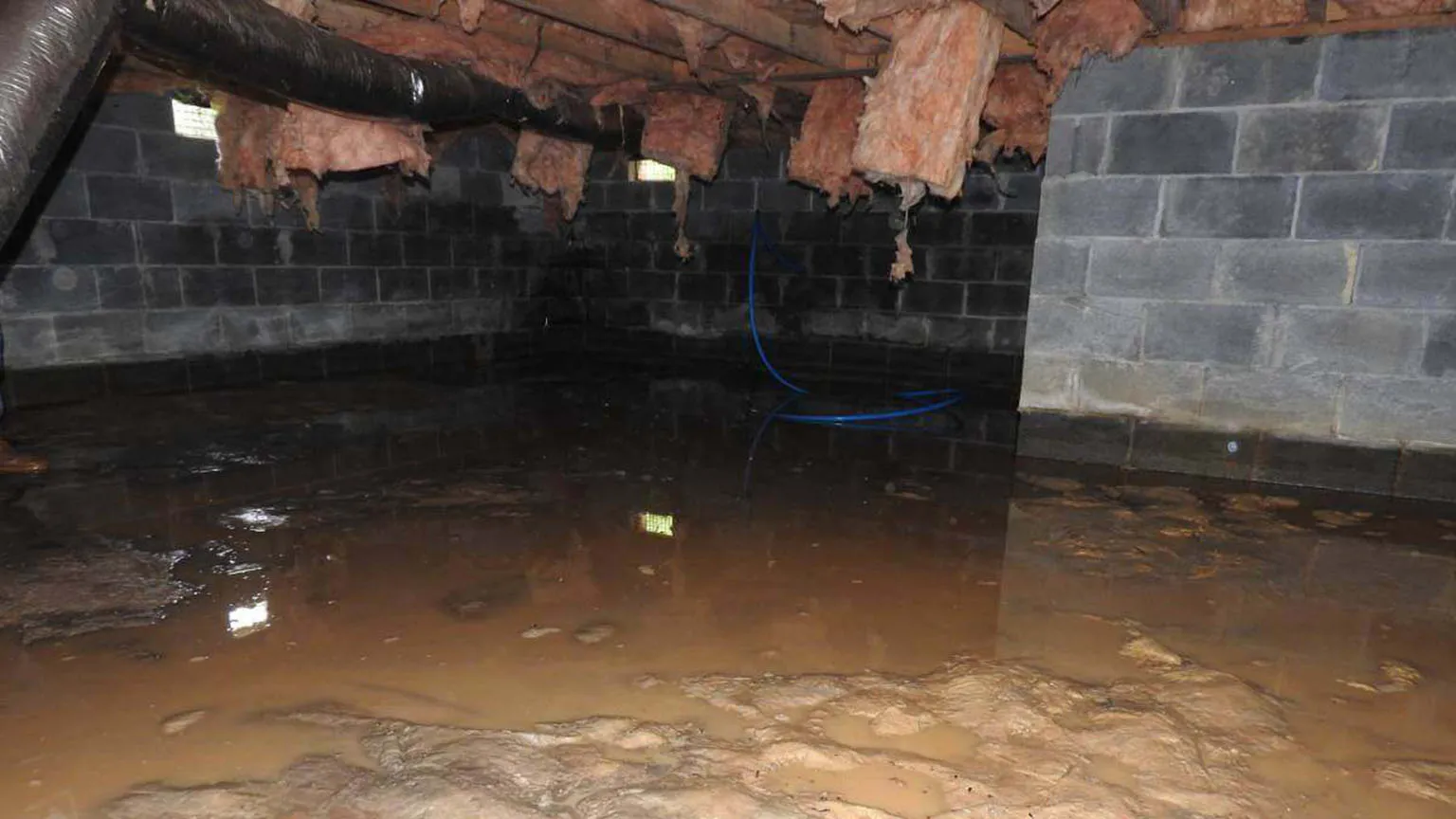
What does the actual repair look like?
Let’s walk it so nothing feels like a surprise. The whole idea is this: stop trying to block water, and give it an easier path than the one it’s using now.
- Find the source first. We walk the outside — grading, gutters, downspouts, window wells — then the inside. Sometimes the answer is smaller than expected, and we say so.
- Open a channel at the perimeter. A narrow strip of slab comes up along the affected walls. It’s loud and dusty for a day, then it’s done.
- Set drainage below the floor. Perforated pipe in clean stone, under the slab, so water gets collected before it reaches your floor.
- Route it to a sump built right. Correct pump size, a check valve so water can’t run back down, a sealed lid, and a battery backup for the night the power drops.
- Send the discharge somewhere useful. Well away from the foundation, not back into the same clay for a second try.
- Close it up clean. Fresh concrete over the channel, wall liner where it’s called for, and our mess hauled off.
Notice what’s missing from that list? Paint. Sealers are fine products for damp block, but a coating can’t beat pressure — it’s a raincoat on a submarine. That’s why we put a warranty behind a drainage system and not behind a bucket.
We quit trying to keep water out years ago. Now we assume it’s coming, and we build it a better way out.
Wondering about price? It depends mostly on how much wall is involved, how the lot drains, and whether a pump is part of it — so we walk it before we quote it. Our breakdown of basement flooding cost covers every factor that moves the number, and the systems themselves are explained on our basement waterproofing page. If you’re also seeing stair-step cracks or a door that stopped latching, our foundation repair page is the better read.
Which rooms does this quietly affect?
Now for the part almost nobody connects. A wet basement isn’t only a basement problem — it’s a whole-house air problem, and the symptoms show up two floors away.
Air moves up through a house naturally. Warm air rises and escapes at the top, so replacement air gets pulled in from the lowest point. In other words, whatever your basement smells like, the upstairs is slowly breathing a version of it.
That’s why families call us about a musty guest room, a closet that never smells right, or allergies that flare in one bedroom and nowhere else. Meanwhile the actual water is sitting under the stairs. Worth knowing, calmly: mold can begin on wet organic material — cardboard, drywall paper, carpet pad — in roughly 24 to 48 hours. That’s not a scare, it’s just a clock, and drying fast beats it.
Damp air also feels colder in winter and stickier in summer, so the HVAC runs longer chasing a number it can’t hit. The National Weather Service flood safety guide is a solid ten-minute read on the water side, and FEMA’s building science resources cover protecting a property long-term.

Picture the other side of this. A hard spring storm rolls through, and next morning you walk down for laundry without checking the corners first. Kids get the floor back for the ping-pong table. Better yet, the next ugly forecast comes and goes and you never think about it — which is the whole point.
Why does hiring somebody local actually matter?
Because twenty-plus years on these exact houses teaches you things a spreadsheet won’t. Most of the homes we visit for a standing water basement Suwanee inspection sit within a few miles of each other. We’ve worked plenty of sloped lots off Moore Road, and we know how fast water moves on the low ground near the Suwanee Creek Greenway after a wet week. Families out by George Pierce Park mostly want one thing — a basement the kids can actually use.
Our shop sits about fifteen minutes south in Lawrenceville, so the crew doing the work is the crew that picks up the phone in year six. You get a written scope, proof of insurance, a real warranty, and a clean job site. If a friend one town over describes the same 2 a.m. story, we handle Peachtree Corners basement flooding too.
Where we work around Suwanee
Suwanee is a quick run north for us, so we’re up this way most weeks. We also cover Duluth, Buford, Sugar Hill, Johns Creek, Lawrenceville, Cumming, Sandy Springs, Peachtree Corners, Berkeley Lake and Norcross, plus the wider Gwinnett area. If you’re near Town Center or anywhere along Lawrenceville-Suwanee Road, odds are we already have a truck close by.
Questions Suwanee homeowners ask us
Once or twice a year still means there’s an open path — the rain just has to be heavy enough to use it. Sometimes the fix really is small, like a window well drain or a downspout extension. That’s why we look before we recommend anything, and plenty of these turn out cheaper than folks expect.
For cleanup, they help a lot, so keep using them. For the cause, no — a vacuum removes water that already arrived and changes nothing about why it arrived. Since one inch across a 1,000-square-foot basement is over 600 gallons, the vac is also losing a race it can’t win.
On wet organic material like cardboard, carpet pad or drywall paper, growth can begin in roughly 24 to 48 hours. So the priority is drying fast — move stored items up, run fans and a dehumidifier, and get air across the space. Bare concrete and block are far more forgiving than the soft stuff sitting on them.
Kill power to the basement at the panel before you step into any water. After that, lift what you can off the floor, start removing water, and take a few photos for your records. Then note where the water is sitting, because that detail helps us find the entry point quickly.
Because our red clay drains slowly and holds water right against the wall. A light rain soaks in and disappears, but a long heavy one saturates the soil until pressure builds and pushes through the cove joint or the block cores. Once drainage relieves that pressure, the same storm passes without a puddle.
Let’s find out where that water is getting in
The inspection is free, the estimate is free, and nobody pressures you at the end. We’ll show you the entry point, explain the fix in plain English, and put the scope in writing — even if the answer turns out simpler than you feared.
(678) 914-5112Serving Suwanee and all of Metro Atlanta · $500 off projects over $3,500 · Live support 7am–8pm, 7 days a week