

Standing Water Basement Dunwoody: Why It Happens and What Actually Stops It
Water on the floor after a storm isn’t a mystery, and it isn’t an emergency. Here’s where it comes from and how the repair works.
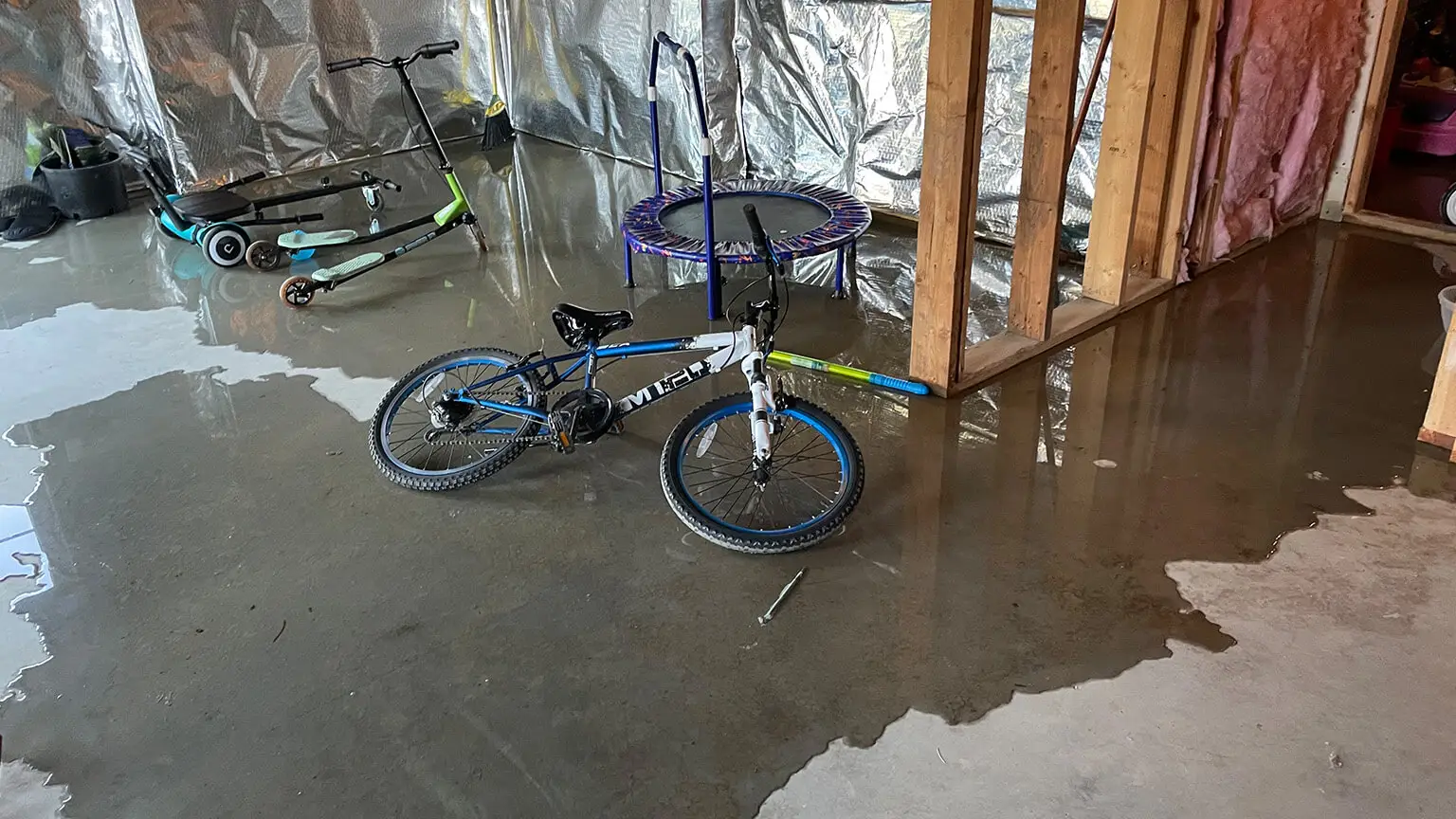
Is this normal? That’s the question nobody wants to say out loud after walking downstairs and finding an inch of water sitting on the slab. So let’s answer it plainly: a standing water basement Dunwoody homeowners find after heavy rain is very common here, and it is very fixable. You didn’t miss something obvious. Your house just met more water than its original drainage was built to move.
Good news? Water on the floor is one of the easier problems to read, because it leaves clues. Once you know how to read them, the whole thing stops feeling random.
What should you do first?
Before anything else, handle the electricity. Never step into standing water while power still runs to that space. Go to the panel, shut off the basement circuits, and only then go down. If the panel itself sits in the wet area, stop and call an electrician instead. After that, snap a few photos from the stairs and lift what you can safely reach off the floor.
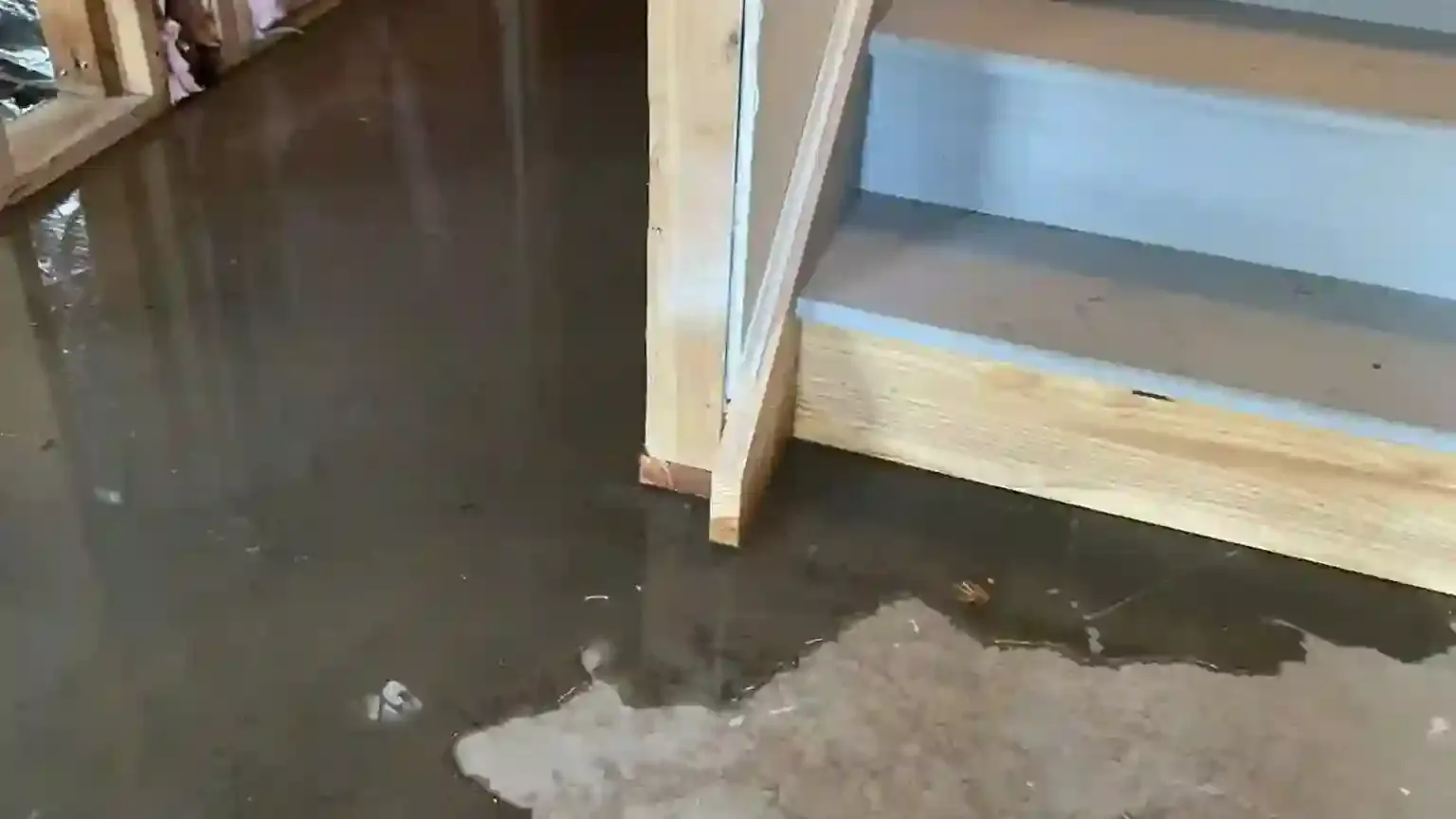
Where is the water coming in?
Here’s the thing: standing water is a different animal than dampness. A musty smell means vapor, and vapor drifts. Standing water means bulk entry — a real opening with real volume behind it. So instead of hunting a mystery crack, we check four usual suspects.
The cove joint. That’s the seam where your wall meets the floor slab. Those two pieces of concrete were poured on different days, so they never truly bonded. As a result, the seam runs your whole perimeter like a hairline door, and pressure outside pushes water right through it. It isn’t a crack — it’s a seam. That’s why sealing cracks so often changes nothing.
A sump pump that quit. Pumps fail predictably. Power drops during the same storm that needed the pump, the float sticks, the check valve is missing so lifted water slides back down, or the pump was undersized from day one. Sometimes the discharge line outside is simply packed with mulch and roots.
A blocked drain line. Original footing drains from the sixties and seventies silt up, and oak and poplar roots squeeze them too.
A window well with no working drain. That well is a bucket set against your foundation, and a full bucket pours straight through the window frame.
Good news
None of those four is a structural problem on its own. Water on the slab and a moving foundation are two different conversations, and most homes we visit are only having the first one. We’ll tell you plainly which one you’re in.
Why does this happen so much in Dunwoody?
Dunwoody’s split-levels and ranches were built when “waterproofing” meant a spray coat of asphalt on the outside of a block wall. Fifty years of Georgia clay later, those walls are telling on themselves.
Red clay is the other half. Clay doesn’t drain — it holds. After a long rain, the soil hugging your foundation stays saturated for days and keeps leaning on the wall the whole time. That push is hydrostatic pressure, and hollow block walls have cores inside that fill like straws. Water rises in the cores, then exits at the seam down low.
Terrain stacks on top. Streets off Mount Vernon Road roll up and down, so plenty of homes sit below street grade. We see it in Redfield and over in Wynterhall, where one hard storm sends sheet flow toward houses standing downhill of everybody else. That’s not bad luck — that’s gravity.
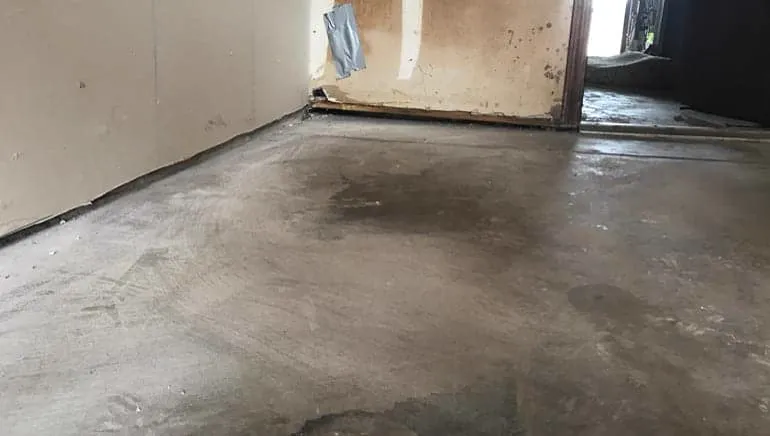
What does the water want?
Flip it around and think like the water instead of the homeowner. It has no plan and no grudge. It does one thing: move toward the lowest, easiest place available, and never tire of trying.
From the water’s side, your yard is a slide, your soil is a sponge, and your basement is the lowest open room for a hundred feet. Honestly, it’s flattered you invited it in. That’s also why blocking it rarely holds — a sealed wall just tells the water to try one foot to the left.
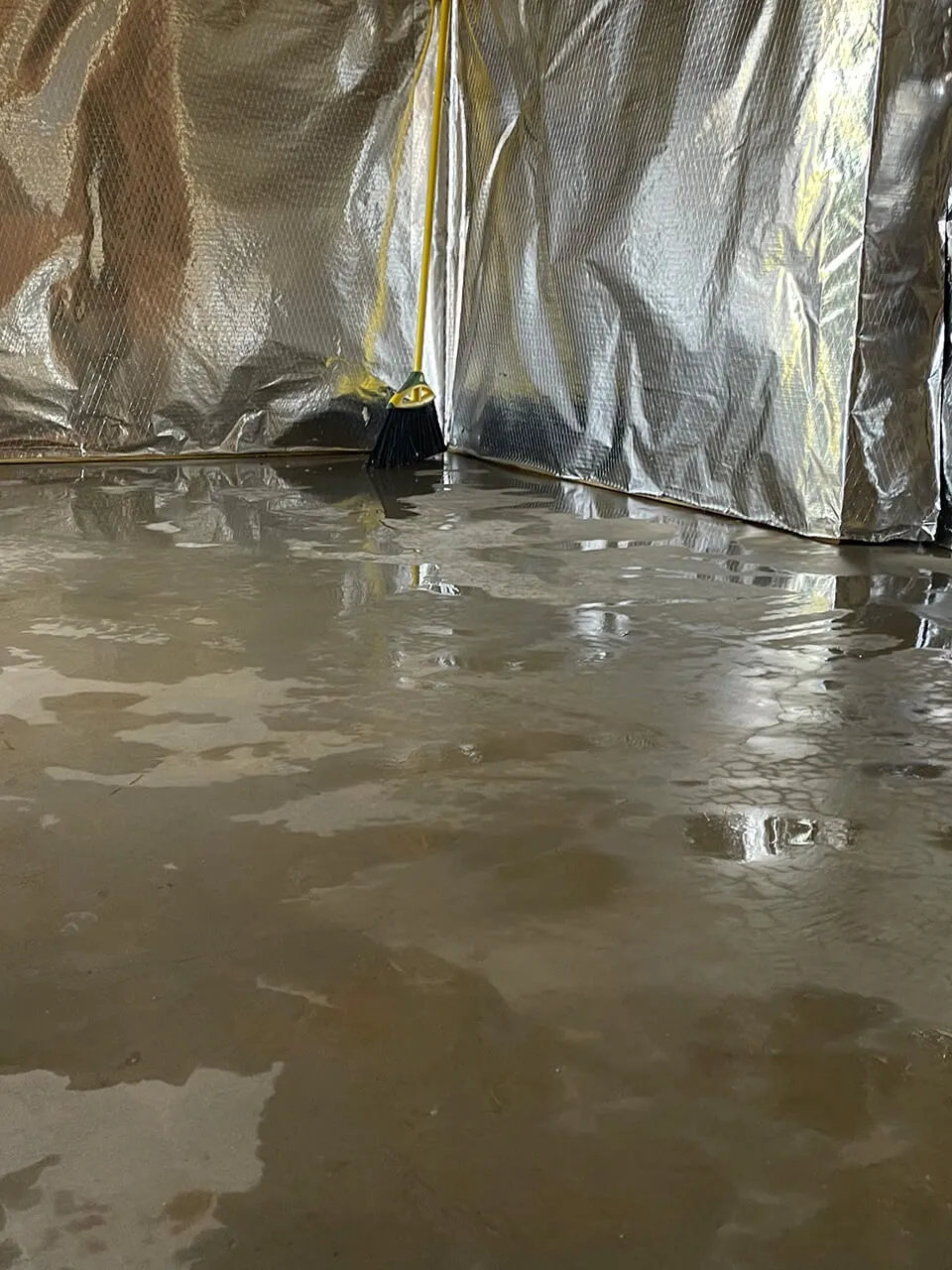
Better yet, the water leaves you a map. A puddle in one corner points to a local entry, like a window well or one failed section. Water spread evenly across the slab points to pressure pushing up from underneath. So we read the floor before we quote anything.
We stopped trying to block water years ago. Now we assume it’s coming, and we build it a better way out.
How do you tell mild from serious?
Fair question, and you deserve a straight answer instead of a sales pitch. We sort what we find into three buckets, and none of them are frightening.
Mild. A thin film that shows up only after an unusually hard rain and dries on its own. In other words, your system still works. It just got outvoted once.
Moderate. Water every serious storm, in the same spot, plus a stain line and rust on metal touching the slab. Most standing water basement Dunwoody calls land right here, where water arrives on a schedule and the room is keeping score.
Active. Water that lingers for days, a pump running nonstop, or water across most of the floor. That said, active still doesn’t mean urgent. It means we should stop guessing and come look.
What if it’s left alone? It holds steady a while, then gets a little worse each season, because clay keeps swelling and drains keep silting. The cost rarely lands on concrete. It lands on flooring, drywall, and the boxes you meant to sort out someday.
One more thing before you call anyone. Standard homeowners insurance typically excludes groundwater seepage, and sump pump failure coverage is usually a separate rider. That’s a good phone call to make on a dry Tuesday.
What does the real fix look like?
Let’s walk it, so nothing surprises you. The plan comes down to one idea: collect the water before it reaches your floor instead of mopping it afterward.
- Find the source first. We walk the outside — grading, downspouts, window wells — then the inside. Sometimes the answer is smaller than expected, and we say so.
- Open a channel at the perimeter. A narrow strip of slab comes up along the affected walls. It’s loud for a day or two, then it’s finished.
- Set drainage below the floor. Perforated pipe in clean stone, tied into the cove joint so pressure finally has somewhere to release.
- Route it to a proper sump. Right-sized pump, real check valve, sealed lid, and a discharge line that carries water well away from the house.
- Close it up clean. Fresh concrete over the channel, wall liner where it’s called for, and our mess hauled off.
Notice what nobody did on that list? Paint anything. Sealers are fine for a damp spot, but a coating can’t beat pressure — it’s a raincoat on a submarine. That’s why we warranty a drainage system in writing and not a bucket of paint.
Curious what it runs? It depends mostly on how much wall is involved and whether the space is finished, so we walk it before we quote it. Our breakdown of basement flooding cost covers every factor that moves the number, and the systems are explained on our basement waterproofing page. If your walls are bowing too, foundation repair is the first conversation.

What does a wet floor have to do with the air upstairs?
More than most people expect. Air in a house doesn’t sit still. Warm air rises and escapes through the attic, which pulls replacement air up from the lowest level. So a good share of what you breathe upstairs started in the basement.
That matters because mold can begin on wet organic material — cardboard, drywall paper, carpet pad — in roughly 24 to 48 hours. It’s why we push drying fast instead of waiting for the weekend. The CDC’s guidance on mold cleanup after flooding is a short, neutral read.
Around here it shows up in a specific way. Plenty of 1980s finished basements have paneling hiding block wall, and moisture gets behind it where nobody looks. Folks in Branches call us about a smell long before they ever see water.
Now picture the other version. The slab stays dry through a March storm that fills the creek at Dunwoody Nature Center. That smell at the bottom of the stairs is simply gone. Instead of a room you apologize for, you get a room you use — and on the next ugly forecast, you don’t think about it at all.
Why does hiring somebody local matter?
Because we’ve spent twenty-plus years on these exact houses. A lot of our work lands within a couple of miles of Dunwoody Village, on homes whose original drainage is old enough to have grandchildren.
We also know Dunwoody homeowners ask good questions and hate being rushed, which suits us fine. You get a written scope, proof of insurance, a warranty we can explain in one sentence, and the same crew in year six. For storm-day guidance, the National Weather Service flood safety page is worth a bookmark. If a relative up the road has the same trouble, we handle the Roswell standing water basement calls too.
Where we work around Dunwoody
Our shop sits about thirty minutes northeast in Lawrenceville, so we’re through this area constantly. Along with Dunwoody, we cover Sandy Springs, Brookhaven, Peachtree Corners, Chamblee, Doraville, Norcross, Tucker and Duluth, plus the wider DeKalb area. If you’re near the Perimeter or off Mount Vernon Road, odds are we already have a truck close by.
Questions Dunwoody homeowners ask us
Mold can begin on wet organic material in roughly 24 to 48 hours, and basements hold plenty of it — cardboard, drywall paper, carpet pad, wood trim. So the clock starts when the water arrives, not when you notice it. Get air moving quickly and you usually stay ahead of it.
Shut the power to the basement off at the panel before you step into standing water. After that, take photos for your records, lift what you can reach off the floor, and start fans or open windows. Then call someone to find the source, because removing the water is only half the job.
Georgia red clay holds water against your foundation instead of letting it drain away. Once that soil saturates, it builds pressure that pushes water through the seam where the wall meets the floor. Light rain never saturates the clay enough to build that pressure, so the basement stays dry.
Standard homeowners policies typically exclude groundwater seepage, which is what most basement water actually is. Coverage for sump pump failure is usually a separate rider you have to add on purpose. Call your agent and ask about both by name, ideally on a dry day rather than a wet one.
Aim to have standing water out and air moving within the first day. Fans, a dehumidifier and open interior doors do most of the work, and pulling up soaked carpet pad helps more than almost anything else. If the water sat for days or came from a sewer line, bring in a professional cleanup crew.
Let’s find out where that water is getting in
The inspection is free, the estimate is free, and nobody pressures you at the end. We’ll show you the entry point, explain the fix in plain English, and put the scope in writing. Come the next big storm, your Dunwoody basement won’t be something you have to think about.
(678) 914-5112Serving Dunwoody and all of Metro Atlanta · $500 off projects over $3,500 · Live support 7am–8pm, 7 days a week