

Standing Water Basement Roswell: What It Means and How It Gets Fixed
Where the water comes in, how to read the puddle, and why this is ordinary, fixable work on a Roswell hillside.
The line usually shows up in the middle of an inspection report, right between the water heater and the deck rail: evidence of standing water on basement slab. Nine words, and suddenly a sale everybody felt good about has a question mark in it. If that’s the page you’re staring at, take a breath — a standing water basement Roswell inspectors flag is one of the most common findings in this city, and it’s also one of the most fixable.
Here’s the thing. That note doesn’t mean the house is failing. It means water got in as water, not as dampness, and somebody wrote it down honestly. So let’s walk through the cause, how to tell mild from serious, and what the repair looks like.
Where does bulk water actually get in?
Short answer: not through the concrete. A damp wall is vapor moving slowly through porous block. A puddle is bulk entry — water found an opening and came through as a stream. Those are two different conversations, and yours is the second one.
In Roswell, four culprits cover almost everything we find. Hydrostatic pressure at the cove joint. A sump pump that quit. A drain line silted up and no longer carrying. Or a window well whose drain gave up years ago and now works like a bucket.

The cove joint deserves its own paragraph, because most people have never heard the term. It’s the seam where your wall meets the floor slab. Those two pieces of concrete were poured on different days, so they never truly bonded — which makes that seam a door, not a crack. Water under pressure picks the easiest door in the house.
Georgia red clay is the other half. Clay holds water instead of draining it, so after a long rain the soil beside your wall stays saturated for days. Pressure builds, then pushes through the hollow cores of block wall and out along that seam. Nothing broke. Something just leaned harder than the seam could hold.
One safety note, said plainly
Never step into standing water while power is on down there. Kill the circuit at the panel first, from dry ground, then go look. If the panel itself is in the wet area, call an electrician instead. It takes two minutes and it settles the question.
How do you read the puddle?
Good question, and you can do a lot of this yourself before anyone knocks on your door. With a standing water basement Roswell homeowners often assume the worst, but where the water sits tells you plenty. Start with the shape of it rather than the size.
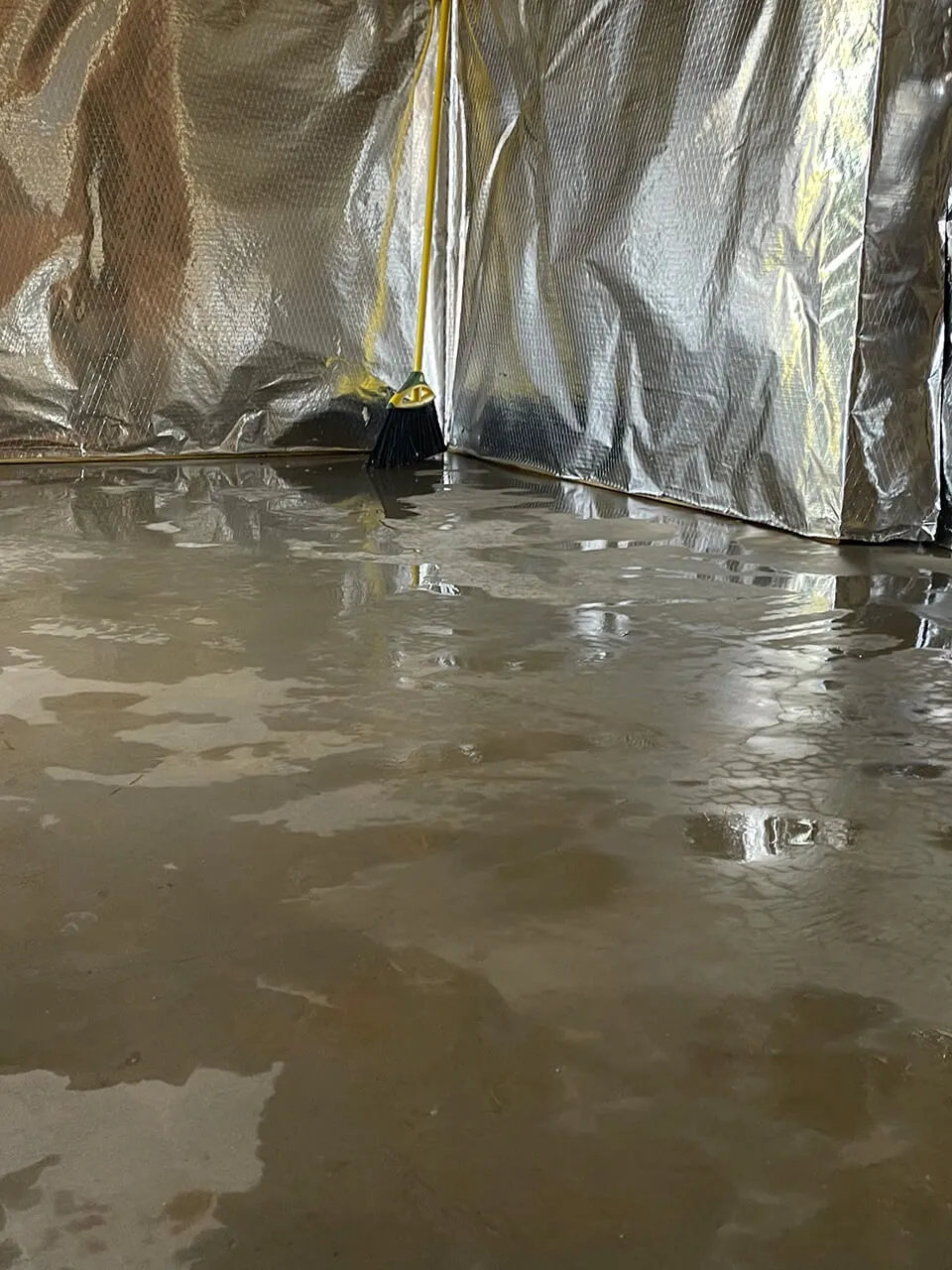
A puddle parked in one corner points to a local entry — a bad window well, a cracked wall penetration, a downspout dumping right outside. Water spread thin across the whole slab points to pressure underneath it, pushing up through the cove joint all the way around. Meanwhile a trail leading back to a sump pit says the pump is the problem, not the wall.
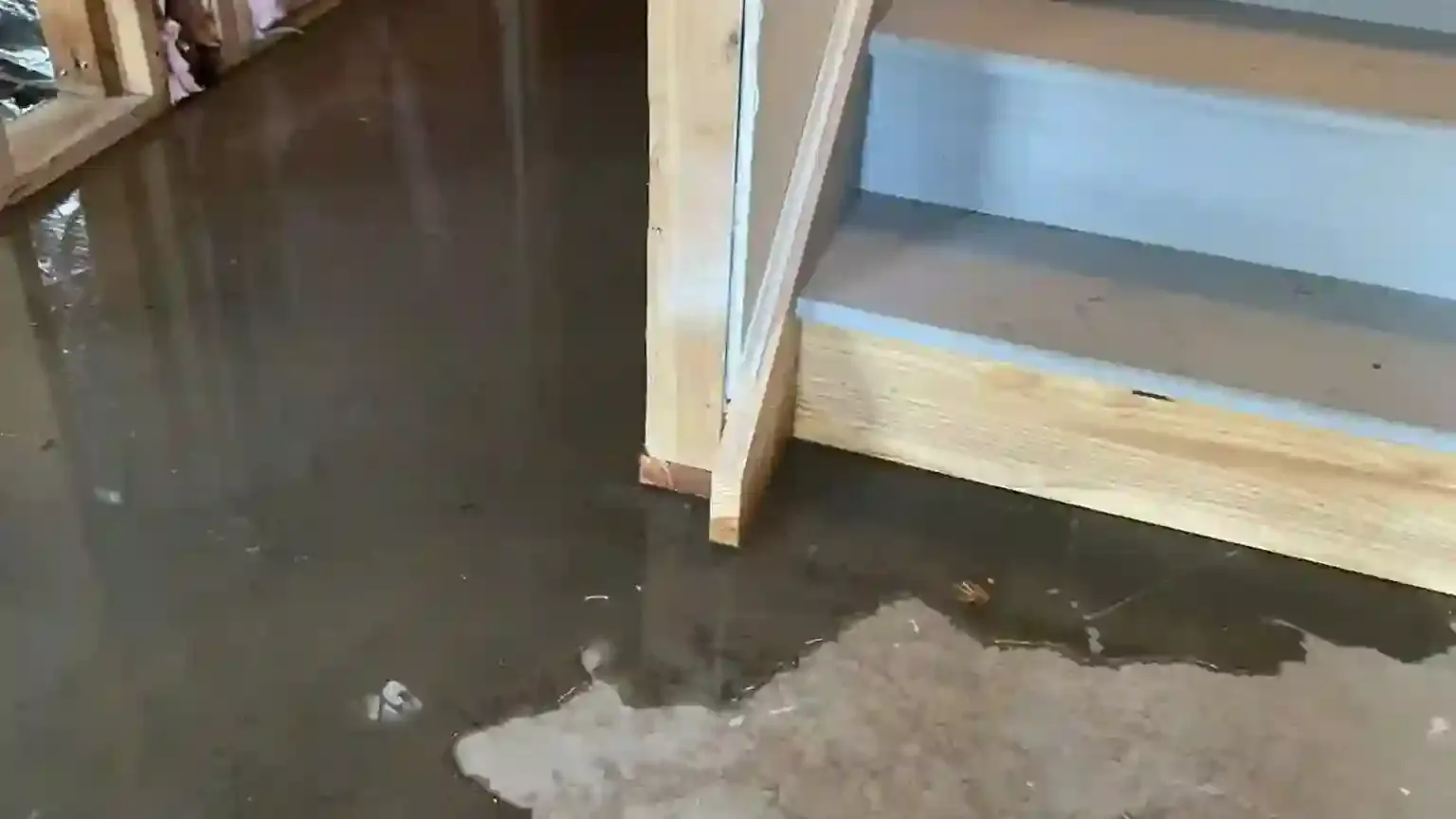
Sump pumps, by the way, fail in boring and predictable ways. Power drops during the same storm that needed the pump. The float sticks. The unit is undersized for a hillside lot. There’s no check valve, so water it just lifted slides back down. Or the discharge line outside is clogged with silt. None of that is exotic, and all of it is cheap to check.
What happens if it’s left alone? Honestly, the concrete holds up fine. The clock is on everything else — drywall, flooring, stored boxes — because mold can begin on wet organic material in roughly 24 to 48 hours. So drying speed matters more than almost anything else, and we’d rather you run fans today than wait on a quote.
Why do two estimates land thousands apart?
This next part is the reason two companies can look at the same wet floor and hand you numbers that don’t resemble each other. It isn’t markup. It’s that they’re solving two different problems, and only one of them is yours.
One estimate prices the symptom. Pump swap, patch the seam, coat the wall, done in a morning. The other prices the source — where water collects, how it travels, and where it needs to go instead. On a flat lot those answers are often close. On a Roswell hillside they’re not.
Because Roswell is built on hills. Water always wins on a hill unless somebody gives it somewhere better to go, and that’s the whole job. Lots here sit above the river bluffs and cut into the ravines around the Roswell Mill and Vickery Creek Falls, so runoff arrives with real speed behind it.
Retaining walls are the local wildcard. Plenty of homes up in Country Club of Roswell have a wall holding back the uphill side of the yard, and when its drainage plugs, that wall stops being a wall and starts being a dam pointed at your foundation. Clear the weep drainage and the basement often calms down on its own. An estimate that never walked the yard would miss that entirely.
Grade is the other one. Along parts of Crossville Road the land keeps falling past the driveway, so a downspout dumping two feet from the house is basically aiming a hose at the seam. Ask any company you call one question: what did you find outside? If the answer is thin, the price is a guess. Our breakdown of basement flooding cost lays out every factor that moves the number.
What does the real fix look like?
Want the whole thing before anyone shows up? Fair. It comes down to one idea: stop trying to block water and start giving it an easier route than the one it’s using.
- Find the source outside first. Grade, gutters, downspout ends, window wells, retaining wall drainage. Sometimes the answer is smaller than you feared, and we say so out loud.
- Test what’s already there. Pump, float, check valve, discharge line. A pump that can’t lift water on a hillside will fail again next spring.
- Open a channel at the perimeter. A narrow strip of slab comes up along the affected walls. Loud and dusty for a day or two, then it’s finished.
- Set drainage below the floor. Perforated pipe in clean stone, under the slab, so water is caught before it reaches your floor.
- Route it to a sump and out. Discharge goes downhill, well away from the house, not back beside the foundation for a second run at it.
- Close it up clean. Fresh concrete over the channel, wall liner where it’s called for, our mess hauled off.
Notice what’s missing from that list? Paint. Coatings are decent products, but a coating can’t beat pressure — it’s a raincoat on a submarine. That’s why we warranty a drainage system in writing and never a bucket of sealer. The systems are laid out on our basement waterproofing page.
We quit trying to stop water years ago. Now we assume it’s coming, and we build it a better way out.
Out along the Chattahoochee Plantation edge we run into crawl spaces doing the same thing on a smaller scale, and the approach barely changes. If your walls also show stair-step cracking or a door that stopped latching, that’s a separate check, and our foundation repair page covers what we look for.

What did this look like on a real house?
A homeowner over in Martins Landing called us after a wet March. Seventies house, walkout basement cut into the slope, an inch of water across two-thirds of the floor — and a listing appointment already on the calendar.
So we walked the outside first, the way we always do. The original sump discharge ended eight feet from the wall and had silted shut, so the pump was faithfully lifting water and handing it right back to the soil beside the foundation. Meanwhile the float was catching on old wiring in the pit. The wall itself, for the record, was in good shape.
The plan was ordinary. New pump sized for the slope, a real check valve, a discharge line run downhill and daylighted well away from the house, plus interior perimeter drainage along the two walls taking pressure. Three days and one dusty saw cut.

Here’s the part that stuck with us. When the buyer’s inspector came back through, the homeowner didn’t get defensive — he handed over the written scope and the warranty and let the paperwork talk. That’s the feeling worth chasing. Not relief. Pride. My house is solid, and I take care of it.
Picture your own version. Next spring the rain comes hard off the ridge, you glance at the forecast, and you don’t think about the basement at all. The stuff down there is just stuff again. Better yet, the room becomes usable — a gym, a playroom, an office with a door that closes.
Why does hiring somebody who knows this terrain matter?
Because Roswell isn’t one kind of house. Downtown you’ve got genuinely historic homes on stone and rubble foundations with dirt-floor cellars, then a big belt of seventies and eighties subdivisions carved into hillsides, plus newer infill on top of both. A crew that only knows flat suburban block will read the wrong story on a bluff lot near the Chattahoochee Nature Center.
We’ve spent twenty-plus years on these exact hills, and most of the standing water basement Roswell calls we take sit within a few miles of each other. Our shop is about thirty minutes east in Lawrenceville, so the crew that does the work is the crew that answers the phone in year six. For a neutral outside read, the National Weather Service flood safety guide is worth ten minutes, and FEMA’s building science library covers how to protect a property from flooding without any sales pitch attached. If a neighbor a few miles north is seeing the same thing, we handle the Milton standing water basement calls too.
Where we work around Roswell
Roswell keeps us busy year-round, so we’re usually somewhere on this side of the river. We also cover Alpharetta, Milton, Sandy Springs, Johns Creek, Marietta, Dunwoody, Peachtree Corners, Duluth, Suwanee and Woodstock, plus the wider Fulton area. If you’re between GA-400 and the Chattahoochee, odds are good we have a truck nearby this week.
Questions Roswell homeowners ask us
Kill the power to that area at the panel before you step in any water. Then get the water out and get air moving — a wet vac, fans, and a dehumidifier do most of the early work. After that, lift anything soft off the floor and take photos for your records before you clean up.
Because it takes saturated soil to build enough pressure to push water through. Light rain soaks in and drains, but a long storm fills the clay beside your wall and it stays full for days. That pressure finds the cove joint, which is a seam rather than a crack, and comes through there.
It depends on where the water came from, so read your policy before you assume either way. Sudden failures like a burst pipe are often covered, while groundwater seeping in from outside usually is not. Some policies add a sump pump failure rider, and that one is worth asking your agent about.
Faster than most people expect. Mold can start growing on wet organic material within roughly 24 to 48 hours, so drying speed matters more than almost anything else you do. Get water off the floor the same day, then keep fans and a dehumidifier running until things test dry.
That’s pressure under the slab rather than against the wall. Saturated ground pushes water upward, and the easiest opening is the seam where the floor meets the wall. It’s a normal finding on a hillside lot, and sub-slab drainage is exactly what it’s designed to solve.
Let’s find out what’s really going on down there
The inspection is free, the estimate is free, and nobody pressures you at the end. We’ll walk the yard, find where water gets in, explain the fix plainly, and put the scope in writing — even if the answer is simpler than you expected.
(678) 914-5112Serving Roswell and all of Metro Atlanta · $500 off projects over $3,500 · Live support 7am–8pm, 7 days a week