

Foundation Repair Options Suwanee Homeowners Have — and When the Simpler One Wins
Helical piers, push piers, foam, straps, or nothing at all. Here’s how each one works and how to tell which one your house is asking for.
Every house here sits on a decision somebody made before the drywall ever went up. A builder cut into a hillside, pushed the spoil onto the low side, set the footings and moved to the next lot. Usually that works out fine for decades. Sometimes, though, it’s the quiet reason a homeowner starts reading about foundation repair options Suwanee crews will quote — and the honest news is that the right fix is often smaller than people expect.
So let’s lay the choices out flat. No hedging, no shrug at the end. By the last paragraph you’ll know what to ask for, what belongs in a fair estimate, and when the answer is “you really don’t need the big one.”
Why does this start with the builder?
Because a footing only cares about one thing: what’s underneath it. On a cut-and-fill lot, part of the house rests on undisturbed ground and part rests on soil that was moved there. Compacted fill can carry a house beautifully. Still, fill and native clay settle at different speeds, and the seam between them often runs right under a corner of the home.
Suwanee grew up in one fast wave in the late nineties and early two-thousands, so a whole city’s worth of those footings hit the same age at the same time. That’s why we’re near the Town Center district one week and out past The River Club the next, looking at nearly identical cracks. Lots along the Suwanee Creek tributaries add a second wrinkle, since seasonal water keeps the soil moisture swinging all year.
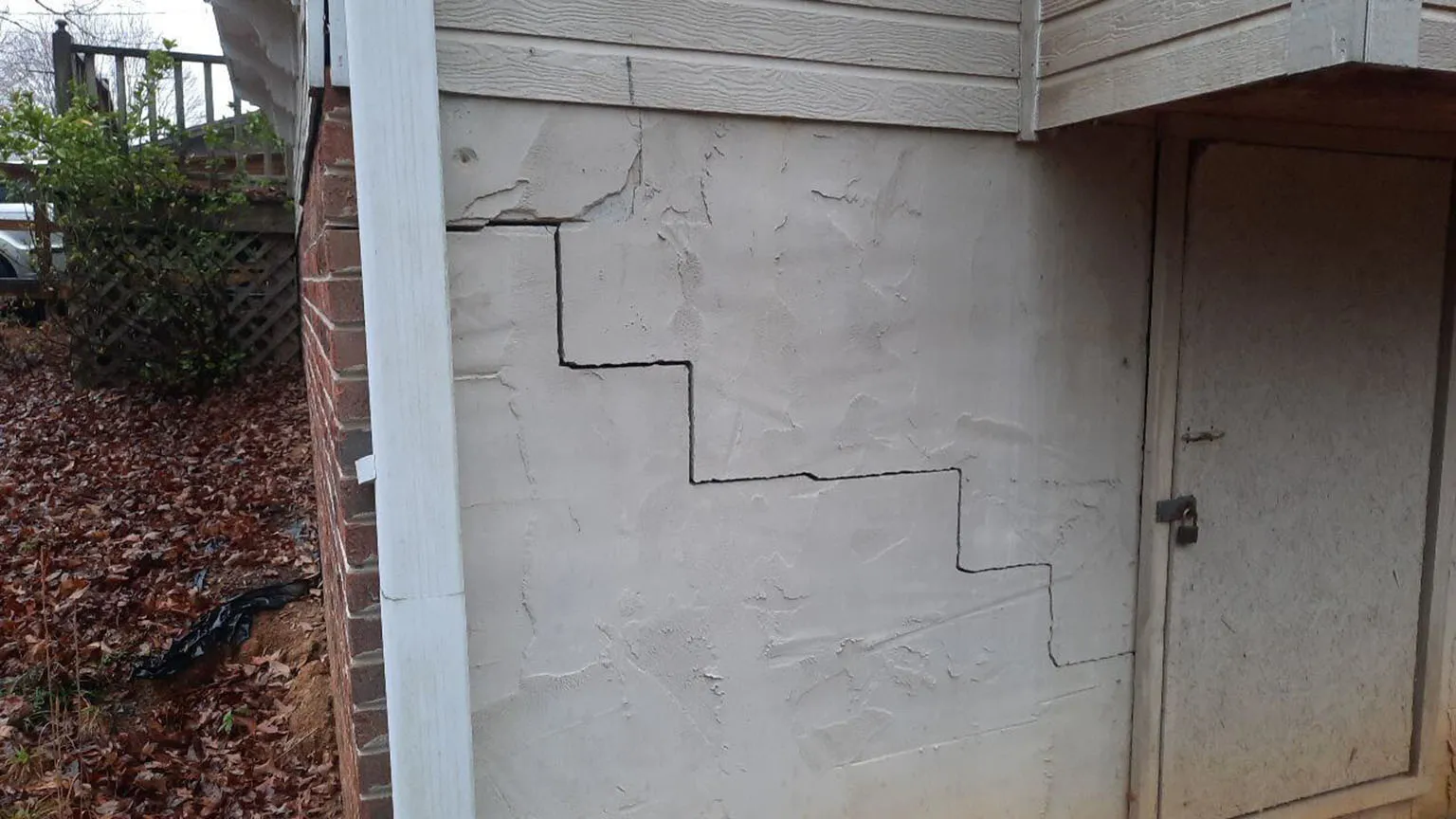
What’s actually moving under there?
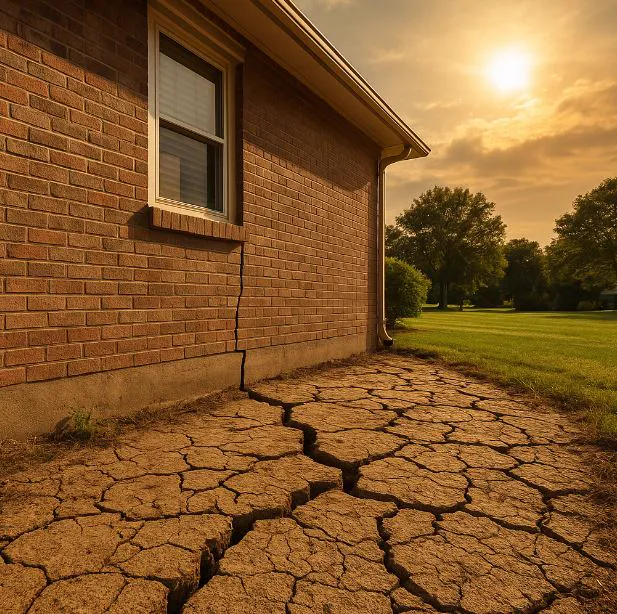
Georgia red clay is the busiest ingredient in this whole story. It swells when it takes on water and shrinks when it dries out, which means the ground under a footing is never quite the same size two seasons in a row. Drought summers pull it back hardest. The University of Georgia’s Extension soils resources cover how our clay soils behave if you like the science behind it.
Here’s what homeowners usually notice first, though. Not the foundation at all — a door that suddenly sticks, a window that won’t glide, or a crack running out of a door corner in an upstairs bedroom. A house is a frame, so movement at the bottom shows up as geometry at the top. That said, a door that binds every July and behaves every November is usually just wood reacting to humidity.
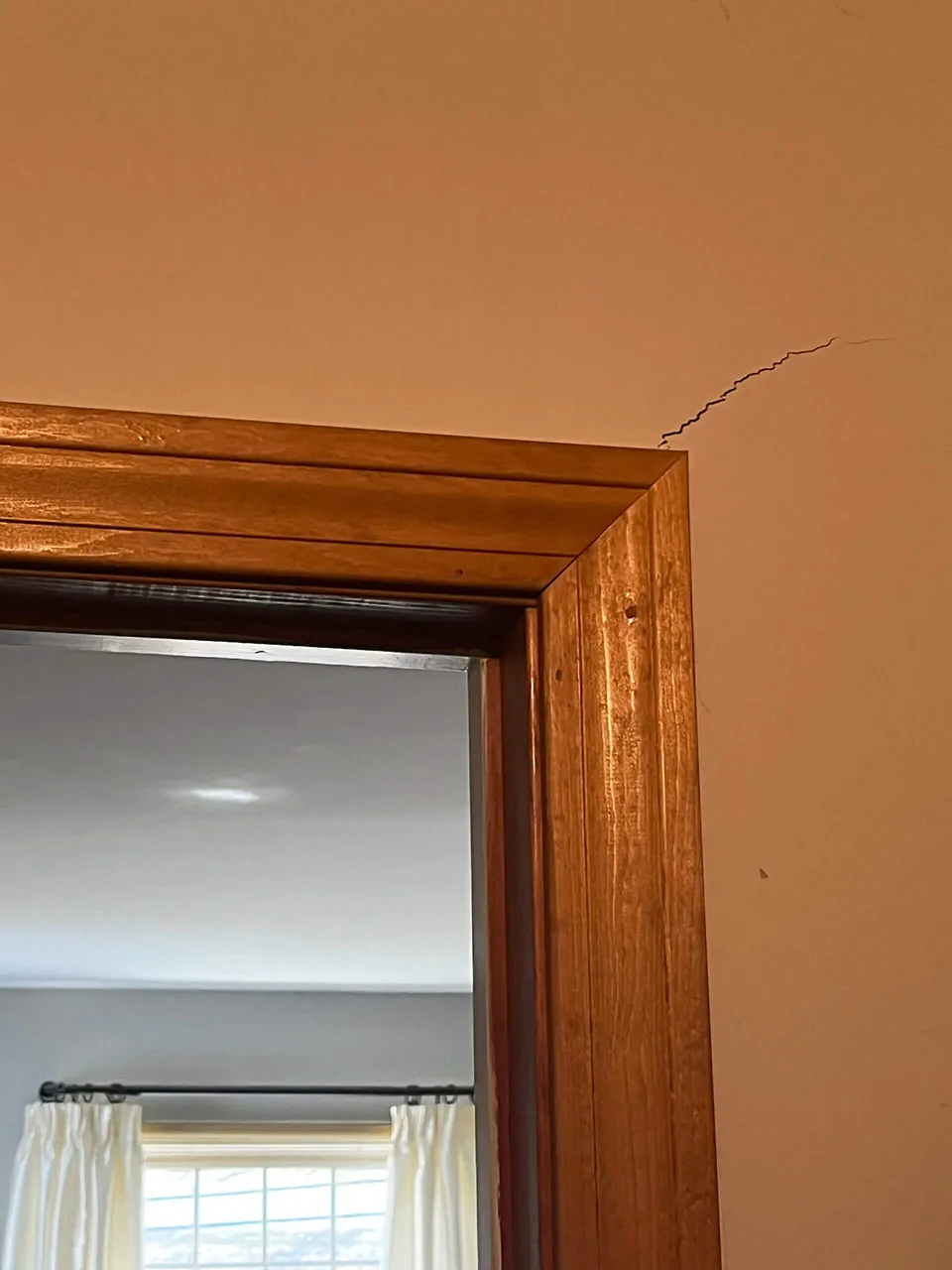
What would we check if it were our own house?
Four things, in this order. And honestly, this is the part we wish more homeowners knew before anybody hands them a proposal.
One: is it moving now, or did it move once? A crack that measured the same width in March and again in June is a very different animal than one that’s opening. Movement history changes the whole plan.
Two: how deep is the soil that can actually carry weight? That depth decides which pier makes sense, and it isn’t guessable from the driveway.
Three: is water driving it? Because if a downspout has been soaking one corner for six years, piers alone treat the symptom.
Four: is this settlement at all? A wall pushed inward by soil pressure is a separate problem with a separate fix, and mixing the two up gets expensive.
Worth knowing
A written report should tell you which walls moved, how much, and how the number was measured. If the answer is “it looks bad,” that’s an opinion, not a diagnosis.
Option A: what are helical piers?
Think of a big steel screw. A helical pier has round plates welded near the tip, and a hydraulic drive turns it down into the ground until it reaches soil strong enough to carry load. The machine reads torque the whole way in, and torque tells us capacity — so the pier basically reports its own strength as it goes. A bracket then ties it to your footing.
When it wins: lighter structures. Porches, stoops, sunrooms, room additions and garages are perfect candidates, because those don’t weigh enough to drive a pier by themselves. Tight access helps too, since the equipment is small.
What moves the price: the number of piers, how deep each one has to turn, and whether the crew is working through a finished basement or open dirt.
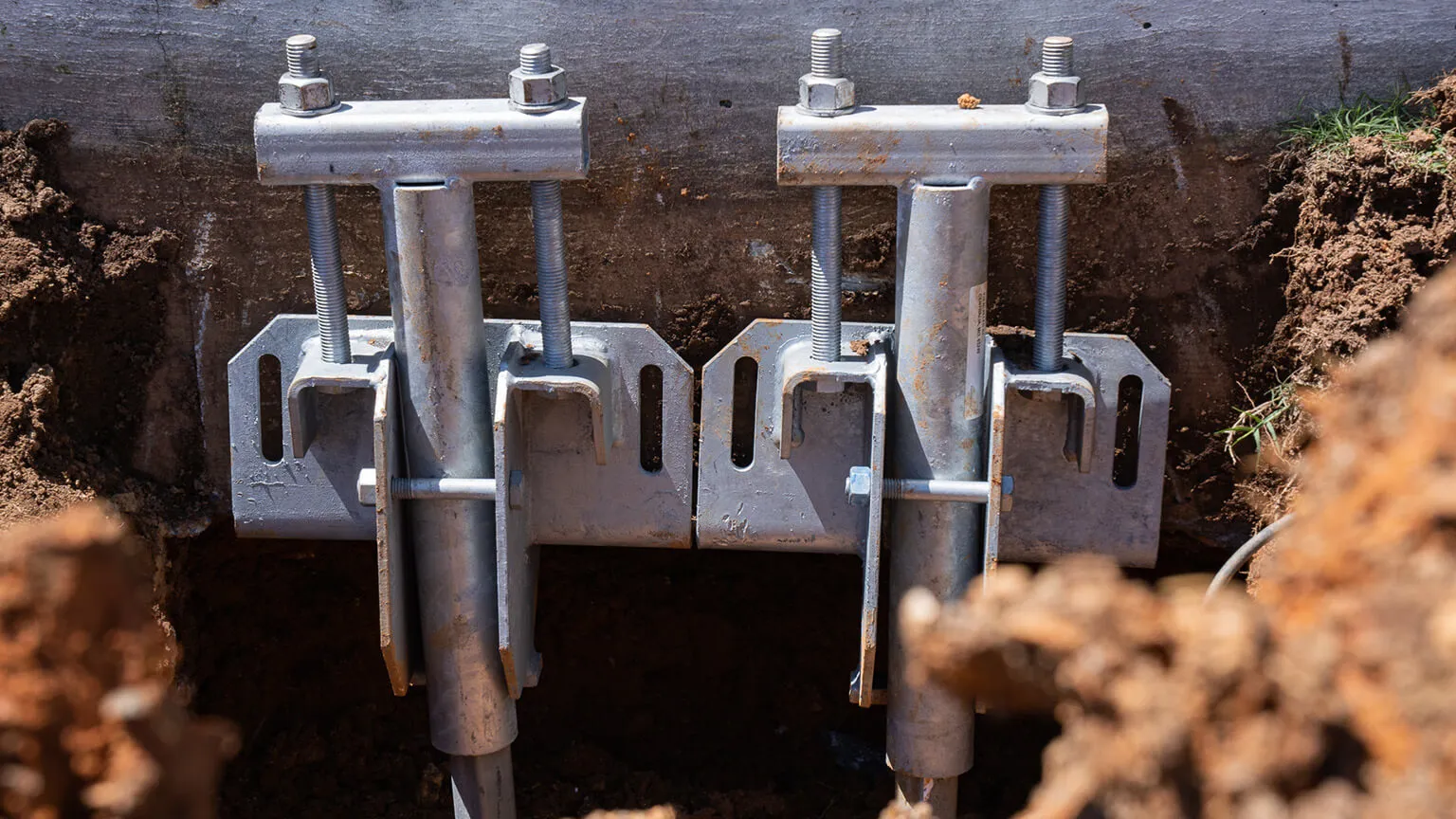
Option B: how are push piers different?
Push piers, sometimes called resistance piers, borrow the house itself. Sections of steel tube get pressed into the ground using the structure’s own weight as the reaction force, one length at a time, until the pier hits refusal and stops going down. Nobody picks the depth in advance. The soil picks it, which is a strange idea at first and a comforting one once you sit with it.
When it wins: heavier homes. A two-story brick house with a full basement gives plenty of weight to press against, so push piers reach dense strata efficiently.
What moves the price: depth again, plus spacing along the footing and any excavation needed to reach it. Deep fill costs more because each pier needs more steel.
How do the two stack up?
Helical piers
- Capacity measured by torque as they install
- Great for porches, additions and light structures
- Work where the building can’t supply reaction weight
- Small equipment, tighter access
- Can be installed before a load exists
- More steel components per pier
Push piers
- Driven by the home’s own weight to refusal
- Best under heavy two-story or brick homes
- Depth set by the soil, not chosen up front
- Each pier is load-tested as it’s installed
- Simple, proven, straight-shaft design
- Needs real structure weight to work
Neither column is the winner. They’re two answers to the same question — how do we get this weight down to dirt that doesn’t move — and the house decides which answer applies.
Twenty years in, the thing we trust least is a guess. A pier that reports its own capacity while it goes into the ground beats anyone’s opinion about how deep the good soil sits.
Are you buying stability or elevation?
This is the decision most estimates skip, and it matters more than the brand of pier. Stabilizing means the movement stops where it is. Lifting means we try to bring the settled section back up toward where it started.
Lifting sounds better, of course. Sometimes it is. But a house that has settled slowly for twenty years has quietly rebuilt itself around that shape, so raising it can open fresh cracks in drywall, tile and trim on the way up. That’s why we recover what the structure gives up willingly and stop there. Stability is the product. Elevation is a bonus when it’s safe to take.
What if it isn’t settlement at all?
Then piers are the wrong tool, and we’d rather say so early. A block wall that bows inward is dealing with lateral pressure from wet soil pushing against it — a sideways problem, not a downward one. Carbon fiber straps bonded to the wall handle smaller deflection well, while steel beams anchored top and bottom handle larger movement. Either way, the wall gets braced, not underpinned.
Interior slabs get their own category too. When a basement floor sinks but the perimeter footing is fine, slab piers carry that floor independently. And for a settled garage floor, driveway or a walkway that’s turned into an ankle test, polyurethane foam lifting is often the neat answer. Small ports, foam injected underneath, slab back up the same day. Just remember what foam does: it lifts concrete slabs. It doesn’t underpin a footing.
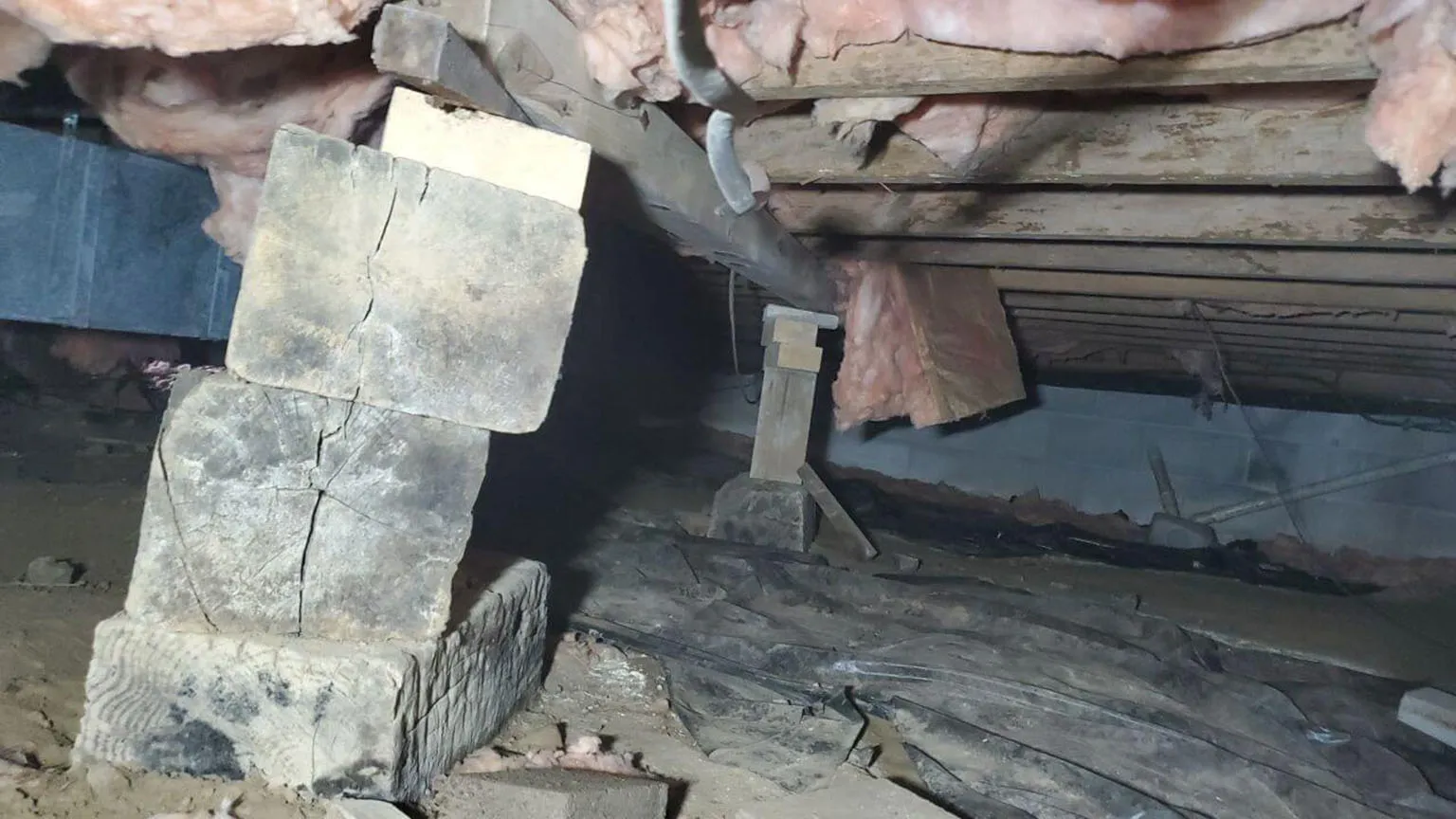
So what would we actually tell you to do?
For most settled Suwanee homes, we’d size the fix to the weight above it. Heavy masonry home with a full basement and a corner that’s dropped? Push piers. A sagging front porch, a sunroom addition, or a garage slab edge pulling away? Helical piers, nearly every time.
Now the part people don’t expect a repair company to write down. Plenty of the foundation repair options Suwanee homeowners get quoted are bigger than the house needs. A dormant hairline crack that hasn’t changed width across several months of monitoring may need nothing more than sealing and a checkup next year. We’ve told folks over near Harvest Park exactly that, then packed up.
More importantly, drainage corrections do quiet work no pier can do. Clean gutters, downspouts carrying water six to ten feet out, and soil graded away from the wall keep moisture around the footing steady — and steady moisture is what stops clay from swelling and shrinking underneath it. Repairs should also follow real engineering standards, and the International Code Council’s building safety resources are a good plain-language starting point.
What should you do every year once it’s fixed?
Here’s the list nobody hands you when the trucks pull away. None of it is hard, and together it protects the money you just spent.
- Walk the perimeter each spring. Look for soil that’s dished toward the house. Add dirt to low spots, not mulch, since mulch holds water instead of shedding it.
- Clean gutters twice a year. Overflowing gutters drop the whole roof’s water right at the footing you just paid to support.
- Check downspout extensions after mowing season. They get bumped loose constantly, and a disconnected one soaks a single corner.
- Water the foundation in a drought. A slow soaker hose a few feet out keeps clay from shrinking away. It feels odd. It works.
- Keep big trees honest. Roots pull real moisture out of clay, so watch the ground near mature trees close to the house.
- Mark and measure any crack once a year. A pencil date and a width reading turn “I think it’s worse” into an actual answer.
Do that and you’ll spend most years not thinking about your foundation at all. Which is the whole point — you should be at Sims Lake Park on a Saturday, not standing in the yard squinting at a wall.
Why does local experience matter here?
Because we’ve spent twenty-plus years on this exact clay, on these exact hills, in houses built in the same handful of years. We know what a cut-and-fill lot off Lawrenceville-Suwanee Road tends to do at twenty-five, and we know when a crack is just concrete curing. Plus, if year seven brings a question, you’re calling the same crew that did the work.
Want to keep reading? Our overview of foundation repair walks through each method in more detail, and our guide to the best foundation repair approach for local homes covers how we scope a job. If a single crack is your whole concern, start with foundation crack repair. Neighbors down the road can compare notes with our Peachtree Corners repair options breakdown.
Where we work around Suwanee
We’re based in Lawrenceville, about fifteen minutes south, so we’re up around Suwanee Town Center Park and the surrounding neighborhoods most weeks. We also cover Duluth, Buford, Sugar Hill, Johns Creek, Cumming, Dacula, Grayson, Norcross and Peachtree Corners, plus the wider Gwinnett area.
Questions Suwanee homeowners ask us
It rides on three things: how many piers the plan calls for, how deep each one has to go before it finds soil that carries load, and how hard the access is. Sealing and monitoring a dormant crack sits at the very low end, while underpinning a settled corner of a two-story home sits far above that. You’ll get a written scope with the pier count and locations on it, never a number over the phone.
Sometimes, and sometimes it’s only humidity swelling the wood. The tell is whether it comes and goes with the seasons. If a door binds year-round and there’s a diagonal crack coming off the upper corner of the frame, that pairing is worth having looked at.
They’re steel shafts with helix plates near the tip, turned into the ground by a hydraulic drive like a giant screw. The drive measures torque as it turns, and that torque tells us the capacity the pier has reached. A bracket then transfers the weight of the footing onto the pier and down to firm soil.
Generally it helps, because buyers and their inspectors react far worse to unexplained movement than to a documented repair. Keep the engineering paperwork, the pier layout and the transferable warranty together in one folder. That packet answers the question before anyone has to ask it.
Most pier jobs run two to four days on site, depending on the pier count and the digging. Foam lifting on a slab or driveway is often a single day, and sealing a stable crack is an afternoon. You get a day-by-day plan before anything starts.
Let’s find out which fix your Suwanee home actually needs
The inspection is free, the estimate is free, and nobody leans on you at the end. We’ll measure what’s moving, show you the options side by side, and tell you plainly if the smaller answer is the right one.
(678) 914-5112Serving Suwanee and all of Metro Atlanta · $500 off projects over $3,500 · Live support 7am–8pm, 7 days a week