

Flooded Basement Repair in Roswell: What It Involves and What It Costs
A plain-English look at the work, the price drivers, and what belongs in a fair estimate.
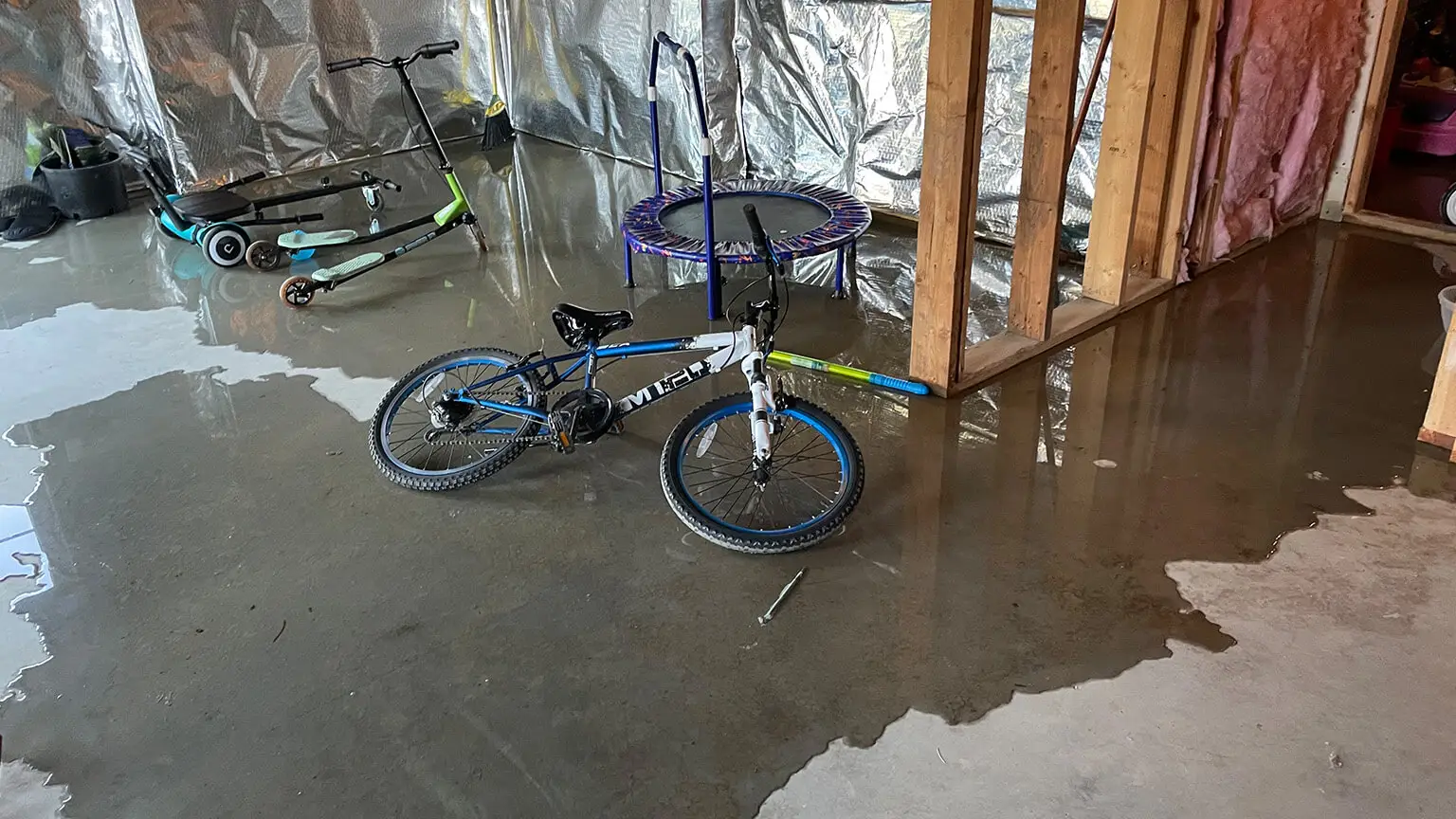
There’s a cardboard box near the basement wall that was fine last month. The top still looks perfect. Then you lift it, and the bottom peels away in your hands. That soft corner is usually the first honest signal, and it’s why most people start reading about flooded basement repair Roswell homeowners can understand before anyone hands them a price.
Good news up front: this is a solved problem, and we’ve handled it around Metro Atlanta for more than twenty years. Below is the honest version — the work, the price drivers, and what belongs on the estimate.
First question: did it flood, or did it seep?
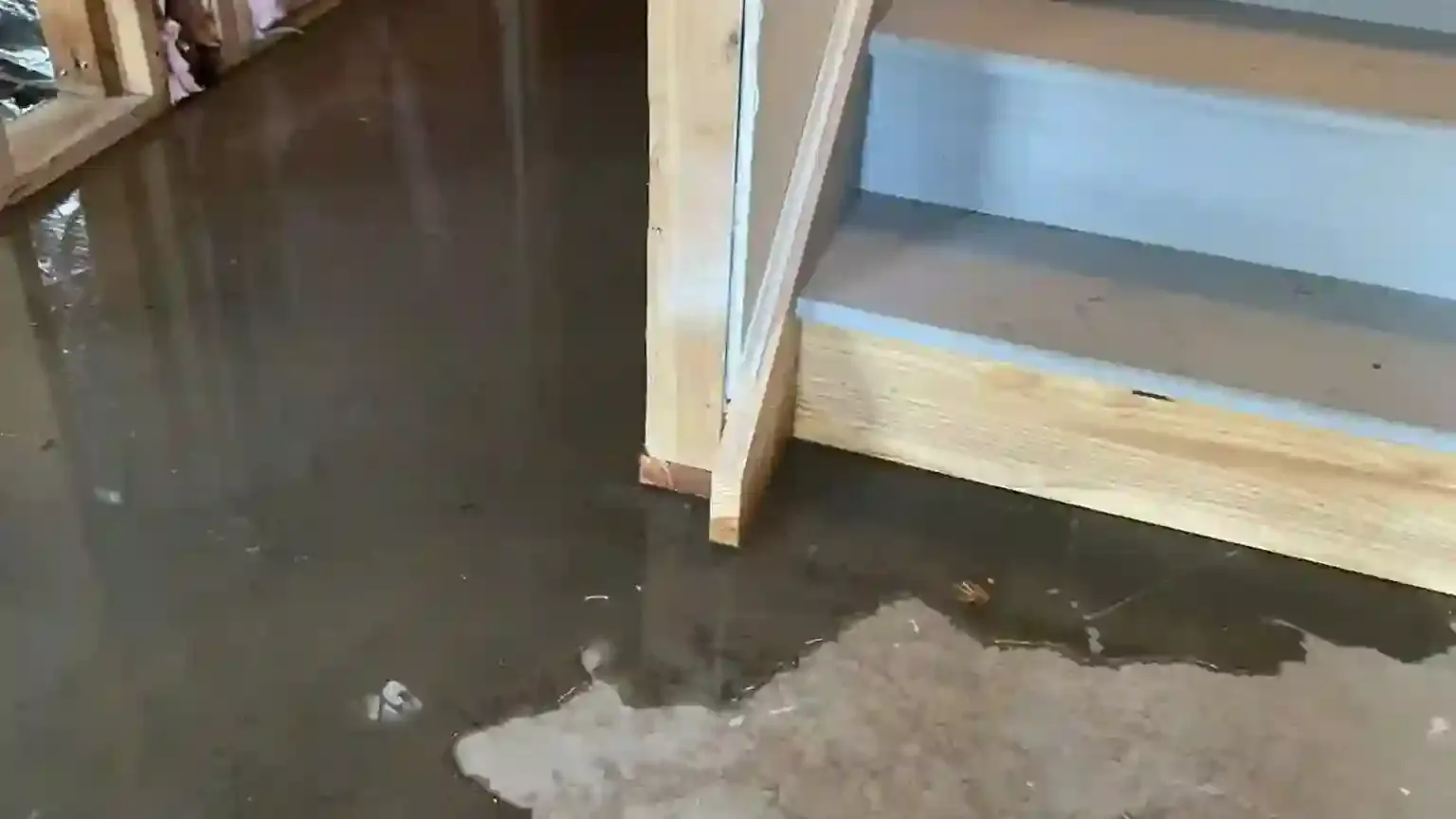
They sound alike, but they’re two different repairs, and mixing them up is how people pay twice. Seepage is slow — a damp line at the base of the wall, a musty smell, a chalky bloom on the block. Flooding is bulk water, enough to move a box.
Bulk water almost always means one of four things. Hydrostatic pressure pushing up under the slab. A sump pump that quit. A blocked or collapsed drain line. Or a window well with a drain that stopped draining years ago.

Here’s the part almost nobody expects. The most common entry point under pressure isn’t a crack — it’s the cove joint, the seam where wall meets floor slab. Those two pours happened at different times, so water under pressure doesn’t need a crack when a seam is right there.
Why does this happen so often here? Because Roswell is built on hills. Water always wins on a hill unless somebody gives it somewhere better to go, and that’s the whole job. Add Georgia red clay, which holds rain against the wall long after the storm passes, and pressure builds until it pushes through the hollow cores of a block wall.
A calm safety note
If there’s standing water down there, don’t step into it while the power is on. Kill the circuit at the panel first, and if the panel is in the basement, call your utility. Everything else can wait ten minutes.
What does a real job actually look like?
Most jobs follow the same shape, so you can picture it before a truck parks in your driveway:
- Water out, then organics out. Standing water gets pumped and extracted. Then wet cardboard, carpet pad and soaked drywall come out, because those hold moisture the longest.
- Then we dry it properly. Air movers plus dehumidification, not a box fan pointed at a wall. Speed matters — mold can get going in roughly 24 to 48 hours on wet organic material.
- We find the source. Outside first: grading, downspouts, retaining walls, where the hillside sends its runoff. Then inside. Often the answer is outdoors, which is cheaper for you.
- Drainage goes in below the slab. A narrow channel opens along the walls that need it, and perforated pipe sits in clean stone below floor level, so water is caught before it reaches your floor.
- Everything routes to a sump. The pipe feeds a sealed basin, and the pump sends water well away from the house — not next to the foundation, where it would come back for another try.
- We close it up and clean up. Fresh concrete over the channel, wall liner where needed, and our mess leaves with us. A pile of broken slab by the garage is not a finished job.
Notice what nobody did? Paint a wall. Waterproof coatings have their place, but a coating can’t beat pressure. It’s a raincoat on a submarine.
So what separates a patch from a fix?
Here’s where estimates stop looking alike. A patch treats what you saw, while a fix treats why you saw it. Both show up on quotes here every week.
A patch sounds like this: hydraulic cement in the cove joint, a coat of sealer, a new pump in the old basin. Real talk — that can hold a season. Then the next long soak arrives and water goes around the patch the way traffic goes around a wreck on GA-400.
Twenty years in, one thing changed how we work: we stopped blocking water and started giving it somewhere better to go.
A fix looks different on paper. It names the entry point, gives water a path with a pump at the end of it, and deals with what’s outside — the uphill runoff, the downspout dumping near the wall, the retaining wall pouring toward the house. Not glamorous, just permanent.
Sump pumps fail in predictable ways. Power goes out mid-storm. A float sticks against the basin wall. The pump is too small for the water it’s asked to move. There’s no check valve, so water it just pushed out slides back down. Or the discharge line is clogged. All five are preventable, which is why we check all five.
That played out on a hillside lot in Horseshoe Bend. Two days of rain, a pump that ran fine until the power blinked, and an inch of water across the slab by morning. New pump, battery backup, longer discharge line, and drainage on the uphill wall. Dry ever since.
What does flooded basement repair cost in Roswell?
Straight answer: it depends on how much wall is involved and how hard that wall is to reach. Anyone quoting a flat number over the phone is guessing, and you’d pay for the guess. Here’s what we weigh, so you can read any estimate with confidence.
What moves the number up or down
- Linear feet of wall. One wall is a very different job than a full perimeter. Biggest factor by far.
- Cleanup and drying. A bare slab is quick. Soaked carpet, pad and lower drywall add extraction and days of dehumidification.
- Access. An open basement is straightforward. A finished one with built-ins costs more, because there’s careful work before the real work.
- The sump situation. Some homes have a usable basin. Plenty here have one that came with the house in 1988 and is living on borrowed time.
- What’s happening outside. Grading, downspouts and a silted-up footing drain often carry most of the blame. Smaller ticket, and we’ll say so.
- Wall condition. Bowing or active cracking means structural work comes first. Drainage over a moving wall is money spent twice.
- Backup power. A battery backup adds cost, and it runs during the exact storm that knocks out power. Worth it on a hill.
Small drainage corrections land at the low end. A full perimeter system with a new sump, battery backup and careful work around a finished space sits at the high end. Most flooded basement repair Roswell jobs land in between, and after we walk your house you get a written number with the scope spelled out line by line.
What’s included, what isn’t, and what about the warranty?
Included: labor, materials, the concrete we replace, the pump and discharge, hauling everything away, and the written warranty. Not included: rebuilding finished walls we opened, replacing ruined flooring, and structural repair, which is priced on its own. Better you hear it now than read it in fine print.
On the warranty, ask any company three questions. Is it transferable if you sell? Does it cover the drainage, the pump, or both? And who answers the phone in year seven? A warranty is only worth as much as the company behind it.
Insurance deserves an honest word too. Standard homeowners policies commonly exclude groundwater seepage and surface flooding, and sump pump failure coverage is usually a separate rider you add on purpose. Policies vary, so call your agent and have them read you the exact language. For general guidance, the National Weather Service flood safety pages are a plain, useful read.
Ever notice the problem shows up in other rooms?
Here’s the part almost nobody connects. A basement isn’t sealed off from the rest of the house — air moves up through it all day, pulled in from the lowest point. So whatever the basement smells like, the upstairs gets a share.
That’s why folks call us about a musty guest room upstairs, hardwood that cupped for no clear reason, or an HVAC system running longer than it used to. Damp air is heavy air, so the system works harder. Fix the water and those annoyances quietly go away.
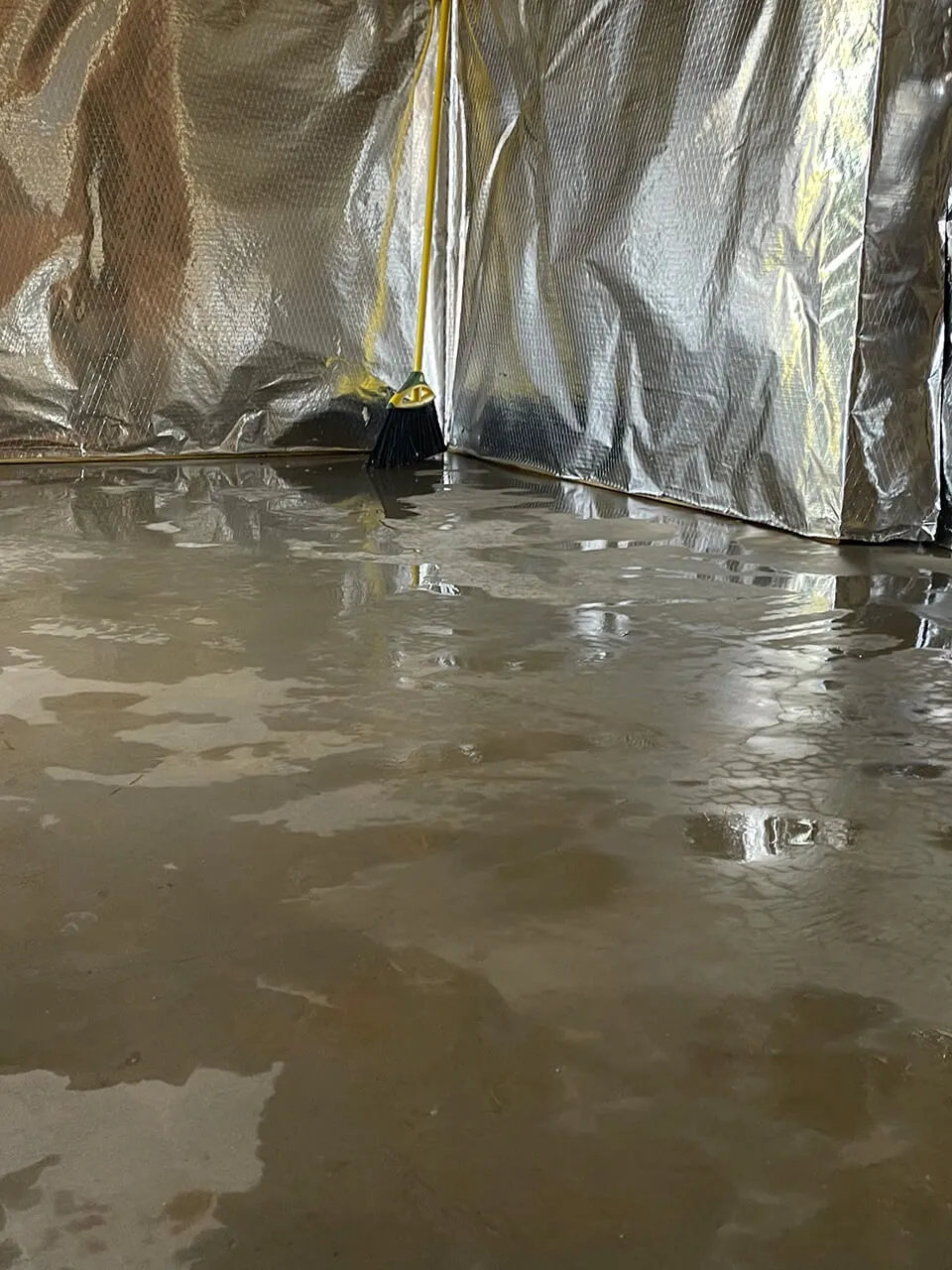
Crawl spaces do the same thing, only quieter. Plenty of homes on the older streets off Canton Street have a crawl instead of a basement, and a flooded crawl sends damp air up through the floor for months. Since mold can start on wet material within a day or two, drying is the piece we never rush. The CDC’s guidance on mold after flooding covers the basics if you want a neutral source.

Why does hiring local change the outcome here?
Because Roswell terrain is genuinely different from the rest of our service area. Red clay sits over granite here, so water travels sideways on shallow bedrock and arrives at the wall-floor joint with force behind it. A crew that mostly works flat lots misses that.
We know the housing stock too. The 1970s and 1980s hillside subdivisions with original drainage that’s aged out. Walkout basements in Willow Springs. The sloped lots around Country Club of Roswell where uphill runoff hits the back of the house. Ravine lots near Roswell Mill and Vickery Creek Falls, plus Chattahoochee floodplain properties, where water sits longer than anyone expects.
Still sorting out what you’re seeing? Our guide to standing water basement problems covers the symptoms, every system we install is spelled out on our basement waterproofing page, and if there are cracks alongside the water, start with foundation repair. Comparing notes with family a few exits north? We cover the same ground for Milton flooded basement repair.
Where we work around Roswell
We’re based in Lawrenceville, about thirty minutes east, and we’re in Roswell constantly. We also work throughout Alpharetta, Milton, Sandy Springs, Johns Creek, Marietta, Duluth, Suwanee and Peachtree Corners, plus Dunwoody, Woodstock and the wider Fulton area.
Questions Roswell homeowners ask us
For a small spill on bare concrete, sure. For real flooding, no — a shop vac pulls the water you can see, but the slab, the block cores and anything soft are still holding moisture. You need extraction plus real dehumidification, and you need the wet cardboard and carpet pad out of the room entirely.
Generally in the range of 24 to 48 hours on wet organic material like drywall paper, cardboard and carpet pad. That’s why we move fast on drying rather than waiting to schedule the repair. Get the water and the soaked material out first, and you avoid most of the problem before it starts.
Shut off power to the basement at the panel before you step into standing water. After that, take photos for your records, then start moving anything soft and anything valuable up and out. Once those two things are done, call us and we’ll handle the water.
Because the soil around your foundation is holding that rain against the wall. Red clay drains slowly, so pressure builds under the slab and along the cove joint until water finds the seam. On a hillside lot, uphill runoff adds even more, which is why the same storm affects two neighbors very differently.
Often not. Standard policies commonly exclude groundwater seepage and surface flooding, and sump pump failure coverage is usually a separate rider you add on purpose. Policies do vary, so call your agent and ask them to read you the exact wording before you assume either way.
Let’s find out what’s really happening under your Roswell home
The inspection is free, the estimate is free, and nobody pressures you at the end. We’ll show you where the water gets in and what a fair scope looks like in writing — even if the answer is simpler than you expected.
(678) 914-5112Serving Roswell and all of Metro Atlanta · $500 off projects over $3,500 · Live support 7am–8pm, 7 days a week