

Flood Restoration in Johns Creek: How to Pick the Right Crew
What a good cleanup includes, how to read the scope, and what to ask before anyone starts.
Good news first: almost every wet basement we see gets fully dried, cleaned and fixed, and the homeowner ends up with a better basement than before the water showed up. So if you’re shopping for flood restoration Johns Creek homeowners can count on, you’re not looking at a rescue. You’re making a purchase, and you have time to make a smart one.
Here’s the thing, though. Cleanup and repair are two different jobs, and plenty of companies only sell the first one. Knowing the difference separates a good decision from an expensive do-over.
Why do Johns Creek basements behave this way?
Start with what’s under the house. This part of Fulton County sits on Georgia Piedmont red clay, which swells when wet and shrinks when dry. That push-and-pull leans on foundation walls, so joints loosen and small openings widen. Add terrain that rolls downhill toward the Chattahoochee, and you get a lot of daylight and walkout basements cut into a slope.
Then there’s timing, and this is the part that explains your street. Johns Creek was largely built in one big wave, mostly between 1988 and 2007. That means a whole city’s worth of original waterproofing systems are aging out on roughly the same schedule. Your neighbor’s basement didn’t flood because they were careless. It flooded because the drain tile turned twenty-nine.
Lots that back up to the river and its feeder creeks add water table pressure. After a soaking week, the ground around the foundation stays saturated and pushes upward and inward. Homes down near Rivermont deal with this more than most, which is why two houses on one street behave completely differently.
And because so many basements here are finished, drywall, trim and carpet pad are usually in the way. So the cleanup has to be done right the first time, not just fast.
What should a good crew do differently here?
Do they take readings, or do they eyeball it? That’s the fastest way to sort companies. A real crew shows up with a moisture meter, takes numbers off the drywall, framing, subfloor and slab, then shows you those numbers and takes them again later. “Dry” is a measurement, not a feeling.
Good news
Water removed quickly and completely usually leaves nothing behind. Most damage we repair came from moisture that sat, not the flood itself.
Documentation matters just as much. Photos before anything moves, photos during demo, and readings logged by date. Even if you never file a claim, that file turns a conversation into a record.
Now the part people skip: wet organic material has to come out. Soaked drywall, insulation and carpet pad hold water like a sponge, and blowing air at them doesn’t change that. Drying around wet material is how a basement smells fine in week one and musty in week five.
Finally, a good crew separates the cleanup from the permanent fix and says so out loud. Extraction, drying and rebuild handle today. Finding the entry point and stopping it handles next spring. When a company rolls both into one vague total, you lose the ability to compare anything.
What would we want to know if it were our own house?
Honest answer? One question, before price ever comes up: where did the water come in, and how do you know? A crew that can’t point at a spot is selling you a repeat performance with a fresh invoice.
Around here the usual answer is the cove joint — the seam where the wall meets the floor. Concrete floors get poured after the walls, so that seam is never truly sealed. When the soil outside is saturated, pressure finds that seam first and water comes up along the edge of the room. It’s the most common entry point we find, and it’s very fixable.
Extraction is not a repair. It’s the part that makes the repair possible.
The fix is straightforward once you know that. Interior drainage relieves the pressure at that seam, routes water below the slab, and sends it to a sump that discharges well away from the house. That’s what basement waterproofing means in practice, and it’s the difference between a basement that got dried and one that stays dry.
We’d also ask about response time. Mold can begin growing on wet organic material in roughly 24 to 48 hours, so how fast a crew can be on site is a fair question. It’s just the clock everybody in this trade works against. The National Weather Service flood safety guide is a good read before you make any calls.
How do you read the estimate?
Line by line, out loud if it helps. A strong scope says what gets removed, how many air movers and dehumidifiers, how long they run, and who comes back to verify the readings. A weak scope says “water mitigation” and a number. Folks in Johns Creek compare proposals carefully, which we like, because detail is where we win.
Questions worth asking before anyone starts
- Will you take moisture readings and show them to me? Then again at the end, in writing.
- What comes out, and what gets dried in place? Wet organic material should come out.
- Where is the water entering? If nobody looked, the cleanup is half a plan.
- Is the permanent repair priced separately? Its own line, so you can compare it.
- How will this be documented for my insurer? Photos, logs and a dated scope.
- Who’s on my job — your crew or a sub? Ask who honors the warranty later.
- Can I see proof of insurance? A real company hands it over.
On cost, we’ll be straight with you. A small cleanup with limited demo sits at the low end, while a finished basement needing material removed, days of controlled drying and a full drainage system sits much higher. What moves the number is square footage, how long the water sat, and how much wall the permanent fix covers. You’ll get one written figure with the scope spelled out — never a “starting at.”
What are the red flags?
A firm price over the phone before anyone has seen the water is the big one, because nobody can price drying time without knowing what’s wet. Pressure to sign right now is the second, especially on the day you’re rattled and standing in wet socks. A real scope survives a night of sleep.
Watch also for no written scope at all, since a handshake and a truck is not a plan. Be careful too when extraction gets treated as the whole job and the entry point never comes up. That’s the one that costs people twice.
One more: be wary of anyone promising what your insurance will pay before you’ve read your policy. Standard homeowners policies commonly exclude surface flooding, and sump-failure coverage is usually a separate endorsement. Check your declarations page and call your agent. Documentation helps either way, which is why we photograph everything.
The number that changes how you shop
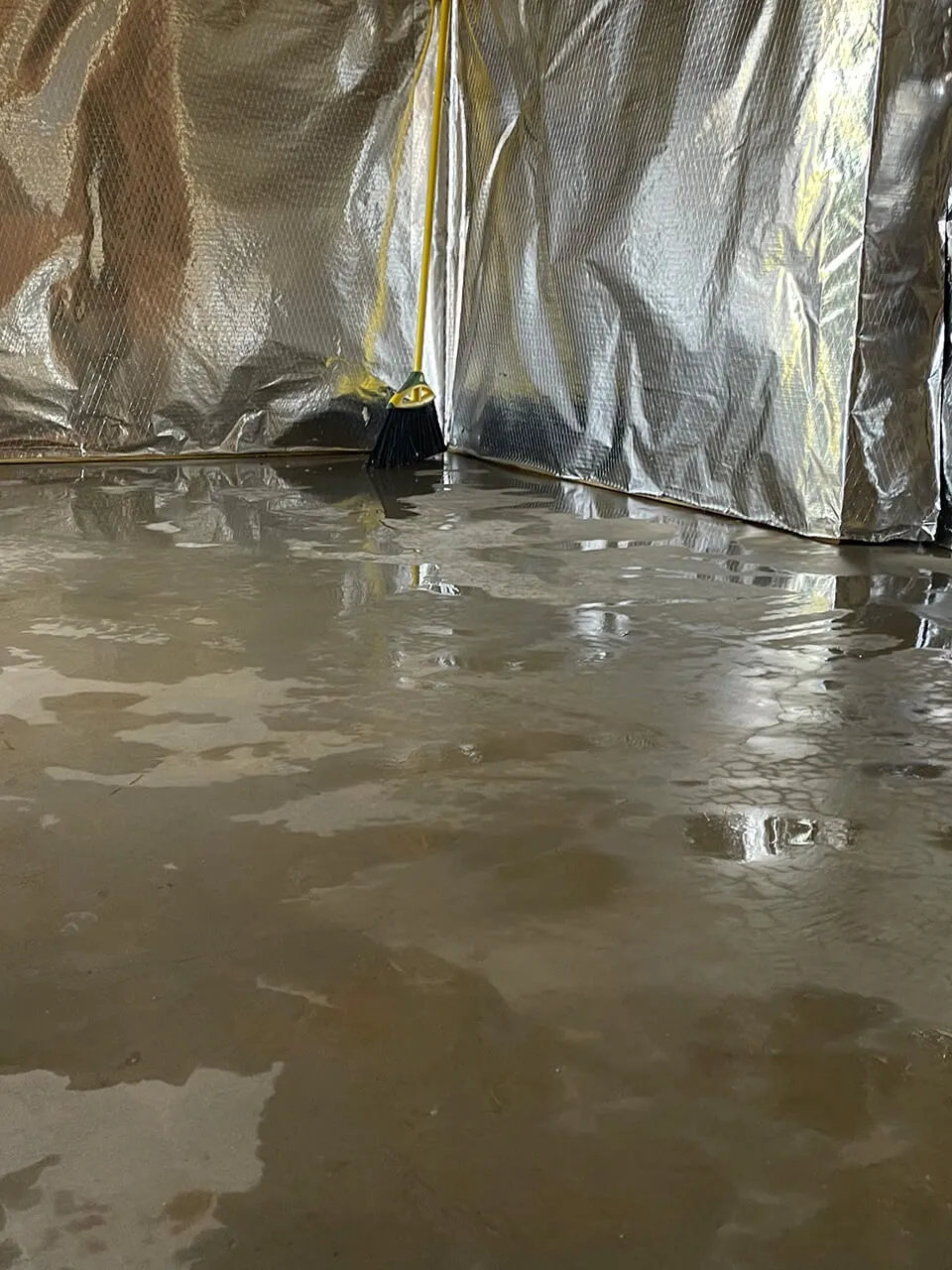
Ready for the figure that reframes all of this? One inch of water across a 1,000-square-foot basement is more than 600 gallons. Not a puddle — a small pool that arrived through your floor. That’s why a shop vac and a box fan feel hopeless around hour two.
Sit with that number for a second, because it explains the whole shopping process. Six hundred gallons doesn’t come through a hairline crack or a leaky pipe. It comes from pressure in saturated soil pushing through the weakest seam it can find, usually that cove joint. So any bid treating this as a mopping problem has already misread the house.
It also explains the equipment. Water that heavy soaks into framing, subfloor and the bottom edge of every wall, so real air movers and dehumidifiers run for days. We had a homeowner near Seven Oaks quoted a one-day cleanup for a basement holding easily that much. It took four days, and the readings proved it.
Picture the after, though, because that’s the point. The room is dry, readings are back to normal, and the drywall goes back up over a wall that now has somewhere to send water. Next March a storm hits Medlock Bridge Road and you think about traffic, not your basement. That’s the feeling you’re buying, and it’s why spending correctly beats spending fast.
Why we might be a good fit
We’re about twenty minutes east of you in Lawrenceville, and we’ve been at this over twenty years. Because we work this city constantly — the older sections by Shakerag Park, the sloped lots in Wellington, the streets running out from Johns Creek Town Center — we know what these houses tend to do. Familiar housing stock means a faster diagnosis and a scope you can actually read.
We’ll also tell you when the job is smaller than you feared, which happens often. Plenty of homes need drainage on one wall rather than four. Our job is the right-sized fix, not the biggest one.
Planning ahead helps too. March through May is our busiest stretch, while winter is the easiest window for non-urgent work. For long-term protection, FEMA’s building science guidance is worth a look.
Still sorting out what happened down there? Our guide to a flooded basement walks through the causes, and if you’ve noticed cracks along with the water, foundation repair is a separate conversation. Family one town over? We cover Alpharetta best basement drainage too.
Where we work around Johns Creek
We’re on the ground here week after week, from the river side of town to the neighborhoods off the 141 corridor. Beyond Johns Creek, we work in Alpharetta, Duluth, Suwanee, Roswell, Milton, Peachtree Corners, Cumming, Norcross and Berkeley Lake, plus the wider Fulton area.
Questions Johns Creek homeowners ask us
Shut off power to the basement at the breaker before you step into standing water, then photograph everything exactly as it sits. After that, move what you can lift to dry ground and call for help with the extraction. Those photos matter later, so take more than you think you need.
Because the soil around your foundation soaks up water and starts pushing on it. That pressure finds the weakest seam, usually where the wall meets the floor. Once the ground dries out, the pressure drops and the basement looks fine again, which is why the problem seems to come and go.
It depends on your policy and the cause. Standard homeowners policies commonly exclude surface flooding, and sump pump failure coverage is usually a separate endorsement. Read your declarations page and call your agent, and either way keep photos and dated moisture readings.
Quickly. Mold can begin growing on wet organic material in roughly 24 to 48 hours, so extraction should start the same day when possible. Drying then runs on a schedule with meters, not guesswork, and saturated materials usually come out instead of getting dried in place.
The floor was poured after the walls, so the seam between them is never fully sealed. When saturated soil pushes water upward, that cove joint is the easiest path in. Interior drainage relieves that pressure and routes the water below the slab to a sump instead of across your floor.
Let’s find out where the water is really getting into your Johns Creek basement
The inspection is free, the estimate is free, and nobody pressures you at the end. We’ll show you what we find and give you one written scope you can compare against anyone else’s.
(678) 914-5112Serving Johns Creek and all of Metro Atlanta · $500 off projects over $3,500 · Live support 7am–8pm, 7 days a week