

How to Compare Bids for the Best Crawl Space Tucker Homes Can Get
Why houses here behave the way they do, what belongs in a real quote, and the questions that sort a good crew from a fast one.
You smelled it before you ever saw it. Weeks back, in a hall closet or on the stairs, the house picked up that old-cabin note that fades by noon and returns every morning. So now you’re collecting quotes, trying to figure out what the best crawl space Tucker homeowners can hire looks like on paper.
Good news first: a musty smell is a moisture reading, not a verdict. Air is coming up from below carrying something with it, and that’s very fixable. Here’s the catch, though. Two companies can quote what sounds like the same job and be selling two different outcomes.
Why does the nose beat the eyes?
Because air moves. Warm air rises and leaves the top of a house, so replacement air gets pulled in from the lowest point — the crawl space. Building science calls that the stack effect, and it means a real share of what you breathe in the den started under your floor.
That’s why the smell shows up upstairs while the crawl space door stays shut all year. The house is simply breathing through its basement, and it doesn’t have great taste in air.
Tucker sits on the edge of the Stone Mountain granite. When water hits that rock it can’t go down, so it goes sideways — and quite often it goes sideways straight into somebody’s house.
What makes Tucker houses different?
Two things, and both matter to your quote. Start with the ground. Under most of this city you’ve got red clay on shallow granite, so rain soaks down a foot or two, hits rock, and runs sideways until something gets in the way.
Up in Smoke Rise the lots are steep and wooded, and that sideways water arrives at the uphill wall with real push behind it. Over near Livsey and around the Lakeside area the grade is gentler, but the same rock is down there doing the same trick, just slower.
Then there’s age. Most of this city went up between 1955 and 1985, so a whole town’s worth of original moisture systems are wearing out on the same schedule. Footing drains from that era have usually silted shut. What’s more, plenty of 1960s and 1970s block walls have taken six decades of clay pressure and started to bow, so a quote that ignores the walls isn’t really a plan.
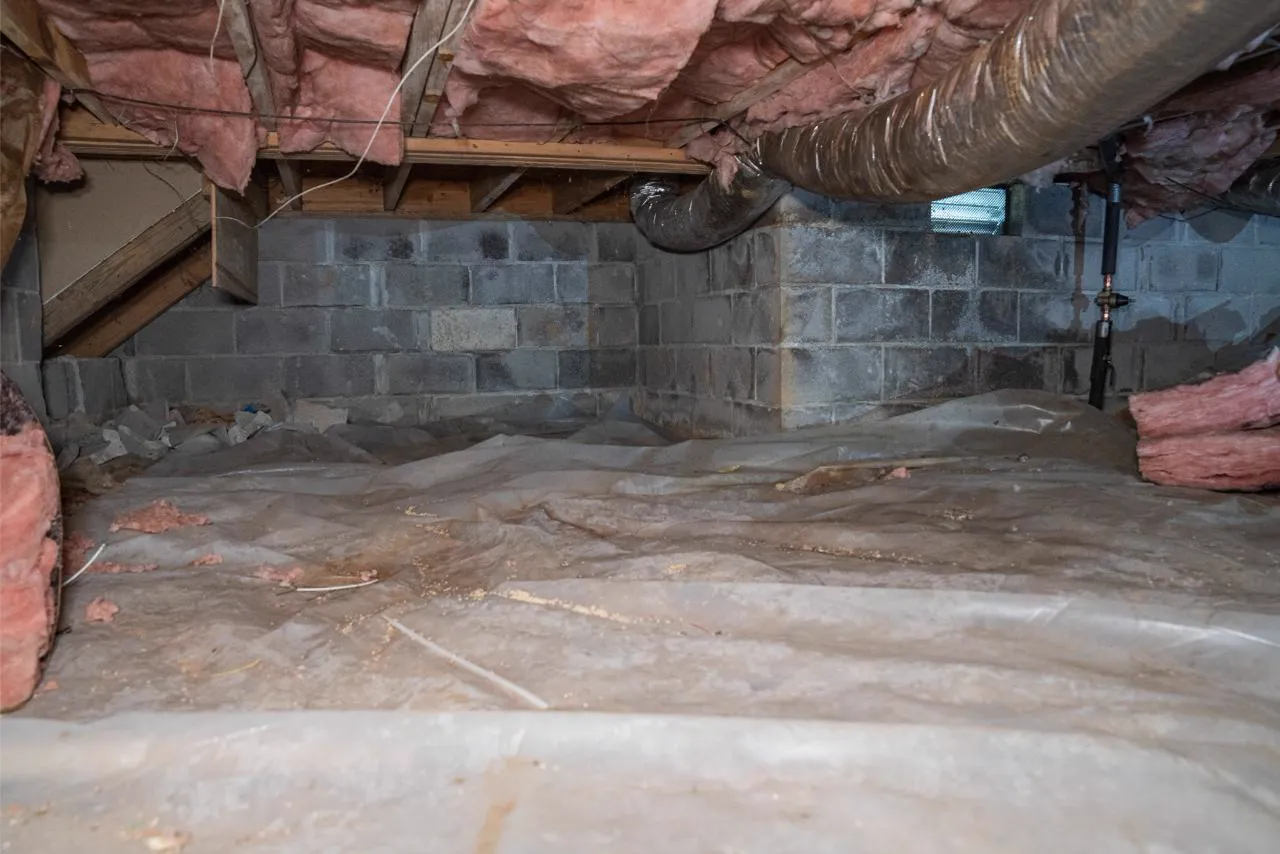
One more local wrinkle: plenty of these homes picked up paneled storage rooms along the way. Paneling hides moisture beautifully, which is exactly the problem.
What should a good company do differently here?
Walk the outside first. The best crawl space Tucker crews start in the yard, because a company that goes straight under the house is skipping the cheapest half of the fix. Gutters, downspout runs, grading and the uphill slope all tell you where the water starts.
Next, they should talk about interception, not just collection. On a lot below the ridge, a curtain drain or a re-cut swale catches that sideways water uphill and sends it around. Then the interior system only handles what’s left.
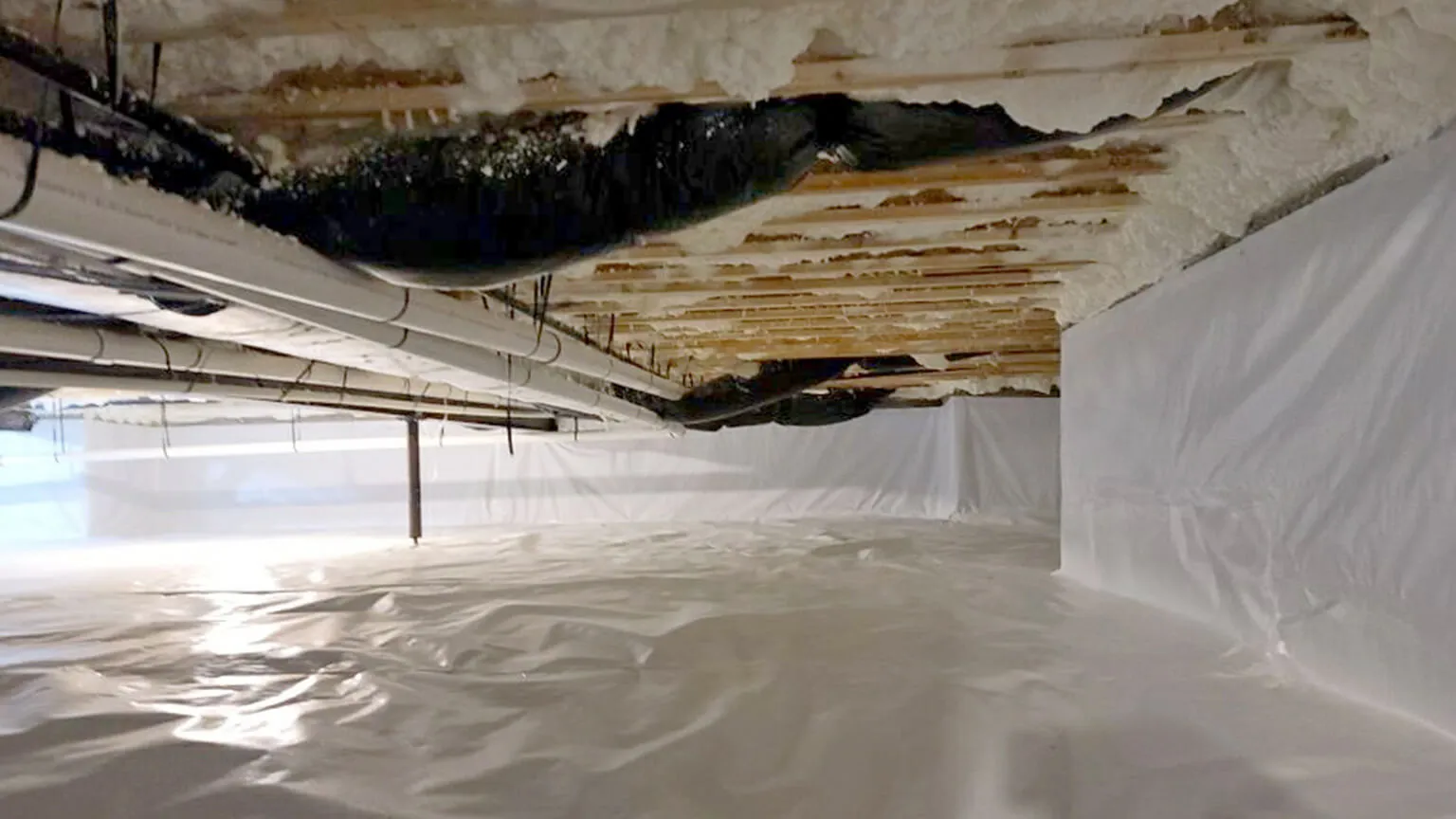
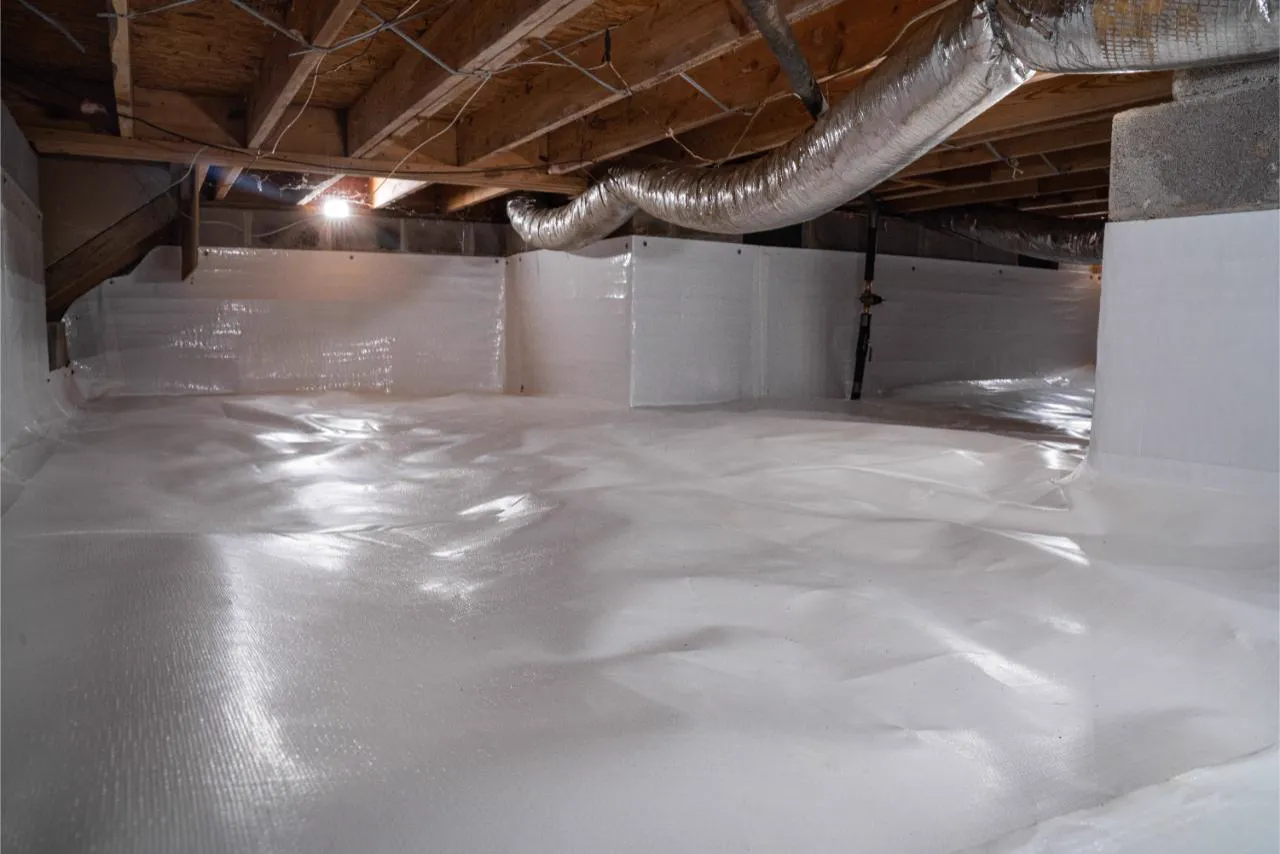
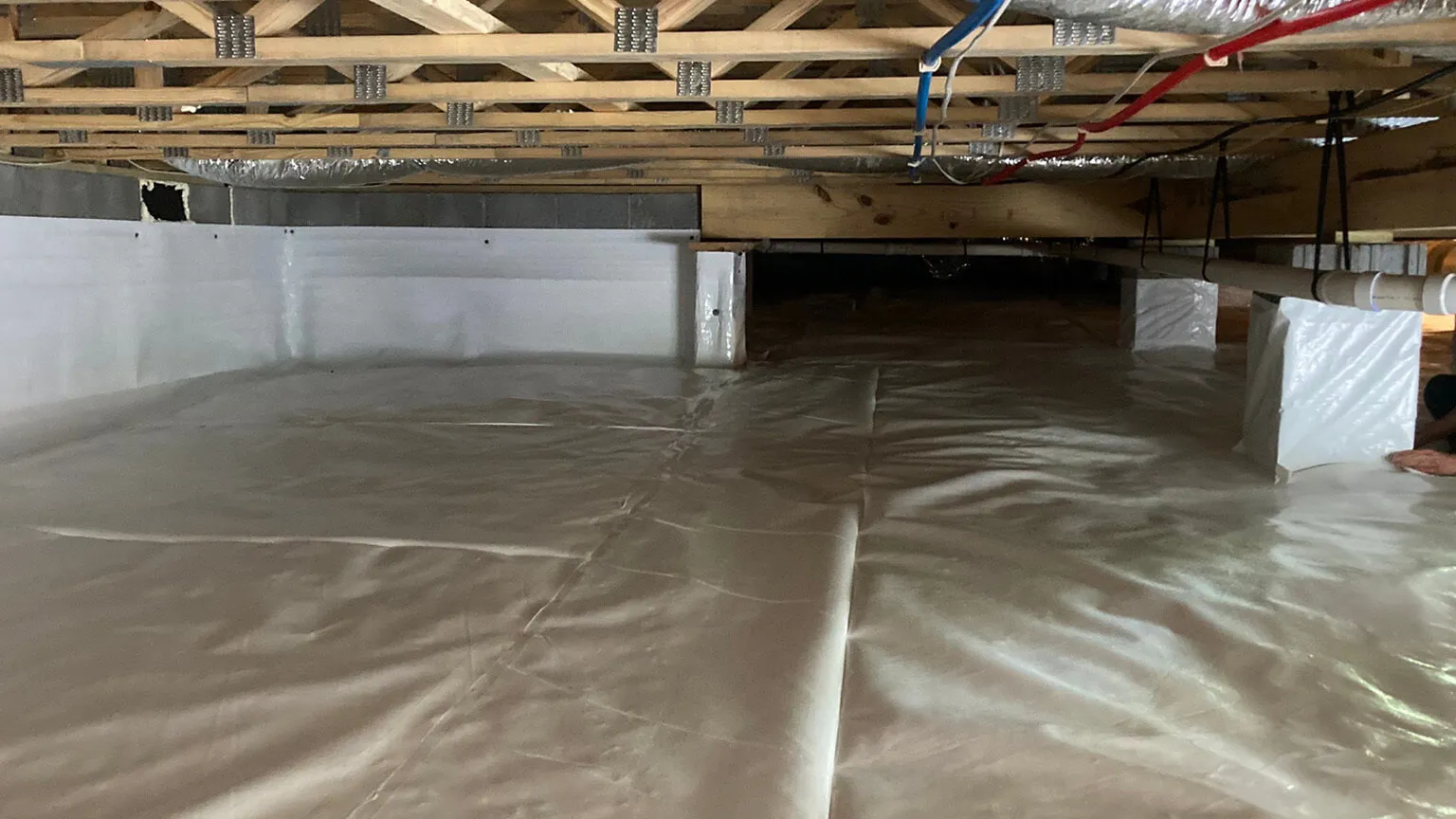
After that comes the liner. Sealing the space shuts out the wet dirt and the humid outside air at the same time, which is what turns it into part of the house. The result is honestly a little funny: the space smells like nothing, and so does your hallway.
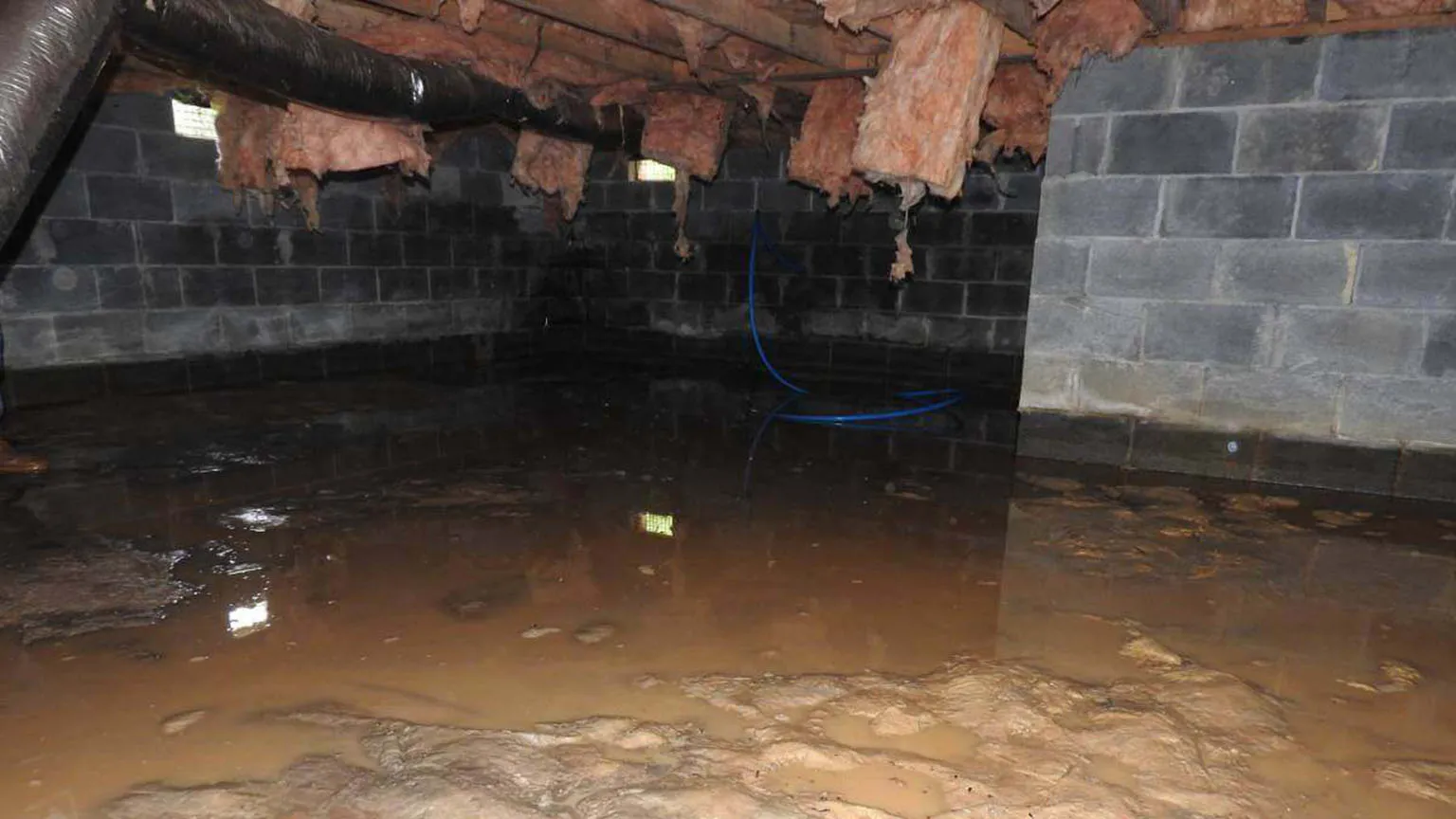
Order matters more than materials, in other words. Water first, then structure, then the seal, then the air.
Where does most advice stop?
Right about here — “seal it up and you’re done.” That’s where most articles end, and plenty of jobs end there too. But you just closed the vents that used to move air through that space, so now the air down there is your responsibility.
This is where a dehumidifier earns its keep. Not a hardware-store unit on an extension cord, either. A proper crawl space unit is sized to your square footage, drains on its own, and holds humidity steady in August and February alike.
Insulation is the other half nobody mentions. Once the vents close, insulation belongs on the perimeter walls and rim joist instead of sagging between the floor joists. The U.S. Department of Energy’s guidance on insulation and moisture control explains why that swap works so well.
Better yet, you feel it upstairs. Your ducts stop running through a hot, damp box in July, and that floor over the crawl space stops feeling colder than the rest of the house in winter.
How do you read the estimate?
Line by line, with one question in mind: does this describe my house? A real scope names your square footage, materials and equipment. A weak one says “encapsulate crawl space” and a number, which you can’t compare to anything.
What should be spelled out in writing
- Liner thickness and reinforcement. In mils. This is the biggest quality gap hiding between two similar prices.
- Where the liner stops. Floor only, or sealed up the stem walls and around every pier.
- Water handling first. Interior drain, sump, basin and where the discharge line actually ends up outside.
- Exterior work. Grading, downspout extensions or a curtain drain on the uphill side, if your lot needs it.
- The dehumidifier. Model, capacity, and how it drains without anyone emptying a bucket.
- Wall condition. On a 1960s block wall, whether any bowing was measured and what the plan is.
- Warranty, in plain words. What’s covered, how long, and whether it transfers when you sell.
About price: a firm number over the phone is a guess, and you’d be the one paying for it. Small dry spaces land at the low end. A big Smoke Rise footprint with drainage, a sump and a sized dehumidifier sits well above that, while most homes fall in between.
So compare scopes before you compare totals. The best crawl space Tucker bids read like a plan for your house, not a price list, and if one number comes in a third cheaper, something got left out. Usually it’s the drainage or the liner thickness.
What should you ask, and what should worry you?
Six questions do most of the sorting. Ask how the liner attaches to the walls and piers, what thickness it is, whether the vents get sealed or only covered, and how the dehumidifier was sized. Then ask what they saw outside, and whether the warranty transfers to a buyer.
Red flags are easier to spot than people expect. Pressure to sign today is one. A discount that expires when the truck pulls away is another, and so is any talk about your home falling apart — that’s a sales line, not a diagnosis.
Watch for a crew that won’t go all the way in, too. If nobody reached the far corner, nobody knows what’s in the far corner. Same goes for a company that never mentions your yard.
One last local one. Ask whether they’ve worked this side of DeKalb before. Someone who’s been under houses off Chamblee-Tucker Road knows about the shallow rock without you having to explain it, and that shows up in the plan.
What do you do every year after it’s fixed?
Here’s the part almost nobody hands you: the maintenance list. A sealed crawl space isn’t fussy, but fifteen minutes twice a year keeps it perfect for decades.
Your yearly checkup
Spring: clean the gutters, check that every downspout dumps well away from the wall, and walk the uphill side after a hard rain looking for new channels in the mulch. Fall: pop the access door, glance at the liner seams and pier wraps, and confirm the dehumidifier reads in the 50s. Once a year: pour a bucket of water in the sump basin to be sure the pump kicks on. That’s the whole list.
Keep the humidity in that range and mold simply doesn’t have what it needs, which is the whole point — the EPA’s guidance on mold and health puts controlling moisture at the top of the list for the same reason.
And that’s the real payoff. Not just a dry house, but the quiet pride of knowing how your house works and staying ahead of it. Folks here already know their homes well, so this is simply one more system you’ve got handled.
Why we might be the right fit
We’ve been doing this over twenty years, and Tucker sits about twenty-five minutes southwest of our Lawrenceville shop. Between jobs near Henderson Park and homes on the wooded streets toward Kelley Cofer Park, we’ve likely been under a house built the same year as yours.
That history matters for one plain reason: a warranty is only as good as the company behind it. If something needs a look in year nine, you’re calling the same local crews who did the work. We’ll also tell you straight when the fix is smaller than you feared.
Want to keep reading first? Our local guide to crawl space encapsulation walks through symptoms and options, and the crawl space repair systems we install are laid out step by step. Neighbors north of the perimeter get the same breakdown from our Johns Creek encapsulation company guide. If the lower level worries you more, start with flooded basement repair.
Where we work around Tucker
Our shop sits in Lawrenceville, so this stretch of DeKalb is a short drive for us. We work throughout Tucker, Lilburn, Stone Mountain, Norcross, Decatur, Clarkston, Doraville and Brookhaven, plus the wider DeKalb area. Anywhere near Main Street, the Northlake side of town, or the streets climbing up toward Smoke Rise, we’ve usually got a truck close by.
Questions we get around town
Trust your nose and your floors. A musty smell upstairs, cupping hardwood, cold rooms over the crawl space or allergies that get worse at home are all common signs. Then go look: standing water, rusty duct straps, sagging insulation or white growth on the subfloor all mean the space is holding moisture.
It’s a heavy liner sealed across the dirt floor, up the walls and around every pier, with the seams taped and the vents closed. Any standing water gets drained first. After that the space is dry and conditioned, so it becomes part of your house instead of a damp hole under it.
It depends on square footage, whether water has to be drained first, and how big the dehumidifier needs to be. Small dry spaces land at the low end, while a large footprint with drainage and a sump sits well above that. We give you a written scope after the inspection rather than a number over the phone.
In Georgia, almost always. Once the vents are sealed, the air in that space needs managing, so a unit sized to your square footage holds humidity steady year round. It should also drain on its own, because nobody wants to remember a bucket in a crawl space.
Closed, once the space is properly sealed and conditioned. Open vents made sense when these homes were built, but in a humid summer they mostly invite wet air in to condense on cool wood. Closing them only helps as part of a full encapsulation, though, not on its own.
Let’s go look under your Tucker home
The inspection is free, the estimate is free, and nobody pressures you afterward. We’ll show you photos of what’s down there, explain the fix, and tell you plainly if the answer is simpler than you expected.
(678) 914-5112Serving Tucker and all of Metro Atlanta · $500 off projects over $3,500 · Live support 7am–8pm, 7 days a week