

Flooded Basement Repair Tucker: What It Costs, Step by Step
The smell came first. Then the water. Here’s the honest version of the fix.
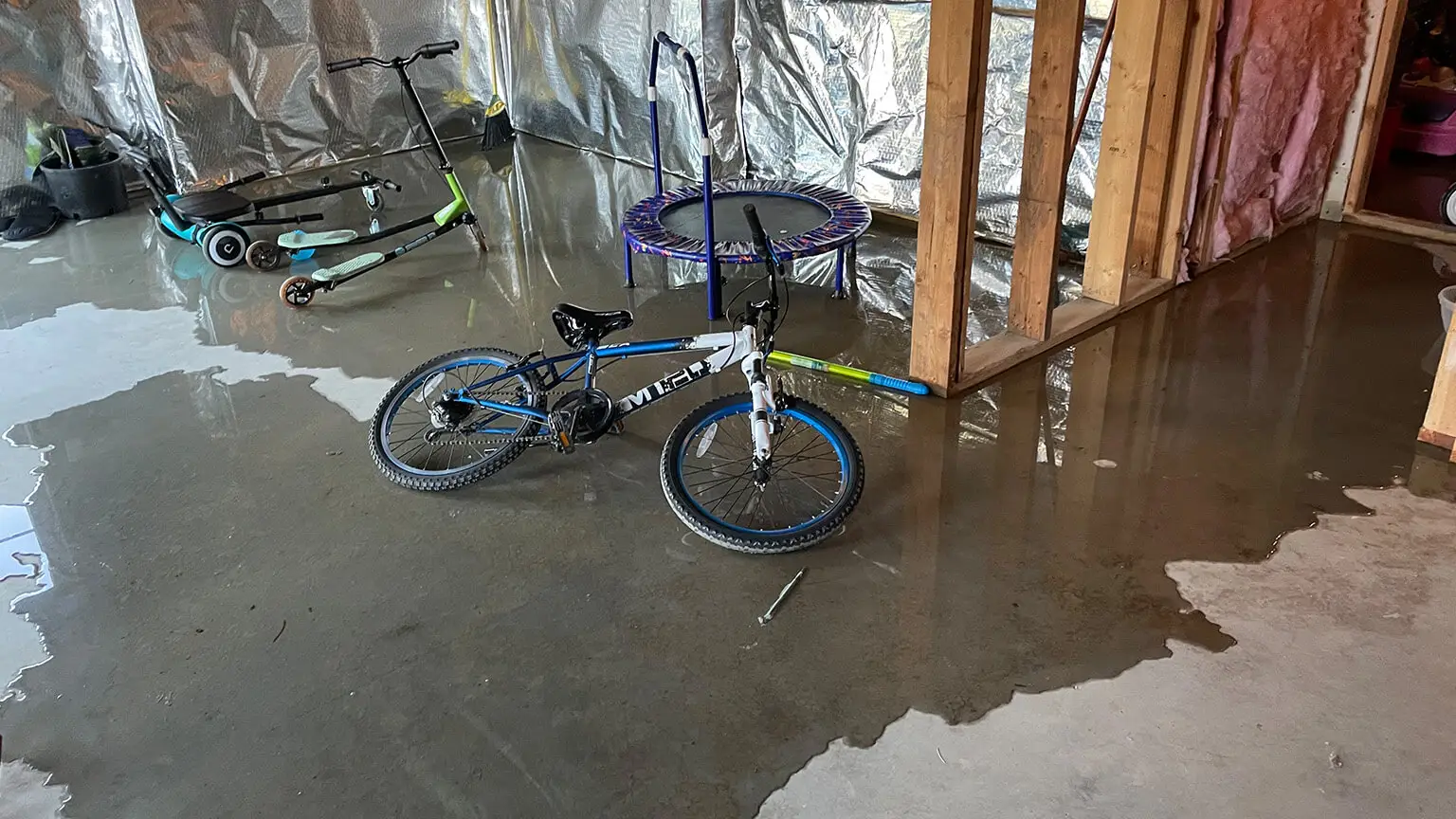
You smelled it before you saw it. Weeks ago the basement went from “old house” to “wet towel in a gym bag,” and you figured it would pass. Then came the storm, and now there’s water on the slab. If that’s your week, this straight-talk guide to flooded basement repair Tucker homeowners can price out was written for you.
Good news first: that smell was your house telling on itself early, and early is a great place to start. We’ve done this work across Metro Atlanta for more than twenty years. Below is the honest version — the work, the price drivers, and what you get in writing.
So what makes a basement flood instead of just get damp?
These are two different problems, and mixing them up costs money. Dampness is seepage — slow weeping that leaves a stain and a smell. Flooding is bulk water, and bulk water always has a reason.
Usually it’s one of four: pressure in saturated soil, a sump pump that quit, a drain line that’s blocked or crushed, or a window well whose drain gave up. Short list, which is why this is so fixable. We’re not hunting a ghost — we’re checking four things.

Now the part specific to your city. Tucker sits at the edge of the Stone Mountain granite, the same rock you walk on at Stone Mountain Park. When rain soaks through our red clay and hits that shallow rock, it can’t keep going down. So it turns sideways — and sometimes sideways means straight toward a basement wall.
That matters around Midvale and Brockett, where block basements mostly date to the 1960s and 1970s. Block is hollow inside. Once water fills those cores under pressure, it pushes out at the weakest seam instead of politely waiting outside. Add the giant hardwoods this town is proud of, whose roots shove walls and break old drain lines, and you get an ordinary Tucker story with an ordinary fix.
Before you go back down there
Never step into standing water while the power is on. Shut the circuits off at the panel first, and if the panel itself sits in the wet area, call your utility. The National Weather Service flood safety guide covers this in plain language.
What does the job actually look like, start to finish?
Can you picture it before a truck parks out front? Almost every job follows the same shape:
- Water out. Pumps and extractors first, so we can see the floor and the base of every wall. Nobody can diagnose a lake.
- Wet organics out. Soaked carpet, pad, cardboard and the bottom of any drywall. Those hold water long after the floor looks dry.
- Dry it hard. Air movers plus real dehumidification, running until the materials read dry — not until the room merely feels dry.
- Find the source. We walk the outside — grading, downspouts, window wells, roof water — then the inside. Often the culprit is outdoors, and cheaper.
- Fix the path. Usually an interior channel below the slab, clean stone, perforated pipe, and a right-sized sump with a check valve and a discharge line well away from the house.
- Close it up clean. Fresh concrete over the channel, wall liner where it helps, debris hauled off. Broken slab by your driveway isn’t a finish.
About that sump pump. Pumps don’t fail creatively — they fail the same five ways. Power drops mid-storm, the float sticks, the pump is undersized, there’s no check valve so the discharge runs back into the basin, or the outside line clogs. All five have fixes, and all five explain the backup battery.
If water shows up in the same corner every storm instead of across the whole floor, the fix may be simpler still. Our page on standing water basement causes covers that pattern, and the systems we install sit on our basement waterproofing page.
Now, the myth we hear on almost every estimate
Want the sentence we hear at nearly every kitchen table? “We just need to find the crack.” Homeowners say it with confidence, and it makes sense — water got in, so something must be broken.
Except most of the time there is no crack. Water comes in at the cove joint — the seam where your wall meets the floor slab. It isn’t damage. It’s a joint, built that way, because wall and floor were poured at different times. Under pressure, it’s the easiest door in the house.
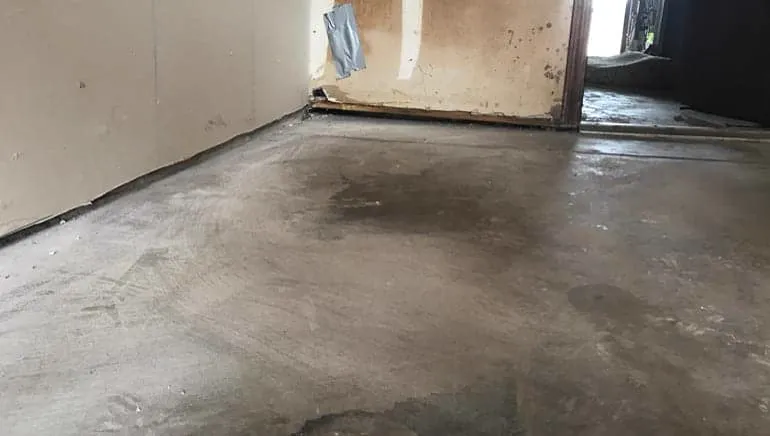
So if you spent a weekend with a flashlight hunting damage you couldn’t find, relax — you weren’t missing it. That’s also why waterproof paint disappoints people. A coating can’t out-muscle pressure. It’s a raincoat on a submarine, and it looks great for about seven months.
There’s a second half to the myth. Sometimes a wall really is bowing, and drainage alone isn’t the answer. A homeowner near the Northlake area had a block wall leaning after six decades of clay pressure, so that job needed foundation repair before drainage went in. Doing it backwards means paying twice, so we tell you which situation you’re in first.
We stopped trying to block water years ago. Now we give it a better place to go — and it takes the offer every time.
What does this cost in Tucker?
Straight answer? It depends on how much wall is involved and how hard it is to reach. Anybody quoting a flat number over the phone is guessing, and you’d pay for the guess. Here’s what we weigh instead.
What moves the number up or down
- Linear feet. One wall versus a full perimeter is the biggest factor by far.
- Access. An open basement is simple. A finished one with paneling and built-ins costs more, because there’s careful work before the real work.
- Sump and backup. A new basin, right-sized pump, check valve and battery backup add cost — and each does real work on storm night.
- Emergency drying. Extraction, demo of wet materials and days of dehumidification are their own line, apart from the permanent fix.
- What’s outside. Grading, buried downspouts and a collapsed footing drain sometimes carry most of the blame. Smaller ticket, and we’ll say so.
- Wall condition. Bowing means structural work comes first, which changes the sequence and the price.
Small outside corrections and a pump swap sit at the low end. A full perimeter system with a new sump, battery backup and delicate work around a finished space sits at the high end. Most flooded basement repair Tucker projects land between the two. After we walk your house, you get a written scope with the number attached — no verbal ballpark that grows later.
What’s included? Labor, materials, the concrete we replace, haul-off and the warranty. What isn’t? Rebuilding finished walls we opened, replacing ruined flooring, and structural repair, which is quoted separately. Better you hear it now than read it in fine print.
On the warranty: our drainage systems carry a written, transferable warranty, handed to you before work starts. Ask us to explain it in one sentence. If a company can’t, that’s worth noticing.
One honest word about insurance. Standard homeowners policies commonly exclude surface flooding and groundwater, and sump-failure coverage is usually a separate endorsement you add on purpose. Call your agent before you assume either way — ten minutes, and it changes how you plan the repair.
Here’s the number that reorders everything
Ready for the number that changes the priority list? Twenty-four to forty-eight hours. That’s how fast mold can begin growing on wet building materials, which is why drying speed beats almost every other decision this week.
That clock flips the usual order of operations. Most people want to talk about the permanent system first, since that part feels like progress. In fact the water and wet materials come out today, while the drainage design gets settled tomorrow.
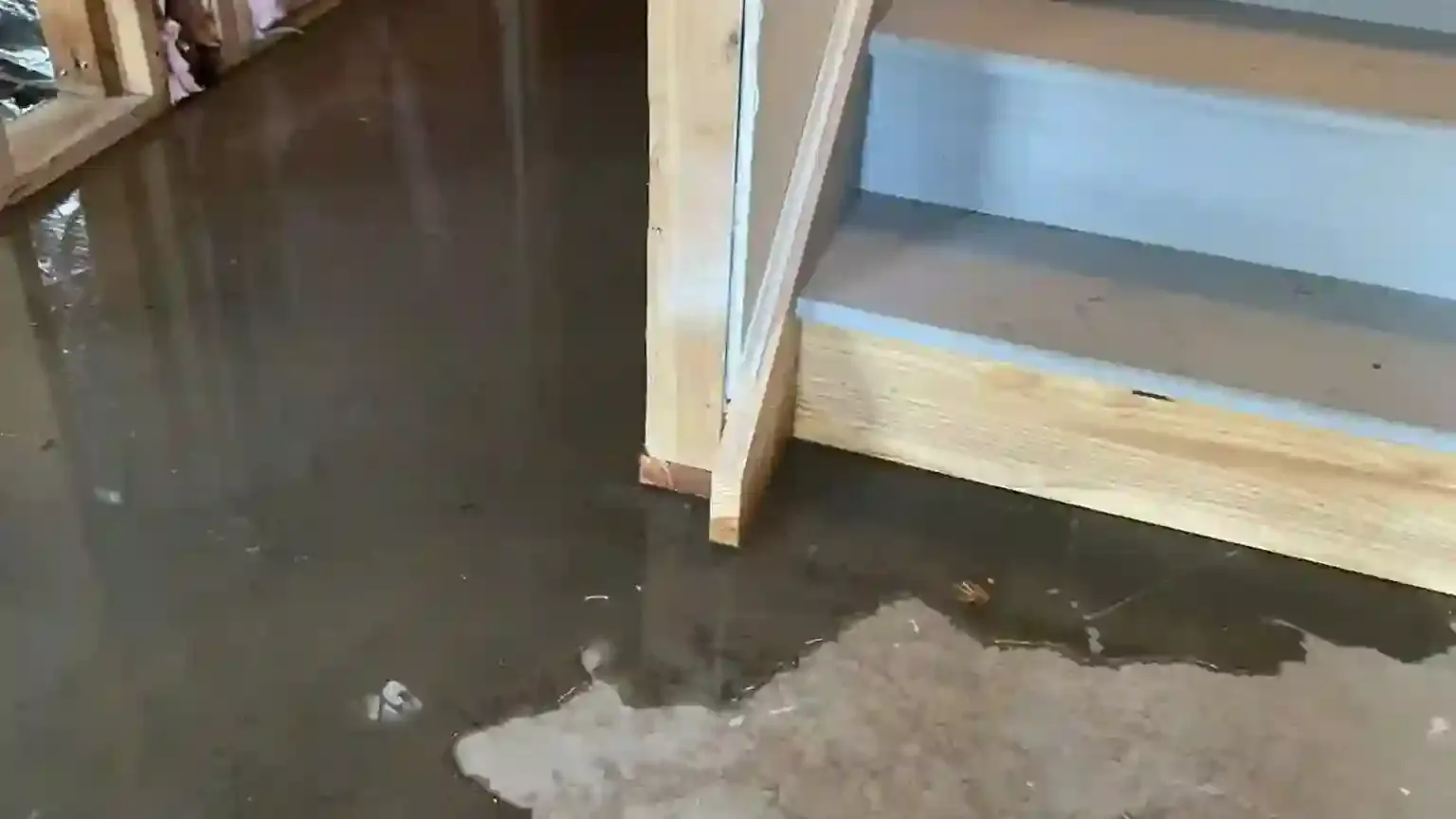
Once dry, the outside work keeps it that way. Downspouts discharging ten feet out instead of two, soil sloping away from the house, window wells that actually drain. FEMA’s building science resources cover the same principles. Comparing notes with family across town? Here’s how we handle a Johns Creek flooded basement.
Then comes the good part. The space smells like a house again, and the bins sit on the floor instead of up on blocks. When the next storm rolls through, you check the radar out of curiosity and go back to sleep — because you handled it, and your house is solid.

Why does hiring local matter here?
Because a warranty is only worth as much as the company behind it. Our shop sits in Lawrenceville, twenty-five minutes up from you, and we’ve been at this over twenty years. If something needs a look in year seven, you’re calling the crew that did the work.
Local also means we know the housing stock. We know how 1960s block behaves after a wet spring, and which streets inside I-285 sit downhill from their neighbors. You know your house better than any salesperson does, so we’d rather show you what we found and let you decide. That’s how flooded basement repair Tucker jobs should start.
Where we work around Tucker
We’re based in Lawrenceville, so Tucker is a short run. We also work throughout Lilburn, Stone Mountain, Norcross, Decatur, Clarkston, Doraville and Brookhaven, plus the wider DeKalb County area. If you’re near Main Street or the Northlake area, odds are we’ve been under a house on your street.
Questions Tucker homeowners ask us
Light rain soaks in and drains away. A long, heavy rain saturates the clay around your foundation, and that trapped water builds pressure with nowhere to go. The pressure pushes through the easiest opening, so it looks like a storm problem when it’s really a drainage problem.
Often not, at least not automatically. Standard policies commonly exclude surface flooding and groundwater, and sump pump failure is usually a separate endorsement you have to add. Check your own policy or call your agent, because the answer varies from one household to the next.
Quickly. Mold can begin growing on wet building materials within roughly 24 to 48 hours, so standing water and soaked carpet, pad and cardboard should come out the same day. After that, run real dehumidification until the materials test dry, not until the room feels better.
That’s the cove joint, the seam where your wall meets the floor slab. It isn’t a crack or a defect — it’s a joint, because wall and floor were poured separately. When pressure builds underneath, that seam is the path of least resistance.
Yes, when the water gets a managed path instead of a blocked one. Below-slab drainage, a right-sized sump with a check valve and battery backup, plus corrected grading outside, handles it long term. The pump is the only part with a service life, so plan on replacing one around the ten-year mark.
Let’s find out where the water is really getting into your Tucker home
The inspection is free, the estimate is free, and nobody pressures you at the end. We’ll show you the entry point, explain the fix in plain words, and put the scope in writing — even if the answer is simpler than expected.
(678) 914-5112Serving Tucker and all of Metro Atlanta · $500 off projects over $3,500 · Live support 7am–8pm, 7 days a week