

What the Best Crawl Space Roswell Companies Do Differently
Why homes on these hills behave the way they do, what belongs in a real written quote, and the five questions that sort the careful crews from the fast ones.
The box was fine last month. Now you lift it and the bottom sags, the cardboard dark and cool at the corners, and a couple of holiday ornaments are stuck to it. That box is why a lot of people go looking for the best crawl space Roswell has to offer, usually on a Sunday night with a flashlight still in hand.
Good news first: a soft box doesn’t mean your house is in trouble. It means the air under your floor is holding water, which is one of the more fixable problems a home can hand you. Here’s the catch, though. Two companies can quote what sounds like the same job and be selling two different things.
What is a damp box actually telling you?
Cardboard is a humidity meter that costs nothing. It pulls moisture from the air until it goes limp, so when a box turns soft in a few weeks, the space around it has been sitting wet for a while.
The fix isn’t complicated, either. You stop water from getting in, then you seal the space so humid outside air can’t drift back through the vents. After that it holds steady, and the boxes stay boxes.
Roswell is built on hills. Water always wins on a hill unless somebody gives it somewhere better to go — and that’s the whole job.
Why are Roswell homes their own thing?
Because of the ground they sit on. This is the steepest terrain we work in, with river bluffs, ravines cut by Vickery Creek, and subdivisions carved into hillsides. So a rainstorm here doesn’t soak in politely. It runs.
Then there’s what’s under the clay. Roswell sits on red clay over granite, and that rock is often shallow. So water soaks down a foot or two, hits stone, and turns sideways until it finds the low corner of your crawl space and slips in at the joint where the wall meets the floor.
That’s why an uphill neighbor’s yard becomes your problem. On the sloped streets around Brookfield and off Woodstock Road, the back of the house takes runoff from land you don’t own, while the front stays bone dry.
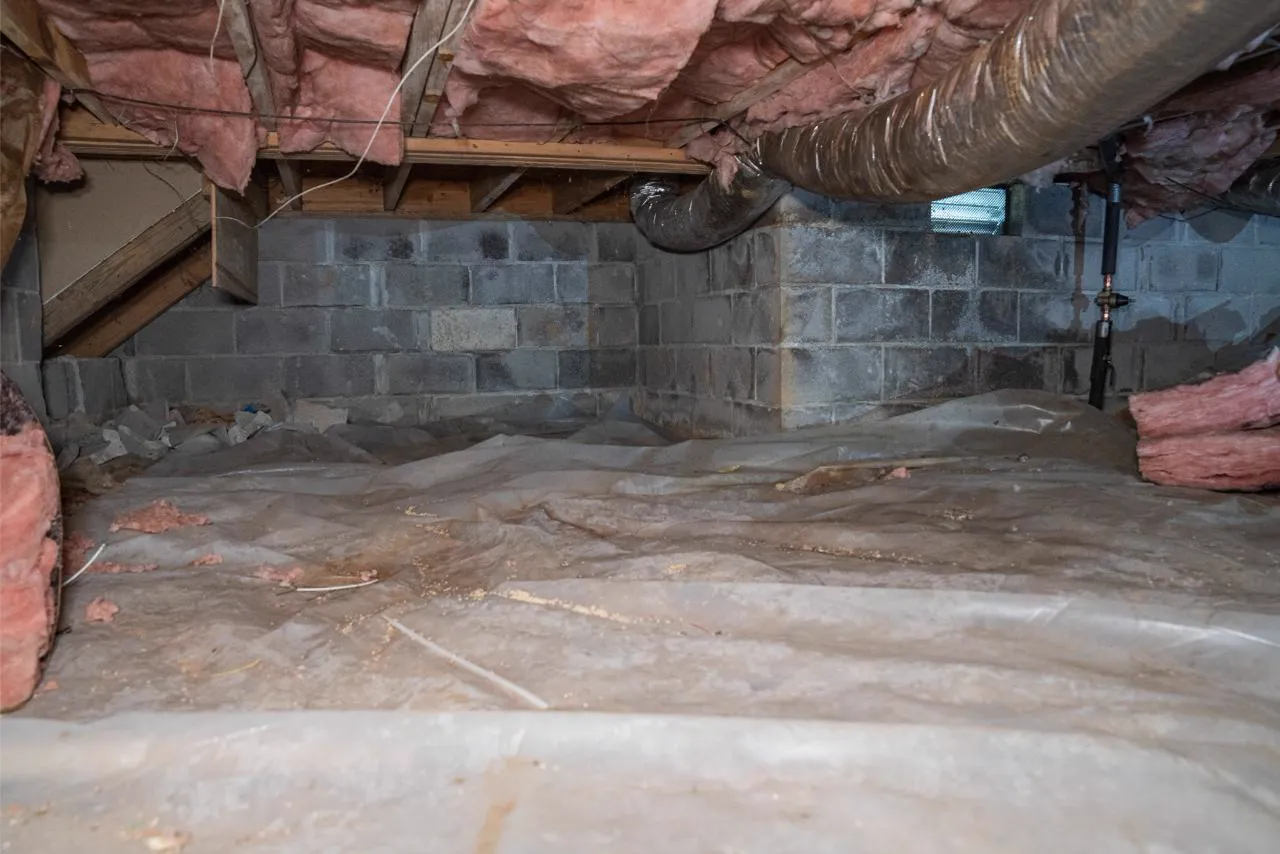
Age plays a part too. Roswell Farms and the wider 1970s and 1980s subdivision belt went in before anyone treated crawl spaces as part of the house, so the original drainage was thin and has had forty years to clog. Older Hembree-area homes and the historic places near Old Mill Park are a different animal, with stone foundations and dirt-floor cellars that never had waterproofing at all.
So a company that only knows flat subdivisions will hand you a flat-subdivision plan. Here, slope, rock and house age all pull in different directions on the same street.
What’s the question under the question?
Let’s back up a second. Most people searching for the best crawl space Roswell offers are really asking a second question underneath it: what job am I actually buying? Companies aren’t ranked on one ladder. They quote different scopes, and the price gap you’re staring at is usually a scope gap in disguise.
Once you can name the scope, comparing gets easy. You stop guessing and start matching line items, which is a better use of a Saturday.
Worth knowing
A true encapsulation uses a reinforced liner sealed to the walls and piers, not loose sheeting laid on the dirt. Both get written on quotes as “encapsulation,” so ask which one you’re being sold before you compare a single number.
So what counts as a real encapsulation?
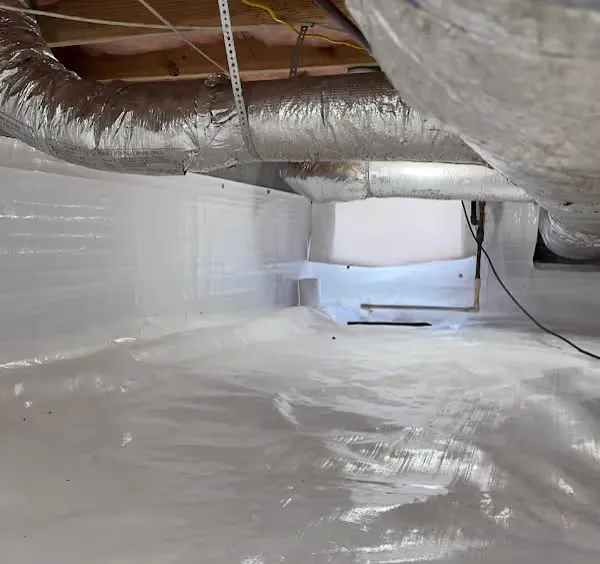
Picture a liner running across the whole dirt floor, up the walls and around every pier, with seams taped and vents sealed shut. The space becomes part of your house instead of a vented hole under it.
Loose plastic does something, but not that. It slows evaporation a little, then somebody crawls in to service a duct and tears it. Reinforced liner takes knees, tools and years, so thickness in mils belongs in writing.
Water comes first, though, and hillside homes can’t skip that part. If a corner puddles after every long rain, a liner over the top just builds a swimming pool with a nice lid. Drainage and a sump go in first.
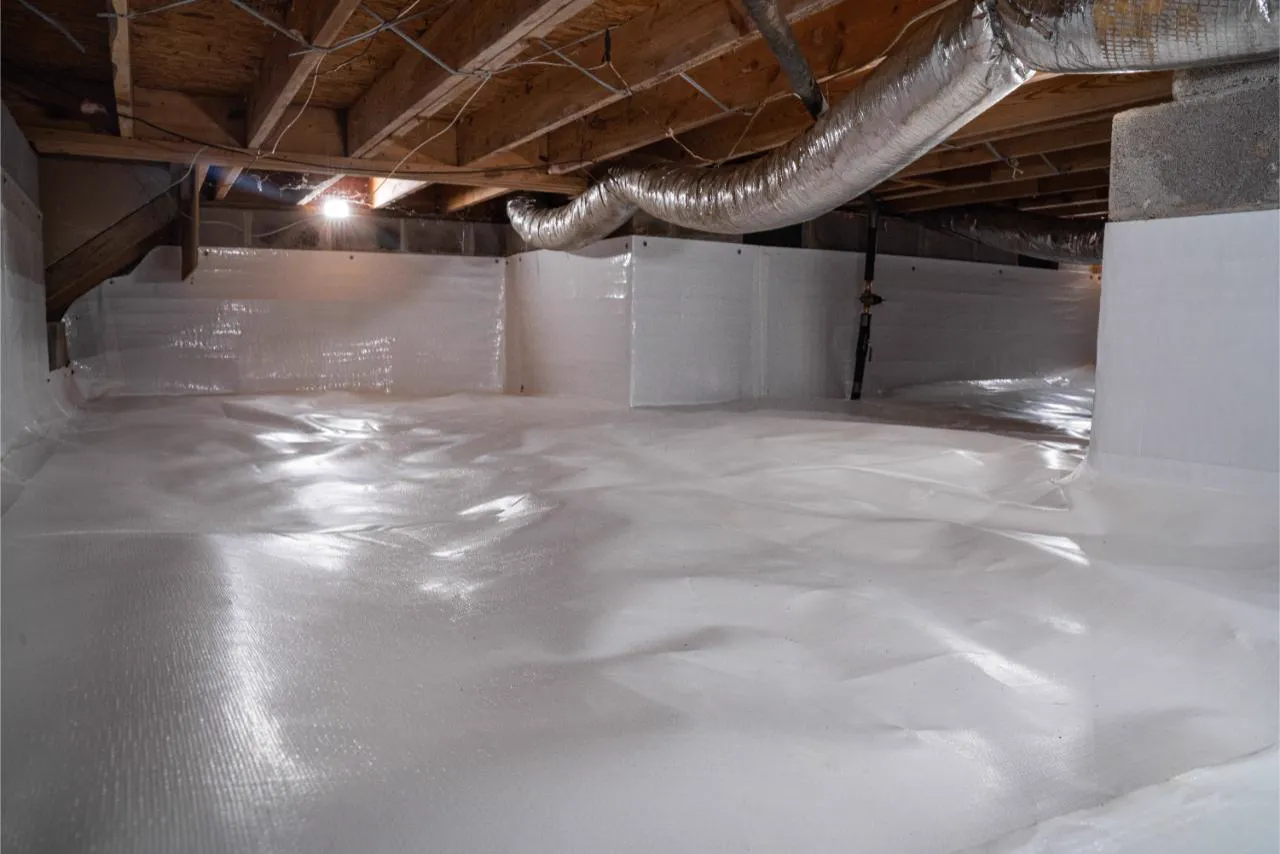
After that the air needs managing, since you just removed the vents that used to move it. A dehumidifier sized to the square footage handles that, and it should drain on its own. Nobody wants to remember a bucket.
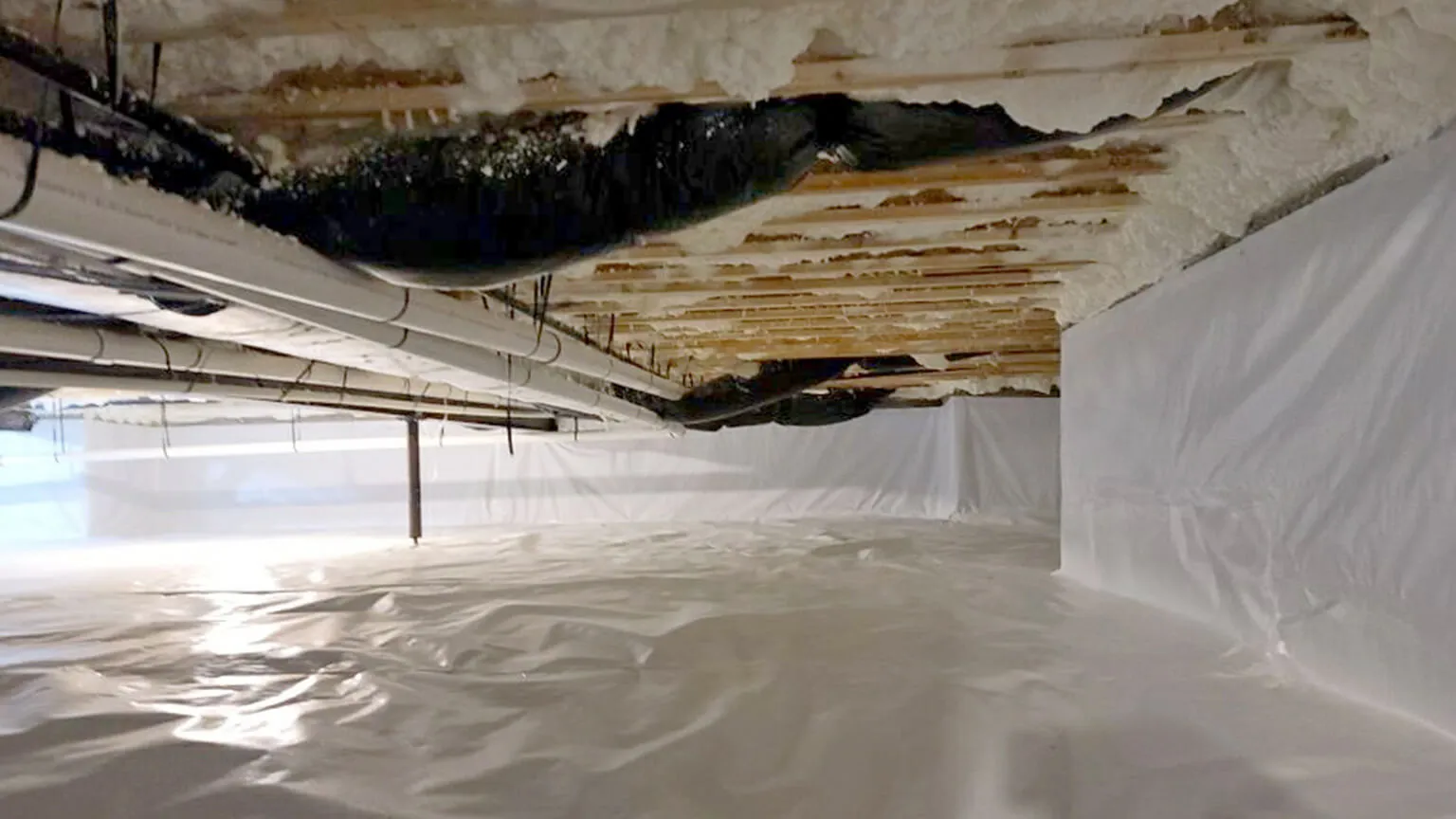
Insulation is the last piece, and it moves. Once the vents close, it belongs at the perimeter walls and rim joist instead of sagging between the floor joists. The U.S. Department of Energy’s guidance on insulation and moisture control explains why that swap works.
How do you read the estimate?
Line by line, with one question in mind: does this describe my crawl space? A real scope names your square footage, materials and equipment. A weak one says “encapsulate crawl space” and then a number.
What should be spelled out in writing
- Liner thickness and reinforcement. In mils. This is the biggest quality difference hiding between two similar prices.
- Where the liner stops. Floor only, or sealed up the walls and around each pier.
- Water first. Interior drain, sump, basin and where the discharge ends up.
- Vent treatment. Sealed and insulated, or just covered with a grate.
- Dehumidifier. Model, capacity, and how it drains. Sizing should match your footprint.
- Outside work. Gutters, downspout extensions, grading and any wall aiming water at the house.
- Warranty, in plain words. What’s covered, how long, and whether it transfers to a buyer.
About price: a firm number over the phone is a guess, and you’d be the one paying for it. Small dry spaces sit at the low end, while a big footprint with drainage and a sized dehumidifier sits well above that. So what you want is a written scope, not a “starting at.”
What should you ask, and what should worry you?
Five questions do most of the sorting. Ask how the liner attaches to the walls and piers, then ask its thickness in mils. Ask whether vents get sealed or merely covered, how the dehumidifier was sized, and whether the warranty transfers. Anyone worth hiring answers all five without hedging.
Red flags are easier to spot than people expect. Pressure to sign today is one, and a discount that expires when the visit ends is another. Talk about your home falling apart is a sales line, not a diagnosis.
Watch for a crew that won’t go all the way in, too. If nobody crawled to the far uphill corner, nobody knows what’s happening there — and on a Roswell lot, that corner is where the story is.
One more that’s local: if the estimate never mentions the outside of the house, pause. Water arriving on shallow rock is a grading question too, so a plan that ignores the yard is doing half the job.
Here’s the number that reframes all of it
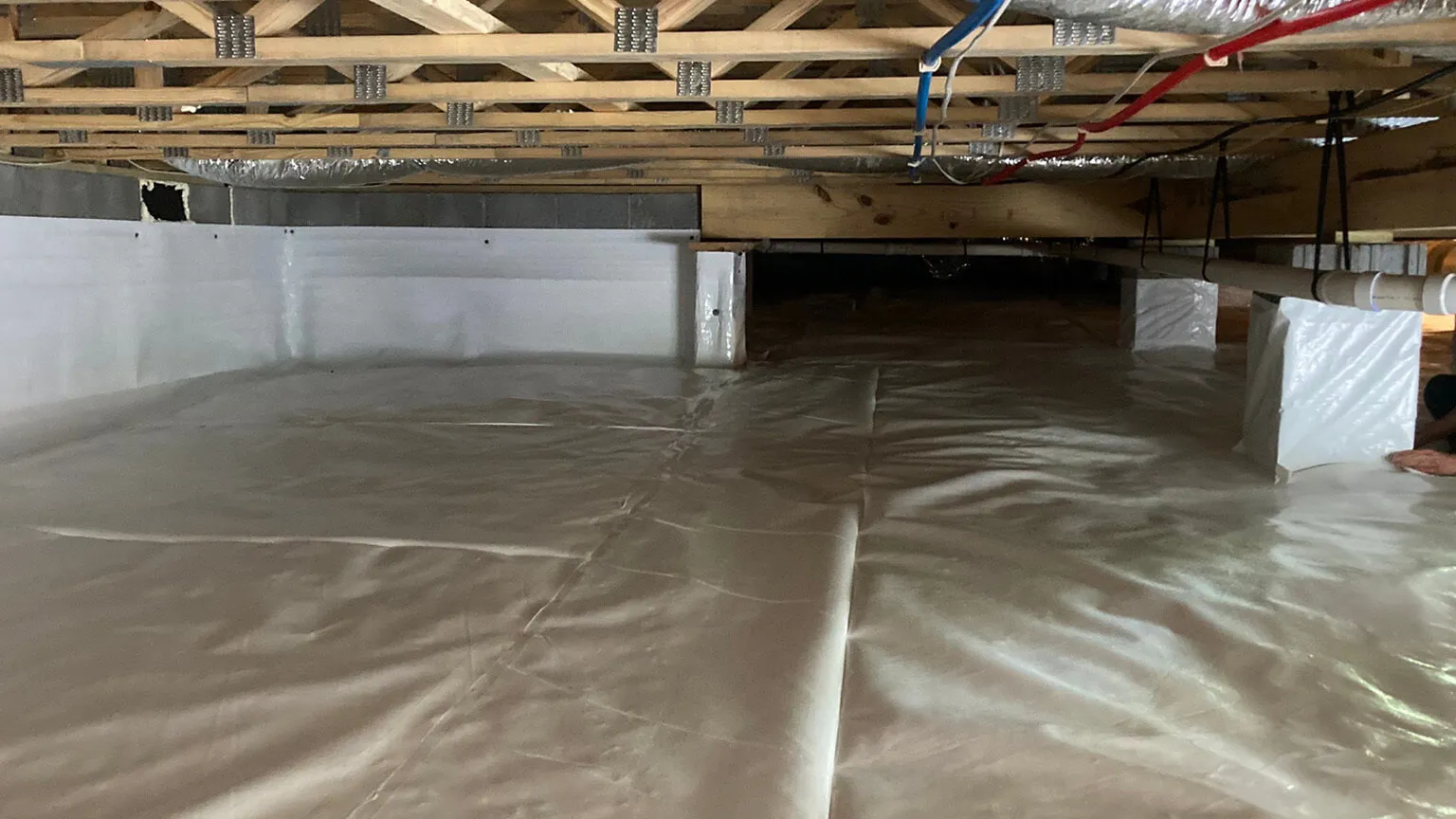
Bare dirt can release 15 to 20 gallons of water into the air every day under an average-size home. Not from a leak. Just from soil doing what soil does, quietly, while you’re upstairs making coffee.
Put that next to your soft box and it stops being mysterious. That’s why sealing the ground matters even when nobody has ever seen standing water down there.
It also explains the upstairs symptoms. Air rises through a house, so a share of what you breathe in the den started under the floor, and the CDC’s overview of mold and your home covers why damp indoor air behaves that way.
What life looks like after
The smell goes first, usually within a week or two. Floors near the back wall stop feeling colder than the rest of the house, bins stay dry, and you can go down after a stray suitcase without holding your breath. Best of all, you stop thinking about it, which is really what you were buying.
Why we might be the right fit
We’ve been at this over twenty years, and Roswell sits about thirty minutes west of our Lawrenceville shop. Between hillside homes on the Brookfield side and older places out toward the Chattahoochee Nature Center, we’re under houses here most weeks.
Our approach is boring on purpose: stop the source, protect the structure, explain the plan, build it to last. If you’re weighing who does the best crawl space Roswell work, judge us on that list. We’ll show you photos, walk the scope line by line, and tell you plainly when the fix is smaller than you feared.
Want to compare notes first? Our local guide to crawl space encapsulation covers symptoms and options in order, and the full crawl space repair systems we install are laid out step by step. Neighbors up the road get the same breakdown for Milton best crawl space work. If your lower level worries you more, start with flooded basement repair, since water at the wall-floor joint is the other thing we see on these hillside streets.
Where we work around Roswell
Our shop sits in Lawrenceville, so this side of the map is an easy drive. We work throughout Roswell, Alpharetta, Milton, Sandy Springs, Johns Creek, Marietta, Dunwoody, Woodstock and Duluth, plus the wider Fulton County area. Between Historic Roswell and the river, we’ve usually got a truck close by.
Questions we get around town
It’s a reinforced liner sealed across the dirt floor, up the walls and around every pier, with the seams taped and the vents closed. Any water gets drained first. After that the space is dry, conditioned, and part of your house instead of a damp hole under it.
Soft cardboard, a musty closet upstairs, cold floors over one part of the house, or rusty duct straps are all good clues. A humidity reading settles it fast, though. If it’s holding above about 60 percent, the space is working against you.
It helps a little, but it isn’t the same job. Loose sheeting tears easily and leaves the walls and piers open, so humid air still moves through. A sealed, reinforced liner is what changes how the space behaves year round.
If it’s wet, sagging or moldy, it comes out — it’s holding water against your subfloor at that point. Once the space is sealed, insulation goes at the perimeter walls and rim joist instead of between the joists. Dry batts in good shape can sometimes stay, and we’ll tell you which you have.
Usually it helps, because your ducts stop running through a hot, damp box and drier air is cheaper to cool. Savings depend on your system and how leaky the space was, so we won’t promise a number. Most homeowners notice comfort before they notice the bill.
Let’s go look under your Roswell home
The inspection is free, the estimate is free, and nobody pressures you afterward. We’ll photograph what’s down there, price it line by line so you can compare it against any other quote, and say plainly if the answer is simpler than you expected.
(678) 914-5112Serving Roswell and all of Metro Atlanta · $500 off projects over $3,500 · Live support 7am–8pm, 7 days a week