

Who Does the Best Crawl Space Norcross Homeowners Can Trust?
How to compare quotes in a city with houses from three different centuries, what to ask before you hire, and the red flags worth walking away from.
So who really does the best crawl space Norcross work? Honestly, the right answer isn’t a company name — it’s the crew that inspects your house before they price it. Because in this town, two homes on the same street can need two completely different jobs.
Good news, though: this is very fixable, and you’re already doing the smart thing by comparing. Here’s the catch. Two quotes can use the same words and describe wildly different work, so knowing what to look for is most of the battle.
What makes Norcross homes different?
Their ages, mostly. Norcross has houses from three different centuries, which is rare in Gwinnett. Historic Downtown Norcross has stone and brick foundations that predate anything we’d call waterproofing, while the subdivisions that filled in later came up in the 1960s and 1970s.
Those mid-century homes are their own story. Plenty of block basements and crawl spaces from that era went in with no meaningful original waterproofing at all, because the standard simply wasn’t there yet. Nobody cut corners. The rules just hadn’t caught up.
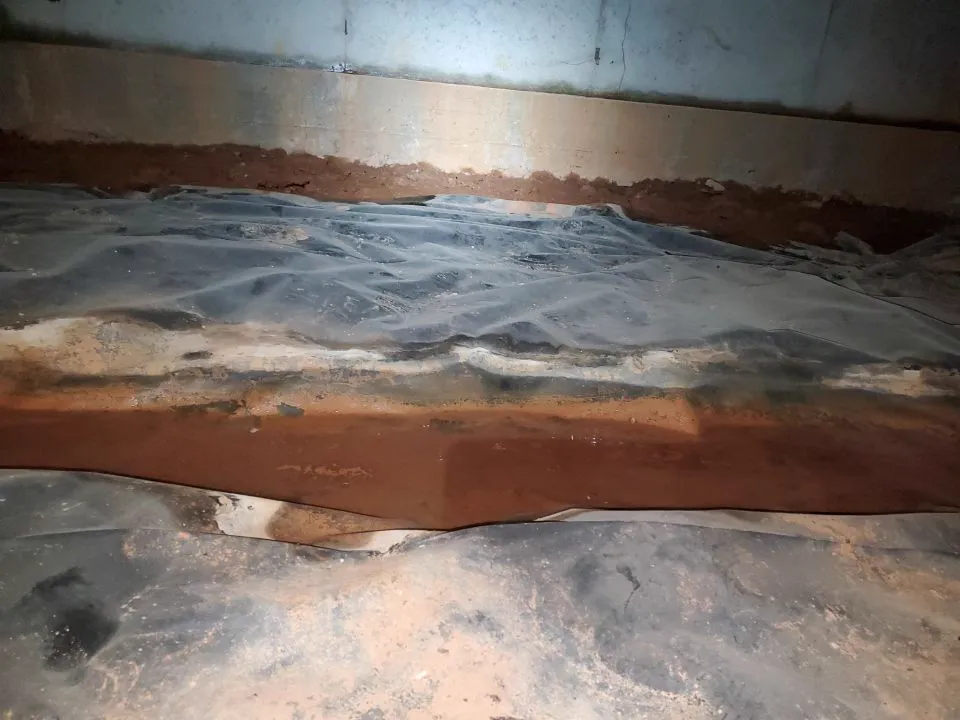
Then there’s the ground under all of it. Red clay swells when it’s wet and shrinks when it’s dry, so water slides sideways instead of soaking straight down. Out toward the Berkeley Lake edge, where lots roll down toward the Chattahoochee, that water finds the low corner of a house and settles in.
Norcross has houses from three different centuries. Each one needs a different answer — which is exactly why a real inspection beats a phone quote every time.
What should a good company do differently here?
Diagnose before it quotes. In a city with this much variety, a crew that walks in with one product and one price is guessing. The right approach starts with somebody going all the way to the back corner with a light and a moisture meter.
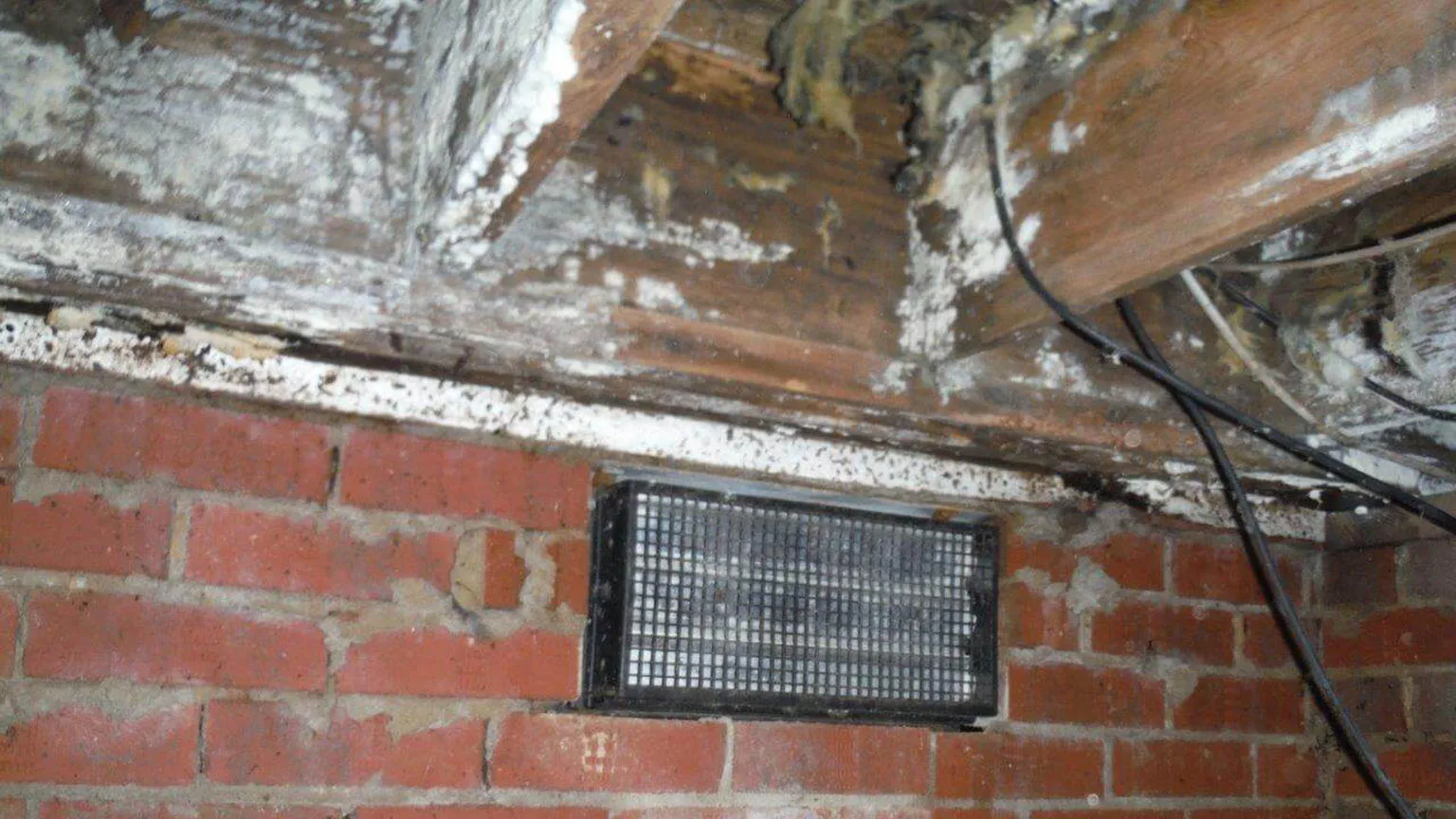
Vents come up early in that conversation, too. Open foundation vents were required for decades on the theory that outside air dries a crawl space out. In a humid climate the opposite happens, because warm outside air hits cool wood and dirt and lets its moisture go. That’s condensation, not drying.
A good crew explains that instead of just quoting a liner. They’ll also look outside, since gutters, downspouts and grading feed a surprising number of these problems. So if nobody checked your downspouts, nobody checked the whole house.
Old houses get a gentler hand as well. Around the Lillian Webb district, the goal is to keep original materials intact while still getting the space dry, which is slower work and worth doing right.
Before you call anyone, understand this one distinction
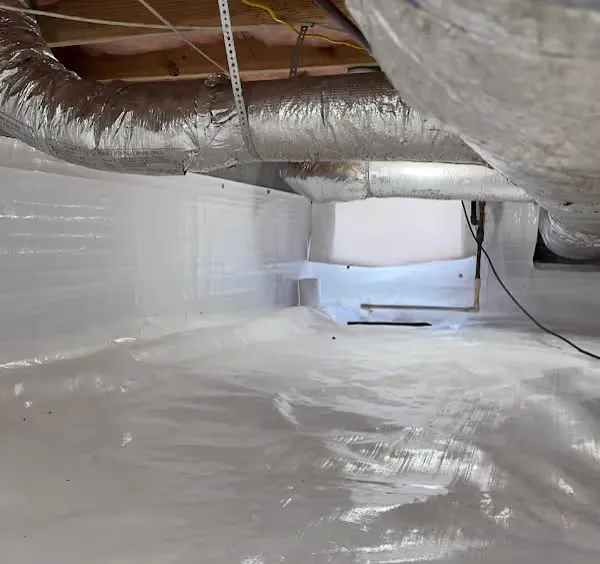
Real talk: the word “encapsulation” gets used for two very different jobs. One is a heavy reinforced liner sealed to the floor, run up the stem walls, wrapped around every pier, seams taped, vents closed. The other is a sheet of plastic laid loose on the dirt.
Both show up on estimates under the same word. Only one actually changes how the space behaves, though, because sealing to the walls and piers is what makes the crawl space part of your house instead of a hole under it.
Worth knowing
Liner thickness matters more than color. A thin sheet tears the first time somebody crawls in to service a duct, while a reinforced liner takes knees, tools and years of it. So ask for the thickness in mils, then compare that one line across every quote you have.
Water always gets handled first, too. If there’s standing water down there, or a spot that puddles after every long rain, a liner over the top just builds a very tidy swimming pool with a lid. Drainage and a sump come before the liner, not after.

How do you read the estimate?
Line by line, with one question in your head: does this describe my crawl space? A real scope names your square footage, your materials and your equipment. A weak one says “encapsulate crawl space” and then a number.
What should be spelled out in writing
- Liner thickness and reinforcement. In mils. This is the biggest quality gap hiding behind two similar prices.
- Where the liner stops. Floor only, or sealed up the walls and around each pier.
- Vent treatment. Sealed and insulated, or just covered with a grate from the outside.
- Water first. Interior drain, sump, basin and discharge point, if the inspection found water.
- The dehumidifier. Model, capacity, and how it drains. Sizing should match your footprint.
- Insulation plan. What comes out, what goes back in, and where it lands.
- Warranty, in plain words. What’s covered, for how long, and whether it transfers to a buyer.
About price: a firm number over the phone is a guess, and you’d be the one paying for it. Small dry spaces sit at the low end, while a big footprint with drainage and a sized dehumidifier sits well above that. Most jobs land somewhere between, so what you want is a written scope instead of a “starting at.”
What should you ask, and what should worry you?
Five questions do most of the sorting. Ask how the liner attaches to the walls and piers. Then ask the thickness in mils, whether vents get sealed or only covered, how the dehumidifier was sized, and whether the warranty follows the house when you sell. Anyone doing the best crawl space Norcross work can answer all five without hedging.
Red flags are easier to spot than folks expect. Pressure to sign today is one. A discount that expires the moment the visit ends is another, and so is any talk about your home falling apart, which is a sales line rather than a diagnosis.
Watch for the crew that won’t go all the way in, too. If nobody reached the far corner, nobody knows what’s happening in the far corner. Also fair to ask: has this company worked on a house as old as yours, or only on the newer builds?
One more that’s specific to here. Homes near historic downtown sometimes have old drain or sewer lines quietly soaking the soil at the footing, and that shows up as a “mystery” wet crawl space. A crew that has seen it before knows to look.
A house off Indian Trail
Here’s how one of these usually goes. We had a homeowner off Indian Trail, in a ranch built in the early 1970s, who called because the hall closet smelled like a basement even though the house doesn’t have one. She’d already had two companies out and gotten two very different numbers.
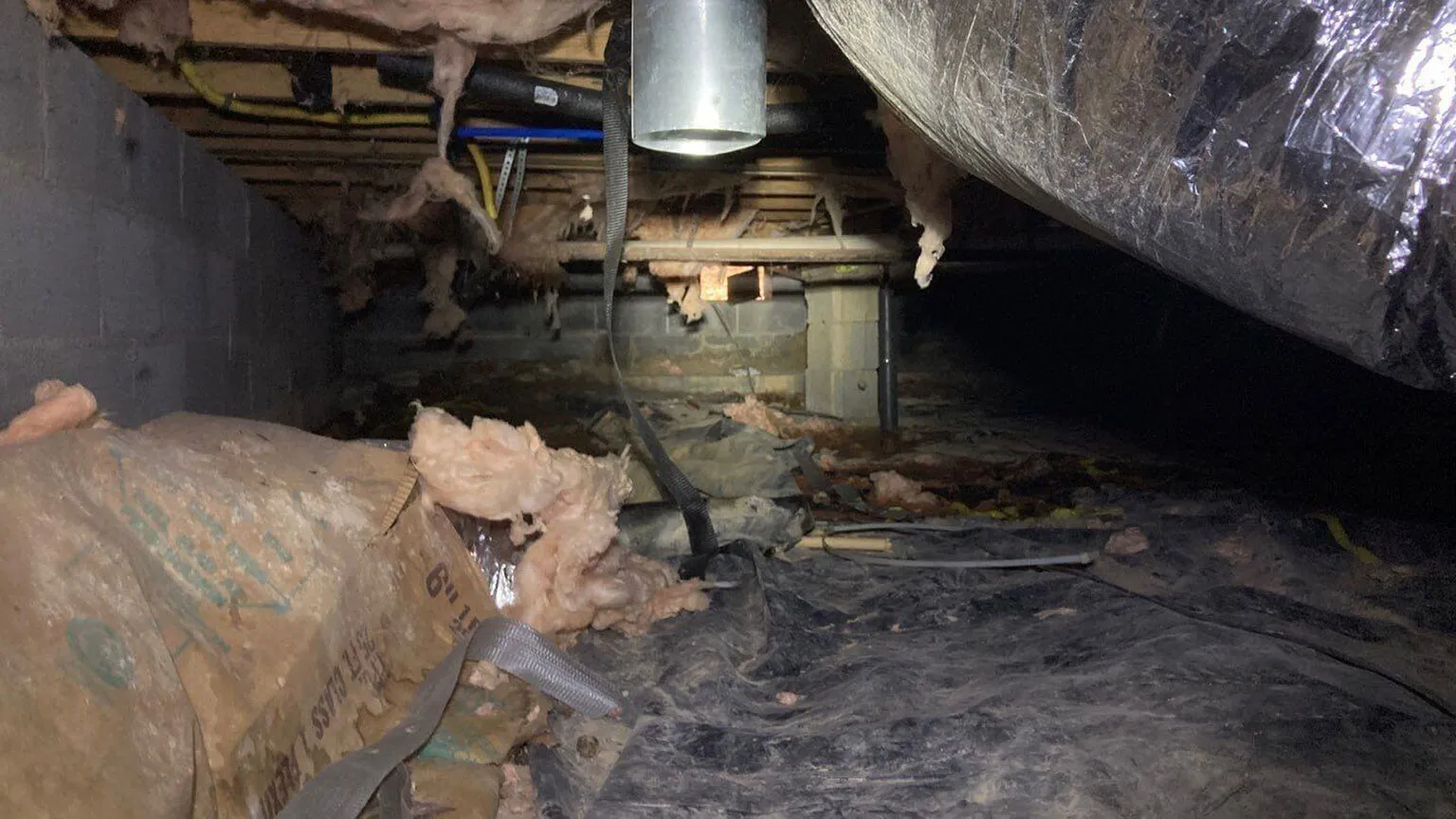
Under the house, the story was plain enough. Torn plastic, batts hanging out of the joists, and a damp low corner where the yard sloped back toward the crawl door. Not an emergency, either. Just twenty-some years of moisture nobody had reason to look at.
The fix ran in order: fix the grading and downspout at that corner, put in a short interior drain to a sump, then seal the floor, walls and piers with a reinforced liner and close the vents. A right-sized dehumidifier finished it. Two days of work, and one very patient dog watching from the window.
She called about ten days later to say the closet smelled like nothing. That’s the highest compliment a crawl space can get. Her floors stopped feeling cold near the back wall, too, and the EPA’s guidance on mold and health explains why damp indoor air affects how a home feels to live in.
Why we might be your people
We’ve been doing this for over twenty years, and Norcross sits about twenty minutes southwest of our Lawrenceville shop. Between jobs near Lucky Shoals Park and homes over toward Best Friend Park, we’re in this city most weeks, so odds are good we’ve been under a house built the same year as yours.
Our promise is simple, and it’s the same one every time. We stop the source, protect the structure, explain the plan in plain words, and build it to last. That’s our whole idea of what the best crawl space Norcross work should look like. Plus we’ll tell you when the fix is smaller than you feared, because that happens more often than people expect.
That history matters for one practical reason: a warranty is only as strong as the company standing behind it. If something needs a second look in year eight, you’re calling the same local crews who did the work in the first place.
Want to read more before you call? Our local guide to crawl space encapsulation walks through symptoms and options, and the full crawl space repair systems we install are laid out step by step. Neighbors down the road get the same breakdown for Loganville best crawl space work. If your lower level worries you more than the crawl, start with our piece on flooded basement repair, since older block walls around here seep at the cove joint after long spring rains. The CDC’s overview of mold and your home is a good plain-language read on the health side.
Where we work around Norcross
Our shop is in Lawrenceville, so this side of the map is a short drive for us. We work throughout Norcross, Peachtree Corners, Duluth, Lilburn, Doraville, Tucker, Berkeley Lake, Suwanee and Snellville, plus the wider Gwinnett area. Anywhere between Buford Highway and Jimmy Carter, we’ve usually got a truck nearby.
Questions we get around town
If it’s wet, sagging or falling out of the joists, it comes out. Damp batts hold moisture against wood, so leaving them in place works against everything else we do. New insulation then goes on the perimeter walls and rim joist, where it belongs once the vents are sealed.
It helps a little, but it isn’t the same job. Thin sheeting sits loose on the dirt, tears under knees and tools, and stops at the walls. A reinforced liner sealed up the stem walls and around the piers is what actually changes the humidity down there.
Your nose usually tells you first, especially in a closet or a room over the crawl. Cupping hardwood, cold floors in winter and a musty smell that comes back are all common signs. The only way to be sure is to look, which is why the inspection is free.
It’s a heavy liner sealed across the dirt floor, up the walls and around the piers, with the seams taped and the vents closed. Any standing water gets drained first. After that the space stays dry and conditioned, so it behaves like part of your house.
It depends on the square footage, whether water has to be drained first, and the dehumidifier size. Small dry spaces land at the low end, while a large footprint with drainage and a sump sits well above that. We give you a written scope after the inspection instead of a phone guess.
Let’s go look under your Norcross home
The inspection is free, the estimate is free, and nobody pressures you afterward. We’ll show you photos of what’s actually down there, explain what it takes to fix, and say plainly if the answer is simpler than you expected.
(678) 914-5112Serving Norcross and all of Metro Atlanta · $500 off projects over $3,500 · Live support 7am–8pm, 7 days a week