

How to Choose the Best Basement Waterproofing Lawrenceville Has, Without Guessing
What our homes here actually need, how to read a bid line by line, and the questions that tell you everything before you sign.
Somebody made a decision about your basement long before you ever owned the house. When it went up — maybe 1979 near Collins Hill Road, maybe 1998 out toward Providence — a builder picked how that foundation would be protected on the outside. Most of the time that meant a spray of tar, a little gravel, and then the dirt went right back against the wall. So when you start hunting for the best basement waterproofing Lawrenceville has, you’re really shopping for the fix to a call made decades ago by someone you never met.
Good news? That’s a very fixable thing, and it isn’t a reflection on you or your house. Better yet, once you know what to look for, comparing companies gets a lot less confusing.
What did the builder decide, exactly?
Tar. That’s the short answer for most of our 1970s and 1980s block basements. It’s a coating, and coatings are only as good as the day they go on — they get scraped during backfill, then brittle with age. Meanwhile the red clay against that wall never gets tired.
Clay is the second half of the story. It swells when wet and shrinks when dry, so water sits in it instead of draining through. As a result, pressure builds against the wall and the seam at the floor. The U.S. Geological Survey’s groundwater basics explains that better than any sales pitch could.
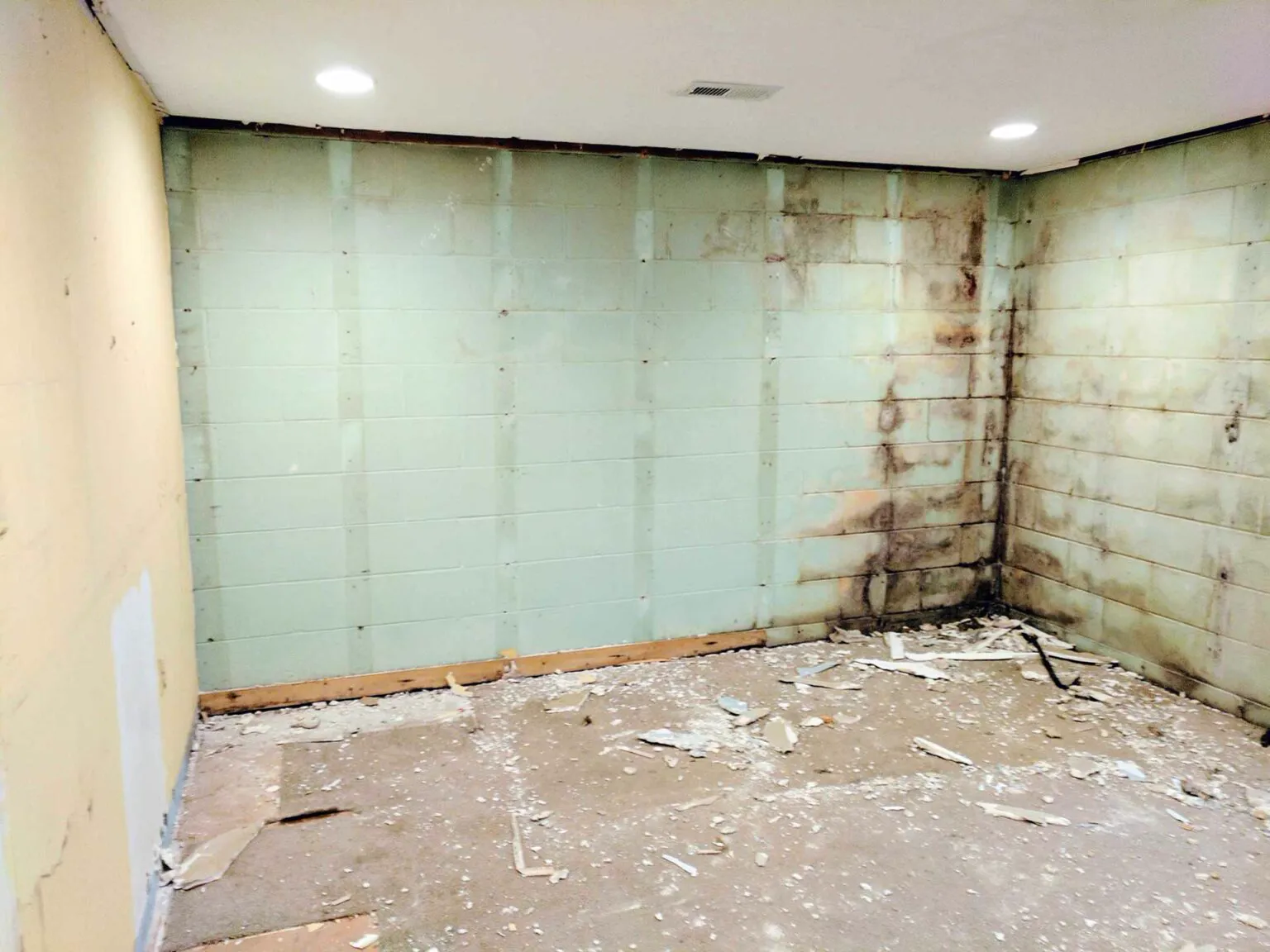
Newer homes aren’t off the hook either. In our 1990s and 2000s subdivisions, the original footing drain often went in correctly and then quietly silted up with clay. Nothing failed dramatically. It just filled in, the way a gutter does when nobody’s looking.
What should a good company be doing differently in Lawrenceville?
Walk the yard first. Our lots roll, and on the east side of town the ground leans toward the Alcovy headwaters, so plenty of “basement problems” start forty feet from the house. Downspouts dumping at the wall, a patio sloping the wrong way, a low spot that holds water for two days after a storm — those are cheap fixes. An honest crew will point at one even when it costs them the bigger job.
Next, they should read your foundation for what it is. Block walls and poured walls behave differently under pressure, and a house near the River Club edge doesn’t get the same plan as a split-level up in Collins Hill. Anyone quoting the same package for both isn’t measuring, they’re guessing.
Worth knowing
Seepage and structural movement are two separate conversations. Lots of block walls seep while staying perfectly sound. You deserve to be told which one you have before anybody mentions a number.
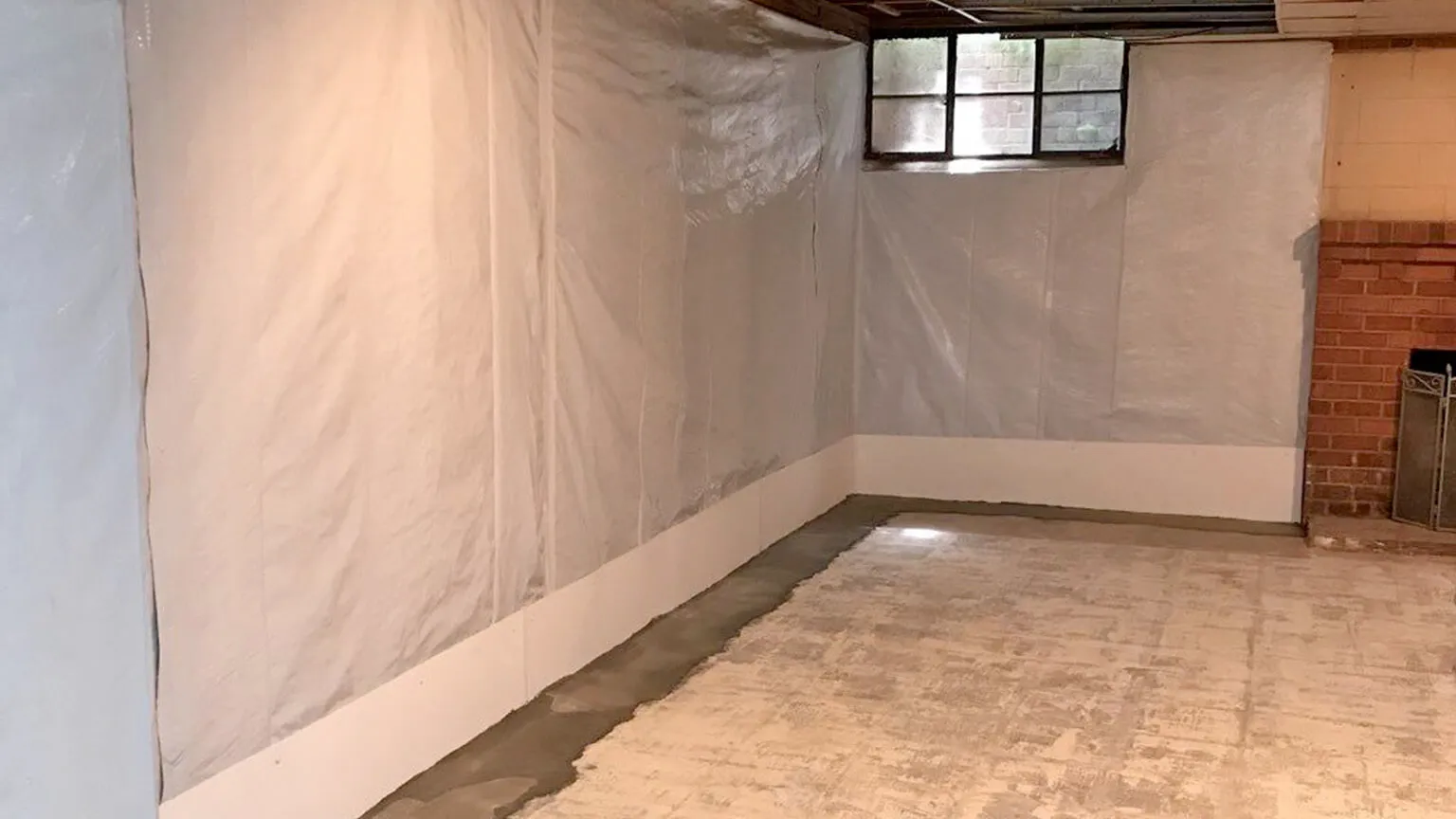
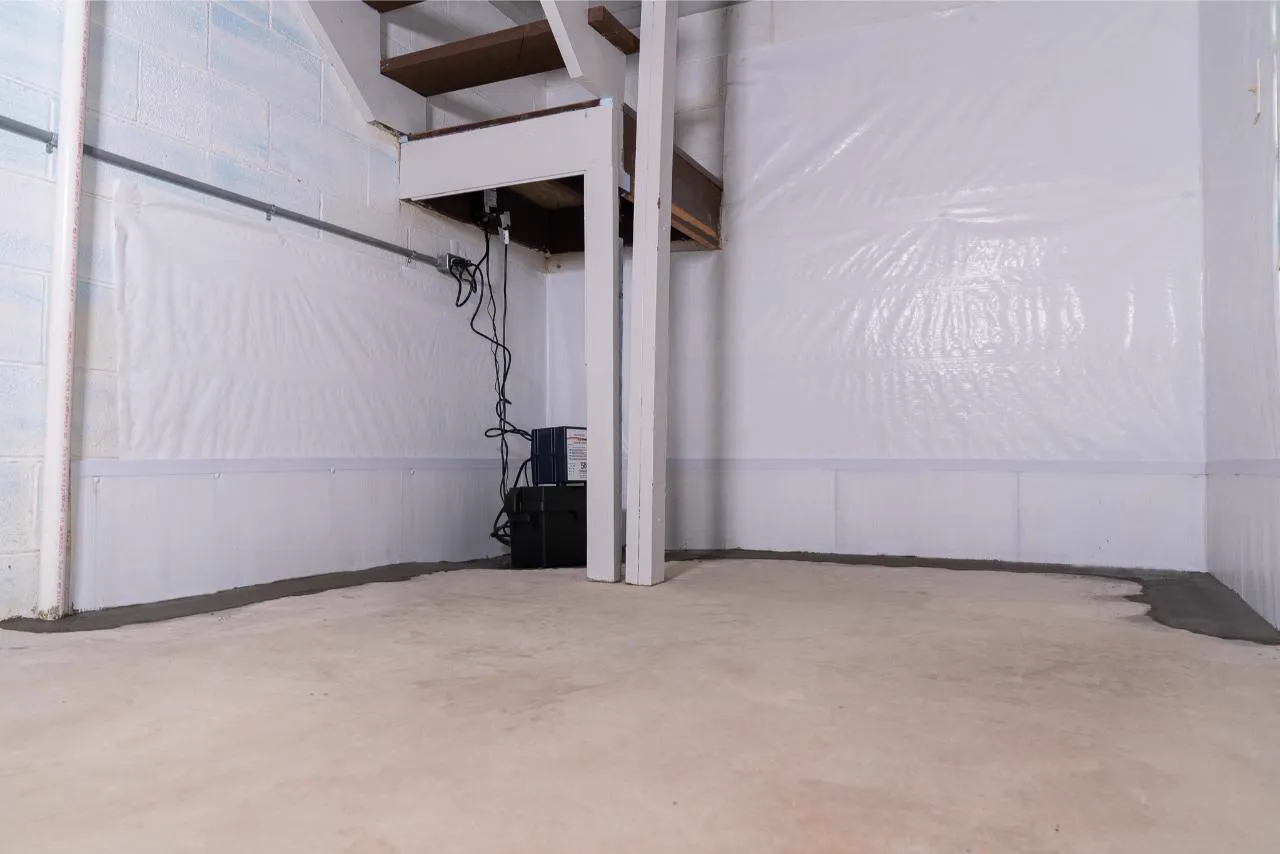
Then there’s the fix, which is simpler than most people expect. Interior drainage collects water below the slab and routes it to a sump before it ever reaches your floor, instead of trying to block it at the wall. In other words, you stop arguing with the water. Your basement shouldn’t have its own water feature.
Real talk: what actually decides whether it lasts?
Not the brand of pipe. Not the color of the wall panel. Here’s the thing — the part that decides whether your system still works in fifteen years is whether the company that installed it is still here, still answering the phone, and still willing to come back.
A warranty is a piece of paper. What makes it real is a local address, a truck you recognize, and crews who stick around. Plenty of outfits sell hard in Gwinnett for three seasons and then move on, so the paper outlives the company. That’s just the thing nobody puts in a brochure.
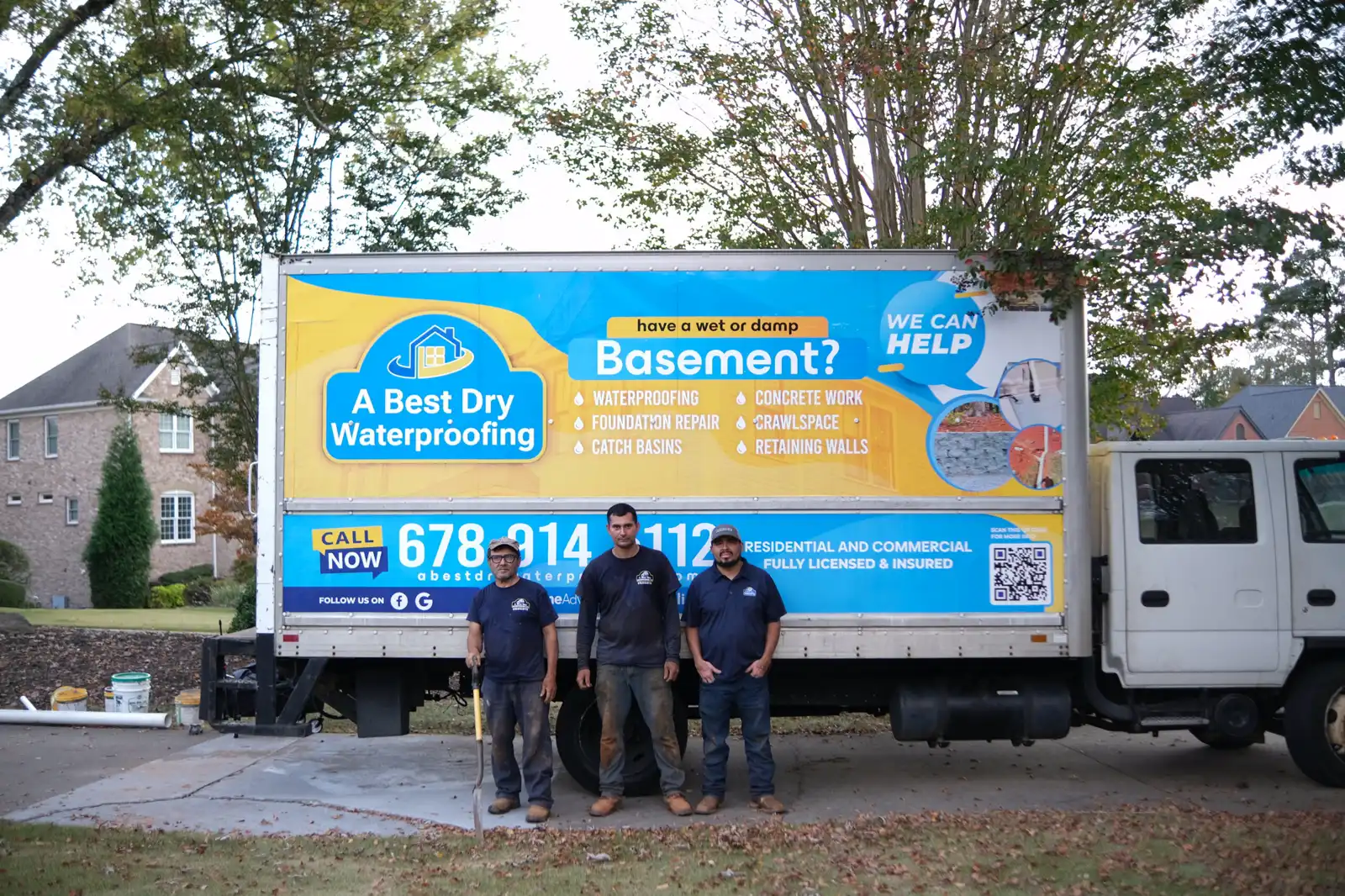
We’re right here in Lawrenceville — our shop, our crews, our trucks. We’ve been fixing basements in this city for over twenty years, so there’s a real chance we’ve already worked on a house in your neighborhood, maybe even on your street. When you call about a sump three winters from now, you’re calling the same number and the same people.
Installation quality is the other half. Drainage set below the slab performs; drainage set beside it doesn’t. Clean stone around the pipe keeps clay out, while a skipped filter fabric invites it in. So ask to see photos of the pipe before the concrete goes back — a good crew takes them without being asked.
How do you read an estimate without a degree in this?
Look at scope, not the total. A real estimate names the walls, the linear feet, the depth of the drainage, the sump, and where the water ends up outside. If all you got was a price and a signature line, that’s not an estimate — it’s a number with good posture.
What a solid Lawrenceville estimate spells out
- Linear feet and which walls. One wet wall versus a full perimeter is the single biggest price swing there is.
- Depth of the drainage. Below the slab, not beside it. Bargain bids quietly cross that line.
- Sump and discharge point. Water has to leave the yard, not tour the flower bed and come home.
- Exterior corrections. Regrading or downspout work sometimes is the fix, and it should be priced honestly.
- Warranty terms, in writing. What’s covered, for how long, and who honors it.
Prices swing because houses do, so nobody should hand you a firm number before standing in your basement. For the nuts and bolts of the systems themselves, our guide to keeping local basements dry walks through each one, and the basement waterproofing page shows exactly what we install. Comparing across the county? Our Snellville best basement waterproofing write-up covers a similar housing mix.
What do week one, year one and year ten look like?
This is the part nobody compares on a bid sheet, and it’s the part you actually live with. So picture the calendar instead of the invoice.
Week one. The new concrete cures and the sump cycles a few times during the next rain. That’s the system doing its job, not a problem. Meanwhile the damp smell fades quickly, because the source is finally cut off instead of covered up.
Year one. You get through a full spring storm season, which around here is the real exam. Better yet, you stop walking down the stairs after every downpour. One homeowner over near Providence told us the strangest part was realizing she hadn’t checked in months.
Year ten. Stone and pipe under a slab have nothing to wear out, so the drainage keeps working. The pump is the one piece with a service life — plan on replacing it around a decade in, same as a water heater. If we installed it, we’re still minutes away.
That’s the feeling worth paying for. Not “the leak stopped,” but “my house is handled.” Storms roll through and you hear rain instead of trouble.
What should you ask before you hire anyone?
Five questions do most of the work. Ask all of them at every appointment, then compare the answers instead of the totals — that’s how the best basement waterproofing Lawrenceville offers separates itself from the rest.
Five questions worth asking
- “Where’s your shop?” A real local address means somebody to call in year eight.
- “What did you find outside?” If nobody walked the yard, nobody looked for the source.
- “How deep is the drainage going?” Below the slab is the only right answer.
- “Will you photograph the pipe before the concrete?” Yes should come back instantly.
- “Who’s on my job?” Your own crews, or a sub you meet on the first morning?
Red flags are simpler than folks expect. A firm price quoted over the phone means nothing got measured, and pressure to sign today is a sales tactic rather than a real schedule. Also watch a bid far under the others — usually something got left out, and usually it’s drainage depth.
Air quality belongs in this conversation too, since a dry floor and healthy air go together. The EPA’s guide to moisture control at home lays out the basics plainly, and it isn’t selling anything.
Why are we a fit for homes here?
Because this is our town, not a territory. Our trucks park here, our crews grew up around here, and we’ve spent twenty-plus years on these exact foundations — 1970s block walls, 1990s poured walls, and the older places near the Gwinnett Historic Courthouse where the original drainage was never much to begin with.
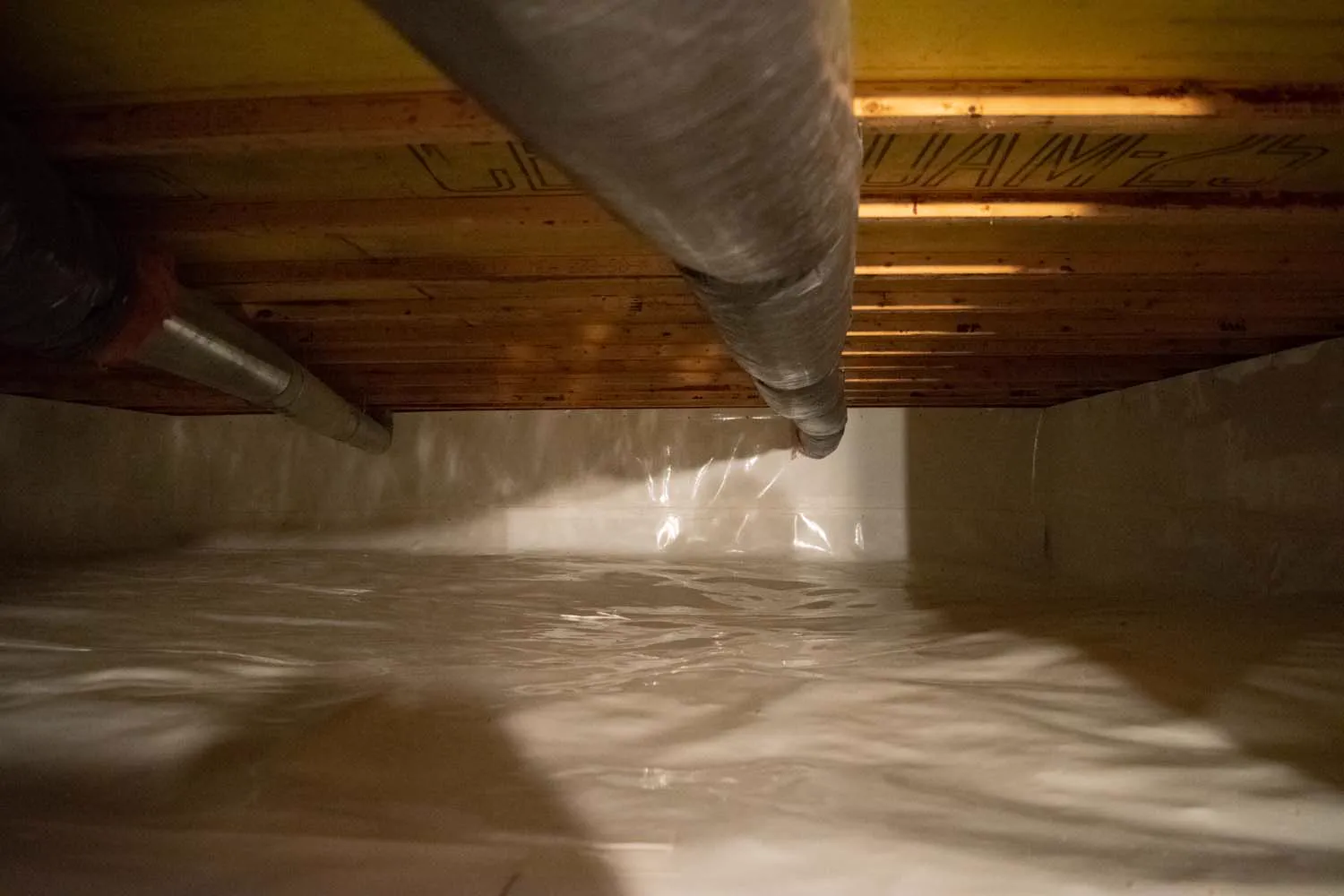
You’ll also get answers in plain language. We’ll show you the water path, explain why one wall gets treated and another gets left alone, and hand over photos from under the slab. If the wet space is a low dirt area instead, the honest answer is often crawl space encapsulation. Either way, you’ll know what you’re buying — free inspection, free estimate, no pressure.
Where we work around Lawrenceville
We’re based right here, so we’re all over Gwinnett every week. That includes Lawrenceville, Snellville, Grayson, Dacula, Suwanee, Duluth, Lilburn and Loganville, plus the wider Gwinnett area. Whether you’re near Alexander Park, off 316, or on a quiet street between the Square and Collins Hill, odds are good one of our trucks is already close by.
Questions Lawrenceville homeowners ask us
It depends mostly on how much wall is involved and how easy that wall is to reach. Small exterior corrections sit at the low end, while a full perimeter system with a new sump sits at the top. We won’t quote a flat number over the phone, because that number would be a guess you’d end up paying for.
Most interior systems here run two to four working days. Add a day when the basement is finished and the walls need opening up first. Exterior grading and downspout work usually takes less, though weather can push it.
No. Clear about four feet along the walls we’re working on and slide boxes toward the middle, and we’ll handle the heavy items with you. Pets do better upstairs while the saw runs, and that’s really the whole list.
Sometimes, though a crack can be its own conversation. Relieving water pressure stops seepage through a joint or a hairline, but a crack caused by movement needs the movement addressed first. We’ll tell you which one you have during the inspection, in plain language.
Neither one wins every time, so it comes down to your lot and your foundation. Interior drainage works well on finished basements and tight lots, since it collects water below the slab without digging up the yard. Exterior work makes more sense when the grade or the original drain line is the real source, and plenty of homes get a bit of both.
Let’s look at your Lawrenceville basement together
We’ll walk the house with you, show you where the water is getting in, and explain the plan in plain language. Free inspection, free estimate, and a company that’s still down the road when you need us again.
(678) 914-5112Serving Lawrenceville and all of Metro Atlanta · $500 off projects over $3,500 · Live support 7am–8pm, 7 days a week